
Reviewed · THE HAGUE TOURS
Your Own Hague. Behind The Scenes of The Royal City
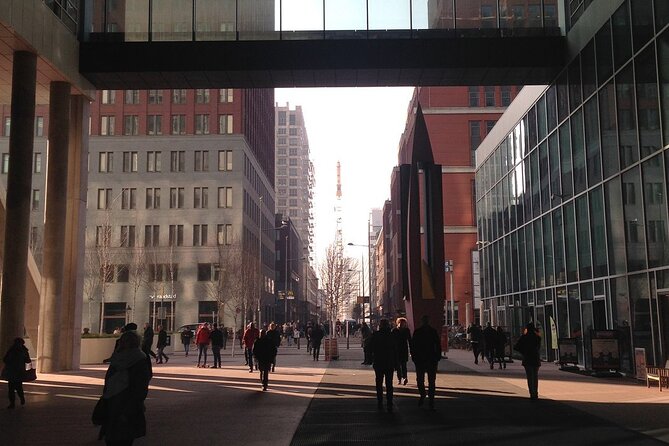
The Hague reveals its character in sharp contrasts: medieval courtyards sit beside high-rise offices, a royal palace anchors the center, and a house just 183 centimeters wide hides along an ordinary street. This private 3.5-hour walk gives you a useful introduction to the city’s royal past and modern public life.
I like the route’s strong variety. You’ll see the Binnenhof, an old inn, Paris-inspired shopping arcades, a tiny house, and an ornate hotel without spending the whole afternoon inside one museum. I also like the guide-led format, since the most interesting details here are stories about people, power, architecture, and daily life.
The main drawback is the price: $254.50 per person is a serious outlay for a walking tour, especially since admission, drinks, and snacks are not included. The value improves if you want a private experience for your own group and plan to ask plenty of questions.
Key points to know before booking
- The Binnenhof opens the story: Begin at the historic heart of Dutch government, where each building carries a different piece of The Hague’s past.
- The route mixes royal and ordinary life: You move from the prime minister’s office and Noordeinde Palace to an old café, a shopping arcade, and a tiny private-looking house.
- Expect architecture as well as history: The walk covers medieval remains, nineteenth-century design, grand hotel style, modern urban planning, and street art.
- The guide shapes the experience: This is not simply a list of buildings. The emphasis is on intriguing local stories, inhabitants, political life, and details you could easily miss alone.
- It is private, not a shared group outing: Only your party participates, which makes it easier to set the pace and ask direct questions.
- Plan for an outdoor walk: Coffee, tea, snacks, and alcohol are extra, so dress for the weather and wear comfortable shoes.
Why The Hague works so well as a walking tour
The Hague is often reduced to two labels: royal city and seat of government. Both are correct, but neither tells the whole story. Its center shifts quickly from old lanes and ceremonial squares to bold modern buildings, fashionable shops, and public art.
That change of mood is what makes this route useful. You are not looking at one isolated monument. You are following the growth of a small settlement into an aristocratic center and then into a political capital with an unmistakably modern edge.
The walk lasts about three and a half hours. The published stops are each planned for roughly 30 minutes, giving you time to hear the story and look around without racing from one address to the next. The route begins near public transportation at the Starbucks on Koningin Julianalaan and finishes at Noordeinde Palace.
Because the activity is private, you can make better use of that time than you might on a large scheduled walk. Ask about royal customs, the city’s architecture, the buildings you pass, or modern political life. The quality of the day will depend partly on how actively you engage with the guide.
A few more The Hague trips worth a look
- The Hague: Mauritshuis Entrance Ticket
★ 4.7 · 2,706 reviews - The Hague: City Canal Cruise
★ 4.6 · 2,024 reviews - The Hague: Madurodam Miniature Park Entry Ticket
★ 4.6 · 1,559 reviews
Het Binnenhof, where The Hague began
The first stop is Het Binnenhof, the historic complex often described as the birthplace of The Hague. Its buildings are not just a backdrop for government offices. They form a record of the city’s early importance, royal connections, and political development.
You can expect the guide to place the buildings in their wider setting, explaining how a small settlement gained influence. This is a good place to begin because it gives the rest of the walk a clear frame. The royal and political details later in the route make more sense once you understand why this center mattered.
The stop is free, and there is no separate admission ticket to budget for. Still, do not treat it as a quick photo stop. The value here lies in the explanation of how the complex functions as a living monument, with each building contributing a different piece of the story.
The description presents the Binnenhof as a place of knights, minstrels, and courtly life before The Hague became a modern capital. That old-world image is balanced by the city around it, where contemporary buildings and government activity are never far away.
The prime minister’s office and a touch of political luck
Next comes the Torentje, associated with the Dutch prime minister’s working office. This is one of the route’s more unusual promises, since the guide may try to get close enough to see whether the prime minister appears.
Treat that part as a bit of good-natured luck, not a guaranteed meeting. The useful part is the setting itself. You are connecting the city’s royal image with its current political role, and you may gain a better sense of how public power remains part of everyday The Hague.
This stop also gives the guide room to explain modern life in the city. The experience is not presented as history alone. It looks at the people who work in the area now, the city’s public identity, and the way Dutch politics is tied to these streets.
If your main aim is a formal government tour, this walk may not be enough. There is no stated promise of interior access or a meeting with the prime minister. If you enjoy the possibility of spotting an important figure and hearing the local story around the office, it adds personality to the route.
’t Goude Hooft, an inn with medieval roots
Hotel Restaurant ’t Goude Hooft claims a place in the route as the oldest café and inn in the Netherlands, dating to 1423. Its original customers were knights and other people on the road. Today, it serves ordinary citizens, which makes it a neat example of how old buildings can shift roles without losing their identity.
This stop helps keep the tour from becoming a procession of palaces and government buildings. You see how The Hague worked as a town, not just as a royal or political center. The guide can use the inn to discuss inhabitants, visitors from earlier centuries, and the everyday side of the city.
The stop itself does not include a coffee, tea, snack, or alcoholic drink. If you want to sit down and order something, plan to pay separately. That is worth remembering because the name and setting may make a refreshment break seem built into the experience. It is not.
For me, this is the kind of stop that makes a walking tour feel grounded. You can admire royal buildings all day, but an old inn explains how people actually moved through the city and where they gathered.
Same country, a completely different kind of day:
- The Hague: The Pier SkyView Ticket with Drink and Snack
★ 4.4 · 1,398 reviews - The Hague: Hop-on Hop-off Old-Fashioned Heritage Tram Tour
★ 4.4 · 1,083 reviews - The Hague: Escher in The Palace Museum Ticket
★ 4.6 · 896 reviews - Oranjehotel World War II Prison Entrance Ticket
★ 4.6 · 708 reviews
De Passage and the arrival of modern shopping
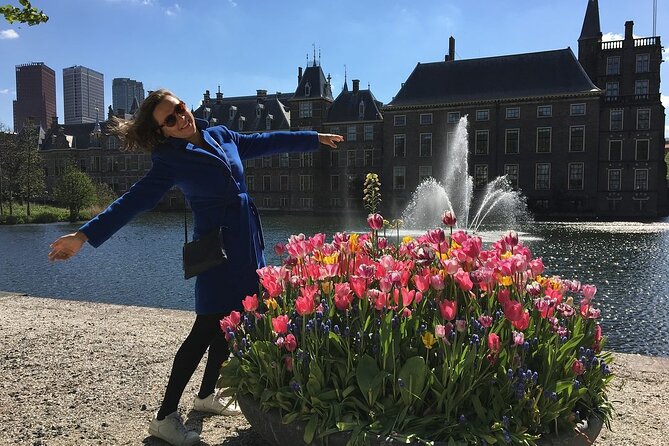
De Passage offers a different chapter. It is described as the first place in the Netherlands where shopping in the modern sense took shape, with a design inspired by Parisian architecture.
The arcade is useful for understanding the nineteenth-century city. Here, commerce became part of a planned public experience. People were not simply buying an item from a roadside shop. They were walking through a designed setting intended to make shopping feel social and stylish.
This is also one of the easier stops in poor weather because the architecture gives you some shelter. Still, the tour remains a walking experience, and you should not assume the entire route is indoors.
Look above the shopfronts as you pass through. The appeal is not only what is being sold today, but the proportion, decoration, and sense of theatrical design. The guide’s interpretation matters because the arcade can otherwise seem like a pleasant passageway rather than a turning point in urban life.
The stop also reinforces the tour’s broad range. In one afternoon you move from government and royalty to hospitality and retail. That variety is a real strength for anyone who wants an overview rather than a narrow architectural lecture.
The 183-centimeter house on Lange Voorhout
The smallest house in The Hague is easy to miss, which is precisely why it works so well on this route. At only 183 centimeters wide, it demands a careful look rather than a grand entrance.
Do not expect a major museum or a long interior visit. The attraction is the oddity of the building and the story attached to its place in the city. It gives you a pause from official monuments and grand façades, showing how unusual architecture can survive in a busy center.
This is also where a guide earns the fee. Alone, you might walk past without noticing the narrow frontage. With someone pointing it out and explaining its context, a small detail becomes part of your mental map of The Hague.
The tour description warns you to be careful not to miss it, and that is practical advice. Keep your eyes at street level as well as on the larger buildings. The route’s smaller discoveries are among its most appealing features.
Hotel Des Indes and The Hague’s grand side
Hotel Des Indes supplies the walk’s strongest display of luxury. The hotel presents a very different picture from the modest idea some people have of the Netherlands. Here, The Hague shows its aristocratic and wealthy side with polished design and a confident sense of style.
The point is not simply that the hotel looks expensive. It helps explain why The Hague developed a reputation as a royal and diplomatic city. Grand hotels serve people who arrive for government, court life, business, and public events. Their design tells you who the city expected to welcome.
You will likely spend time outside, hearing about the building and its place in local life. There is no hotel meal or drink included, so consider the stop an architectural and historical visit rather than a dining break.
Placed late in the route, Hotel Des Indes works as a visual contrast with the tiny house and the old inn. The city can be intimate and grand within a few minutes’ walk. That tension is one of the most memorable things about central The Hague.
Ending at Noordeinde Palace
The walk finishes at Noordeinde Palace, at Noordeinde 68. The palace remains closely tied to the city’s royal identity, and its position in the center makes the ending feel appropriate.
You are not promised admission to the palace, so think of this as an exterior conclusion and a useful place to continue exploring on your own. The end point also connects the tour’s opening themes with its final destination: royal life, public power, and the streets of present-day The Hague.
The route’s wider description also refers to innovation, modern architecture, and street art. The six named stops lean most heavily toward royal, historic, and architectural subjects, but the guide may use the spaces between them to discuss the city’s newer face. If contemporary design or street art is your main interest, ask about that focus when arranging the tour.
What the price means in practical terms
At $254.50 per person, this is not an inexpensive introduction to The Hague. Your payment covers the guide, but not drinks, snacks, alcohol, or admission fees. The listed stops themselves are presented without admission charges, so you are paying mainly for private interpretation and the time spent with the guide.
That can be worthwhile for the right kind of day. You receive a route built around details that are easy to overlook, including the narrowest house, the political office, and the old inn. A private guide can also answer questions in a way a self-guided walk cannot.
The price is harder to justify if you simply want to see the main sights from outside. You could walk through the center independently and visit many public areas at no charge. The tour makes more sense if you value stories, context, local anecdotes, and a flexible conversation over a low-cost checklist.
Group discounts are available, though the amount is not specified. Since only your group participates, compare the final total with the number of people in your party before booking. A larger private group may find the per-person value more comfortable than a solo participant.
Who will enjoy this route most
I would choose this experience if you are visiting The Hague for the first time and want a strong orientation to the center. It suits people who enjoy history but do not want three hours inside a museum.
It also works for architecture fans. You will see medieval government buildings, nineteenth-century commercial design, a narrow house, a grand hotel, royal surroundings, and references to newer city design. The route gives you variety instead of one fixed period.
The private format suits families, friends, and couples who want to ask questions without a large group. Most people can participate, and the start is near public transportation. Comfortable shoes remain a sensible choice because the experience is built around walking.
One point deserves attention: the guide’s focus includes modern life, not only Dutch history. One past experience raised frustration about discussion of the war in Ukraine, while the provider’s response made clear that present-day events can form part of its wider cultural and political conversations. If you prefer a strictly historic tour, make your preferred focus clear in advance.
Weather, timing, and simple planning advice
The walk lasts approximately three hours and 30 minutes, with around 30 minutes assigned to each of the six principal stops. The timing gives you room to listen, look closely, and move through the city without an exhausting full-day commitment.
The experience runs outdoors for much of its route. A poor-weather day should not automatically stop you, but rain can affect your enjoyment, especially between the indoor or sheltered portions. Bring suitable clothing and plan your own refreshment stop if needed.
The starting point is Starbucks, Kon. Julianalaan 10 to 15, 2595 AA Den Haag. The final point is Noordeinde Palace, Noordeinde 68, 2514 GL Den Haag. Confirmation is provided at booking, and the meeting area is near public transportation.
Free cancellation is available if you cancel at least 24 hours before the local start time. Changes or cancellations inside that window are not accepted for a refund. Keep that deadline in mind before committing your schedule.
Should you book Your Own Hague?
Book it if you want a private, story-led introduction that connects royal life, Dutch politics, old hospitality, shopping history, and unusual architecture. The strongest moments are likely to be the details you would miss alone, especially the 183-centimeter house and the political setting around the Torentje.
Skip it if $254.50 per person feels too high for a mostly outdoor walk or if you want extensive interior access. The tour does not include food or drinks, and the published stops are free rather than ticketed attractions.
For a first visit, I see the best value in using this as your city orientation. Start with the walk, note the places you want to revisit, then spend another day exploring The Hague’s museums, modern buildings, street art, or surrounding towns at your own pace.
FAQ
Where does the tour begin?
It begins at Starbucks, Kon. Julianalaan 10 to 15, 2595 AA Den Haag, Netherlands.
Where does the tour end?
The walk ends at Noordeinde Palace, Noordeinde 68, 2514 GL Den Haag, Netherlands.
How long does the experience last?
The tour lasts approximately three hours and 30 minutes.
How much does the tour cost?
The stated price is $254.50 per person.
Is this a private tour?
Yes. Only your group participates in the activity.
Is a guide included?
Yes. A guide is included.
Are food and drinks included?
No. Coffee, tea, snacks, and alcoholic beverages are not included.
Are admission tickets included?
The tour information lists admission as free at the named stops. No separate paid admission is included.
Is the tour near public transportation?
Yes. The meeting point is near public transportation.
Can I cancel for a full refund?
Yes, if you cancel at least 24 hours before the experience start time. Cancellations or changes made less than 24 hours before the start are not accepted for a refund.
Just added around The Hague
- Private Tour of Rotterdam and The Hague including Transfer★ 5.0 · 3 reviews
- Private Tour of The Hague, Delft and Rotterdam with Lunch★ 5.0 · 3 reviews
- Discover Historical Delft with an Audio Guide★ 5.0 · 3 reviews
- The Hague Self-Guided Audio Tour★ 5.0 · 3 reviews
- 3 Course Walking Dinner in Delft with Guided Tours in Between★ 5.0 · 3 reviews
- Surprise Walk of The Hague with a Local★ 4.5 · 3 reviews
- Surfing at The Shore in The Hague★ 4.5 · 3 reviews
- Private Tour of Vermeer’s Delft + Tickets to Vermeer Museum★ 5.0 · 3 reviews
The Hague Tours, compared.

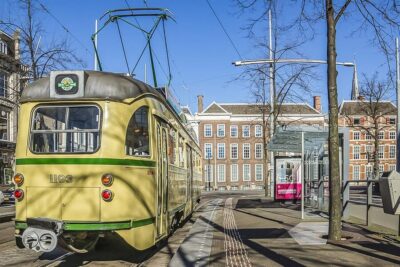
Hop-on Hop-off Old-Fashioned Heritage Tram Tour
Read our review →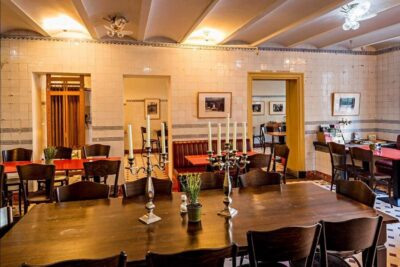
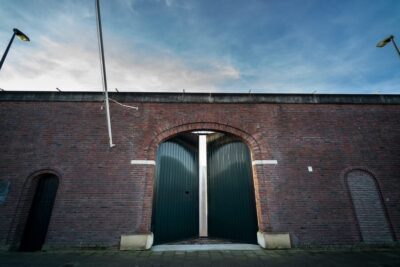
Oranjehotel World War II Prison Entrance Ticket
Read our review →
Browse the lists this tour appears in