
Reviewed · UTRECHT TOURS
Utrecht Historic City: a Self-Guided Augmented Reality Tour
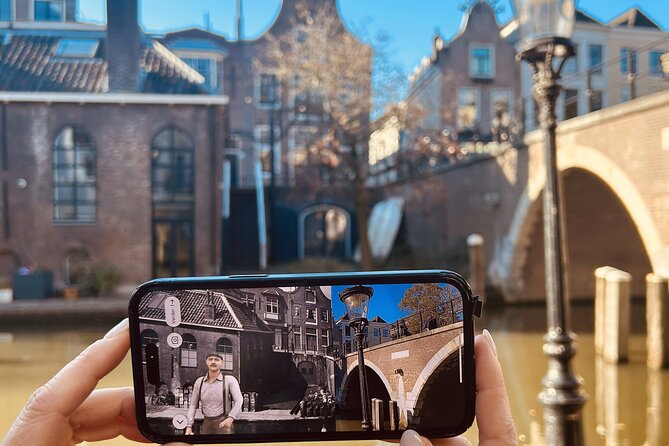
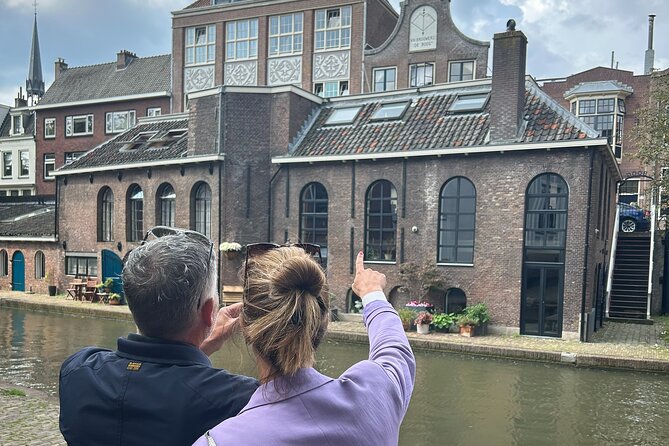
Utrecht’s past appears on your phone as you walk. At Domplein, you can compare the city today with historical footage, while at Pandhof Sinte Marie, life-sized virtual nuns help explain monastic life. It is a clever way to connect old stories with the exact streets, churches, and squares around you.
I like the freedom to pause, since you can stop for coffee, lunch, or a shop without losing a live guide. I also like the low $12 price, private access for your own group, and the mix of audio, video, augmented reality, and virtual reality. The main consideration is that you supply the phone, headphones, battery, and internet connection, so the experience depends on your technology working well.
Key points at a glance

- Eleven Utrecht stops: The route begins and ends at Domplein and covers squares, canalside wharves, churches, gardens, and old neighborhoods.
- Historical scenes on location: Audio, video, AR, and virtual content connect past events with the buildings and streets in front of you.
- Flexible two-hour format: You set the pace and can pause for food, coffee, shopping, or a rest.
- Private for your group: You do not join a larger walking group or follow a guide’s fixed timetable.
- Walking or cycling option: The experience is designed for a walking route and is also available as a cycling route.
- Bring your own setup: You need a mobile device, headphones, internet for the app download, and a well-charged battery.
What this Utrecht AR tour is really like
This is not a standard audio walk with a voice telling you to turn left and look right. The app adds visual material to Utrecht’s streets, letting you see earlier versions of places you are standing in now. Historical footage and virtual figures are used to make the past easier to picture.
The tour takes about two hours, though the flexible format means your actual outing can be longer. The eleven stops are each planned for about ten minutes, with walking time between them. You follow Google Maps support from Domplein, listen through your own headphones, and decide when to move on.
The tour is private, so your group can keep its own rhythm. That matters in Utrecht, where a small square, a café break, or an interesting shop can easily interrupt a tightly scheduled walking tour. Here, stopping is part of the design rather than a problem.
The app is offered in English. You should download or access it with an internet connection before setting out, since internet access is not included. Wireless earbuds are a sensible choice, and sharing one earbud each can help couples or friends stay aware of bicycles and other street sounds.
More history tours in Utrecht:
- Historical Utrecht: Private Walking Tour with a Local Guide
★ 4.6 · 3 reviews - Amsterdam Food and Cultural Tour with Tastings
★ 5.0 · 2,442 reviews - Rotterdam: Kinderdijk UNESCO World Heritage Entry Ticket
★ 4.6 · 1,477 reviews
Starting at Domplein, Utrecht’s great reference point
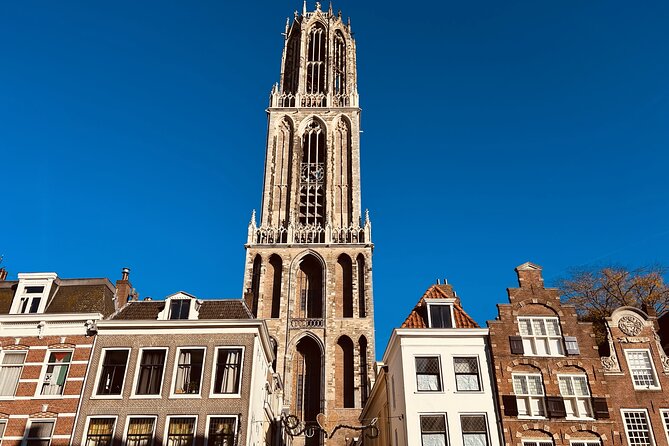
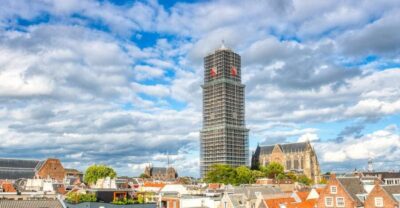
Begin at Domplein, the central meeting point and one of the easiest places in Utrecht to orient yourself. The first ten-minute stop looks at the Dom and the square around it, introducing the city through its most recognizable landmark.
The free admission here does not mean there is nothing to learn. The AR format gives the square a before-and-after quality, helping you picture how the Dom area changed over time. It is a good opening because you start with a major place rather than a minor detail.
The tour returns to Domplein at the end for a second segment about the Dom’s five years of renovation. That bookend structure is useful. You begin with the monument’s past, walk through a selection of Utrecht stories, then return to think about the building’s more recent care and repair.
Give yourself a moment to locate the starting point before opening the app. Domplein can be busy with pedestrians, bicycles, and people heading to nearby sights. The tour is self-guided, so there is no staff member waiting to gather your group.
De Werfkelder and Utrecht’s lower-level streets
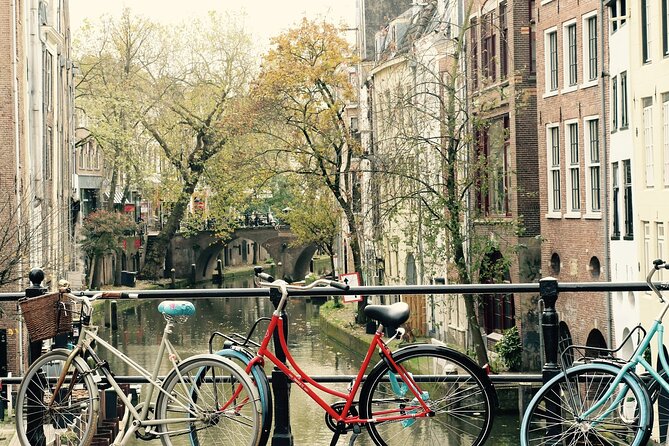
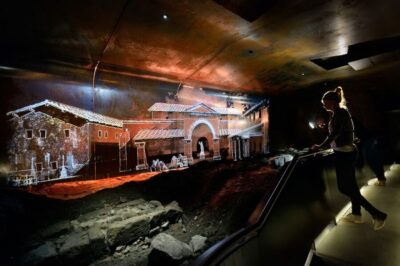
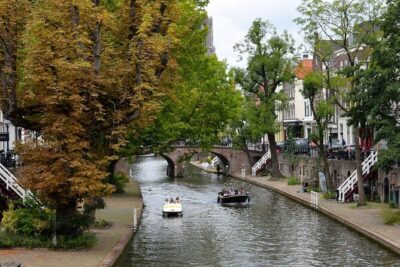
At De Werfkelder, the story moves below street level. These medieval wharf cellars are one of Utrecht’s most distinctive urban features, and the tour presents them as a medieval wonder beneath the city.
This stop is valuable because it shows how Utrecht’s waterways shaped daily life and building design. Rather than seeing only a pretty canal, you get a clue to the practical spaces built beside and below it. The virtual material can help you picture how these lower rooms functioned in earlier times.
The route gives this stop about ten minutes. That is enough for the explanation and some looking around, but it is not a long architectural study. If the wharf area catches your attention, you can pause the app and take more time without being rushed by a group leader.
The Seven Little Streets and ordinary Utrecht life
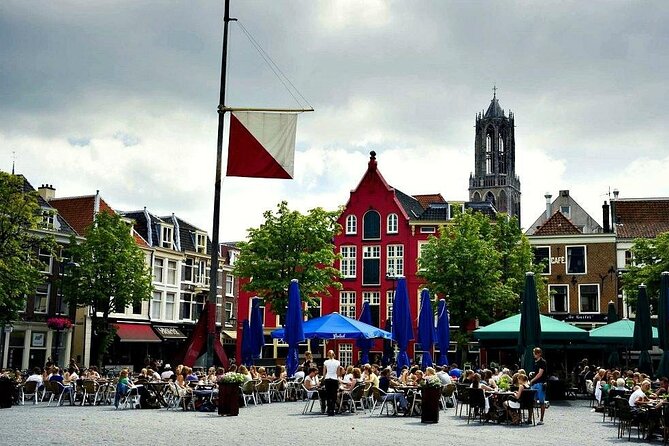
De Zeven Steegjes van Utrecht shifts the focus from famous monuments to a folksy neighborhood. The title refers to seven small streets, and this stop looks at local life rather than grand civic power.
I appreciate this kind of pause in a city tour. Big churches and old squares tell only part of a city’s story. Small streets show how homes, neighbors, and working communities shaped Utrecht day by day.
The AR presentation gives you a way to connect the present neighborhood with its earlier character. Do not expect an entrance attraction or a formal museum here. The point is to notice the setting around you and let the app supply context.
Because the route is private and self-paced, you can move quietly through the area and avoid turning the stop into a large group event. Keep your volume at a level that lets you remain aware of the surroundings.
A few more Utrecht trips worth a look
- Discover Utrecht with a self-guided Outside Escape city game tour
★ 4.5 · 51 reviews - Utrecht Scavenger Hunt and Highlights Self Guided Audio Tour
★ 4.0 · 10 reviews - Castles, Canals and Good Folk: A Self-Guided Audio Tour of Utrecht
★ 4.0 · 9 reviews - Uniquely Utrecht: An Audio Tour of its Charming City Centre
★ 5.0 · 4 reviews
Geertebolwerk, from defense to refuge
At Geertebolwerk, the tour explains Karel V and the site’s use as a place of refuge, both in the past and in the present. This is one of the stops where a familiar piece of the city can gain a second meaning through the digital story.
The location connects Utrecht’s defensive past with later human use. That contrast gives the stop more depth than a simple list of dates. Look around before starting the audio, then use the visual content to match the story to the physical place.
Ten minutes may feel short if you enjoy historical background, but the app is easy to pause. You can also continue at your own speed and return to a detail later if the program allows it. The supplied information does not specify how long your app access lasts, so treat the tour as an outing to complete while your setup is ready.
Pandhof Sinte Marie and monastic life
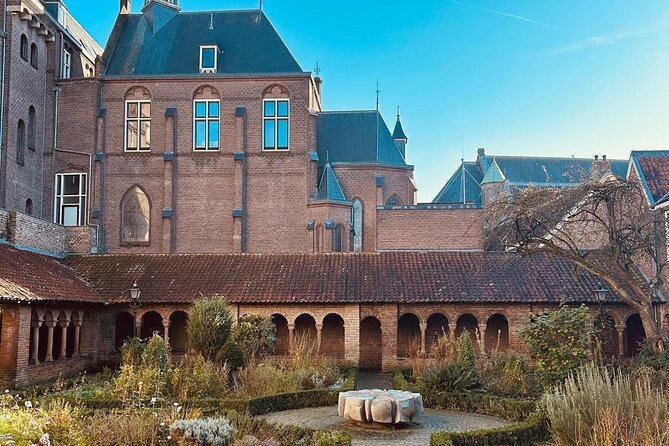
Pandhof Sinte Marie offers one of the tour’s more unusual visual moments. The stop explores Sinte Marie and monastic life, using virtual figures, including life-sized nuns, to make the past feel present in the garden.
This is where AR can do something a printed guide cannot. A paragraph can describe a convent community, but a life-sized digital figure gives you a stronger sense of people occupying the same space. It is still a digital reconstruction, not a live historical performance, but it can make the setting easier to understand.
Gardens also reward a slower pace. You may want to finish the audio, look carefully around the courtyard, and then move on rather than racing through the ten-minute estimate. The tour does not include an entrance fee for this stop, though any separate fee at a site requiring admission is not included in the $12 price.
Zadelstraat and the pleasure of a small mystery
Zadelstraat brings a little puzzle-like energy to the route. The tour calls it a mystery, suggesting a story built around a street that many people might pass without examining closely.
That approach is one of the best reasons to choose a self-guided city tour. You are not only collecting major landmarks. You are learning to look at street names, façades, corners, and small clues that can be easy to miss when you move from one headline sight to another.
The stop lasts about ten minutes, but the surrounding shopping area gives you a natural reason to linger. This is also a good place to take a break if something catches your eye. Since the tour has no fixed departure time, you do not have to choose between following the story and browsing the street.
Janskerk and two centuries of flower-market tradition
At Janskerk, the story turns to two centuries of flower markets at Janskerkhof. The topic links an important church and square with a long-running part of Utrecht’s commercial and social life.
This stop should appeal to you if you like history grounded in routine. Markets explain how a public square worked, who used it, and why a place mattered beyond its architecture. The audio and video format can add scenes and details that are difficult to imagine from stone buildings alone.
As with the other stops, no admission ticket is included or required for the listed stop itself. You are exploring public locations from outside unless the app directs you to a place where a separate entrance applies. The supplied details do not promise interior access to Janskerk, so plan on this as an exterior city stop.
Neude, from marshland to city square
Neude provides a larger urban story. The stop traces the area from marsh to modern city square, showing how Utrecht expanded and changed as land was used for public life.
I like the scale of this explanation. Instead of treating the square as a finished product, the tour asks you to picture the earlier ground beneath it and the stages that produced the city you see today. AR is especially useful here because a changing open area can be hard to understand from one modern viewpoint.
The square is also a sensible midpoint or pause point, depending on your walking speed. You can stop for a drink or meal and then resume the route. The tour’s flexibility is most useful at places such as this, where you may want time to sit rather than listen while standing.
Sint Willibrordkerk and a quieter church stop
Sint Willibrordkerk is presented as a less obvious church worth finding. The route gives you a reason to look beyond Utrecht’s best-known religious buildings and consider a site you might otherwise pass.
The stop’s value lies in the contrast. You have already heard about the Dom, monastic life, and Janskerk. Sint Willibrordkerk adds another religious setting, allowing you to compare the city’s different layers of church history and architecture.
The available information does not state that the tour includes entry inside the church. Do not assume that it does. The $12 covers private access to the digital tour, while entrance fees are excluded wherever they are necessary.
Paushuize and Pope Adrian’s Utrecht connection
At Paushuize, the app tells the story of Pope Adrian and the building associated with him. This stop adds a personal and political thread to the route, moving from general city development to the life of a major religious figure.
The name alone may not explain the site, which is why a short digital narrative can be useful. You get the context while standing at the location instead of reading about it later in a hotel room. Historical footage and visual material can also make the connection easier to follow.
This is another stop where you should listen first, then spend a few minutes looking at the building and its surroundings. The ten-minute estimate is a guide, not a deadline. You can keep the walk efficient, or slow it down if this period of Utrecht’s past interests you.
Returning to the Dom after five years of renovation
The final stop returns you to Domplein, focusing on the Dom’s five years of renovation. Ending at the starting point makes the route simple to manage, especially if you arrived by public transport or plan to continue exploring from the square.
The renovation story gives the tour a present-day link. Utrecht is not treated as a museum frozen in the past. Historic buildings need work, decisions, and money, and the final stop brings that practical side into view.
At this point, you can decide whether to keep exploring independently. The listed experience ends back at Domplein, so transport, food, and any further sightseeing are your responsibility.
Why the $12 price can be good value
At $12 per person, this is inexpensive for a private activity, especially for a couple, family, or small group that would otherwise pay for several individual audio guides. You are paying for the app content and access to the AR experience, not for a live guide, transport, or admission to paid sights.
The value depends on how much you use the digital features. If you only want a map and a few short facts, a free city walk may meet your needs. If you enjoy seeing historical footage at the exact place where events happened, or using virtual figures to picture earlier life, the additional visual layer makes the price easier to justify.
Group discounts are available, though the exact savings are not provided. This may make the tour particularly practical for colleagues, families, or friends traveling together. Since the activity is private, you can also split your attention between the story and your group rather than keeping up with strangers.
The published rating is 4.7 from seven ratings. That is encouraging, but it is still a small sample. I would use the rating as one signal, then make the decision based on your interest in AR and your readiness to manage the technology yourself.
Practical tips for a smoother two-hour walk
Charge your phone fully before leaving. The app uses navigation, audio, video, and AR, all of which can use more battery than ordinary map reading.
Bring headphones, preferably wireless earbuds. The audio is easier to follow in a city setting, and two people can each use one earbud. Keep one ear open if you are walking near bicycle traffic.
Download the app with a reliable internet connection before you start. Internet access is not included, and the tour requires your own mobile device. A weak connection or low battery can turn a simple self-guided walk into a technical chore.
Wear shoes suited to a city walk. The listed walking time is about two hours, and the route includes streets, squares, a canalside wharf area, and smaller passages. The experience can also be done by bicycle, but the information does not specify bicycle rental or bike equipment.
The listed operating period runs from October 22, 2024, through February 7, 2027, with access every day from 9:00 a.m. to 11:30 p.m. That broad window gives you room to avoid the busiest part of your day or schedule the walk after another activity.
The tour is near public transportation, allows service animals, and is suitable for most people. It is not a guided accessibility assessment, so if you need specific information about surfaces, steps, or access into individual buildings, confirm those details before booking.
Free cancellation is available if you cancel at least 24 hours before the local start time. Cancellations or changes made less than 24 hours before the start are not refunded or accepted.
Who should book this Utrecht experience
I would choose this tour if you like history but do not want to spend two hours in a fixed group. It suits couples, families, friends, colleagues, and solo explorers who are comfortable using a phone while walking.
It is also a good choice if you already know Utrecht. The route reaches familiar places from less familiar angles, and the stories about neighborhoods, markets, renovation, and monastic life can add something beyond the usual Dom visit.
You should think twice if you want a live guide who can answer questions, adjust the story to your interests, or handle every practical detail. You should also skip it if you do not want to carry and operate a phone, use headphones, download an app, or depend on a battery and internet connection.
Should you book it?
Book it if flexibility and visual history matter more to you than personal conversation with a guide. For $12, you get an affordable private route through eleven Utrecht locations, with plenty of freedom to stop for coffee, lunch, shopping, or photographs.
The strongest reason to choose it is the way the AR material connects old scenes to real places. The main weakness is just as clear: the experience works only as well as your phone, headphones, connection, and battery. Prepare those before you leave, and this is a smart, modern way to get oriented in Utrecht without surrendering control of your afternoon.
FAQ
How long does the Utrecht AR tour take?
The experience takes approximately two hours. Each of the eleven stops is planned for about ten minutes, not including the time you spend walking between them or taking breaks.
Where does the tour begin and end?
It begins at Domplein, 3512 JE Utrecht, Netherlands, and ends back at Domplein.
Is the tour guided by a person?
No. It is a self-guided experience accessed through an app. You follow Google Maps support and listen to the audio and video storytelling at your own pace.
What language is available?
The tour is offered in English.
What do I need to bring?
You need your own mobile device and headphones. You also need an internet connection to download the app and should bring a charged phone battery for the AR, audio, video, and navigation features.
Can I take breaks during the tour?
Yes. The self-guided format lets you pause for coffee, lunch, shopping, or other stops and continue when you are ready.
Can the route be done by bicycle?
Yes. The experience is available as a walking or cycling route. Transportation and bicycle rental are not included.
What is the cancellation policy?
You can cancel for a full refund up to 24 hours before the experience’s start time. Cancellations or changes made less than 24 hours before the local start time are not accepted or refunded.
Just added around Utrecht
- Historical Utrecht: Private Walking Tour with a Local Guide★ 4.6 · 3 reviews
- Utrecht: Hoge Woerd Museum Entry Ticket with Audio Tour★ 3.3 · 3 reviews
- Walking Tour Utrecht with a local comedian as guide★ 4.8 · 4 reviews
- Uniquely Utrecht: An Audio Tour of its Charming City Centre★ 5.0 · 4 reviews
- Utrecht Walking Tour with a local comedian as guide★ 4.8 · 5 reviews
- Vecht River: Private Tour sightseeing Cruise with diner★ 5.0 · 5 reviews
- Utrecht Small Public Walking Tour★ 5.0 · 6 reviews
- Utrecht – Food Tour: Try out 6 dutch bites★ 4.5 · 6 reviews
Utrecht Tours, compared.
Utrecht 2-Hour Walking Tour | Discover The City With A Local
Read our review →

Browse the lists this tour appears in