
Reviewed · UTRECHT TOURS
Utrecht: DOMunder Entry Ticket with Guide
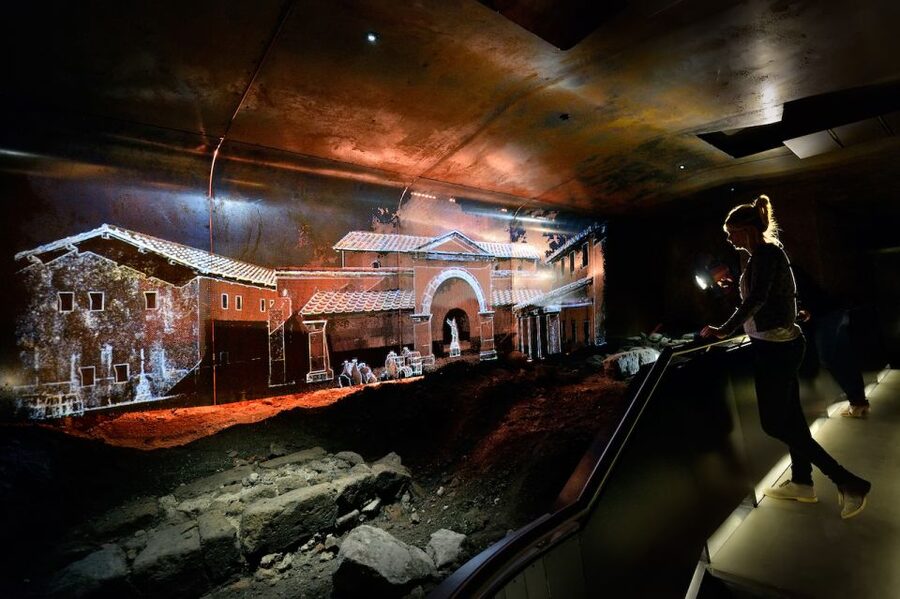
Beneath Utrecht’s neat, historic Dom Square lies a far older city. At DOMunder, you climb below street level and use a smart flashlight to inspect Roman stones, medieval remains, and traces of the buildings that once filled this open space. It is history you can point at, touch, and follow in the dark.
I especially like the time-sequence storytelling, which links Roman Trajectum to the Middle Ages and then to the 1674 storm. I also like the flashlight system: instead of standing in front of a case, you move through the ruins and trigger short explanations at your own pace.
The main consideration is the 75-minute limit. The opening talk gives useful context, but some people may want more time underground. The route also involves going below ground and is not suitable for wheelchair users.
Key points to know before you go
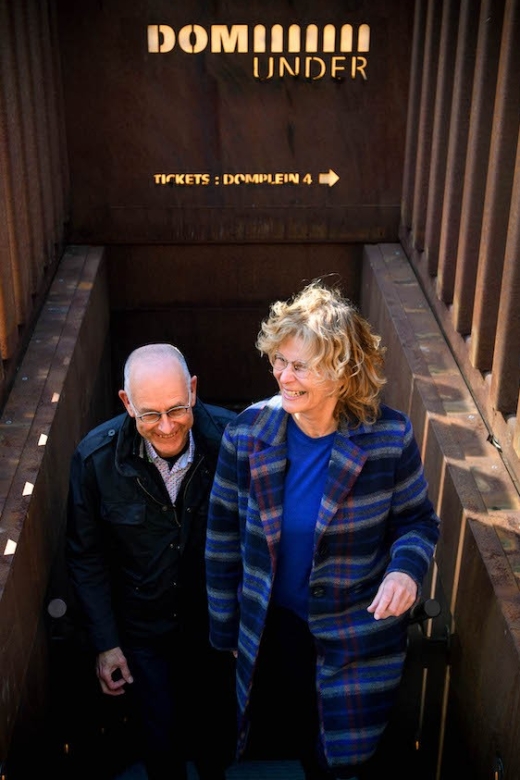
- Roman stones beneath Dom Square: See some of Utrecht’s oldest surviving remains and learn about the city’s Roman origins.
- A flashlight that tells the story: Point the smart torch around the excavation to activate information and short audio sections.
- A guide-led introduction: English and Dutch guides explain the setting before you explore the underground section.
- The 1674 storm brought to life: Videos and reconstructions show how the Dom Church nave collapsed and created today’s square.
- A tactile experience: You may see construction details, recovered stonework, and tiny ancient paw prints.
- Good value at $17: The mix of live guiding, technology, and archaeological remains gives you more than a standard museum visit.
Why DOMunder is different from a normal museum
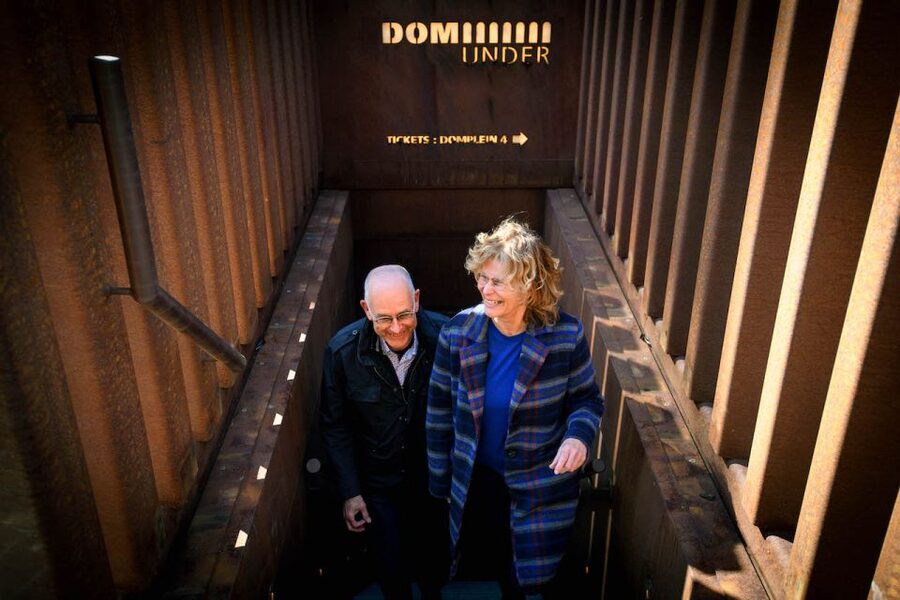
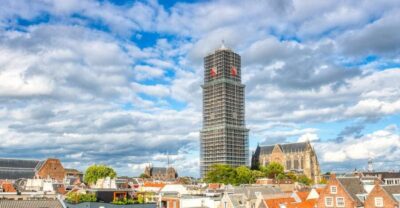
Utrecht’s Domplein looks like a handsome city square, but it also marks the center of the city’s long story. Above ground, the Dom Tower and Dom Church tell part of that story. Below ground, DOMunder lets you see the layers beneath the paving.
That physical change matters. You are not simply looking at an object behind glass and reading a date. You are standing among foundations and stones from different periods, with the modern square directly overhead. The setting makes the history easier to picture.
The attraction covers roughly 2,000 years, but it does not treat the past as one long list of names and dates. The guide connects the Roman settlement, the city’s medieval importance, the changing buildings around Domplein, and the disaster that reshaped the square.
At $17 per person, this is a reasonable price for a 75-minute activity in central Utrecht. You receive admission and a guide, plus the interactive flashlight and audio system used underground. If you have already visited the Dom Tower, DOMunder gives you a useful second angle. The tower shows Utrecht from above. This experience shows you what lies below.
A few more Utrecht trips worth a look
- Utrecht: City Canal Cruise
★ 4.3 · 2,895 reviews - Utrecht: De Haar Castle & Park Entry Ticket
★ 4.7 · 1,350 reviews - Utrecht: Dom Tower Entry Ticket and Guided Tour
★ 4.6 · 513 reviews
Starting at Domplein 9
Your meeting point is the Tourist Information Centre at Domplein 9. Scan your ticket at the desk there before the tour begins. This is worth handling early because the excavation area and the ticket desk can look like separate parts of the attraction.
The first part takes place above ground, where your guide sets the scene. Guides speak English or Dutch, and the tour also includes English or Dutch audio. The introductory talk is an important part of the visit, not filler before the real activity begins.
It explains what you are about to see and helps you place the remains in time. Without that background, a wall fragment or foundation can seem like just another old stone. With it, you can understand how the site changed from the Roman period through the Middle Ages and into the modern city.
The guides bring different personalities to the experience. Christine has been praised for explaining the area from Roman times through the 1674 disaster. Stefan has been described as patient and clear, while Joanna used maps and visual material to make the story of the Dom area easier to follow. These details matter because the guide shapes the first half of the visit.
A small-group setting can make this opening more personal. One tour had only three people, with two guides accompanying the group. You should not assume every departure will be that small, but the format allows room for questions and direct interaction.
Roman Trajectum beneath the modern city
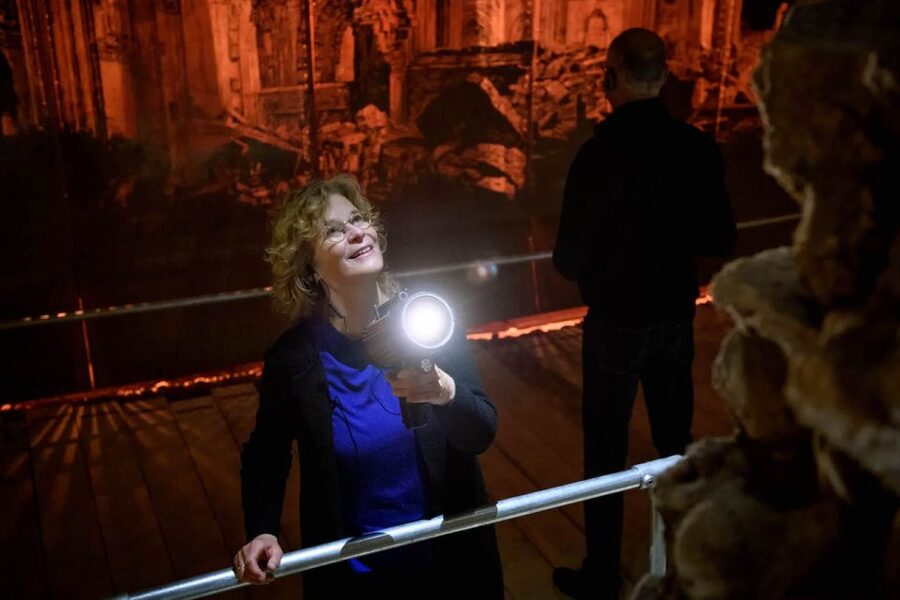
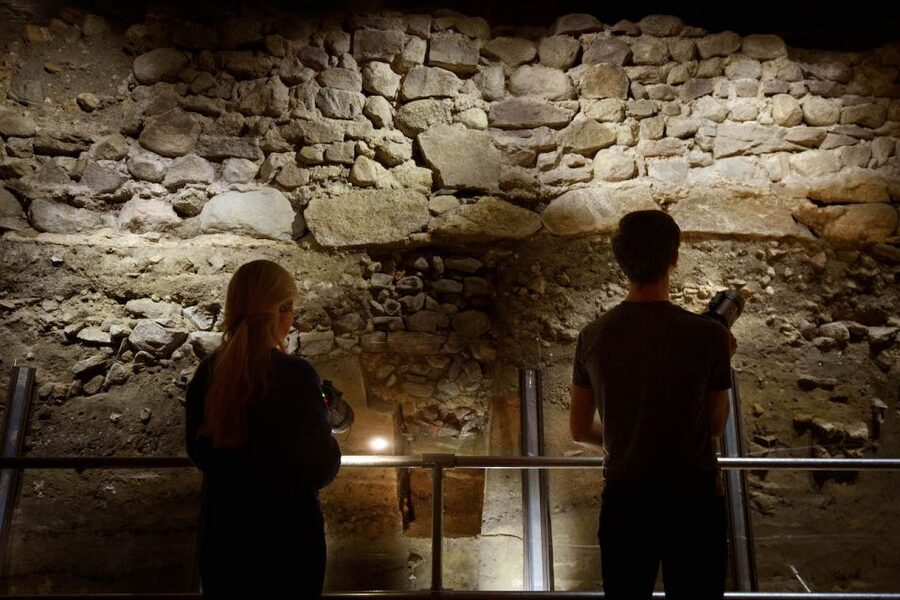
The underground section begins after you go below Domplein. You receive a smart flashlight and an earpiece, then explore the excavation area while listening to short explanations linked to what you are seeing.
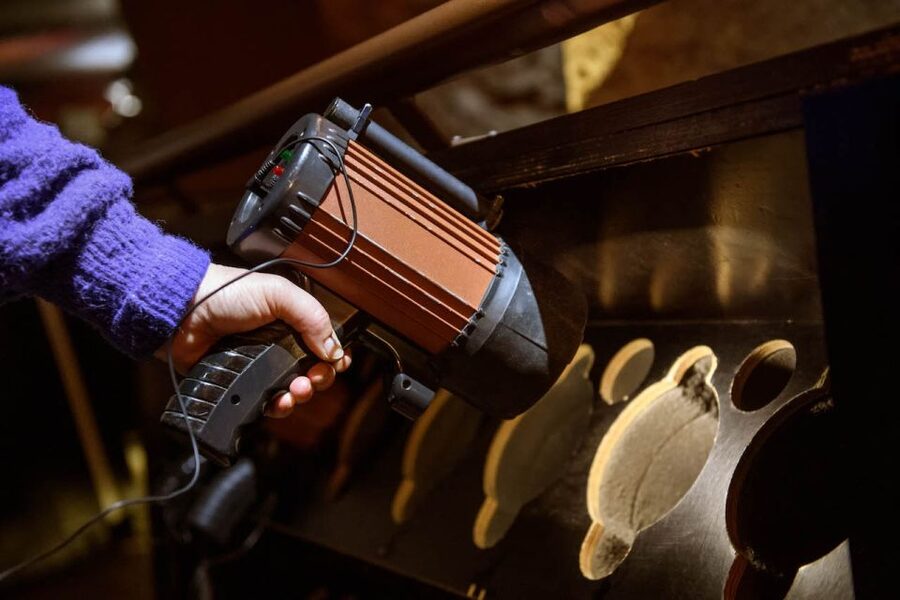
This is the clever part of DOMunder. The flashlight is not only for seeing in the dim space. Point it toward selected areas and it activates information about the remains. You can move at your own pace rather than waiting for a guide to finish a long explanation beside each object.
The technology also gives the site a sense of discovery without turning it into a video game. You still need to look carefully at the actual stonework and foundations. The audio simply tells you what to notice and why it matters.
The Roman section is especially effective for visitors who want a connection with Utrecht’s earliest known urban past. The attraction presents the city as part of the Roman world, often referred to as Trajectum. You can see remains that reach back about 2,000 years, including stonework that gives the past a physical presence.
One particularly striking detail is the sight of small paw prints preserved in recovered stonework. The marks are easy to miss in a conventional presentation, but here they become a reminder that ancient construction sites were working places, not polished monuments. People, animals, tools, and building materials all left traces.
You will not spend the entire 75 minutes wandering without guidance. The guide provides the larger story, and the flashlight system fills in smaller points as you move. That balance works well for people who like both a proper explanation and a little freedom to look around.
Medieval Utrecht and the buildings above you
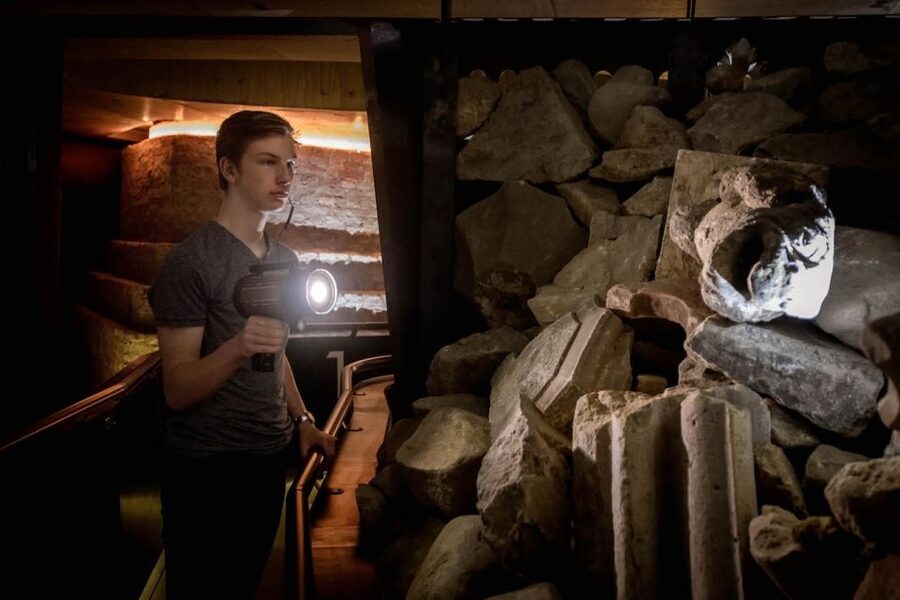
After the Roman period, the story moves into Utrecht’s medieval era. The Domplein became an important religious and civic center, and the buildings around it changed over time.
The underground remains help you see that today’s square was not always open. Foundations and fragments suggest the scale and complexity of the structures that once occupied the site. The guide explains building styles and construction methods, which adds useful detail beyond a simple account of who built what.
I find this part valuable because it gives context to the Dom Church and Dom Tower above ground. If you have climbed the tower, you have already seen Utrecht from a dramatic height. Here, you get a closer look at the built layers that supported the city’s religious center.
The presentation follows a clear time line. That approach received strong praise because it makes changes in building style and construction easier to understand. You are not expected to remember a maze of dates. The sequence helps you see cause and effect.
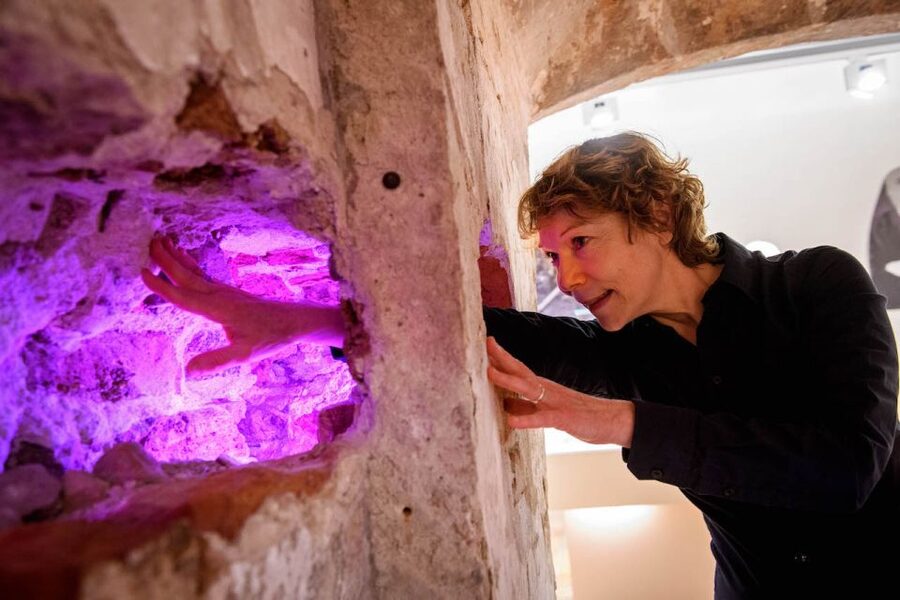
The underground route is also tactile and visual. You may be close to walls and recovered materials rather than separated from them by a large gallery floor. That does not mean you can handle every object, so follow the guide’s directions, but the setting gives the visit a more direct feel than a standard museum.
Some visitors with mild mobility issues may want to sit during the opening talk. The experience involves going underground, and it is specifically not suitable for wheelchair users. If access is a concern, check with the attraction before booking rather than relying on the fact that the tour lasts only 75 minutes.
Same country, a completely different kind of day:
- Utrecht: De Haar Castle, Park Entry Ticket
★ 4.6 · 153 reviews - Utrecht 2-Hour Walking Tour | Discover The City With A Local
★ 5.0 · 138 reviews - Utrecht: Rietveld Schröderhuis UNESCO Entry Ticket
★ 4.8 · 119 reviews - Utrecht Food Tour with local guide
★ 5.0 · 112 reviews
The 1674 storm and the making of Dom Square
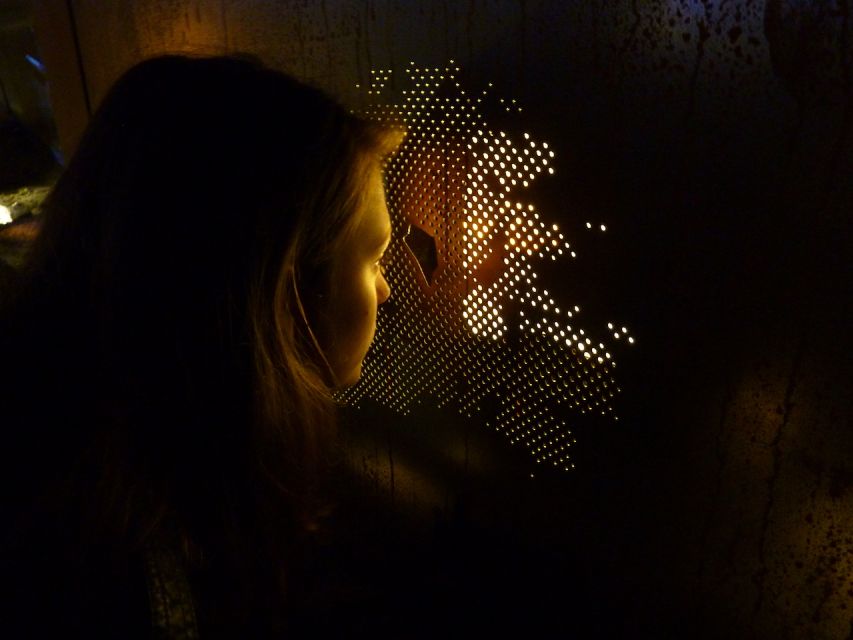
The most dramatic chapter is the storm of 1674. The storm caused the nave of the Dom Church to collapse, leaving the open area now known as Dom Square.
This event explains the unusual layout above ground. The space is not simply a planned plaza. It was shaped by a sudden disaster and the removal of what had once connected parts of the church complex.
DOMunder uses video and reconstruction to show what happened. The presentation helps you imagine the church before the collapse, then understand how the storm changed the center of Utrecht. The visual reconstruction has impressed many visitors because it turns an abstract date into a clear before-and-after scene.
One practical warning: a sound or alarm effect is used during the storm section. If you are sensitive to sudden noises, or if you are with children, it may help to explain in advance that the effect is part of the presentation. It can sound like a fire alarm at first.
The storm section is not only a dramatic ending. It ties the entire visit together. You have seen layers from the Roman era and Middle Ages, then learned why the open square above you exists. The modern view of Domplein becomes easier to read once you know what disappeared.
How the flashlight and audio system work
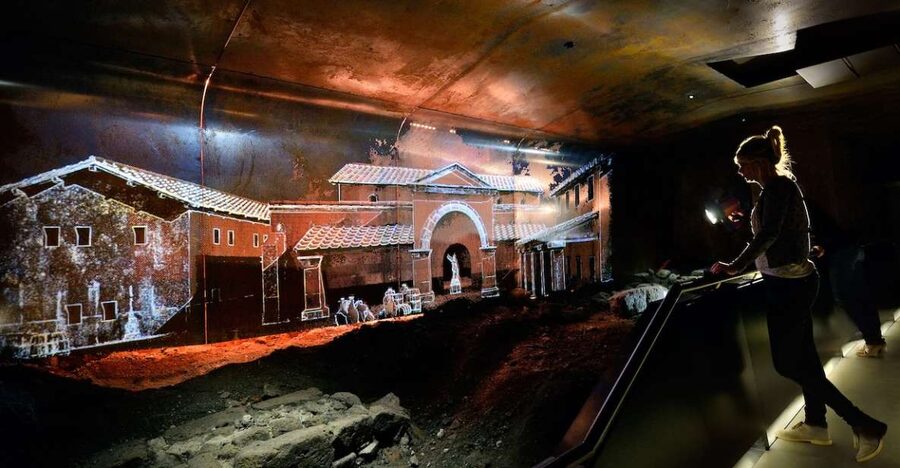
The smart flashlight is the attraction’s signature feature. You use it to locate points of interest in the excavation and trigger short information sections. An earpiece lets you hear the related material without needing to gather around one guide.
I like this setup because it gives you control. You can stop to look at a wall, move on when you are ready, and take in the information in smaller pieces. It also prevents the underground section from becoming a single crowded explanation delivered at one spot.
The system is not flawless. One person found some items difficult to activate with the flashlight. If a trigger does not work at once, ask for help rather than spending too long aiming at it. The guide is there to assist, and the experience works best when you keep moving.
The equipment also requires a little attention. You are handling the torch, listening through the earpiece, and looking at the archaeology at the same time. That is part of the fun, but it may be slightly above the level of very young children. Older children who enjoy interactive activities may find it more engaging than a quiet museum display.
The underground section is partly self-guided, but not entirely independent. You begin with a live guide and still have staff support as you move through the site. That combination suits people who want structure without being kept in one fixed group.
Timing, language, and practical comfort
The full experience lasts 75 minutes. Starting times vary, so check availability when choosing your date. The schedule makes DOMunder easy to fit around other central Utrecht sights, but allow enough time to find Domplein 9 and check in at the Tourist Information Centre.
English and Dutch are available for the live guide and audio. If you book an English departure, the guide’s personal style will affect the tone, but the format remains clear: introduction first, underground exploration afterward.
Some people may find the beginning more comfortable seated, especially if they have slight mobility issues. The most important accessibility point is firm: wheelchair users cannot take this experience.
The meeting instructions deserve attention. Signs near the excavation can lead you toward the wrong entrance, and the ticket desk is at the Tourist Information Centre. Scan your ticket there first and collect the equipment as directed. Arriving a little early should help you get your bearings.
If you are late, speak to the staff as soon as you arrive. One late arrival was still included with help from the staff, but you should not count on every departure being able to wait. The opening talk provides essential context, so missing it would weaken the visit.
Who will get the most from DOMunder
I would choose this for anyone interested in archaeology, Roman Utrecht, medieval architecture, or the history of the Dom area. It also suits visitors who prefer an active presentation to a room of labels and display cases.
Families can enjoy the flashlight element, though the amount of historical explanation may be better for older children. The storm sound effect may startle younger ones. Adults who like a clear story and hands-on technology will probably appreciate the mix.
It is a strong companion to a Dom Tower visit. The two experiences approach the same center of Utrecht from opposite directions, one looking across the city and the other looking into its foundations.
You should think twice if you want a long, quiet archaeological session. The underground time is limited, and the attraction moves between different periods. You get a well-shaped overview rather than an extended research visit.
The same applies if you dislike electronic interpretation. The remains are real, but the audio and flashlight are central to how you experience them. If you would rather listen to a guide speak continuously beside each feature, this may feel too self-directed.
Is $17 a fair price?
At $17, DOMunder offers good value if you care about Utrecht’s past and want more than a quick look at the Domplein. The ticket includes the guide, the underground entry, and the interactive equipment, so you are paying for both the archaeological setting and the presentation.
The price is easier to justify when you consider the variety. In 75 minutes, you receive a live introduction, Roman and medieval context, an interactive exploration, and a visual account of the 1674 storm. It is not simply access to an excavation.
The limitation is depth. You may leave wishing for more time underground, especially if you enjoy examining masonry and foundations at your own speed. Still, for a compact central-Utrecht activity, the format gives you a lot to take in without using half a day.
Should you book DOMunder?
Book it if you want to understand why Utrecht’s Domplein looks the way it does. The Roman remains, medieval building story, flashlight system, and 1674 storm reconstruction work together to make the square more readable.
I would particularly recommend it after, or alongside, a visit to the Dom Tower. Choose an English or Dutch departure, arrive at the Tourist Information Centre at Domplein 9, and allow time for the opening explanation. If you use a wheelchair, this is not the right choice. If you want a long archaeological visit, the 75-minute format may feel short.
For most visitors who like history presented with a little action, the $17 price is sound. You get real ruins, a lively guide, and a clear reason to look down as you walk through Utrecht.
FAQ
Where does the DOMunder tour meet?
Meet at the Tourist Information Centre at Domplein 9 in Utrecht. Scan your ticket at the desk before the tour begins.
How long does the experience last?
The tour lasts 75 minutes.
What languages are available?
The live guide and audio guide are available in English and Dutch.
Is a guide included?
Yes. The ticket includes a live guide as well as the DOMunder entry.
Is an audio guide included?
Yes. An English or Dutch audio guide is included as part of the experience.
What does the tour cover?
It covers about 2,000 years of Utrecht’s history, including the Roman past, the Middle Ages, the Domplein ruins, and the 1674 storm that caused the Dom Church nave to collapse.
What do you use underground?
You receive a smart flashlight and an earpiece. The flashlight helps activate information about features in the underground excavation.
Is the tour suitable for wheelchair users?
No. The experience is not suitable for wheelchair users.
Does the tour include the Dom Tower?
The activity information describes entry to DOMunder beneath Dom Square. It does not include Dom Tower entry.
Can I cancel for a full refund?
Yes. You can cancel up to 24 hours in advance for a full refund. You can also reserve now and pay later, keeping your travel plans flexible.
Just added around Utrecht
- Historical Utrecht: Private Walking Tour with a Local Guide★ 4.6 · 3 reviews
- Utrecht: Hoge Woerd Museum Entry Ticket with Audio Tour★ 3.3 · 3 reviews
- Walking Tour Utrecht with a local comedian as guide★ 4.8 · 4 reviews
- Uniquely Utrecht: An Audio Tour of its Charming City Centre★ 5.0 · 4 reviews
- Utrecht Walking Tour with a local comedian as guide★ 4.8 · 5 reviews
- Vecht River: Private Tour sightseeing Cruise with diner★ 5.0 · 5 reviews
- Utrecht Small Public Walking Tour★ 5.0 · 6 reviews
- Utrecht – Food Tour: Try out 6 dutch bites★ 4.5 · 6 reviews
Utrecht Tours, compared.
Utrecht 2-Hour Walking Tour | Discover The City With A Local
Read our review →

Browse the lists this tour appears in