
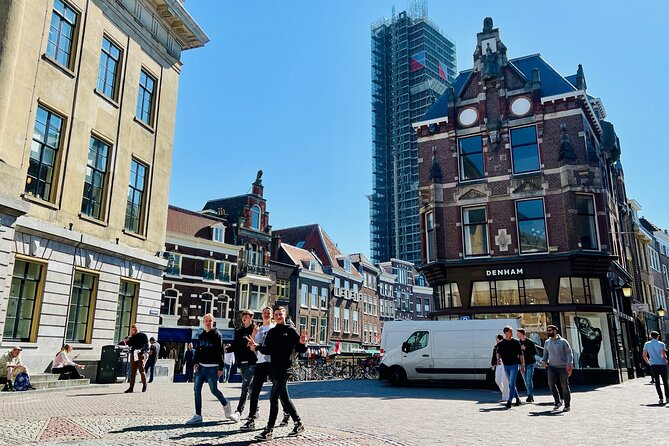
Reviewed · UTRECHT TOURS
Utrecht Small Public Walking Tour
Utrecht’s story is written below street level. Along the Oudegracht, old wharf cellars once held goods unloaded from boats. Today, many house restaurants, galleries, and shops. I like that this small-group walk connects those practical spaces with the city’s Roman beginnings and the Dom Tower, rather than treating Utrecht as a string of pretty views.
I also like the headsets, which matter on a busy street, and the chance to spend time with a guide such as Lucy, whose lively delivery and care for questions earned especially warm praise. The main consideration is pace: 90 minutes gives you a useful first look, but not a full visit to Utrecht’s monuments, and admission to the Dom Tower is not included.
Key points to know before you book
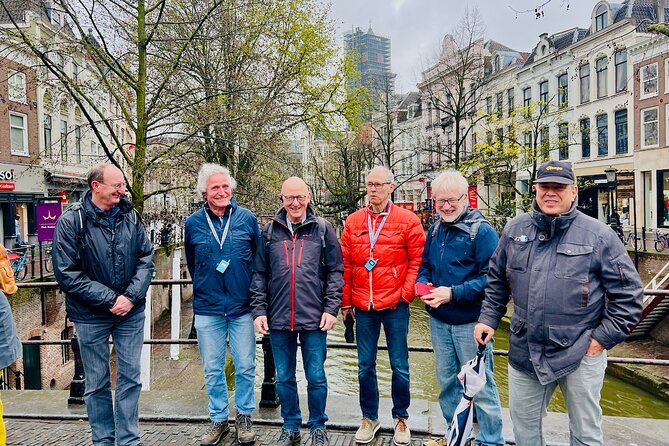
- A six-person maximum: This is a public walk with room for no more than six people, so the guide can keep the conversation personal.
- Utrecht in 90 minutes: The route gives you a clear first orientation to the old center, its canals, squares, churches, and Roman origins.
- The Oudegracht’s wharf cellars: More than 730 old storage spaces line the canals, many now used as places to eat, browse, or have a drink.
- The Dom Tower is the centerpiece: You’ll learn why the Netherlands’ tallest church tower marks the place where Utrecht began nearly 2,000 years ago.
- Headsets are provided: You can hear the guide without crowding around or missing comments on a noisy street.
- A practical starting point: The walk begins and ends at Vredenburgplein 154, making it easy to fit into a day in central Utrecht.
Why this short Utrecht walk works well
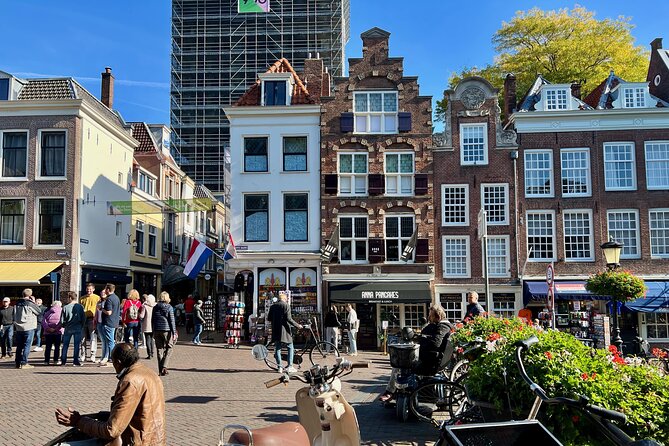
Utrecht can feel confusing at first. Its old center has canals at more than one level, bridges crossing narrow waterways, churchyards tucked behind streets, and layers of Roman, medieval, and modern life sharing the same few blocks.
That makes a guided walk useful. You are not simply looking at the Dom Tower or taking pictures along Oudegracht. You are learning why the canal has its unusual lower-level wharfs, how the city grew around an early Roman site, and why a former swamp became one of its social squares.
This is a historic and cultural orientation, not a museum tour or a tower climb. In an hour and a half, you get the city’s main framework. You can then return to the places that catch your eye, perhaps for a meal in a former wharf cellar or a closer look at the Dom Church.
The group limit is unusually helpful. With six people at most, you should be able to hear explanations, ask questions, and pause without feeling like one face in a crowd. Headsets add another layer of comfort, particularly when the guide is speaking beside a canal, near a bridge, or on a square with other activity.
More Walking Tours in Utrecht
- Utrecht 2-Hour Walking Tour | Discover The City With A Local
★ 5.0 · 138 reviews - Utrecht: Guided Highlights Walking Tour
★ 4.7 · 80 reviews - Utrecht Old Town: Medieval Monster Hunt & Walking Tour
★ 4.0 · 62 reviews
Starting at Vredenburgplein
The meeting point is Vredenburgplein 154, 3511 BG Utrecht. The walk returns to this same spot, so you do not have to work out a distant pickup point at the end.
The experience starts at a fixed time, and the group leaves on schedule. Arrive a few minutes early. Since the maximum group size is six, one late arrival can be more noticeable than on a large coach excursion.
The meeting point is near public transportation, and the tour is designed for most people who can take a 90-minute city walk. Service animals are allowed. The minimum age is 12, so families with younger children need to choose a different private walk offered by the same provider.
There is no separate transport during the experience. You are on foot for the full 1.5 hours, including normal stops and any unexpected pauses. Wear shoes that feel good on cobbled streets, and bring a rain layer. One especially praised guide, Lucy, conducted a walk in the rain and still kept the mood warm and engaged.
Following the Oudegracht below street level
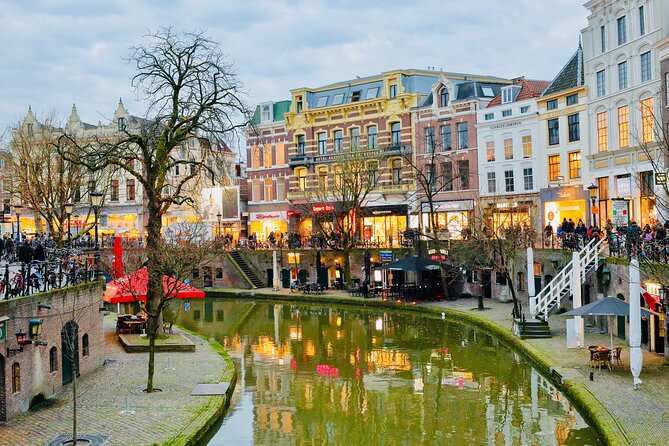
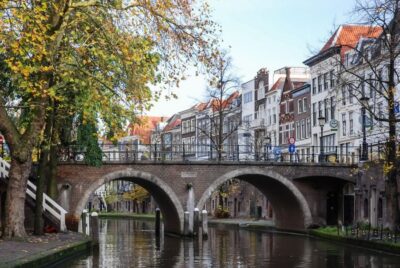
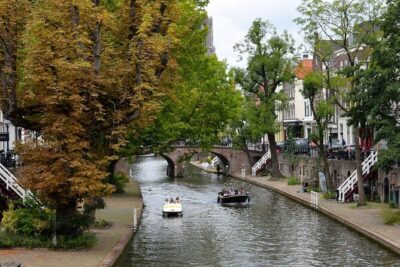
The Oudegracht is the tour’s most distinctive setting. This former moat runs about 2 kilometers from north to south through Utrecht. Its unusual design includes lower wharfs and storage cellars directly beside the water.
There are more than 730 of these wharf cellars. They were built so merchants could move goods from boats into storage without hauling everything up to street level. The oldest known example dates to about 1150, when a merchant cut a passage from a house basement to the canal bank.
That detail helps explain why the canal feels different from the grand waterways of Amsterdam. Here, the waterway is not just a scenic corridor. It was a working part of the city’s economy, with trade happening at the level of the boats and daily life continuing above.
Many old cellars now serve as restaurants, galleries, and shops. The walk does not include a meal or drink, but the guide can point out places where you might stop afterward. I like this built-in follow-up: the history is easy to continue on your own with a snack or drink beside the water.
The drawback is that the 90-minute schedule cannot give you time to explore every cellar. Think of this part as an explanation of how the canal works, paired with a look at the spaces you can revisit later. If you want to eat in one, save that for after the tour.
Crossing Maartensbrug, Utrecht’s oldest surviving bridge
The route also reaches Maartensbrug, a bridge with an unusually long connection to Utrecht’s past. It crosses the section of the Oudegracht that already existed in Roman times.
The bridge in its current form dates to 1404, making it the oldest surviving bridge in Utrecht. That combination of dates is the useful lesson here. The bridge is medieval, but it sits over a waterway with roots reaching back to the Roman period.
This is the kind of place that can be easy to pass without context. You see stone, water, and nearby buildings, but the guide helps connect the scene to the city’s longer development. A headset should make the explanation easier to follow while you are looking around rather than standing shoulder to shoulder with the guide.
Maartensbrug is also a good example of the tour’s scale. You are not stopping at only one famous monument. The route uses bridges, canals, squares, and church sites to show how Utrecht grew as a real city.
Same country, a completely different kind of day:
- Utrecht: City Canal Cruise
★ 4.3 · 2,895 reviews - Utrecht: De Haar Castle & Park Entry Ticket
★ 4.7 · 1,350 reviews - Utrecht: DOMunder Entry Ticket with Guide
★ 4.4 · 706 reviews - Utrecht: Dom Tower Entry Ticket and Guided Tour
★ 4.6 · 513 reviews
The square that rose from a swamp
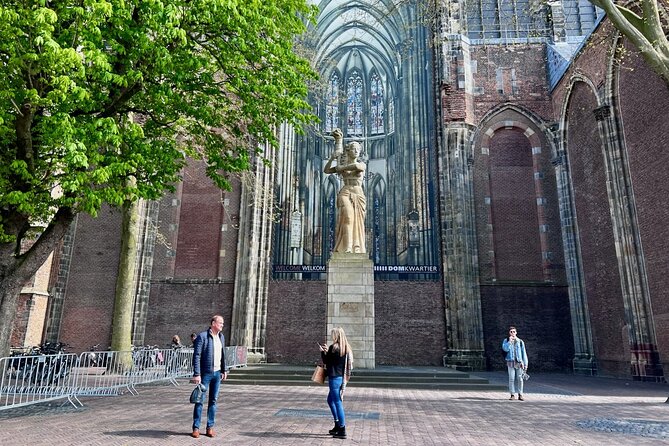
One square on the walk has a name that translates as swampy ground. Until the end of the 15th century, this area was swamp. As Utrecht needed more usable land, workers strengthened and raised it with sand, stones, and debris.
From the 15th through the 19th centuries, the square served as a market area. It also had a darker role, since executions took place there. Until the 1990s, it was used as a parking lot. Today, it is a festival square lined with cafés.
That change gives you a compact lesson in urban history. The place moved from wet ground, to market, to public punishment site, to car park, and finally to a social gathering space. You can ask the guide for recommendations if you would like to spend time there after the walk.
I appreciate that the route includes this less polished story. Utrecht is not presented as an old city frozen in time. The square shows how public spaces change with the needs and habits of the people who use them.
Meeting the Dom Tower at the city’s starting point
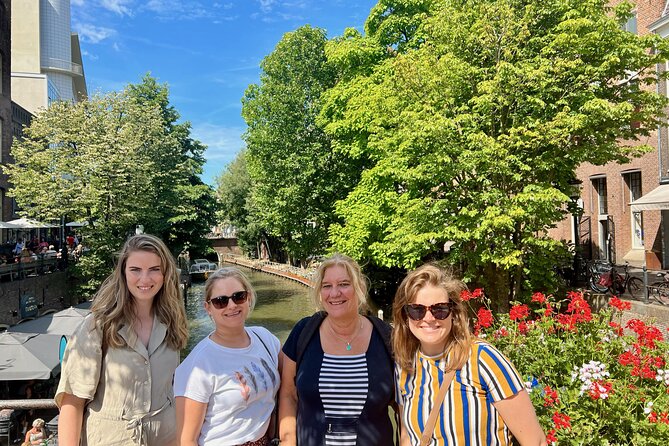
The Dom Tower receives about 30 minutes of attention, making it the main anchor of the walk. At 112.5 meters, it is the tallest church tower in the Netherlands. It was part of the Cathedral of Saint Martin, usually called the Dom Church.
The cathedral was never fully completed because money ran short. The tower, however, became the city’s most recognizable landmark. Its location is even more important than its height: Utrecht began here nearly 2,000 years ago.
The tour includes information about the Dom Tower, but admission to the tower is not included. The experience is a walking tour, not a tower visit, so do not book it expecting a climb or an interior admission. If you want to go up the tower separately, plan that as another activity and check its own arrangements.
The Dom area also gives the guide a chance to explain the relationship between the tower and the cathedral. The incomplete church is not merely an architectural oddity. It reflects the limits of money and building plans in medieval Utrecht.
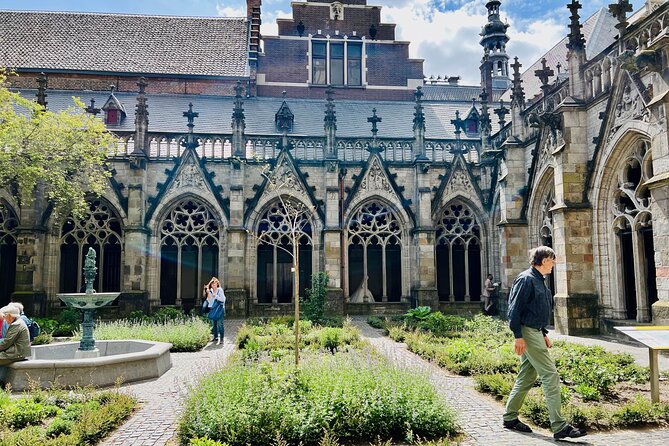
You should also expect more sights than the named highlights. The route includes churchyards, cobbled streets, classical city castles, and a church converted into a café. Since the public description does not promise a fixed list of every minor stop, the exact emphasis may vary with the guide and the group’s questions.
What a guide adds to the walk
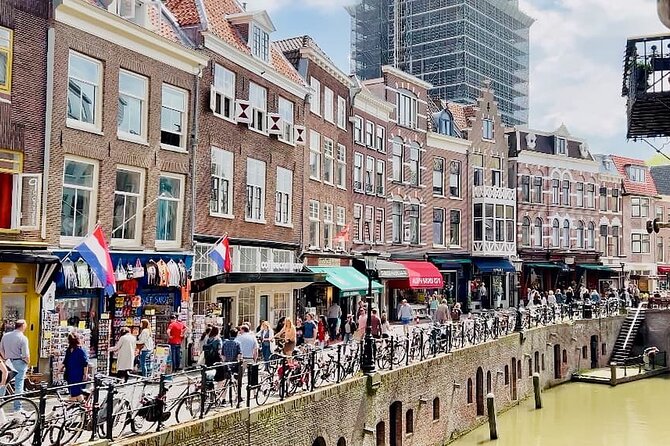
The guide is the main difference between this tour and a self-guided stroll. You can see the Dom Tower and Oudegracht on your own, but a local guide gives you the links between them.
Lucy is specifically praised for her enthusiasm, clear historical and cultural explanations, and willingness to answer questions. She also made a point of engaging each person in the group. That is a useful sign for anyone who prefers conversation to a memorized speech.
The small format should help you speak up. Ask about the old wharf cellars, the square’s name, Utrecht’s Roman origins, or places to eat afterward. You are not locked into a lecture from the back of a large group.
At the same time, a guide’s style can shape the experience. Lucy’s approach is lively and personal, based on the available feedback. If you prefer to wander silently and set your own pace, this tour may feel more structured than walking alone.
The awards associated with Tulip Day Tours include recognition for city walking, sustainable experiences, and tour operation in the Netherlands. Awards do not guarantee that every guide or date will suit every person, but they do add some background to the company’s focus on guided city visits.
Value at a listed price of $0.00
The supplied price is $0.00, which makes the value calculation unusual. If that price is still shown when you book, a 90-minute guided introduction with a private guide for a group capped at six is a very strong offer.
You should still check the final booking screen for the current price and conditions. Tour prices can change, and the key point is not to assume that the listed amount will remain the same indefinitely.
The experience includes the guide, the 1.5-hour walk, headsets, taxes, fees, and handling charges. Gratuity is not included and is optional. Admission to the Dom Tower is also excluded, so budget separately if you plan to climb it.
Even at a standard paid rate, the small group and focused route would matter. A large free walk can be a good bargain, but six people gives you more access to the guide and less chance of missing the explanation. At the listed price, that personal attention is especially appealing.
Who should choose this Utrecht experience?
I would choose this walk early in a Utrecht stay, ideally before spending much time around the Oudegracht or Dom area. It gives you a map in your head, explains the city’s unusual canal structure, and points out places worth returning to.
It suits first-time visitors who want a clear introduction without giving up half a day. It also works for adults and families with children aged 12 or older who can manage a full 90 minutes on foot.
History fans will appreciate the Roman connection, the medieval bridge, the unfinished cathedral, and the practical story of the wharf cellars. Food-focused visitors may like the route for a different reason: it shows you where the old storage spaces became restaurants and cafés for a later stop.
You may want something else if you need step-free certainty at every point, a private itinerary, or a long interior visit to the Dom Tower. The available details say most people can participate and that service animals are allowed, but they do not promise a fully step-free route or describe every surface.
The minimum age also matters. If you are traveling with children under 12, this public walk is not the right choice. A private Utrecht walk from the same provider is suggested for younger families.
Booking, cancellation, and timing
Your confirmation arrives at booking, and the confirmation serves as your walking tour ticket. You do not need to confirm again. Be at Vredenburgplein a few minutes before the scheduled start.
Free cancellation is available until 24 hours before the local start time for a full refund. Changes or cancellations made within 24 hours are not accepted for a refund.
The experience needs a minimum number of participants. If that minimum is not reached and the tour is canceled, you are offered another date or experience, or a full refund. Since the group maximum is six, the walk remains small, but the minimum requirement means the tour is not guaranteed to operate in every case.
Should you book the Utrecht Small Public Walking Tour?
Book it if you want a short, personal introduction to Utrecht’s old center, especially the Oudegracht, Maartensbrug, the swamp-born square, and the Dom Tower. The small group, supplied headsets, same-place return, and guide Lucy’s warm, energetic approach all support an easy first day in the city.
Do not book it as a substitute for climbing the Dom Tower or spending hours inside Utrecht’s churches and museums. It gives you the city’s main story, not every detail.
For first-time visitors, I see this as a smart use of 90 minutes. Start here, listen closely, ask where to eat, then use the rest of your day to return to the canal cellars, cafés, or Dom area that interest you most.
FAQ
Where does the Utrecht walking tour begin?
The tour begins at Vredenburgplein 154, 3511 BG Utrecht, Netherlands.
Where does the walking tour finish?
The tour ends back at the same meeting point where it begins.
How long does the experience last?
The total walking tour lasts about 1.5 hours, including expected and unexpected stops.
How large is the group?
The public walking tour has a maximum of six participants.
What is the minimum age?
The minimum age is 12. A private Utrecht walking tour is suggested for families with younger children.
Is admission to the Dom Tower included?
No. The Dom Tower is part of the walking tour’s sightseeing and explanation, but admission is not included.
Are headsets provided?
Yes. Headsets are provided so you can hear the guide clearly during the walk.
What is the cancellation policy?
You can cancel at least 24 hours before the local start time for a full refund. Cancellations or changes made within 24 hours are not refunded or accepted.
Just added around Utrecht
- Historical Utrecht: Private Walking Tour with a Local Guide★ 4.6 · 3 reviews
- Utrecht: Hoge Woerd Museum Entry Ticket with Audio Tour★ 3.3 · 3 reviews
- Walking Tour Utrecht with a local comedian as guide★ 4.8 · 4 reviews
- Uniquely Utrecht: An Audio Tour of its Charming City Centre★ 5.0 · 4 reviews
- Utrecht Walking Tour with a local comedian as guide★ 4.8 · 5 reviews
- Vecht River: Private Tour sightseeing Cruise with diner★ 5.0 · 5 reviews
- Utrecht – Food Tour: Try out 6 dutch bites★ 4.5 · 6 reviews
- Utrecht Historic City: a Self-Guided Augmented Reality Tour★ 4.5 · 7 reviews
Utrecht Tours, compared.

Utrecht 2-Hour Walking Tour | Discover The City With A Local
Read our review →

Browse the lists this tour appears in