
Reviewed · THE HAGUE TOURS
Private Tour of Delft + Visit to Delft Blue Museum & Factory
Delft’s best story is told on foot, from the tilted Old Church and royal tombs to the spot where Vermeer painted his View of Delft. This private tour then takes you to Royal Delft, where the famous blue-and-white pottery is explained in a self-guided museum and factory visit.
I like the private format because you can ask questions and set the pace with your own guide. I also like the mix of city history and working craft, especially the included transfer to Royal Delft after the walking tour. The main consideration is timing: three hours is brisk, and the factory visit is largely self-guided rather than led by your private guide.
Key points to know before booking
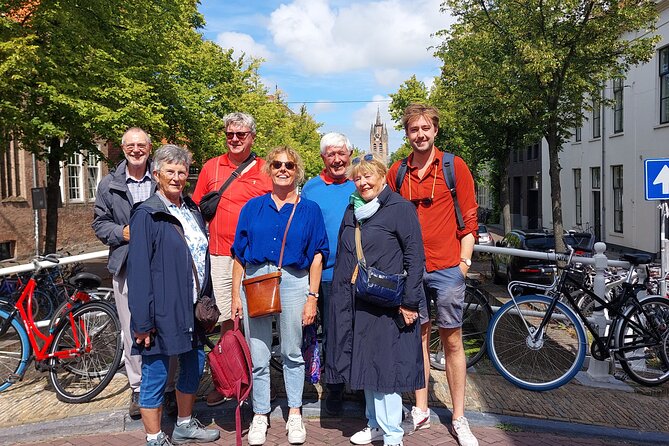
- See Delft’s major landmarks in a compact walk: The route covers the New Church, Old Church, City Hall, Prinsenhof, canals, Beestenmarkt, and the old Armamentarium.
- Hear the story behind Vermeer’s View of Delft: The tour passes the exact place where Johannes Vermeer stood when he painted his famous city view.
- Visit Royal Delft for 1 hour and 20 minutes: Your ticket and transfer are included, giving you time to explore the museum and factory on your own.
- Enjoy a private English-language tour: Only your group takes part, with guides including Eliza and Billie named in the tour’s feedback.
- Plan for walking and changeable weather: Comfortable shoes and a rain jacket are sensible choices.
- Finish outside the center: Royal Delft is about a 20-minute walk back to central Delft, or you can arrange a small shuttle from the museum for a few euros.
Why this Delft tour works so well
Delft is easy to admire and surprisingly easy to misunderstand. Its canals, brick lanes, churches, and handsome squares can feel like a smaller version of Amsterdam, but the city has its own story. This tour gives you a person to connect those pieces.
You begin at Markt 80, on the main square in front of Delft’s New Church. From there, the route crosses several centuries in a short distance. You hear about Dutch rulers, religious change, trade, military power, art, and pottery without spending the whole morning inside a museum.
The private setup matters here. Delft’s sights are close together, but the details are easy to miss. A guide can explain why one church leans, why a grand canal house mattered, and how Delft’s pottery trade connected to the Dutch Republic. You can also ask for more detail on the subjects that interest you most.
The tour costs $204.27 per person, which is a serious price for three hours. It makes the most sense for people who value a private guide, want an efficient introduction to Delft, and plan to visit Royal Delft anyway. If you are happy to read signs and follow a map, you can see many of the exterior sights for much less. The cost becomes easier to justify when you count the private guiding, museum admission, and transfer to the factory.
More Museums in The Hague
- The Hague: Escher in The Palace Museum Ticket
★ 4.6 · 896 reviews - Royal Delft: Delftblue Factory and Museum Admission Ticket
★ 4.5 · 145 reviews - The Hague: Panorama Mesdag Museum Entry Ticket
★ 4.8 · 143 reviews
New Church and the royal story beneath Markt
The first stop is the New Church, the second-tallest church in the Netherlands. You spend about 10 minutes here, with admission to this stop listed as free.
The building is important not only for its height and place on the main square. The church is connected to the Dutch royal family, and the guide explains who is buried below it. That question gives the stop a clear purpose. Instead of simply looking at a large Gothic church, you learn why this particular building matters to the country.
Ten minutes is enough for an introduction and some exterior viewing, but not for a full architectural visit. If you want to go inside and spend time looking at the interior, check how that fits with the day’s schedule. The published route treats this as a brief guided stop rather than a long church visit.
The meeting point is right in the center, which is convenient if you arrive by public transport or are already spending time in Delft. If you select a pickup option, the operator coordinates pickup from your chosen location, possibly up to an hour before the start.
City Hall and Delft’s main square
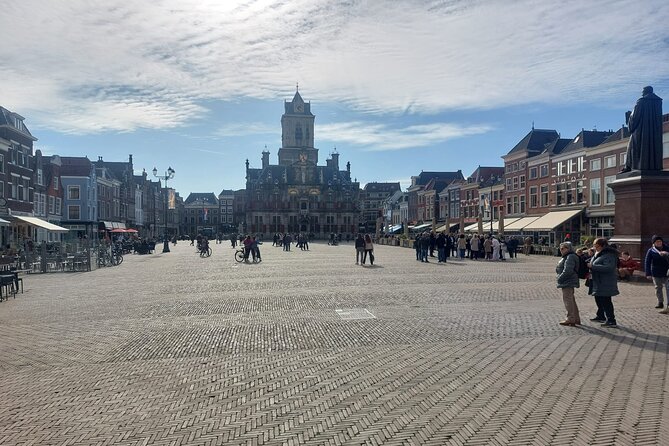
From the New Church, you walk across Markt to Delft’s old City Hall. The stop lasts about 10 minutes and admission is free.
The building is one of Delft’s key civic landmarks. Your guide explains what makes the City Hall important as you leave the square toward the Old Church. This is a good example of the tour’s approach: the emphasis is on the meaning of the building, not just its facade.
Markt also helps you understand Delft’s layout. The square places the New Church and City Hall opposite each other, giving the center a strong civic and religious focus. Because the route moves on quickly, take a moment to look around before following the guide. The tour provides context, but you still need to make your own time for photographs.
The leaning Old Church and the former brewing quarter
The Old Church is one of Delft’s most recognizable sights. You spend another 10 minutes in this part of the city, once known as the beer brewing quarter.
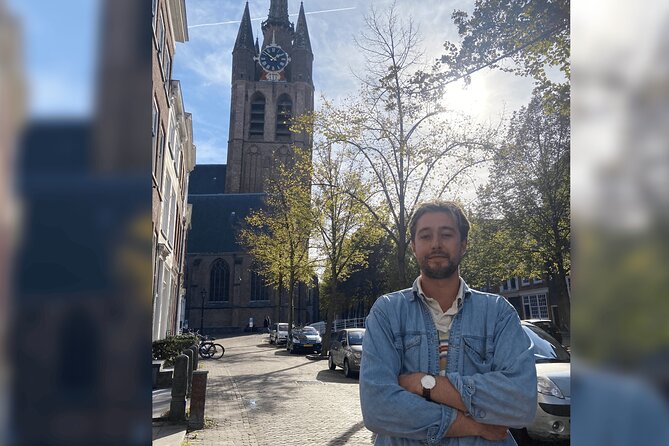
The church’s tilt is the obvious question. How old is it, and why is it so skewed? Your guide addresses both points, turning a familiar photograph into a quick lesson in Delft’s past and its changing ground conditions.
The brewing quarter adds a useful layer. Delft was not only a city of churches, painters, and pottery. Brewing was once a major local trade, and the route asks where those brewers went. That sort of question makes the walk feel less like a checklist of monuments and more like a look at how people used the city.
Again, this is a short stop. You should expect an explanation and exterior viewing, not a long church tour. Wear comfortable shoes, since the experience links several stops through city streets and canals.
Same country, a completely different kind of day:
- The Hague: Mauritshuis Entrance Ticket
★ 4.7 · 2,706 reviews - The Hague: City Canal Cruise
★ 4.6 · 2,024 reviews - The Hague: Madurodam Miniature Park Entry Ticket
★ 4.6 · 1,559 reviews - The Hague: The Pier SkyView Ticket with Drink and Snack
★ 4.4 · 1,398 reviews
Prinsenhof, where Dutch history turned violent
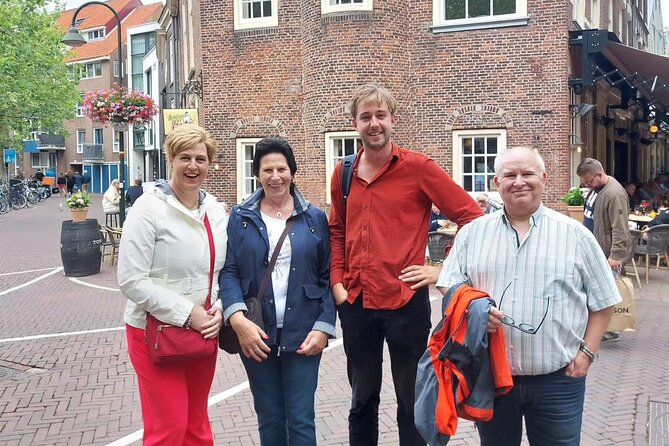
The route continues to Museum Prinsenhof Delft for about 15 minutes. The tour lists this stop as free admission, suggesting that the visit focuses on the building and its story rather than a full museum entry.
Prinsenhof played a deciding role in Dutch history. William of Orange, often called the Father of the Fatherland, was assassinated here. That single event gives the building a powerful connection to the creation of the Dutch state.
A guide is especially useful at Prinsenhof because the important story is not always obvious from the outside. You learn what happened here and why it mattered far beyond Delft. The short visit should leave you with the basic setting and political context, while a separate museum visit would be better if you want to examine the collections in detail.
This is one of the stops where a private tour can help. If the story catches your interest, you can ask questions rather than simply moving past another historic facade.
Oude Delft and the decorated Gemeenlandshuis
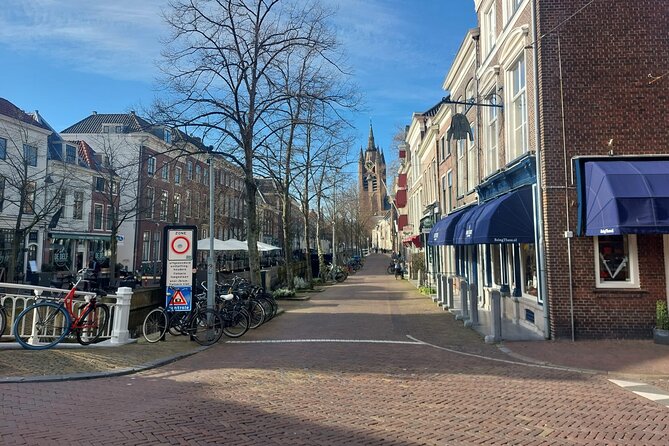
On the way down the Oude Delft canal, you pass the heavily decorated facade of the Gemeenlandshuis van Delfland. The visit lasts around 10 minutes.
The building served an important role in managing water in the Delfland area. The Netherlands depends on careful control of canals, drainage, and waterways, so this stop connects Delft’s pretty canals with the practical work that keeps low-lying Dutch land livable.
The ornate exterior is easy to photograph, but the explanation gives it greater value. You learn what the building was and why it mattered, rather than treating it as another attractive canal house.
The route along Oude Delft is also a pleasant change of pace after the main square. You move through a quieter historic setting while the guide explains how local government and water management shaped daily life.
Armamentarium and Delft’s Golden Age connections
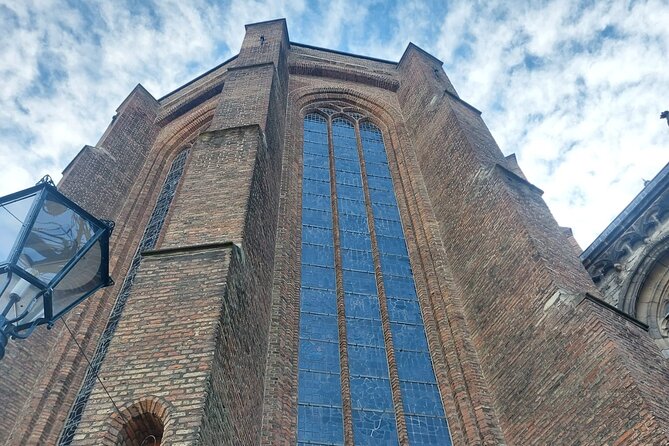
The tour then heads south toward the former Armamentarium, a large weapons storehouse connected to the Dutch East India Company, known as the V.O.C. You spend about 25 minutes in this area.
This is one of the longer city stops, and it earns the extra time. Delft’s role in the Dutch Republic was not limited to art and pottery. The Armamentarium points to trade, military power, and the overseas reach of the V.O.C. Your guide connects the building to Delft’s place during the period often called the Dutch Golden Age.
The stop also includes a special art reference. You can look at the exact location where Vermeer stood while making View of Delft. That detail gives the painting a physical anchor. Instead of seeing the work only in a gallery or book, you can connect it to the city’s streets, water, and buildings.
The itinerary does not state that the tour includes entry to the Armamentarium or a Vermeer exhibition. Think of this as an outdoor explanation and viewing point. If Vermeer is your main reason for visiting Delft, this will be useful but brief.
Beestenmarkt and the city’s working past
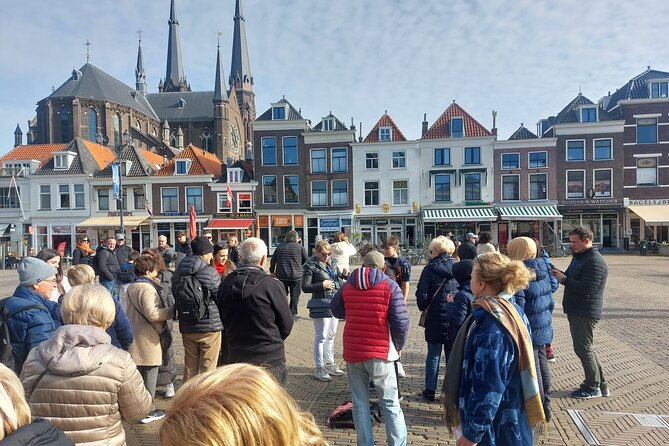
The walk continues to Beestenmarkt, a picturesque square that once hosted animal markets. You spend about 20 minutes here.
The name and former use reveal a less polished side of old Delft. Markets like this were part of the city’s working life, bringing animals, sellers, and buyers into the urban center. Today, the square offers a more relaxed pause in the route, but the guide helps you see what came before.
Along the way, you pass former Delft Blue pottery manufacturers, an old synagogue, and what is described as the oldest hospital in the Netherlands. These sights broaden the story of the city. Delft Blue is not just a souvenir style, the synagogue points to the city’s religious communities, and the hospital reflects the development of public care.
This section is a good reason to choose a guide instead of walking without one. Several buildings may look attractive or unusual, but their purpose is not always clear. The tour gives each one a place in Delft’s social and economic story.
Royal Delft: blue pottery, museum, and factory
After the city walk, you are transferred to Royal Delft, also known as Koninklijke Porceleyne Fles. The visit lasts about 1 hour and 20 minutes, and the entrance ticket is included.
This is the second half of the experience and a major part of its value. Delft Blue pottery is one of the city’s best-known products, but the factory visit helps explain how the tradition works. You explore the museum and production setting at your own pace through a self-guided visit.
The arrangement is worth understanding before you book. Your private guide leads the city portion, but the Royal Delft visit is described as self-guided. That gives you freedom to spend longer with displays that interest you, though you should not expect your city guide to accompany you through every part of the factory.
The 80-minute allocation is generous enough for a proper look rather than a rushed stop. You can connect what you saw in the old pottery district with the modern presentation at Royal Delft. The transfer is included, which is helpful because the factory is outside the central walking route.
The tour ends at Royal Delft, at Rotterdamseweg 196. From there, you can walk back to the city center in about 20 minutes or order a small city shuttle from the museum for a few euros. If you have a train to catch or do not want more walking, the shuttle is the practical choice.
What the private format adds
A private tour is most useful when the subject benefits from questions. Delft has plenty of visible sights, but much of its appeal comes from the explanations between them.
You can ask about the New Church’s royal connection, the Old Church’s tilt, the V.O.C., Vermeer, or the pottery makers. You also avoid being tied to the interests and pace of a large group. Only your own party takes part.
The guide names Eliza and Billie appear in the tour’s feedback, with Eliza praised for explaining the city’s history beautifully and Billie praised for showing more than expected. Guide quality can vary from one departure to another, but these names give you a useful point of reference when communicating with the operator.
There is also one important practical warning. One booking went wrong when the guide went to the wrong meeting location and did not arrive. The operator accepted responsibility and issued a full refund, but you should still confirm the meeting point before the start. The stated meeting place is Markt 80, Delft, unless you have booked an option with pickup and drop-off.
Timing, walking, and weather
The total duration is about three hours. That includes roughly one hour and 40 minutes of short city stops and about 80 minutes at Royal Delft, plus the transfer between the two parts.
You should expect a walking tour rather than a ride through Delft. The stops are close enough to connect on foot, but the route covers several neighborhoods and squares. Comfortable shoes are a smart choice.
Delft weather can change quickly, and one useful tip from the tour’s practical experience is to bring a rain jacket if the forecast looks uncertain. Much of the city portion is outdoors, so a wet spell can affect your comfort even if it does not ruin the tour.
Pickup may be available depending on the option you select. If included, you can be collected from your chosen location up to one hour before the start and dropped off afterward. If you do not choose pickup, meet at the central Markt address.
The tour is offered in English. Service animals are allowed, most people can participate, and the experience is near public transportation. Alcoholic drinks are permitted only for people aged 18 and above, though alcohol is not presented as a central part of the tour.
Is $204.27 per person good value?
At $204.27 per person, this is not a budget way to see Delft. The price is paying for privacy, a dedicated English-speaking guide, Royal Delft admission, the transfer to the factory, and taxes.
I would consider it good value if you are visiting Delft for the first time, have only a few hours, and want the city’s main stories explained in a clear order. It is also a sensible choice for a couple, family, or small group that would rather not join strangers.
The value is weaker if you mainly want to enter the churches, spend time inside Prinsenhof, or have a fully guided factory tour. The city stops are brief, and the Royal Delft section is self-guided. You are paying for a well-organized introduction, not an all-day specialist visit.
Group discounts may improve the price for larger parties. Free cancellation is available if you cancel at least 24 hours before the start time. Changes or cancellations inside that window are not accepted for a refund.
Who should book this Delft experience?
I would choose this tour if you want a strong first look at Delft and prefer stories to silent sightseeing. It suits people interested in Dutch art, royal history, water management, trade, military power, and pottery, all packed into one short route.
It also works well for a private family outing because the guide can adjust explanations and answer questions. The Royal Delft stop gives the experience a hands-on craft focus after the city walk, so you get more variety than with a standard historic walking tour.
I would think twice if you dislike brisk schedules or want extensive time inside museums. Three hours goes quickly, and the tour is designed to introduce many places rather than study one or two in depth.
Should you book it?
Book this private Delft tour if you want an efficient, story-led introduction followed by Royal Delft’s museum and factory. The combination of the leaning Old Church, Prinsenhof, Vermeer’s viewpoint, the V.O.C. armory, and Delft Blue pottery gives you a clear sense of why the city matters.
Skip it if you prefer to explore independently or need long museum visits. For everyone else, the private guide and included factory transfer make this a practical way to connect Delft’s landmarks with the craft that made its name famous. Confirm the meeting point, wear good shoes, and leave enough time after the tour for the 20-minute walk or shuttle back to central Delft.
FAQ
Where does the tour begin?
The standard meeting point is Markt 80, 2611 GS Delft, Netherlands. Pickup is available with selected booking options.
Where does the tour end?
The tour ends at Royal Delft, Rotterdamseweg 196, 2628 AR Delft. You can walk back to the city center in about 20 minutes or arrange a small city shuttle from the museum for a few euros.
How long does the experience last?
The experience lasts approximately three hours, including the Delft walking tour, transfer, and Royal Delft visit.
Is Royal Delft admission included?
Yes. Royal Delft entrance tickets, the private guide, the transfer to Royal Delft, and all fees and taxes are included.
Is the Royal Delft visit guided?
The city portion is led by a private guide. The Royal Delft museum and factory portion is self-guided.
Is this a private tour?
Yes. Only your group participates in the activity.
Can I cancel for a full refund?
Yes, if you cancel at least 24 hours before the experience start time. Cancellations or changes made less than 24 hours before the start are not refunded or accepted.
Just added around The Hague
- Private Tour of Rotterdam and The Hague including Transfer★ 5.0 · 3 reviews
- Private Tour of The Hague, Delft and Rotterdam with Lunch★ 5.0 · 3 reviews
- Discover Historical Delft with an Audio Guide★ 5.0 · 3 reviews
- The Hague Self-Guided Audio Tour★ 5.0 · 3 reviews
- 3 Course Walking Dinner in Delft with Guided Tours in Between★ 5.0 · 3 reviews
- Surprise Walk of The Hague with a Local★ 4.5 · 3 reviews
- Surfing at The Shore in The Hague★ 4.5 · 3 reviews
- Private Tour of Vermeer’s Delft + Tickets to Vermeer Museum★ 5.0 · 3 reviews
The Hague Tours, compared.

Hop-on Hop-off Old-Fashioned Heritage Tram Tour
Read our review →
Oranjehotel World War II Prison Entrance Ticket
Read our review →
Browse the lists this tour appears in