
Reviewed · DELFT TOURS
Delft: Private Historical and Cultural Guided Walking Tour
Delft’s real charm appears when you leave the main square and follow the guide through small alleys, old bridges, and quiet courtyards. This private walk connects William of Orange, Johannes Vermeer, Delft Blue pottery, and the city’s medieval streets in one compact visit.
I like the customizable route and the chance to ask questions without a large group setting the pace. I also like the local detail: guides such as Harry, Yvette, and Jessica have been praised for clear explanations, patience, and practical tips. The main drawback is simple: $135 per person is a serious price for 2.5 hours, especially if you are traveling alone or as a couple.
Key Points
- William of Orange’s mausoleum: Begin at the Nieuwe Church and see the elaborate tomb of the man linked to the founding of the Netherlands.
- A private, adjustable walk: Discuss your interests with the guide and shape the route around architecture, art, history, or Delft’s canals.
- Vermeer’s hometown: Follow locations tied to Johannes Vermeer and the scenes associated with his paintings.
- Delft Blue in its home city: Learn how the famous pottery began and watch a master painter at work in one of Delft’s pottery workshops.
- Quiet corners beyond the postcard view: Seek out courtyards, narrow lanes, the Beguinage, the Prince’s Court, and the Court of Almonde.
- Useful practical format: The tour lasts 2.5 hours, is offered in several languages, and runs rain or shine, so comfortable shoes and weather protection matter.
Why This Delft Walk Works So Well
Delft is easy to see as a pretty canal town, but its appeal is stronger when you understand the people and work tied to its streets. This tour brings together three useful threads: the political story of William of Orange, the art of Vermeer, and the craft of Delft Blue pottery.
I like that the walk is not limited to a single subject. You can focus on the city’s churches and architecture, ask about Vermeer, or spend more time on pottery and daily life in old Delft. A private format makes that possible. You are not simply following a fixed script while a large group waits at the next stop.
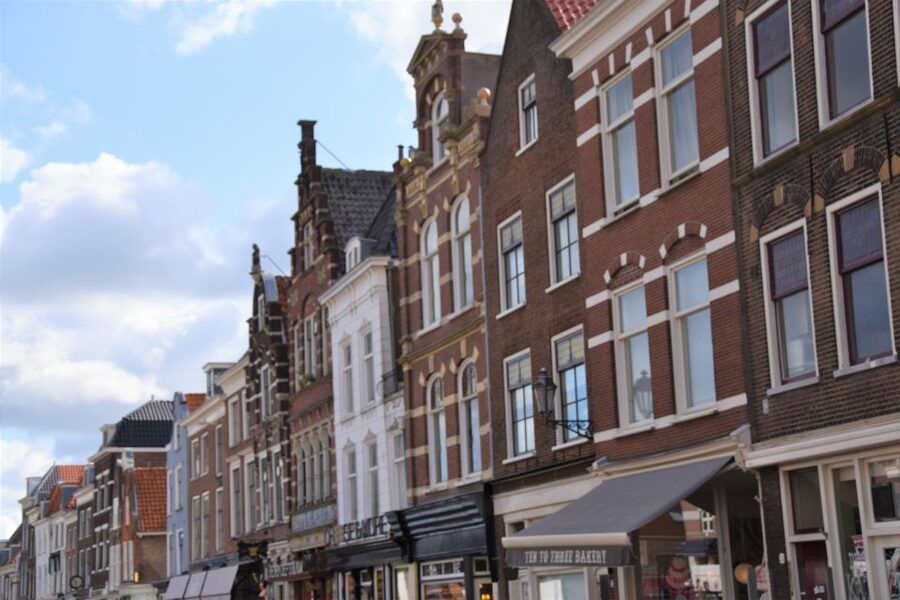
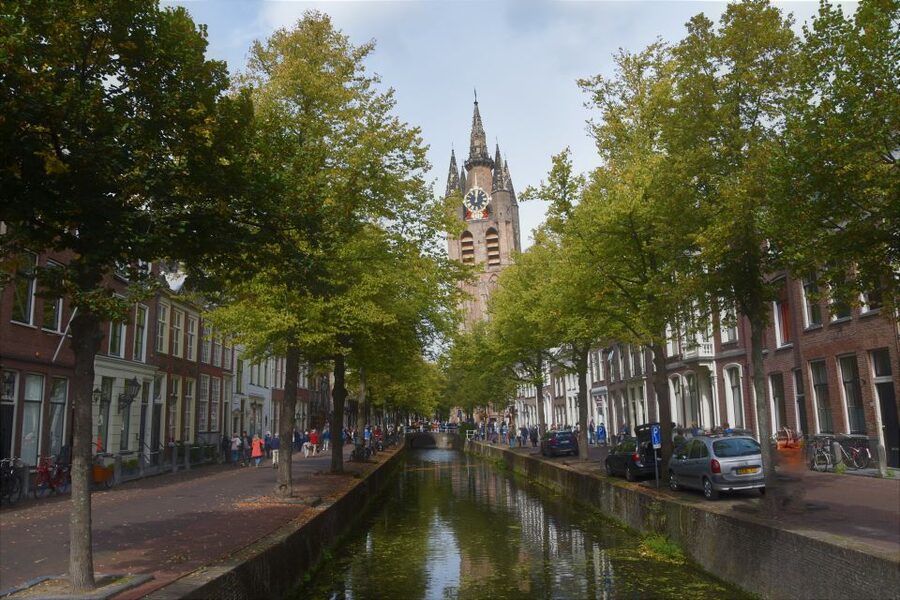
The meeting point is in front of the Nieuwe Church, an easy place to begin in central Delft. From there, you move through the historic centre on foot. The route includes canals, bridges, old merchant houses, squares, religious buildings, and less obvious corners.
The pace appears to be one of the tour’s strengths. Feedback about the guides describes a calm walk with enough time for explanations and questions. That matters in Delft, where the pleasure comes from noticing details rather than racing between major sights.
More history tours in Delft:
- Amsterdam Food and Cultural Tour with Tastings
★ 5.0 · 2,442 reviews - Rotterdam: Kinderdijk UNESCO World Heritage Entry Ticket
★ 4.6 · 1,477 reviews - The Hague: Hop-on Hop-off Old-Fashioned Heritage Tram Tour
★ 4.4 · 1,083 reviews
Starting at the Nieuwe Church and William of Orange
The Nieuwe Church provides a fitting opening because it links Delft to the political birth of the Netherlands. Inside, you see the mausoleum of Prince William of Orange, often called the founding father of the country.
The tomb is the chief historical sight of the opening section. Your guide can place William of Orange within Delft’s story and explain why this church became such an important burial place. If you have little background in Dutch history, this context will help the rest of the walk make more sense.
The meeting point is in front of the church, but the supplied details do not confirm whether admission inside is always included or depends on opening conditions. Ask your guide about access at the start if seeing the interior is important to you.
This is also a good place to tell the guide what you want from the tour. You may prefer architecture, political history, Vermeer, pottery, or a broad introduction. Because the group is private, your guide can adjust the emphasis instead of treating every participant the same way.
The Medieval Square and Renaissance Town Hall
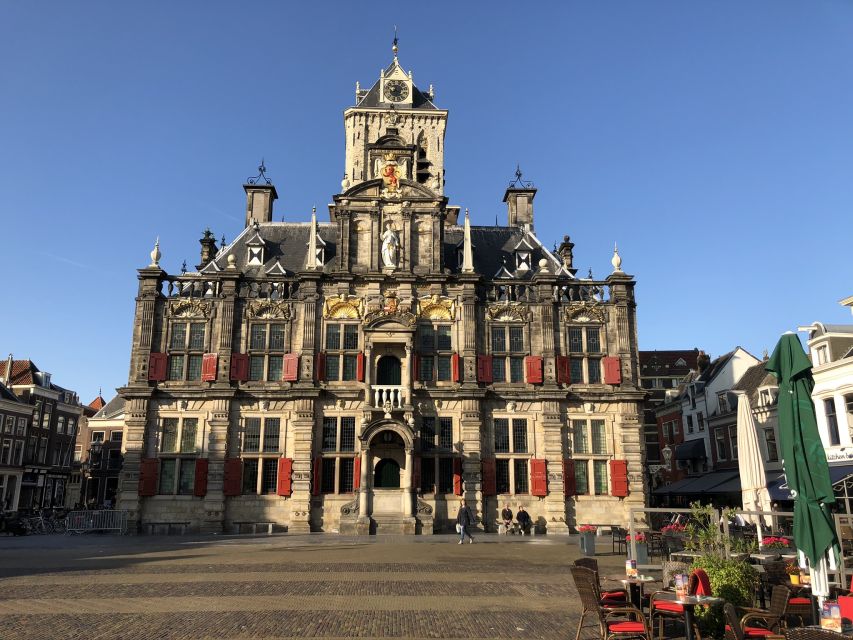
The walk continues toward Delft’s medieval square and the city hall, a Renaissance building with a strong civic role. The exterior gives you a clear sense of the city’s old centre, where trade, government, and public ceremony came together.
A particularly interesting detail is the chance to look inside and learn how justice was administered centuries ago. That small addition makes the building more than a photo stop. You get a glimpse of how Delft functioned as a city, not just how it looked.
I find this kind of stop useful because grand churches and handsome façades can blur together after a few days in the Netherlands. A guide who explains the building’s purpose gives you a reason to remember it.
The square is also one of the places where you can pause. The tour description allows time to relax in cozy squares, but food and drinks are not included. You can ask for a recommendation if you want to return later for a meal or a pastry. Jessica, one of the guides praised in the feedback, is specifically noted for suggesting places to eat and enjoy pastries.
Canals, Bridges, and Old Merchant Houses
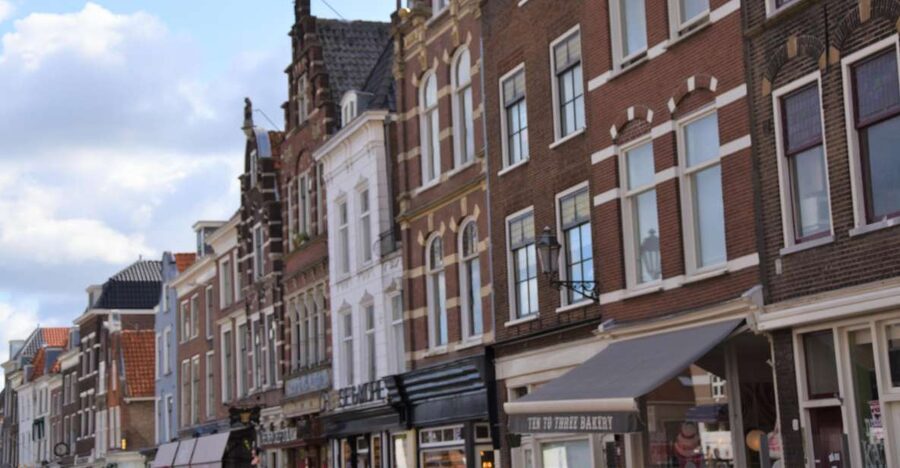
Delft’s canals are not simply decorative. They shaped movement, trade, and the form of the city. As you cross historic bridges and pass colorful traditional houses, your guide can help you read the streets as part of Delft’s development.
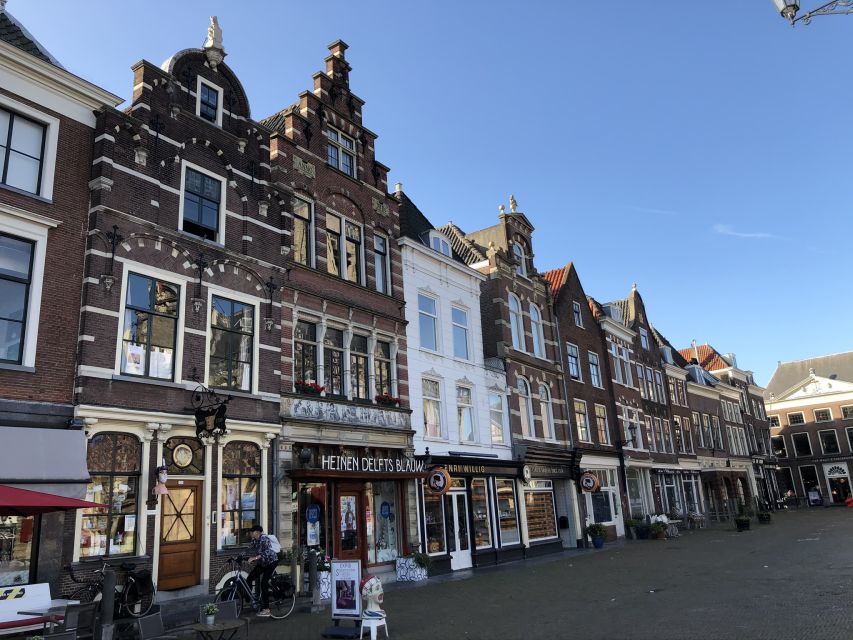
The old merchant houses are among the most photogenic parts of the walk. Their narrow façades and canal-side position create the familiar Dutch scene, but the guide adds the useful details that a camera cannot provide. You can learn what the buildings were used for and why the canal network mattered.
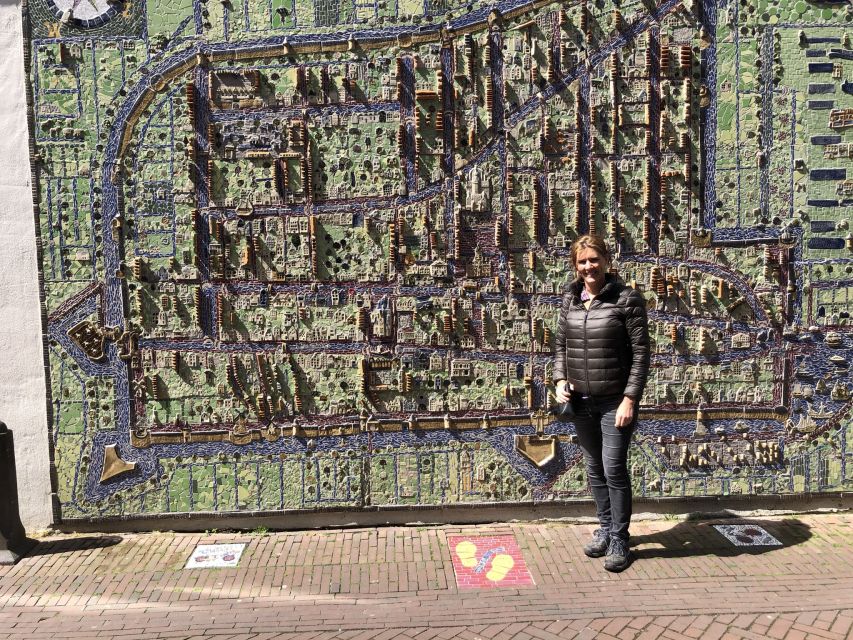
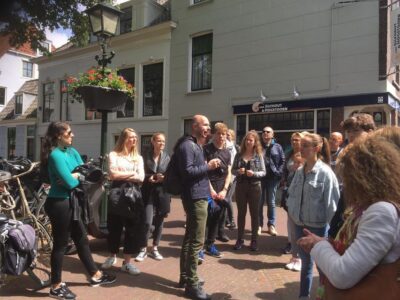
The route also includes small alleys and charming courtyards. This is where a private guide earns the fee most clearly. You are not just looking at Delft from the main street. You are being led into quieter spaces, including the Court of Almonde, described as one of the city’s best hidden courtyards.
The word hidden should not be taken as a promise of a secret place known only to locals. It means the courtyard is easy to miss without someone pointing it out. That is exactly the sort of detail a walking tour should provide.
More walking tours in Delft:
- Delft: City Center Walking Tour
★ 4.7 · 88 reviews - Delft: Dive into the Golden Age on a Private Walking Tour
★ 4.6 · 16 reviews - Delft: Guided Walking Tour
★ 4.7 · 9 reviews - Delft: Christmas Walk with Oliebollen and Glühwein
★ 4.8 · 8 reviews
Vermeer’s Delft Without a Museum Visit
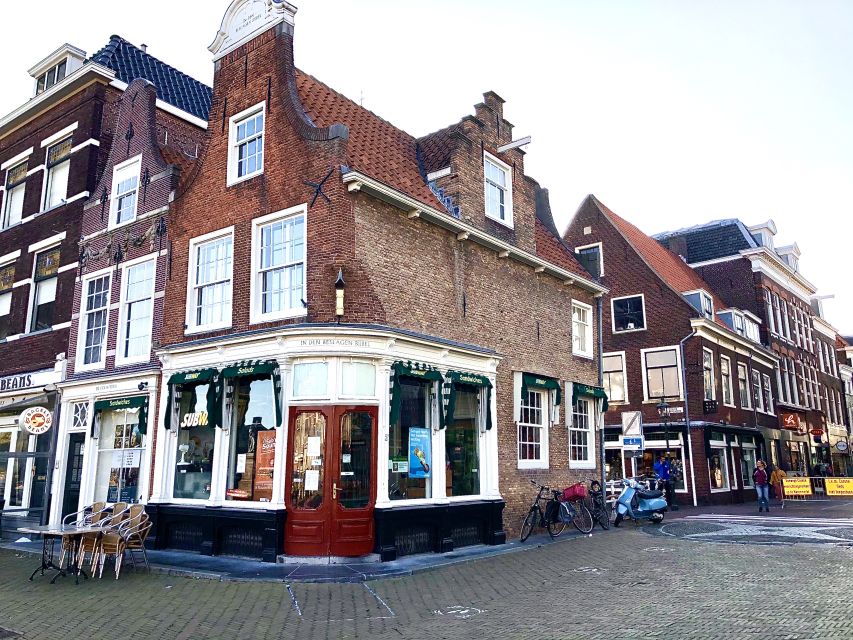
Johannes Vermeer is one of Delft’s strongest cultural connections, and the tour uses the city itself to tell his story. You walk through the artist’s hometown and visit places connected with the settings of his paintings.
The idea is less about seeing a large collection of artworks and more about placing Vermeer in the streets where he lived and worked. You can connect his paintings to Delft’s light, buildings, waterways, and domestic scenes.
The supplied details do not state that entrance to a Vermeer museum is included. Plan on this being an outdoor, place-based art walk rather than a museum tour. If you want to see original paintings, ask your guide for current museum advice and allow separate time.
This part should suit you if you like art but do not want a formal lecture. A private guide can explain the paintings in relation to the city and answer specific questions. If Vermeer is your main reason for visiting Delft, tell the guide before the walk so the route and commentary can give that subject enough attention.
The Prince’s Court, Beguinage, and Delft’s Older Corners
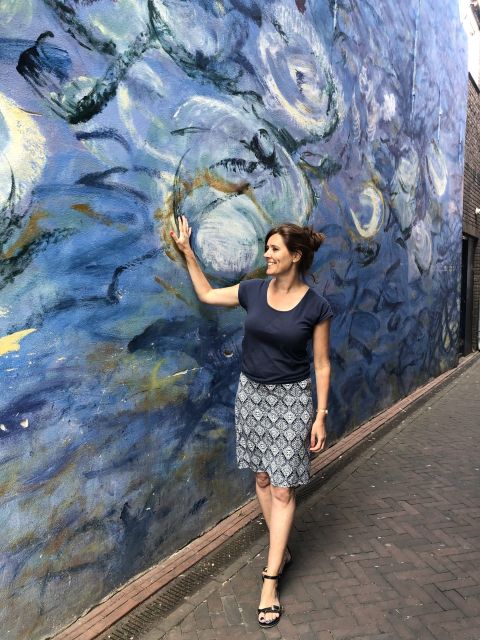
The route may include the Prince’s Court, the Beguinage, and other old streets in the centre. These places broaden the story beyond famous names and major monuments.
The Prince’s Court adds another link to Delft’s political past. The Beguinage points toward the city’s religious and communal life. The exact amount of time spent at each location depends on the route you agree on with the guide.
This flexibility is useful, but it also means you should not assume every listed sight receives equal attention. A 2.5-hour walk cannot offer a detailed tour of every church, courtyard, canal, and historic building. Tell your guide your top two or three priorities rather than naming everything.
The only remaining historical windmill is also listed among the possible highlights. The information does not say that you will enter the windmill or see it operating. Treat it as a possible exterior stop within the walking route, not a separate windmill visit.
Delft Blue Pottery in Its Home City
Delft is famous for Delft Blue pottery, and the tour explains how this craft developed in the city. You can also see a master painter at work in one of the pottery places.
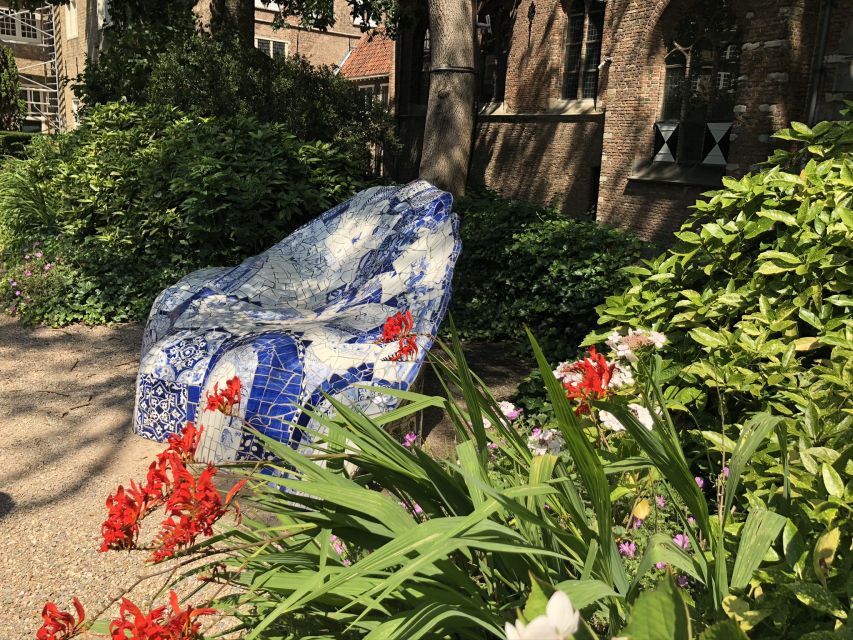
This is a valuable part of the experience because it connects a familiar souvenir with an actual local craft tradition. Blue-and-white pottery is easy to buy without knowing anything about it. Seeing the painting process gives you a better sense of the skill behind the finished pieces.
The pottery stop also adds variety after several hours of churches, canals, and old buildings. You move from architecture and politics to a working artistic tradition. If you are considering buying pottery, the guide may help you understand what you are seeing, but the tour does not include food, drinks, or shopping purchases.
The description does not name the pottery location or promise a workshop demonstration beyond seeing a painter at work. If this is your top interest, confirm the planned stop with the guide before the tour begins.
What the Private Format Means for You
The price is $135 per person, and the group is private. That price makes more sense for a family, a couple traveling with friends, or a small group that wants a personal introduction to Delft.
For one person, the cost is harder to justify. For a larger private group, the per-person value may improve, depending on the booking arrangement. You are paying for a professional local guide, flexible pacing, language choice, and the ability to shape the route around your interests.
The available feedback gives this experience a perfect 5 rating from eight reviews. The praise focuses on the guides rather than on a single landmark. William, from the United States, described Yvette as engaging and able to bring Delft’s past to life. Nicole said Harry’s tour pleased her parents and left no criticism. A German-language booking praised the strong attention to history and architecture.
Jessica received special praise for complete explanations, a kind manner, and adapting the walk to the group’s pace. Another booking highlighted a guide who had been a teacher and offered an especially large amount of information. These comments suggest that the guide’s personality and teaching style are central to the experience.
That also means your results may depend on which guide you receive. The listed guide names are Harry, Yvette, and Jessica, but the booking information does not guarantee a particular person. If you have a preferred language or a strong subject interest, make that clear when arranging the tour.
Timing, Weather, and Walking Comfort
The walk lasts 2.5 hours. That is long enough for a proper introduction to Delft but short enough to fit before or after another planned activity.
You should expect continuous walking over city streets, bridges, and alleys. Comfortable shoes are specifically recommended, and I would take that advice seriously. Even a flat Dutch city can feel tiring when you spend the full morning or afternoon on foot.
The tour runs rain or shine. Delft’s canals and old houses can look appealing in any weather, but rain will affect how long you want to linger at outdoor stops. Bring weather protection and avoid planning an important outdoor activity immediately afterward if the forecast is poor.
The experience is wheelchair accessible, which is useful information when comparing walking tours. Still, the route includes old streets, bridges, alleys, and historic areas, so you should discuss your specific mobility needs with the guide before setting out.
Languages available are English, Dutch, German, French, and Spanish, with Japanese also listed in the private-tour information. The language details are not fully consistent across the supplied booking fields, so confirm your preferred language when booking.
Who Should Book This Tour?
I would choose this tour for a first visit to Delft when I wanted a broad introduction without joining a large group. It suits people who like history, architecture, art, and local crafts but do not want to plan every stop themselves.
Families may find the private format helpful because the guide can adjust the pace and explain difficult history in a way that suits the group. It also works well for older adults, provided the walking distance and historic surfaces are manageable.
Art lovers should book it if they want to understand Vermeer’s connection to Delft from the streets themselves. Pottery fans will appreciate the Delft Blue stop, especially if seeing a painter at work matters more than simply browsing a shop.
I would think twice if you want extensive interior access, a museum visit, or a deep specialist tour focused on only Vermeer or only Delft Blue pottery. The experience covers many subjects, and its strength is the connection between them. A specialist may prefer a narrower visit.
Final Decision: Is Delft’s Private Walk Worth $135?
Book it if you value a private guide, flexible pacing, and a clear introduction to Delft’s main stories. The strongest reasons are the route through courtyards and small lanes, the link to William of Orange and Vermeer, and the chance to see Delft Blue painting in progress.
The price is high for a short walk, but it can be fair for a small private group that wants personal attention and multiple language choices. It is less attractive if you are traveling alone, already know Delft well, or mainly want to enter museums.
For the best result, arrive ready to choose your priorities. Ask for the balance you want between William of Orange, Vermeer, architecture, pottery, and quiet corners. Wear comfortable shoes, plan for rain, and remember that the tour is an outdoor walking experience rather than a food tour or a guaranteed museum visit.
FAQ
How long does the Delft walking tour last?
The tour lasts 2.5 hours.
Where does the tour meet?
Meet your guide in front of the Nieuwe Church in Delft.
Is this a private tour?
Yes. The experience is arranged for a private group.
What languages are available?
The tour is offered in English, Dutch, German, French, and Spanish. Japanese is also listed for the private tour, so confirm availability for your booking.
Is the tour wheelchair accessible?
Yes, the activity is listed as wheelchair accessible.
What should I bring?
Bring comfortable shoes. The tour takes place on foot and runs rain or shine, so weather protection is also sensible.
Is food or drink included?
No. Food and drinks are not included in the tour price.
Can I choose the route?
Yes. You discuss your interests with the guide and decide which landmarks and routes you would like to visit.
Can I cancel for a full refund?
Yes. You can cancel up to 24 hours in advance for a full refund.
Just added around Delft
- Private Tour of Delft + Visit to Royal Delft Museum★ 5.0 · 4 reviews
- Delft: Canal House Museum ‘Paul Tetar van Elven’ Ticket★ 4.5 · 6 reviews
- Delft: Christmas Walk with Oliebollen and Glühwein★ 4.8 · 8 reviews
- Delft – Step/scootertour in and around the city★ 4.8 · 9 reviews
- Delft: Guided Walking Tour★ 4.7 · 9 reviews
- Delft: Dive into the Golden Age on a Private Walking Tour★ 4.6 · 16 reviews
- Delft: Craft Beer Tasting in Medieval Brewery with Snacks★ 4.4 · 67 reviews
- Delft: City Center Walking Tour★ 4.7 · 88 reviews
Delft Tours, compared.


Craft Beer Tasting in Medieval Brewery with Snacks
Read our review →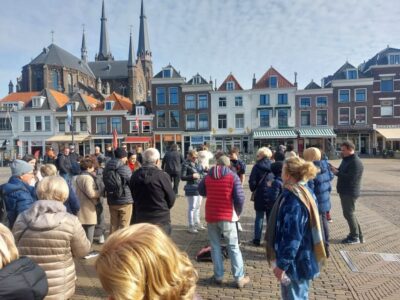

Browse the lists this tour appears in