
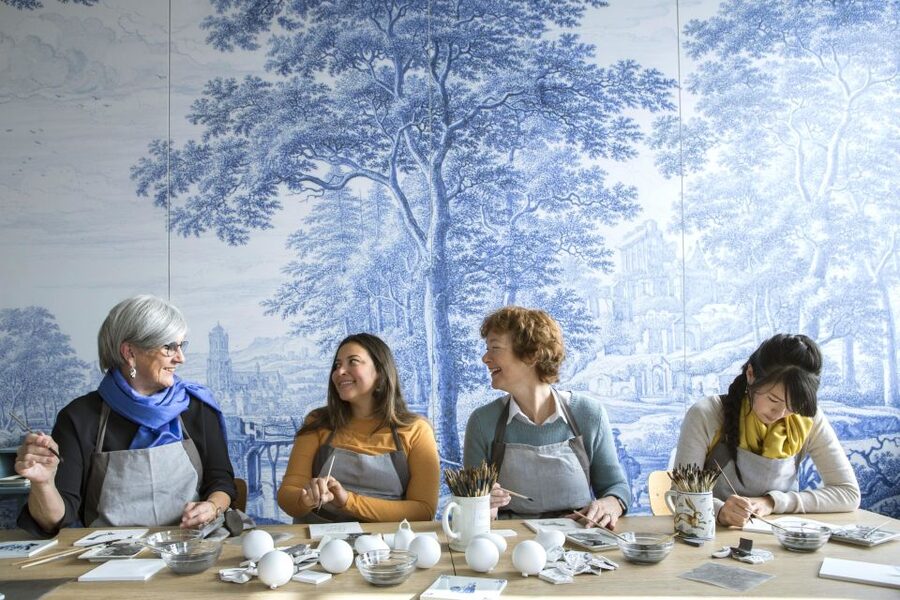
Reviewed · DELFT TOURS
Royal Delft: Delftblue Factory and Museum
The most compelling part of Royal Delft is not a display case. It is the chance to watch Delft Blue being made in the same Delft tradition that began here in 1653. You move from historic ceramics to the working factory, where painters still apply each fine line by hand and clay is poured into handmade molds.
I like the self-guided audio tour, because you can set your own pace and choose between eight languages. I also like the working factory floor, where the craft feels real rather than locked away behind museum glass. The main consideration is timing: in the afternoon, you may see only a few artisans at work, and the experience is less interactive than a live guided tour.
Key points to know before you go
- This is Delft’s original 17th-century Delft Blue factory: Royal Delft was established in 1653 and is the last original factory in Delft still painting Delft Blue by hand.
- The factory is part of the visit: You can watch painters, clay workers, and finishers handling real production pieces.
- The audio tour is included: Choose English, Dutch, Spanish, Chinese, French, German, Italian, or Japanese.
- The museum and factory take about 1.5 hours: Add time for the showroom, garden, and Brasserie 1653.
- The showroom sells genuine hand-painted pieces: Prices can be high, but packing and shipping help if you buy a fragile keepsake.
- It is easy to reach: Delft Station is about a 15-minute walk away, and the Market Square is about 20 minutes on foot.
Why Royal Delft feels different from a standard museum
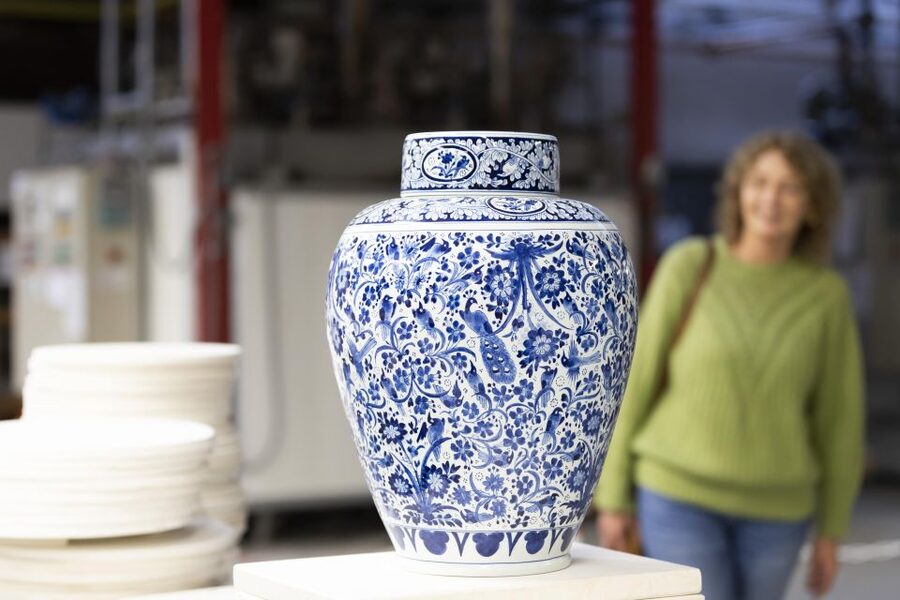
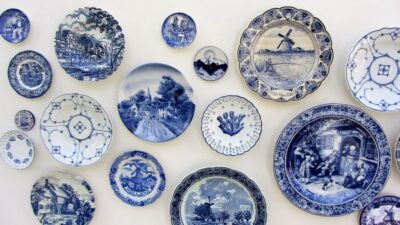
Delft Blue is often treated as a symbol of the Netherlands, along with windmills, canals, and tulips. At Royal Delft, you see the object as both art and a working product. The visit explains how a white earthenware piece becomes the familiar blue-and-white ceramic associated with Delft.
The factory dates to 1653, making it the last surviving original Delft Blue factory in the city that still uses hand painting. That age matters because the visit is not only about old plates and vases. It connects the historic collection with a process that continues today.
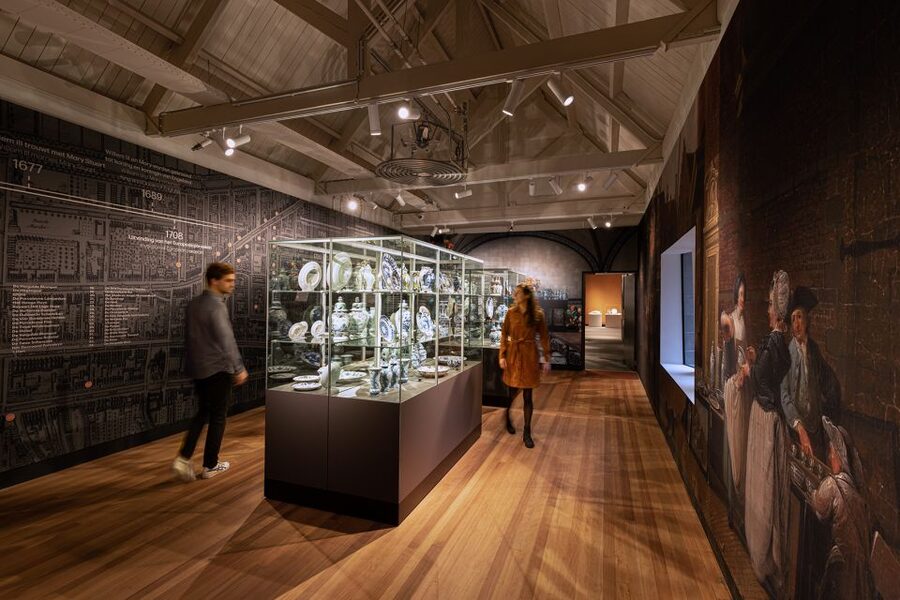
You begin with the company’s story and a collection of antique and modern earthenware. The displays help you spot the difference between simple souvenir ceramics and carefully painted Royal Delft work. Videos and information panels explain the production stages, and the audio guide supplies extra context without forcing you to follow a group.
I find this format useful if you enjoy museums but do not want to stand beside a guide for every stop. You can pause, replay information, or move on when a display is less interesting to you. The tradeoff is that the visit does not always provide the conversation or demonstration you might expect from a live factory tour.
More museums in Delft:
- Delft: Vermeer Centrum Delft Museum Entry Ticket
★ 4.6 · 189 reviews - Delft: Canal House Museum ‘Paul Tetar van Elven’ Ticket
★ 4.5 · 6 reviews - Private Tour of Delft + Visit to Royal Delft Museum
★ 5.0 · 4 reviews
Following the Delft Blue production process
The factory section gives Royal Delft its character. You see the production process rather than just the finished product. Clay is poured into handmade molds, pieces are prepared and finished, and painters work on the white earthenware with remarkable control.
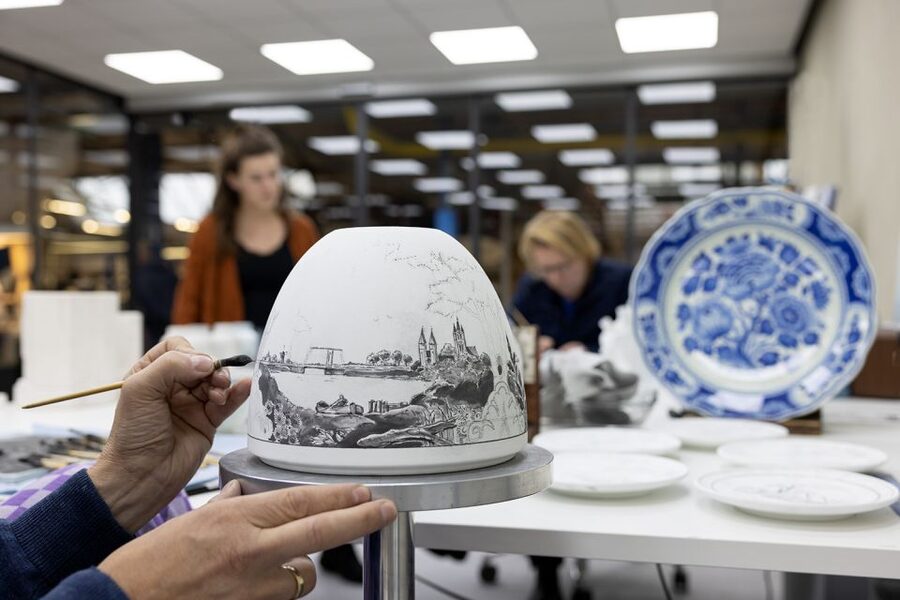
The painting is especially worth your attention. A design may look simple from a distance, but close viewing shows how much depends on steady hands and consistent brushwork. The decoration is applied in black ink, which turns blue during firing in the kiln. That small detail explains why the finished color can look different from what the painter sees at the start.
You may watch an artist painting a vase or plate, while another worker sands a newly made pitcher. The work is quiet and precise, so do not expect a loud, theatrical demonstration. On some days, especially later in the afternoon, only one or two people may be working in view.
That is an important point when planning your visit. The factory is active, but it is still a working production area, not a show staged every few minutes for an audience. Go in expecting to observe skilled work at close range, not to receive a long spoken presentation.
Some scheduled demonstrations may also be quite simple. A painter may sit down and begin decorating a vase without speaking to the audience. If you want detailed explanations or questions answered, a guided tour would be a better fit, but the standard admission includes the audio tour rather than a personal guide.
The museum collection, from antique tiles to modern Delftware
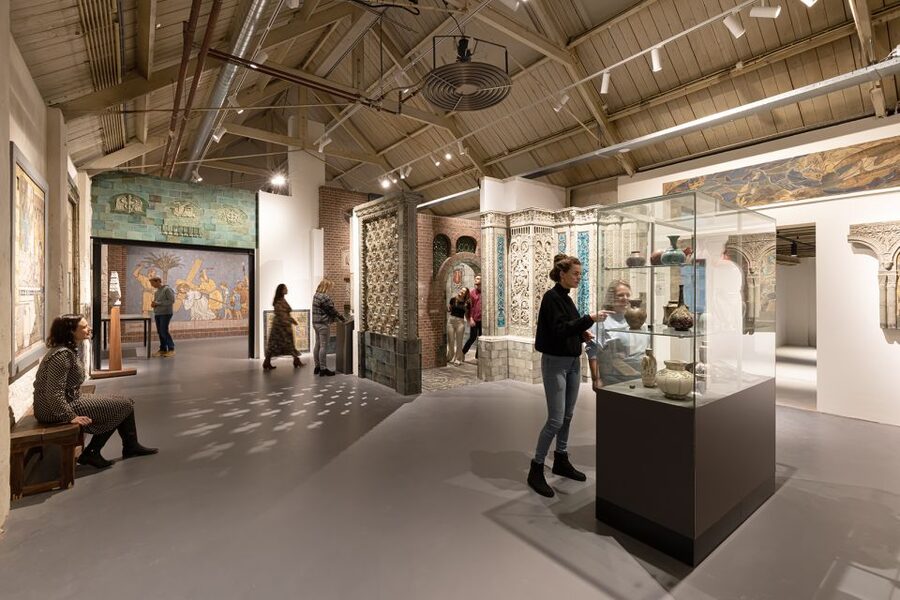
The museum presents Royal Delft’s past through both old and new pieces. You will see historic Delft Blue earthenware alongside modern designs, which helps show how the style has changed while keeping its basic visual language.
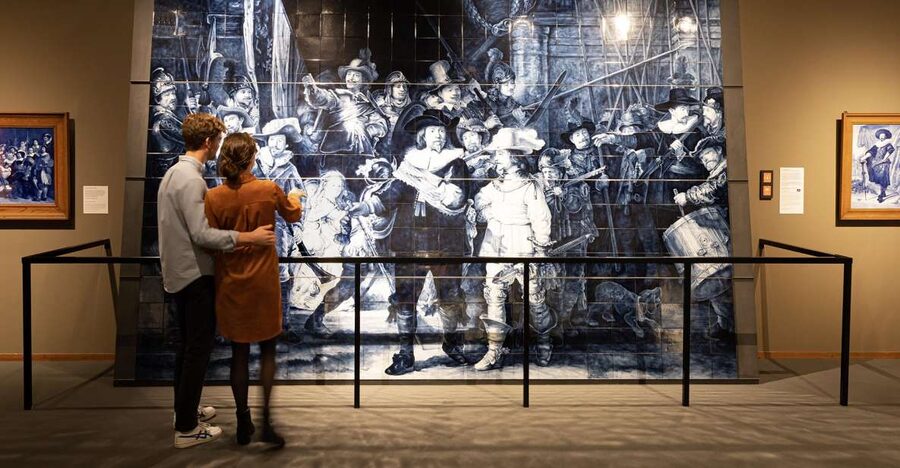
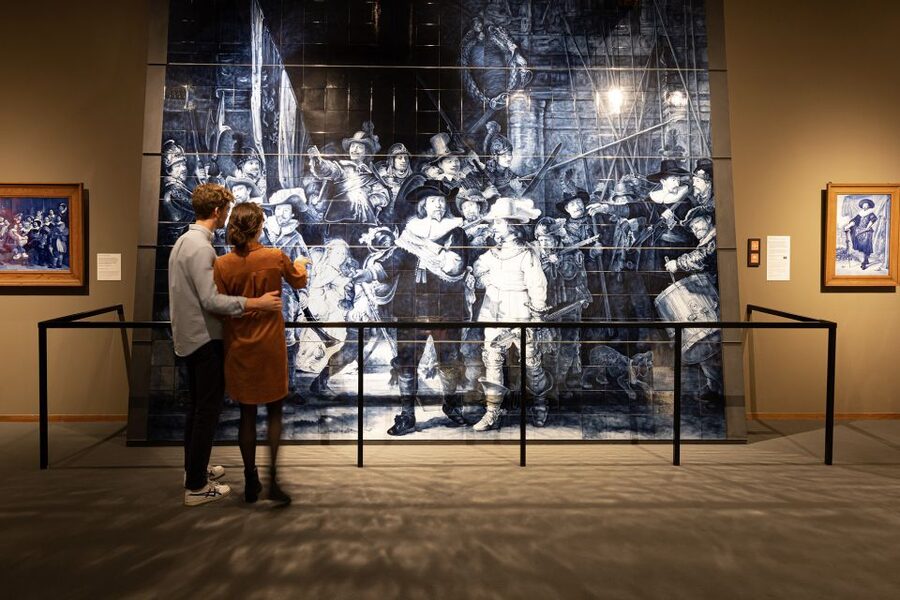
The collection includes decorative objects, tiles, plates, vases, and larger works. One striking piece is a life-sized tiled version of Rembrandt’s Night Watch. It gives you a sense of what Delft tile painting can do when the small blue-and-white format is used on a much larger scale.
The displays are clean and easy to follow, with useful directional information and written panels. If you prefer reading to listening, you can use the exhibits without relying entirely on the audio device. The audio tour is available in eight languages: English, Dutch, Spanish, Chinese, French, German, Italian, and Japanese.
I would allow enough time to listen to the main sections, but you do not need to hear every word to enjoy the visit. Some people find the museum portion less lively than the factory, particularly if they prefer hands-on experiences. The strength here is the link between the collection and the process, not a large number of interactive exhibits.
The museum is also a good stop before you reach the workshop area. After seeing finished pieces, you can better understand why a painter spends so much time on a single vase or plate.
Watching the artisans at work
The people working at Royal Delft are the reason to slow down. You may see an artist painting detailed lines and curves, a worker sanding a fresh piece, or staff handling earthenware at another stage of production. Their movements are controlled and careful, with little wasted motion.
This is not the kind of attraction where the activity is hidden behind a glass wall. You walk through the factory and get a direct view of the work areas. That makes the visit valuable even if you have already seen Delft Blue in shops around the Netherlands.
For the best chance of seeing more artists, morning may be preferable. The factory does not promise that every craftsperson will be present at every hour, and production work naturally varies from day to day. An afternoon visit can still be rewarding, but you might find fewer active stations.
The staff and greeters help you get started, but the regular experience is self-guided. That suits independent visitors and families who want flexibility. It may disappoint you if you arrive expecting a live guide to explain every step in person.
A few more Delft trips worth a look
- Delft: Canal Cruise with Guided Commentary
★ 4.4 · 990 reviews - Delft: Entrance Ticket for the Old and New Churches
★ 4.4 · 229 reviews - Delft: City Center Walking Tour
★ 4.7 · 88 reviews - Delft: Craft Beer Tasting in Medieval Brewery with Snacks
★ 4.4 · 67 reviews
The Royal Delft building, garden, and Brasserie 1653
The building itself adds to the visit. After the museum and factory, you can step into the courtyard garden and take a break at Brasserie 1653, which overlooks the garden.
The brasserie serves coffee, high tea, lunch, snacks, and other drinks, though these are not included in the admission price. This is a useful place to extend the visit rather than rushing straight back into Delft. The garden gives you a calmer setting after the concentrated displays and factory walk.
I would treat the brasserie as an optional extra, not part of the core ticket value. If you are short on time, the museum and factory deserve priority. If you have a relaxed schedule, a drink or light meal makes the stop feel more complete.
The garden is also a practical pause for families and anyone who wants to sit between sections. You can enjoy the setting without buying a ceramic piece, which matters because the showroom prices are not aimed at the budget souvenir market.
The showroom and the cost of Delft Blue
Admission is about $21 per person. For a 1.5-hour visit, that is not a bargain attraction, but the ticket covers more than a small display room. You get the museum, access to the factory, and a one-hour audio tour, with free Wi-Fi included.
I think the value is strongest if you care about craftsmanship or want to see Delft Blue being produced by hand. If you are interested only in buying a cheap Delft-style souvenir, the ticket may feel expensive. The museum is pleasant, but the working factory is what justifies the price.
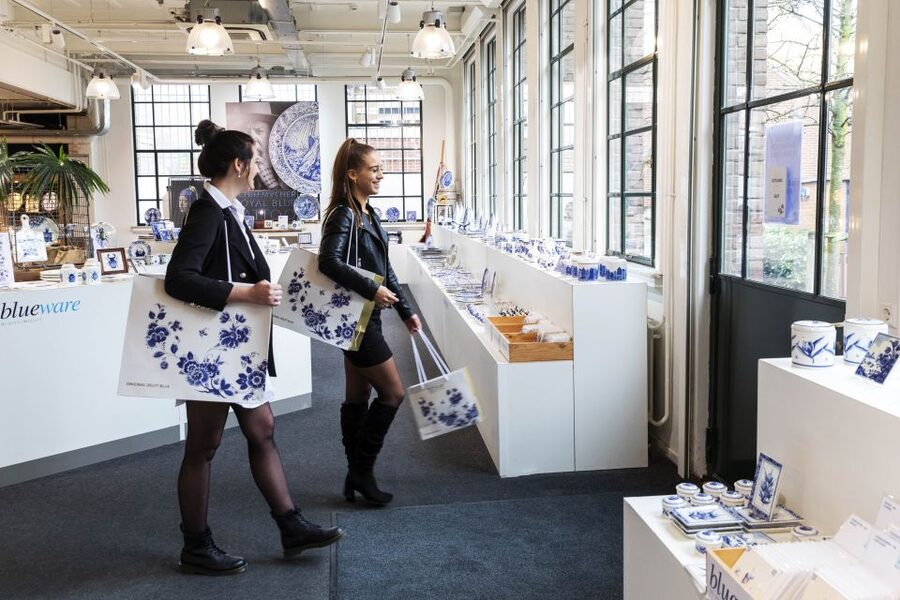
The showroom displays Royal Delft’s classic and modern collections, along with souvenirs. Genuine hand-painted pieces can cost much more than visitors expect. A small item may be manageable, while larger or more detailed ceramics can quickly become a major purchase.
The staff can wrap, pack, and ship purchases, which is helpful if you do not want to carry fragile pottery through the rest of your trip. Before buying, compare the piece with your budget and remember that the price reflects hand decoration and Royal Delft production rather than mass-market ceramic work.
A workshop may also be available as a separate activity, where you create your own Delft tile. That is not part of the standard entry described here, but it can suit families and anyone who wants a hands-on keepsake. One family enjoyed having their finished tiles sent to them later, which avoided carrying them during the rest of their journey.
Getting there from Delft, Amsterdam, The Hague, and Rotterdam

Royal Delft is at Rotterdamseweg 196, 2628 AR, Delft. Delft Station is about a 15-minute walk away, and the Market Square is about 20 minutes on foot. That makes it possible to combine the factory with the historic center, though you should allow time for both walks.
From The Hague or Rotterdam, the train journey to Delft takes about 30 minutes. From Amsterdam, the journey takes about 1.5 hours. If you are staying in Amsterdam, Royal Delft works best as part of a planned Delft day rather than a quick side trip.
There is free parking around the building. Public buses stop nearby, and a canal boat or Delft City Shuttle can take you into town quickly. This gives you several ways to combine the factory with Delft’s center without walking both directions.
The lack of a fixed time slot is convenient. You can choose an available starting time and fit the visit around your day in Delft. Check the opening schedule before you go, especially around the holidays: Royal Delft closes at 4 p.m. on December 24 and 31, and closes all day on December 25, 26, and January 1.
The visit is wheelchair accessible, and staff have been helpful to visitors using wheelchairs. That makes the museum and factory easier to include in a mixed-mobility itinerary, though you should still allow enough time to move comfortably through the building.
Who will enjoy Royal Delft most
I would recommend Royal Delft to you if you enjoy traditional crafts, decorative arts, Dutch history, or working industrial sites. It is also a strong choice for anyone who has seen Delft Blue in shops and wants to understand how it is made.
Families can do well here because the factory adds movement and real activity to the museum displays. A child who normally loses interest in old objects may respond better to watching clay shaped in molds or seeing a painter work on a vase.
Art lovers will appreciate the fine brushwork, while shoppers can browse the complete Royal Delft range. The garden and brasserie help break up the visit for anyone who does not want to spend the entire time in galleries.
I would be more cautious if you require a live guide, frequent demonstrations, or a highly interactive museum. The audio tour works well for many visitors, but the standard experience is still self-guided. You may also see fewer artisans than expected, depending on the day and time.
My practical verdict on the 1.5-hour visit
Royal Delft succeeds because it lets you see the complete chain: historic pieces, modern designs, raw clay, skilled painting, and finished ceramics in the showroom. The factory floor gives the visit purpose, while the museum provides the background needed to understand what you are seeing.
The strongest moments come from watching a painter work and noticing details such as the black ink that becomes blue in the kiln. The weakest moments come when the factory is quiet or when you expect a live explanation and receive only a silent demonstration.
For about $21, I consider it good value if you use the full visit and take time with the factory. Plan for about 1.5 hours inside, then add time for the garden, brasserie, and showroom. If possible, visit earlier in the day for a better chance of seeing more production activity.
Should you book Royal Delft?
Book it if you want the real story behind Delft Blue, not just a quick photo of blue-and-white pottery. The hand painting, working factory, antique collection, and life-sized tiled Night Watch make this a worthwhile Delft stop.
Skip it if your schedule is extremely tight, you dislike self-guided museums, or you are looking only for inexpensive souvenirs. For most visitors who have an interest in Dutch craft, Royal Delft offers a clear look at a tradition that is still being practiced by hand.
FAQ
How long does the Royal Delft experience take?
The visit lasts about 1.5 hours. You can spend additional time in the showroom, courtyard garden, or Brasserie 1653.
What is included in the admission price?
Admission includes entry to the museum and factory, a one-hour audio tour, and free Wi-Fi.
Is the tour guided by a person?
The standard experience is self-guided with an audio tour. English and Dutch-speaking hosts or greeters are available, but a live guided tour is not included.
Which languages are available for the audio guide?
The audio guide is available in Spanish, Chinese, Dutch, English, French, German, Italian, and Japanese.
Can I watch Delft Blue being made?
Yes. You can walk through the factory and may see painters, clay workers, and other craftspeople working on earthenware. The number of active workers can vary by day and time.
Is Royal Delft wheelchair accessible?
Yes, the experience is wheelchair accessible.
How far is Royal Delft from Delft Station?
Delft Station is about a 15-minute walk from Royal Delft.
How far is Royal Delft from Delft Market Square?
The Market Square is about a 20-minute walk away.
Is parking available?
Yes. Free parking is available around the Royal Delft building.
Can I eat or drink at Royal Delft?
Yes. Brasserie 1653 overlooks the courtyard garden and serves coffee, high tea, lunch, snacks, and drinks. Food and beverages are not included in the admission price.
Just added around Delft
- Private Tour of Delft + Visit to Royal Delft Museum★ 5.0 · 4 reviews
- Delft: Canal House Museum ‘Paul Tetar van Elven’ Ticket★ 4.5 · 6 reviews
- Delft: Private Historical and Cultural Guided Walking Tour★ 5.0 · 8 reviews
- Delft: Christmas Walk with Oliebollen and Glühwein★ 4.8 · 8 reviews
- Delft – Step/scootertour in and around the city★ 4.8 · 9 reviews
- Delft: Guided Walking Tour★ 4.7 · 9 reviews
- Delft: Dive into the Golden Age on a Private Walking Tour★ 4.6 · 16 reviews
- Delft: Craft Beer Tasting in Medieval Brewery with Snacks★ 4.4 · 67 reviews
Delft Tours, compared.

Craft Beer Tasting in Medieval Brewery with Snacks
Read our review →
Browse the lists this tour appears in