
Reviewed · DELFT TOURS
Delft: Entrance Ticket for the Old and New Churches
Delft’s two great churches tell the story of the Netherlands in stone, glass, and burial monuments. At the New Church, you see the royal connection and the grand mausoleum of William of Orange. At the Old Church, you get medieval Delft, including the grave of Johannes Vermeer and a tower that leans about two meters off-center.
I like the one-ticket simplicity and the sharp contrast between the churches. I also like the thoughtful displays around William of Orange’s tomb, including video screens, written timelines, and a model of the burial vault. The main drawback is that this is a self-guided visit, so you need to bring your own context, and building work or church events can affect what you see.
Key points to know before you go
- Two churches, one $11 ticket: Visit the New Church and Old Church with a single admission.
- Start at the New Church: Exchange your voucher at its ticket counter before visiting the Old Church.
- William of Orange’s mausoleum: See the burial place of the Dutch leader known as the Father of the Fatherland.
- Royal Delft: The New Church is the burial church of members of the Dutch Royal Family.
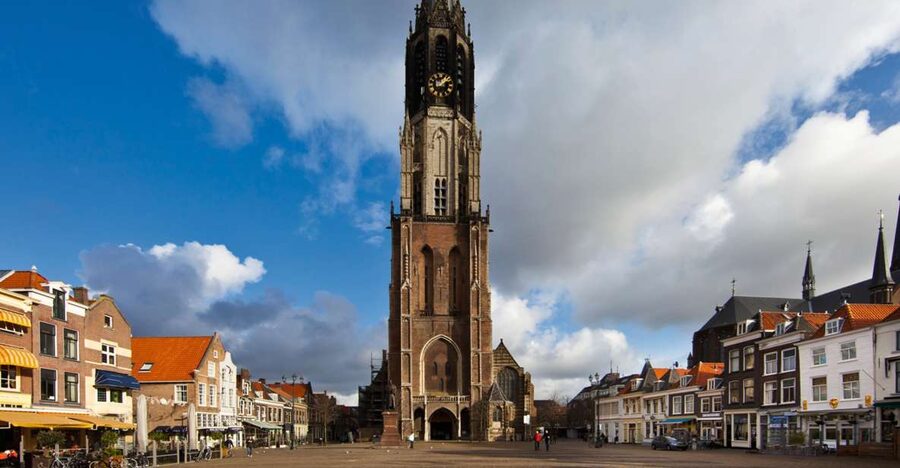
- Leaning John: The Old Church tower tilts about two meters from center.
- Allow 1.5 hours: The visit is wheelchair accessible, though the floors can be uneven or bumpy.
Why Delft’s two churches work so well together
If you visit only one church in Delft, you miss half the story. The New Church gives you royal ceremony, national identity, and grand memorials. The Old Church feels older, stranger, and more medieval, with a leaning tower and the graves of artists, scientists, and naval figures.
The pairing also makes the $11 price easier to judge. You are not paying for a single quick church stop. You are getting access to two major monuments in central Delft, with enough material to fill roughly an hour and a half.
This is not a guided tour with a host leading you from room to room. You move at your own pace, using the information available inside the churches and the map provided. That suits you if you like stopping for photographs, reading selected details, or taking in the architecture without keeping up with a group.
A few more Delft trips worth a look
- Delft: Canal Cruise with Guided Commentary
★ 4.4 · 990 reviews - Royal Delft: Delftblue Factory and Museum
★ 4.6 · 588 reviews - Delft: Vermeer Centrum Delft Museum Entry Ticket
★ 4.6 · 189 reviews
Begin at the New Church in Delft
The practical rule is simple: visit the New Church first. Go to its ticket counter to exchange your voucher, then begin your visit there before walking on to the Old Church.
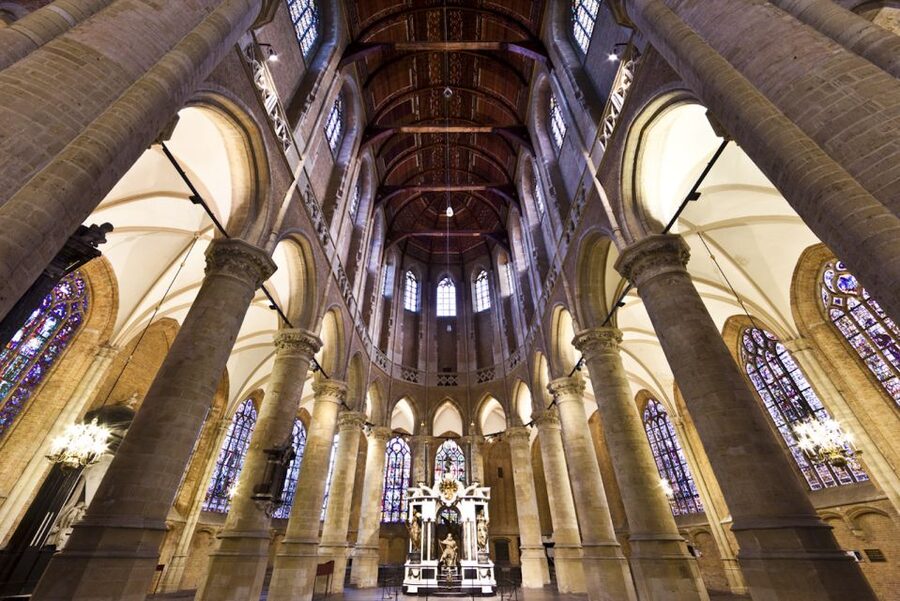
The New Church was completed in 1655, although its royal role reaches back to the burial of William of Orange in 1584. Members of the House of Orange have since been laid to rest within the church. That gives the building a special place in Dutch public life, not just in Delft’s religious past.
The first thing you notice is scale. The interior gives the royal burials room to breathe, and the atmosphere is more formal than at the Old Church. If you have an interest in Dutch political history or the modern monarchy, this is likely the stronger half of the visit.
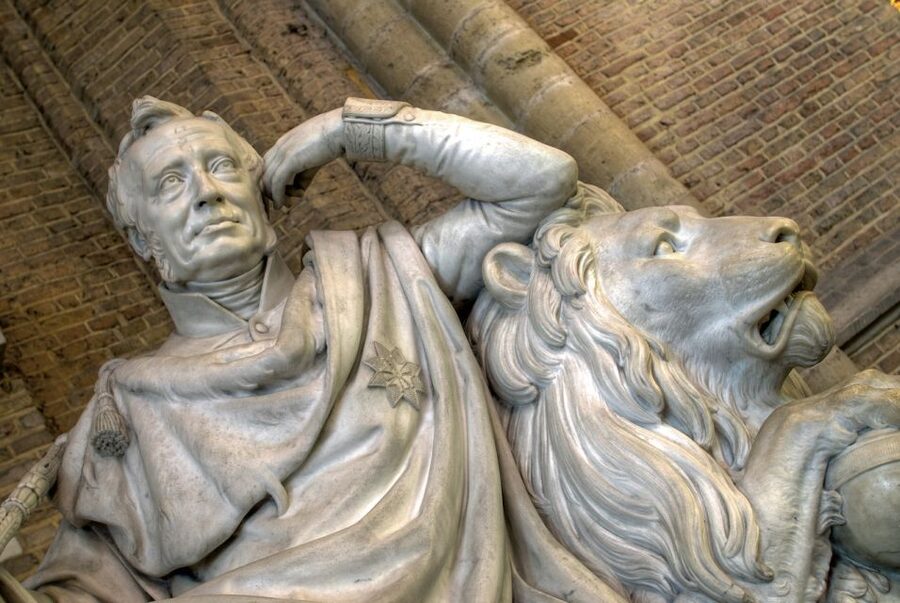
The central feature is the mausoleum of William of Orange, often called the Father of the Fatherland. Its importance is easy to understand even if you know little about Dutch history. William helped shape the struggle that led to the Dutch state, and his tomb became the first major royal burial in the church.
You do not need to rush past the mausoleum. A walking route around it helps explain the people and events connected with the monument. Video screens and written panels set out historical timelines and introduce key figures. This is useful because the architecture alone cannot explain why William of Orange matters so much to the Netherlands.
A model of the burial vault adds another helpful layer. It gives you a clearer idea of what lies below the church and how the burial spaces relate to the memorial above. I find this sort of model especially useful in a church where the most important spaces are not all visible at floor level.
Royal burials, organ music, and colored glass
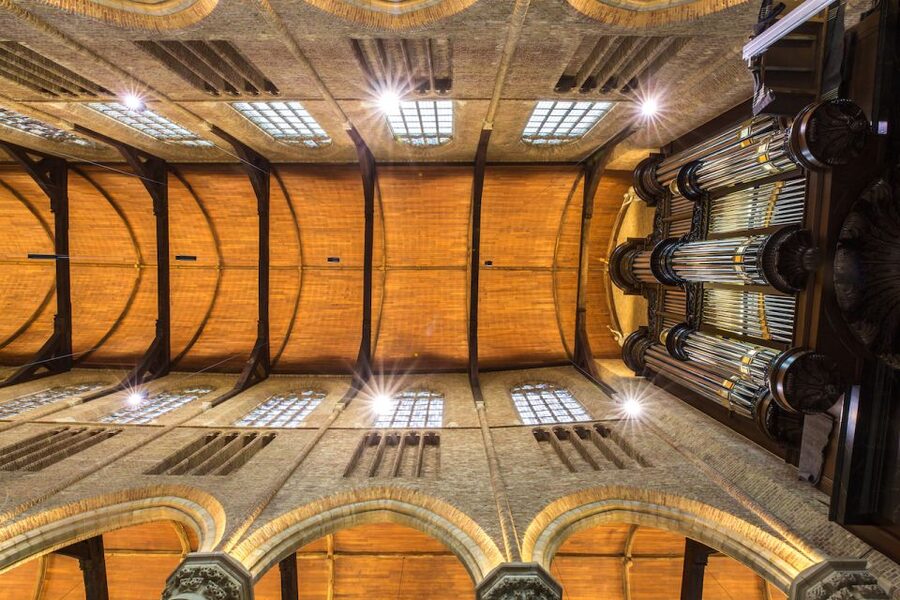
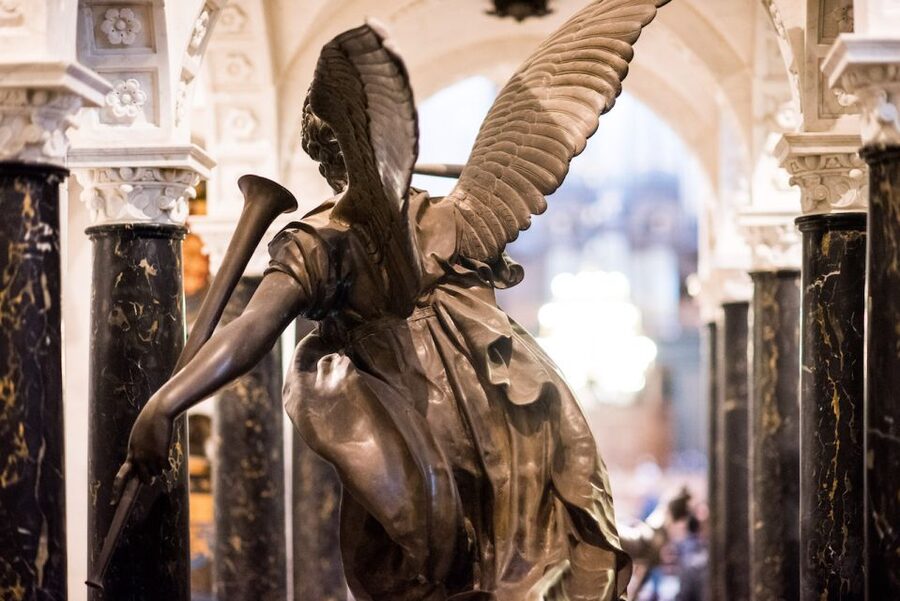
The New Church is not only about tombs. Its monumental organ gives the interior a strong musical presence, even when no performance is taking place. The organ also reminds you that this is still a working church, not simply a historic monument.
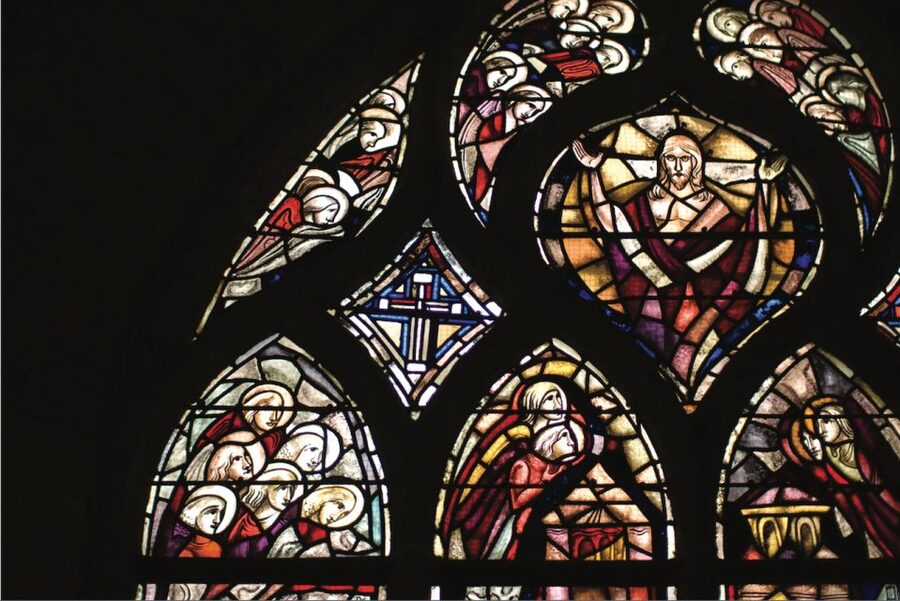
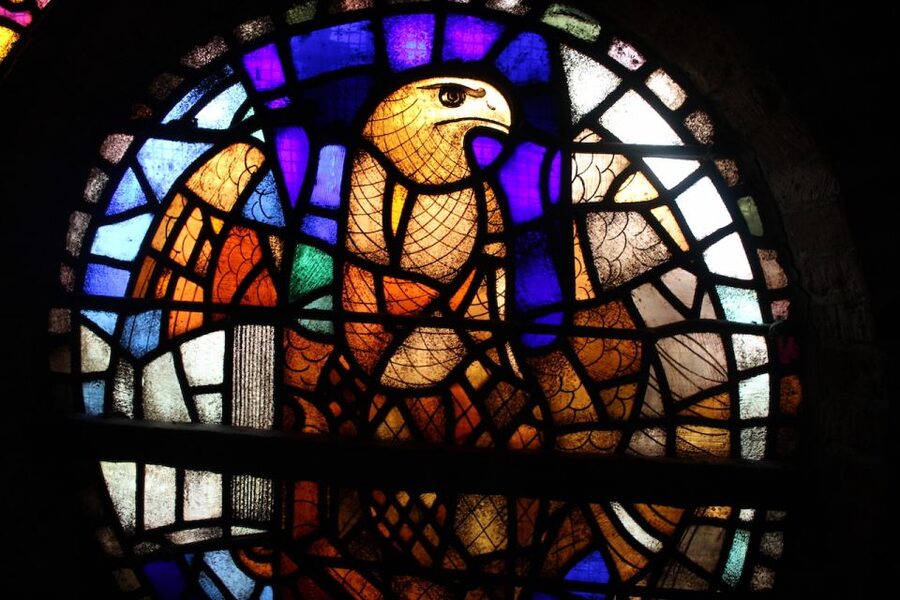
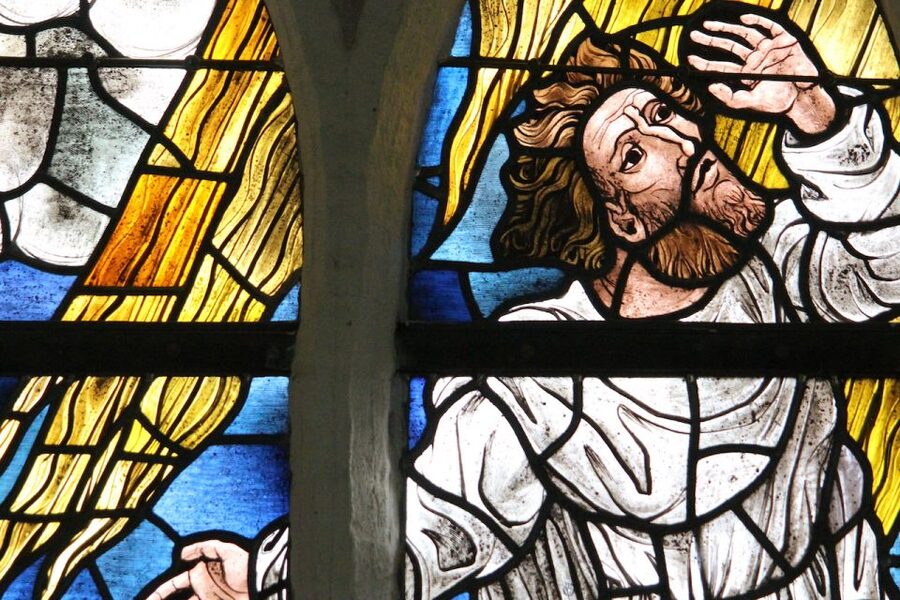
Modern stained-glass windows bring color into the old stone interior. That mix of old structure and newer glass keeps the church from feeling frozen in one period. Look for the way colored light changes the mood around the darker memorials and stone surfaces.
The royal connection will appeal most to you if you already follow the House of Orange or Dutch history. If royal genealogy does not interest you, the mausoleum can feel like a large centerpiece surrounded by names you may not recognize. The written material helps, but there is no personal guide to fill in the gaps or answer questions.
That is the tradeoff throughout this experience. You get freedom and a low price, but your understanding depends on how much time you spend with the displays. A quick pass through both churches will show you the main sights. A slower visit makes the ticket more worthwhile.
Walk to the Old Church and meet Leaning John
After the New Church, continue to the Old Church. The required order matters, so do not arrive at the Old Church first expecting to start there. The churches are close enough to combine easily in one Delft sightseeing stop, although the ticket instructions place the New Church at the beginning.
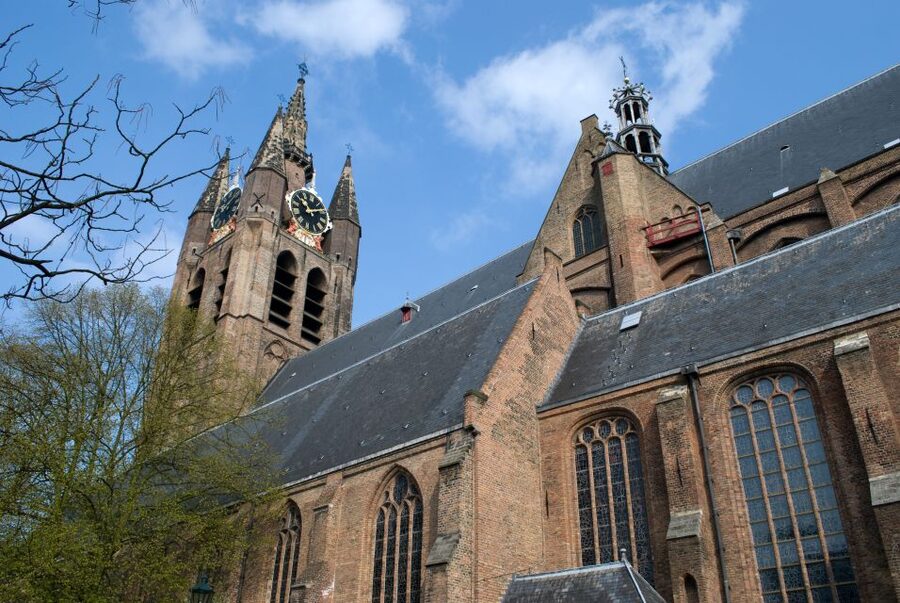
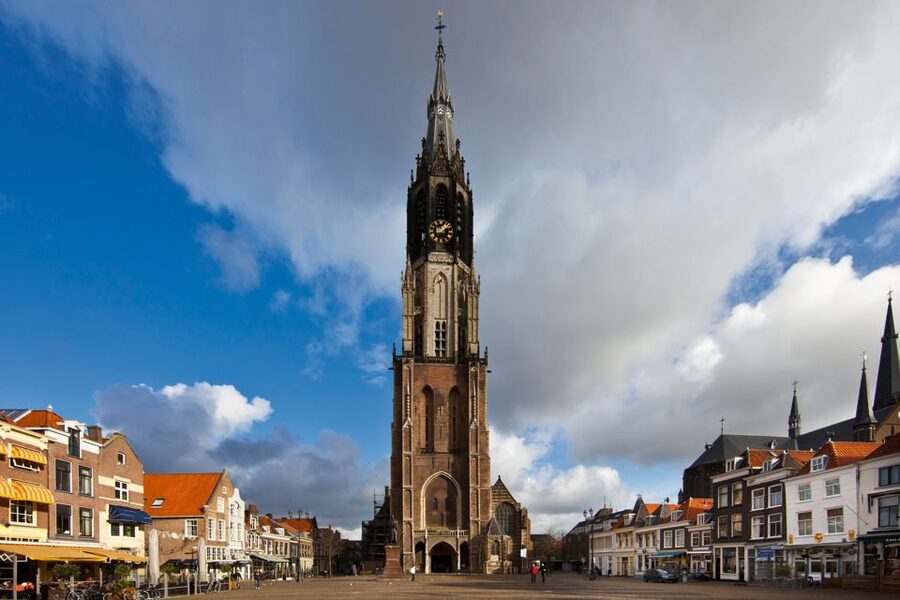
The Old Church has been part of Delft since 1246. It offers a different mood from the New Church: more medieval, more irregular, and more intimate. Its most famous feature is the tower, which leans about two meters off-center. The nickname Leaning John gives the structure a friendly local character, but the tilt is also a striking piece of engineering and city history.
You can see why the tower becomes such a memorable part of the visit. It does not look perfectly straight against the Delft skyline, and its angle gives the church a distinct identity. The tower may close one hour before the churches, and it can be closed in bad weather, so check conditions if climbing or tower access is important to you.
Do not plan to arrive just before closing. New visitors are not admitted during the final 15 minutes, and the tower closes earlier. The exact hours can also change when church activities or special events take place.
Same country, a completely different kind of day:
- Delft: City Center Walking Tour
★ 4.7 · 88 reviews - Delft: Craft Beer Tasting in Medieval Brewery with Snacks
★ 4.4 · 67 reviews - Delft: Dive into the Golden Age on a Private Walking Tour
★ 4.6 · 16 reviews - Delft – Step/scootertour in and around the city
★ 4.8 · 9 reviews
Johannes Vermeer and the other historic graves
The Old Church is the burial place of Johannes Vermeer, Delft’s celebrated painter. Vermeer is closely linked with the city’s light and quiet interiors, so seeing his grave here adds a personal connection to the place where he lived and worked.
The grave itself is not a grand royal monument. That is part of the point. The church places Vermeer among the ordinary and monumental traces of Delft’s past, giving you a sense of how many different kinds of people are remembered here.
Other important figures include Piet Hein and Antoni van Leeuwenhoek. Piet Hein is associated with Dutch naval history, while Van Leeuwenhoek is known for his scientific work. Their presence broadens the visit beyond art and monarchy.
You may find the Old Church more rewarding if you enjoy small details. Look at the tomb monuments, the worn floor, the stained glass, and the way the building’s long use shows in its surfaces. The floor can be uneven or bumpy, which adds to the old-world feel but matters for anyone who walks with difficulty.
The stained glass gives the church another visual focus. In the New Church, colored light works with the formal royal interior. In the Old Church, it feels more closely tied to the medieval setting and historic stonework. Seeing both churches makes the contrast easier to appreciate.
How the visit works without a guide
There is no guide included. You exchange your voucher at the New Church ticket counter, then explore the buildings independently. A map provides useful information and helps you get your bearings quickly.
The self-guided format works best if you have a basic interest in history and are willing to read. At the New Church, the video screens, written text, and burial-vault model offer more explanation than you might expect from a simple church ticket.
Still, you should not expect a full lecture on Dutch history. The material points you toward important people and events, but it does not replace a specialist guide. If you want detailed answers about architecture, theology, or royal ceremony, you will need to do extra reading before or after your visit.
The advantage is control. You can spend extra time at William of Orange’s mausoleum, move quickly through areas that interest you less, or pause in silence without being hurried along. For many people, that freedom is worth more than a scripted commentary.
Is $11 good value for 1.5 hours?
At $11 per person, I consider this a solid-value Delft attraction, especially if you plan to use the full 1.5 hours. The ticket covers both churches, not just the better-known New Church, and each building offers a different experience.
The value is strongest for you if you care about Dutch history, royal families, famous residents, church architecture, or Vermeer. It is also a sensible choice on a short Delft visit because the two sites can be combined in one compact cultural stop.
The value is weaker if you want entertainment, a live guide, or a tightly organized tour. You are paying for access to historic spaces and supporting information, not for transport, a guide, or a performance.
A useful approach is to give yourself enough time for the highlights:
- Start with William of Orange’s mausoleum and the displays around it.
- Look at the organ and stained glass in the New Church.
- Check the tower situation before spending too much time at the Old Church.
- Find Vermeer’s grave and look for the other named historic figures.
- Save a few minutes for the overall architecture instead of treating both churches as a checklist.
Access, timing, and possible changes
Both churches are wheelchair accessible. The uneven or bumpy floors can still make movement less comfortable, so plan at a pace that suits you.
Churches remain active religious and public spaces. They may close or adjust their hours for services, ceremonies, maintenance, or other activities. Check the current agenda before setting out, especially if your Delft visit is built around a narrow time window.
During the Christmas holidays, both churches are open from 10:00 in the morning until 5:00 in the afternoon on weekdays and Saturdays. Other periods may have different hours.
The tower has its own limitation. It closes one hour earlier than the churches and may close because of weather. If the leaning tower is your main reason for booking, confirm that it is open rather than assuming church admission guarantees tower access.
Food and drinks are not allowed inside, and alcohol and drugs are prohibited. This is easy to manage, but it means you should finish snacks and drinks before entering.
The booking terms are flexible: you can cancel up to 24 hours in advance for a full refund, and a reserve-now, pay-later option is available. Those terms help if your Delft day depends on weather, museum plans, or uncertain opening hours.
Who should book this Delft church ticket?
I would recommend it to you if you want a self-guided history stop with real connections to Dutch national life. It is particularly suitable for:
- People interested in the Dutch Royal Family and William of Orange.
- Art lovers who want to see where Johannes Vermeer is buried.
- History fans who enjoy tombs, memorials, and old city churches.
- Visitors looking for an indoor activity in Delft.
- Families or independent sightseers who prefer to set their own pace.
- Wheelchair users who can manage uneven flooring.
I would think twice if you want a guide, a short visit of only a few minutes, or guaranteed tower access. The tower can close early or shut in bad weather, and church activities can alter the schedule.
Should you book the Old and New Churches ticket?
Book it if you want to connect Delft’s medieval past with its royal and national story. The New Church gives you William of Orange, royal burials, the organ, stained glass, and helpful displays. The Old Church adds Leaning John, Vermeer, Piet Hein, Van Leeuwenhoek, and a more rugged medieval setting.
The strongest reason to go is the contrast. You are not seeing two nearly identical churches. You are moving between two different chapters of Delft, with one ticket and about 1.5 hours of your day.
Skip it only if you need a guide or if your schedule cannot tolerate possible closures and early tower access limits. For $11, the combination offers enough history and atmosphere to earn a place on a Delft itinerary, especially when you follow the required order and allow time to read the material around the mausoleum.
FAQ
What does the Delft church ticket include?
It includes admission to both the Old Church and the New Church in Delft.
How much does the ticket cost?
The listed price is $11 per person.
How long should I allow for the visit?
The stated duration is 1.5 hours.
Which church should I visit first?
You must visit the New Church before the Old Church. Exchange your voucher at the New Church ticket counter first.
Is a guide included?
No. The ticket does not include a guide, so you visit independently using the available information and map.
Can I see William of Orange’s mausoleum?
Yes. The New Church contains the mausoleum of William of Orange, known as the Father of the Fatherland.
Are Dutch Royal Family members buried in the New Church?
Yes. The New Church is the burial place of members of the Dutch Royal Family, beginning with William of Orange’s burial there in 1584.
Can I see Johannes Vermeer’s grave?
Yes. Johannes Vermeer is buried in the Old Church.
Is the experience wheelchair accessible?
Yes. Both churches are wheelchair accessible, though the floors may be uneven or bumpy.
Can I visit the churches just before closing?
No new visitors are admitted during the final 15 minutes before closing. The tower closes one hour earlier than the churches, and it may also close because of weather.
Just added around Delft
- Private Tour of Delft + Visit to Royal Delft Museum★ 5.0 · 4 reviews
- Delft: Canal House Museum ‘Paul Tetar van Elven’ Ticket★ 4.5 · 6 reviews
- Delft: Private Historical and Cultural Guided Walking Tour★ 5.0 · 8 reviews
- Delft: Christmas Walk with Oliebollen and Glühwein★ 4.8 · 8 reviews
- Delft – Step/scootertour in and around the city★ 4.8 · 9 reviews
- Delft: Guided Walking Tour★ 4.7 · 9 reviews
- Delft: Dive into the Golden Age on a Private Walking Tour★ 4.6 · 16 reviews
- Delft: Craft Beer Tasting in Medieval Brewery with Snacks★ 4.4 · 67 reviews
Delft Tours, compared.


Craft Beer Tasting in Medieval Brewery with Snacks
Read our review →


Browse the lists this tour appears in