
Reviewed · DELFT TOURS
Delft: Dive into the Golden Age on a Private Walking Tour
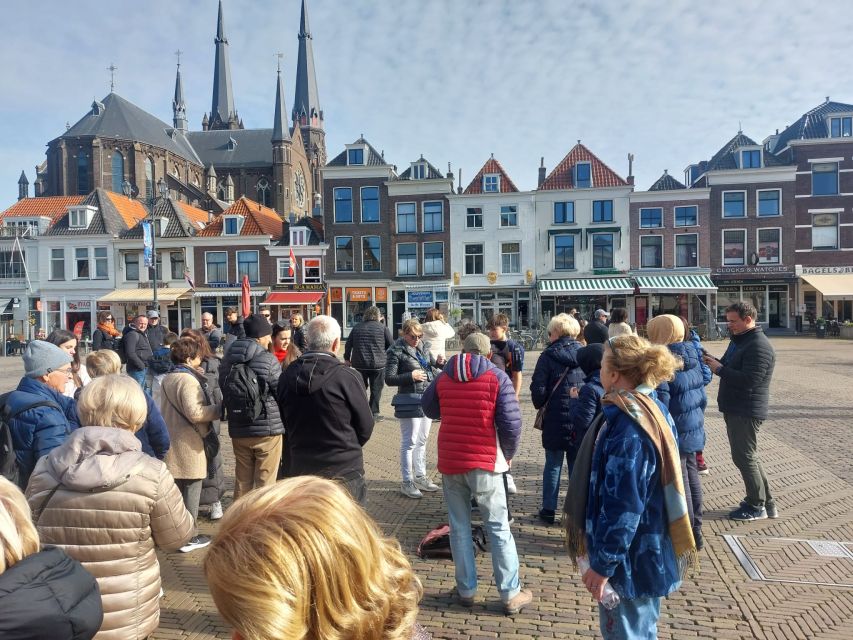
Delft is the sort of city that makes more sense once someone points out what you are seeing. This two-hour private walk begins beside Hugo Grotius’s statue on Market Square and leads through the old center, where canals, churches, bridges, and Golden Age stories fit together. You will hear about Vermeer, William of Orange, and Antonie van Leeuwenhoek while walking through the setting that shaped them.
I like the flexible pace and the chance to ask questions without a larger group waiting. I also like the local angle: guides such as Sterre, Peter, and Tristan have brought personal stories and useful city tips to the walk. The main consideration is language consistency. One French-speaking group found its guide friendly but only moderately comfortable in French, so confirm your preferred language if that matters.
Key points at a glance
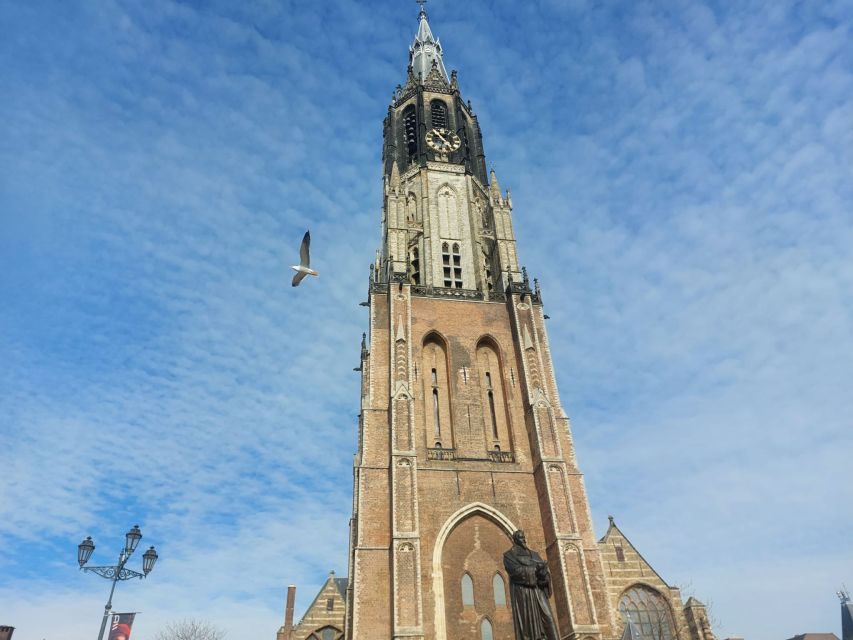
- Hugo Grotius’s statue: Meet in front of the New Church on Delft’s central Market Square.
- Golden Age figures: Connect Delft with Vermeer, William of Orange, and microscope pioneer Antonie van Leeuwenhoek.
- Canals and bridges: Cross some of the city center’s roughly 75 bridges while learning how the town fits together.
- Private format: Your group can set the pace, ask questions freely, and shorten the walk if needed.
- Six guide languages: English, Dutch, German, Italian, Spanish, and French are offered.
- Optional tower visit: Entry to the New Church tower is not included, but it may be arranged on request.
Why Delft works so well on foot
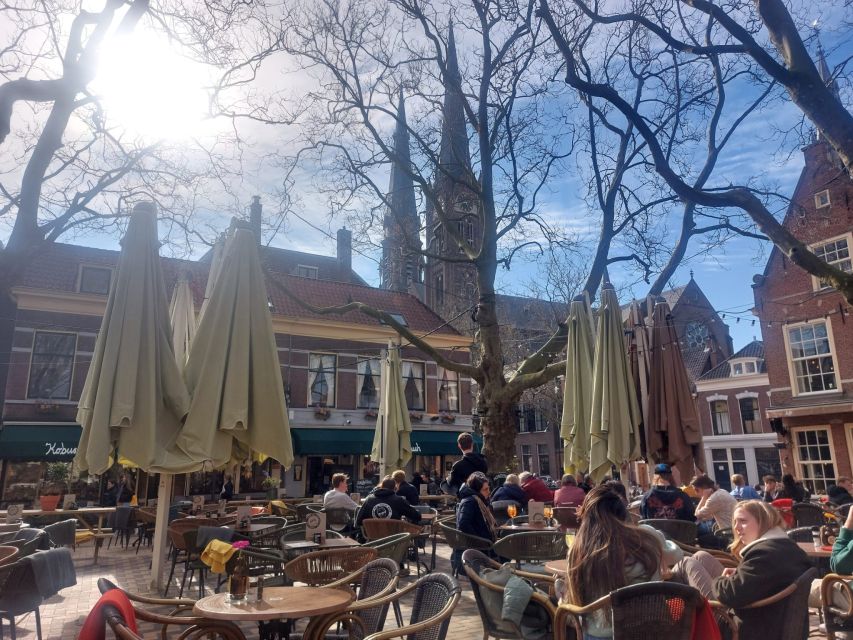
Delft’s old center is compact, calm, and full of visual clues. You do not need a bus or a long transfer to move between the main sights. The pleasure comes from walking slowly enough to notice a canal bend, a church tower, an old facade, or a bridge that you might otherwise pass without a second thought.
This tour is built around that scale. Rather than treating Delft as a checklist of monuments, the guide connects the streets to the people who made the city famous. You hear how William of Orange became known as the Father of the Fatherland, how Leeuwenhoek helped people see the microscopic world, and how Vermeer turned ordinary Delft interiors and streets into carefully balanced scenes of light.
That approach is useful if you are new to Dutch history. Names and dates can blur together when you visit several Dutch cities in one trip. A good guide gives each person a clear place in the story, then shows you where that story belongs in Delft.
The walk also suits anyone who enjoys architecture without needing a formal architecture lecture. Churches, canals, Market Square, and the city’s bridges provide the setting. Your guide supplies the connections.
More walking tours in Delft:
- Delft: City Center Walking Tour
★ 4.7 · 88 reviews - Delft: Guided Walking Tour
★ 4.7 · 9 reviews - Delft: Private Historical and Cultural Guided Walking Tour
★ 5.0 · 8 reviews
Meeting Hugo Grotius in Market Square
The tour starts at the statue of Hugo Grotius, in front of the New Church. This is a sensible meeting point because it is easy to identify and places you immediately in Delft’s historic center.
Market Square gives the walk a strong opening. The New Church provides the backdrop, while the square helps you understand Delft as a civic center rather than just a pretty collection of canals. Your guide can begin putting the city’s major figures into context here, before leading you into the surrounding streets.
Starting in the square also makes the tour easy to fit into a day of sightseeing. You can continue exploring nearby after the walk, return to a place your guide recommends, or ask where to go next. Since the operator allows a different starting point in Delft if arranged ahead of time, you have some room to adapt the meeting location to your plans.
The statue itself is not simply a place to wait. Grotius gives the guide an opening into Dutch political and intellectual history. You will hear about a man remembered as the Father of the Fatherland, then begin to see Delft as a place where national events and local streets overlap.
Following the canals and crossing Delft’s bridges
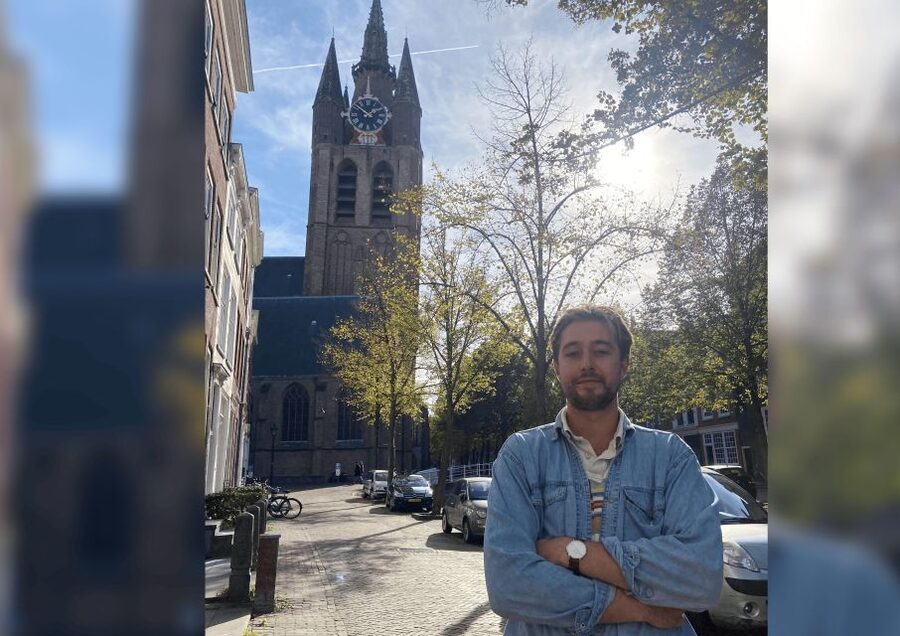
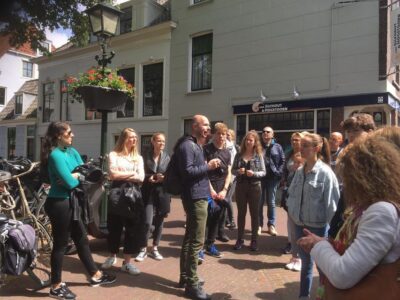
The central walk takes you along Delft’s canals and across some of the town’s many bridges. The exact route can vary because this is a private tour, but the supplied outline centers on the historic heart, Market Square, churches, canals, and the old streets around them.
The bridges are more than photo stops. They help you read the city’s layout. From each crossing, you get a slightly different view down the water, along the street, or toward a church tower. A guide can also point out details that are easy to miss when you are focused only on reaching the next major sight.
The town center has about 75 bridges, and the tour uses some of them to show how Delft’s streets and waterways connect. You will not see every bridge in two hours, nor should you want to. The value is in walking a representative part of the old center at a pace that leaves room for explanation.
This is also where the private setup helps. If you want more time for canals and architecture, you can slow down. If your group has already seen a certain area, you can ask the guide to spend more time elsewhere. The walk can also be shortened if you prefer a quicker overview.
Plan for ordinary walking on city streets and bridges. The information says the activity is wheelchair accessible, but it also lists people with mobility impairments as unsuitable. Those two notes do not fully match, so anyone with access needs should contact the operator before booking and describe the specific requirement.
Vermeer’s Delft, seen at street level
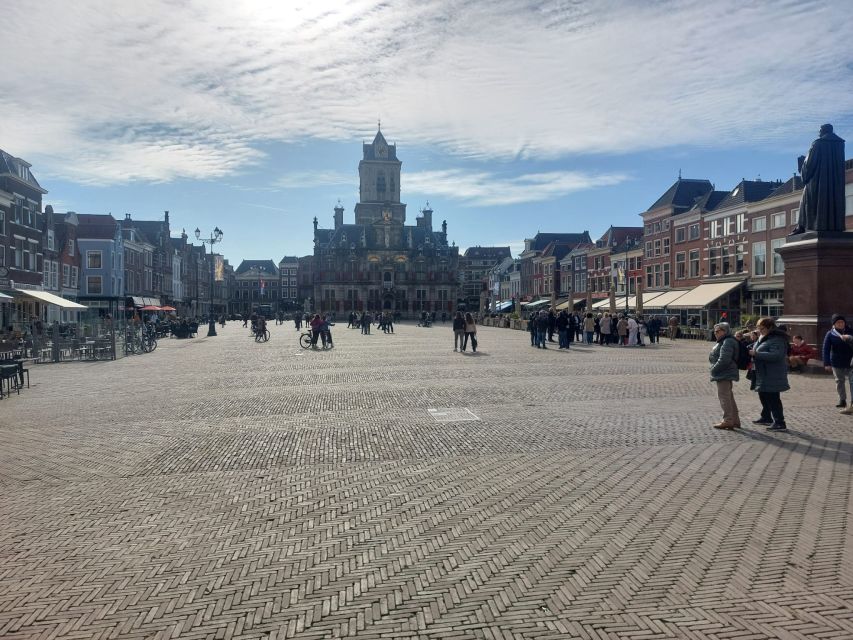
Vermeer is one of the main reasons this tour feels different from a standard city orientation. The guide does not simply name the painter and move on. The walk presents Delft as the city of Vermeer, allowing you to connect his work with the old streets, canals, and quiet corners around you.
You should not expect an art museum tour or a visit inside a Vermeer collection. The supplied details describe a walking tour through the historic center, not an included museum admission. Instead, the guide uses the city itself to explain the painter’s connection to Delft and the way light and place became central to his work.
That can be especially helpful if you know Vermeer mainly through famous paintings. A local guide can give you a stronger sense of his home city and explain why Delft’s calm streets and waterways matter to his story. The experience is visual, but it is also conversational. Ask questions if you want more attention on painting, architecture, or the city’s daily life.
The tour’s description presents the walk as going through a Vermeer painting. Take that as a mood rather than a promise of a particular painting location. You will be walking through the historic city that shaped the artist, not stepping into a staged recreation.
A few more Delft trips worth a look
- Delft: Canal Cruise with Guided Commentary
★ 4.4 · 990 reviews - Royal Delft: Delftblue Factory and Museum
★ 4.6 · 588 reviews - Delft: Entrance Ticket for the Old and New Churches
★ 4.4 · 229 reviews - Delft: Vermeer Centrum Delft Museum Entry Ticket
★ 4.6 · 189 reviews
William of Orange and Delft’s national story
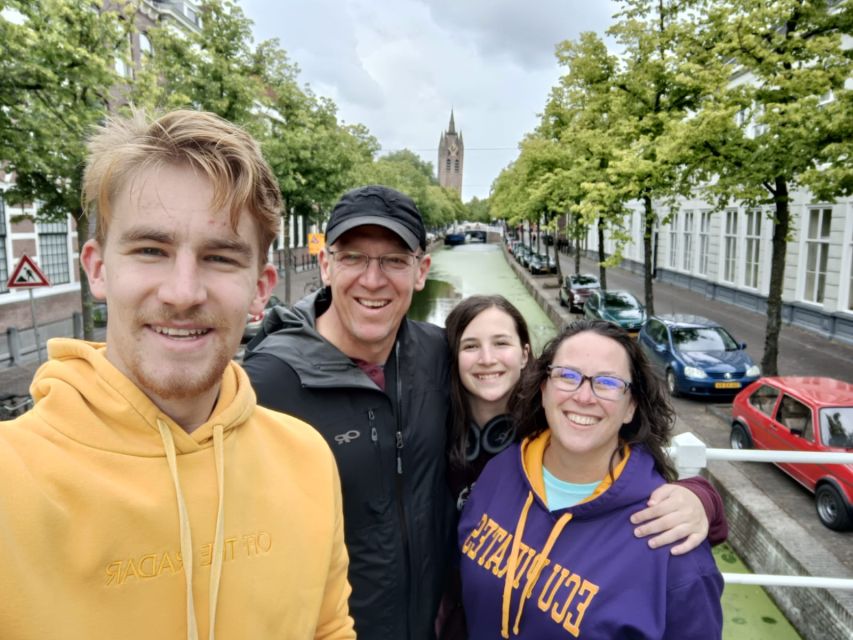
Delft’s connection with William of Orange gives the tour a wider focus. The city is not presented only as an attractive canal town. It also appears as a place tied to the formation of the Netherlands and to the figure remembered as the Father of the Fatherland.
For you, this means the guide can link local landmarks to national history. The churches, square, and old streets are not isolated sights. They become part of a story about power, belief, public life, and the emergence of the Dutch state.
This is one of the strongest reasons to take the walk early in your Delft visit. Once you understand the basic story, later sightseeing has more shape. You can return to places from the tour and notice them with a better sense of why they matter.
The tour will not suit everyone equally. If you want detailed military history or a long chronological lecture, ask your guide at the start how much time can be given to William of Orange. The private format makes that request possible, but two hours still requires choices.
Leeuwenhoek and the science behind the streets
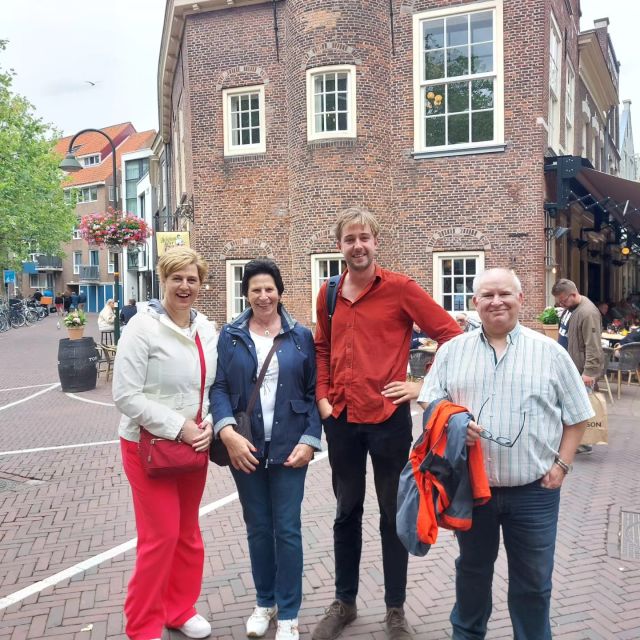
Antonie van Leeuwenhoek adds a welcome change of subject. He is the Dutchman associated with the discovery of microbes, and his story brings science into a walk otherwise focused on art, politics, canals, and churches.
I like this mix because it keeps the tour from becoming a single-subject history lesson. Delft is shown through several people with very different interests: Vermeer and light, William of Orange and national leadership, and Leeuwenhoek and the unseen world revealed through observation.
Your guide will tell the story while you move through the old center, so the science becomes part of the city’s human history rather than a separate museum topic. If Leeuwenhoek interests you, ask for more detail. The private guide can adjust the emphasis more easily than a fixed group tour.
As with Vermeer, no museum visit or special exhibit is included. The attraction here is the explanation and the connection to Delft, not an included scientific display.
What the two-hour format really gives you
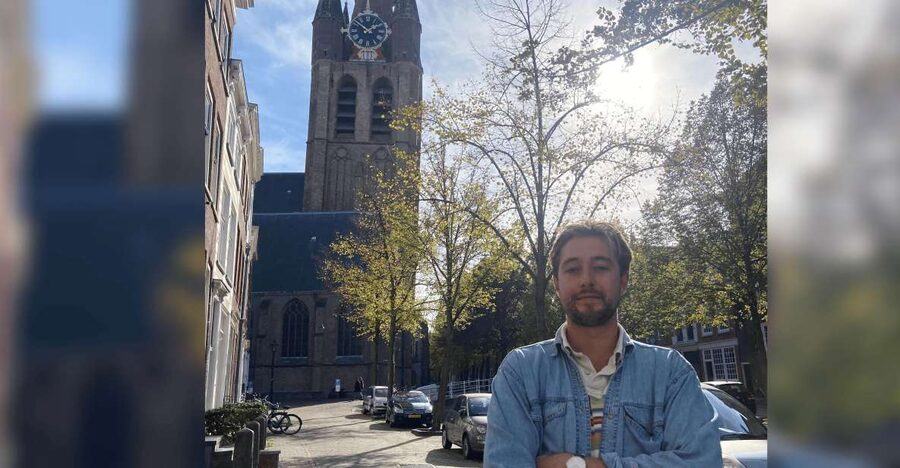
Two hours is enough for a meaningful introduction, but not for every church, bridge, and historical figure in detail. That is a good limit for most visitors. You get a clear framework without spending half a day on a single orientation walk.
The private format changes how those two hours feel. A group of up to 20 can book together, and the price is $199 per group rather than per person. For one or two people, that is a substantial cost compared with a public group walk. For a family or larger party, the calculation improves quickly. A full group of 20 would bring the cost to less than $10 per person, before any optional extras.
The real value depends on how many people are sharing the booking and how much you want personal attention. A couple who only wants a quick look at Delft may find the price high. A family or group of friends can get a private guide, a flexible route, and the chance to ask questions for a set group price.
The pace is normally about two hours, but the guide can be flexible. You can shorten the experience if children are tired, if the weather turns unpleasant, or if you want to move on to another appointment. The tour operates in all weather, so bring suitable clothing rather than assuming rain will cancel it.
Guides, languages, and the human element
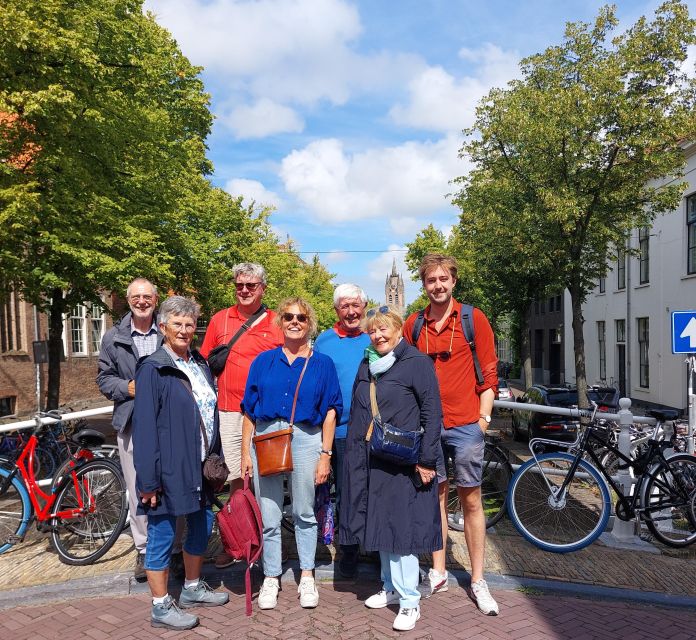
The guide is the main variable in any walking tour. This experience uses local guides and offers English, Dutch, German, Italian, Spanish, and French.
Several guide names appear in the available feedback. Sterre led a relaxed, enjoyable introduction for one Dutch-speaking group. Peter received especially warm approval for an educational Delft walk. Tristan was praised for broad background knowledge, anecdotes about history and architecture, and an interesting international life.
Those details suggest that guides may bring different personalities and strengths. One may focus on easy conversation and local charm, while another may offer more historical context or architectural detail. That is normal for a private local tour, but it also means the language experience can vary.
The French-language note is worth taking seriously. A Belgian group found the guide pleasant but felt the French was only moderate, which limited how much they could gain from the explanations. If you are booking in French, ask the provider to confirm the guide’s fluency rather than relying only on the language menu.
The overall rating is 4.6 from 16 ratings, with several top marks and a few four-star scores. The pattern points to a well-liked experience, while also reminding you that guide fit and language ability matter.
Churches, Market Square, and the optional tower
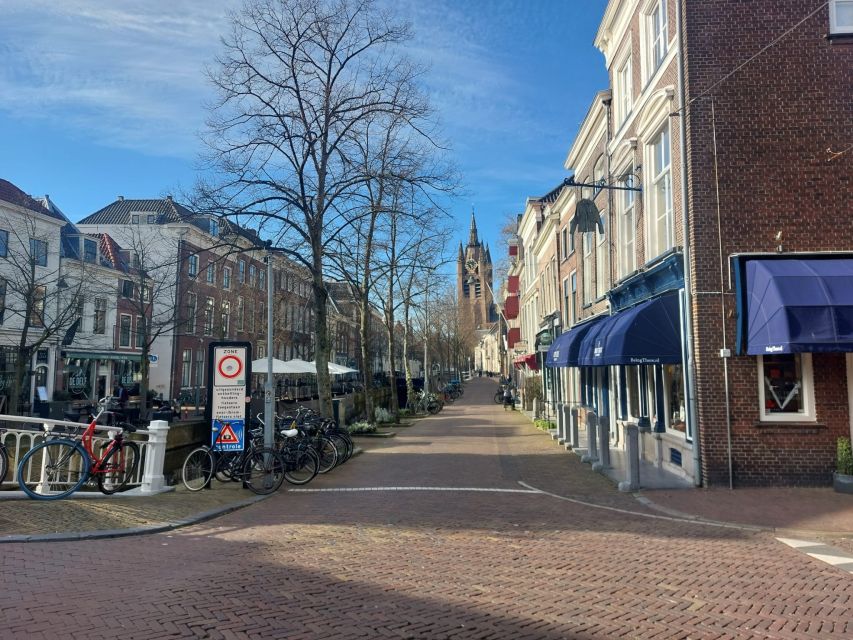
Churches are part of the walk’s historic setting, and the New Church is especially important because it fronts the meeting point. You will see and hear about Delft’s major religious and civic spaces as part of the route.
Entry tickets are not included. The New Church tower may be available on request, but it is an optional extra rather than a guaranteed part of the standard two-hour walk. Ask before the tour if you want to add it, and allow for the fact that tower access would change the time available for the walking route.
This distinction matters when comparing prices. The $199 covers the private guide and all taxes and fees, but not food, drinks, or the tower ticket. You are paying for interpretation and a tailored walk, not a package of admissions.
Who should book this private Delft walk?
I would choose this tour if you want a quick but thoughtful introduction to Delft, especially at the start of a visit. It is a good fit for families, couples, and groups of friends who value questions, flexible pacing, and local stories over a fixed script.
It also suits anyone who wants Delft placed in a broader Dutch context. Vermeer, William of Orange, and Leeuwenhoek give you three clear paths into the city, and the canals and bridges keep the history tied to real places.
You may want something else if you prefer a self-guided walk, want museum interiors included, or are mainly looking for a long tower visit. You should also confirm access arrangements if anyone in your group has mobility or hearing concerns, since the information gives conflicting guidance on mobility and says the tour is not suitable for hearing-impaired participants.
Cancellation is flexible up to 24 hours before the start for a full refund, and you can reserve while paying later. Those terms are useful if your Netherlands schedule is still moving around.
Should you book it?
Book this tour if you want Delft to become more than a series of attractive canals. The guide gives you a usable story of the city, from Vermeer’s light to William of Orange’s national role and Leeuwenhoek’s scientific work, while the private format lets you control the pace.
The price is strongest for a group sharing the $199 fee. Solo visitors and couples should compare it with a public walk, but families and larger parties get a fairer deal. Confirm your language and access needs in advance, then meet at Grotius’s statue ready to walk, listen, and look closely at Delft’s old center.
FAQ
Where does the tour begin?
The meeting point is beside the statue of Hugo Grotius on Delft’s Market Square, in front of the New Church.
Can the tour start somewhere else in Delft?
Yes. You can request another starting point in Delft by contacting the provider.
How long does the walking tour last?
The normal duration is two hours. The guide can shorten the tour if you wish.
Is this a private tour?
Yes. It is a private group experience, with a price of $199 for a group of up to 20 people.
Which languages are available?
The tour is offered in English, Dutch, German, Italian, Spanish, and French.
Is entry to the New Church tower included?
No. A ticket for the New Church tower is not included, but entry may be arranged on request.
What happens if the weather is poor?
The tour runs in all weather conditions. You should dress appropriately for the forecast.
Just added around Delft
- Private Tour of Delft + Visit to Royal Delft Museum★ 5.0 · 4 reviews
- Delft: Canal House Museum ‘Paul Tetar van Elven’ Ticket★ 4.5 · 6 reviews
- Delft: Private Historical and Cultural Guided Walking Tour★ 5.0 · 8 reviews
- Delft: Christmas Walk with Oliebollen and Glühwein★ 4.8 · 8 reviews
- Delft – Step/scootertour in and around the city★ 4.8 · 9 reviews
- Delft: Guided Walking Tour★ 4.7 · 9 reviews
- Delft: Craft Beer Tasting in Medieval Brewery with Snacks★ 4.4 · 67 reviews
- Delft: City Center Walking Tour★ 4.7 · 88 reviews
Delft Tours, compared.


Craft Beer Tasting in Medieval Brewery with Snacks
Read our review →
Browse the lists this tour appears in