
Reviewed · DELFT TOURS
Delft: Canal House Museum ‘Paul Tetar van Elven’ Ticket
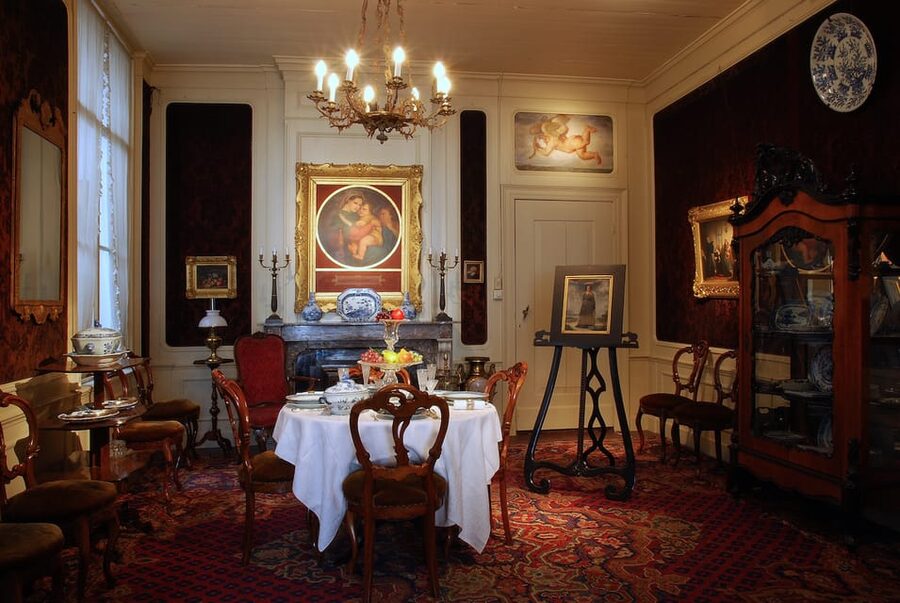
The best thing about this Delft museum is that it feels like a home left in place, not a gallery emptied of its owner. At Paul Tetar van Elven’s canal house, you see the rooms, furniture, books, paintings, studio items, and pottery that belonged to one 19th-century artist and collector.
I like the authentic interior, especially the lavish drawing room and the remarkable ceiling covered with names of old masters. I also like the mix of art and everyday possessions, from antique books to Delft blue pottery and Far Eastern porcelain. The main drawback is its narrow focus: if you want a large museum with many artists, this small house museum may feel limited.
Key points to know before you go
- A real 19th-century artist’s home: Paul Tetar van Elven’s house and contents became a museum through his will.
- A lavish Delft canal house: The rooms show how a prosperous 19th-century household could look.
- An unusual painted ceiling: Abraham Gips decorated the salon ceiling with the names of old masters Tetar van Elven admired and copied.
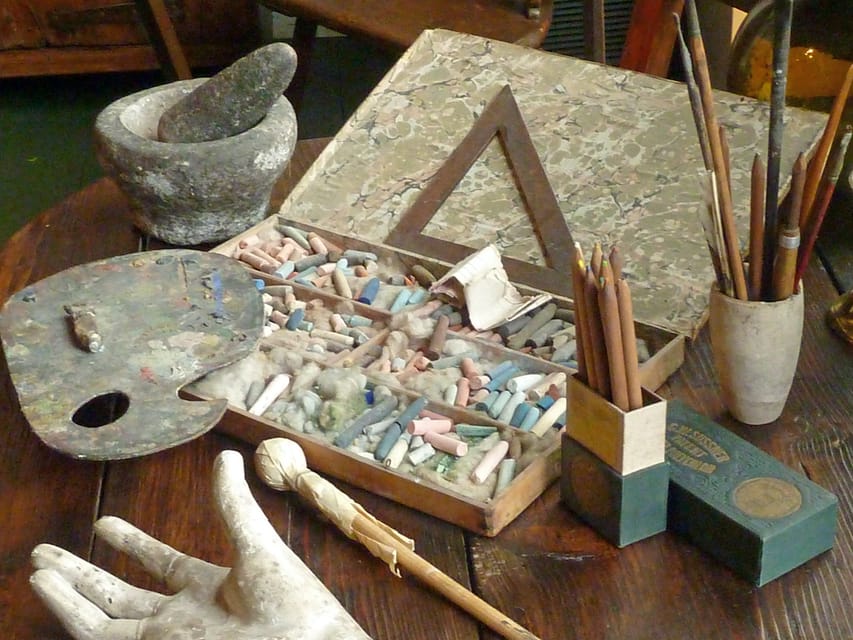
- More than paintings: Expect antique books, personal studio objects, Delft blue pottery, and porcelain from the Far East.
- Central Koornmarkt location: The museum sits in the heart of Delft, in a house with 16th-century origins.
- English and Dutch support: The host or greeter can assist in English or Dutch.
Entering a Delft house with centuries of changes
Museum Paul Tetar van Elven sits on Koornmarkt, one of Delft’s central streets. The house began in the 16th century, soon after the Great Fire of Delft in 1536. By then, Koornmarkt had become one of the city’s wealthier areas.
That date matters because the building is not a purpose-built museum. It is an old canal house that changed over time, then became the home of Paul Tetar van Elven in 1864. The house received a new front façade and major modernization around 1800, before Tetar van Elven bought it.
You can therefore read the building in layers. The structure reaches back to Delft’s older city fabric. The rooms reflect later fashion. The collections show the taste of one artist who lived there in the second half of the 19th century.
Tetar van Elven did not carry out more major renovations after buying the house. Instead, he adapted the interiors to current style. That leaves you with a useful distinction: you are not simply seeing a preserved old building, but an old building shaped into a fashionable artist’s home.
More museums in Delft:
- Royal Delft: Delftblue Factory and Museum
★ 4.6 · 588 reviews - Delft: Vermeer Centrum Delft Museum Entry Ticket
★ 4.6 · 189 reviews - Private Tour of Delft + Visit to Royal Delft Museum
★ 5.0 · 4 reviews
Who Paul Tetar van Elven was
Paul Tetar van Elven was born in 1823 and died in 1896. He worked as an artist and as a drawing-master at the Polytechnic School in Delft, now the Technical University of Delft.
His professional life helps explain the character of the house. This was not only a private residence. It was also a place connected to art education, copying old masters, collecting, and the display of cultivated taste.
He collected art and antiques, along with Delft blue pottery and porcelain from the Far East. The result is a house where paintings share space with objects. You are not moving through a single-subject collection. You are seeing how an artist arranged the things that mattered to him.
That personal angle is the museum’s main strength. A standard art museum asks you to look at selected works on walls. Here, you get clues about the owner’s surroundings and interests. The house itself is part of the collection.
The drawing room and Abraham Gips’s painted ceiling
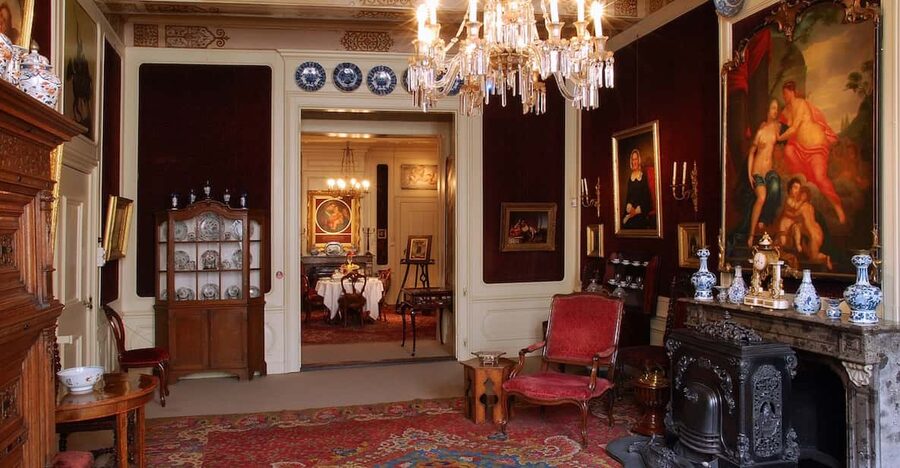
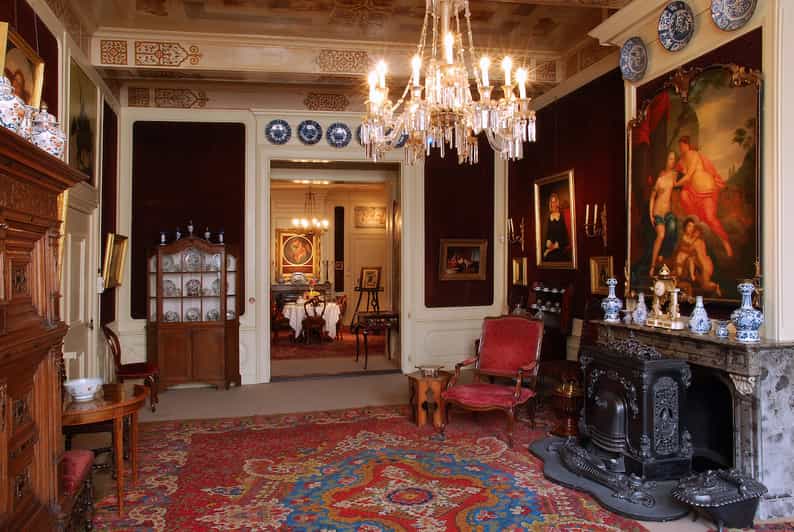
The salon is likely to be the visual high point of your visit. It was richly decorated and furnished, and it gives the clearest sense of how Tetar van Elven wanted his home to appear.
Look up. The ceiling was decorated by Abraham Gips, a Dutch painter who lived from 1861 to 1943. Tetar van Elven commissioned him to paint the names of old masters admired and copied by Tetar van Elven, including Raphaël, Rubens, and Rembrandt.
This detail does more than add decoration. It tells you how the artist saw his own work. He placed himself within a long line of admired painters and made that connection part of his home.
The ceiling also rewards a slower visit. In many historic houses, visitors rush past ceilings while concentrating on furniture and paintings. Here, the ceiling carries a direct statement about artistic taste. Take a moment to look up and connect the names with the paintings and collections around you.
The salon is also where the house can feel most personal. The preserved furniture and decoration create the impression of a room prepared for its owner and his wife, rather than a neutral exhibition space. You can picture it as a working social room, not just an attractive period setting.
Paintings, portraits, and the artist’s own surroundings
The house contains portraits and other paintings by Tetar van Elven and by artists of his time. These works help place him in his professional and social setting.
The useful point here is scale. You are not being asked to judge a large sequence of paintings in isolation. Instead, you see works among the furniture, objects, and rooms where Tetar van Elven lived.
That setting can change how you look at the art. A portrait is not only an image on a wall. It becomes part of a home’s decoration. A painting by Tetar van Elven is not only an example of his work. It is also evidence of what he chose to keep close to him.
If you already know Delft’s major attractions, this house gives you a different way to understand the city. Delft is often associated with canals, historic streets, ceramics, and the technical university. Tetar van Elven’s house brings those themes together through one person who taught drawing, made art, and collected decorative objects.
A few more Delft trips worth a look
- Delft: Canal Cruise with Guided Commentary
★ 4.4 · 990 reviews - Delft: Entrance Ticket for the Old and New Churches
★ 4.4 · 229 reviews - Delft: City Center Walking Tour
★ 4.7 · 88 reviews - Delft: Craft Beer Tasting in Medieval Brewery with Snacks
★ 4.4 · 67 reviews
The studio, library, and personal possessions
The studio provides another important change of mood. Instead of seeing only polished entertaining rooms, you can see the setting connected with Tetar van Elven’s work and personal possessions.
The exact arrangement matters because it keeps the artist from becoming an abstract name. His work took place in a real home, surrounded by tools and objects linked to his life. You might find the studio more revealing than the grander rooms if you prefer personal details to formal decoration.
The library adds a quieter side to the visit. Tetar van Elven’s collection of antique books reflects his interests and the education expected of an artist and drawing teacher of his period.
Together, the studio and library show a fuller picture than the salon alone. The salon presents public taste. The studio suggests work. The library points to study and learning. The house becomes a portrait of a person through rooms rather than through a single biography panel.
I recommend giving these areas proper attention instead of spending all your time in the most decorated room. The museum’s appeal comes from the complete household, not just one impressive ceiling.
Delft blue pottery and Far Eastern porcelain
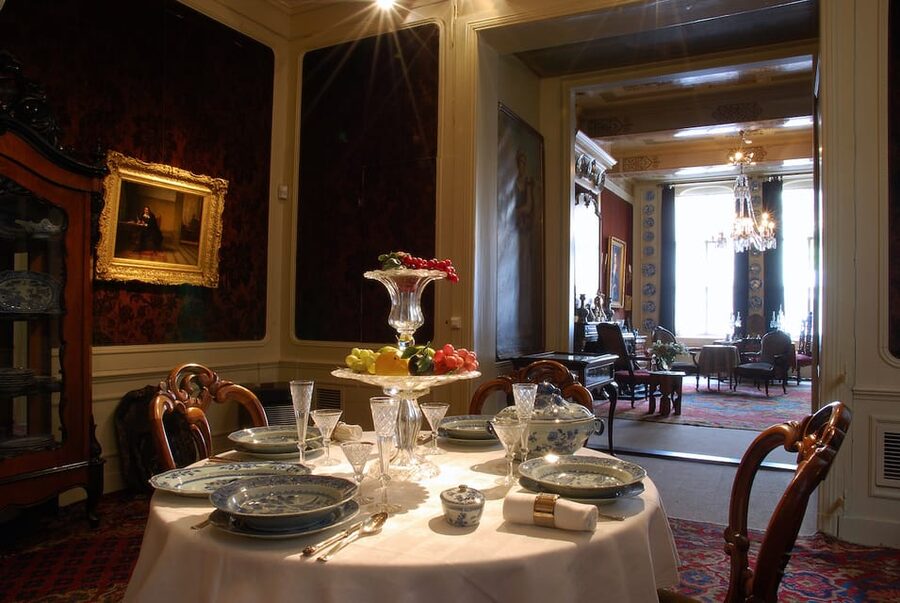
The cabinets hold Tetar van Elven’s extensive collection of pottery and porcelain. Delft blue pottery will be especially interesting if you want to connect the museum with the city’s famous ceramic tradition.
The Far Eastern porcelain adds another layer. It shows that the collection was not limited to local objects. Tetar van Elven placed Delft pieces alongside porcelain from farther away, creating a broader picture of the decorative arts he valued.
These displays are useful for anyone who enjoys craftsmanship, household design, or collecting. You can compare the objects with the paintings and furniture around them and see how decorative pieces helped shape the home’s appearance.
The pottery and porcelain also keep the museum from feeling like a narrow memorial to one painter. Even if Tetar van Elven’s art is not your main interest, the cabinets give you a reason to look closely.
Still, you should set your expectations correctly. This is a historic house museum, not a major ceramics museum with a vast modern display. The collection is valuable here because it remains within the artist’s home and forms part of his personal world.
What the one-day ticket includes
The ticket costs $14 per person and includes entry to Museum Paul Tetar van Elven. Food and drinks are not included, so plan to treat the museum as one stop during your Delft sightseeing rather than as a full-day activity with refreshments on site.
The ticket is valid for one day. Starting times depend on availability, so you need to check the available schedule before booking. The experience is listed with an English or Dutch host or greeter, which is useful if you do not speak Dutch.
At $14, the value depends on what you want from a museum visit. If you are looking for a large number of galleries and hours of exhibits, this may not be the right use of your budget. If you value an authentic home, preserved furnishings, and a close look at one artist’s collecting habits, the price is reasonable.
The strongest value comes from the combination. You get a building with 16th-century origins, a 19th-century interior, an artist’s studio, a library, paintings, and collections of ceramics and porcelain. That is a more personal experience than a basic entry ticket to a single room of art.
You can also keep your plans flexible. The booking terms allow you to reserve now and pay later, and cancellation is free up to 24 hours in advance for a full refund. Those terms are useful if your Delft plans may change, but they do not alter the main question: do you enjoy small museums with a strong sense of place?
How long should you allow?
The activity is described as valid for one day, not as a set guided tour lasting a stated number of hours. You should therefore check the available starting times and allow enough time to look carefully at the rooms.
I would not treat the house as a quick photo stop. The salon ceiling, portraits, studio, library, books, and ceramic cabinets each reward attention. A rushed visit would leave you with the façade and a general impression, while a slower visit lets you understand how the rooms connect.
Because no fixed tour length or group size is specified, I would build the museum into a broader Delft day without relying on a precise timetable. Its central location on Koornmarkt makes it a practical cultural stop while you are exploring the city center.
The host or greeter can assist in English or Dutch. One verified booking described the guide as exceptionally well informed and praised the guided visit, while another praised the guide’s enthusiasm. Since no individual guide name is provided, you should not expect a named guide when booking.
The house’s strongest sense of authenticity
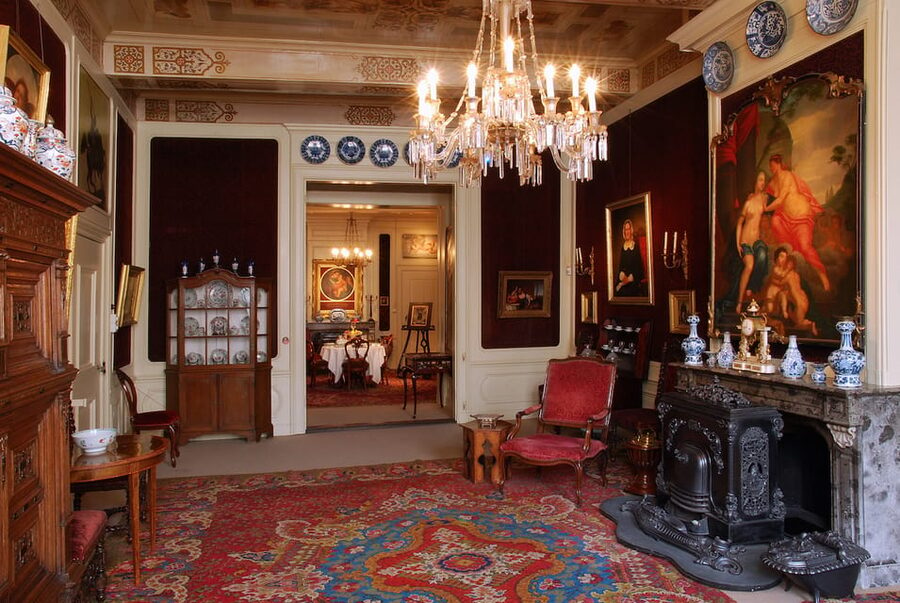
The museum’s biggest advantage is the survival of the house and its contents together. Tetar van Elven left both to be turned into a museum, so the institution can preserve more than a selection of paintings.
That makes the experience feel coherent. Furniture belongs with rooms. Books belong with a library. Studio objects belong with the artist. Pottery and porcelain belong in cabinets within the same domestic setting.
The house is described as the only well-preserved, authentic example of a 19th-century artist’s house in the Netherlands. That is a strong reason to choose it if you want an experience tied to a person’s daily environment rather than a general period reconstruction.
Authenticity does not mean everything here is grand or easy to understand. Some objects may mean more to you once you know something about Tetar van Elven’s work and interests. The museum rewards curiosity, and the English or Dutch host can help give the rooms context.
Who will enjoy this museum most?
I would recommend this experience to:
- Art lovers who want to see how an artist lived and worked.
- Architecture fans interested in historic canal houses and changing interiors.
- Ceramics collectors drawn to Delft blue pottery and Far Eastern porcelain.
- Museum visitors who prefer intimate houses to large, crowded institutions.
- Delft first-time visitors looking for a cultural stop beyond the city’s best-known sights.
- Repeat visitors to Delft who want a more personal and less obvious attraction.
Families may also enjoy the visual variety, especially the decorated rooms and cabinets, though the information provided does not describe child-specific activities. If your main interest is modern art, large collections, or a long formal exhibition, you may find the visit too specialized.
The house will also suit you if you like seeing how collections grow out of personal taste. Tetar van Elven did not collect only one type of object. His home reveals how art, books, furniture, and ceramics worked together in a 19th-century interior.
Practical booking advice for a Delft day
Check the available starting times before you book, since the ticket is valid for one day but does not provide a fixed duration in the information available here. English and Dutch assistance is offered, so select this museum with confidence if language is a concern.
You do not need to budget for food or drinks as part of the ticket, because those are excluded. Plan those separately during your time in Delft.
The flexible booking terms are helpful for a day built around canals, city streets, and several museums. You can reserve and pay later, then cancel up to 24 hours before the activity for a full refund if your plans change.
Most important, book it for the house, not simply for the name of the artist. Tetar van Elven’s paintings matter, but the full experience comes from the rooms, ceiling, books, studio, furniture, pottery, and porcelain working together.
Should you book the Paul Tetar van Elven house?
Book this museum if you want a small, personal experience with an authentic Delft canal house and a preserved 19th-century interior. At $14, it offers good value for anyone who enjoys art in its original domestic setting, especially with an English or Dutch host to explain what you are seeing.
Skip it if you want a major museum, a broad survey of Dutch art, or a clearly timed full-day program. For the right visitor, though, the painted salon ceiling, working studio, antique library, Delft blue pottery, and Far Eastern porcelain make this one of Delft’s most distinctive cultural stops.
FAQ
Where is Museum Paul Tetar van Elven located?
The museum is on Koornmarkt in the center of Delft, in South Holland, Netherlands.
How much does the ticket cost?
The ticket costs $14 per person.
How long is the ticket valid?
The ticket is valid for one day.
What does the ticket include?
The ticket includes entry to Museum Paul Tetar van Elven.
Are food and drinks included?
No. Food and drinks are not included in the ticket.
Is a guide or host available?
A host or greeter is available in English or Dutch. The available information does not provide a specific guide’s name.
Can I cancel the booking?
Yes. You can cancel up to 24 hours in advance for a full refund.
Can I reserve the ticket and pay later?
Yes. You can reserve now and pay later, allowing you to keep your travel plans flexible.
Just added around Delft
- Private Tour of Delft + Visit to Royal Delft Museum★ 5.0 · 4 reviews
- Delft: Private Historical and Cultural Guided Walking Tour★ 5.0 · 8 reviews
- Delft: Christmas Walk with Oliebollen and Glühwein★ 4.8 · 8 reviews
- Delft – Step/scootertour in and around the city★ 4.8 · 9 reviews
- Delft: Guided Walking Tour★ 4.7 · 9 reviews
- Delft: Dive into the Golden Age on a Private Walking Tour★ 4.6 · 16 reviews
- Delft: Craft Beer Tasting in Medieval Brewery with Snacks★ 4.4 · 67 reviews
- Delft: City Center Walking Tour★ 4.7 · 88 reviews
Delft Tours, compared.

Craft Beer Tasting in Medieval Brewery with Snacks
Read our review →

Browse the lists this tour appears in