
Reviewed · THE HAGUE TOURS
Private Walking Tour of Delft: Dive into the Dutch Golden Age
Delft’s story comes alive in the places where it happened: a royal burial church, a leaning medieval tower, the house where William of Orange was killed, and the canal view painted by Johannes Vermeer. This private walk connects those sites in about two hours, giving you a useful first look at the city without wasting time on long transfers.
I like the private format, which lets your guide adjust the pace and answer your questions instead of following a fixed group routine. I also like the practical finish at Beestenmarkt, where Robin or Matyas can point you toward a good beer, snack, or dinner. The main consideration is that the tour moves quickly, with roughly 15 minutes devoted to each stop and no admission tickets included.
Key points at a glance

- See Delft’s two famous churches: Learn why the New Church matters to the Dutch royal family and why the Old Church began leaning during construction.
- Follow Vermeer’s footsteps: Visit the place where Johannes Vermeer was buried and the exact spot linked to his View of Delft.
- Connect Delft to Dutch power: Hear how William of Orange, the Dutch East India Company, weapons production, and water management shaped the city.
- Enjoy a private guide: Your group alone takes part, with room for questions, a slower pace, or small changes to the route.
- Start and finish in the historic center: Meet beside the Hugo Grotius statue on Markt and end nearby at Beestenmarkt.
- Pay by group, not by person: The price is $203.22 for up to 15 people, which can be good value for a family or larger party.
Why Delft works best on foot
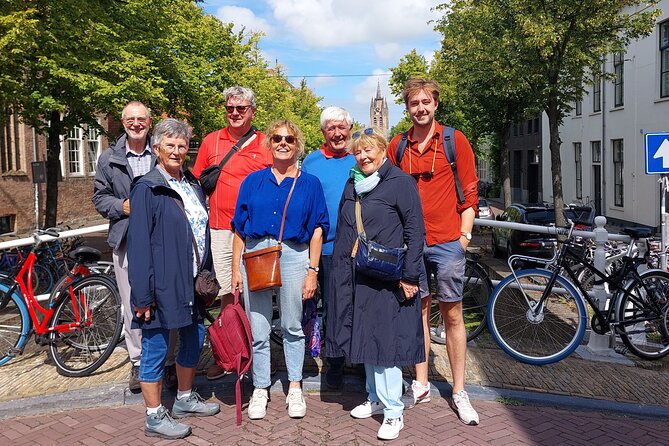
Delft is compact, but its canals and narrow streets hold more stories than you might expect. A walking tour lets you see how civic power, religion, trade, science, art, and water control all occupied the same small city.
This is not a tour built around one famous painting or one grand church. Instead, the guide uses the route to show how Delft grew during the Dutch Golden Age and how older institutions still shape its identity.
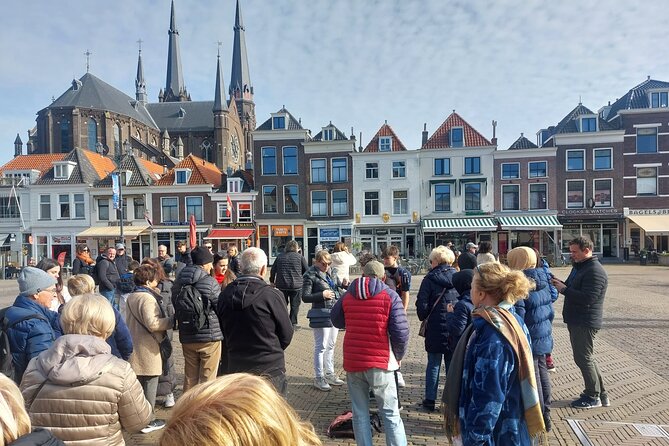
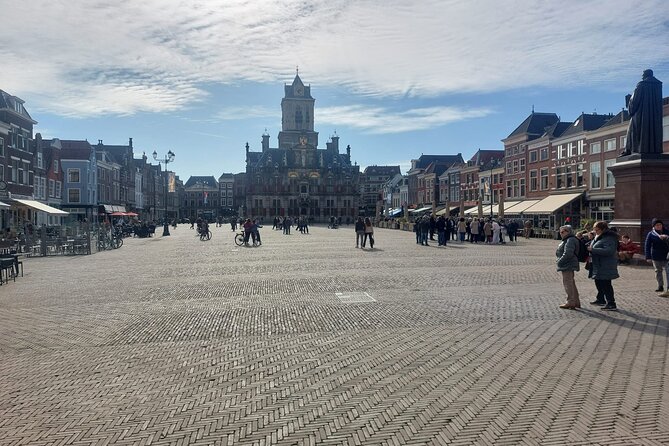
You begin and end on Markt, the city’s historic market square. That is a practical meeting point in the center, and the Hugo Grotius statue gives you a clear landmark. Since pickup can be arranged from any place in the city center, you can ask for that option if finding the statue would be inconvenient.
The location information identifies the experience with The Hague, but the actual walk takes place in Delft. Keep that distinction in mind when planning your day. You will need to be in Delft for the tour unless you have arranged a pickup that fits your plans.
More Walking Tours in The Hague
- Food Walking Tour of The Hague – by Bites & Stories
★ 5.0 · 188 reviews - The Hague: City Walking Tour
★ 4.5 · 156 reviews - The Hague 2-Hour Walking Tour | Discover The City With A Local
★ 4.5 · 81 reviews
New Church and Delft’s royal connection
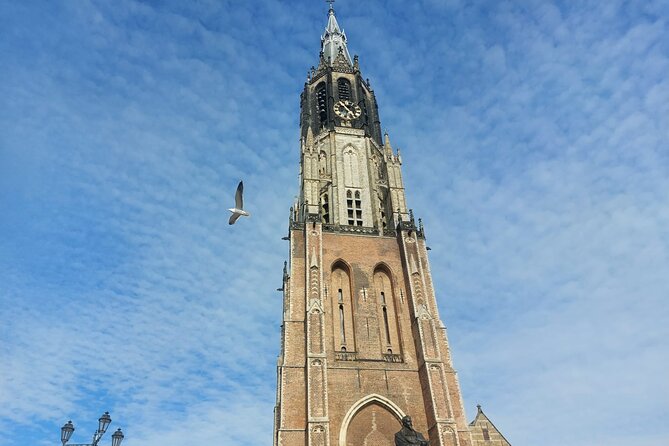
The New Church is the first major landmark on the route. It occupies one side of Markt, making the square a natural place to begin a story about Delft and the Netherlands.
The church is the burial place of the Dutch royal family and of Hugo Grotius, the legal thinker whose statue marks your meeting point. Its tower is the second tallest church tower in the country, so your guide can use it to orient you while explaining the building’s place in Dutch culture.
The listed admission cost is free, but the tour information does not promise a dedicated interior visit or tower climb. I would treat this stop as a guided introduction to the church and its importance rather than assume you will have time to explore every corner.
That distinction matters because 15 minutes passes fast. If you want to see the interior at length or climb the tower, ask your guide what is possible during your booking. The walking route itself is designed to cover the city’s story, not to provide long museum-style visits.
Town Hall, justice, and city government
Leaving Markt, you pass Delft’s historic Town Hall. Its Renaissance façade gives the building a polished look, but the story behind it is less tidy.
The town hall has links to fires, justice, city government, and a former prison. This is the kind of stop that benefits from a local guide because the building can seem decorative if you only walk past it on your own. The guide supplies the events that turn the façade into a record of civic life.
You will not spend a full hour here, and no admission fee is listed. Think of it as a short outdoor explanation that helps you understand how Delft was governed and how public buildings could serve several purposes over time.
The Old Church and Vermeer’s Delft
The route then heads toward the Old Church, passing the former Butter House, the old Weigh House, and the historic home of Antonie van Leeuwenhoek. These brief sights help you picture Delft as a working town, not just a postcard of canals and brick façades.
You also enter the former beer-brewing quarter. That detail gives the walk some texture. Delft’s past was not only about painters and princes. Brewing, weighing goods, measuring trade, and ordinary commerce helped keep the city running.
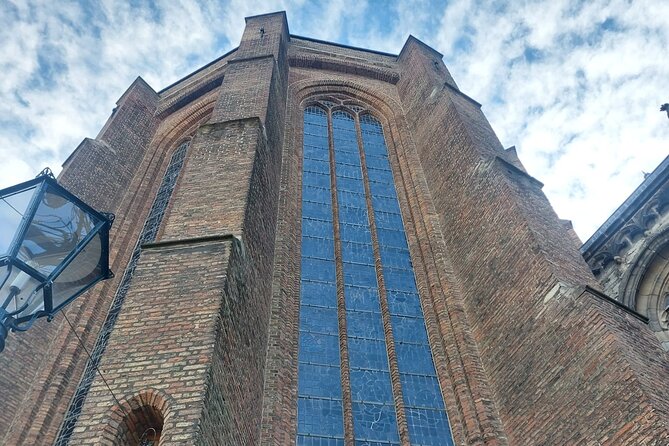
The Old Church is one of the tour’s strongest stops. Its tower leans sharply, and your guide explains why it began to tilt almost as soon as construction started. The explanation turns an amusing visual oddity into a lesson in old building methods and unstable ground.
Inside the church lies Johannes Vermeer, Delft’s best-known painter. The visit is especially useful if you have come to Delft because of his work, although the route does not promise extended time inside. Ask about the grave if that is a priority for you.
I like this portion because it links art to the actual city around you. Vermeer did not paint an abstract idea of Delft. He painted its water, buildings, and daily atmosphere, and this walk places his grave and working environment within that setting.
Same country, a completely different kind of day:
- The Hague: Mauritshuis Entrance Ticket
★ 4.7 · 2,706 reviews - The Hague: City Canal Cruise
★ 4.6 · 2,024 reviews - The Hague: Madurodam Miniature Park Entry Ticket
★ 4.6 · 1,559 reviews - The Hague: The Pier SkyView Ticket with Drink and Snack
★ 4.4 · 1,398 reviews
Prinsenhof and the death of William of Orange
Across from the Old Church, the Prinsenhof occupies a former monastery that later became a residence for William of Orange. He is often called the Father of the Fatherland because of his role in the formation of the Dutch state.
The crucial event here was his assassination in 1584. Your guide explains how that killing affected the future of the Netherlands and why Delft became so closely tied to the House of Orange.
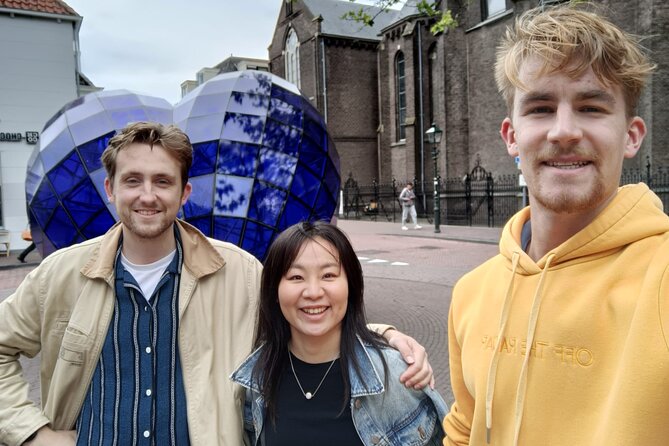
This is a stop where the private format can help. Dutch political history can become a blur of names and dates, but you can interrupt with questions and ask your guide to explain the sequence in plain language. Guides Robin and Matyas are specifically praised for friendly, engaging storytelling, humor, and their ability to answer questions.
The Prinsenhof also gives the route a strong sense of place. You are not merely hearing that William of Orange was important. You are standing outside the building where a major turning point occurred.
Admission to the museum is not included as a separate visit. If you want to tour the Prinsenhof museum, plan that as another activity or confirm whether your guide can adjust the route. With only two hours, adding a full museum visit would likely change the pace.
Oude Delft canal and the water board
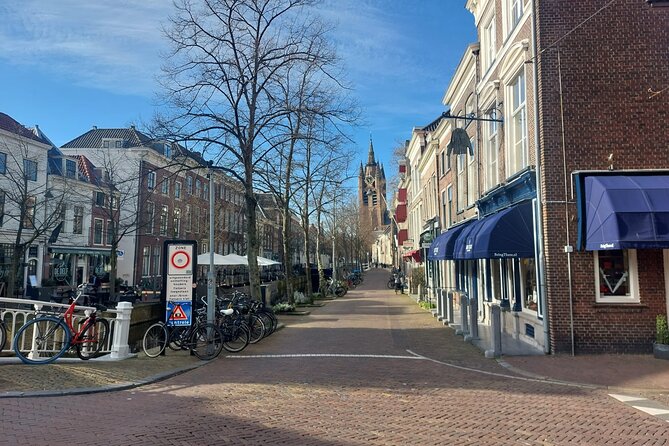
Walking along the Oude Delft canal, you pass the oldest surviving house in the city and the Gemeenlandshuis van Delfland. Since 1645, this decorated building has housed the local Water Board.
For many visitors, the water board may sound less exciting than a church or royal residence. I would not skip the explanation, though. Water control is one of the clearest ways to understand Dutch civic life. The guide explains what a water board does and why managing water could determine whether a community survived and prospered.
This stop adds useful balance to the tour. Delft’s story is not only about famous men, battles, and paintings. It is also about the shared systems that protected homes, farms, roads, and trade.
The canal walk should be comfortable for most people, and the tour is described as suitable for most participants. Still, you should expect a continuous city walk rather than a series of vehicle stops. Anyone who prefers a slower pace should say so at the start. The private setup makes that request more practical.
Armamentarium and the Dutch Golden Age
Continuing south along the Oude Delft canal, the tour passes impressive historic residences before reaching the former state weapons armory and the main building of Delft’s chamber of the Dutch East India Company.
These sites broaden the usual Delft picture. The city was not simply a home for artists and churchgoers. It had military, maritime, and commercial links to the Dutch Republic’s expansion.
The former armory points to Delft’s military role. The East India Company building points to trade and overseas commerce. Your guide connects both to the period when Dutch cities gained wealth and influence through shipping, business, and state power.
The route also reaches the exact location associated with Vermeer’s View of Delft. That is one of the walk’s most appealing details for anyone familiar with the painting. You can compare the idea of a painted city view with the actual location and see how Vermeer’s work grew from a specific place.
The tour does not include a dedicated art museum visit, and no painting reproduction is mentioned. I would bring your own interest in Vermeer rather than expect a formal art lesson. The value here is the setting, the connection between the painter and the city, and the chance to ask your guide about what you are seeing.
The former synagogue and Delft’s Jewish community
Walking north along Delft’s second-oldest canal, once used as the city’s grain market, you pass the former synagogue.
This stop reflects the long presence of a Jewish community in Delft. It is a quieter part of the route, but it keeps the city’s story from becoming too narrow. A good historic walk should make room for communities and institutions beyond the most famous names.
The former grain market also helps you read the canal as a place of trade. Delft’s waterways were not just scenic. They were working routes tied to food, commerce, and city life.
As with several stops, the building is presented as part of the walk rather than as a scheduled interior tour. If the synagogue’s history matters greatly to you, ask the guide how much time can be devoted to it.
Beestenmarkt and useful local advice
The walk ends at Beestenmarkt, a former animal market just behind Markt. Today, the square is lined with cafés and restaurants and is one of Delft’s popular meeting places.
This is a smart place to finish. You are not left at an isolated monument or sent back to the starting point with no idea what to do next. Your guide can suggest a place for beer, casual food, or a relaxed dinner.
One piece of feedback about Robin is especially useful here: he gave practical advice about grocery shopping and dining as well as historical information. That tells me the experience is not limited to rehearsed dates. You can use the final minutes to ask the everyday questions that make a short stay easier.
The finish also gives you a choice. You can walk back to Markt, continue exploring Delft, or settle into Beestenmarkt for food. If you have an evening train or another fixed appointment, allow extra time after the official end rather than assuming the tour will finish early.
Private groups, timing, and value
The price is $203.22 per group of up to 15 people. That works out very differently depending on your party size. For one or two people, it is a premium walking tour. For a family, reunion, or group of friends, the cost can be quite reasonable because the price does not rise per person up to the stated limit.
The private format is the biggest reason to consider paying more than a standard group walk. Your guide can respond to questions, adjust explanations, and make small changes for a senior participant or young child. Robin was specifically praised for being easygoing when a group needed to deviate from the plan.
The tour lasts about two hours. The eight listed stops are each allocated roughly 15 minutes, which accounts for the full length before you add the walking between them. This means the itinerary is efficient but not leisurely.
I would book it near the start of your Delft visit if you want help getting oriented. You will finish knowing where the major churches, canals, historic buildings, and dining areas are. I would choose a later time only if your schedule requires it, since one group successfully took the tour at 4 PM after visiting Amsterdam and The Hague, but that made for a long day.
The tour is offered in English and includes a private guide, fees, and taxes. A mobile ticket is provided, and pickup is available if you arrange it from a place in the city center. Service animals are allowed, the meeting area is near public transportation, and most people can participate.
Free cancellation is available up to 24 hours before the start time for a full refund. Changes or cancellations inside that 24-hour window are not accepted for a refund, and the cut-off follows local time.
Who will get the most from this walk
I would recommend this tour to first-time Delft visitors who want a clear introduction without spending half a day in a museum. It suits families and mixed-age groups especially well because the guide can adjust the pace and explain things at the level your group needs.
It is also a good match for people interested in Vermeer, William of Orange, Dutch civic life, or the practical side of water management. You get all four subjects in one compact route.
You may want something else if your main goal is a long interior visit to the New Church, Old Church, or Prinsenhof museum. The tour points out and explains these places, but the schedule favors a broad city walk rather than extended time at one site.
Likewise, serious art historians may want a more specialized Vermeer tour. This experience gives you the location tied to View of Delft and Vermeer’s grave, but its subject is Delft as a whole.
Should you book this Delft walking tour?
Book it if you want a private, efficient introduction to Delft with history tied to real streets and buildings. The best parts are the leaning Old Church, the Prinsenhof assassination site, the canal views, and the Vermeer locations, while the private guide adds flexibility that a large group cannot match.
Think twice if you want admission-based sightseeing or a slow, detailed visit inside every landmark. At $203.22, the value improves sharply with several people sharing the cost. For a couple, it is worth booking when personal attention, questions, and a flexible pace matter more than keeping the walking budget low.
FAQ
Where does the tour start?
The tour starts beside the Hugo Grotius statue on Markt, Delft, Netherlands, at the meeting point listed as Hugo Grotius StatueGW, Markt, 2611 GW Delft.
Where does the tour end?
The walk ends back in the central area, at Beestenmarkt, just behind Markt. The meeting-point information also notes that the activity ends back at the meeting point.
How long does the tour last?
The tour lasts approximately two hours.
How much does the tour cost?
The listed price is $203.22 per group, with up to 15 people included in that group price.
Is the tour private?
Yes. Only your group participates in the activity.
Is pickup available?
Yes. Pickup can be arranged from any place in the city center if you let the provider know.
What language is the tour offered in?
The tour is offered in English.
Are entrance tickets included?
The experience includes a private guide and all fees and taxes. Each listed stop shows free admission, but the tour details do not promise extended interior visits or admission to a separate museum program.
Can I cancel for a full refund?
Yes. You can cancel at least 24 hours before the experience start time for a full refund. Cancellations or changes made less than 24 hours before the start time are not accepted for a refund.
Just added around The Hague
- Private Tour of Rotterdam and The Hague including Transfer★ 5.0 · 3 reviews
- Private Tour of The Hague, Delft and Rotterdam with Lunch★ 5.0 · 3 reviews
- Discover Historical Delft with an Audio Guide★ 5.0 · 3 reviews
- The Hague Self-Guided Audio Tour★ 5.0 · 3 reviews
- 3 Course Walking Dinner in Delft with Guided Tours in Between★ 5.0 · 3 reviews
- Surprise Walk of The Hague with a Local★ 4.5 · 3 reviews
- Surfing at The Shore in The Hague★ 4.5 · 3 reviews
- Private Tour of Vermeer’s Delft + Tickets to Vermeer Museum★ 5.0 · 3 reviews
The Hague Tours, compared.


Hop-on Hop-off Old-Fashioned Heritage Tram Tour
Read our review →
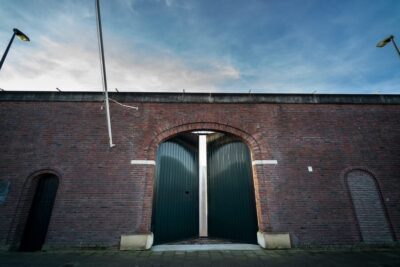
Oranjehotel World War II Prison Entrance Ticket
Read our review →
Browse the lists this tour appears in