
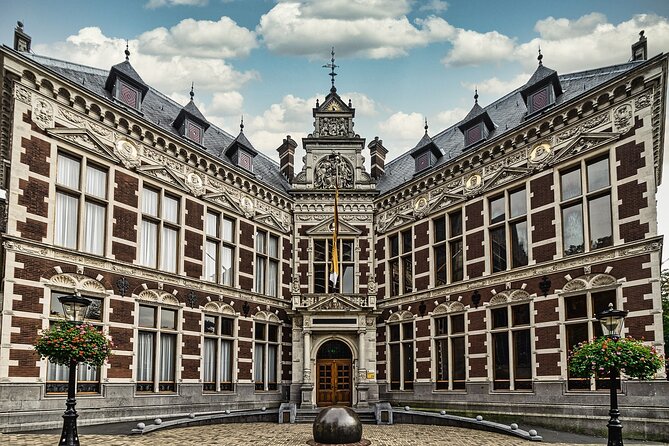
Reviewed · UTRECHT TOURS
Utrecht Private Walking Tour With A Professional Guide
Utrecht’s story begins with Roman Traiectum and runs through Christian power, trade, war, and modern rebuilding. This private walk gives you that full arc while leading you past the Dom Tower, Domkerk, and Oudegracht, the places most first-time visitors want to see.
I like the private format because your guide is with your group only, with room to adjust the route on the spot. I also like the chance to see Utrecht through a local guide such as Willemijn, Giovanna, or Famke, whose friendly, clear explanations have made this tour especially appealing to people who want more than a quick look at the sights.
The main drawback is the short running time. Two hours can provide a smart city introduction, but it is not enough for long interior visits or a slow exploration of every church and historic building. Entrance fees are also not included, so you should ask your guide what can be visited during your walk.
Key points to know before booking
- Roman beginnings in the city center: Learn how Traiectum gave Utrecht its name and why the Roman period still matters to the city’s story.
- A private group of up to 15: You get a guide focused only on your party, with possible changes to the route during the walk.
- The essential Utrecht sights: The route includes the Dom Tower, Domkerk, Oudegracht, Neude Square, Janskerk, and more.
- A canal walk with historical context: Oudegracht is not just a pleasant place for photographs. It helps explain Utrecht’s role as a trade center.
- A broad timeline: The tour covers Germanic invasions, the Carolingian Empire, Christianity, the Dutch Republic, industry, World War II, and reconstruction.
- Good value for a group: The listed price is $313 per group, which works out to about $20.87 per person when 15 people share the cost.
Starting at Neude Square
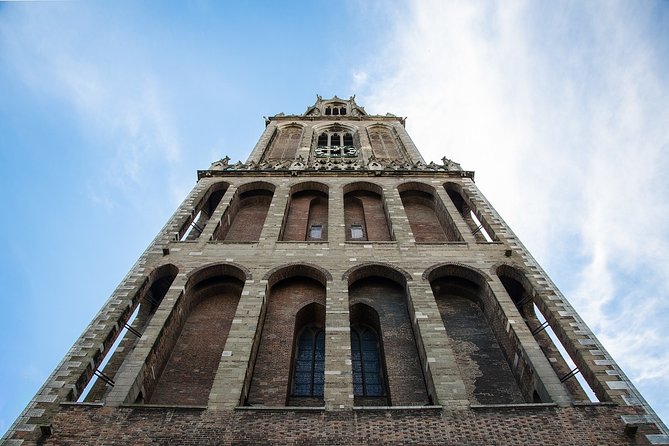
You meet your guide at Neude, a central square in Utrecht, and return there at the end. This is a useful starting point because the tour can begin with the city around you rather than with a long transfer from a distant meeting place.
I like a city walk that starts in the middle of things. You do not spend the first part of your paid time finding the historic center. The meeting point is also near public transportation, making it practical if you arrive by train or are coming from another part of Utrecht.
The walk lasts about two hours, though one outing ran for more than two hours. The pace can be leisurely, especially if your guide is explaining the city carefully or your group wants to pause for questions. Still, you should wear comfortable shoes and plan on being outdoors for most of the experience.
This is a private activity for your group only, with a maximum of 15 people. That matters more than it may sound. A guide can answer your questions directly, adjust the amount of detail, and possibly customize the route as you go. A group of 15 will feel different from a group of two, but it remains more personal than a large public tour.
More Walking Tours in Utrecht
- Utrecht 2-Hour Walking Tour | Discover The City With A Local
★ 5.0 · 138 reviews - Utrecht: Guided Highlights Walking Tour
★ 4.7 · 80 reviews - Utrecht Old Town: Medieval Monster Hunt & Walking Tour
★ 4.0 · 62 reviews
Roman Traiectum and Utrecht’s first chapter
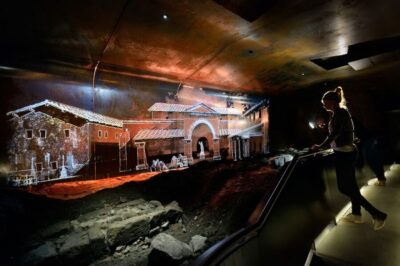
The historical thread begins with the Roman period and Traiectum, the name linked to Utrecht’s origins. Your guide uses that early chapter to explain how a Roman presence helped shape the identity of the city.
This is a strong way to begin because you are not simply being shown old buildings one by one. You are given a timeline that helps each later stop make sense. The city’s name, its position, and its role in northern Europe all connect back to this opening story.
The tour then moves through the Germanic invasions and the Carolingian Empire. These subjects can sound distant if presented as a list of dates, so the value here depends on your guide’s ability to connect them to Utrecht. The strongest part of this experience is likely to be the spoken explanation, not a single dramatic viewpoint.
That makes the guide important. People who want only photographs can walk Utrecht independently. You book this experience for the links between the places, and for the chance to ask why Utrecht became important in the first place.
Dom Tower and Domkerk
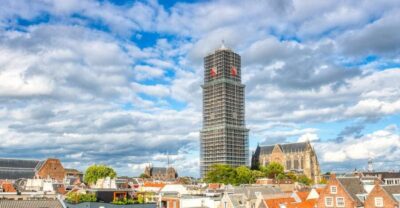
The Dom Tower is one of the clearest visual markers on the route. You will see it as part of the central Utrecht walk, along with Domkerk, the city’s famous church.
The tour presents Utrecht as a major center of Christianity in the north. That gives the Dom buildings a larger role than simply being attractive historic sights. They help explain the city’s religious influence and its place in the region.
You should check your expectations about entry. Entrance fees are not included, and the advertised experience is a walking tour rather than a dedicated tower climb or church admission. You will see these landmarks, hear their story, and may have the chance to enter a church depending on the route and conditions, but you should not assume that every interior visit is covered.
One outing included a visit inside the cathedral, and that was a highlight for the group. If entering Domkerk is important to you, ask at the beginning whether it fits the timing and whether any fee applies. The private setup makes that conversation easier than on a fixed public tour.
Utrecht’s churches and quiet historic corners
The city’s religious story continues at Sint-Catharinakathedraal and Sint-Willibrordkerk. You will also see Janskerk, giving you several chances to compare Utrecht’s religious buildings and understand how central Christianity was to the city.
The route includes the Oude Hortus as well. The supplied information does not promise a long garden visit, so think of it as one of the historic places you pass rather than a separate garden tour. The same applies to the churches: the focus is the overall city story, not an extended architectural study of each building.
That broad approach suits me. In two hours, I would rather see several important places and understand their connection than spend the whole time inside one building. If you are an architecture specialist or want detailed church interiors, you may need a longer or more focused visit afterward.
The guide can also help you notice locations you might otherwise pass without understanding. The tour’s value is not only in reaching the famous landmarks. It is in learning why less obvious places belong in Utrecht’s story.
Same country, a completely different kind of day:
- Utrecht: City Canal Cruise
★ 4.3 · 2,895 reviews - Utrecht: De Haar Castle & Park Entry Ticket
★ 4.7 · 1,350 reviews - Utrecht: DOMunder Entry Ticket with Guide
★ 4.4 · 706 reviews - Utrecht: Dom Tower Entry Ticket and Guided Tour
★ 4.6 · 513 reviews
Oudegracht, trade, and old city life
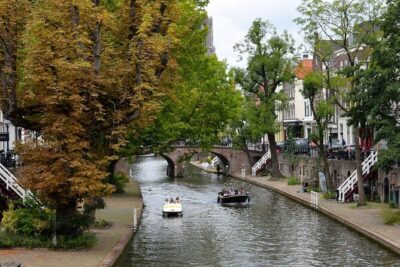
The walk along Oudegracht is one of the most appealing parts of the experience. This is Utrecht’s picturesque canal, but the guide also uses it to explain the city’s role as a trade hub.
That combination is useful. You get the scenic part of the walk, with water and historic surroundings, while also learning how commerce helped Utrecht grow. A canal becomes more interesting when you understand its place in the city’s working life.
The route also includes Oudaen, another historic sight tied to the old city, and Voorstraat, which gives the walk a wider view of Utrecht beyond the Dom area. These stops help prevent the tour from becoming a simple checklist of the best-known landmarks.
I would pay attention to how your guide moves between grand subjects and ordinary streets. The tour is strongest when the Roman, religious, commercial, and political stories meet in the places you are actually walking through.
Neude Square, city hall, and the city center
Neude is both your starting and finishing point, so you will see it at the beginning and have a chance to orient yourself there again at the end. The route also passes Stadhuis van Utrecht, the city hall, giving you a look at the civic side of the old center.
This section helps balance the churches and canals. Utrecht was not only a religious center. It was also a place of government, trade, and daily urban life. A good guide can use the square, city hall, and surrounding streets to explain how the city functioned.
The private format is handy here because you can ask about places you notice along the way. If a particular building or street catches your eye, the guide may be able to spend more time on it, subject to the overall route and timing.
You should not expect a long break for shopping or a meal. The tour is a continuous walking introduction. If you want to linger at Neude or explore nearby cafés, do that after the tour ends.
From independence to the Dutch Republic
The historical timeline then reaches the 16th century, when Utrecht’s independence came to an end, followed by its place in the Republic of the Netherlands. This is a key turning point, and it adds political context to the city’s earlier religious and commercial importance.
For me, this is where a guide-led walk earns its price. A map can show you the canal, tower, and square. It cannot easily explain how Utrecht’s position changed as larger political powers took shape.
The tour does not appear to be a specialist political history course. Instead, it gives you a useful overview of the forces that changed the city. That is ideal if you are visiting Utrecht for the first time and want a clear framework before exploring on your own.
Because the tour covers many centuries, the level of detail will depend on your guide and your questions. If you want a close study of one period, tell your guide early. The experience allows possible customization on the spot, which is one of its practical strengths.
Industrial age, World War II, and reconstruction
The final part of the timeline moves through the Industrial Age, World War II, the blitz, Nazi rule, liberation, and modern reconstruction. This keeps the walk from presenting Utrecht as a city frozen in its medieval past.
The wartime section is particularly important because it places the historic center within the experience of the 20th century. You hear about the city under Nazi control, liberation, and the work of rebuilding afterward. That gives you a more complete picture than a tour focused only on pretty canals and old churches.
Modern reconstruction also helps explain why a historic city can contain layers from very different periods. You are not just looking backward. You are learning how Utrecht changed and how it became the city you see today.
Again, the two-hour limit means this will be an overview. I would treat it as a well-organized introduction, then choose one or two subjects to explore more deeply if they catch your interest.
What the private guide adds
The guide is the central reason to choose this tour. Names connected with particularly strong outings include Willemijn, Giovanna, and Famke. You cannot assume which guide will lead your booking, but the experience is designed around a local guide who stays with your group.
The best guide for this sort of walk is not simply someone who recites dates. You want clear explanations, patience, humor, and a willingness to answer questions. The recorded experiences describe guides who were friendly, easy to talk with, passionate about Utrecht, and generous with their time.
One guide met a group at the train station and led a relaxed walk lasting more than two hours. The standard meeting point is Neude, so do not assume train-station pickup is included. Still, that example shows that the route may have some flexibility if you arrange details in advance.
The tour can suit both history fans and first-time city visitors. If you are traveling alone or as a couple, the total group price may feel high. For a family or larger party, the cost becomes more reasonable because up to 15 people can share the $313 fee.
Is $313 a fair price?
At $313 per group, this is not the cheapest way to see Utrecht. It becomes better value as your party grows: two people pay about $156.50 each, while 10 people pay about $31.30 each, and 15 people pay about $20.87 each.
That price buys a private guide for roughly two hours, not admission to attractions. You are paying for the guide’s time, local perspective, and the ability to shape the conversation around your group. If you value independence and prefer to use a guidebook, you may find the price hard to justify.
I think the value is strongest for families, groups of friends, and visitors with limited time in Utrecht. It is also useful for anyone who wants to understand the city before exploring the canal, churches, and central streets alone.
Confirmation is provided at booking, and free cancellation is available if you cancel at least 24 hours before the start time. Changes or cancellations made less than 24 hours ahead are not accepted for a refund. Service animals are allowed, and most people can participate, but this remains a walking activity with no special accessibility details provided.
Who should book this Utrecht walk?
I would choose this tour if you want a personal city introduction rather than a self-guided list of sights. It is especially well suited to a private family group, a party arriving in Utrecht for the first time, or anyone who likes asking questions as they walk.
It is also a good pick if you want the city’s story to include more than its postcard views. The Roman origins, Christian role, trade history, political changes, wartime period, and rebuilding all receive attention.
I would look elsewhere if you want extensive time inside the Dom Tower or churches, a food-focused walk, or a full-day examination of Utrecht’s architecture. Those are not promised here, and the two-hour format moves quickly across a lot of ground.
Book this experience when the guide’s interpretation matters to you and your group can share the cost. Skip it if you mainly want to wander at your own pace and are content to learn the history from signs or a guidebook.
FAQ
Where does the Utrecht private walking tour start?
The tour starts at Neude, 3512 Utrecht, Netherlands. The activity ends back at the same meeting point.
How long does the tour last?
The tour lasts approximately two hours. One outing lasted more than two hours, but you should plan around the advertised two-hour duration.
How many people can join the private tour?
The private tour is for your group only and allows up to 15 people.
Which sights are included on the walking route?
The route includes Dom Tower, Domkerk, Sint-Catharinakathedraal, Oude Hortus, Sint-Willibrordkerk, Stadhuis van Utrecht, Oudegracht, Neude Square, Oudaen, Janskerk, and Voorstraat.
Are entrance fees included?
No. Entrance fees are not included in the tour price.
Can the tour be customized?
Possible customization can be arranged with your local guide during the tour. The experience is private, so changes can be discussed with the guide on the spot.
Just added around Utrecht
- Historical Utrecht: Private Walking Tour with a Local Guide★ 4.6 · 3 reviews
- Utrecht: Hoge Woerd Museum Entry Ticket with Audio Tour★ 3.3 · 3 reviews
- Walking Tour Utrecht with a local comedian as guide★ 4.8 · 4 reviews
- Uniquely Utrecht: An Audio Tour of its Charming City Centre★ 5.0 · 4 reviews
- Utrecht Walking Tour with a local comedian as guide★ 4.8 · 5 reviews
- Vecht River: Private Tour sightseeing Cruise with diner★ 5.0 · 5 reviews
- Utrecht Small Public Walking Tour★ 5.0 · 6 reviews
- Utrecht – Food Tour: Try out 6 dutch bites★ 4.5 · 6 reviews
Utrecht Tours, compared.
Utrecht 2-Hour Walking Tour | Discover The City With A Local
Read our review →

Browse the lists this tour appears in