
Reviewed · ROTTERDAM TOURS
Private Tour: Rotterdam Walking Tour Including Harbor Cruise
Rotterdam makes the most sense when you see its two faces together: the medieval church that survived the 1940 bombing, and the daring modern buildings that rose after it. This private tour connects those pieces on foot, then carries you into the working port on a 75-minute harbor cruise.
I like the personal pace. Your guide can spend more time on architecture, wartime history, markets, or local life instead of marching every group through the same script. I also like the clear rhythm of the day: city streets first, then a seat and wide harbor views when your feet need a break.
The main caution is the walking. The city portion lasts about 2.5 to 3 hours and can cover close to four miles, with only brief pauses. The harbor ride is restful, but some sections pass container ships, docks, and industrial areas rather than postcard scenery.
Key points to know before booking
- Two Rotterdams in one walk: See the medieval St. Lawrence Church beside the postwar Cube Houses and bold modern architecture.
- A genuinely private route: Your guide can adjust the walk to your interests and set a pace that suits your group.
- Museumpark without museum admission: You pass several major museums, including Kunsthal and Boijmans Van Beuningen, but entrance tickets are not included.
- A practical finish: The harbor cruise follows the walking portion, giving you time to sit while viewing shipyards, docks, containers, and the skyline.
- Central meeting options: Meet at the Zadkine statue near the Maritime Museum, at Rotterdam Central Station, or arrange downtown hotel pickup.
- Best for active sightseers: Good walking shoes are essential, and the tour operates in all weather.
Why Rotterdam makes a good half-day walking tour
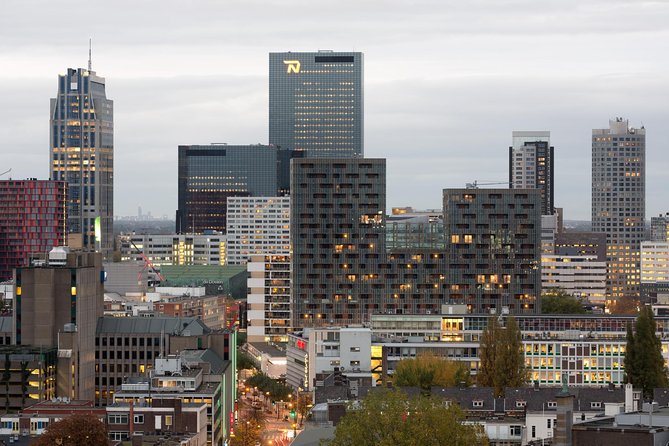
Rotterdam is unlike the canal-centered image many people have of the Netherlands. Much of the old center was destroyed during the German bombing of May 1940, and the rebuilding that followed gave the city room for broad streets, high-rises, experimental housing, and daring public buildings.
A guide helps you read that change. Without context, a tilted Cube House may look like a clever photo stop and a wide road may seem simply modern. With a local explanation, you begin to see how destruction, housing needs, commerce, and architectural ambition shaped the city.
The private format matters here. Rotterdam’s attractions are spread across different parts of the center, and the city works best as a series of connections rather than a single monument. You can ask why a building looks the way it does, pause for photographs, or move more quickly past shopping if that is not your priority.
Guides named in the available feedback include Adrien, Niels, Raphael, Anthony, Jacob, and Skip. Their styles naturally vary, but the strongest experiences center on guides who explain the city through personal stories, old photographs, architecture, and European history. If you have a particular interest, mention it when booking and again at the start.
More Boat Tours in Rotterdam
- Rotterdam: Harbor Sightseeing Cruise
★ 4.3 · 7,599 reviews - Rotterdam: Pancake Cruise
★ 4.4 · 1,986 reviews - Rotterdam: Harbor Cruise with Live Guide
★ 4.0 · 1,270 reviews
Starting near the Maritime Museum or Rotterdam Central
The usual meeting point is Plein 1940, by the Zadkine statue near the Maritime Museum. If your hotel is in central Rotterdam, pickup may be arranged there. When no hotel name is supplied, the meeting point may instead be Rotterdam Central Station, near the Cloudlamp.
Clarify the exact start location before the day of the tour. Rotterdam Central is easy to reach by train and public transport, but it is not right beside Plein 1940. A few minutes spent confirming the meeting point can prevent a rushed beginning.
The tour is offered in English, French, German, or Spanish. It runs in the morning or afternoon, which makes it useful for a cruise stop, a short city stay, or a first afternoon in Rotterdam when you want an overview before exploring on your own.
Cube Houses and the Old Harbor
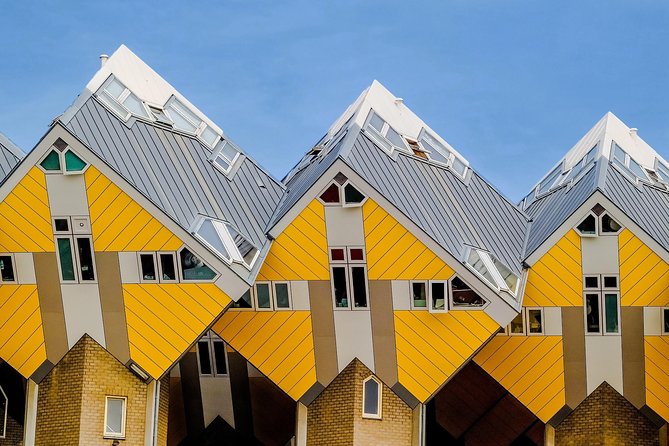
The Kijk-Kubus, or Show Cube, is one of the most memorable early stops. Piet Blom designed the Cube Houses as tilted homes set on hexagonal poles. They are a postwar answer to a basic city problem: how to create housing while also making room for public life below.
You can look inside the Kijk-Kubus, which gives the design more meaning than a quick exterior photograph. The interior helps you understand the tradeoff. The angled walls and unusual corners are exciting, but they are not the simplest use of space. This is architecture meant to challenge your idea of what a home can be.
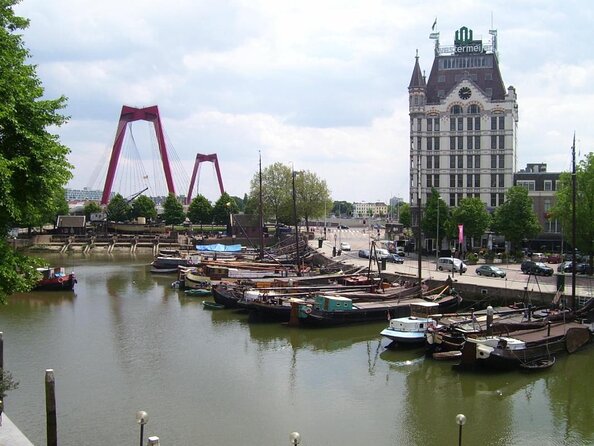
Nearby, the Old Harbor, or Oude Haven, offers a very different mood. Dating to the 14th century, it is one of the few places where Rotterdam’s earlier port identity is easy to picture. Today, cafés and restaurants line the water, making it a sensible place for a later drink or meal, though food is not part of the tour.
The nearby Markthal adds another layer. Its large market hall is one of the city’s most eye-catching modern buildings and a useful place to notice how Rotterdam combines commerce with architecture. If you want to stop for a fresh stroopwafel, one participant did so during the walk, but allow time for it. A food stop may mean less time in another area.
St. Lawrence Church, the city’s medieval survivor
The Grote of Sint-Laurenskerk is the emotional counterpoint to the new architecture. This 16th-century church was badly damaged in the 1940 bombing and later restored. It is Rotterdam’s only remaining medieval building, so its survival carries unusual weight in a city largely rebuilt after the war.
The church is also called the Great Church of Rotterdam. Depending on the timing and access that day, you may learn about its interior and the possibility of a view from the spire. The supplied tour information specifically highlights the city view, but admission details for entering or climbing are not included in the tour price, so ask your guide what is available.
This stop is where the city’s wartime story becomes concrete. You are not only hearing that Rotterdam was destroyed. You are looking at the one major medieval structure that remained and then seeing the radically different city built around it.
More Walking Tours in Rotterdam
- Rotterdam: Architectural Highlights Guided Walking Tour
★ 4.8 · 215 reviews - Rotterdam Walk: Hilights, Gems, Architecture & WWII | 2 or 3hrs
★ 5.0 · 149 reviews - Rotterdam: Highlights & Gems Walking Tour with Dutch Local
★ 5.0 · 133 reviews - Rotterdam 2-Hour Walking Tour | Discover The City With A Local
★ 4.5 · 111 reviews
Museumpark and Rotterdam’s architectural conversation
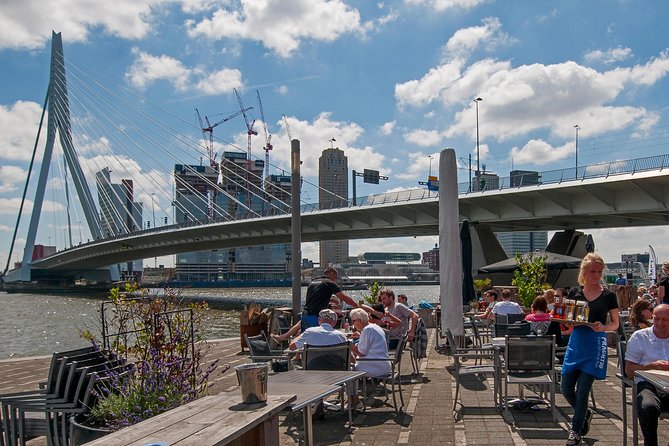
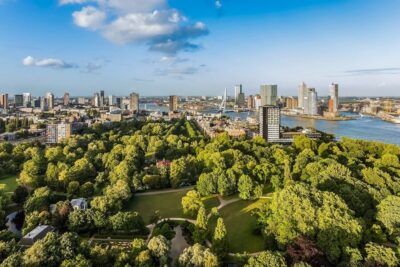
Museumpark gathers an impressive group of cultural buildings within a compact area. The walk can pass Kunsthal Rotterdam, Museum Boijmans Van Beuningen, the Chabot Museum, the Natural History Museum, Huis Sonneveld, and the Netherlands Architecture Institute.
You do not receive admission to these museums, and the tour is not designed as a museum visit. Think of Museumpark as an outdoor introduction. Your guide can explain how the buildings differ, point out architectural details, and help you decide where to return if you have another free afternoon.
Each stop adds something different:
- Kunsthal Rotterdam is known for changing exhibitions, making it a useful choice if you plan to return for art or design.
- Museum Boijmans Van Beuningen is one of Rotterdam’s major art institutions, though access and exhibition arrangements can change.
- Chabot Museum focuses on the work of painter and sculptor Hendrik Chabot.
- The Natural History Museum offers a change of subject, with collections related to the natural world.
- Huis Sonneveld presents a carefully designed modernist home and helps explain how people lived with the architecture of the early 20th century.
- The Netherlands Architecture Institute fits naturally into a city tour centered on rebuilding and design.
The strength of this section is not checking off seven buildings. It is seeing Rotterdam’s architecture as a conversation between art, housing, museums, and public space. If you care more about markets or street life than museums, tell your guide. The route can be adjusted.
One practical note: the tour moves on foot, and Museumpark can become the section you cut if the group walks slowly or stops often. One person missed the gardens after taking a slower pace. That is not a flaw in the private format, but it shows that you cannot linger everywhere during a four-hour experience.
Rotterdam Central and the postwar city
Rotterdam Central Station may appear as a transport stop, but it also gives you a strong look at the city’s newer identity. The station connects Rotterdam to the Dutch rail network and helps explain why the center feels open, busy, and built for movement.
The contrast with St. Lawrence Church is especially useful. One building carries centuries of religious and civic history. The other belongs to a city that rebuilt itself for modern transport, business, and daily life.
A good guide will not treat Rotterdam’s modern buildings as a collection of odd shapes. The wider point is how the city chose to rebuild. Some residents wanted a clean break from the past, while others mourned the loss of the old center. Your guide’s stories and old photographs can make that debate easier to understand.
Several people who took this type of walk covered nearly four miles. That is a useful planning figure even though the exact route varies. Wear shoes you would trust on a long city walk, and do not assume the cruise replaces most of the walking.
The 75-minute harbor cruise
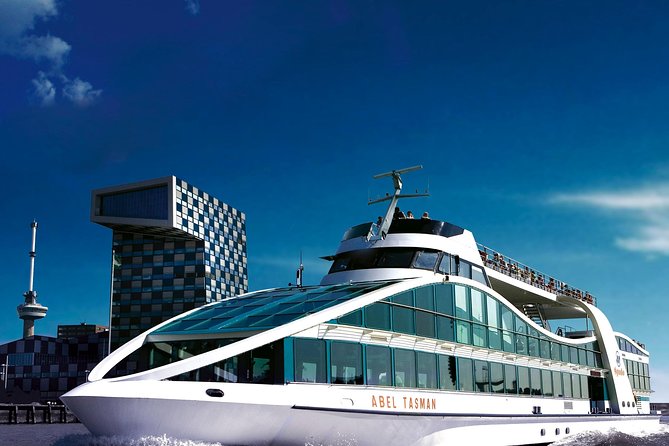
After the streets, the boat is a welcome change. The walking portion ends at the Port of Rotterdam, where you board a 75-minute cruise. Your private guide does not necessarily remain on the boat, so the cruise should be viewed as a separate, relaxing finale rather than a continued private tour.
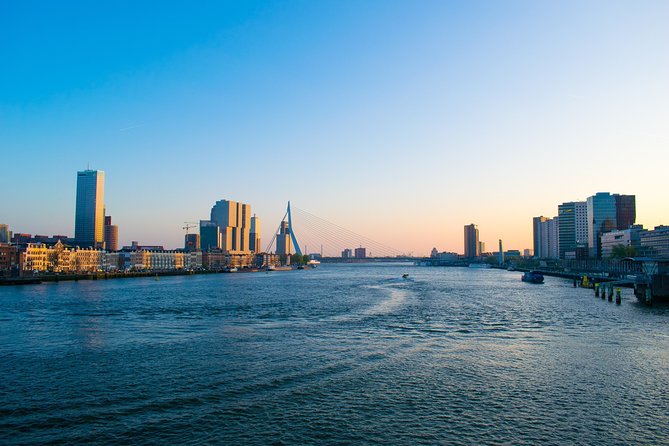
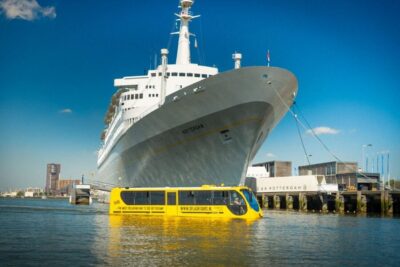
From the water, you can see the scale of Rotterdam’s port in a way that is hard to grasp from the center. Expect views of the skyline, shipyards, docks, shipping containers, and working port areas. You may also see the Rotterdam steamship, the former flagship of Holland America Line.
The port has been central to Rotterdam’s growth. It became Europe’s largest port and was once the world’s busiest, before Singapore and then Shanghai moved ahead. The cruise gives that fact physical scale: cranes, ships, industrial buildings, and long stretches of waterfront show that this is not simply a scenic marina.
The boat ride will appeal most to people curious about shipping and urban industry. If you want nonstop historic buildings or pretty waterfront views, parts of the cruise may feel slow. One especially honest assessment described the ride as the low point because it passed container ships and a working port. Another found it a fitting and restful end, particularly after several miles of walking.
The onboard commentary may be given in several languages in sequence. If you understand all of them, that repetition can become tiring. Still, sitting down and watching the port unfold can be exactly what you need after a long walking route.
What the private format adds
A standard group tour has a fixed rhythm. This one gives you more control. Guides have adjusted routes for people who were not interested in shopping, slowed the pace for groups, and pointed out less obvious street art and side streets along with major sights.
That flexibility is most valuable when your group has a clear preference. You might ask for more wartime history, modern architecture, local markets, museum exteriors, or port context. You should not expect to see every stop in depth, especially if you want frequent photographs or food breaks.
The guide quality is important. Strong guides such as Jacob, Niels, Raphael, Anthony, and Skip were described as warm, professional, humorous, and able to connect local events to broader European history. One guide had worked as a senior program director for a major river cruise line, while Raphael used personal memories of growing up in Rotterdam to add local detail.
The tour is private, so only your group participates. That makes it easier to ask questions and avoid the awkwardness of holding up strangers. It also means the value depends partly on your group size. At $192.77 per person, the price is easier to justify for a small group that wants private attention than for a solo visitor comparing it with a public city walk.
Is $192.77 per person good value?
The price includes a private guide, commentary in your chosen language, a 75-minute harbor cruise, and downtown hotel pickup when arranged and applicable. It does not include food, drinks, or museum admissions.
At first glance, the price may feel high for a four-hour city tour. Part of what you are paying for is not admission tickets. It is the guide’s time, route flexibility, language choice, and the convenience of combining a private walk with the boat ride.
The value improves if you have only one day in Rotterdam, are traveling with family or friends, or want a guide to make sense of the city’s postwar design. It is less compelling if you prefer to explore at your own pace, plan to visit several museums, or mainly want a cheap harbor cruise.
A separate harbor cruise can cost far less than the full tour, so do not book this solely for the boat. Book it for the connection between Rotterdam’s destruction, rebuilding, architecture, old harbor, and port economy.
Weather, walking, and practical planning
The tour operates in all weather. Rotterdam’s open streets and waterfront can feel exposed, so bring sensible clothing and shoes that can handle rain. Good walking shoes are not a polite suggestion here. They are the difference between enjoying the architecture and watching the clock.
The tour is near public transportation, and most people can participate. Service animals are allowed. Pickup and drop-off are included only when the hotel is in central Rotterdam, and the activity ends back at the meeting point, not at your hotel unless that arrangement is specifically part of the pickup plan.
Free cancellation is available until 24 hours before the start time. Changes or cancellations made within that final 24-hour period are not accepted for a refund. Confirmation is normally sent at booking, though bookings made within seven days of departure may receive confirmation within 48 hours, subject to availability.
Who should book this Rotterdam experience?
Book this tour if you want a strong first reading of Rotterdam rather than a list of disconnected sights. It suits people who enjoy architecture, urban history, wartime reconstruction, ports, and asking a local guide why the city looks the way it does.
It also works well for a single day in Rotterdam. The walking route covers the key central contrasts, and the cruise adds a port view without requiring you to organize a second activity.
You may want another option if your mobility is limited, if you dislike long walks, or if your main goal is museum interiors. You should also think twice if industrial waterfront scenery sounds dull. The boat is restful, but it is not a picturesque canal ride.
My recommendation
I would choose this for a first visit, especially with a small group that wants a private guide and has only half a day. The best part is the city story: medieval church, wartime destruction, experimental housing, museums, markets, and one of Europe’s great working ports.
Go in with realistic expectations. You will walk a lot, museum entry is not included, and the cruise shows industry as much as scenery. If that sounds interesting rather than disappointing, this is a smart way to understand Rotterdam quickly and leave with a clear sense of where to explore next.
FAQ
How long does the tour last?
The experience lasts approximately four hours. The walking portion takes about 2.5 to 3 hours, followed by a 75-minute Rotterdam Harbor cruise.
Where does the tour begin?
The usual meeting point is the Zadkine statue at Plein 1940, near the Maritime Museum. If no hotel name is provided, the meeting point may be Rotterdam Central Station near the Cloudlamp.
Is hotel pickup included?
Pickup is included when your hotel is in central Rotterdam. Hotel pickup and drop-off are not included for hotels outside the city center.
Which languages are available?
The tour can be operated in English, French, German, or Spanish. You should provide your preferred language when booking.
Are museum admission tickets included?
No. The walk passes Museumpark and museums such as Kunsthal Rotterdam, Museum Boijmans Van Beuningen, the Chabot Museum, and the Natural History Museum, but museum admission is not included.
What happens if the weather is bad?
The tour operates in all weather conditions. Good walking shoes are recommended, and service animals are allowed.
Just added around Rotterdam
- Discover Rotterdam: Classic Highlights Bike Tour by a Local★ 5.0 · 3 reviews
- Rotterdam: Capture the most Photogenic Spots with a Local★ 5.0 · 3 reviews
- Private tour: Markthal, Cube houses and Rooftop Het Witte Huis★ 4.5 · 3 reviews
- Private Transfer from Rotterdam Port to Amsterdam Airport (AMS)★ 5.0 · 3 reviews
- Rotterdam: 2.5-Hour Leckers Boat Cruise and Buffet★ 3.2 · 3 reviews
- Discover Rotterdam’s most Photogenic Spots with a Local★ 5.0 · 3 reviews
- Rotterdam: Wilhelminapier, High-rise & floating architecture★ 4.0 · 3 reviews
- Private Transfer from Rotterdam City to Amsterdam Schiphol Airport★ 5.0 · 4 reviews
Rotterdam Tours, compared.

Kinderdijk UNESCO World Heritage Entry Ticket
Read our review →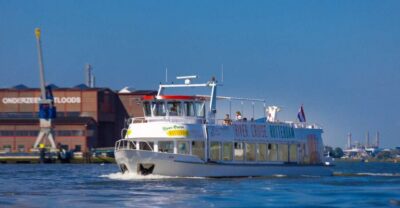
Browse the lists this tour appears in