
Reviewed · ROTTERDAM TOURS
Rotterdam: Architectural Highlights Guided Walking Tour
Rotterdam makes the most sense when you understand why it looks so different from other Dutch cities. This two-hour architecture walk connects the city’s 1940 destruction, postwar rebuilding, bold experiments, and future-minded planning in one brisk route from Central Station to the river.
I like the way the tour uses buildings as clues to Rotterdam’s story, rather than treating architecture as a parade of pretty façades. I also like the route: you cover the Lijnbaan, City Hall, Timmerhuis, Markthal, Cube Houses, and Erasmus Bridge without paying for local transport. The main drawback is its pace. You walk 3 to 4 kilometers and stop often to listen, so you may wish for more than two hours.
Key points to know before booking
- A city story told through buildings: Learn how the 1940 bombing and later rebuilding shaped Rotterdam’s modern center.
- A practical Central Station to river route: Begin under the clock at Rotterdam Centraal and finish by the Maas and Erasmus Bridge.
- An architect leads the walk: Guides including Tania, Silvia, Tina, and Tanya have explained design, urban planning, and local history in clear, engaging terms.
- Major sights fit into one compact tour: See the Lijnbaan, City Hall, Timmerhuis, Sint Laurens church, Markthal, Cube Houses, and riverside development.
- Good value for architecture fans: At $53 per person, the price covers a live English-speaking architect guide, with no extra transport required.
- Plan for weather and walking: The tour runs rain or shine, and comfortable shoes are essential.
Why Rotterdam needs an architecture tour
Rotterdam is not a city you understand by simply admiring its skyline. Its center was shaped by a wartime bombing in 1940, followed by difficult choices about how to rebuild. Instead of recreating an older Dutch town, Rotterdam developed a modern identity, with broad streets, experimental buildings, offices, housing, shopping areas, and large infrastructure projects.
That choice gives the city its unusual mix. You can move from historic remnants to postwar planning and then to striking contemporary buildings within a short walk. Without context, the result can seem random. With an architect explaining the decisions, the city becomes easier to read.
The tour also puts daily life into the picture. You are not only examining façades. You are learning how people use streets, shops, offices, public spaces, and transport hubs, and how city planners have tried to connect Rotterdam’s center with the river and the newer development on the south bank.
I would not book this as a general sightseeing stroll if you want lots of free time for photographs or shopping. It is a talk-and-walk experience, with a steady route and plenty of information. For anyone curious about cities, design, or the way Rotterdam reinvented itself, that focus is the point.
More Walking Tours in Rotterdam
- Rotterdam Walk: Hilights, Gems, Architecture & WWII | 2 or 3hrs
★ 5.0 · 149 reviews - Rotterdam: Highlights & Gems Walking Tour with Dutch Local
★ 5.0 · 133 reviews - Rotterdam 2-Hour Walking Tour | Discover The City With A Local
★ 4.5 · 111 reviews
Meeting under the clock at Rotterdam Centraal
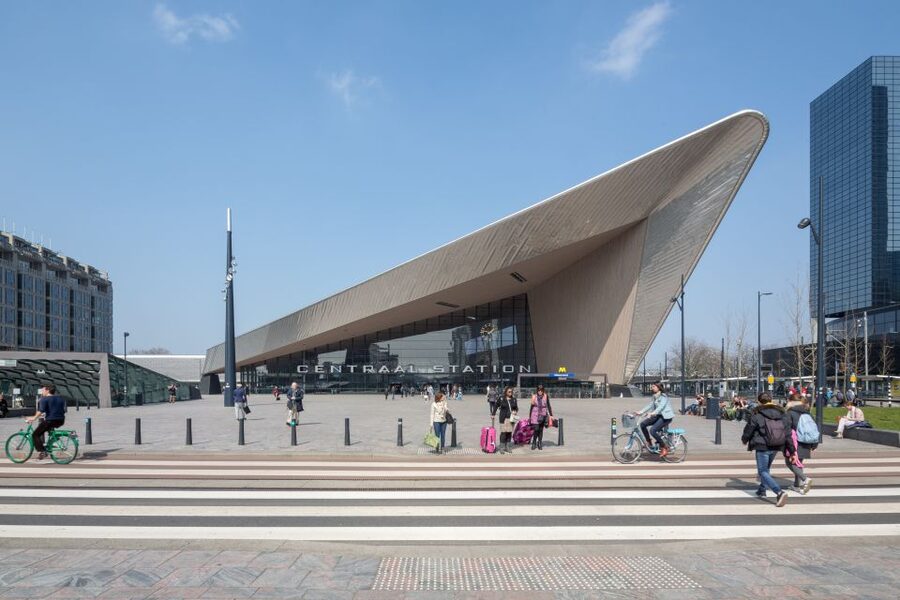
The tour begins at Rotterdam Centraal Station, underneath the clock. This is a sensible starting point because the station itself introduces Rotterdam’s modern approach before the walk properly begins.
You will meet an English-speaking guide who works as an architect or has a strong professional background in architecture and city planning. Guides named Tania, Tanya, Silvia, Sylvie, and Tina appear in the tour’s guide roster and past bookings, so the exact person leading your walk can vary. The strongest descriptions of the experience point to guides who explain buildings in their social and historical setting, not just by naming architectural styles.
Central Station also gives you an immediate lesson in how Rotterdam presents itself. It is a major transport gateway and a modern landmark, so the guide can begin with the city’s postwar character and its plans for the future. You will not need to arrange a tram or taxi between the sights. The route is on foot from here.
The meeting point is convenient if you arrive by train, but give yourself enough time to find the clock area inside the station. Wear shoes you can comfortably use for a 3 to 4 kilometer walk. The tour is wheelchair accessible, though any walking tour with repeated stops and city streets is best approached at a pace that works for your group.
The Lijnbaan and Rotterdam’s postwar reset
From Central Station, the walk heads into the center and toward the Lijnbaan area. This section helps explain why Rotterdam feels so open and planned compared with many old European centers.
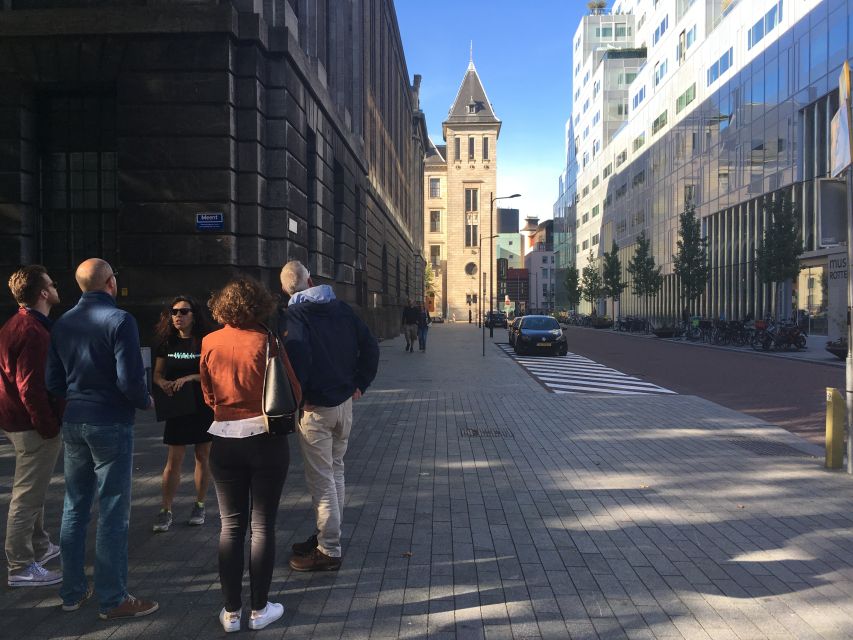
The Lijnbaan is important because it reflects postwar thinking about shopping streets, pedestrians, traffic, and urban space. Here, your guide can point out how the city’s rebuilding created a different kind of center after the wartime damage. You are looking at urban planning as much as individual buildings.
This is where an architect’s guidance adds real value. A casual stroll may show you a broad shopping area, but the guide can explain why it was laid out that way and how its design fits Rotterdam’s larger rebuilding story. You will also begin to see the variety of architectural periods that the tour covers.
The route is not limited to famous photo stops. It asks you to notice how buildings meet the street, how public areas are arranged, and how the city balances older structures with new construction. That makes the tour useful even if you do not know technical architectural terms.
City Hall, Timmerhuis, and the city’s changing center
The next section brings you past City Hall and the Timmerhuis, two useful contrasts in Rotterdam’s central district. The tour uses these buildings to show how the city has continued to change after its initial postwar rebuilding.
City Hall gives the walk a civic dimension. It is not simply another grand building on the route. It helps you think about how municipal decisions shape the appearance and use of the center. Your guide can connect the building to Rotterdam’s civic identity and the way the city has planned its future.
The Timmerhuis adds a newer note. It is one of the places where you can see Rotterdam’s continuing interest in modern forms and mixed city functions. The guide’s role is to explain how a building fits into its surroundings and what it says about the period in which it was created.
I appreciate this part of the route because it keeps the tour from becoming a list of isolated landmarks. You are moving through a working city, where offices, public buildings, shops, and streets have to function together. The discussion of urban development is one of the most praised parts of this experience, especially for visitors who want to understand why Rotterdam made particular choices over several decades.
Same country, a completely different kind of day:
- Rotterdam: Harbor Sightseeing Cruise
★ 4.3 · 7,599 reviews - Rotterdam: 1-Hour Sightseeing Splash Tour
★ 4.5 · 3,299 reviews - Rotterdam: Rotterdam Zoo Blijdorp Entry Ticket
★ 4.6 · 2,754 reviews - Rotterdam: Euromast Lookout Tower Ticket
★ 4.4 · 2,549 reviews
Sint Laurens church and the memory of 1940
The Sint Laurens church provides a sharp change of mood and style. After the modern forms around the center, this historic church reminds you that Rotterdam once had a very different architectural core.
The church is especially meaningful in the context of the 1940 bombing and the city’s recovery. The walk does not treat the past as a separate museum topic. Instead, it shows how the surviving historic structure and the newer city around it exist together.
Your guide may use old photographs or other visual material to make the comparison clearer. One guide, Silvia, has been described as carrying a historical photo book, which is exactly the sort of aid that can help you picture what the center looked like before and after the bombing. The supplied information does not promise that every guide uses one, so consider it a possible bonus rather than a standard feature.
This stop also helps prevent a common mistake: assuming Rotterdam is simply a city that replaced old buildings with flashy new ones. The story is more complicated. The tour gives you a way to see loss, preservation, rebuilding, and later development as connected parts of the city’s identity.
Inside the Markthal
The route continues to the Markthal, where you enter the impressive covered market building. This is one of the most enjoyable stops because you experience the architecture from inside rather than only viewing it from the pavement.
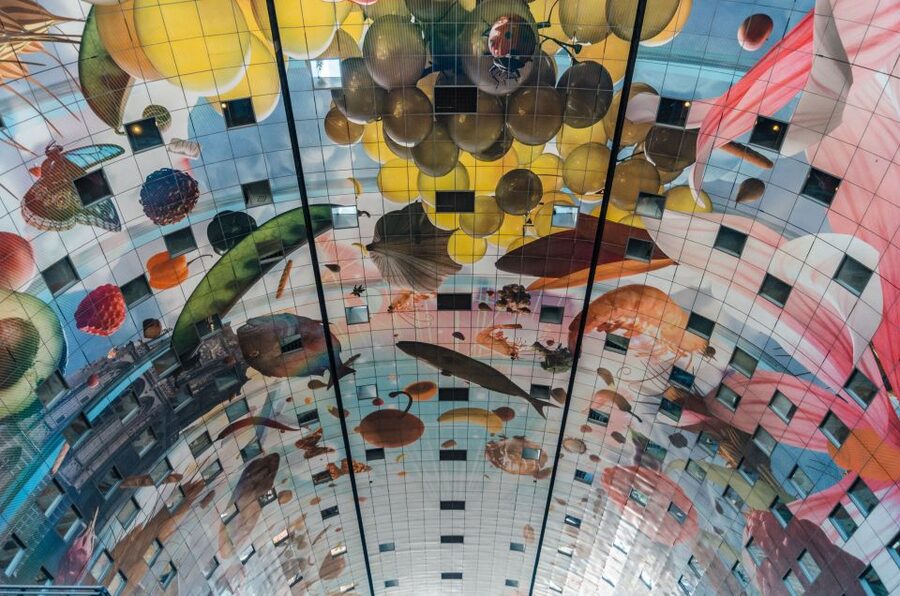
The Markthal combines a public market with a large contemporary structure, giving the guide plenty to discuss about scale, use, and urban life. As you walk through, you can look up and take in the building’s interior artwork and curved form. The tour’s main purpose is architectural, so food and drinks are not included, but the market gives you a chance to see an active public place during the walk.
You should not expect a long meal break here. Two hours is a tight schedule, and the group needs to keep moving. If you want to browse food stalls or stop for lunch, plan to return after the tour.
Still, entering the Markthal makes the itinerary feel more complete. You get a view of Rotterdam’s modern architecture not only as an object, but as a place designed for people to gather, shop, and pass through.
The Cube Houses, with room for a fair appraisal
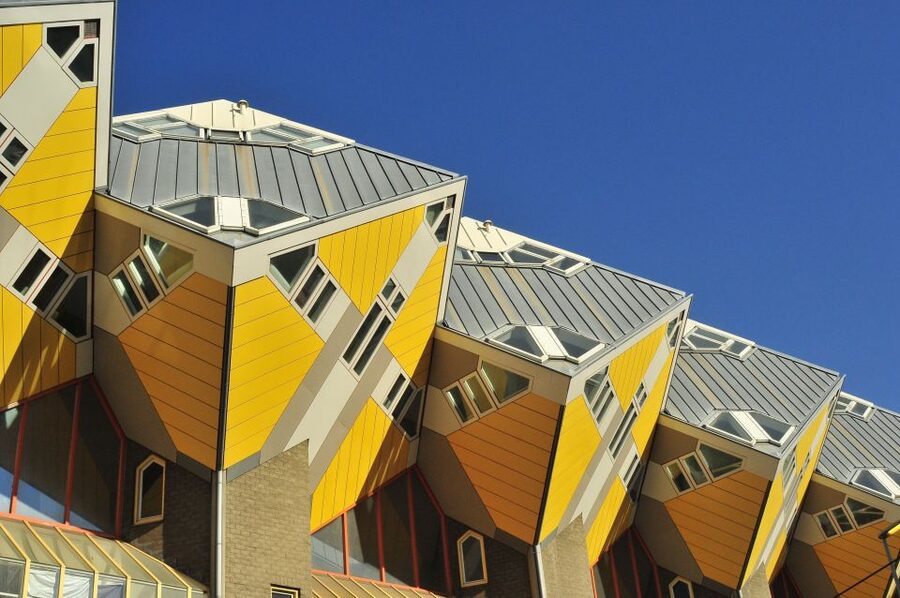
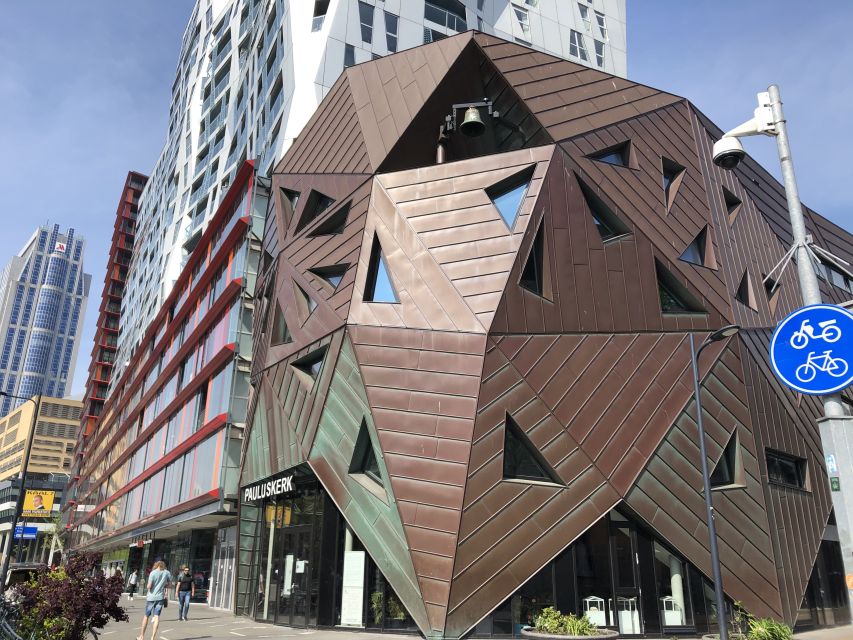
After the Markthal, the walk passes the row of Cube Houses. They are among Rotterdam’s best-known sights, and their angled forms are hard to miss.
The guide can explain the design idea and how the houses fit into a wider experiment in urban living. You will see why they attract photographers, but the tour also gives you room to question whether an unusual design is practical. One past participant felt the Cube Houses had received more attention than they deserved, which is a useful reminder that iconic does not always mean successful for everyday life.
That candid view is part of what makes an architecture walk worthwhile. You are not required to admire every famous building. You can ask what works, what does not, and how a striking idea affects the people who use the space.
The route passes the Cube Houses rather than promising an extended interior visit. If you want to explore inside, check the timing and any separate admission arrangements before booking, since entry is not listed as part of this walking tour.
The riverfront and Erasmus Bridge
The final stretch leads toward the riverside and the new development on the south bank. This is where Rotterdam’s ambitions become easiest to see.
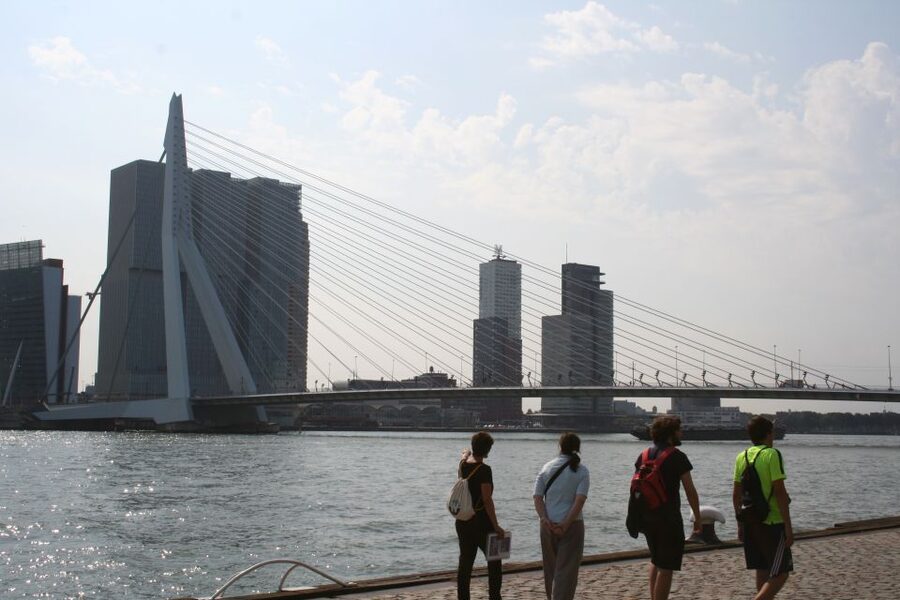
From the waterfront, you can admire the high-rise skyline and the Erasmus Bridge, the city’s signature river crossing. The bridge gives the tour a strong visual finish, but the guide also puts it into a wider story about connections between the center, the Maas, and the south bank.
This part is valuable because it shows that Rotterdam’s rebuilding did not stop when the central streets were reconstructed. The city continues to plan, add new buildings, and reshape the relationship between its older core and the river. You can look across the water and see how architecture, transport, commerce, and public space work together at a much larger scale.
It is also a good place for photographs, though the walk may not linger as long as you would like. Several people who enjoyed the tour wished it lasted four hours instead of two. That tells you something important about the format: you receive a strong introduction, not an exhaustive study of every building along the harbor.
How much walking and talking to expect
The route covers 3 to 4 kilometers in two hours. That is not a difficult distance for most reasonably mobile adults, but the pace can feel brisk because you are stopping to listen, catch up, and move between sights.
Comfortable shoes and weather-appropriate clothing are essential. The tour runs rain or shine, and there is no promise of a sheltered alternative. In poor weather, the outdoor portions will be less pleasant, especially near the river.
The guide may pause to let slower walkers catch up, but you should still stay aware of the group. If you prefer a slow stroll with long pauses, a private group could be a better fit if available for your date. Families should also think carefully about the content and distance before bringing children. Kids aged 0 to 12 can join free, but the walk is designed around architecture, history, and urban planning rather than child-focused entertainment.
The tour is offered in English and is wheelchair accessible. Since the exact route and street conditions can affect comfort, anyone with specific mobility needs should confirm details at booking.
What $53 buys you
At $53 per person, this is not the cheapest way to see Rotterdam’s center. You can walk past many of the same buildings on your own for free. The question is what you would miss without the guide.
The value comes from interpretation. You are paying for an architect to connect the 1940 bombing, postwar planning, design decisions, civic buildings, market architecture, experimental housing, and riverside development. The strongest guide experiences have included detailed answers, historical photographs, restaurant suggestions, and advice on what else to see in the city.
You also avoid transport costs because the sights are linked on foot. The route starts at the main station and ends by the river, making it a practical first activity when you arrive. Afterward, you are already close to the waterfront and the city center.
For a private group, the value depends on the final group price and your interest in a more personal conversation. Small groups can make it easier to ask questions, and some past bookings have felt almost like walking around with a local friend. A larger group may provide less flexibility, though the tour’s format remains useful for a first orientation.
The main limit is time. Two hours is enough to understand the city’s big story, but not enough to explore interiors, social housing, or every part of the harbor. If you want a specialist study of housing policy or a longer architectural survey, this tour may feel like an introduction rather than the full course.
Who will get the most from this walk
You should book this if you like cities, buildings, planning, design, or history and want more than a quick photo stop. It works especially well near the start of a Rotterdam visit because it gives you a mental map of the center and helps you decide what deserves a second look.
It also suits first-time visitors who find Rotterdam confusing at first glance. The guide explains how the pieces fit together, so later walks through the Lijnbaan, Markthal, Cube Houses, and riverfront become more rewarding.
You may want to skip it if you dislike guided commentary, walk slowly, or want a relaxed café-and-photo outing. The route is set, the walk is fairly packed, and the tour operates in all weather.
Guide quality matters in any walking tour. The guides named in the supplied material, especially Tania, Tanya, Silvia, Sylvie, and Tina, are repeatedly described as friendly, clear, and well prepared. One practical point is worth noting: a strong accent may occasionally make the English harder to follow for some listeners. That is not a broad criticism, but if you have hearing difficulties, a private group and a quiet position near the guide may help.
Practical details before you reserve
The walking tour costs $53 per person and lasts two hours. It includes the walking tour and architect guide, but not food, drinks, or transportation.
Meet under the clock at Rotterdam Centraal Station. Bookings allow free cancellation up to 24 hours before the start time, and you can reserve now and pay later. Starting times depend on availability.
Children aged 0 to 12 can join free. Parents should consider the 3 to 4 kilometer distance, the length of the walk, and the architecture-heavy subject. The tour is in English, wheelchair accessible, and private groups are available.
Bring comfortable shoes, clothing suited to the forecast, and a willingness to keep moving. If you hope to eat at the Markthal or spend time inside the Cube Houses, plan those activities separately after the walk.
Should you book the Rotterdam architecture walk?
I would book this tour if you want Rotterdam to make sense, not just look unusual. The route covers the city’s major architectural talking points, but its real strength is the connection between buildings and decisions: what happened in 1940, how the city rebuilt, and why Rotterdam keeps trying new urban ideas.
The $53 price is fair for an architect-led introduction, especially if you are new to the city and would otherwise spend hours trying to piece the story together yourself. Go in expecting a brisk overview, not a four-hour specialist seminar. Wear good shoes, allow for rain, and save extra time afterward for the Markthal, Cube Houses, or waterfront.
FAQ
How long is the Rotterdam architecture walking tour?
The tour lasts two hours and covers approximately 3 to 4 kilometers on foot.
Where does the tour meet?
Meet your guide at Rotterdam Centraal Station, underneath the clock.
Which sights are included on the route?
The walk includes Rotterdam Central Station, the Lijnbaan area, City Hall, the Timmerhuis, Sint Laurens church, the Markthal, the Cube Houses, the south-bank development, and the Erasmus Bridge.
Is the tour conducted in English?
Yes. The live tour guide speaks English.
Can children join the walking tour?
Yes. Children aged 0 to 12 can join for free. Parents should consider the distance, subject matter, and two-hour duration.
What should I bring?
Bring comfortable shoes and weather-appropriate clothing. The tour operates rain or shine.
Just added around Rotterdam
- Discover Rotterdam: Classic Highlights Bike Tour by a Local★ 5.0 · 3 reviews
- Rotterdam: Capture the most Photogenic Spots with a Local★ 5.0 · 3 reviews
- Private tour: Markthal, Cube houses and Rooftop Het Witte Huis★ 4.5 · 3 reviews
- Private Transfer from Rotterdam Port to Amsterdam Airport (AMS)★ 5.0 · 3 reviews
- Rotterdam: 2.5-Hour Leckers Boat Cruise and Buffet★ 3.2 · 3 reviews
- Discover Rotterdam’s most Photogenic Spots with a Local★ 5.0 · 3 reviews
- Rotterdam: Wilhelminapier, High-rise & floating architecture★ 4.0 · 3 reviews
- Private Transfer from Rotterdam City to Amsterdam Schiphol Airport★ 5.0 · 4 reviews
Rotterdam Tours, compared.


Kinderdijk UNESCO World Heritage Entry Ticket
Read our review →
Browse the lists this tour appears in