
Reviewed · E-SCAVENGER HUNTS & CITY GAMES
e-Scavenger hunt Venlo: Explore the city at your own pace
Venlo turns sightseeing into a friendly contest with this self-guided city hunt, which links medieval churches, museums, food halls, and striking modern buildings. You follow questions on your phone rather than a guide, so your group can pause for coffee, take a wrong turn, or move quickly when the mood takes you.
I like the freedom to set your own pace, and I like the private format for up to six people. The questions are designed to be approachable, making this a good fit for families and mixed-age groups. The main catch is practical: you need your own smartphone and data, and the initial login can feel a little cumbersome.
Key points at a glance
- Start at Stationsplein: The hunt begins at Venlo railway station and finishes back at the same meeting point.
- Ten varied city stops: You pass churches, museums, historic civic buildings, a food market, a casino, and a Cradle to Cradle municipal office.
- Two to four hours: You control the pace, so the activity can fit a short city visit or a relaxed afternoon.
- Private group format: One booking covers a team of up to six people, with no strangers added to your group.
- Phone-based play: No special equipment is supplied or required, but your smartphone and mobile data are not included.
- English option: The activity is offered in English, useful if your group does not speak Dutch.
Why Venlo works well for a phone-based city hunt
Venlo is a practical place for this kind of activity because its points of interest cover several eras and styles. You are not simply walking from one similar monument to another. The route brings together medieval religious buildings, civic architecture, food, entertainment, museums, and a modern public office.
That variety gives the questions more purpose. A church can prompt you to look up at stonework or notice artwork. A museum stop can point you toward the city’s cultural side. A food stop can break up the walking with something local to eat or drink.
I also like the fact that the activity does not force you to follow a guide’s timetable. If your group wants to spend longer around the Sint Martinuskerk, you can do so. If children lose interest at a museum, you can keep moving. The trade-off is that the amount of explanation depends on the phone experience rather than a person standing beside you.
The average booking lead time is about 15 days, though the activity is available every day from noon through midnight during the stated operating period. That broad window makes it easy to add to a day in Venlo instead of building your whole visit around a fixed departure.
More city games and scavenger hunts in Netherlands:
- e-Scavenger hunt Maastricht: Explore the city at your own pace
★ 4.5 · 110 reviews - e-Scavenger hunt Middelburg: Explore the city at your own pace
★ 4.5 · 55 reviews - Rotterdam Highlights & Spies: Interactive City Game
★ 4.0 · 51 reviews
Starting at Stationsplein and setting the pace
Your meeting point is Stationsplein, 5913 AA Venlo, directly giving the activity a clear starting place near public transportation. That is useful if you arrive by train or want an easy landmark for the beginning and end of the route.
The activity lasts roughly two to four hours. That is a wide range, but it makes sense for a self-guided hunt. A quick group focused on solving questions may finish closer to the shorter estimate. A family stopping for food, photographs, or museum time will likely need longer.
The format is built for a maximum of six people per team. This is large enough for a family or group of friends, but small enough for everyone to take part. If your party is larger, you would need to consider how the team limit affects your booking and play format.
One point deserves attention before you begin: your phone and data are not included. Check that your battery is charged and that your group has a workable mobile connection. The only specific negative detail available about the experience is that logging in can be somewhat awkward, so allow a few extra minutes at the start rather than expecting to begin instantly.
Venlo’s medieval past, from trading city to contested prize
The opening history section places Venlo in the Middle Ages, when its role as a trading city made it valuable to different powers. The city was controlled at various times by the Spanish, the States, and the French.
That background helps explain why Venlo has layers of political and architectural influence. The point is not just to memorize a list of occupiers. As you move through the city, you can think about how trade brought opportunity while also making Venlo worth fighting over.
A city hunt handles this kind of history in a lighter way than a formal museum tour. You receive prompts while moving through the streets, then use what you see around you to solve them. If you enjoy learning in small pieces instead of reading long panels, this format should suit you.
The limitation is that a game cannot provide the same depth as a dedicated history tour. You will get useful context, but you should not book this expecting a long lecture on military or commercial history.
Limburgs Museum, with a family-friendly cultural stop
The Limburgs Museum is one of the main cultural points on the route. It is described as especially suitable for families and also hosts temporary exhibitions.
That makes it a useful stop for groups with different interests. Children can have a more active museum experience, while adults get a chance to connect the city with wider Limburg culture. Temporary exhibitions also mean the exact experience can change over time.
The city hunt gives you a reason to include the museum in your walk rather than passing it by. Still, the activity does not include museum admission, exhibition details, or a dedicated museum tour. Treat the stop as an introduction and check separately if you want to go inside.
For a family, this is one of the more valuable parts of the route. The hunt provides structure, while the museum offers a change from outdoor sightseeing. If your group only wants to solve clues quickly, you may spend less time here.
A few more Netherlands trips worth a look
- Amsterdam: 75 Minute City Canal Cruise with Audio Guide
★ 4.4 · 17,501 reviews - Amsterdam: City Centre Canal Cruise
★ 4.2 · 12,827 reviews - Amsterdam: Smoke and Lounge City Boat Cruise
★ 4.7 · 8,572 reviews - Amsterdam: City Canal Cruise and Heineken Experience Ticket
★ 4.5 · 5,367 reviews
The House of the City and changing civic needs
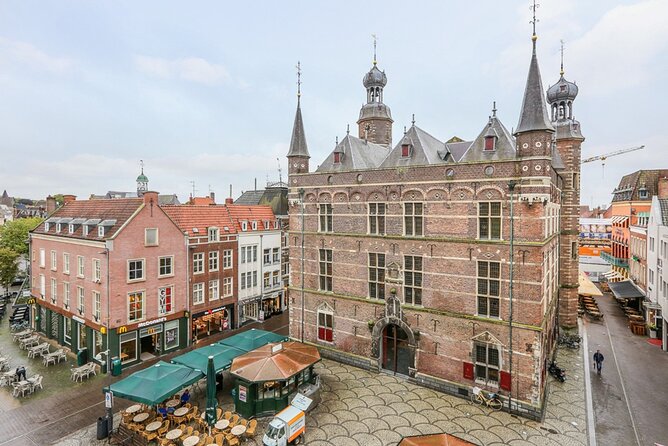
The House of the City of Venlo dates from around 1600 and has been changed over the centuries to meet the needs of its time. That makes it a good example of how historic buildings survive by adapting.
Look at it as more than an old façade. Its story is about continued use, changing requirements, and the way a city reshapes important buildings instead of leaving them frozen in one period.
This kind of stop suits the hunt because the question can encourage you to notice details that a casual walk might miss. You are asked to look carefully, not just take a picture and move on.
The available information does not specify whether the building interior is open during your visit. Plan to appreciate it from the route unless you confirm access separately.
Sint Martinuskerk and Sint-Jacobskerk: two different church experiences
The Sint Martinuskerk is a Gothic church built over a long period from 1410 to 1610. It contains valuable art treasures, giving the stop both architectural and artistic interest.
A church built across two centuries naturally offers a chance to think about changing styles and priorities. Even if you are not a church specialist, the age of the building and its artwork give the question more substance than a simple photo stop.
The Sint-Jacobskerk offers a different setting. It is a single-aisled church in Venlo’s medieval center, at the corner of Maasschriksel and Helschriksel. Its position in the old city fabric is part of what makes it worth locating.
Seeing both churches helps you compare rather than treat every religious building as the same. One is noted for its Gothic form and art treasures, while the other is defined in part by its compact medieval setting.
As with the other stops, the hunt does not promise interior access or a guided explanation. Church opening times can vary, so you should be ready for the possibility that some details are best viewed from outside.
Holland Casino’s unexpected oriental decoration
The Holland Casino location in Venlo is included mainly for its unusual decoration. Its oriental design is noticeable from the moment you arrive.
This is a welcome change of tone in the route. After historic churches and civic buildings, you get a modern entertainment venue whose visual character is the main attraction. The stop shows that city sightseeing is not only about old stone.
You do not need to treat the casino as a gambling visit. In the context of the hunt, it is an architectural and decorative waypoint. The provided information does not say that casino entry, gambling, or any activity inside is included, so do not assume those extras are part of your booking.
For groups, this can be a quick and memorable clue stop. It may be less appealing if your idea of sightseeing is limited to museums and old buildings, but that contrast is useful.
Beej Benders, a taste of Venlo between clues
Beej Benders is presented as a broad food and drink experience centered on products from Venlo and the surrounding area. This is the route’s natural pause for something to eat or drink.
I like the way this stop connects sightseeing with local produce. A city is easier to understand when you encounter what people eat and share, not only the places built by officials or religious institutions.
The food and drinks are not included in the tour price. That is not a flaw, but you should budget separately if you want to make a proper break here. The stop also gives you a chance to adjust the pace. A group racing through the questions can keep it short, while a relaxed group can use it as part of the afternoon.
Because no menu, reservation policy, or included tasting is specified, think of Beej Benders as a recommended location along the hunt rather than a booked food tour.
A modern municipal office built around Cradle to Cradle
The municipal office of Venlo provides one of the route’s most distinctive modern points. It was designed and built according to the Cradle to Cradle principle.
That idea gives the hunt a useful present-day counterpoint to the medieval center. Venlo is not only preserving its past. It is also using public architecture to think about materials, reuse, and environmental responsibility.
You may find this stop especially interesting if you enjoy design, sustainability, or urban planning. It also helps families see that city history is still being written through current buildings and public choices.
The description does not include an interior visit or an explanation of the building’s systems. The value here is in recognizing the design principle and considering how a municipal office can become part of a city’s identity.
Image and sound history, then the Protestant Joriskerk
Another museum stop makes the history of image and sound visible and audible. This adds technology and media to a route otherwise weighted toward architecture and civic history.
That variety matters when you are traveling with a mixed group. Someone less interested in churches may connect more with the development of images and sound. The hunt’s questions can also turn a museum visit into a focused search rather than an unstructured wander.
The exact museum name, admission arrangements, and opening details are not provided, so confirm those points if you plan to enter. The activity itself is still designed to bring the subject into your city walk.
The final church stop is the Joriskerk, a Protestant church partly located on the former site of the Sint Jorisgasthuis. Its story links religious life with the earlier charitable institution that occupied the area.
Together, the museum and Joriskerk give the latter part of the route a thoughtful mix of technology, faith, and social history. You are not just collecting landmarks. You are seeing how different parts of city life occupy the same streets over time.
Price, group size, and what you actually receive
The price is $37.21 per group of up to six people. That means the value depends heavily on your group size. With six participants, the cost works out to about $6.20 each. With only two people, it is about $18.61 per person.
For a full group, that is a reasonable price for two to four hours of structured sightseeing, especially since the activity is private and does not add strangers to your team. The cost covers the city hunt itself, not your phone data, food, museum admission, or other personal spending.
The best comparison is not with a fully guided walking tour, because this offers less live interpretation. Compare it with a self-guided route plus a game layer. You pay for the prepared trail, questions, and activity structure, while keeping control of the day.
The 4.5 rating from 19 reviews and 100 percent recommendation figure point to a generally positive experience, but the sample is small. The clearest practical praise is that Venlo is fun to explore and the questions are not too difficult. That is good news for families and casual groups, though puzzle experts may want tougher challenges.
Who should book this Venlo experience?
I would suggest this activity to families, friends, and groups who want an easy reason to walk around without joining a scheduled tour. It is also useful for people who like solving clues but do not want a highly demanding escape-room style challenge.
The private format works well for a birthday outing, a small group weekend, or a flexible stop during a wider Netherlands trip. Hearing-impaired participants may find the phone-based format useful because the activity is user-friendly for hearing-impaired people.
Most people can participate, and service animals are allowed. The route is near public transportation, which makes the station start particularly convenient.
I would be more cautious if you want a guide who can answer questions in real time, or if your group dislikes phone-based activities. The login issue may frustrate you at the start, and the experience depends on having a working smartphone and data connection.
Cancellation is free if you cancel at least 24 hours before the start time. Cancellations or changes made within 24 hours are not accepted for a refund, and the cut-off follows local time.
Should you book the Venlo city hunt?
Book it if you want a flexible, low-pressure way to see Venlo and can gather a group of four to six people. The route covers a surprisingly broad mix of sights, and the approachable questions should keep the activity moving without turning it into a test.
Think twice if you want detailed historical storytelling or guaranteed access inside every museum and church. This is a playful city walk, not a substitute for a specialist guide.
For the best value, bring a full battery, confirm your mobile data, allow extra time for login, and plan a food or museum pause rather than rushing between clues. With the right expectations, the Venlo hunt gives you a clear route, a bit of competition, and a good look at a city shaped by trade, religion, food, public design, and changing times.
FAQ
Where does the e-Scavenger hunt Venlo start?
The activity starts at Stationsplein, 5913 AA Venlo, Netherlands.
Where does the activity finish?
The hunt ends back at the meeting point at Stationsplein.
How long does the Venlo city hunt take?
The estimated duration is approximately two to four hours.
How many people can join one team?
One team can include a maximum of six people.
Is a smartphone included?
No. You must bring your own smartphone and mobile data.
What language is the activity offered in?
The activity is offered in English.
Can I cancel for a full refund?
Yes, if you cancel at least 24 hours before the scheduled start time. Cancellations or changes made less than 24 hours before the start are not accepted for a refund.
Just added around Netherlands
- Amsterdam: Giethoorn Tour with Canal Cruise and Windmills★ 5.0 · 3 reviews
- Full-day excursion to Edam, Volendam, and Marken★ 3.7 · 3 reviews
- Amsterdam: Chocolate Fondue in the Dark★ 5.0 · 3 reviews
- Historical Leiden: Private Tour with Local Guide★ 5.0 · 3 reviews
- Amsterdam Family Friendly Historical Walking Tour★ 5.0 · 3 reviews
- Amsterdam Private Walking Tour of Famous Painters★ 5.0 · 3 reviews
- Amsterdam Old-West Vegan Food Tour with Local Guide★ 4.7 · 3 reviews
- From Amsterdam: visit Zaanse Schans, Muiderslot and more!★ 5.0 · 3 reviews
E-Scavenger Hunts & City Games, compared.

e-Scavenger hunt Maastricht: Explore the city at your own pace
Read our review →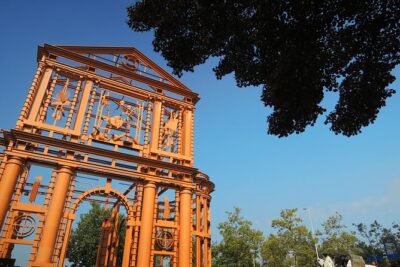
Rotterdam Highlights & Spies: Interactive City Game
Read our review →
Discover Utrecht with a self-guided Outside Escape city game tour
Read our review →

e-Scavenger hunt Den Bosch: Explore the city at your own pace
Read our review →
Discover The Hague with a self-guided Outside Escape city tour
Read our review →
e-Scavenger hunt Deventer: Explore the city at your own pace
Read our review →
Discover Amerfoort’s city center in this Outside Escape game tour
Read our review →Browse the lists this tour appears in