

Reviewed · E-SCAVENGER HUNTS & CITY GAMES
e-Scavenger hunt Deventer: Explore the city at your own pace
Deventer’s old center makes a fine game board. The Qula City Trail sends you between churches, squares, lanes, and civic buildings while your phone serves up riddles and assignments. You set the pace, choose the start time, and play as a private group of up to six.
I like the no fixed appointment and the freedom to pause for lunch, coffee, or a closer look at a church. I also like the team scoreboard, which gives families and friends a reason to pay attention instead of simply following a route.
The main catch is that this is not a guided walk. You need your own smartphone, mobile data, and enough battery, and the game may feel less satisfying if you want detailed explanations at every monument.
Key points at a glance
- Twelve central Deventer stops: The route includes the Toy Museum, City Hall, Broederenkerk, Lebuinuskerk, De Brink, Bergkerk, Walstraat, synagogue, and more.
- Up to six people per team: The $37.21 price covers the group, not each person, making the outing good value for a small party.
- Start any time, day or night: The trail is available 24 hours a day, with no fixed starting slot or required finish time.
- A game rather than a formal tour: You solve riddles and complete assignments on your phone while learning about the city.
- Several language choices: English is available, along with German, French, Dutch, Spanish, Italian, and additional options.
- A private, self-guided format: Only your own group takes part, so you are not matched with strangers or tied to a guide’s schedule.
Why Deventer works so well for a city game
Deventer is compact enough to explore on foot, yet it has plenty of visual change from one stop to the next. Medieval churches, a broad central square, narrow streets, and older civic buildings give the route variety. That matters in a phone-based hunt, since the city itself needs to keep your attention between challenges.
The Qula format turns sightseeing into a light competition. Your team receives tasks through the smartphone, earns points, and can try to reach the top of the leaderboard. You do not need to treat the score as serious business, but it gives children and competitive adults a useful reason to keep moving.
The listed duration is about three hours, while the instructions describe roughly two hours of active trail play. Since there is no time limit, plan on two to three hours if you want to pause at the sights. The experience ends back at the meeting point, at Kleine Poot 7, near the center of Deventer.
More city games and scavenger hunts in Netherlands:
- e-Scavenger hunt Maastricht: Explore the city at your own pace
★ 4.5 · 110 reviews - e-Scavenger hunt Middelburg: Explore the city at your own pace
★ 4.5 · 55 reviews - Discover Utrecht with a self-guided Outside Escape city game tour
★ 4.5 · 51 reviews
Starting at Kleine Poot 7

The trail begins at Kleine Poot 7, 7411 PE Deventer. Once you arrive, open the instructions sent by email and start the quest on your Android phone or iPhone. There is no guide to check you in, so read the instructions before setting off and make sure everyone understands how the game works.
The cost is $37.21 per group of two to six people. For six, that works out to a little over six dollars each. For two people, the per-person price is less attractive, but the private format and flexible hours still offer useful value if a scheduled tour does not suit you.
Your phone and data are not included. Bring a charged device, and remember that the game depends on the phone working throughout the route. The activity is offered in English and several other languages, which helps mixed-language groups choose a version everyone can follow.
Stop 1: Speelgoedmuseum Deventer
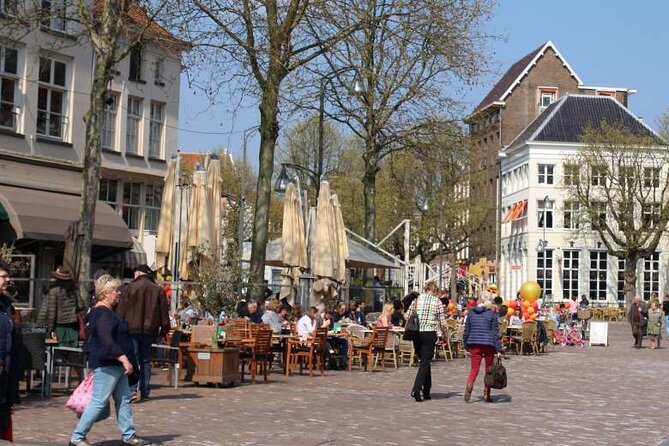
The Toy Museum is a playful opening point for the route. It gives the game a family-friendly start before you move into Deventer’s religious and civic sights. Even if you do not enter the museum, its presence signals that this outing is designed to mix local culture with simple entertainment.
This stop may appeal most to families with younger children, who can connect more quickly with toys than with church architecture. Keep in mind that the trail itself is the booked activity, so do not assume museum admission is part of the price.
Stops 2 and 3: Deventer and the city hall
The broad Deventer stop introduces the city as a whole before the route focuses on individual landmarks. Expect the game to use riddles and assignments to direct your attention to the surroundings rather than provide a long spoken explanation.
The next stop is Stadhuis van Deventer, the city hall. A civic building gives the route a useful change of subject after the opening museum stop. Here, you can look for architectural details and consider how the city’s public life has been organized over time while working through the phone challenge.
Because the trail is self-guided, the amount of background you receive depends on the task and your own curiosity. If you want more context, take a moment to read plaques or inspect the building before moving on.
A few more Netherlands trips worth a look
- Amsterdam: 75 Minute City Canal Cruise with Audio Guide
★ 4.4 · 17,501 reviews - Amsterdam: City Centre Canal Cruise
★ 4.2 · 12,827 reviews - Amsterdam: Smoke and Lounge City Boat Cruise
★ 4.7 · 8,572 reviews - Amsterdam: City Canal Cruise and Heineken Experience Ticket
★ 4.5 · 5,367 reviews
Stops 4 and 5: Broederenkerk and Lebuinuskerk
Broederenkerk brings the route to one of Deventer’s historic churches. The building adds a quieter, more reflective pause to a game that otherwise asks you to collect points and solve tasks. It is a good place to slow your group down and notice details instead of rushing to the next answer.
The Lebuinuskerk is one of the route’s major landmarks. It gives the trail a strong sense of place and helps explain why Deventer has such a substantial historic center. The church is also a natural point for a challenge, since large, recognizable buildings give teams clear visual targets.
The practical issue is simple: a church stop is not the same as a guided interior visit. The supplied information does not promise entry, opening hours, or a church tour, so treat the location as part of the outdoor route unless the game instructions say otherwise.
Stops 6 and 7: The Lebuinus Tower and De Brink
The Toren Grote of Lebuinuskerk adds height and scale to the route. You get a closer look at the church’s tower and a chance to connect the landmark with the wider city around it. The stop should suit players who enjoy spotting details and answering location-based questions.
De Brink provides a different setting. This large square is one of the key public spaces in Deventer, and it is the sort of place where a team can pause, compare answers, and decide whether to chase a higher score or simply keep exploring.
I would use De Brink as a natural break point. The trail has no fixed clock, so you can stop here for a drink or snack and resume when ready. That flexibility is one of the strongest reasons to choose this activity over a traditional tour with a fixed departure and finish.
Stops 8 and 9: Bergkerk and Wilhelminafontein

Bergkerk continues the church-focused middle section of the route. Its inclusion gives you another chance to compare Deventer’s religious buildings rather than seeing only one famous landmark. A scavenger hunt works best here when your group looks carefully at shapes, entrances, stonework, and the surrounding street pattern.
The Wilhelminafontein shifts the mood again. A fountain is a smaller urban detail than a church or city hall, but that is exactly why it belongs in a city trail. The game encourages you to notice features you might otherwise pass without a second glance.
Do not expect every stop to feel equally grand. Some locations are headline sights, while others work as connecting points that keep the route moving through different parts of the center. That variety is useful, though anyone seeking only major monuments may find a few stops less rewarding.
Stops 10 and 11: Walstraat and De Proosdij

Walstraat brings you into one of Deventer’s older street settings. Narrow lanes and historic buildings make a good backdrop for a walking challenge because the route becomes less about one monument and more about the shape of the city around you.
De Proosdij adds another layer of local history. The name points to the city’s ecclesiastical past, and the stop helps connect the churches and religious buildings into a broader story. The phone tasks are likely to give you a reason to examine the area, but the supplied details do not specify the exact questions, so do not book this expecting a fixed lecture.
These two stops are where the activity feels most like a neighborhood walk with a game attached. You are not simply moving from famous sight to famous sight. You are using the old streets as part of the experience.
Stop 12: The synagogue
The synagogue closes the route with another important piece of Deventer’s religious and social history. Its inclusion makes the itinerary broader than a simple church tour. You finish with a reminder that the city’s past includes different faith communities and layers of local life.
The route returns to the meeting point after this stop. Since there is no time limit, you can finish quickly or allow extra time for photographs and discussion. The game’s end is less about a formal farewell and more about seeing your score and deciding how your team performed.
How the points and phone play affect the outing
The Qula trail is built around riddles and assignments. You receive directions and game content on your own device, then submit answers as you go. The leaderboard gives the group a shared target, which can make a familiar sightseeing walk feel more active.
This format suits people who like a bit of competition. You can divide tasks among adults and children, compare guesses, and keep the pace lively. It also works for a group of friends who want an activity with structure but do not want to follow a guide holding a sign.
The format is less ideal if you dislike looking at a screen while sightseeing. It also does not replace a local guide who can answer follow-up questions or adjust the route to your interests. Think of it as a flexible city game with historical content, not as a full interpretive tour.
Timing, languages, and practical value
The activity is available Monday through Sunday, around the clock, during the stated operating period. You choose your own day and time, and there are no fixed reservations or starting slots. That makes it useful for a stopover, a spare afternoon, or a family outing that needs to fit around meals and other plans.
English is available, as are German, French, Dutch, Spanish, Italian, and more. Confirm your preferred language when booking and follow the email instructions you receive. Confirmation is provided at booking time.
At $37.21 for up to six people, this is strongest value for a full group. The price includes the city trail for the team, but not the smartphone or mobile data. If you already carry a suitable phone, the main cost is the game itself, with no guide tip or scheduled transport added to the stated price.
Free cancellation is available if you cancel at least 24 hours before the start time. Cancellations within 24 hours are not refunded, and late changes are not accepted. The activity is near public transportation, service animals are allowed, and most people can participate. It is also described as user-friendly for people with hearing impairments.
Who should choose the Deventer City Trail
I would choose this for a family, a couple of friends, or a private group that wants to see central Deventer without surrendering control of the day. Six people can play together, and the group price becomes especially appealing when divided among a larger party.
It is also a practical choice for mixed-language groups. The language range is wider than English alone, and everyone can work through the same city route at a suitable pace.
I would be more cautious if you want deep architectural commentary, a personal local perspective, or guaranteed access inside every church and building. The supplied information promises riddles, assignments, and historical learning, but not a guide, admissions, or a detailed lecture at each stop.
The experience has a 4.1 rating from 34 ratings, which suggests a generally positive but not flawless response. One poor rating objected to the six-person team limit and called the pricing model unfair. The provider’s reply clarified that six people can play together. The useful takeaway is to read the group rule correctly: this is one team of up to six, not six separate teams or an unlimited party.
Should you book it?
Book the Qula Deventer City Trail if you want a flexible, private city outing with a playful reason to visit twelve historic locations. It is affordable for a group of four to six, works in several languages, and lets you pause whenever the city catches your interest.
Skip it if your priority is a human guide, detailed historical commentary, or a carefully timed walking tour. For everyone else, bring a charged phone, allow two to three hours, and treat the score as a bonus rather than the whole point. The best part is having a simple route through Deventer that leaves room for your own pace.
FAQ
How much does the Deventer City Trail cost?
The price is $37.21 per group of two to six people. The cost is charged per group, not per person.
How long does the activity take?
The experience lasts approximately three hours. The trail instructions describe about two hours of active play, but you can pause and take longer because there is no time limit.
Where does the trail start?
It starts at Kleine Poot 7, 7411 PE Deventer, Netherlands.
Where does the activity end?
The activity ends back at the meeting point.
Do I need to reserve a start time?
No. There are no fixed starting times or reservations for a particular slot. You choose your own day and time.
Is the trail available all day?
Yes. It is available 24 hours a day, from Monday through Sunday, during the stated operating period.
What languages are offered?
English is available, along with German, French, Dutch, Spanish, Italian, and additional languages.
Do I need my own phone and mobile data?
Yes. You need an Android phone or iPhone, plus your own smartphone data. The phone and data are not included.
Just added around Netherlands
- Amsterdam: Giethoorn Tour with Canal Cruise and Windmills★ 5.0 · 3 reviews
- Full-day excursion to Edam, Volendam, and Marken★ 3.7 · 3 reviews
- Amsterdam: Chocolate Fondue in the Dark★ 5.0 · 3 reviews
- Historical Leiden: Private Tour with Local Guide★ 5.0 · 3 reviews
- Amsterdam Private Walking Tour of Famous Painters★ 5.0 · 3 reviews
- Amsterdam Old-West Vegan Food Tour with Local Guide★ 4.7 · 3 reviews
- Amsterdam Family Friendly Historical Walking Tour★ 5.0 · 3 reviews
- From Amsterdam: visit Zaanse Schans, Muiderslot and more!★ 5.0 · 3 reviews
E-Scavenger Hunts & City Games, compared.

e-Scavenger hunt Maastricht: Explore the city at your own pace
Read our review →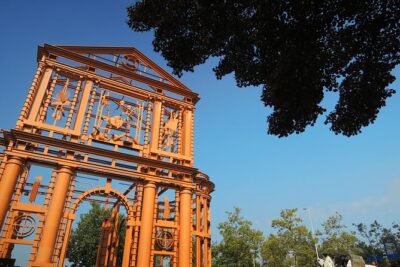
Rotterdam Highlights & Spies: Interactive City Game
Read our review →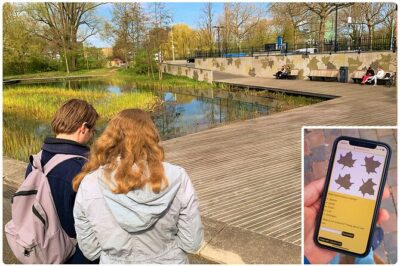
Discover Utrecht with a self-guided Outside Escape city game tour
Read our review →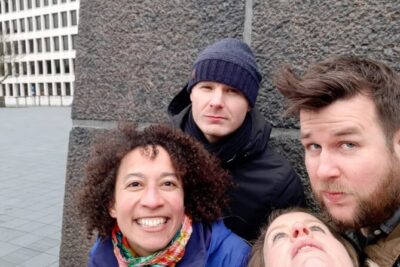

e-Scavenger hunt Den Bosch: Explore the city at your own pace
Read our review →
Discover The Hague with a self-guided Outside Escape city tour
Read our review →
Discover Amerfoort’s city center in this Outside Escape game tour
Read our review →
Discover Delft with a self-guided Outside Escape city game tour!
Read our review →Browse the lists this tour appears in