
Reviewed · AMSTERDAM TOURS
Amsterdam private city walking experience with a local
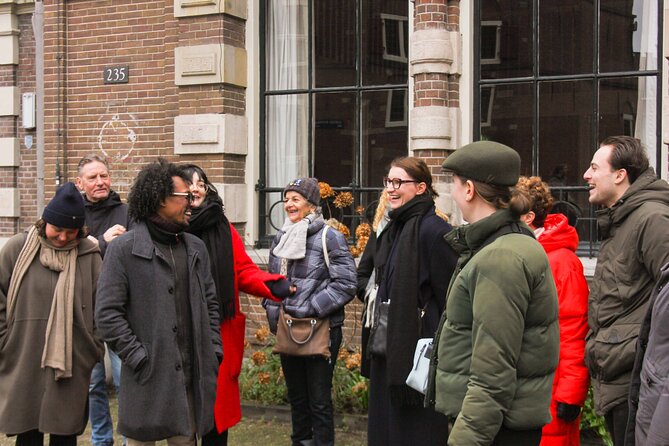
Amsterdam makes more sense when you walk it slowly. This private tour links the city’s trading past, quiet courtyards, canal houses, Chinatown, and grand railway station in one compact route. Guide Manouk brings maps, pictures, local treats, and an easy conversational manner to the story.
I like the private format, especially for couples, families, or solo visitors who want room for questions. I also like the broad mix of subjects: architecture, religion, war, trade, bicycles, guilds, neighborhood change, and present-day city life.
The main consideration is time. Two hours is enough for a smart introduction, but not enough to enter every major building or linger at every stop. You will be walking throughout, and the tour takes about two to two and a half hours.
Key points at a glance
- A private walk for up to 12 people: Your group receives the guide’s attention rather than sharing the route with a large crowd.
- A route with real range: See Dam Square, Begijnhof, canal houses, Nieuwmarkt, Zeedijk, and Centraal Station.
- Manouk’s personal touch: Expect maps, pictures, local edible treats, and useful food suggestions.
- History tied to modern Amsterdam: The walk covers trade, religion, World War II, guilds, Chinatown, bicycles, and future neighborhood plans.
- A good first-day orientation: The route helps you understand where central Amsterdam fits together before exploring on your own.
- Simple outdoor logistics: Meet at Beursplein, use a mobile ticket, and finish back at the meeting point.
Why this walk works as an Amsterdam introduction
Amsterdam is easy to admire and surprisingly easy to misunderstand. The canals are pretty, the streets are narrow, and the bicycles demand attention, but the city’s shape comes from trade, water, defense, religion, and transport. This walk gives you a useful framework for reading what you see.
You begin at Beursplein, close to the city’s commercial heart. From there, the route moves through central streets toward Dam Square, Begijnhof, the canal district, Nieuwmarkt, Zeedijk, and Centraal Station. Each stop lasts about 15 minutes, except Nieuwmarkt, which receives about 30 minutes.
That pacing matters. You are not being rushed from attraction to attraction by bus. Instead, the stops act as anchors while the guide explains the streets between them. You get a sense of how one part of central Amsterdam leads into the next.
The private setup is the strongest practical feature. A group of up to 12 can book together for $180.62, so the cost works out to about $15 per person if the group is full. For two people, it is about $90 each, which is a much bigger outlay than a group walk. The value comes from the personal attention, not from admission tickets, since all listed stops are free to visit from the outside.
More Walking Tours in Amsterdam
- Anne Frank’s Story – Guided Walking Tour through Amsterdam
★ 5.0 · 11,619 reviews - Amsterdam: Life of Anne Frank and World War II Walking Tour
★ 4.8 · 10,467 reviews - Absolutely Amsterdam – the Essential Introductory Walking Tour
★ 5.0 · 3,629 reviews
Beursplein and the story behind Amsterdam
Beursplein is a fitting starting point because the tour begins with the city’s basic question: how did Amsterdam grow from a fishing settlement into a major center of global trade?
You will hear how the city acquired its name and how its location helped shape its future. This opening gives the rest of the walk a purpose. The canals, warehouses, bridges, and grand houses are not random scenery. They belong to a city built around water, commerce, and connection.
This is also where a local guide can help you get your bearings. Rather than beginning with a list of dates, Manouk places Amsterdam’s growth in the physical setting around you. You start to see the center as a working city, not just a postcard backdrop.
Beursplein is also a convenient meeting point near public transportation. Check your mobile ticket before setting out and allow enough time to locate the square. Since the tour begins outdoors, comfortable shoes and weather-ready clothing are sensible choices.
Dam Square, royal power, and wartime memory
From Beursplein, the walk continues to Dam Square, one of Amsterdam’s most important public spaces. Here, the guide explains how the square figured in the city’s formation and points out the Royal Palace on the Dam.
The palace gives the square a formal air, but Dam Square has also been a place of public gatherings and national memory. The tour includes its role during the Second World War, adding a serious layer to what can otherwise feel like a busy central plaza.
I appreciate this stop because it links architecture with civic life. You are not simply looking at the Royal Palace and taking a photograph. You are considering why this location mattered, how power was displayed, and how the square has carried different meanings over time.
The drawback is that Dam Square can be busy and distracting. The guide will be speaking outdoors, so stay close and keep an eye on the group. A private tour helps here because you can ask the guide to repeat a point or explain something you cannot hear clearly.
Begijnhof and Amsterdam’s quieter side
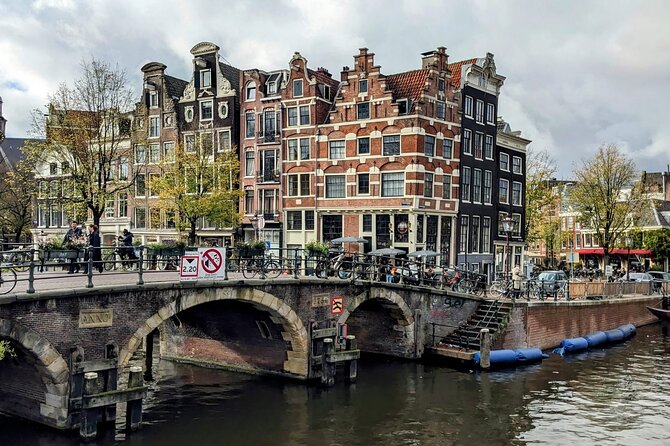
Begijnhof provides a sharp change of mood. After the open public space of Dam Square, you enter a serene courtyard with a religious past and a strong connection to Amsterdam’s tradition of tolerance.
The guide explains the women who lived here and what the courtyard reveals about religious life in the city. You will also see one of Amsterdam’s oldest houses, one of the two wooden cottages mentioned along the route.
This stop is valuable because it shows a less obvious side of the city. Amsterdam’s reputation for tolerance was never as simple as a modern slogan, and Begijnhof gives you a place to think about how different communities lived, worshiped, and made room for one another.
Be respectful here. It is a quiet residential and religious setting rather than a loud attraction. The calm atmosphere is part of the point, so this is a place for a measured pace and a lower voice.
Same country, a completely different kind of day:
- Amsterdam: Van Gogh Museum Ticket
★ 4.7 · 52,054 reviews - Amsterdam Classic Saloon Boat Cruise with Drinks and Cheese
★ 5.0 · 31,825 reviews - Amsterdam Luxury Canal Cruise + Unlimited Drinks & Bites option
★ 5.0 · 30,518 reviews - Amsterdam: Heineken Experience Ticket
★ 4.6 · 30,055 reviews
The three-canal house and a bicycle bridge
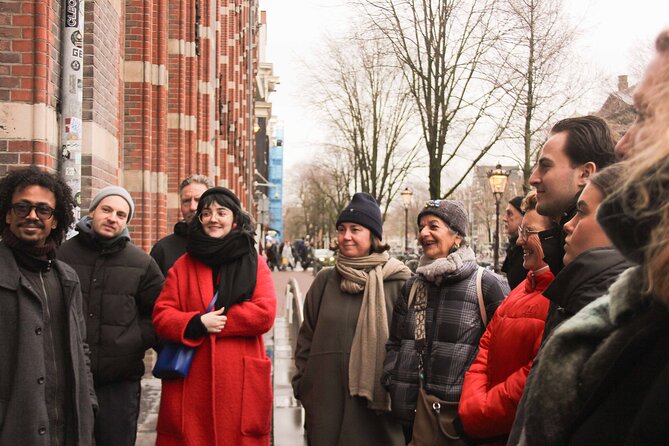
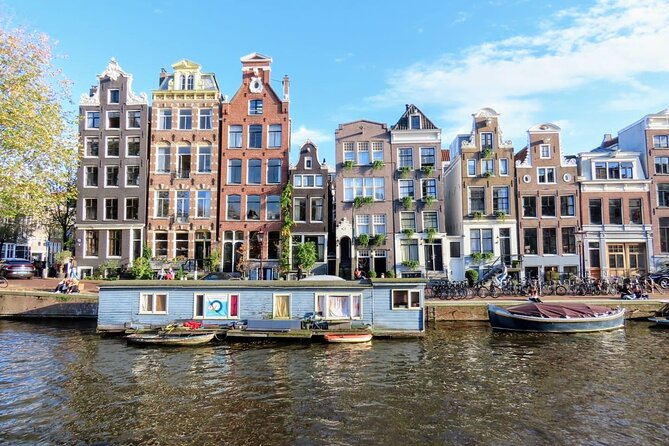
The next portion focuses on Amsterdam’s canal architecture. You will see a house positioned on three canals and learn about the bicycle bridge.
The house offers a useful lesson in urban design. In a city shaped by waterways and narrow plots, buildings often have unusual relationships with the canals around them. A short explanation can make the canal district easier to read, especially if you are interested in architecture.
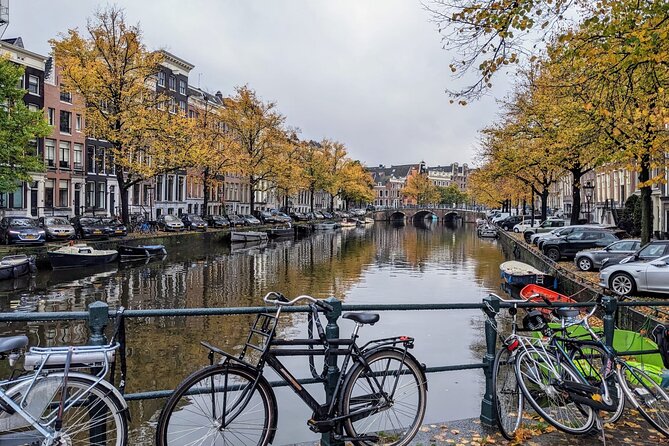
The bicycle bridge adds a very Amsterdam detail. Bicycles are not an occasional feature here. They are part of how the city moves and how public space works. Hearing about a bicycle bridge during a walking tour helps connect the city’s older structure with its current habits.
This is a viewing and explanation stop, not an interior visit. If you want extended architectural study or museum time, plan a separate visit after the walk.
Nieuwmarkt and the old city gate
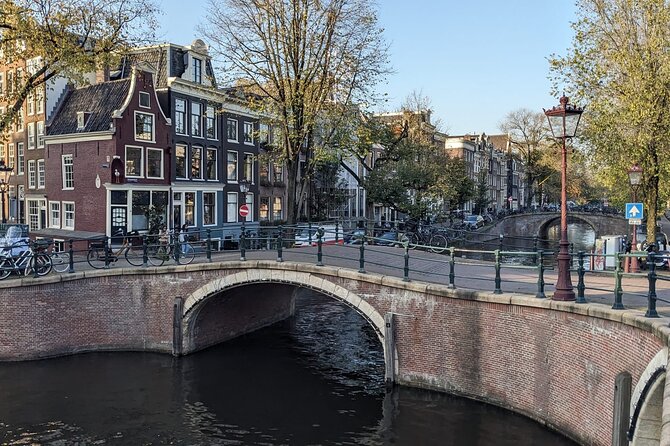
Nieuwmarkt receives the longest scheduled stop, about 30 minutes, and that extra time makes sense. The area brings together defensive history, trade, civic organizations, and distinctive architecture.
The Waag is the central feature. It began as one of the old city gates and later became a guild hall. The guide explains why guilds mattered in Amsterdam, giving you a look at how craftspeople and professionals organized work, standards, and influence.
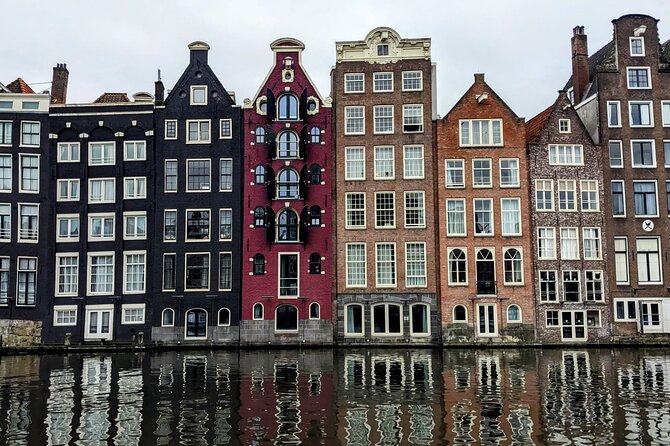
You will also see the dancing houses, the narrow and often slightly tilted buildings that have become one of Amsterdam’s familiar visual signatures. Here, the city’s architecture becomes more than a collection of charming facades. The buildings reflect limited space, shifting ground, long use, and the practical demands of a trading town.
Nieuwmarkt is one of the best sections for questions. If you are interested in local government, architecture, commerce, or daily life, this is a good moment to tell Manouk what you want to understand better. The route can adapt to interests, with history and architecture already proving popular subjects.
The neighborhood discussion also reaches beyond the past. You might hear about current problems and future plans for the area, which keeps the stop from becoming a museum lesson detached from modern Amsterdam.
Zeedijk and the changing face of Chinatown
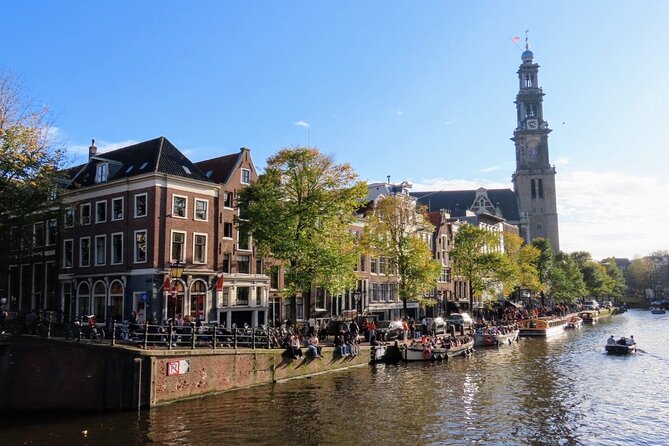
Zeedijk gives the walk a different social and cultural angle. The street is associated with Amsterdam’s Chinatown, and the guide discusses how it was once considered the city’s most dangerous place during the 1970s.
The important point is change. Zeedijk later declined and transformed into one of the favorite spots for many Amsterdammers. That shift lets you consider how central neighborhoods gain, lose, and regain appeal.
This is a useful correction to the idea that Amsterdam is only canals and old houses. Zeedijk shows a city dealing with reputation, decline, renewal, and cultural identity. The guide also discusses current neighborhood issues and future plans, so the stop connects past conditions with the way the area functions now.
You should not expect a dedicated food tour here. The experience can include local edible treats and food suggestions, but the main purpose is the city’s story. If you are hungry, use Manouk’s local recommendations as a starting point for a meal after the walk.
Centraal Station and the city’s wider connections
The final listed stop is Centraal Station, one of Amsterdam’s most impressive buildings. Its architecture makes a strong finish, but the real subject is connection.
The station’s location has mattered for centuries as a transport hub and as a symbol of prosperity and contact with the wider world. That idea echoes the tour’s opening at Beursplein. Amsterdam grew by linking itself to other places, first through water and trade, and later through modern transport.
Centraal Station also helps you understand the city beyond the historic core. It is a practical gateway for rail journeys, but its position tells you something about how Amsterdam organizes movement between the center and the rest of the country.
The published meeting information says the activity ends back at the meeting point. Since Centraal Station is listed as the final sightseeing stop, confirm the exact return arrangement with the guide at the start. The supplied details describe the walk as lasting two to two and a half hours, so allow a little flexibility rather than scheduling an immediate train or timed attraction.
Manouk’s guiding style and personal touches
The guide named in the available tour material is Manouk. Her style appears especially well suited to people who want conversation rather than a memorized speech.
She uses maps and pictures to support the explanation, a helpful feature when a building or historical event is difficult to understand from the street alone. She also brings small local edible treats, which add a friendly touch without changing the focus of the walk.
Her approach includes questions and adaptation. If your interests are history and architecture, say so. If you want food ideas, ask. If you are exploring Amsterdam alone, the private arrangement can make the experience feel more natural because you are not trying to join a large group conversation.
The strongest praise centers on warmth, clear explanations, preparation, and an ability to answer questions. One useful sign is that the guide discusses both past events and current neighborhood issues. That balance helps you see Amsterdam as a living city rather than a preserved old town.
Timing, walking effort, and who will enjoy it
The tour lasts around two hours, though the practical estimate is two to two and a half hours. You will walk between stops, listen outdoors, and spend much of the time on central city streets.
Most people can participate, and service animals are allowed. The tour is near public transportation, begins at Beursplein, and uses a mobile ticket. No admission fees are included because the listed stops are viewed from public areas.
I would choose this for:
- First-time visitors who want a clear overview before sightseeing alone
- Couples or families who prefer a private guide
- Solo visitors who want an easy way to ask questions
- People interested in history, architecture, religion, or city planning
- Repeat visitors who want local context beyond the main postcard sights
I would not choose it as your only Amsterdam activity if you want to enter the Royal Palace, spend long periods inside museums, or take a canal cruise. The route is an orientation walk, not a full museum or interior tour.
Wear shoes you can walk in and prepare for changing weather. The tour is offered in English, and confirmation is provided at booking. Because the group is private, you can ask about pace and interests, but the route still has a fixed number of stops and a limited time.
Is $180.62 a fair price?
The price is $180.62 per group of up to 12 people. For a full group, that is excellent value. For six people, it is about $30 per person. For four, about $45 each. For two, the cost is about $90 per person.
That makes the tour most attractive when shared by a family or group of friends. A couple may still find it worthwhile if personal attention matters, especially if you want to shape the discussion around architecture, wartime history, or local food.
There are no paid attractions built into the route, so you are paying for the guide’s time, preparation, local perspective, and flexibility. The maps, pictures, edible treats, and food suggestions add value, but the central benefit is having someone explain how the city fits together while you walk through it.
The tour is generally booked well ahead, with an average booking lead time of 46 days. That is useful to know if your dates are fixed. Free cancellation is available up to 24 hours before the start time, while later cancellations and changes are not accepted for a refund.
Should you book this Amsterdam walking tour?
Book it if you want a friendly, private introduction that connects Amsterdam’s famous sights with less obvious subjects. The route covers more than canals and pretty buildings: it explains trade, religious life, war, guilds, bicycles, neighborhood change, and transport.
I would especially recommend it for a first morning or afternoon in the city. You can use the orientation to decide where to return later, and Manouk’s food tips may help with the rest of your day.
Skip it if you prefer large group tours, long interior visits, or a tightly scheduled attraction list. For everyone else, the combination of a manageable route, private attention, and a guide who can adjust the conversation makes this a sensible way to begin understanding Amsterdam.
FAQ
How long does the Amsterdam private walking experience last?
The tour is described as lasting about two hours, with the practical walking time listed as two to two and a half hours.
Where does the tour begin?
The meeting point is Beursplein, 1012 JW Amsterdam, Netherlands.
Where does the activity end?
The activity information says it ends back at the meeting point.
Is the tour private?
Yes. Only your group participates, with a maximum group size of 12 people.
What language is offered?
The walking experience is offered in English.
Are admission tickets included?
The listed stops have free admission. The tour focuses on viewing and discussing places along the route rather than entering ticketed attractions.
What is the cancellation policy?
You can cancel at least 24 hours before the local start time for a full refund. Cancellations or changes made less than 24 hours before the start time are not accepted for a refund.
Just added around Amsterdam
- Amsterdam: Giethoorn Tour with Canal Cruise and Windmills★ 5.0 · 3 reviews
- Amsterdam: Chocolate Fondue in the Dark★ 5.0 · 3 reviews
- Full-day excursion to Edam, Volendam, and Marken★ 3.7 · 3 reviews
- Amsterdam Old-West Vegan Food Tour with Local Guide★ 4.7 · 3 reviews
- Amsterdam Private Walking Tour of Famous Painters★ 5.0 · 3 reviews
- Amsterdam Family Friendly Historical Walking Tour★ 5.0 · 3 reviews
- From Amsterdam: visit Zaanse Schans, Muiderslot and more!★ 5.0 · 3 reviews
- Amsterdam Walking Tour with Dutch Pancake Lunch★ 5.0 · 3 reviews
Amsterdam Tours, compared.


Amsterdam Classic Saloon Boat Cruise with Drinks and Cheese
Read our review →
Amsterdam Luxury Canal Cruise + Unlimited Drinks & Bites option
Read our review →


Classic Boat Cruise with Optional Cheese & Wine
Read our review →
Evening Cruise with Optional Wine and Snacks
Read our review →
75 Minute City Canal Cruise with Audio Guide
Read our review →Browse the lists this tour appears in