
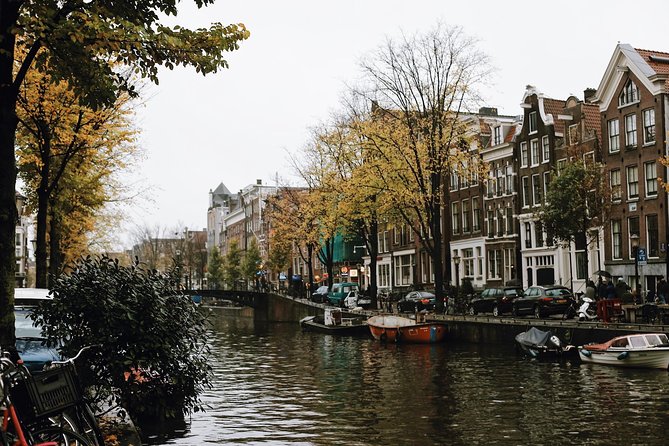
Reviewed · AMSTERDAM TOURS
Amsterdam City Center Guided Walking Tour Semi-Private 12ppl Max
Amsterdam’s story comes alive on foot here, from a 12th-century fishing village to a canal-built capital. In 2.5 hours, you move through old streets, across bridges, and past buildings that explain how trade, religion, art, and water shaped the city.
I like the small-group format, which gives you a better chance to ask questions than a large flag-following tour. I also like the route’s useful mix of famous sights and odd details, including the world’s narrowest-looking houses, the Tower of Tears, and a 1642 brown café.
The main consideration is pace. Twenty stops in 2.5 hours means most are brief outdoor explanations, not full visits. You should also expect plenty of walking on cobblestones, with no hotel pickup and no admission to the interiors of most sights.
Key points to know before you book
- A wide-ranging central route: Walk from St. Nicholas Basilica near Amsterdam Centraal to Het Papeneiland in the Jordaan.
- Small, but not always tiny: The tour has a maximum of 12 people, while the description indicates groups are often eight or fewer.
- Twenty stops in 150 minutes: This is an orientation tour with frequent pauses, not a series of long museum visits.
- Strong local context: Guides such as Josje and Hanneke bring attention to Amsterdam’s religious past, trading power, architecture, and daily life.
- Mostly exterior sightseeing: Plan to see the Anne Frank House, Rembrandt House, churches, and canal homes from outside.
- Useful final stop: The tour ends at Het Papeneiland, a historic brown café known for apple pie.
Starting beside St. Nicholas Basilica
Meet your guide at the Basilica of Saint Nicholas, at Prins Hendrikkade 73. This is a practical starting point near public transportation and close to Amsterdam Centraal, though you should allow enough time to find the exact meeting spot in the busy center.
The basilica is a fitting place to begin because it introduces one of Amsterdam’s less obvious stories. Catholic worship was restricted for centuries after the Reformation, so this grand late-19th-century church reflects a later change in the city’s religious life. Your 10-minute stop is free, but the tour does not promise a full interior visit.
From there, the route heads toward the Schreierstoren, or Tower of Tears. This medieval remnant is tied to women saying farewell to sailors leaving by ship. The story gives the old harbor area a human touch, though the stop is short and admission is not included.
More Walking Tours in Amsterdam
- Anne Frank’s Story – Guided Walking Tour through Amsterdam
★ 5.0 · 11,619 reviews - Amsterdam: Life of Anne Frank and World War II Walking Tour
★ 4.8 · 10,467 reviews - Absolutely Amsterdam – the Essential Introductory Walking Tour
★ 5.0 · 3,629 reviews
Zeedijk and the old sea wall
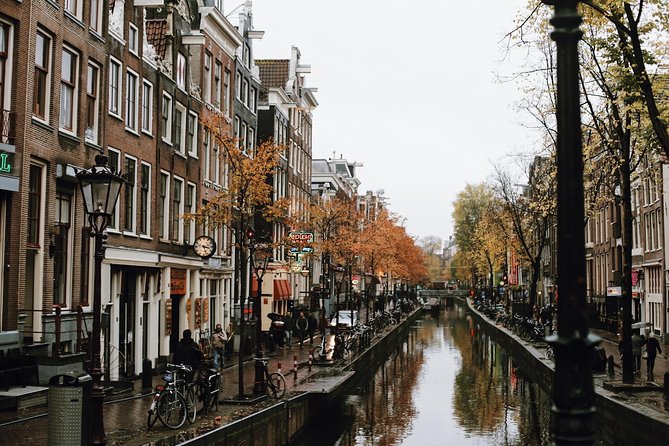
Zeedijk is one of Amsterdam’s oldest streets. Its name means sea dike, and that simple fact explains why the city’s early streets and defenses developed where they did. You will walk along an area once vital for holding back the water of the IJ.
At the Kolksluis, look for one of the city’s attractive lock bridges. This is the kind of stop that makes a walking tour worthwhile: you are not simply checking off a street, but learning how water control affected the shape of Amsterdam.
The route then reaches Nieuwmarkt, a market square just inside the old city gate. It has long been a place for buying, selling, and meeting. The scheduled pause here is only about five minutes, so expect a quick orientation rather than time to browse at leisure.
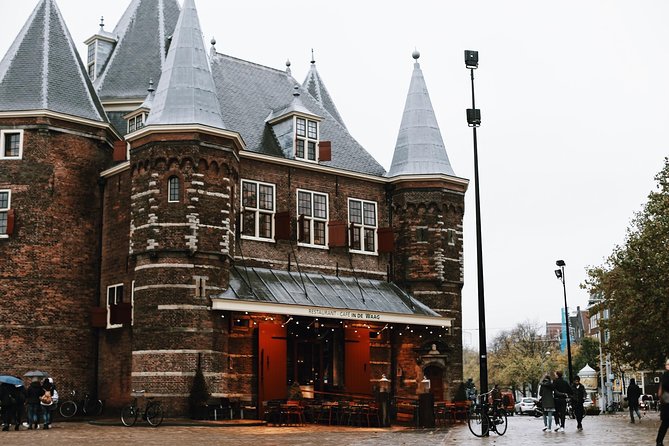
You will also see De Waag, the large medieval building at the square. It began as a city gate and later served as a guildhall, museum, and fire station. Its changing uses reflect Amsterdam’s habit of adapting old buildings rather than discarding them.
The Trippenhuis and Amsterdam’s narrow homes
Amsterdam’s unusual houses receive several stops on this walk. At the Trippenhuis, you see one of the city’s widest homes, measuring about 22 meters across. Across from it is the Kleine Trippenhuis, one of the narrowest houses in the city.
The contrast is memorable because it turns architecture into a social lesson. Land taxes helped encourage tall, narrow construction, and the canal belt became a place where owners made every bit of frontage count. You will see the Kleine Trippenhuis again as the route continues, reinforcing the point without requiring a museum visit.
The stop at Oost-Indisch Huis adds a larger story. You step into the courtyard of the former Dutch East India Company headquarters, connected with the rise of the world’s first multinational corporation. This is a useful reminder that Amsterdam’s attractive canal houses were funded by global commerce, with all the complicated history that implies.
These stops are best for people who enjoy details about buildings. If you want to go inside every historic property, this is not the right format. Admission is not included, and the timing allows for explanation and photographs rather than extended exploration.
Churches, Rembrandt, and the Stopera
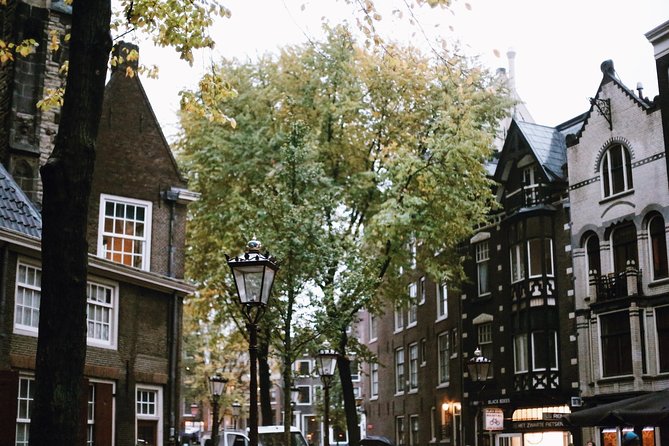
Zuiderkerk was Amsterdam’s first purpose-built Protestant church. Its tower remains an important part of the old city view, and the building introduces the architectural changes that followed the Reformation.
The tour then passes the Rembrandt House, where the painter lived and worked from 1639 to 1656. The museum contains his etchings and paintings by his contemporaries, but this walking experience only pauses outside. If Rembrandt is a major reason for your visit, plan a separate museum visit and do not count on this tour for entry.
Next comes the National Opera and Ballet, part of the Stopera complex that also includes city hall. The building took at least 60 years to bring to completion, offering a modern counterpoint to the medieval streets and Golden Age homes earlier in the route.
This change of architectural mood is one of the route’s strengths. Amsterdam is not just a preserved old town. The city combines churches, trading houses, civic buildings, theaters, and working streets, and the walk gives you a quick sense of how those layers sit together.
Same country, a completely different kind of day:
- Amsterdam: Van Gogh Museum Ticket
★ 4.7 · 52,054 reviews - Amsterdam Classic Saloon Boat Cruise with Drinks and Cheese
★ 5.0 · 31,825 reviews - Amsterdam Luxury Canal Cruise + Unlimited Drinks & Bites option
★ 5.0 · 30,518 reviews - Amsterdam: Heineken Experience Ticket
★ 4.6 · 30,055 reviews
Three canals and the quiet Begijnhof
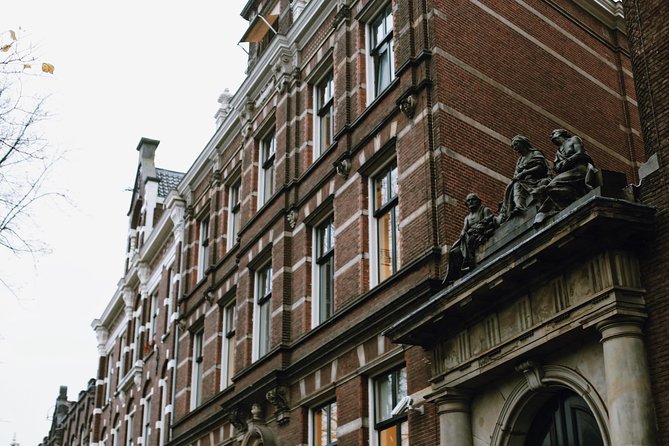
Huis Aan De Drie Grachten is a rare 17th-century canal house with façades facing three canals. It is a small stop, but the building rewards anyone who pays attention to the canal intersections and house fronts instead of simply looking straight ahead.
Begijnhof offers a quieter pause. This enclosed courtyard once housed Beguines, unmarried women who lived together under vows of chastity. The group of houses and garden feels removed from the traffic of the central streets, and two churches remain on the site.
Because the stop is only about five minutes, your guide will give you the essential story rather than a long architectural tour. You should also remember that Begijnhof is a place with its own rules and a residential character. Keep your voice low and follow any posted instructions during the visit.
I especially like this part of the walk for the change in mood. After busy streets, commercial history, and large public buildings, the courtyard offers a glimpse of a more private side of Amsterdam.
Dam Square and the Golden Bend
Dam Square is one of the city’s best-known gathering places. The Royal Palace, New Church, and National Monument all face or border the square, making it a useful place to understand Amsterdam’s civic center.
The pause is brief, so you will not tour the palace or church as part of the experience. Instead, you get a clear introduction to the buildings and the square’s role in public events. If one of these sites is on your must-see list, you will need separate admission and time afterward.
The route continues to Herengracht and its Golden Bend. This section of the canal is lined with some of the city’s grandest Golden Age mansions. Their broad façades and careful ornament tell you that Amsterdam’s wealthiest residents wanted their homes to announce status from the water.
This is also a good place for photographs. The tour stops often, and the walking format lets you frame canal views, bridges, gables, and house fronts without being confined to a vehicle.
Anne Frank House from the outside
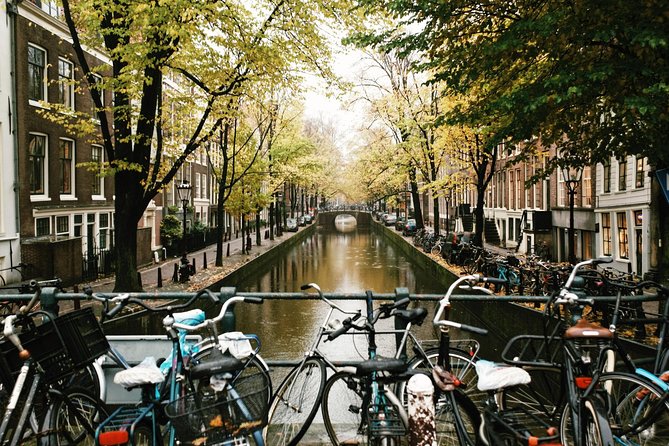
The walk pauses outside the Anne Frank House. You will also see the Westerkerk nearby, with Amsterdam’s tallest church tower. This is an important location, but the tour does not include entry to the Anne Frank House.
That distinction matters. Anne Frank House tickets require separate planning, and this brief stop should be treated as an orientation point rather than a substitute visit. The guide can place the building within the surrounding canal district and wartime story, but you will not have time for the museum experience here.
Security rules can also affect access to attractions along the route. In some cases, buildings cannot be visited inside, so the experience is built around street-level views and explanation.
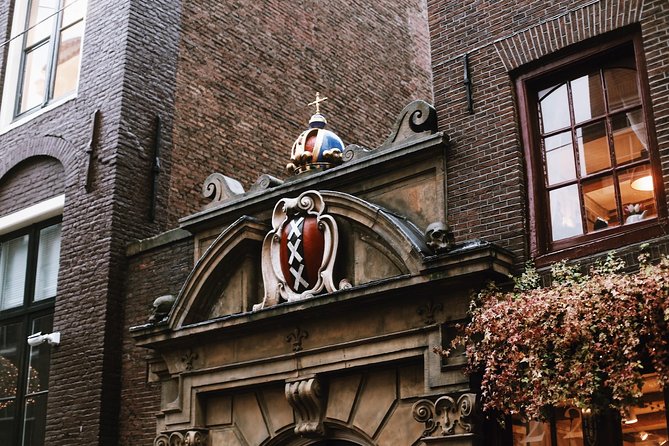
Near Bloemgracht, look up at the gable stones and carved symbols on the façades. These details once helped identify trades, businesses, or stories connected with a house. They are easy to miss when walking alone, which is one reason a guide can add real value even on streets you might otherwise pass through quickly.
Rembrandtplein, Noorderkerk, and the final café
One later stop takes you through Rembrandtplein, a lively square named for Rembrandt. There you see a bronze representation of The Night Watch, installed for the 400th anniversary of the artist’s birth in 2006.
This is a quick look rather than an art lesson, but it gives you another connection to Rembrandt after the earlier stop at his former home. You can decide later if you want to spend more time with his work in a museum.
Noorderkerk was built in the 17th century for the Jordaan district. Its cross-shaped floor plan reflects Protestant ideas about worship and provides another example of how faith influenced Amsterdam’s buildings.
The tour ends at Het Papeneiland, at Prinsengracht 2. This brown café dates from 1642 and is said to serve the best apple pie in town. The tour price does not include food or drinks, so consider this a useful end point for a snack or a drink rather than a promised tasting.
Ending here is practical. You are left in the Jordaan, one of Amsterdam’s most pleasant areas for further walking, cafés, and canals. Your guide can also give you tailored suggestions for the rest of your visit, one of the most useful benefits of taking this kind of tour early in your stay.
What the $59.28 price really buys you
At $59.28 per person, this is not a cheap way to simply walk around central Amsterdam. You are paying for a professional guide, a fixed route, historical context, and the chance to ask questions in a group capped at 12.
The value is strongest if you are visiting Amsterdam for the first time and want a well-organized introduction without spending half a day inside museums. You see many districts and landmarks quickly, then can return to the places that catch your interest.
The price is less compelling if you want entry tickets, a relaxed pace, or long stops at individual sights. Almost every stop is five or 10 minutes, and the listed admissions are either free or not included. Think of the fee as paying for orientation and interpretation, not attraction access.
Group discounts may improve the cost for some bookings. The exact discount depends on the reservation, so check the final price before paying.
Group size, guide style, and walking demands
The experience is described as semi-private, with no more than 12 people. Another part of the description says groups are eight people or fewer, so the practical point is this: it should feel smaller than a standard city tour, but you should not assume it will be a private tour.
A group of 12 is still manageable on narrow lanes, though it can be harder to hear beside traffic or at busy squares. The small-group setup should give you more room for questions, and the strongest praise has focused on guides who make the history personal and engaging.
Josje is singled out for giving an in-depth tour that covered Amsterdam’s watery beginnings, art, and long development while also suggesting neighborhoods for later visits. Hanneke is described as a local, born and raised in Amsterdam, who explains the city in an engaging and entertaining way. Guide assignment is not guaranteed, but these names give you a useful sense of the experience at its best.
Wear comfortable shoes. You will cover cobblestones, bridges, and city streets for about two and a half hours. The tour runs rain or shine, so bring water, an umbrella if rain is possible, and a hat in summer.
This activity is not recommended if you have walking disabilities or use a wheelchair. You also cannot bring large bags or suitcases, which is important if you are arriving before hotel check-in or leaving after checkout.
Timing, meeting point, and cancellation terms
The tour begins at St. Nicholas Basilica and finishes at Het Papeneiland. Hotel pickup and drop-off are not provided, so plan to reach the start by public transportation, taxi, or Uber.
You must provide a mobile phone number with country code when booking. Confirmation is sent at booking, and children must be accompanied by an adult. At least two people are required for the tour to operate. If that minimum is not met, you are offered another date or a full refund.
Free cancellation is available up to 24 hours before the local start time. Cancellations or changes made inside that 24-hour window are not refunded.
National celebrations can alter the route. An alternative route may still cover the highlights, but refunds or discounts are not provided for that change. The operator also offers a satisfaction guarantee, but you must contact them within 24 hours after the tour and give them a chance to address the problem before requesting a resolution.
Who should book this Amsterdam walk?
I would choose this tour if you want a first look at central Amsterdam with enough history to make the streets meaningful. It suits couples, families with older children, and solo visitors who prefer asking questions to a guide rather than reading signs at each stop.
It is also a good early-trip choice. The route passes through places you may want to revisit, and the guide’s tips can help you decide where to spend your limited museum and meal time.
I would skip it if your priority is interior access to the Anne Frank House, Rembrandt House, churches, or the Royal Palace. I would also think twice if you dislike fast walking or want a slow photographic stroll.
Should you book it?
Book this walk if you value local explanation, a broad central route, and a small group more than admission tickets. The best parts are the links between ordinary streets and larger forces: sea defenses, religious change, global trade, land taxes, art, and city planning.
The route covers a lot, sometimes at the expense of depth. Still, at $59.28, it can be a fair buy for a first visit, especially if you take it early and use the guide’s suggestions to shape the rest of your time in Amsterdam. Bring good shoes, keep your bag small, and treat the tour as a smart city introduction rather than a package of museum visits.
FAQ
How long does the Amsterdam walking tour last?
The tour lasts approximately 2 hours and 30 minutes.
What is the maximum group size?
The maximum is 12 people per tour. The experience description also indicates that groups are often eight people or fewer.
Where does the tour start and end?
It starts at the Basilica of Saint Nicholas, Prins Hendrikkade 73, Amsterdam. It ends at Het Papeneiland, Prinsengracht 2.
Is hotel pickup or drop-off included?
No. Hotel pickup and drop-off are not included. You are advised to use public transportation, Uber, or a taxi to reach the meeting point.
Does the tour enter the Anne Frank House or Rembrandt House?
No admission is included for these attractions. The route pauses outside the Anne Frank House and passes the Rembrandt House.
What should I bring?
Wear comfortable shoes and bring a bottle of water. An umbrella is recommended in case of rain, and a hat is useful in summer. Large bags and suitcases are not allowed.
Can I cancel for a full refund?
Yes, if you cancel at least 24 hours before the experience start time. Cancellations or changes made less than 24 hours before the start are not refunded.
Just added around Amsterdam
- Amsterdam: Giethoorn Tour with Canal Cruise and Windmills★ 5.0 · 3 reviews
- Full-day excursion to Edam, Volendam, and Marken★ 3.7 · 3 reviews
- Amsterdam: Chocolate Fondue in the Dark★ 5.0 · 3 reviews
- Amsterdam Old-West Vegan Food Tour with Local Guide★ 4.7 · 3 reviews
- Amsterdam Family Friendly Historical Walking Tour★ 5.0 · 3 reviews
- Amsterdam Private Walking Tour of Famous Painters★ 5.0 · 3 reviews
- From Amsterdam: visit Zaanse Schans, Muiderslot and more!★ 5.0 · 3 reviews
- Amsterdam Walking Tour with Dutch Pancake Lunch★ 5.0 · 3 reviews
Amsterdam Tours, compared.


Amsterdam Classic Saloon Boat Cruise with Drinks and Cheese
Read our review →
Amsterdam Luxury Canal Cruise + Unlimited Drinks & Bites option
Read our review →


Classic Boat Cruise with Optional Cheese & Wine
Read our review →
Evening Cruise with Optional Wine and Snacks
Read our review →
75 Minute City Canal Cruise with Audio Guide
Read our review →Browse the lists this tour appears in