
Reviewed · AMSTERDAM TOURS
Amsterdam: Anne Frank and World War II Walking Tour (TOP RATED)
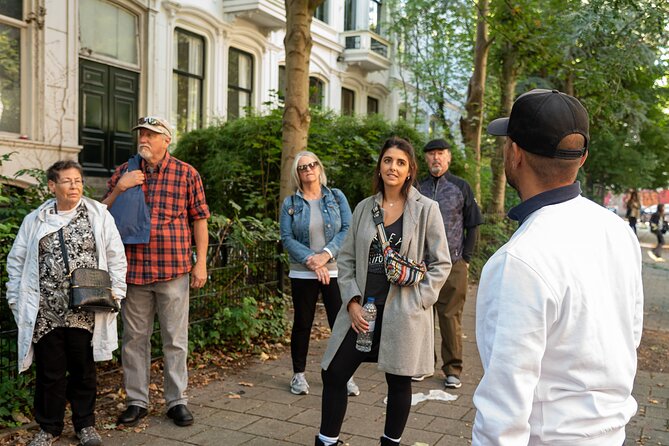
Amsterdam’s Jewish Quarter is best understood on foot, where memorials, old streets, and quiet corners give difficult history a physical setting. This two-hour walking tour links the Portuguese Synagogue, Holocaust memorials, the former Hollandsche Schouwburg, and Dam Square with stories about Anne Frank, Jewish life, deportation, and resistance.
I like the way the tour places Anne Frank within the wider story of Amsterdam’s Jewish community, instead of treating her diary as an isolated subject. I also like the small-group format, capped at 15 people, and the guides who bring strong local interest to the subject. James, Misha, Keese, Stan, Aaron, and others are praised for clear explanations and personal stories.
The main caution is simple but important: the Anne Frank House is not included. The title can create confusion, so book this for the city’s Jewish and WWII history, then arrange a separate Anne Frank House ticket if you want to enter the building.
Key points to know before booking
- The Portuguese Synagogue begins the story: Learn how Amsterdam’s Sephardic Jewish community grew during the Dutch Golden Age and why this large synagogue mattered.
- Memorials make the past tangible: The Auschwitz Monument, Schaduwkade, and Dam Square add places for reflection rather than only spoken history.
- The Anne Frank House is not part of the tour: No entrance ticket is included, and the walking route does not replace a visit inside the house.
- Guides shape the experience: James, Misha, Keese, Stan, Aaron, Peter, and others have been praised for strong speaking skills, personal stories, and clear answers.
- Expect a serious, fairly long walk: The pace suits most participants, but children aged 8 and 10 were reported to be tired by the end.
- Small groups add value: Up to 15 people can join, with a private upgrade available for a more personal route and conversation.
Why this walking tour matters in Amsterdam
Many Amsterdam visitors first meet Anne Frank through her diary or through a planned visit to the Anne Frank House. That is worthwhile, but the house alone can leave you with a narrow view of the city’s wartime story.
This route broadens the picture. You hear about the Sephardic community, Jewish life before the war, deportation, resistance, memorial work, and the places where Amsterdam’s public memory is kept. The result is less about one famous person and more about a community, a city, and the choices people faced.
I like that the walk does not stay in a museum room. You move from synagogue to monument, from the Plantage district to Dam Square. That movement gives the subject a sense of place. It also lets you pause for photographs, though this is a reflective tour rather than a light sightseeing stroll.
The tour has a 4.7 rating from 72 ratings, with 90 percent of participants recommending it. The strong response is tied mainly to the guides. Several guides are singled out for making complicated material easy to follow, answering questions, and connecting public history with family stories.
Still, the subject is painful. You should expect discussion of deportation, concentration camps, the Holocaust, and the loss of Amsterdam’s Jewish population. It is not an entertainment-first tour, and that is part of its value.
More Walking Tours in Amsterdam
- Anne Frank’s Story – Guided Walking Tour through Amsterdam
★ 5.0 · 11,619 reviews - Amsterdam: Life of Anne Frank and World War II Walking Tour
★ 4.8 · 10,467 reviews - Absolutely Amsterdam – the Essential Introductory Walking Tour
★ 5.0 · 3,629 reviews
Starting at the Portuguese Synagogue
The meeting point is Amstel 51C, near the start of the route. The first stop is the Portuguese Synagogue, one of Amsterdam’s most important Jewish landmarks.
Your guide explains the Sephardic community, which became one of the largest and wealthiest Jewish communities in Europe during the Dutch Golden Age. The size of the synagogue reflects that success. It remains an active place of worship and also welcomes visitors as a historic attraction.
The stated visit here lasts about 10 minutes, and admission to the walking stop is free. You should not assume this means a full interior tour or a long visit inside the synagogue. The main purpose is orientation and context: you learn who lived in this part of Amsterdam and how Jewish life developed before the destruction of the wartime years.
That opening is one of the tour’s strongest choices. It gives you a picture of a living community before moving into the story of persecution. Without that background, the later memorials can feel like a list of tragedies. Here, you begin with people, institutions, faith, and civic life.
The Auschwitz Monument and the cost of deportation
The Auschwitz Monument is the next major stop. Here the guide explains the memorial and the deportation of Amsterdam’s Jewish population.
The stop is listed at around 10 minutes, but the subject may lead to questions. This is a place to slow down mentally, even if the group moves on physically. I would not plan a chatty lunch immediately after this section. Give yourself some quiet time if difficult material affects you.
The value of a guide here is not simply factual detail. A good guide can explain why a monument was created, what it asks you to remember, and how deportation changed Amsterdam. Several guides on this tour are praised for being clear, passionate, and able to answer questions beyond the basic Anne Frank story.
The route also helps you understand that the Holocaust was not distant from ordinary city life. The memorial sits within Amsterdam, not outside it. Streets, buildings, and neighborhoods continue around it. That contrast can make the past feel more immediate.
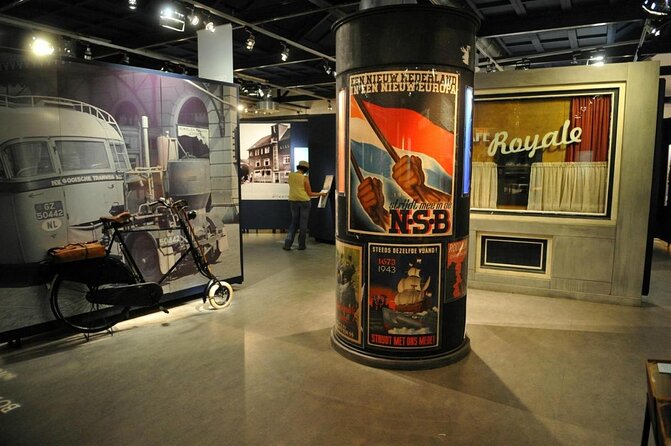
Resistance at the Verzetsmuseum Amsterdam
The tour then discusses the resistance of the Jewish community in connection with the Verzetsmuseum Amsterdam. The museum itself is not listed as an included entrance visit, so expect an explanation from outside or nearby rather than time spent exploring its galleries.
This distinction matters. If you are hoping to visit the museum, set aside separate time and check its admission arrangements independently. The walking tour gives you a guide-led introduction, not a museum ticket.
The resistance section adds needed complexity. Wartime stories can easily become a simple division between heroes and villains. A guide can instead show how people responded under fear, pressure, and changing conditions. The available descriptions emphasize that the route covers both Jewish history and the wider WWII setting.
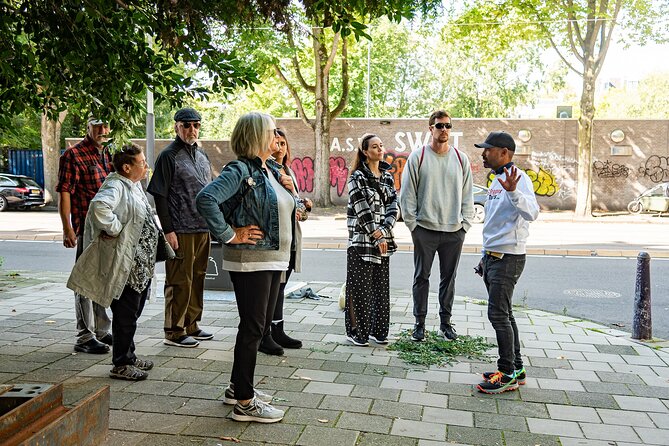
This is also a point where your questions can improve the tour. Small groups make it easier to ask for clarification. With a maximum of 15 participants, you are less likely to disappear into a large crowd, though the experience will still depend on the guide and the group’s pace.
More Anne Frank and Jewish Quarter walks:
- Amsterdam: Anne Frank Guided Small Group Walking Tour
★ 4.8 · 2,722 reviews - Amsterdam: Anne Frank Walking Tour – Guided in EN/DE/IT/ES
★ 4.9 · 2,676 reviews - Anne Frank Walking Tour Amsterdam Including Jewish Cultural Quarter
★ 5.0 · 1,879 reviews - Anne Frank’s Last Walk & See Anne Frank House in Virtual Reality
★ 5.0 · 957 reviews
Hollandsche Schouwburg and the story of deportation camps
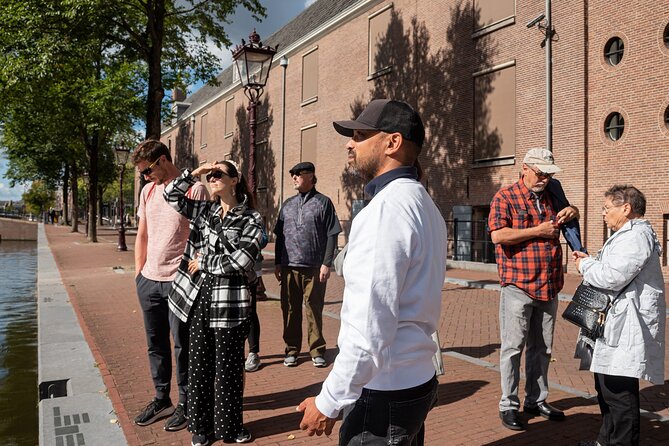
At the Hollandsche Schouwburg, the guide discusses deportation camps and the building’s wartime role. The stop lasts about 10 minutes.
This is one of the route’s most direct connections between a city building and the machinery of deportation. A theater became tied to the forced removal of Jewish people. The guide’s job is to explain that process in human terms while keeping the chronology clear.
A few guides are praised for sharing family stories and personal connections. Keese, for example, is described as bringing his own family history into the discussion. That kind of detail can make a difficult subject easier to grasp, provided it supports rather than distracts from the historical record.
You should expect the tone to remain serious. This is not a stop for quick sightseeing photos alone. The walk allows photographs, but respect for the site matters more than collecting images.
De Plantage, Spinoza, and a wider view of Jewish Amsterdam
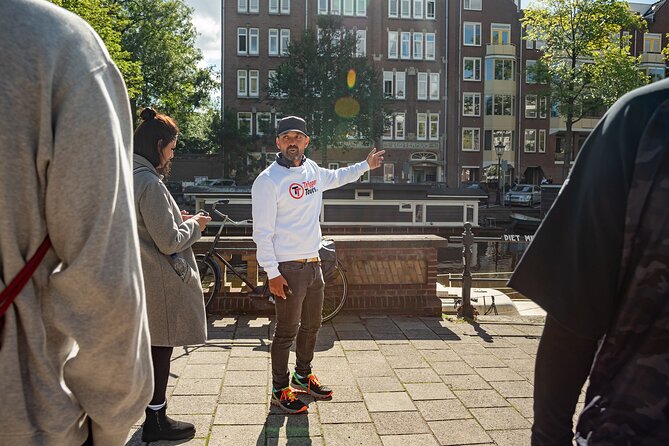
The route continues through De Plantage, a pleasant area with its own history. The guide uses the district to connect scenery with the story of Jewish Amsterdam.
This change in setting is useful. After several memorials and wartime sites, the Plantage gives you a broader sense of the neighborhood and its daily life. The guide also discusses the Spinoza Monument, honoring the influential philosopher Baruch Spinoza.
The Spinoza stop helps place Amsterdam’s Jewish story in a longer timeline. The tour is not only about 1940 to 1945. It also covers Jewish identity, intellectual life, religious communities, and the city’s changing relationship with its Jewish residents.
The itinerary lists about 10 minutes for both De Plantage and the Spinoza Monument. That is enough for a focused explanation, but not for an extended historical lecture at every stop. If you prefer long museum-style discussions, this walk may feel brisk. If you like a clear route with several landmarks, the rhythm works well.
Walking toward Dam Square and the Royal Palace
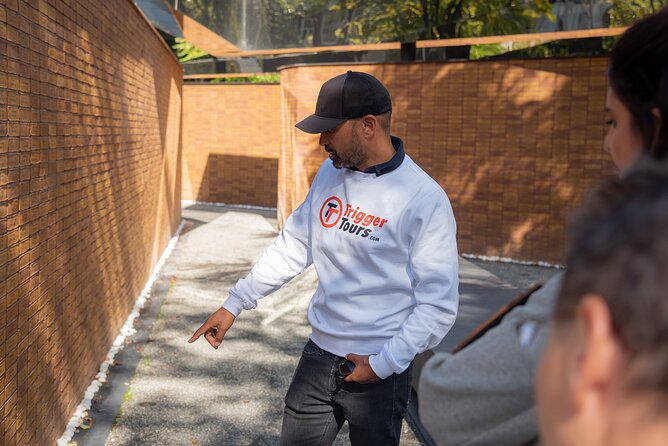
The group then walks toward Dam Square and the Royal Palace. This stretch connects the Jewish Quarter to Amsterdam’s best-known civic center.
The change in scenery can help you place wartime events within the city as a whole. You are not touring a sealed historical district. You are moving through the same central Amsterdam that people use for shopping, transport, work, and sightseeing today.
At Dam Square, the guide discusses the national monument. The stop lasts around 10 minutes and offers another chance to consider how the Netherlands remembers war and occupation in a public setting.
This section may be particularly useful if you are visiting Amsterdam for only a short time. The tour combines Jewish history with a central city orientation, so you finish with a better sense of how the memorial sites fit into the urban plan.
Schaduwkade and the final memorial stop
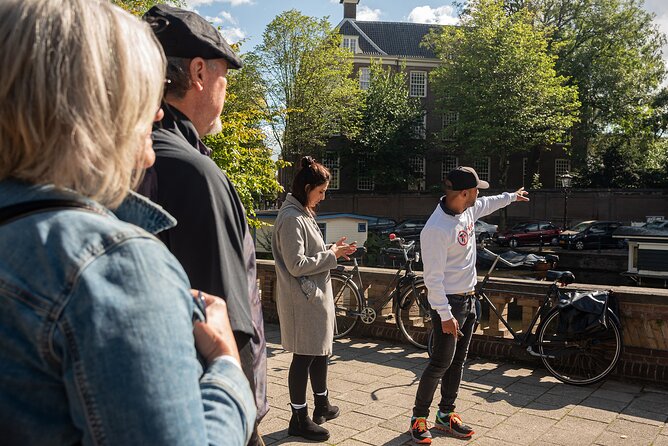
The final listed stop is De Schaduwkade, a memorial connected with remembrance. The guide explains the monument and its meaning before the activity returns to the meeting point.
As with the other memorials, the power comes from the combination of place and explanation. You might pass a marker on your own and understand only that something tragic happened nearby. A guide supplies the names, events, and connections that turn a small monument into part of a larger story.
The tour is scheduled for about two hours, although one participant described a private version ending early after roughly an hour. That suggests timing can vary, especially with a very small group or a flexible guide. I would keep a little space in your schedule rather than planning an immediate, fixed activity at the advertised finish.
Anne Frank is in the title, but the house is not included
This point deserves its own section because it has caused disappointment. The experience discusses Anne Frank, her diary, and her family, but it does not include an entrance ticket to the Anne Frank House.
You also should not treat the walking tour as a guaranteed visit to the house. The listed route focuses on the Jewish Quarter, memorials, Dam Square, and Schaduwkade. The Anne Frank House is not an included stop with admission.
If entering the house matters to you, arrange that separately. Tickets are not part of the $29.45 price, and this tour cannot substitute for the interior experience. The walking tour is better understood as background and setting. It explains the wider world around Anne Frank’s story.
The price is fair for a two-hour guided walk, especially if you receive a strong guide and a small group. You are paying for interpretation, local orientation, and the chance to ask questions, not for museum admission or food. Group discounts and a private upgrade are available, so compare the options if you are traveling with family or friends.
Guide quality can make or break the walk
The strongest feature here is the human one. James is praised for combining WWII facts with modern perspective and for leaving people discussing the subject after the tour. Misha is noted for flexibility and clear explanations. Keese is valued for his passion and family stories, while Stan receives high marks for his command of Anne Frank and Jewish history.
Aaron is described as reaching beyond Anne Frank and WWII into broader Amsterdam history. Peter is praised for patience and an easy speaking style. Other guides are described as energetic, friendly, and able to keep the group engaged.
Those details matter because this is a spoken tour. You are not entering a major attraction with extensive displays to carry the experience. If a guide explains poorly, the walk loses much of its value. If the guide handles the subject with care, the city becomes a connected lesson.
There is one serious service warning: one scheduled tour reportedly had no guide present after a 30-minute wait. That appears to be an isolated failure against a generally high rating, but I would still arrive at the exact meeting point and keep your confirmation available on your phone.
Who should book this tour?
I would recommend it to adults, history-minded visitors, and anyone who wants to understand Amsterdam beyond canals and paintings. It suits people who want context before or after visiting the Anne Frank House.
Families can join because most participants can take part, service animals are allowed, and the tour is near public transportation. But the walk may be tiring for younger children. An 8-year-old and a 10-year-old were reported to be exhausted by the time the route reached the Anne Frank Museum area, so consider your children’s walking stamina before booking.
A private upgrade may suit couples, families, or anyone who wants to ask many questions. The regular format, limited to 15 people, should work for most visitors who prefer a shared experience without a very large crowd.
You should skip it if you want admission to the Anne Frank House, a museum tour, or a light introduction to Amsterdam. You should also think twice if a long walk or discussion of the Holocaust would be physically or emotionally difficult.
Practical details and cancellation terms
The tour is offered in English and includes a mobile ticket and a local guide. Food and drinks are not included, so bring water and plan any meal separately.
The starting point is Amstel 51C, 1018 EJ Amsterdam. The activity is scheduled to end back at the meeting point, although the exact timing can vary. It requires good weather, and poor conditions may lead to a different date or a full refund.
You can cancel for a full refund up to 24 hours before the start time. Cancellations or changes made less than 24 hours before the experience are not accepted for a refund, and cut-off times use Amsterdam local time.
Should you book it?
Book this tour if you want a thoughtful, place-based introduction to Jewish Amsterdam and WWII, with Anne Frank as part of the wider story. The best value comes from the guides: James, Misha, Keese, Stan, Aaron, and Peter are all associated with the clear, personal style this subject needs.
Do not book it expecting the Anne Frank House. Buy that admission separately, then use this walk to understand the community, city, and wartime events surrounding Anne’s story. At $29.45, it is a sensible choice for a two-hour history walk, provided you are ready for a serious subject and a substantial amount of walking.
FAQ
Is the Anne Frank House included?
No. Entrance to the Anne Frank House is not included, and the ticket must be arranged separately.
How long does the tour last?
The tour lasts approximately two hours, though the exact length can vary, especially for a very small or private group.
Where does the tour start?
The meeting point is Amstel 51C, 1018 EJ Amsterdam, Netherlands.
Where does the tour end?
The activity is scheduled to end back at the meeting point.
How many people can join the regular tour?
The tour has a maximum of 15 participants. A private tour upgrade is also available.
What happens if the weather is poor?
The experience requires good weather. If it is canceled because of poor weather, you can choose another date or receive a full refund.
Just added around Amsterdam
- Amsterdam: Giethoorn Tour with Canal Cruise and Windmills★ 5.0 · 3 reviews
- Full-day excursion to Edam, Volendam, and Marken★ 3.7 · 3 reviews
- Amsterdam: Chocolate Fondue in the Dark★ 5.0 · 3 reviews
- Amsterdam Old-West Vegan Food Tour with Local Guide★ 4.7 · 3 reviews
- Amsterdam Private Walking Tour of Famous Painters★ 5.0 · 3 reviews
- Amsterdam Family Friendly Historical Walking Tour★ 5.0 · 3 reviews
- From Amsterdam: visit Zaanse Schans, Muiderslot and more!★ 5.0 · 3 reviews
- Amsterdam Walking Tour with Dutch Pancake Lunch★ 5.0 · 3 reviews
Amsterdam Tours, compared.


Amsterdam Classic Saloon Boat Cruise with Drinks and Cheese
Read our review →
Amsterdam Luxury Canal Cruise + Unlimited Drinks & Bites option
Read our review →


Classic Boat Cruise with Optional Cheese & Wine
Read our review →
Evening Cruise with Optional Wine and Snacks
Read our review →
75 Minute City Canal Cruise with Audio Guide
Read our review →Browse the lists this tour appears in