
Reviewed · ROTTERDAM TOURS
Delfshaven Self-Guided Tour: A Guide to Rotterdam’s Old Town
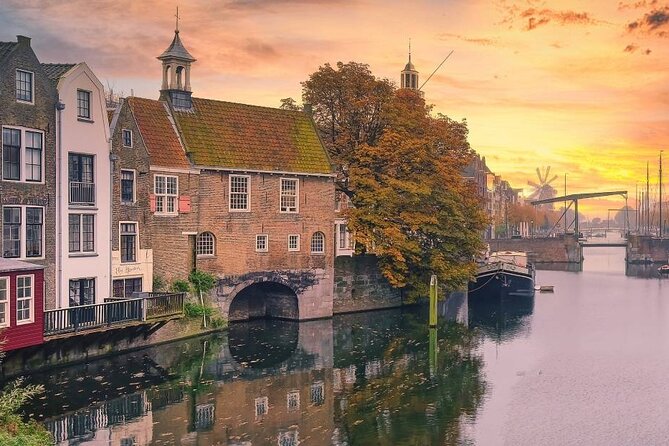
Delfshaven gives you a rare look at old Rotterdam, with quiet canals, narrow streets, historic ships, and buildings that escaped the city’s wartime destruction. This self-guided walk connects those sights in about an hour, beginning near Delfshaven and ending by Café de Oude Sluis.
I like the gentle pace and the way the audio links ordinary places, such as a tiny guild house, to the working life of the old port. I also like the freedom to pause, wander, or replay sections without keeping up with a group.
The main drawback is simple: you need your own smartphone and headphones, and the experience depends on following GPS directions. The listed walking time does not include time spent entering attractions or stopping for a drink, so your visit can take longer than the advertised hour.
Key points to know before you go
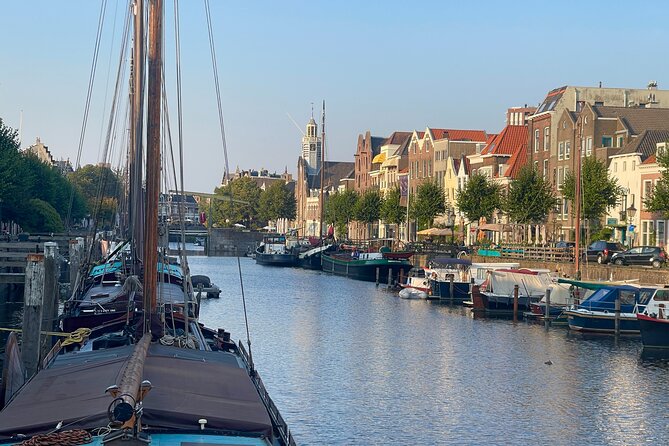
- Delfshaven’s old harbor gives you canals, traditional houses, historic ships, and a calmer side of Rotterdam.
- Piet Heynsbrug and Mouterbrug provide two picture-friendly crossings with views over the water.
- The Pilgrim Fathers’ church adds major historical weight to an otherwise easygoing neighborhood walk.
- The windmill and former town hall brewery show how trade, grain, spirits, and beer shaped Delfshaven.
- Offline audio, maps, and GPS directions let you walk independently without joining a scheduled group.
- The $9.99 price is reasonable if you want context and a flexible route, but less appealing if you only want a short stroll.
Why Delfshaven feels unlike the rest of Rotterdam
Rotterdam is known for modern architecture, large streets, and a busy port. Delfshaven offers a different picture. Here, the water is close, the buildings are older, and the streets feel tied to the city’s maritime past.
That contrast makes this tour useful early in a Rotterdam visit. You get a sense of what the city looked like before war damage and postwar rebuilding changed much of it. The walk is not only about pretty canals. It explains how a small harbor worked, who lived there, and why this corner of Rotterdam matters.
The route lasts roughly one hour to one hour and 15 minutes as a walking experience. That estimate covers moving between the stops. It does not include optional time at the church, brewery, museum, cafés, or other places along the way.
I would allow extra time if you want photographs, a drink, or a closer look at the buildings. The route ends near Café de Oude Sluis, making it easy to finish with a break beside the harbor.
A few more Rotterdam trips worth a look
- Rotterdam: Steamship Rotterdam Audio Tour Entry Ticket
★ 4.5 · 325 reviews - Discover Breda with a self-guided Outside Escape city game tour!
★ 5.0 · 16 reviews - Breda Fun Puzzle Quest: True Lord Self-Guided Tour
★ 4.0 · 9 reviews
Starting across Piet Heynsbrug
The walk begins near Delfshaven, at postal code 3026 VN in Rotterdam. Your first useful landmark is Piet Heynsbrug, a picturesque bridge named for Dutch admiral Piet Heyn.
From the bridge, you can look along the historic canals and see the traditional Dutch houses gathered around the water. This is a strong opening because it gives you the basic visual language of Delfshaven: bridges, boats, brick façades, and narrow waterfront views.
The audio places Piet Heyn within the story of the neighborhood rather than treating the bridge as just a photo stop. You will hear about the admiral and later encounter a monument devoted to him, so the name becomes easier to remember.
The bridge also helps you get your bearings. Since this is a GPS-guided walk, take a moment at the start to check that your audio and map are working. You do not need to rush away from the opening point.
Mouterbrug and the peaceful harbor
The next bridge, Mouterbrug, offers another view across the harbor. The setting is quieter and more enclosed than the grand urban spaces many people associate with Rotterdam.
Look for the relationship between the water and the buildings. Delfshaven’s charm comes less from one spectacular monument than from the way old structures line up around the harbor. Mouterbrug gives you a second angle on that setting, helping you notice the small details rather than simply walking past them.
This is also where the self-guided format makes sense. You can stop in the middle of the route for photographs without making a group wait. If the narration moves on while you are looking around, you can pause it and continue when ready.
Historic ships and the working port
The harbor section is one of the most atmospheric parts of the walk. Historic ships sit beside preserved buildings, bringing the area’s seafaring past into view.
The audio helps you read the harbor as a workplace. These waters were not only scenic. They supported cargo handling, brewing, distilling, and movement in and out of the port. That background gives the ships and warehouses more meaning.
I appreciate this kind of explanation because it keeps the walk grounded in daily life. Instead of hearing only about admirals and famous departures, you also get a sense of the people who loaded goods, carried sacks, and worked around the water.
The route is short enough for a casual outing, but do not treat it as a race. The best parts of Delfshaven appear in the pauses between the major stops.
Same country, a completely different kind of day:
- Rotterdam: Harbor Sightseeing Cruise
★ 4.3 · 7,599 reviews - Rotterdam: 1-Hour Sightseeing Splash Tour
★ 4.5 · 3,299 reviews - Rotterdam: Rotterdam Zoo Blijdorp Entry Ticket
★ 4.6 · 2,754 reviews - Rotterdam: Euromast Lookout Tower Ticket
★ 4.4 · 2,549 reviews
The windmill and Delfshaven’s industrial past
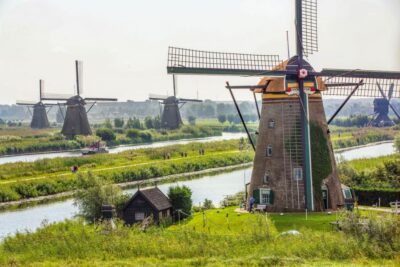
You will pass an iconic windmill, one of the clearest signs of Dutch heritage on the route. Its story is practical: wind power helped run distillery factories in Delfshaven.
That detail adds useful depth. A windmill is easy to photograph and easy to reduce to a postcard image, but here you learn how it supported local industry. The mill connects the harbor, grain, spirits, and trade into one working system.
You are passing by rather than taking part in a dedicated mill visit, so do not expect a long indoor presentation or a guaranteed entry. The value is in seeing the structure in its neighborhood and understanding why it was there.
For many people, this will be one of the most memorable visual stops. The audio makes it more than a quick photograph by explaining its role in the area’s economy.
The Pilgrim Fathers’ church
The historic church is the route’s most important stop for many history-minded visitors. Delfshaven is linked with the Pilgrim Fathers, who departed from here while fleeing religious persecution and heading toward the New World.
That connection gives the church international importance. You are not simply seeing an old religious building. You are standing near a departure point tied to one of the best-known migrations in early American history.
The audio provides the background while you view the church from the route. The supplied details do not promise entry, so plan on treating this as an exterior stop unless access is available when you visit.
I like the balance here. The church adds a serious historical moment to a walk that otherwise focuses on canals, industry, and harbor life. It also shows how a small place can matter far beyond the Netherlands.
Beer in the former Delfshaven Town Hall
The route continues to a brewery housed in the former Delfshaven Town Hall. Traditional Dutch beer is still brewed there, tying the building to the neighborhood’s brewing past.
This is a good example of old and new uses sharing the same setting. The building has civic importance, while the brewery keeps a local working tradition visible. You get a historical explanation, but the stop also points toward a practical choice: this may be a pleasant place to return after the walk.
The tour itself is not described as including a tasting or a brewery visit. Consider the stop an introduction rather than a package of food or drink. If you want to sit down, allow extra time beyond the one-hour walking estimate.
At $9.99, this kind of detail helps the price feel worthwhile. You are not paying only for directions between bridges. You are getting the story behind buildings that you might otherwise see as attractive but unexplained.
A porter’s guild house and everyday work
One of the most distinctive stops is a tiny historic guild house. Porters once gathered there before carrying heavy sacks of grain.
This modest building brings the harbor’s working population into the story. The famous names are easy to remember, but the porter’s guild house reminds you that ports functioned through repetitive, physical labor.
The stop is especially useful for visitors who prefer social history to a list of dates. You can picture the movement of grain through Delfshaven, from ships and warehouses to the people who handled it by hand.
Because the building is tiny, the audio does most of the explanatory work. You may pass by quickly, but the narration gives the place a purpose. This is exactly the sort of detail a self-guided walk can rescue from being overlooked.
Pinball in a 1825 grain warehouse
The route passes a museum housed in a restored grain warehouse dating from 1825. Its collection of vintage pinball machines gives the walk a playful change of mood.
The building itself links back to Delfshaven’s grain trade. Inside, the pinball collection adds a more recent and unusual layer to the neighborhood. You get a glimpse of how an old warehouse can find a new life without losing its connection to the past.
The experience only promises a pass-by stop, so admission is not included. If vintage machines interest you, check the museum’s access arrangements separately and allow more time.
This is also a useful reminder that Delfshaven is not preserved as a frozen historical display. It remains a living part of Rotterdam, with old buildings used for new purposes.
Piet Heyn’s monument and the Spanish silver fleet
Later, you will see a monument to Piet Heyn, the Dutch naval hero whose name appeared at the first bridge. The narration covers his exploits, including the capture of the Spanish silver fleet.
The monument gives the earlier bridge stop a clear payoff. You have already seen how his name remains part of the neighborhood, and now you encounter a physical memorial connected to his career.
This part of the story is likely to appeal to visitors interested in naval power and Dutch maritime expansion. It is worth keeping a balanced eye on the subject, though. A short audio walk can introduce a celebrated figure, but it cannot provide a full account of every political and colonial consequence surrounding Dutch naval success.
Still, the stop gives Delfshaven a strong link to national history. The harbor was not an isolated backwater. It connected local work and local people to events far beyond the neighborhood.
The Locks of Love seat and Euromast view
The route includes a popular seat where couples attach locks overlooking the canal. From here, you can also see the Euromast observation tower in the distance.
This is a lighter stop after the more serious historical material. The seat offers a familiar modern ritual, while the canal and tower place you firmly in present-day Rotterdam.
The view is one of the better examples of how Delfshaven combines old and new. Traditional waterfront buildings frame the canal, while the Euromast provides a modern vertical marker behind them.
Do not expect a sweeping city panorama from every point on the route. The appeal here is the layered view: a close canal, historic architecture, a contemporary Rotterdam landmark, and the small personal gestures represented by the locks.
Preserved streets and wartime scars
The walk then moves through a well-preserved part of Delfshaven, where narrow streets and old buildings offer a clear window onto Rotterdam’s past.
This section rewards a slower pace. Look at the street width, the façades, and the way the buildings sit close together. The neighborhood’s character comes from these modest details, not from a single grand avenue.
You will also reach an area where the effects of the Second World War remain visible. Delfshaven survived the bombing that destroyed much of Rotterdam, so it provides an important contrast with the city’s rebuilt center.
That wartime context changes how you see the old buildings. They are not merely attractive survivors. They help explain why Rotterdam can feel modern in one district and historic in another.
The audio cannot replace a museum visit or a long architectural tour, but it gives you a useful framework for looking. I would pay attention here, since this may be the point where the neighborhood’s survival becomes most meaningful.
What the self-guided format is really like
This is a private activity for your own group, with no scheduled guide leading you from stop to stop. The GPS system supplies directions and narration as you walk.
You receive access to the audio, maps, and geographic data offline. That matters if you want to avoid depending on a steady connection while moving through the neighborhood. Download or prepare the tour before setting out, since the experience is designed around phone playback.
The audio is offered in English. A published rating of five from four ratings is small evidence rather than a broad survey, but the strongest praise focuses on the narrator’s soothing voice, clear delivery, and comfortable pace. Those qualities matter here because the route mixes short facts with time to look around.
You supply the smartphone and headphones. I recommend headphones that let you remain aware of your surroundings, especially near water and on bridges.
The tour also includes lifetime use. You can use it before your booking date, after it, or through the virtual playback option from another location. The virtual option is useful if you want to preview the route or listen to the material later, though the main value comes from hearing the narration while seeing Delfshaven directly.
Is $9.99 good value for this walk?
At $9.99 per person, this is a modest purchase for an hour of structured sightseeing. The price works best if you value historical explanation, offline maps, and the ability to set your own pace.
A free walk through Delfshaven will still show you the bridges, harbor, windmill, church, and old streets. The paid element is the interpretation. You are paying to connect those sights into a story about shipping, grain, distilling, brewing, religion, war, and modern Rotterdam.
The value drops if you plan to spend only a few minutes in the area or prefer exploring without audio. It also drops if you expect admission to the church, brewery, or pinball museum, since the walk only takes you past those places.
For an independent visitor, couple, or small family group, the private format is helpful. You do not pay for a larger scheduled group, and you can stop whenever you like. Most people can participate, service animals are allowed, and the starting area is near public transportation.
Free cancellation is available if you cancel at least 24 hours before the start time. Changes or cancellations inside that period are not accepted for a refund, so keep the local cut-off time in mind.
Who should book the Delfshaven audio walk?
I would choose this experience if you want a compact introduction to Rotterdam’s oldest-feeling district and prefer to control your own schedule. It suits history fans, photographers, couples, and anyone who likes to combine a quiet walk with short audio explanations.
It is also a good choice after seeing Rotterdam’s modern center. Delfshaven provides a strong change of pace, and the route explains why the city contains such different visual worlds.
I would hesitate if you need a live guide for questions, want long interior visits, or dislike using your phone while sightseeing. The tour passes many attractions, but it does not promise extended entry or a tasting.
Should you book it?
Book it if you want a low-cost, flexible history walk with clear English narration and offline access. The best parts are the harbor views, the Pilgrim church connection, the windmill’s practical story, and the small details about port workers.
Skip it if your priority is a fully guided group experience or included admissions. For everyone else, this is a sensible way to spend about an hour in Delfshaven, with enough extra stops nearby to turn it into a longer afternoon.
FAQ
How long does the Delfshaven Self-Guided Tour take?
The walking portion takes approximately one hour to one hour and 15 minutes. This estimate does not include optional time spent at attractions or breaks.
What language is the audio tour offered in?
The tour is offered in English.
Where does the tour begin?
The tour starts in Delfshaven, Rotterdam, at postal code 3026 VN. Directions to the starting point are provided.
Where does the tour end?
The walk ends near Café de Oude Sluis at Havenstraat 7, 3024 SE Rotterdam.
Do I need a smartphone and headphones?
Yes. A smartphone and headphones are not included, so you need to bring your own.
Can I use the tour without an internet connection?
Yes. Offline access is provided for the audio, maps, and geographic data.
Can I cancel for a full refund?
Yes, if you cancel at least 24 hours before the experience start time. Cancellations made less than 24 hours before the start time are not refunded.
Just added around Rotterdam
- Discover Rotterdam: Classic Highlights Bike Tour by a Local★ 5.0 · 3 reviews
- Rotterdam: Capture the most Photogenic Spots with a Local★ 5.0 · 3 reviews
- Private tour: Markthal, Cube houses and Rooftop Het Witte Huis★ 4.5 · 3 reviews
- Private Transfer from Rotterdam Port to Amsterdam Airport (AMS)★ 5.0 · 3 reviews
- Rotterdam: 2.5-Hour Leckers Boat Cruise and Buffet★ 3.2 · 3 reviews
- Discover Rotterdam’s most Photogenic Spots with a Local★ 5.0 · 3 reviews
- Rotterdam: Wilhelminapier, High-rise & floating architecture★ 4.0 · 3 reviews
- Private Transfer from Rotterdam City to Amsterdam Schiphol Airport★ 5.0 · 4 reviews
Rotterdam Tours, compared.



Kinderdijk UNESCO World Heritage Entry Ticket
Read our review →
Browse the lists this tour appears in