
Reviewed · ROTTERDAM TOURS
Rotterdam: Steamship Rotterdam Audio Tour Entry Ticket
The SS Rotterdam is a floating time capsule from the golden age of ocean travel. This 1959 Holland-America Line flagship was the largest ocean liner ever built in the Netherlands, and you can walk through its passenger decks, bridge, chart room, radio room, and original captain’s cabin.
I like the mix of polished 1950s interiors and working-ship machinery. I also like that you can finish with a drink or meal on the broad deck, looking across Maashaven. The main drawback is simple: finding the correct starting point can be confusing, and some audio checkpoints have not worked reliably.
Key points to know before you go
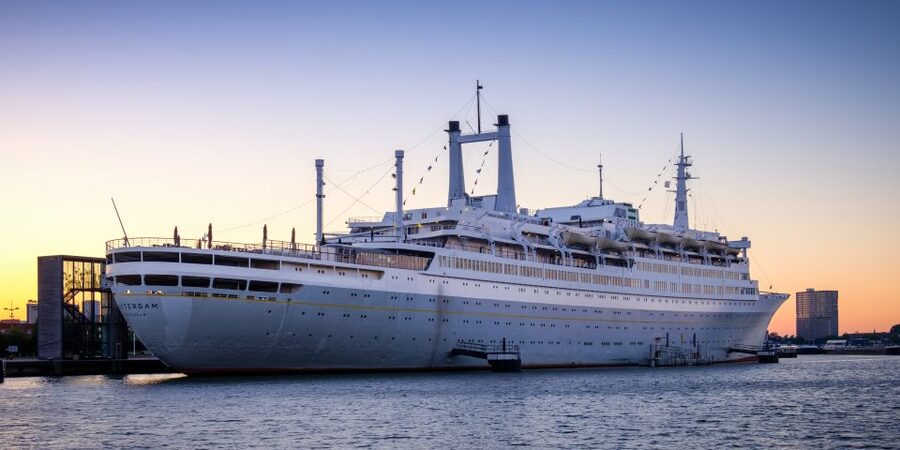
- A genuine 1959 ocean liner: See the former Holland-America Line flagship, now permanently moored at Katendrecht.
- Three tour choices: Pick the Rotterdam Complete Tour, Seabreeze Deluxe Tour, or Steam and Chrome Tour, with different parts of the ship included.
- Original working spaces: Visit the bridge, chart room, radio room, captain’s cabin, and other areas above and below the waterline.
- Audio guide in four languages: Dutch, English, French, and German are available.
- Allow about two hours: Some people spend closer to three hours when adding the engine-room tour or taking their time.
- Plan your arrival carefully: Go to the gift shop or reception first to collect your ticket and audio equipment.
Why the SS Rotterdam is worth your time
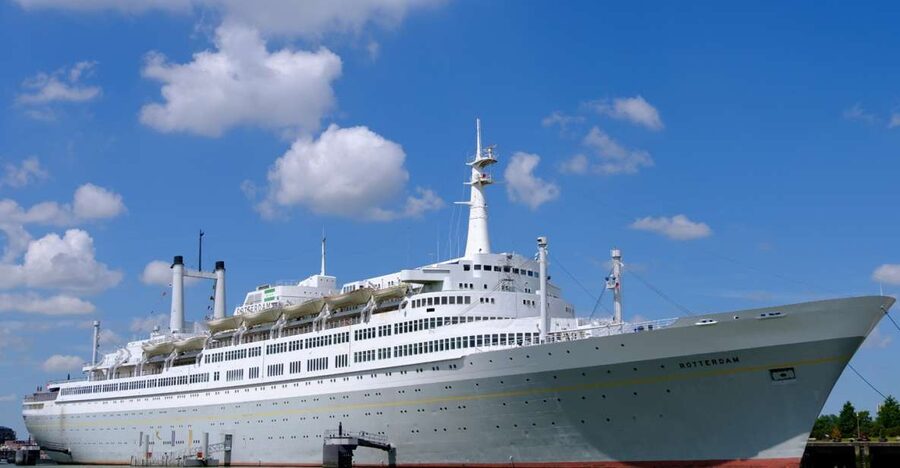
Many museums show you a ship through models, photographs, and fragments. Here, you walk through the actual vessel. The SS Rotterdam gives you a feel for the scale of a major ocean liner, from its monumental bow and heavy windlasses to its elegant passenger rooms and tall bridge.
The ship began sailing in 1959 as the flagship of the Holland-America Line. It carried emigrants, holidaymakers, and long-distance passengers across the world’s seas. That background gives the visit more weight than a simple walk through an old hotel. You are seeing the spaces used by both wealthy passengers and working crew during the final years of classic liner travel.
I particularly like the contrast between the public rooms and the technical areas. One minute you may be looking at stylish mid-century decoration. The next, you are examining the bridge or learning how the ship’s systems supported life at sea. It is a good choice if you enjoy design, maritime history, engineering, or old transport.
The ship now serves as a hotel and conference venue, so not every part feels like a museum. That is both a strength and a limitation. The vessel has a useful second life, but some areas may feel less like a carefully ordered exhibition and more like a large ship you need to learn your way around.
A few more Rotterdam trips worth a look
- Discover Breda with a self-guided Outside Escape city game tour!
★ 5.0 · 16 reviews - Breda Fun Puzzle Quest: True Lord Self-Guided Tour
★ 4.0 · 9 reviews - Rotterdam: City Walk Audio Guide in 7 Languages on your Phone
★ 3.5 · 6 reviews
Getting to the ship at Katendrecht
The SS Rotterdam is moored at 3e Katendrechtse Hoofd 25 in Rotterdam’s Katendrecht district. The location by Maashaven adds to the experience. You are not arriving at a conventional museum entrance in the city center. You are heading toward a huge liner fixed beside the water.
One practical arrival tip is worth taking seriously: go first to reception or the gift shop. Several people found the beginning unclear, with little direction after entering the ship. The audio guides are located by the gift shop, and staff can point you toward the correct deck and starting place.
If you arrive by water taxi, the approach itself becomes part of the outing. One visitor found this a pleasant way to reach the ship. You do not need to use a water taxi, but arriving over the water gives you a fine first view of the liner’s size.
Once inside, do not assume the tour begins at the first doorway you see. Collect your ticket and audio device before setting off. The ship has many corridors, stairways, and deck levels, so spending a few minutes getting oriented can save you from missing the start.
Choosing between the three tour options
Your ticket gives you a choice of three routes: the Rotterdam Complete Tour, Seabreeze Deluxe Tour, or Steam and Chrome Tour. The supplied details do not set out every stop included in each option, so check the exact access list when booking.
The Rotterdam Complete Tour is the natural choice if you want the broadest look at the ship. It is suited to first-time visitors who want passenger interiors, upper-deck areas, and the ship’s important operational rooms without focusing only on one theme.
The Seabreeze Deluxe Tour appears aimed at the ship’s more stylish side and its upper-deck atmosphere. This should appeal to you if the idea of ocean travel, deck space, passenger comfort, and classic liner design matters more than machinery.
The Steam and Chrome Tour is the one to consider if engines and ship systems are your main interest. The standard audio tour does not necessarily include the engine room, and an engine-room visit may be available as an extra guided experience. The engine tour lasts about one hour and has received especially strong praise for its guides.
A useful way to choose is to ask yourself what you want to remember afterward. If you want the ship as a whole, choose the broadest option. If you want stylish passenger life, choose the route with more upper-deck and interior access. If you like engineering, choose Steam and Chrome or add the engine-room tour if available.
The upper deck, bow, and views across Maashaven
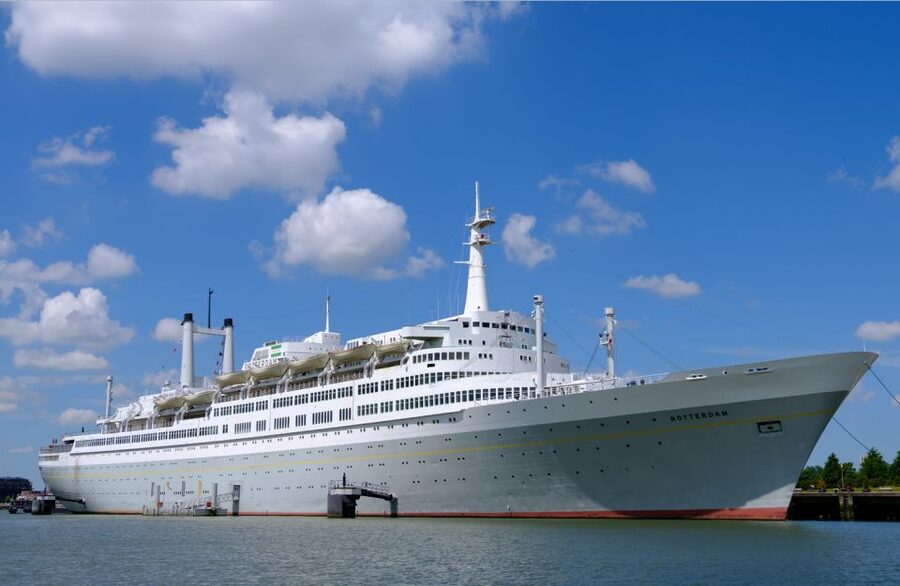
The upper deck is one of the easiest places to appreciate the SS Rotterdam’s scale. From the bow, you can look across the long forward section of the ship and see the heavy windlasses used in anchoring. The view also helps you understand how much open deck space a liner of this size required.
The bow is a good pause point rather than just another stop on the route. After moving through enclosed passageways and rooms, you can step outside and get air, light, and a sense of the ship’s position in Rotterdam’s harbor district.
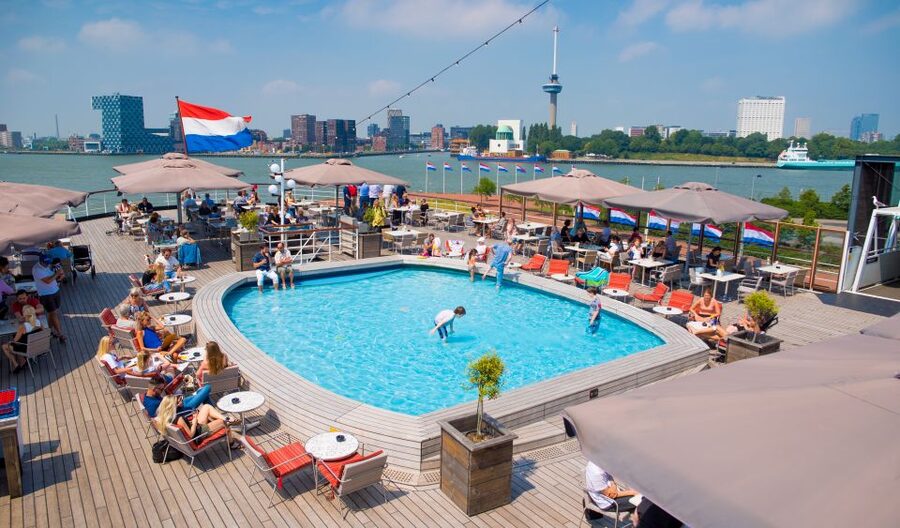
The deck terrace is also useful for breaking up the visit. You can stop for a drink or something to eat while still surrounded by the ship’s structure. Several people made time for coffee, cake, lunch, or a glass of wine after the tour. That makes the SS Rotterdam easier to enjoy as a half-day outing rather than a quick museum visit.
Do not rush the exterior areas. The public rooms explain how passengers lived, but the deck shows how the ship was organized as a working machine. Looking at the bow, windlasses, bridge, and upper structures gives you a clearer sense of the labor and equipment behind the glamour.
More audio tours in Rotterdam:
- Amsterdam: 75 Minute City Canal Cruise with Audio Guide
★ 4.4 · 17,501 reviews - Amsterdam: Royal Palace Entry Ticket and Audio Guide
★ 4.6 · 6,475 reviews - Amsterdam: Canal Cruise with Live Commentary & Audio Guide
★ 4.4 · 1,034 reviews - Amsterdam Sightseeing Canal Cruise with Audio Guide
★ 3.5 · 828 reviews
The bridge, chart room, and radio room
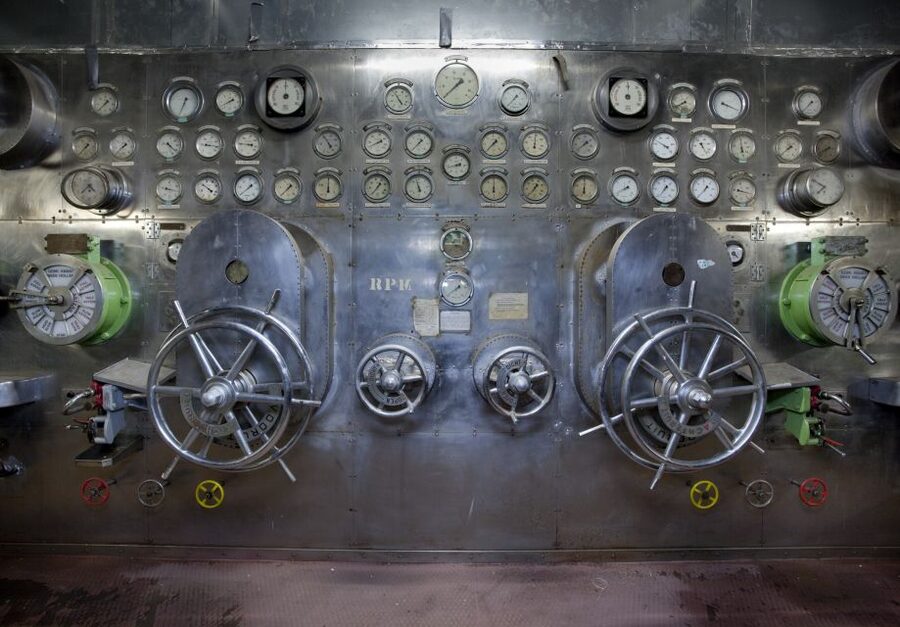
The bridge is one of the most rewarding parts of the visit. From here, the ship’s movement, navigation, and safety were managed. Even if you are not an expert in maritime equipment, the location helps turn the liner from a decorative old vessel into a place where real decisions were made.
The chart room offers another view of the ship’s working life. Charts, routes, and navigation tools connect the SS Rotterdam to the long sea journeys made before modern digital systems became standard. The radio room also points to the importance of communication at sea, when contact with land depended on dedicated equipment and trained crew.
You can visit the original captain’s cabin as part of the route. That room adds a personal element to the ship’s command structure. It is not only a grand vessel in the abstract. It was also a place where a captain lived and worked while responsible for the ship and everyone aboard.
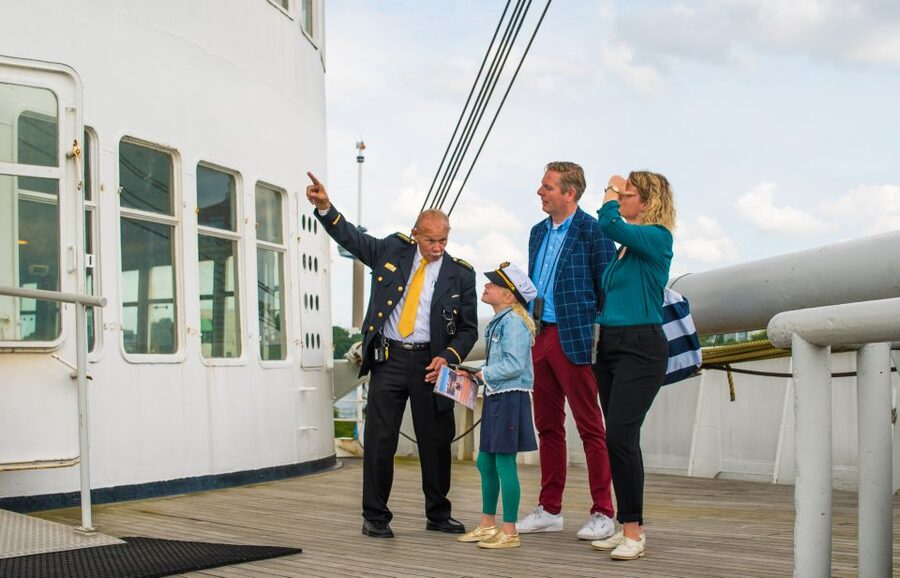
The audio guide is most useful here because it can explain what you are looking at and why the room mattered. Guides and volunteers are also present around parts of the ship, and their knowledge can add helpful context. One especially memorable guide was Mimi, who had sailed as crew during the ship’s first ten years. If you encounter a former crew member or long-serving guide, make time for the stories. They can make the rooms feel used rather than merely preserved.
Passenger interiors and the style of the 1950s
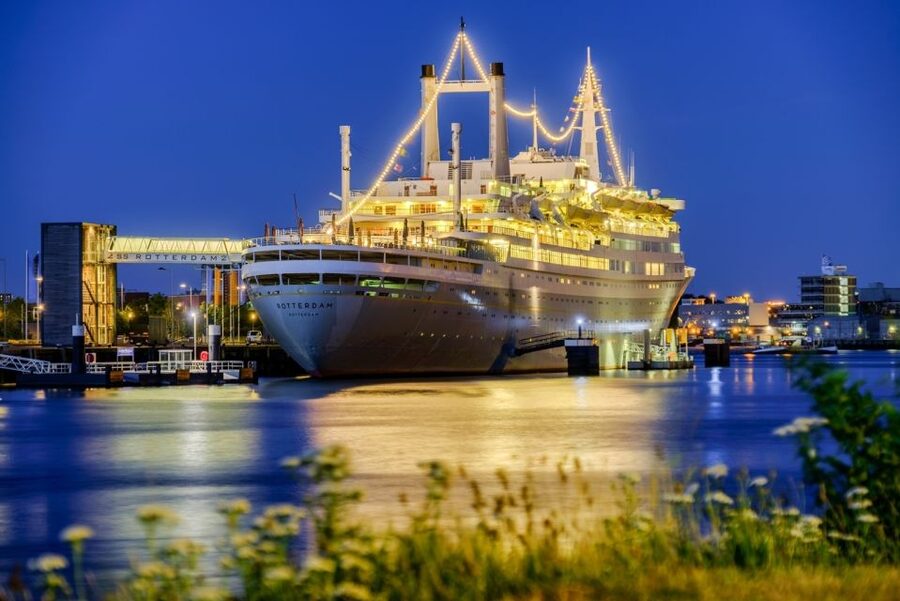
The public interiors show how ocean travel once sold comfort and ceremony. Expect polished rooms, mid-century decoration, and a style that can feel wonderfully old-fashioned. One visitor described the interiors as very stylish and distinctly 1950s, which is a useful way to set your expectations.
This is not minimalist Scandinavian design. The liner’s interiors have the visual confidence of an era when a long sea crossing was a major event. Decorative details, formal passenger spaces, and carefully designed rooms helped turn travel into part of the occasion.
The ship also lets you compare passenger life with crew life. The polished public areas were made for comfort and appearance. Other rooms and passageways served the practical work needed to keep the liner moving. The contrast is one of the visit’s main pleasures.
Families can find plenty to discuss here. You can ask children to spot the difference between a passenger room and a working space, or compare the ship’s old technology with a modern cruise vessel. The visit also suits older family members who remember the design period or have an interest in sea travel.
Some access points can feel disjointed. You may move between areas without always knowing which stop comes next. The audio guide is intended to provide order, but a few checkpoints have reportedly been difficult to use, and some information may appear only in Dutch. If a recording fails, ask a staff member rather than wasting time trying to make the device work.
The engine room and Steam and Chrome option
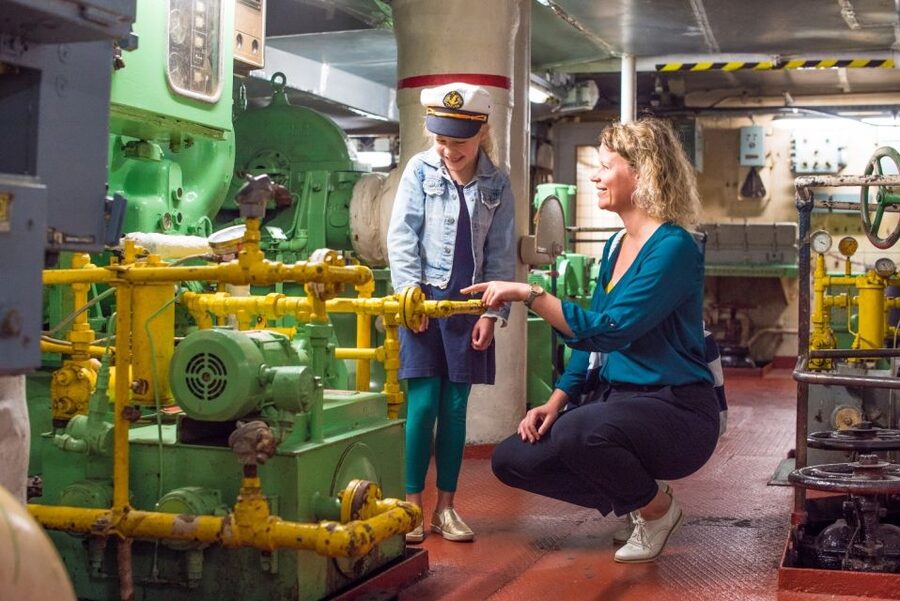
The engine-room visit is the clearest choice for anyone fascinated by how ships work. It is separate from the more general walk through passenger and upper-ship areas, and it takes about one hour.
The technical material can include diesel engines, electric propulsion systems, dynamic positioning systems, and scrubbers. That makes this part particularly useful if you want more than vintage decoration. You get a sense of the systems that powered and supported a large ocean liner.
The engine-room guide can make a major difference. Hans was singled out for his clear and engaging explanation, and another guide who had worked as an engineer on the ship brought direct experience to the tour. Former crew and technical guides give the machinery a human connection that an audio recording cannot always provide.
This extra tour is not necessary for everyone. If engines are not your interest, the passenger interiors, bridge, and deck areas provide a full visit on their own. But if you have recently taken a cruise, enjoy mechanical systems, or are visiting with older children and teenagers, the engine room may be the part you remember best.
Allow extra time if you add it. The main audio route takes roughly two hours, while the engine-room visit can bring your total to around three hours.
How the audio tour works in practice
The audio guide is available in Dutch, English, French, and German. It lets you explore at your own pace, which is useful on a large ship where you may want to stop for photographs or spend longer in a room that interests you.
The self-guided format also means you need to manage your own route. Clear instructions at the beginning would make the experience easier, but the ship’s layout can still take a little effort to understand. Pick up the device at the gift shop, listen carefully to the opening directions, and ask staff to point out the first stop.
You may also encounter staff or volunteer guides along the way. Their role can vary, but they have often been described as friendly and ready to help. If you have a question that the audio does not answer, ask. The human explanations are one of the best additions to a self-guided visit.
The audio equipment has not worked perfectly at every checkpoint. This is a minor nuisance, but it matters if you expect a polished museum-style system. Keep your own eyes open and read available signs as you go. You will still see the physical spaces even if one recording fails.
Time, price, and practical value
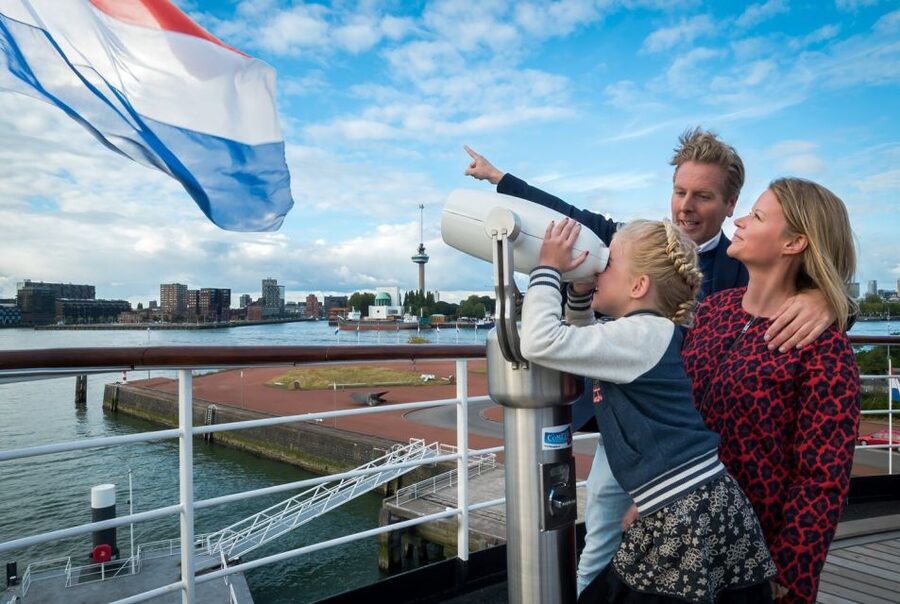
At about $16 per person, this is a fair price for a large ship visit lasting around two hours. You are paying for access to an intact ocean liner, not just a small exhibition. The price becomes even better if you enjoy taking your time on the deck or stopping for food and a drink afterward.
The value depends on the route you choose. A broad tour makes sense for a first visit because it gives you the ship’s public face, operational areas, and outdoor spaces. A focused engineering option is better value for you if machinery is the main reason for coming.
Plan on two hours at a minimum. Some people spend about three hours on the ship, especially when adding the engine room. The ship’s hotel and conference use means the visit does not feel like a tightly controlled museum circuit, so allow time to find your way between sections.
Cancellation is available up to 24 hours before the visit for a full refund, and you can reserve now and pay later. The ticket is valid for one day, with starting times depending on availability.
The accessibility information needs care. The activity details describe the ship as wheelchair accessible, but the same information also says it is not suitable for wheelchair users. Because a historic liner has stairs and changing deck levels, you should confirm current access arrangements directly before booking if you use a wheelchair.
Who should book the SS Rotterdam tour?
I would recommend this visit to anyone who likes ships, transport, design, engineering, or Rotterdam’s port identity. It is also a strong rainy-day option because much of the route is indoors, though the outdoor deck is an important part of the experience when the weather is kind.
Families can enjoy the range of spaces, while couples may like combining the tour with coffee, lunch, or a drink on deck. The ship also suits anyone curious about how luxury travel looked before today’s giant cruise ships.
I would think twice if you dislike self-guided museums, have difficulty with stairs, or want a perfectly clear route from the moment you step aboard. The staff can help, but the first few minutes may be less orderly than you expect.
Should you book it?
Book the SS Rotterdam tour if you want to walk through a real ocean liner rather than view one from the quayside. At $16, it offers strong value, especially when you take time with the bridge, captain’s cabin, passenger interiors, bow, and deck terrace.
Choose the engine-room option if ship technology interests you, and ask for directions as soon as you arrive. If you remember only two tips, make them these: start at the gift shop, and allow more than two hours if you want the ship to feel like an experience rather than a checklist.
FAQ
Where is the SS Rotterdam located?
The ship is permanently moored at 3e Katendrechtse Hoofd 25, 3072 AM Rotterdam, Netherlands, in the Katendrecht area by Maashaven.
How much does the audio tour cost?
The listed price is $16 per person.
How long does the audio tour take?
The audio tour takes approximately two hours. Adding the one-hour engine-room tour can bring the total visit to about three hours.
Which languages are available for the audio guide?
The audio guide is available in Dutch, English, French, and German.
Which tour options can I choose from?
You can choose the Rotterdam Complete Tour, Seabreeze Deluxe Tour, or Steam and Chrome Tour. Access to different ship levels depends on the option selected.
Can I visit the captain’s cabin?
Yes. The original captain’s cabin is one of the areas included among the ship’s historic rooms, along with the chart room and radio room.
Is the SS Rotterdam wheelchair accessible?
The activity information gives conflicting details. It describes the experience as wheelchair accessible but also lists it as not suitable for wheelchair users. Confirm current access arrangements before booking.
Can I cancel the booking?
You can cancel up to 24 hours in advance for a full refund.
Can I reserve now and pay later?
Yes. The reserve-now, pay-later option lets you hold a place without paying at the time of booking.
Just added around Rotterdam
- Discover Rotterdam: Classic Highlights Bike Tour by a Local★ 5.0 · 3 reviews
- Rotterdam: Capture the most Photogenic Spots with a Local★ 5.0 · 3 reviews
- Private tour: Markthal, Cube houses and Rooftop Het Witte Huis★ 4.5 · 3 reviews
- Private Transfer from Rotterdam Port to Amsterdam Airport (AMS)★ 5.0 · 3 reviews
- Rotterdam: 2.5-Hour Leckers Boat Cruise and Buffet★ 3.2 · 3 reviews
- Discover Rotterdam’s most Photogenic Spots with a Local★ 5.0 · 3 reviews
- Rotterdam: Wilhelminapier, High-rise & floating architecture★ 4.0 · 3 reviews
- Private Transfer from Rotterdam City to Amsterdam Schiphol Airport★ 5.0 · 4 reviews
Rotterdam Tours, compared.


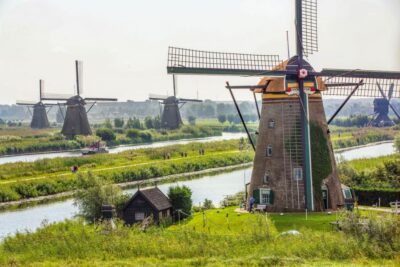
Kinderdijk UNESCO World Heritage Entry Ticket
Read our review →
Browse the lists this tour appears in