
Reviewed · ROTTERDAM TOURS
Rotterdam Travel to the Future Walking Tour
Rotterdam’s best story is not simply old versus new. It is how a city rebuilt itself and kept experimenting. This private walking tour follows that idea through rooftop farming, public art, unusual bridges, and daring architecture, ending at the Erasmus Bridge with a fine view across the water.
I like the way the route reaches beyond the postcard sights. You get the Cube Houses and Markthal, but also places such as the yellow wooden Luchtsingel, a rooftop farm, and public projects most visitors could easily miss. I also like the guide-led storytelling. Danya, Danny, and Danil Hochlovic are the names connected with this experience, and the strongest descriptions emphasize clear, lively explanations rather than a pile of dates.
The main drawback is the price: $274.03 per person is a serious sum for a three-hour walk, especially since food, drinks, and entrance fees are extra. It makes the most sense for a private group that values personal attention and wants a thoughtful introduction to Rotterdam’s design and urban life.
Key Points About Rotterdam’s Future-Focused Walk
- The yellow Luchtsingel: Walk across a 390-meter wooden footbridge built to reconnect central and northern Rotterdam.
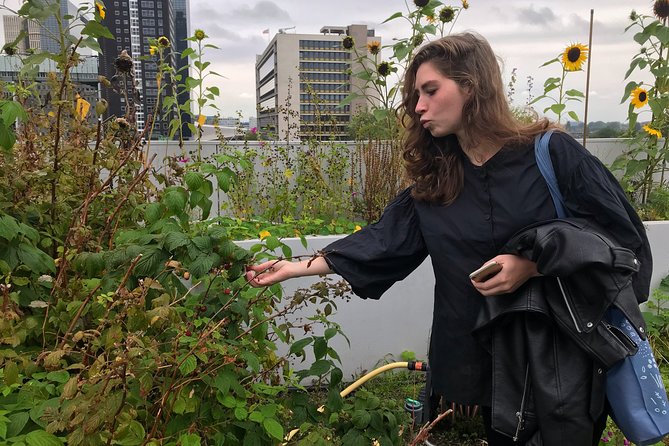
- DakAkker rooftop farm: Learn how vegetables, fruit, edible flowers, and bees occupy a city rooftop.
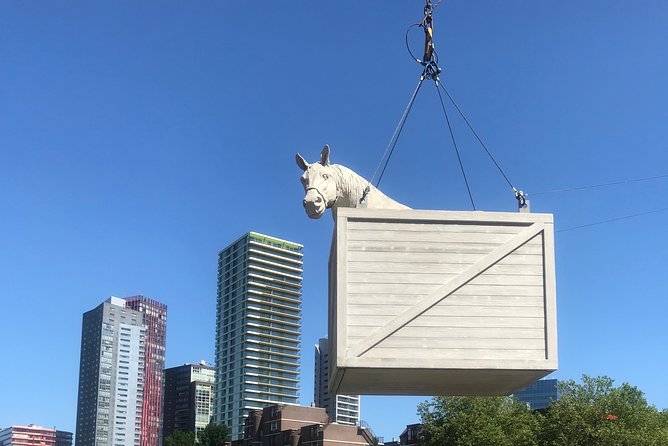
- Street art with context: See graffiti and public sculptures while hearing the stories and ideas behind them.
- Markthal and Cube Houses: Study two of Rotterdam’s most recognizable architectural projects from close range.
- Old Rotterdam in a modern city: Visit Laurenskerk and the area around the old city hall for a glimpse of the prewar city.
- Private English-language format: Your group gets its own certified guide, with free cancellation up to 24 hours before the start time.
A Walking Tour About How Rotterdam Reinvented Itself
This is not a standard greatest-hits walk. Rotterdam has those tours, too, and they have their place. But this experience uses the city’s newer projects to explain how Rotterdam changed from a damaged wartime port city into one of Europe’s most experimental urban centers.
You spend about three hours on foot. The route links architecture, public spaces, street art, food, and local history. That mix matters. You are not only looking at unusual buildings. You are asking why they were built, who uses them, and how they changed parts of the city.
The private format is useful here. A guide can pause when you have questions, adjust the pace for your group, and spend more time on the subjects that interest you. Families may appreciate that flexibility. A seven-year-old and a five-year-old were both described as staying interested during similar private walks, while older children can engage with the architecture, city planning, and street art.
The meeting point is at Ode aan Marten Toonder on Verlengde Nieuwstraat. The walk ends at Erasmusbrug, near the Erasmus Bridge. Both points are in central Rotterdam and the area is near public transportation, but you should allow time to find the exact starting spot.
More Walking Tours in Rotterdam
- Rotterdam: Architectural Highlights Guided Walking Tour
★ 4.8 · 215 reviews - Rotterdam Walk: Hilights, Gems, Architecture & WWII | 2 or 3hrs
★ 5.0 · 149 reviews - Rotterdam: Highlights & Gems Walking Tour with Dutch Local
★ 5.0 · 133 reviews
Starting With Public Projects and Rooftop Ideas
The opening section focuses on Rotterdam’s innovative public spaces. This is where the tour earns its unusual title. Instead of beginning with a long account of dates, the guide uses visible projects to show how the city tests new ways to use limited urban space.
One feature is the bright yellow Luchtsingel, a wooden pedestrian bridge measuring about 390 meters. It connects central Rotterdam with the northern part of the city. Its color is hard to miss, and its purpose is easy to understand: a footbridge can reconnect areas that roads, rail lines, and development have divided.
The project was created by Rotterdam architecture firm ZUS and supported by the city municipality. Much of the funding came from local residents through a crowdfunding campaign. That detail gives the bridge a social side. It was not merely a striking object placed in the city. It became a public effort to improve an overlooked area.
The walk also introduces DakAkker, a rooftop farm of about 1,000 square meters. It grows vegetables, fruit, and edible flowers, and keeps bees. A rooftop farm may sound like a small curiosity, but it raises useful questions about food production, unused building space, and how cities can add planting where ground-level land is scarce.
DakAkker has hosted public events, lunches, harvest celebrations, and seminars. A rooftop bistro associated with the farm changed name and concept after its earlier operation closed, so do not book this walk expecting a guaranteed café stop or included meal. You may be able to buy food or coffee in the area, but the tour price does not cover those purchases.
This opening portion lasts about 30 minutes. It is one of the strongest parts for anyone interested in architecture, urban planning, sustainability, or city renewal. If you mainly want interior visits and famous historic monuments, it may feel less direct.
Street Art That Requires More Than a Quick Photograph
Rotterdam is a good city for public art, and the next stop looks at street sculptures and graffiti. You spend about 15 minutes here, though the amount of art you see can depend on the route and the guide’s choices.
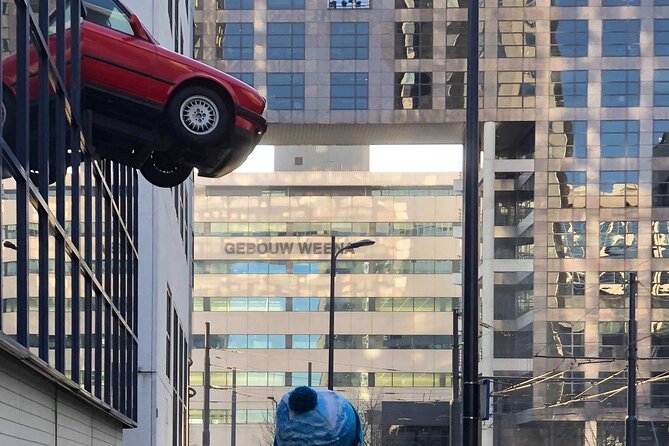
The useful part is the explanation. A wall painting can look like decoration when you pass it alone. With context, it can point to neighborhood change, social issues, or the city’s creative culture. One particularly memorable account of this walk describes a red car breaking through a wall, presented as a symbol of breaking down barriers between richer and poorer areas.
The area around the yellow bridge once had a more troubled reputation. The tour does not treat the neighborhood as a frozen piece of urban misery. Instead, it shows how art, studios, shops, cafés, and public improvements helped change its feel. Under the old railway viaduct known as Hofbogen, the arches now contain small businesses, restaurants, bars, and cafés.
That gives the street-art section more substance than a quick catalogue of murals. You see how art fits into a broader attempt to bring people into a part of Rotterdam that had been neglected. If you have already taken a dedicated street-art tour, this portion may repeat some familiar themes. For first-time visitors, it offers a useful introduction without making the entire walk about graffiti.
Laurenskerk and the Surviving Old City
Rotterdam can seem almost determined to look forward. The stop at Grote of Sint-Laurenskerk corrects that impression.
The church and the nearby old city hall area recall the city before its modern rebuilding. The guide uses this pause to explain Rotterdam’s earlier history and introduce important figures connected with the city. The planned stop lasts about 15 minutes, so expect an orientation rather than a long church visit.
This is also a good point to remember that Rotterdam’s modern appearance is partly the result of wartime destruction and later rebuilding. The walk’s balance improves when you see the old landmark beside bold postwar and contemporary projects. The contrast helps explain why the city feels so different from Amsterdam, Delft, or Utrecht.
The information provided does not promise a guided interior visit or a ticketed church admission. Treat this as an exterior and historical stop unless your guide confirms otherwise. The listed admission for the itinerary stops is free, while entrance tickets in general are not included.
Same country, a completely different kind of day:
- Rotterdam: Harbor Sightseeing Cruise
★ 4.3 · 7,599 reviews - Rotterdam: 1-Hour Sightseeing Splash Tour
★ 4.5 · 3,299 reviews - Rotterdam: Rotterdam Zoo Blijdorp Entry Ticket
★ 4.6 · 2,754 reviews - Rotterdam: Euromast Lookout Tower Ticket
★ 4.4 · 2,549 reviews
Markthal: Architecture With Something to Eat
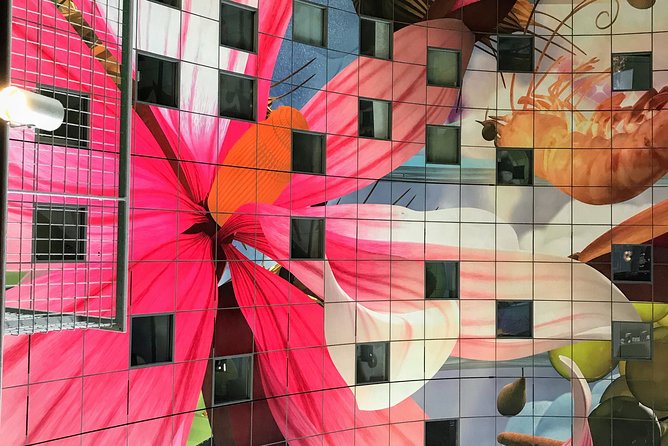
Markthal is the tour’s most sensory stop. The building, designed by MVRDV, combines apartments with an indoor market hall. That combination is central to its appeal. People live above the market, while the large public interior draws shoppers, diners, and sightseers below.
You spend about 30 minutes here. The guide explains how the building combines private housing and public space, then leads you through the market. This is a practical moment to ask questions about the structure, its purpose, and how the building works as part of the city.
You may also find food worth trying. Possible choices include herring, farmer cheese, truffle sausages, Dutch wine, and other products described as ethical or locally produced. None of this is included in the tour price, and 30 minutes is enough for browsing or a small taste, not a relaxed market meal.
I like this stop because it connects design to daily life. You are not examining a building from across a square. You are seeing how people use it. The drawback is that Markthal can be crowded and stimulating, and a short visit may leave you wanting more time to eat or shop. If food is a priority, plan to return after the tour.
Cube Houses and Rotterdam’s Architectural Experiments
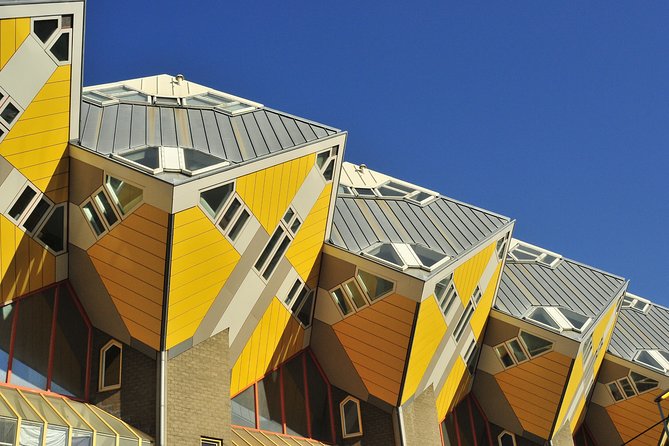
The Cube Houses are among Rotterdam’s best-known sights, and the walk uses them to explain 20th-century architectural movements, social housing, and the city’s willingness to try forms that would seem impractical elsewhere.
The angled yellow houses are designed to suggest a group of trees, with each house functioning as a tilted cube. Nearby, you see other recognizable buildings, including the Pencil and the Apple. The point is not only to take an unusual photograph. It is to consider how architecture affects ordinary life.
The Cube Houses raise practical questions. How do you furnish sloping rooms? How much daylight reaches the interior? Can an eye-catching design also offer comfortable housing? The tour can give those questions a local setting, though the supplied details do not promise entry into a show house or a separate admission.
This stop is especially good for anyone who enjoys modern architecture. If you prefer traditional streets, the buildings may look more like visual puzzles than homes. That is precisely why a guide helps. Without explanation, you may spend five minutes photographing them and move on. With context, you begin to see them as part of Rotterdam’s long-running argument about what a city should be.
Erasmus Bridge and the View Across the Water
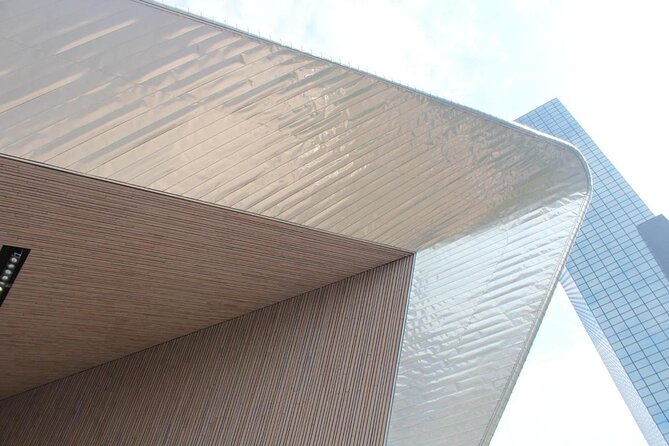
The walk finishes at Erasmus Bridge, where you can look across the river and toward the opposite side of Rotterdam. This is a fitting ending because the bridge is both a practical crossing and one of the city’s major visual symbols.
The stop lasts about 15 minutes. The guide also brings in OMA and architect Rem Koolhaas, connecting the view to Rotterdam’s wider architectural culture. From the bridge area, you get a chance to pause after the tighter streets and enclosed market spaces.
The end point is Erasmusbrug, at 3011 BN Rotterdam. Since the tour finishes here, you are well placed to continue exploring on your own, though the supplied information does not specify onward routes or attractions. You should also remember that the final stop has no promise of a long viewpoint session. Fifteen minutes is enough for orientation and photographs, but not for lingering.
What the Guides Add to the Walk
The strongest feature of this experience is the guide’s ability to connect places with stories. The names associated with the tour include Danya, Danny, and Danil Hochlovic. Because the names appear in different forms, confirm who will lead your booking if having a particular guide matters to you.
The accounts connected with these guides describe a style that is informative but not overloaded with dates. One detailed account came from someone who had lived in Rotterdam for more than two decades and still encountered parts of the city they had never properly noticed. That is a useful test for the tour’s value: it is not only designed for a first visit.
The guide may also discuss Rotterdam during the Second World War, the character of local residents, and the city’s transition from neglected areas to creative districts. The best version of this walk will make the buildings feel connected rather than isolated. You move from public funding to street art, from rooftop agriculture to market design, and from historic church to experimental housing.
Because this is a private tour, you can ask for more detail on the subjects you care about. The format is suitable for families, couples, and small groups who want one conversation rather than a large-group lecture.
Price, Group Size, and Practical Value
At $274.03 per person, the cost is high for a three-hour walking tour. The value depends heavily on your group size and your priorities. A private experience can be worthwhile if you are sharing the cost among several people and want a guide focused only on your party. It is harder to justify for one person who simply wants a quick introduction to the main sights.
The price includes a certified guide. It does not include coffee, tea, snacks, or entrance tickets. The listed itinerary stops are described as having free admission, but you should still budget for anything you choose to eat at Markthal or elsewhere.
The tour is offered in English and includes a mobile ticket. Confirmation arrives at booking, and most people can participate. It is near public transportation, which helps with reaching the central meeting point. Since the experience lasts about three hours and involves walking between several stops, comfortable shoes and weather-ready clothing are sensible choices, though no specific dress requirement is provided.
Free cancellation is available up to 24 hours before the local start time for a full refund. Changes or cancellations made inside that period are not accepted for a refund.
Who Should Book This Rotterdam Walk
I would choose this tour if you want Rotterdam explained as a living design project rather than presented as a checklist of sights. It suits visitors interested in architecture, public art, city planning, sustainability, and the way neighborhoods change.
It also works well for repeat visitors. One account describes someone who had been to Rotterdam seven or eight times and still found new places through a local guide. That is a strong reason to consider the walk if you already know Markthal and the Cube Houses but want a different route and more context.
Families can also benefit from the private setup. The mix of bright colors, odd buildings, open spaces, and market food gives younger children something to look at, while older children and adults can follow the architectural ideas.
I would hesitate if you want a museum-heavy tour, a long indoor visit, or a cheap way to see Rotterdam’s landmarks. You will not receive meals, drinks, or a guaranteed interior admission. The experience is about walking, looking, and talking.
Should You Book It?
Book this tour if your group wants a personal introduction to Rotterdam’s architecture and public projects, and if the private format fits your budget. The yellow Luchtsingel, DakAkker, street art, Markthal, Cube Houses, Laurenskerk, and Erasmus Bridge create a strong three-hour arc.
Skip it if $274.03 per person feels excessive for a short walk or if you would rather explore independently with a guidebook. For the right group, the cost buys more than directions. It gives you a way to understand why Rotterdam looks the way it does, and why the city keeps trying something new.
FAQ
How long does the Rotterdam Travel to the Future Walking Tour last?
The tour lasts approximately three hours.
Where does the tour begin?
The meeting point is Ode aan Marten Toönder, Verlengde Nieuwstraat, 3011 GA Rotterdam, Netherlands.
Where does the tour end?
The tour ends at Erasmusbrug, 3011 BN Rotterdam, Netherlands.
Is the tour private?
Yes. Only your group participates in the private activity.
Is the tour offered in English?
Yes. English is the listed tour language.
What is included in the price?
A certified guide and the walking experience are included.
Are food and drinks included?
No. Coffee, tea, snacks, and food purchases at Markthal are not included.
Are entrance tickets included?
No entrance tickets are included. The listed itinerary stops are described as having free admission, but any separate admission costs are your responsibility.
Can I cancel for a full refund?
Yes. You can cancel at least 24 hours before the local start time for a full refund. Cancellations or changes made less than 24 hours before the start time are not accepted for a refund.
Just added around Rotterdam
- Discover Rotterdam: Classic Highlights Bike Tour by a Local★ 5.0 · 3 reviews
- Rotterdam: Capture the most Photogenic Spots with a Local★ 5.0 · 3 reviews
- Private tour: Markthal, Cube houses and Rooftop Het Witte Huis★ 4.5 · 3 reviews
- Private Transfer from Rotterdam Port to Amsterdam Airport (AMS)★ 5.0 · 3 reviews
- Rotterdam: 2.5-Hour Leckers Boat Cruise and Buffet★ 3.2 · 3 reviews
- Discover Rotterdam’s most Photogenic Spots with a Local★ 5.0 · 3 reviews
- Rotterdam: Wilhelminapier, High-rise & floating architecture★ 4.0 · 3 reviews
- Private Transfer from Rotterdam City to Amsterdam Schiphol Airport★ 5.0 · 4 reviews
Rotterdam Tours, compared.

Kinderdijk UNESCO World Heritage Entry Ticket
Read our review →
Browse the lists this tour appears in