
Reviewed · ROTTERDAM TOURS
Cultural Walking Tour in Rotterdam
Rotterdam’s story is easiest to understand on foot, and this tour takes you through the city’s sharpest contrast: a medieval church beside daring postwar architecture. You begin at the sleek Rotterdam Centraal and finish by the Maas, with the rebuilt city center spread out between them.
I like the focus on architecture and urban design, rather than a quick checklist of sights. Guides such as Tania and Sonia bring professional architecture backgrounds, and their explanations can connect buildings, memorials, engineering, and the city’s destruction during World War II. I also like the route’s practical shape: it starts at the main train station and ends near the Erasmus Bridge, so you can continue exploring afterward.
The main consideration is pace. The advertised length is about two hours, though one detailed outing lasted closer to two and a half. You will be outside for the whole walk, and the market snack is not included in the price, so bring water and dress for the weather.
Key points at a glance
- Rotterdam’s rebuilt center: See how a city largely destroyed in World War II took a bold new architectural direction.
- An architect-led walk: Guides such as Tania and Sonia explain buildings through urban design, engineering, politics, and culture.
- A useful central route: Begin at Rotterdam Centraal and finish beside the Maas near the Erasmus Bridge.
- A mix of old and new: Compare the surviving Grote of Sint-Laurenskerk with the Markthal, Cube Houses, and modern city blocks along the way.
- Market life, not just monuments: The Markthal offers a chance to pause for a local bite, though you pay for food and drinks separately.
- Small-group format: The maximum group size is 20, with a minimum of two people per booking.
Why Rotterdam makes such a good walking tour
Rotterdam is not a city you understand by looking only at its oldest buildings. Much of the central area was destroyed in the 1940 bombardment, and the city rebuilt itself with wide streets, high-rise offices, experimental housing, and large public spaces.
That gives you a rare lesson in modern European city planning. The question is not simply What is this building? It is Why did Rotterdam choose to build this way? An art historian or architect guide can make that question useful, pointing out how the port, wartime damage, postwar planning, and new construction shaped the city you see today.
The route also avoids the trap of treating Rotterdam as a collection of unusual buildings. The Cube Houses, Markthal, bridges, and station are striking on their own, but they make more sense when you see them as parts of a city that chose a modern identity after devastation.
I would choose this walk early in a Rotterdam visit. It gives you a mental map of the center and helps you recognize the city’s design logic when you explore alone later.
More Walking Tours in Rotterdam
- Rotterdam: Architectural Highlights Guided Walking Tour
★ 4.8 · 215 reviews - Rotterdam Walk: Hilights, Gems, Architecture & WWII | 2 or 3hrs
★ 5.0 · 149 reviews - Rotterdam: Highlights & Gems Walking Tour with Dutch Local
★ 5.0 · 133 reviews
Starting at Rotterdam Centraal
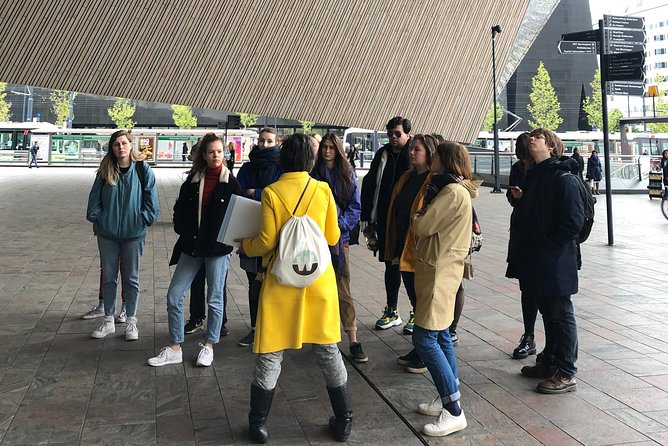
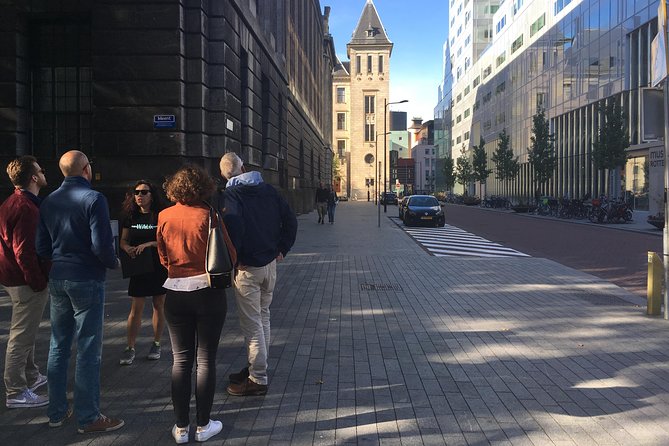
The tour begins outside Rotterdam Centraal Station, at 3013 AJ Rotterdam. This is an easy meeting point if you arrive by train or public transport, and it gives the guide an ideal opening subject.
The newly built station is one of the clearest signs of Rotterdam’s forward-looking character. From the start, you are looking at a major transport hub rather than a preserved historic gateway. That sets the tone for the rest of the walk.
Allow a little time to find your guide and get organized. The formal stop here is listed as about 10 minutes, but the station also functions as the launch point for the wider story. The walk is in English, though the guide may be multilingual.
A fully charged phone is a good idea. One particularly detailed walk covered many photo spots, and the route offers plenty of places where you will want to record the contrast between old masonry, bold new forms, and wide city views.
Lijnbaan and the postwar city center
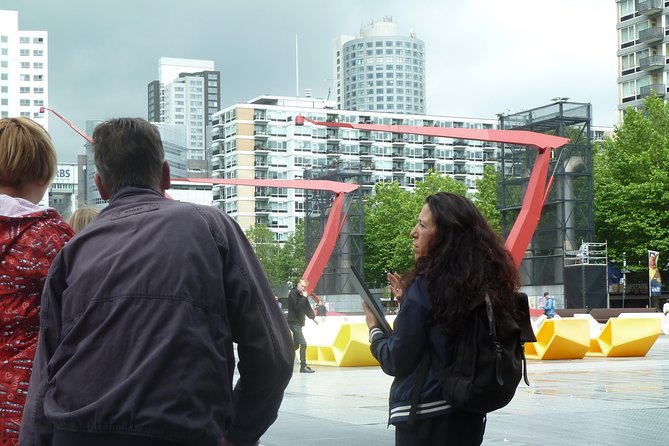
From the station, the route passes through Lijnbaan, described as the country’s largest national monumental area. This is an important stop because it represents postwar thinking about city streets, shopping, and pedestrian space.
You are not simply walking from one attraction to another here. The guide can explain how the area fits into Rotterdam’s rebuilding and why its design mattered. This kind of context is the main reason to take an architecture-focused walk instead of relying on a standard sightseeing route.
Lijnbaan is also a useful reminder that Rotterdam’s modern buildings were not all designed as isolated showpieces. Streets, commercial areas, public movement, and housing were part of the plan. Pay attention to how the route feels underfoot and how the spaces guide your movement.
The tour is limited to 20 people, which is still large enough for a proper group but small enough for a guide to speak to you directly. A group of 20 can make narrow areas and photo stops slower, so expect some pauses and keep close to the guide.
Grote of Sint-Laurenskerk, Rotterdam’s surviving old landmark
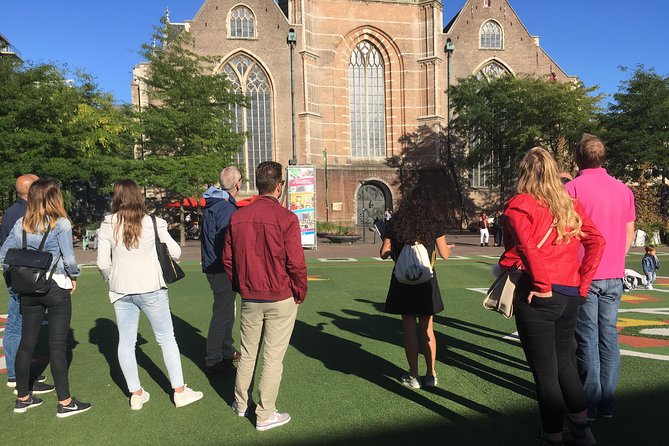
The Grote of Sint-Laurenskerk is the oldest building in Rotterdam, and only part of it survived the wartime bombardment. The tour focuses on the exterior and allows about 10 minutes here.
This is one of the most meaningful points on the route because it gives you a physical before-and-after marker. Around it, much of the city feels modern and planned. The church reminds you that Rotterdam once had a much older center and that the modern city grew from a near-total break with that past.
The value of this stop is less about spending a long time inside the church and more about seeing its place in the rebuilt city. I would listen closely for the guide’s explanation of what survived, what was restored, and how the church relates to the surrounding modern buildings.
If you want an extensive interior visit, this tour is not designed for that. The stop is brief and the emphasis remains on the city as a whole.
Same country, a completely different kind of day:
- Rotterdam: Harbor Sightseeing Cruise
★ 4.3 · 7,599 reviews - Rotterdam: 1-Hour Sightseeing Splash Tour
★ 4.5 · 3,299 reviews - Rotterdam: Rotterdam Zoo Blijdorp Entry Ticket
★ 4.6 · 2,754 reviews - Rotterdam: Euromast Lookout Tower Ticket
★ 4.4 · 2,549 reviews
Markthal and a taste of local Rotterdam
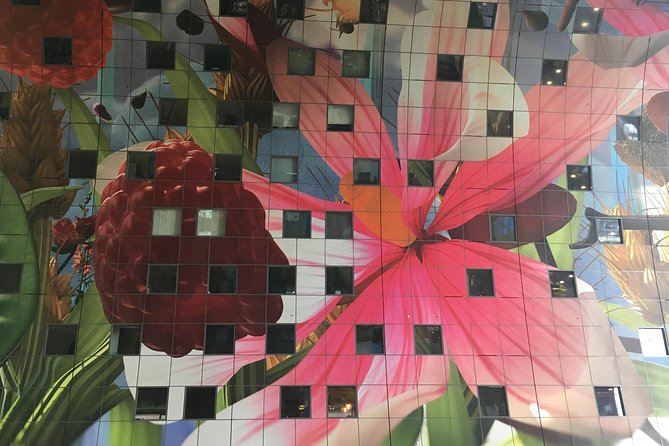
The Markthal is the route’s liveliest pause, with its indoor food market and dramatic architecture. The guide spends about 10 minutes explaining the building and its role in the city.
The stop is useful for two reasons. First, the Markthal is a major architectural statement. Second, it gives you a chance to see a more everyday side of Rotterdam, where food shopping and quick meals take place alongside sightseeing.
A small market snack is part of the tour’s appeal, but food and drinks are not included in the $54.06 price. Plan to buy your own if you want to eat. This is a minor extra cost, but it is worth knowing before you arrive, especially if you expect a prepared snack to be supplied.
Ten minutes is enough for an introduction, not a full food tour. If you want to browse every stall or sit down for a meal, return later on your own. The guide’s explanation should help you appreciate the building before you explore it at a slower pace.
Rotterdam’s modern icons along the way
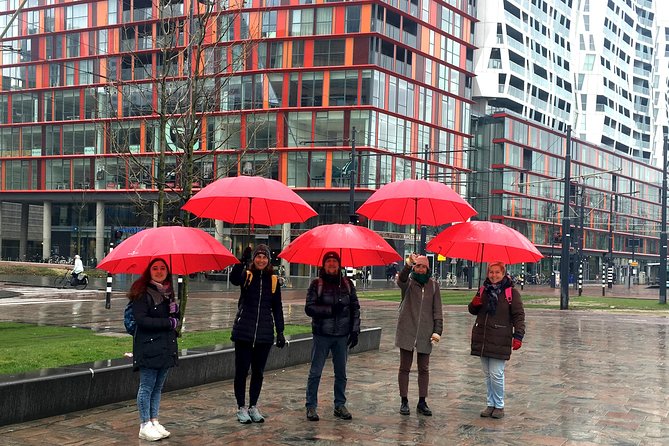
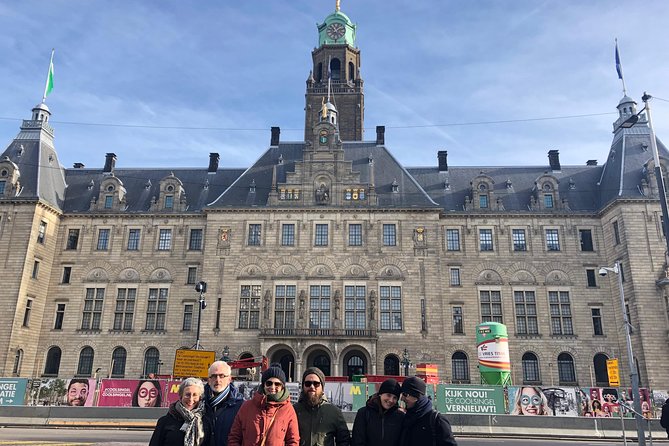
The official route lists the main stops, but the walk can include views and explanations of other central landmarks. A detailed outing covered the Groot Handelsgebouw, Cube Houses, Pencil Building, City Hall, Timmerhuis, the White House, and the Maas.
That broader range is important. You get more than four isolated stops, although the exact amount of time at each place can depend on the guide, group, and pace. Some guides may spend more time on architectural detail, while others may build a wider story about politics, culture, and city planning.
The Cube Houses and Pencil Building are especially useful examples of Rotterdam’s willingness to try unusual forms. The White House offers a different architectural chapter, while the Timmerhuis shows how newer development continues to reshape the center.
The best part of this section is the explanation behind the design. A guide can point out why a building looks the way it does, how it works within the street plan, and what its shape says about Rotterdam’s ambitions. That is more useful than collecting building names without context.
Finishing beside the Maas and the Erasmus Bridge
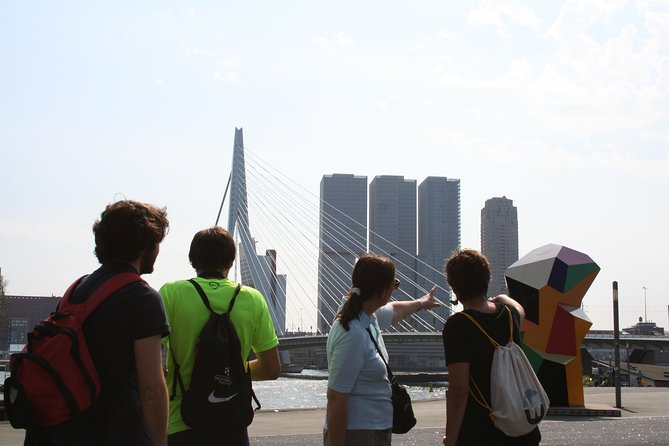
The tour ends at Boompjeskade, near the Maas river, with views toward Rotterdam’s bridges and newer high-end developments on the opposite side of the water. This is a strong finish because the river helps you understand Rotterdam as a port city and gives the walking route a clear endpoint.
The Erasmus Bridge is the visual payoff. You see it as part of a wider riverside setting, not just as a structure to photograph. The guide may also connect the bridge to engineering, skyline growth, and the city’s relationship with the Maas.
Ending here is convenient if you want to continue along the waterfront or take photos. It is less convenient if you need to return to Rotterdam Centraal immediately, though public transportation is nearby. The meeting and end points are not the same, so plan your next move before the tour begins.
The riverside can also feel exposed in cold or wet weather. In January, a participant found the guide’s storytelling engaging enough to make the cold easier to forget, but warm clothing remains the smarter plan.
The guides and the kind of teaching to expect
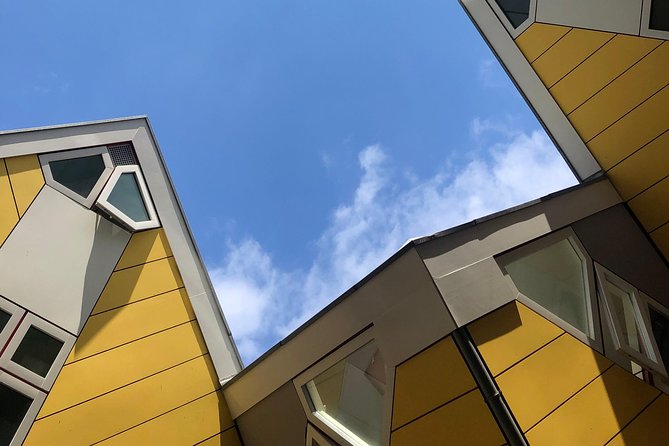
This is not presented as a standard scripted stroll. The included guide is described as a local and professional architect guide, and the strongest part of the experience is the amount of explanation offered at each stop.
Tania received particularly warm praise for knowing her material and keeping the group engaged in cold weather. Sonia is described as a local architect who explained the rebuilt downtown and the context of restoring a major port city after wartime destruction.
The guide may also bring in history, politics, culture, engineering, and urban design. That mix suits you if you enjoy asking why a city looks the way it does. If you prefer a fast route with little commentary, this may feel too talkative.
The exact guide cannot be guaranteed, and the activity may be operated by a multilingual guide. Still, the professional architecture background gives the tour a clear identity and helps explain why the experience costs more than a casual orientation walk.
Is $54.06 a fair price?
At $54.06 per person, this is not the cheapest way to see Rotterdam’s center. You are paying for a professional guide, an English walking tour, architectural interpretation, and a small-group setting capped at 20 people.
The value depends on how much context you want. If you only need directions and a few famous photo stops, you can walk this central route independently. If you want someone to explain Rotterdam’s wartime break, rebuilding choices, unusual buildings, and riverside development, the price is more reasonable.
The market snack is not included, and neither are drinks, hotel pickup, or drop-off. Those exclusions are ordinary for a city walking tour, but you should budget for water and any food you buy at the Markthal.
Group discounts are available, though the exact discount is not stated. A minimum of two people is required for a booking, and the activity is often reserved about 31 days ahead. That advance booking pattern suggests you should not leave it until the last day if your Rotterdam dates are fixed.
Timing, fitness, and practical preparation
The advertised duration is about two hours, with short stops of around 10 minutes at the station, church, Markthal, and Erasmus Bridge. In practice, the walk can run longer if the guide gives detailed explanations or the group pauses for questions and photographs.
A moderate level of physical fitness is required. The tour involves walking between central landmarks, and there is no hotel pickup or vehicle support. Wear comfortable shoes and check the forecast before leaving.
I would bring:
- Water, since drinks are not included
- A charged phone for photos and maps
- Sunglasses on bright days
- A weatherproof outer layer
- A little money for food at the Markthal
The minimum age is 12. Service animals are allowed, and the route is near public transportation. Confirmation is provided at booking. Free cancellation is available if you cancel at least 24 hours before the start time, based on local time. Changes or cancellations made later do not qualify for a refund.
Who will enjoy this walk most?
This tour suits first-time visitors who want a clear introduction to Rotterdam’s central architecture. It is also a good match for anyone interested in modern cities, postwar rebuilding, urban planning, engineering, or the relationship between old landmarks and new development.
It works particularly well for couples, friends, and families with children aged 12 or older who enjoy walking and discussion. The two-hour format is long enough to cover a lot without taking the whole day, although you should allow extra time if your group moves slowly or the guide gives extended explanations.
Solo visitors should note the two-person booking minimum. If the booking proceeds with only one participant, you may receive very personal attention, which can be excellent for questions and detailed discussion. The trade-off is a quieter outing with less chance to meet other people.
You may want a different experience if your main goal is food, interiors, museums, or a relaxed cafe break. The Markthal stop is short, the church visit is exterior-focused, and the tour is built around walking and architectural commentary.
Should you book the Cultural Walking Tour in Rotterdam?
I would book it if you want Rotterdam explained, not merely photographed. The combination of Central Station, Lijnbaan, the surviving Laurenskerk, Markthal, modern city buildings, and the Erasmus Bridge gives you a strong first look at the city’s unusual identity.
The best reason to choose it is the guide’s architectural and urban-design perspective. Tania and Sonia show the kind of specialist knowledge this route needs, and the strongest outings connect buildings with the difficult story of Rotterdam’s wartime destruction and rebuilding.
Book it early if your dates are firm, wear shoes for a proper walk, and bring money for your own market snack. Skip it if you want a short, purely historical tour or a food-focused experience. For a first visit, especially one built around modern architecture, this is a practical and worthwhile way to get your bearings.
FAQ
How long does the Cultural Walking Tour in Rotterdam last?
The tour lasts approximately two hours. A detailed outing took about two and a half hours, so allow some extra time if you want a relaxed schedule.
Where does the tour begin?
The tour begins at Rotterdam Central Station, 3013 AJ Rotterdam, Netherlands.
Where does the tour finish?
It ends at Boompjeskade, 3011 Rotterdam, beside the Maas river and near the Erasmus Bridge.
Is the tour offered in English?
Yes. The activity is offered in English, though it may be operated by a multilingual guide.
Is food included at the Markthal?
No. Snacks and drinks are not included. You can purchase food at the local market if you wish.
What is the minimum age and group size?
The minimum age is 12. At least two people are required per booking, and the maximum group size is 20.
Can I cancel for a full refund?
Yes, if you cancel at least 24 hours before the experience start time, using the local time for the cutoff. Cancellations or changes made less than 24 hours before the start are not refunded.
Just added around Rotterdam
- Discover Rotterdam: Classic Highlights Bike Tour by a Local★ 5.0 · 3 reviews
- Rotterdam: Capture the most Photogenic Spots with a Local★ 5.0 · 3 reviews
- Private tour: Markthal, Cube houses and Rooftop Het Witte Huis★ 4.5 · 3 reviews
- Private Transfer from Rotterdam Port to Amsterdam Airport (AMS)★ 5.0 · 3 reviews
- Rotterdam: 2.5-Hour Leckers Boat Cruise and Buffet★ 3.2 · 3 reviews
- Discover Rotterdam’s most Photogenic Spots with a Local★ 5.0 · 3 reviews
- Rotterdam: Wilhelminapier, High-rise & floating architecture★ 4.0 · 3 reviews
- Private Transfer from Rotterdam City to Amsterdam Schiphol Airport★ 5.0 · 4 reviews
Rotterdam Tours, compared.

Kinderdijk UNESCO World Heritage Entry Ticket
Read our review →
Browse the lists this tour appears in