
Reviewed · ROTTERDAM TOURS
Rotterdam Architecture Highlights Walking Tour
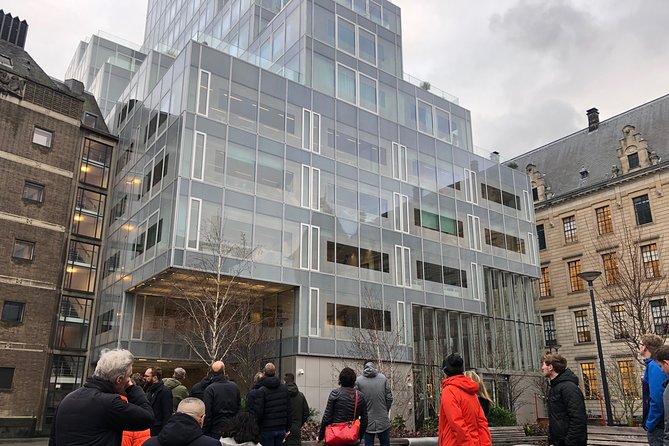
Rotterdam makes more sense once you understand why so much of it looks new, daring, and sometimes delightfully strange. This two-hour walk traces the city’s postwar rebuilding through Central Station, Schouwburgplein, Timmerhuis, Markthal, the Cube Houses area, and the Maas riverfront, with an architect guiding the way.
I like the route for two clear reasons. First, you get history and design together, not just a parade of impressive façades. Second, the small groups, capped at 15 people, give guides such as Tania and Silvia room to answer questions and adjust the talk to your interests.
The main drawback is that this is a real city walk, not a quick hop between sights. You may cover close to 12,000 steps, and the tour does not include a full visit inside a Cube House. On a cold or wet day, the open riverfront can also be uncomfortable.
Key points to know before you book
- A postwar city told through buildings: The walk explains how Rotterdam was rebuilt after World War II and why its center took such a modern direction.
- Architect guides add useful context: Tania and Silvia are both praised for explaining design, city planning, present-day challenges, and local life.
- Central Station is more than a meeting point: You spend about 10 minutes examining Rotterdam’s new front door before heading into the city.
- The Cube Houses may be viewed rather than entered: The route brings you near them, but an interior visit is not promised.
- The end point offers a fine visual payoff: Boompjeskade gives you the Maas, the South Bank, and strong photo opportunities.
- Plan for weather and walking: The tour is outdoors, requires moderate fitness, and may be canceled in poor weather.
Why Rotterdam’s modern center is worth a walking tour
Rotterdam is not a city where every important sight belongs to an earlier century. Much of its central core was destroyed during World War II, and the rebuilding that followed gave architects room to try new ideas.
That background matters. Without it, the angled houses, oversized market hall, exposed structures, and wide public spaces can seem like unrelated design experiments. With it, you begin to see a city working out what a modern center should be.
I find an architect-led walk especially useful here because Rotterdam’s buildings are easy to photograph but harder to read. A guide can point out how a structure meets the street, how public space is used, and how the city has balanced bold design with housing, transport, business, and daily life.
The tour also appears to go beyond technical architecture. Guides have discussed social activism, city politics, and the quasi-socialist role of some structures. That is a plus if you want to understand Rotterdam as a working city, not just admire its unusual buildings.
If you are an architect or design student, you may want more detail about construction methods, materials, and the practical problems behind each project. One participant felt the tour leaned more toward history and social questions than strict design analysis. That is a fair expectation to set: this is an introduction to Rotterdam’s architecture and urban story, not a specialist technical seminar.
More Walking Tours in Rotterdam
- Rotterdam: Architectural Highlights Guided Walking Tour
★ 4.8 · 215 reviews - Rotterdam Walk: Hilights, Gems, Architecture & WWII | 2 or 3hrs
★ 5.0 · 149 reviews - Rotterdam: Highlights & Gems Walking Tour with Dutch Local
★ 5.0 · 133 reviews
Starting at Rotterdam Centraal Station
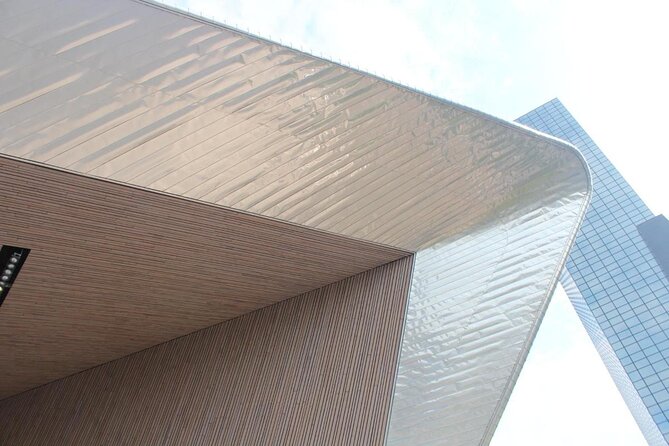
The walk begins at Rotterdam Central Station, a major transport hub and a fitting opening scene. The station is described as the city’s newly built entrance, and the first 10 minutes focus on how it presents Rotterdam to people arriving by train.
You will likely get your first lesson here in the city’s preference for strong shapes and clear modern gestures. The station is not treated as a simple place to meet. It introduces the question running through the whole walk: how should a city announce itself in the present while acknowledging what came before?
The location is practical if you arrive by train from Amsterdam or another Dutch city. One person specifically found the tour worthwhile as a day trip from Amsterdam, so you can use the station as both your arrival point and your meeting place.
Take care with the exact meeting spot. The stated address is Rotterdam Central Station, 3013 AJ Rotterdam, but one participant found the map, address, and actual meeting place confusing. I would arrive early and check your confirmation carefully rather than rushing out of the station at the start time.
The station section is fairly short, though the guide may spend more or less time depending on the group. It gives you the basic context before the walk moves into Rotterdam’s cultural center.
Schouwburgplein and the city’s cultural stage
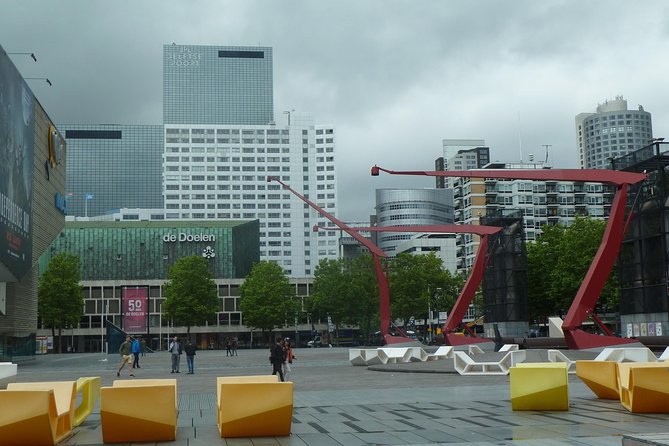
The next stop is Schouwburgplein, known as Rotterdam’s cultural podium square. The name suggests a stage, and the square works as a public setting rather than a quiet historic plaza.
You will spend about 10 minutes here. The guide can help you notice how an open urban space is shaped for gathering, performance, movement, and city life. This is the sort of place that can seem empty or overly hard-edged when you first see it, but its purpose becomes clearer when someone explains how it functions.
This stop also helps connect architecture with public policy. The tour’s approach includes discussion of how different structures serve social purposes, so you may hear less about decorative details and more about who a space is for and how it is used.
That wider angle is one of the tour’s strengths for a first visit. Rotterdam’s modern center is not only a collection of photogenic projects. It is also a series of decisions about traffic, culture, housing, commerce, and public access.
A postwar monument and the city rebuilt
The route includes a postwar national monument, though the supplied details do not identify it by name or assign a separate time for the stop. Its role in the walk is clear: it links the visible modern city to the destruction and rebuilding that shaped it.
Expect the guide to explain how Rotterdam’s center changed after World War II. Several guides are praised for making this part understandable and for connecting the city’s past, present, and future.
That historical layer gives the walk its backbone. You are not simply moving from one clever building to another. You are learning why Rotterdam accepted such a different visual identity and how the city continues to deal with the results.
A guide who lives in Rotterdam can add a personal note here. Tania, in particular, is described as someone who clearly loves the city and its evolution. Silvia is also praised for combining architectural training with an understanding of current city issues.
Same country, a completely different kind of day:
- Rotterdam: Harbor Sightseeing Cruise
★ 4.3 · 7,599 reviews - Rotterdam: 1-Hour Sightseeing Splash Tour
★ 4.5 · 3,299 reviews - Rotterdam: Rotterdam Zoo Blijdorp Entry Ticket
★ 4.6 · 2,754 reviews - Rotterdam: Euromast Lookout Tower Ticket
★ 4.4 · 2,549 reviews
Timmerhuis and the OMA approach
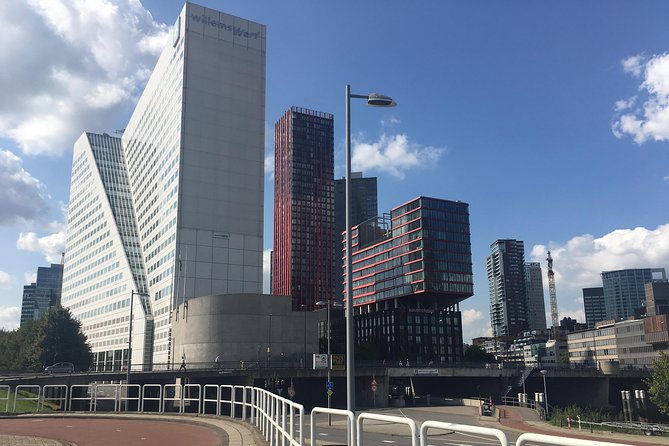
Timmerhuis is a short stop, about five minutes, but it is one of the route’s key design moments. It is identified as an architecture icon designed by OMA, the Rotterdam-based architectural practice known for large, inventive projects.
Five minutes may sound brief, but this is a walking tour with several stops rather than a single-building study. The value comes from using the guide’s explanation to understand the building’s place in Rotterdam’s modern center and then seeing how it relates to nearby streets and structures.
This is also a good point to ask your own questions. Small groups make that easier, and guides have been praised for responding carefully rather than rushing everyone onward. If you want to discuss design decisions, construction, or how the building works at street level, ask directly.
Keep your expectations measured. The tour does not promise an interior visit or a long stop inside Timmerhuis. You see it as part of the city, which is often the right way to understand large urban projects.
Markthal, color, commerce, and spectacle
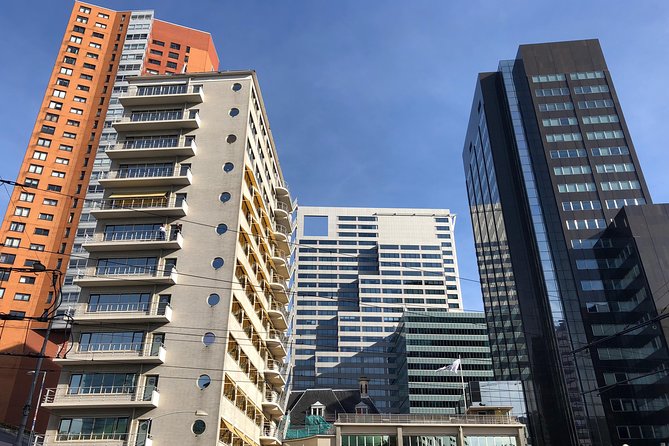
The Markthal gets about 15 minutes, making it one of the longer stops. It is presented as one of Rotterdam’s most eye-catching indoor markets, and the building offers a shift from offices, stations, and public squares to food, trade, and daily activity.
You can expect the guide to explain both the visual impact and the building’s urban role. Markthal is not only something to admire from outside. Its market function gives you a chance to see how Rotterdam places commerce and public life inside a bold contemporary structure.
This is likely one of the easiest stops for photographs. Give yourself a moment to look up, around, and beyond the obvious view. The guide’s comments should help you connect the decorative spectacle with the building’s practical purpose.
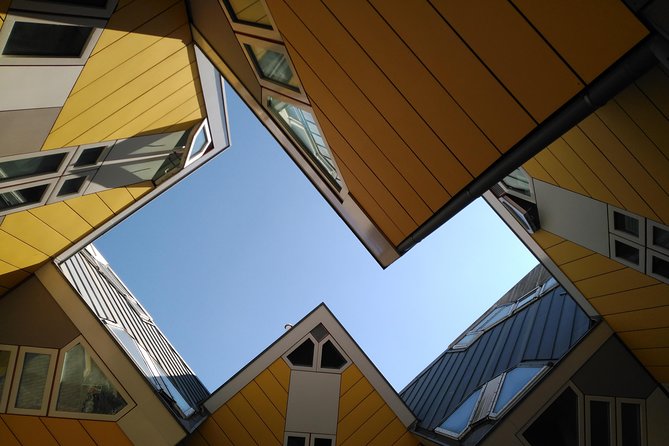
The nearby Cube Houses are another major attraction, and their absence as a full stop is the clearest limitation of the route. The walk passes by the Cube Houses area, but an interior visit is not included in the stated plan. One participant had expected to walk through them and instead saw them from a distance.
If entering a Cube House is a priority, treat this tour as an introduction and plan a separate visit if available. Do not assume the two-hour route includes a house interior simply because the Cube Houses are shown among the tour highlights.
Boompjeskade and the Maas river view
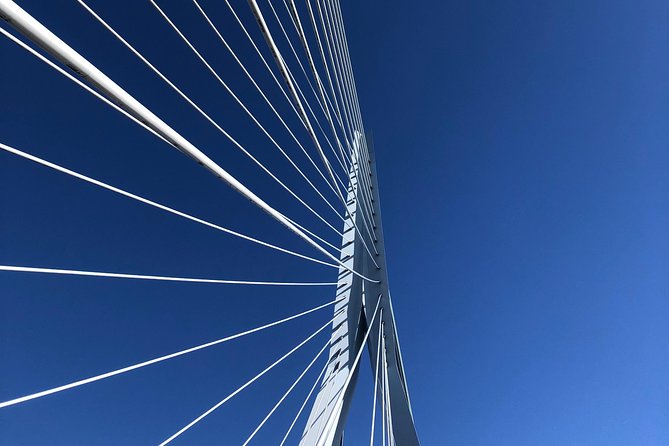
The walk ends at Boompjeskade, on the riverside. You spend about 15 minutes here, taking in the Maas and the view toward Rotterdam’s South Bank.
This is a smart ending. After seeing the city’s buildings close up, you get space to look across the water and understand Rotterdam’s scale. The riverfront puts the modern center into a broader setting and provides some of the tour’s best photo chances.
The open waterfront also explains why weather matters. Rotterdam can be windy, and the river breeze may feel icy on a cold day. Dress for the forecast, not just for the temperature you see when you leave your hotel.
The tour ends here rather than returning to Central Station. That is useful if you want to continue along the river or explore nearby areas, but you should account for the walk or public transport needed afterward.
What the architect guides add
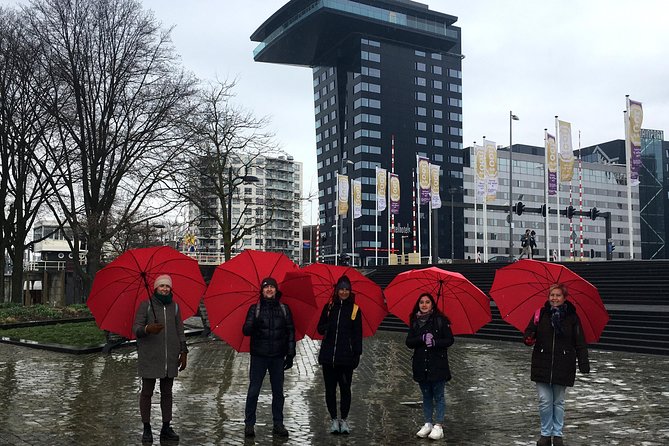
The guide is the heart of this experience. The tour is offered in English, though it may be led by a multilingual guide. The strongest guide names attached to the experience are Tania and Silvia, and the comments about both are consistently favorable.
Tania is described as friendly, warm, thorough, and willing to explain details at length. She has also offered restaurant suggestions and stayed beyond the planned finish when the group needed more time. Silvia is praised for clear explanations, good humor, flexibility, and the ability to adapt the material to different nationalities and interests.
That adaptability matters. A group with an architect, a history fan, and a first-time visitor will need different things from the walk. The small-group format, with no more than 15 people, gives the guide a better chance to handle those differences.
In some cases, the group may be very small. One booking became a private tour for two people, allowing the pair to ask as many questions as they liked. You should not count on having a private guide, but a small group is part of the design of the experience.
The guide’s role is not limited to naming buildings. You can expect discussion of Rotterdam’s reconstruction, present-day challenges, city politics, social use, and the way residents experience the center. If you want a purely technical architecture tour, state that interest early and ask focused questions.
Price, group size, and the value of two hours
The price is $54.31 per person. That is not a bargain basement walking tour, but it includes a professional architect as your guide and keeps the group to a maximum of 15 people.
I see the value in the interpretation. Rotterdam’s architecture is spread across an active city center, and the difference between wandering with a map and walking with someone who can explain the decisions behind the buildings is significant.
You are not paying for admission to an attraction. The stops are viewed from public spaces, and admission is free. You are paying for local explanation, route planning, and the chance to ask questions in a small group.
For a short visit, that can be worthwhile. The tour gives you a framework you can use for the rest of your time in Rotterdam. It can also work well as a first activity, since you finish with a clearer idea of which buildings and neighborhoods deserve a longer look.
The two-hour duration is approximate. Guides have sometimes spent extra time with the group, including about half an hour beyond the planned finish. Do not build a tight connection or restaurant booking immediately after the end time.
The experience is booked an average of 47 days ahead, which suggests you should reserve early if your dates are fixed. The minimum age is 12, and at least two people are required per booking.
Who should take this walk?
I would choose this tour if you want Rotterdam’s modern architecture explained in plain language and tied to the city’s wartime rebuilding. It suits first-time visitors, design fans, urban planning enthusiasts, and anyone who has looked at the Cube Houses or Markthal and wanted more context.
It also makes sense for a day trip from Amsterdam. The start at Central Station is convenient, and the route gives you a focused introduction without taking an entire day.
You should be comfortable walking for two hours, with a moderate level of physical fitness. One account estimated nearly 12,000 steps, so the distance may feel greater than the timetable suggests.
The tour is less suitable if you need frequent indoor breaks, dislike open-air walking, or want a detailed study of interiors and construction systems. It is also not the best fit if your main goal is to tour the Cube Houses from inside.
Bring weather-appropriate clothing, comfortable shoes, and a charged phone for directions and photos. Service animals are allowed, and the route is near public transportation.
Should you book the Rotterdam Architecture Highlights Walking Tour?
Book it if you want to understand why Rotterdam looks the way it does. The strongest parts are the architect guides, the postwar rebuilding story, the small-group setting, and the final view across the Maas.
Go in knowing what it is. This is an outdoor overview with social and historical context, not a technical architecture course or a guaranteed interior tour of the Cube Houses. The pace may be brisk, the walk may be long, and the riverfront can be cold.
At $54.31, I think the tour earns its price for visitors who value explanation over simply collecting photographs. If you have only a few hours in Rotterdam, it gives you a useful first map of the city’s ideas, buildings, and ongoing changes.
Free cancellation is available with at least 24 hours’ notice. If poor weather forces cancellation, you can receive a different date or a full refund.
FAQ
How long is the Rotterdam Architecture Highlights Walking Tour?
The tour lasts approximately two hours, although the guide may spend extra time with the group.
Where does the tour start?
It starts at Rotterdam Central Station, 3013 AJ Rotterdam, Netherlands.
Where does the tour finish?
The tour finishes at Boompjeskade, 3011 Rotterdam, on the riverside.
Is the Cube House interior included?
An interior visit is not specified. The route passes by the Cube Houses area, and you should not assume that you will walk through one.
What buildings and places are included?
The route includes Rotterdam Central Station, Schouwburgplein, a postwar national monument, Timmerhuis, Markthal, the Cube Houses area, and Boompjeskade.
What language is the tour offered in?
The tour is offered in English. It may be operated by a multilingual guide.
How large is the group?
The maximum group size is 15 people. A minimum of two people is required per booking.
What happens if the weather is poor?
The experience requires good weather. If it is canceled because of poor weather, you will be offered another date or a full refund. You can also cancel for a full refund up to 24 hours before the start time.
Just added around Rotterdam
- Discover Rotterdam: Classic Highlights Bike Tour by a Local★ 5.0 · 3 reviews
- Rotterdam: Capture the most Photogenic Spots with a Local★ 5.0 · 3 reviews
- Private tour: Markthal, Cube houses and Rooftop Het Witte Huis★ 4.5 · 3 reviews
- Private Transfer from Rotterdam Port to Amsterdam Airport (AMS)★ 5.0 · 3 reviews
- Rotterdam: 2.5-Hour Leckers Boat Cruise and Buffet★ 3.2 · 3 reviews
- Discover Rotterdam’s most Photogenic Spots with a Local★ 5.0 · 3 reviews
- Rotterdam: Wilhelminapier, High-rise & floating architecture★ 4.0 · 3 reviews
- Private Transfer from Rotterdam City to Amsterdam Schiphol Airport★ 5.0 · 4 reviews
Rotterdam Tours, compared.


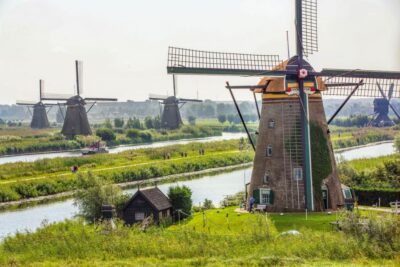
Kinderdijk UNESCO World Heritage Entry Ticket
Read our review →
Browse the lists this tour appears in