
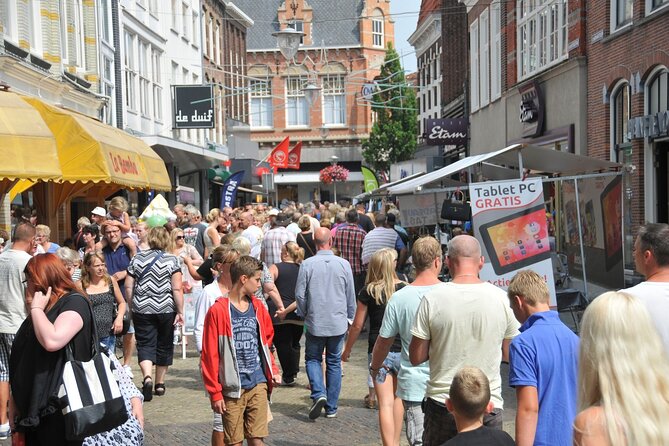
Reviewed · E-SCAVENGER HUNTS & CITY GAMES
e-Scavenger hunt Sneek: Explore the city at your own pace
Sneek turns sightseeing into a friendly contest. This self-guided city hunt sends you through a Frisian town of canals, old churches, museums, and the famous Waterpoort while your group solves questions on a phone. You set the pace, pause when you like, and decide whether the score matters or the walk matters more.
I like the freedom to spend two hours on the route or stretch it toward four. I also like the small-team format, since a group of up to six can play together for one price. The main catch is that you need your own smartphone and mobile data, and one point on the route may be hard to answer if the needed information is not easy to find.
Key points at a glance
- Sneek’s canals and Waterpoort lead the route: You see the city’s best-known sights while working through app-based challenges.
- One price covers up to six people: At $35.86 per group, the cost can be good value when your whole party plays together.
- You control the timing: Plan on roughly 2 to 4 hours, with no fixed guide or group departure.
- The app keeps the walk active: Trivia and location-based questions give you a reason to inspect buildings instead of simply passing them.
- The route mixes major sights with local details: Expect shipping history, churches, city government, theater, a liqueur maker, and model trains.
- Bring a charged phone and data: These are not included, and the game depends on access to the online app.
Why Sneek works well for a city hunt
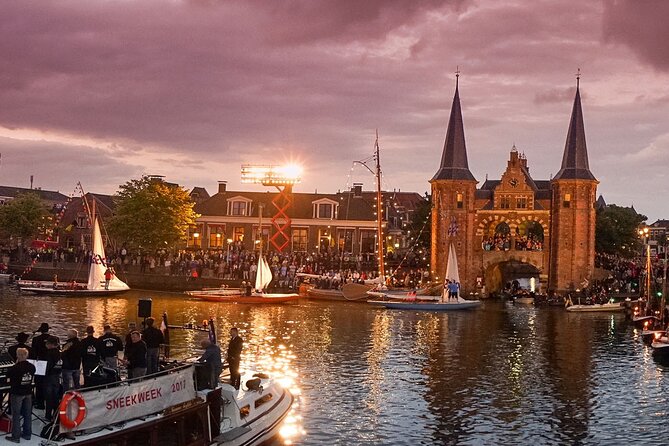
Sneek is a good match for a game because its sights are spread through a walkable historic center rather than packed into one large museum complex. You move between waterways, old stone buildings, churches, and civic landmarks, with questions prompting you to look up, read signs, and notice details.
The water gives the route its character. Sneek is known for water sports, and its canals help explain why shipping and boating matter so much to the city. You are not simply ticking off monuments. The route connects the town’s waterborne past with present-day culture and everyday city streets.
I would think of this as a sightseeing walk with a game attached, not as a demanding puzzle competition. The questions are generally described as fun and not too complicated, though one piece of feedback points out that some answers were difficult to locate in the area. If your group wants a relaxed outing, that is easy to shrug off. If you want a precise, polished quiz, it may frustrate you.
More city games and scavenger hunts in Netherlands:
- e-Scavenger hunt Maastricht: Explore the city at your own pace
★ 4.5 · 110 reviews - e-Scavenger hunt Middelburg: Explore the city at your own pace
★ 4.5 · 55 reviews - Rotterdam Highlights & Spies: Interactive City Game
★ 4.0 · 51 reviews
Starting at Johan Willem Frisostraat 2
The official start is Johan Willem Frisostraat 2, 8606 CV Sneek, and the activity returns you to the meeting point. The hours are listed as all day, from midnight to 11:59 p.m., Monday through Sunday, so you can choose a morning walk, an afternoon outing, or an evening round.
One practical warning matters here: the starting point has caused some confusion. Check the address carefully before setting out, and make sure everyone in your group knows where the game begins. A phone with data is essential because the app is part of the experience, not just a bonus guide.
The mobile format gives you useful control. You can stop for a drink, spend extra time outside a church, or let the group debate an answer without holding up a scheduled guide. The tradeoff is that you are responsible for navigation, timing, battery power, and getting the game running.
The Fries Scheepvaart Museum and Sneek’s water story
The Fries Scheepvaart Museum introduces the history of Frisian shipping from the 17th through the 20th century. Even if you do not enter the museum, its place in the route helps frame Sneek as a water-connected city.
This is one of the more meaningful stops because it gives context to the canals and boating culture you see elsewhere. A city waterway can look decorative when you are rushing past it. Shipping history reminds you that these routes once supported work, trade, and movement.
The museum is also a natural pause point if your group wants to look more closely at the subject. Keep in mind that the city hunt itself is designed as an outdoor, app-led activity. The supplied information does not say that museum admission is included, so treat the museum stop as part of the route rather than assuming entry comes with the $35.86 booking.
The Waterpoort, Sneek’s unmistakable symbol
The Waterpoort is likely the visual high point of the walk. This stone gateway has two octagonal towers and is widely recognized as Sneek’s main icon.
I like the way this stop gives the hunt a clear sense of place. The Waterpoort is not an anonymous old building. Its form makes it easy to remember, and the surrounding water reinforces the city’s connection to boats and canals.
Your challenge here is likely less about finding the building and more about noticing its design and role. Take a moment to look at the two towers before rushing on to the next question. A group can easily turn this into a quick photo stop, but the better use of the game is to let the question make you inspect the structure.
A few more Netherlands trips worth a look
- Amsterdam: 75 Minute City Canal Cruise with Audio Guide
★ 4.4 · 17,501 reviews - Amsterdam: City Centre Canal Cruise
★ 4.2 · 12,827 reviews - Amsterdam: Smoke and Lounge City Boat Cruise
★ 4.7 · 8,572 reviews - Amsterdam: City Canal Cruise and Heineken Experience Ticket
★ 4.5 · 5,367 reviews
Widow Joustra Beerenburg and one of Sneek’s old buildings
Another stop brings you to one of Sneek’s oldest buildings, dated 1484. It is connected with Widow Joustra Beerenburg, a local spirit that has been made for more than 150 years.
This adds a useful local flavor to the route. You are not only seeing grand churches and public buildings. You are also encountering a long-running product tied to a specific place and business tradition.
The stop may appeal to adults interested in food and drink history, though the information provided does not promise a tasting or an interior visit. I would treat it as an exterior landmark and a prompt to learn what makes the building and the Beerenburg name important. The app gives your group a reason to stop and investigate instead of walking by.
Europe’s largest model railway collection
The model railway museum brings a change of scale and mood. It has more than 5,000 models and is described as having the largest collection of model trains in Europe.
That claim gives this stop immediate appeal for families, railway fans, and anyone who enjoys detailed miniature scenes. It also breaks up the architectural focus of the walk. After canals, churches, and civic buildings, a museum devoted to trains gives the route a playful indoor counterpoint.
Again, do not assume admission is included. The price covers the city trail and online app, while museum entry is not listed among the inclusions. If your group wants to visit, check the museum’s own opening information separately.
Sneek’s churches, from medieval stone to neo-Gothic design
The route includes several churches, and each adds a different layer to Sneek’s story. The Martini Church began in the 11th century and was built of tuff. Around 1300, it was enlarged, gaining three towers and a Romanesque west facade, along with a wooden core.
The repeated Martini Church entry suggests that it is an important part of the route. Pay attention to the architectural details rather than treating it as just another church stop. Its long building history makes it useful for spotting how a place changes over time.
The Sint-Martinuskerk offers a different style. It is a Roman Catholic neo-Gothic pseudo-basilica cross church dedicated to Saint Martin of Tours. Even without an interior visit, the contrast between the older Martini Church and the later neo-Gothic church gives you a compact lesson in religious architecture.
The route does not state that church interiors are guaranteed to be open. Plan to appreciate the exterior unless the doors happen to be open and visiting is permitted. This is a good example of where a self-guided tour gives you flexibility, but cannot provide the access or explanation a live guide might arrange.
Town Hall and the story of civic power
Sneek Town Hall dates to around 1478. The building began on the foundations of two towers, including a medieval structure that was defensive and habitable. It was then expanded and renovated many times.
This stop helps shift your attention from religion and shipping to local government. The building is also a reminder that historic city centers are often layered places. A public building may look like one structure, but its walls can reflect centuries of repairs, additions, and changing needs.
The app’s questions should encourage you to look for those clues. I find this style of sightseeing more rewarding than reading a long paragraph after the fact because you have to examine the building before moving on. Still, the amount of detail you get depends on how well the app’s prompts work at the time you play.
Theater Sneek and the modern city
Theater Sneek represents the city’s current cultural life. Its program includes cabaret, musicals, dance, music, and family performances.
This is a smart inclusion because it keeps the walk from becoming a parade of old stones. A town is not only its medieval gateways and historic churches. It also has places where people gather for entertainment now.
You may not be attending a performance during the city hunt, but the theater gives you a glimpse of Sneek as a living regional center. If you are staying overnight, it could also point you toward an evening plan. The route’s pub-trail variation has helped some groups discover cafés and return to places later, but the supplied details do not promise that every booking includes a pub trail. Check exactly which version you are purchasing.
How the app and scoring change the walk
The game runs through an online app on your phone. You answer trivia questions, search for information, and earn points that can place your team on a leaderboard.
For me, the scoring is best used as a little spark of competition. It gives children and adults a reason to keep looking when a standard walking tour might lose their attention. A six-person group can divide tasks, compare guesses, and keep the pace lively.
The app has been described as user-friendly, which matters because a complicated interface would spoil a self-guided tour quickly. Still, technology brings basic responsibilities. Bring a smartphone, mobile data, and enough battery for a 2 to 4 hour activity. The phone and data are not included.
You also need to accept that the game may not answer every question perfectly. One piece of feedback says some answers could not be found anywhere nearby, while other questions were enjoyable and straightforward. I would treat the score as optional. If a question sends your group on an unreasonable search, make your best guess and continue enjoying Sneek.
Time, group size, and value at $35.86
The listed price is $35.86 per group, with up to six people playing together. For a full group, that works out to less than $6 per person before any extra costs such as museum admission, food, drinks, or transport.
That is a fair price if you want an independent way to see the city and your group enjoys solving questions. It is less compelling if you want a guide, a carefully narrated history lesson, or included access to museums and churches. The value rests in the route, the app, and the freedom to set your own schedule.
Allow 2 to 4 hours. A quick group focused on the questions may finish closer to two hours. If you stop at sights, pause for cafés, or add museum visits, the outing can take longer. Because you return to the starting point, it works well as a planned block in a day rather than a one-way transfer.
The small maximum also matters. Six people is enough for a family or a few friends, but a larger party would need more than one booking and might not feel like one team. For a couple, the fixed group price is less economical, though you gain a private activity rather than joining strangers.
Rain, access, and who should choose it
This is an outdoor walk, so weather affects the experience. A late-afternoon rain shower can make the route less pleasant, and there is no indication that bad weather creates an automatic refund. Bring suitable clothing if the forecast is uncertain, and consider starting earlier if rain is expected later.
The activity is private to your group. Service animals are allowed, the route is near public transportation, and most people can participate. It is also described as user-friendly for people with hearing impairments because there is no live spoken commentary to follow.
I would recommend it most for:
- Families who want sightseeing to feel like a game
- Friends who enjoy light competition and shared problem-solving
- Couples who prefer an independent walk to a fixed group tour
- Visitors with several hours in Sneek who want an introduction to its main sights
- People interested in canals, shipping, architecture, and local culture
I would choose another format if you need detailed live storytelling, guaranteed indoor access, or a fully guided route with no phone work. The city hunt asks you to take an active role. That is its appeal, but also its limit.
Booking flexibility and the final call
You can cancel for a full refund up to 24 hours before the start time. Cancellations or changes made inside that 24-hour window are not refunded or accepted, and the cut-off uses local time.
I would book this Sneek city hunt if I had a group of three to six people, a charged smartphone with data, and a few flexible hours. The combination of canals, the Waterpoort, old churches, Town Hall, shipping history, local spirits, trains, and theater gives the route more variety than a simple landmark checklist.
I would skip it if your main goal is expert interpretation or if rain is likely and you have no backup plan. For the right group, though, the fixed price and private format make this a practical, playful way to get your bearings in Sneek without surrendering control of the day.
FAQ
How long does the e-Scavenger hunt in Sneek take?
The activity takes approximately 2 to 4 hours, depending on your group’s pace and how long you spend at the stops.
How many people can play together?
One team can include up to six people.
What is included in the price?
The price includes a city trail for a team of up to six people and access to the online app used to play the game.
Do I need to bring a smartphone?
Yes. A smartphone is not included, and you also need your own mobile data to use the online app.
Where does the activity start and finish?
It starts at Johan Willem Frisostraat 2, 8606 CV Sneek, Netherlands, and ends back at the meeting point.
Is there a live guide?
No live guide is listed. This is a private, self-guided activity that your group completes through the mobile app.
What sights are included along the route?
The route includes the Fries Scheepvaart Museum, Waterpoort, the Widow Joustra Beerenburg building, the model railway museum, Martini Church, Sneek Town Hall, Sint-Martinuskerk, and Theater Sneek.
Can I cancel for a full refund?
Yes. You can cancel at least 24 hours before the start time for a full refund. Cancellations and changes made less than 24 hours before the start time are not refunded or accepted.
Just added around Netherlands
- Amsterdam: Giethoorn Tour with Canal Cruise and Windmills★ 5.0 · 3 reviews
- Full-day excursion to Edam, Volendam, and Marken★ 3.7 · 3 reviews
- Amsterdam: Chocolate Fondue in the Dark★ 5.0 · 3 reviews
- Historical Leiden: Private Tour with Local Guide★ 5.0 · 3 reviews
- Amsterdam Family Friendly Historical Walking Tour★ 5.0 · 3 reviews
- Amsterdam Private Walking Tour of Famous Painters★ 5.0 · 3 reviews
- Amsterdam Old-West Vegan Food Tour with Local Guide★ 4.7 · 3 reviews
- From Amsterdam: visit Zaanse Schans, Muiderslot and more!★ 5.0 · 3 reviews
E-Scavenger Hunts & City Games, compared.

e-Scavenger hunt Maastricht: Explore the city at your own pace
Read our review →
Rotterdam Highlights & Spies: Interactive City Game
Read our review →
Discover Utrecht with a self-guided Outside Escape city game tour
Read our review →

e-Scavenger hunt Den Bosch: Explore the city at your own pace
Read our review →
Discover The Hague with a self-guided Outside Escape city tour
Read our review →
e-Scavenger hunt Deventer: Explore the city at your own pace
Read our review →
Discover Amerfoort’s city center in this Outside Escape game tour
Read our review →Browse the lists this tour appears in