
Reviewed · AMSTERDAM TOURS
Amsterdam: Guided Red Light District and City Walking Tour
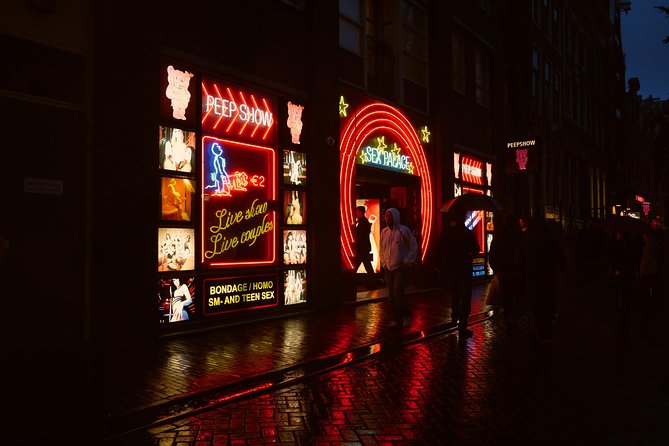
Amsterdam’s Red Light District is far more than red windows and late-night curiosity. This walk takes you through the oldest part of the city, where a former defensive gate, a 16th-century wooden pub, narrow lanes, and the world’s first condom shop sit beside today’s adult businesses. The result is a tour about Amsterdam’s past and present, not just its famous nightlife.
I like two things right away: the guide explains how the city was built on wooden foundation poles, and the route includes small sights you could easily miss on your own. Guides such as Ari, Ben, Max, Pedro, Angel, and Captain Dan have been praised for clear stories, humor, and friendly conversation. The main drawback is that the experience depends heavily on the individual guide, and one serious complaint describes rude and inappropriate behavior.
Key points at a glance
- Amsterdam’s oldest quarter: Walk through the Old Town and Red Light District, where many streets reflect the city’s early port life.
- Small-group setting: The group can have up to 15 people, giving you a better chance to ask questions than on a large city walk.
- Unusual historic stops: See Int Aepjen, the Waag, the smallest house, and the Condomerie.
- More than adult nightlife: The discussion covers architecture, prostitution laws, local culture, merchants, and the district’s changing role.
- Useful evening option: Several start times are available, including an 8 pm departure.
- Simple value calculation: At $35.44 for about two hours, you are paying for interpretation and local context rather than entry tickets.
Why this walk is more than a look at red windows
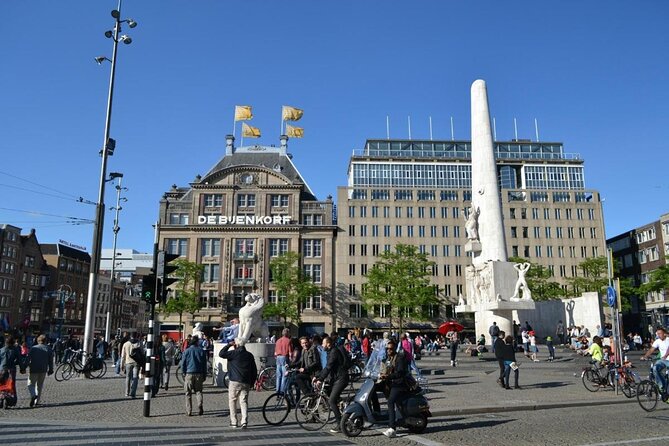
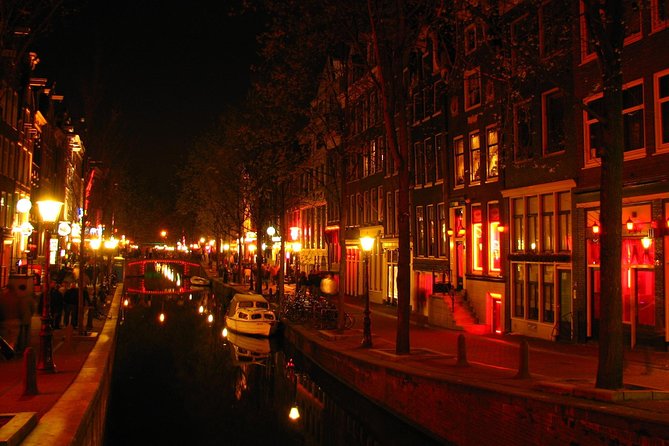
The Red Light District is easy to visit without a guide. You can walk through it yourself, see the windows, cross the canals, and take in the crowds. What you cannot easily get on your own is a clear explanation of why this area developed here, how Amsterdam’s port shaped its working life, and how laws and social attitudes have changed.
That context is the real reason to book. The walk connects the district to Amsterdam’s merchants, sailors, old city walls, wooden foundations, and narrow plots of land. You are not simply being shown a notorious street. You are being shown how a practical trading city grew around water, commerce, and limited space.
I also like that the route is not built only around sensational stories. The guide points out ordinary-looking buildings with remarkable pasts. A short lane can reveal an old city gate, a former guild hall, or a tiny house once used by the Dutch East India Company, known as the VOC.
The tone is adult and direct. Topics around prostitution, condoms, coffee shops, and local laws are part of the conversation, so this is not the right walk for anyone seeking a quiet architecture tour. Still, the goal appears to be explanation rather than shock.
More Walking Tours in Amsterdam
- Anne Frank’s Story – Guided Walking Tour through Amsterdam
★ 5.0 · 11,619 reviews - Amsterdam: Life of Anne Frank and World War II Walking Tour
★ 4.8 · 10,467 reviews - Absolutely Amsterdam – the Essential Introductory Walking Tour
★ 5.0 · 3,629 reviews
Starting at Geldersekade 2
The meeting point is Geldersekade 2, 1012 BH Amsterdam, close to public transportation. The tour ends back at the same place, which makes the timing easier to manage if you have dinner, a train, or another evening plan afterward.
You should arrive ready to walk for roughly two hours. The route uses narrow streets in the Old Town, and the activity is not recommended for people with limited mobility. Service animals are allowed, and most people can take part.
The group limit is 15. That is not the same as a private one-to-one tour, but it is small enough for a guide to handle questions without losing the whole group. A smaller party also matters in narrow lanes, where a large crowd can block doorways and make it harder to hear.
Several start times are offered. An evening departure can change the mood of the walk. One 8 pm outing began with daylight in late summer and ended with illuminated bridges, giving the group two different views of the city. The exact light depends on the season, but the timing gives you a useful choice between a more visible historic walk and a later look at the district.
The Dam and Amsterdam’s wooden foundations
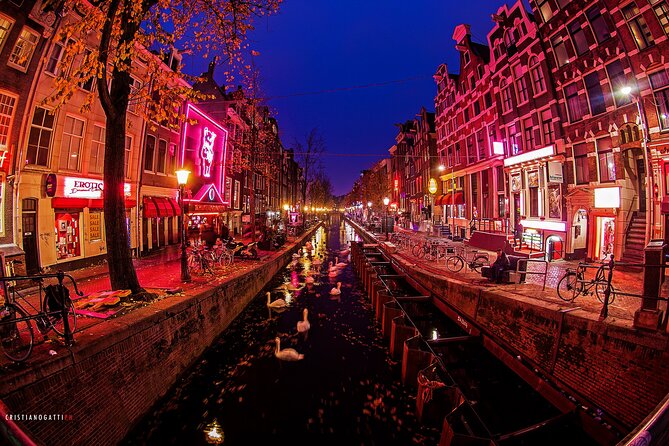
The itinerary includes the Dam, one of the city’s central places and a useful point for understanding Amsterdam’s unusual construction. The soil here contains thick layers of fen and clay, so many buildings rely on wooden poles driven down through the soft ground until they reach a firm sandy layer around 11 meters below the surface.
This is the kind of detail that can change the way you look at the city. A tall, narrow house is not simply narrow because Amsterdam’s streets are attractive. The buildings reflect old taxes, limited plots, trade, and difficult ground conditions. Their foundations also explain why the city’s architecture requires constant care.
I appreciate this stop because it gives the rest of the walk a physical setting. Amsterdam is not just a collection of old façades. It is a city built in wet soil, shaped by water, and held up by hidden engineering.
The Dam itself can be busy, and the tour may not linger in a quiet way. You are there for orientation and explanation, not for a long museum-style visit. Admission is included because the tour is outdoors, so you should expect to view the sites from public streets rather than enter a series of buildings.
Int Aepjen, one of two old wooden buildings
Pub Int Aepjen, also called The Ape, dates from around 1540. It is described as one of only two remaining wooden buildings in Amsterdam, which makes it a striking survivor in a city better known for brick façades.
The reason wooden buildings became so rare is dramatic. After a major fire in 1452, the government required brick façades to reduce the danger of future fires. That simple rule helps explain why this building matters. It is not just an old pub. It shows what Amsterdam looked like before brick construction became the norm.
The guide’s role is especially useful here. You can pass a timber building and recognize that it is old, but you may not know why so few remain or how fire shaped the city’s appearance. A good explanation turns a quick glance into a memorable stop.
Do not expect a long indoor visit or a drink included with the tour. Food and drinks are not part of the price. You may see the pub from the street and hear its story as part of the walking route.
More Red Light District walks:
- Amsterdam: Red Light Secrets Museum Entry Ticket
★ 4.2 · 5,722 reviews - Amsterdam: Red Light District Tour in German/English/Italian
★ 4.9 · 5,623 reviews - Amsterdam Red Light District & Coffee Shop Tour
★ 4.6 · 4,134 reviews - Amsterdam: Red Light District Pub Crawl with Unlimited Shots
★ 4.1 · 2,130 reviews
The Waag and the city’s defensive edge
The Waag began as one of Amsterdam’s city gates, part of the defensive wall built around the 1400s. It is described as the second-oldest building in Amsterdam. Later, guilds and craft organizations used the building and the surrounding square.
This stop adds an important layer to the walk. The Red Light District is often treated as a modern entertainment zone, but the area is also part of the old city core. The Waag shows that these streets once marked the edge of a defended settlement and later became places where trades and professions organized themselves.
I find this kind of connection more useful than a simple list of dates. It helps you understand why the district contains such a mix of civic buildings, workspaces, homes, bars, and adult businesses. Amsterdam’s old center has never served only one purpose.
The square around the Waag may be active and crowded, so listen carefully when the guide begins the explanation. If you want to take photos, do so without blocking the group or nearby pedestrians.
The smallest house and the pressure of limited space
The smallest house dates from around the 1700s. It first served as storage for the VOC, the Dutch trading company, and was later used as a home for a long period.
This tiny building gives you a quick lesson in Amsterdam’s land values and trading past. Storage space mattered in a port city, and every narrow plot had a job. Later, the fact that people lived in such a small structure shows how tightly packed the old center could become.
I would not expect an elaborate stop. The appeal is the scale. After seeing larger civic buildings and old commercial structures, you encounter a house that makes Amsterdam’s narrow urban form instantly clear.
The building is viewed as part of the outdoor route. There is no separate admission ticket listed, and the tour does not promise an interior visit. You are paying for the explanation and the route, not a collection of paid entrances.
The Condomerie and the district today
The Condomerie has operated since 1987 and is described as the world’s first shop devoted specifically to condoms. It sells many types, including custom-sized options.
This is one of the route’s most unusual modern stops. It also helps move the conversation away from old buildings and toward public health, sex work, local commerce, and Amsterdam’s practical attitude toward adult subjects. The guide can place the shop within the wider culture of the district instead of treating it as a joke or photo opportunity.
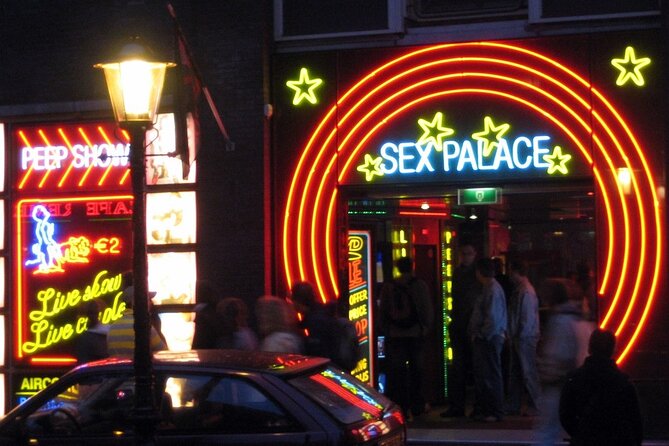
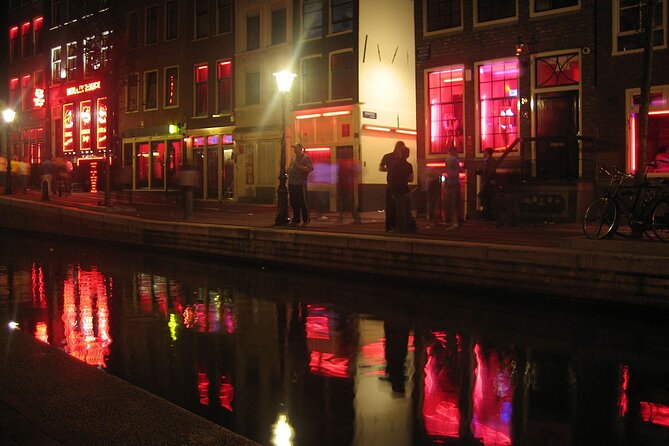
The Red Light District is not a theme park. People live and work here, and the women in the windows are part of a real and regulated adult industry. You should behave with care. Do not photograph workers in the windows, and listen to the guide’s instructions about respectful conduct.
The walk discusses how the profession developed, including its connection to merchants and sailors arriving in the port after long journeys. It also covers the current situation and relevant laws. The precise depth will depend on your guide, but this is where the tour’s serious side becomes clearest.
What the guides add to the experience
The strongest part of this tour is the human explanation. Ari is described as personable and clear. Ben has led walks with history, humor, and discussion of the area and coffee shops. Captain Dan guided a later evening outing, while Pedro, Angel, Max, Aaron, and others have been singled out for their stories and easy manner.
I would treat those names as a sign of the provider’s range rather than a promise that you will receive a particular guide. Your guide is assigned by the operator, Trigger Tours, and the tone may vary. Most of the available feedback gives the guides high marks for friendliness, professionalism, clear answers, and strong knowledge of Amsterdam’s history and laws.
That variation matters. A good guide can make a familiar street feel new, especially in a district you could otherwise walk through in 20 minutes. A poor guide can make a sensitive subject uncomfortable. One complaint describes a guide as rude and making inappropriate comments, followed by a lack of response from the provider. I would not ignore that concern simply because the overall score is high.
The published rating is 4.7 out of 5, with 93 percent recommending the experience, based on 15 ratings. That is a positive record, but the sample is small. Go in expecting a useful introduction, not a guaranteed perfect performance.
Is $35.44 a fair price?
The price is $35.44 per person for about two hours. There are no food or drink costs included, and the route does not list admission to indoor attractions. At first glance, that may seem high for a walk through public streets.
The value comes from the guide’s interpretation. If you already know Amsterdam’s history, can identify the Waag, and feel comfortable researching the district’s laws and social background yourself, you may prefer a self-guided walk. One rating makes exactly that point: you can walk through the area without a guide.
I see the price as reasonable for a first visit if you want structure and context. You get a licensed guide, a local guide, a fixed route, and a small group capped at 15. You also avoid wasting time deciding where to go next in a maze of narrow streets.
Group discounts may improve the price for parties booking together. Since there are multiple departure times, you can fit the walk into a larger Amsterdam plan rather than giving up a full half-day.
Who should book this Amsterdam walk?
I would recommend it most for first-time visitors who want to understand the Red Light District without reducing it to nightlife. It also suits anyone interested in Amsterdam’s old center, city construction, port history, architecture, and the laws surrounding sex work.
You will get the most from it if you ask questions. Ask how the district has changed, how the old port shaped the area, and what the guide can explain about current rules. The walk is short enough to fit before dinner or another evening activity, and the 8 pm option can add bridge lights to the experience.
This is less suitable if you want a long indoor tour, a museum visit, a food tasting, or a strictly family-oriented outing. The subject matter is adult, the streets can be narrow and busy, and people with limited mobility may find the route difficult.
Wear shoes suited to two hours on foot and keep your camera away from the windows. The best souvenir here is a clearer understanding of the place, not a photograph of someone at work.
Cancellation and basic booking details
You receive confirmation when you book. The experience is offered in English, and free cancellation is available if you cancel at least 24 hours before the local start time. Cancellations or changes made within 24 hours are not accepted for a refund.
The tour is operated by Trigger Tours. It starts and ends at Geldersekade 2, and the maximum group size is 15 people.
Should you book the Red Light District walking tour?
Book this tour if you want the Red Light District explained through history, law, architecture, and daily life, rather than simply pointed out on a map. The stops at Int Aepjen, the Waag, the smallest house, and the Condomerie give the two-hour route more substance than a quick stroll through the windows.
I would skip it if you are comfortable exploring independently or if you dislike adult subject matter. The cost pays for a guide, not entry tickets, and the quality depends on who leads your group. Still, with a 4.7 rating, a 93 percent recommendation rate, several well-regarded guides, and a group limit of 15, it is a sensible introduction for many first-time visitors.
FAQ
Where does the tour start?
The tour starts at Geldersekade 2, 1012 BH Amsterdam, Netherlands.
Where does the tour end?
The activity ends back at the meeting point on Geldersekade.
How long does the walking tour last?
The tour lasts approximately two hours.
What language is the tour offered in?
The tour is offered in English.
What is included in the price?
The price includes a licensed guide and a local guide.
Are food and drinks included?
No. Food and drinks are not included.
How many people can join the tour?
The activity has a maximum group size of 15 people.
Is the tour accessible to people with limited mobility?
The tour is not recommended for travelers with limited mobility.
Are service animals allowed?
Yes, service animals are allowed.
Can I cancel for a full refund?
Yes. You can cancel for a full refund if you cancel at least 24 hours before the experience start time. Changes or cancellations made less than 24 hours before the start time are not accepted for a refund.
What sights are included on the route?
The route includes the Dam, Amsterdam’s old Red Light District and Old Town streets, Int Aepjen, the Waag, the smallest house, and the Condomerie.
Just added around Amsterdam
- Amsterdam: Giethoorn Tour with Canal Cruise and Windmills★ 5.0 · 3 reviews
- Amsterdam: Chocolate Fondue in the Dark★ 5.0 · 3 reviews
- Full-day excursion to Edam, Volendam, and Marken★ 3.7 · 3 reviews
- Amsterdam Old-West Vegan Food Tour with Local Guide★ 4.7 · 3 reviews
- Amsterdam Family Friendly Historical Walking Tour★ 5.0 · 3 reviews
- Amsterdam Private Walking Tour of Famous Painters★ 5.0 · 3 reviews
- From Amsterdam: visit Zaanse Schans, Muiderslot and more!★ 5.0 · 3 reviews
- Amsterdam Walking Tour with Dutch Pancake Lunch★ 5.0 · 3 reviews
Amsterdam Tours, compared.


Amsterdam Classic Saloon Boat Cruise with Drinks and Cheese
Read our review →
Amsterdam Luxury Canal Cruise + Unlimited Drinks & Bites option
Read our review →


Classic Boat Cruise with Optional Cheese & Wine
Read our review →
Evening Cruise with Optional Wine and Snacks
Read our review →
75 Minute City Canal Cruise with Audio Guide
Read our review →Browse the lists this tour appears in