
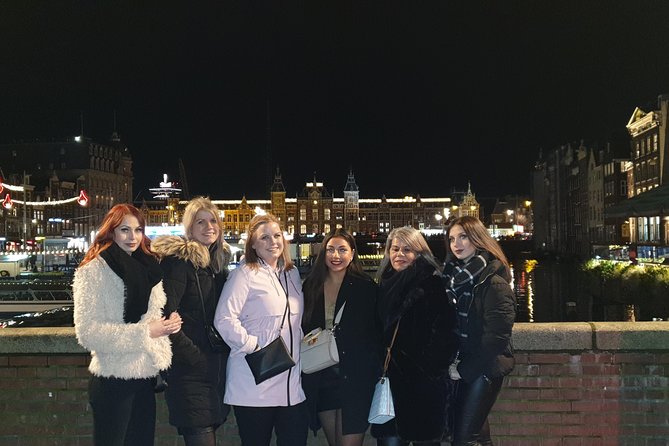
Reviewed · AMSTERDAM TOURS
Amsterdam Red Light District and City Center Walking Tour
Amsterdam’s Red Light District is more than glowing windows and late-night crowds. This two-hour walk through De Wallen explains how sex work and coffeeshop laws fit into Amsterdam’s wider history, then ties the neighborhood to old city gates, wooden foundations, and trading wealth. It is a useful way to get your bearings early in a visit.
I like the small group size of up to 16 people, which should make it easier to hear and ask questions. I also like the route’s mix of serious social history and odd little details, from the wooden building known as Int Aepjen to a tiny former VOC storage house and a shop devoted entirely to condoms.
The main caution is that this is a walking tour through an old district with narrow streets and uneven urban movement. It is not recommended for people with limited mobility, and the quality of the experience depends heavily on the guide. Most feedback praises Robin, Gio, and Aaron, though one three-star comment raised concern about a guide appearing impaired.
Key points before you book
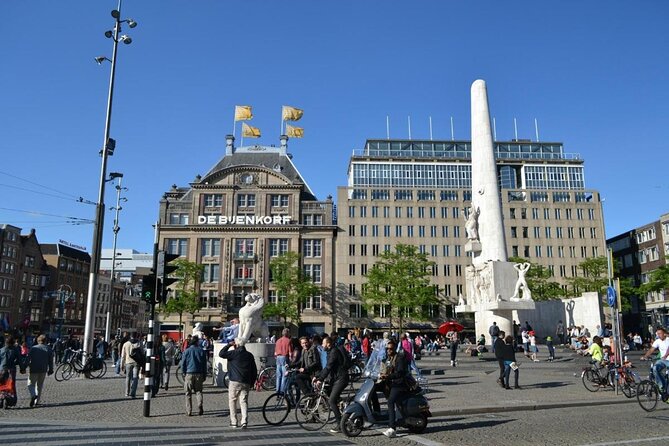
- The tour explains De Wallen instead of treating it as a spectacle: You learn about prostitution, coffeeshop culture, and the laws that shape the district.
- The route connects Amsterdam’s oldest quarter with famous sights: Dam Square, the Waag, Int Aepjen, the smallest house, and a historic condom shop all fit into the walk.
- The group is capped at 16 people: That is a useful middle ground between a private walk and a large crowd.
- You return to the starting point: The walk begins and ends at Geldersekade 2, near public transportation.
- The guides are a major part of the value: Robin, Gio, and Aaron receive especially strong praise for clear explanations, personal attention, and control of the group.
- You get flexible scheduling: Several start times are offered, and confirmation arrives when you book.
Entering De Wallen from Geldersekade
The walk begins at Geldersekade 2, 1012 BH Amsterdam. This puts you beside the old center, close to the Red Light District and within reach of public transportation. Since the activity ends back at the same meeting point, you do not need to plan a complicated pickup or arrange a separate return.
The first major focus is De Wallen, Amsterdam’s best-known Red Light District. The guide takes you through its narrow streets and explains the area’s sex work industry and coffeeshop culture. That context matters because De Wallen can be easy to misunderstand if you only see its windows, bars, and crowds.
You should expect an educational walk rather than a visit built around jokes or shock value. The strongest guides keep the subject direct and human, explaining how rights for sex workers developed and how Amsterdam’s rules work around prostitution and coffeeshops.
The tour is offered in English. It is capped at 16 people, so you are not being pushed through the streets in a huge group. That limit also gives you a better chance to hear the guide and ask something when a point catches your attention.
More Walking Tours in Amsterdam
- Anne Frank’s Story – Guided Walking Tour through Amsterdam
★ 5.0 · 11,619 reviews - Amsterdam: Life of Anne Frank and World War II Walking Tour
★ 4.8 · 10,467 reviews - Absolutely Amsterdam – the Essential Introductory Walking Tour
★ 5.0 · 3,629 reviews
Dam Square and a city built on wooden poles
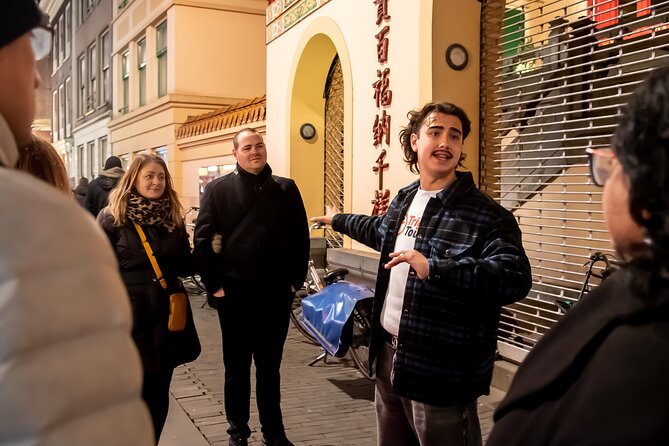
One stop focuses on the Dam, the square at the heart of Amsterdam. Here, the guide explains why the city is sometimes described as being built on trees.
Amsterdam sits on thick layers of fen and clay, with water close below. In older building work, wooden poles were driven through the soft ground until they reached a firm sandy layer about 11 meters down. Buildings could then rest on those foundations instead of sinking into the wet soil.
This is the sort of detail that makes the city easier to read as you walk. The old facades are not just pretty walls beside canals. They reflect a long struggle to build a permanent city on difficult ground.
The Dam also helps you place De Wallen within Amsterdam’s wider center. The Red Light District is not an isolated entertainment zone on the edge of town. It is part of the Old Town, and that makes its history much older and more closely tied to Amsterdam’s growth than a first-time visitor might expect.
Old Town streets and the roots of De Wallen
The route puts De Wallen inside the story of Amsterdam’s oldest urban area. That is important because the district’s identity did not appear overnight. Its location, trade, waterfront setting, and place within the old center all helped shape what it became.
You will hear about how the area developed and how prostitution gained legal rights within Amsterdam’s system. You will also learn about coffeeshop culture and the rules surrounding it. The precise value here is the explanation of how public policy and everyday city life meet in one compact neighborhood.
If you are expecting a formal museum-style presentation, the streets themselves are the setting. You move from one point to another while the guide uses the buildings and lanes around you to explain the past and present.
The narrow streets can also be crowded, especially at night. Keep close to the group and leave room for people moving through the district. A guide who keeps track of everyone is especially valuable here. Aaron was praised for doing exactly that, while also making eye contact with each person and allowing time for questions.
Int Aepjen, one of Amsterdam’s last wooden buildings
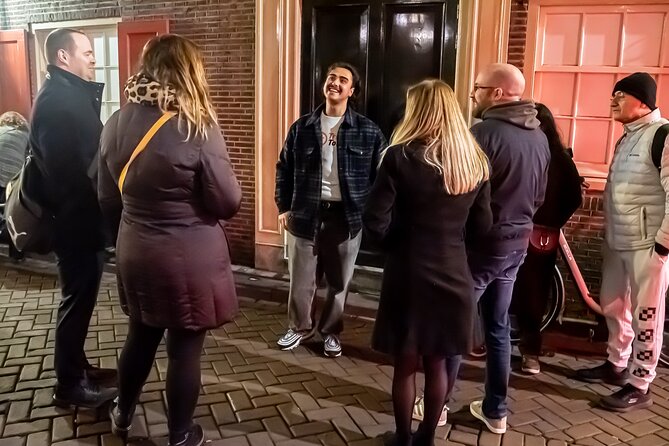
Pub The Ape, known in Dutch as Int Aepjen, is one of the more unusual stops. The building dates to about 1540 and is one of only two remaining wooden buildings in Amsterdam.
A major city fire in 1452 led the government to require brick facades, which explains why surviving wooden structures are so unusual. Int Aepjen gives you a small, concrete example of how fire changed Amsterdam’s architecture.
The stop is brief in physical scale but useful in context. You see how one old building can tell a story about city regulation, construction, and the risks of a dense medieval town.
It also breaks up the tour’s heavier discussion of sex work and law. The route does not stay on one subject for two hours. You move between social history, architecture, city planning, trade, and curious local details.
More Red Light District walks:
- Amsterdam: Red Light Secrets Museum Entry Ticket
★ 4.2 · 5,722 reviews - Amsterdam: Red Light District Tour in German/English/Italian
★ 4.9 · 5,623 reviews - Amsterdam Red Light District & Coffee Shop Tour
★ 4.6 · 4,134 reviews - Amsterdam: Red Light District Pub Crawl with Unlimited Shots
★ 4.1 · 2,130 reviews
The Waag and Amsterdam’s former city gate
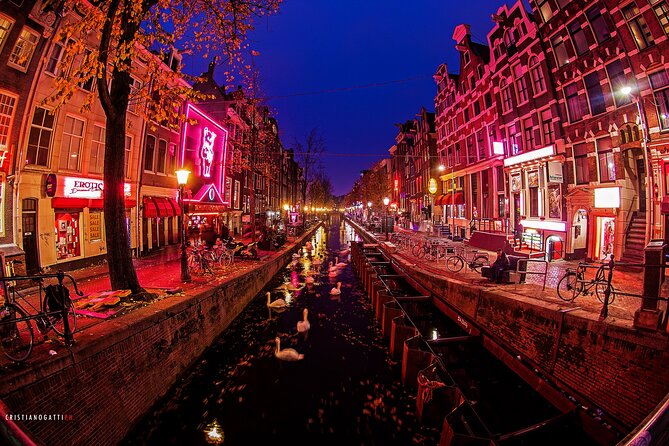
The Waag is another major historical marker on the walk. It was built around the 1400s and once served as one of Amsterdam’s city gates, forming part of the defensive wall. It is described as the city’s second-oldest building.
Later, the Waag became a place for guilds, the organizations that represented skilled craftspeople. Those groups were based inside and around the square, connecting the building to the working life of historic Amsterdam.
For you, the Waag is a useful reminder that this part of town was once a fortified entrance and a center for trade and craft. The district’s modern reputation can easily hide that older role.
The building also helps link the tour’s themes. Amsterdam’s center grew through defense, commerce, craft, shipping, and regulation. De Wallen is part of that same story, not a separate chapter with no connection to the rest of the city.
Amsterdam’s smallest house and VOC trade
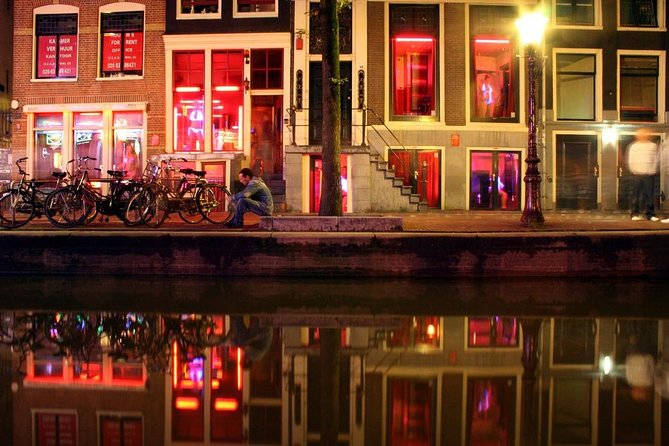
The stop described as Amsterdam’s smallest house adds a dose of city oddity. Built around the 1700s, it was first used as storage for the VOC trading company. Later, people lived in it for a long time.
The building shows how limited space could be in the old center and how Amsterdam’s commercial past shaped even its smallest properties. The VOC, or Dutch East India Company, is tied to the city’s trading age, so this little house points to a much larger economic story.
You should not expect a long interior visit from the information provided. The value is in seeing the structure and hearing how its use changed from storage to home.
This is also one of the tour’s best small details. Big monuments can explain a city, but tiny buildings often make its past easier to remember. A narrow house once used by a trading company gives you a sharper sense of how intensely the old center was used.
The condom shop with a practical local twist
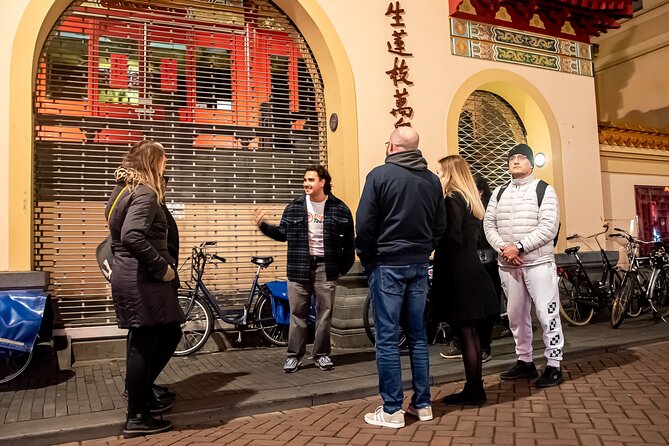
The route includes what is described as the world’s first shop specializing in condoms. It has been in place since 1987 and sells many types, including size-customized condoms and novelty designs.
This stop may sound playful, but it fits the tour’s larger purpose. The Red Light District is connected to real questions about health, sex work, personal safety, and public policy. A shop devoted to condoms gives that subject a practical side.
You can expect the guide to explain why the shop is notable rather than simply point it out as a curiosity. It is one of the places that helps the walk move beyond the usual Red Light District clichés.
The combination of serious explanation and slightly offbeat stops is one of the route’s strengths. You learn about rights and regulation, then encounter the city’s unusual approach to sex-related commerce in a very concrete form.
What the guide adds to the experience
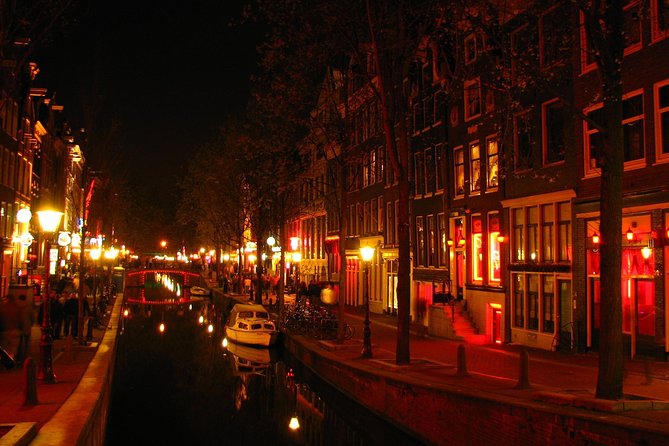
The guide is not a minor detail on this walk. The subject matter requires someone who can explain laws and local history clearly without making the experience uncomfortable or careless.
Robin is praised for being friendly and well informed, while Gio is described as creating a memorable experience and managing the route with confidence. Aaron receives particularly strong credit for giving detailed explanations, keeping the group together, making eye contact, and inviting questions.
Those qualities matter more here than they would on a simple sightseeing stroll. The district can be noisy and distracting. A good guide helps you focus on what you are seeing and gives you a fair explanation of the people and systems behind it.
There is one caution. A three-star account questioned the condition of a guide, describing the person as possibly impaired. That appears to be an isolated concern among the supplied feedback, while the other comments give the named guides five-star praise. Still, if guide professionalism is your top concern, it is worth knowing that the experience can vary.
Is $31.24 a fair price for two hours?
At $31.24 per person, this is priced as an affordable guided city walk rather than a private tour. You are paying for about two hours with an English-speaking guide, a planned route, local explanation, and a group limited to 16 people.
I see the best value if you are new to Amsterdam and want a quick orientation before exploring on your own. The walk covers a compact but historically important part of town and gives you the background needed to interpret what you see later.
The price is less compelling if you only want photographs of the district or already know Amsterdam’s history well. You can walk through the area without a paid guide, but you will miss the organized explanation of coffeeshop culture, sex work rights, old defenses, wooden foundations, and the city’s trading past.
A private tour costs more, but the feedback specifically suggests it can be worth the extra expense for some people. A private option may suit you if you want more time for questions or prefer a quieter pace, though the supplied details do not give a separate private-tour price or itinerary.
Timing, walking conditions, and group size
The experience lasts about two hours and offers multiple start times. That makes it easier to fit around a museum visit, canal outing, or evening plans, but the information does not identify the exact departure hours. Check the available time when you choose your date.
The tour begins and ends at Geldersekade 2. It is near public transportation, which is useful in Amsterdam’s central area where walking routes can be easier than arranging a car.
Most people can participate, and service animals are allowed. The tour is not recommended for people with limited mobility. That warning makes sense given the narrow Old Town streets and the amount of walking involved, though the supplied details do not specify a distance, number of stairs, or surface conditions.
You receive confirmation at booking, and free cancellation is available if you cancel at least 24 hours before the start time. Cancellations or changes made less than 24 hours in advance are not refunded or accepted.
Who should book this Amsterdam walk?
I would choose this tour if you are visiting Amsterdam for the first time and want the Red Light District explained in a calm, factual way. It is especially useful if you are curious about how sex work and coffeeshops are regulated, rather than interested only in the district’s famous image.
It also suits you if you like city walks that mix major sights with unusual details. Dam Square and the Waag are familiar names, while Int Aepjen, the tiny house, and the condom shop add stops you might not find easily on your own.
The tour may be a good fit for adults who want to ask direct questions in a small group. It is less suitable if you dislike crowded central streets, need a fully accessible route, or want a private experience from the start.
Should you book the Red Light District and City Center Walking Tour?
Book it if you want context rather than spectacle. The route explains De Wallen as part of Amsterdam’s Old Town, then adds architecture, trade, city planning, and practical details about the district’s sex industry and coffeeshop culture.
The $31.24 price is reasonable for a two-hour English walk with a maximum of 16 people. I would book early if your schedule is fixed, since the activity is often reserved well ahead of time, with an average booking lead time of 86 days.
My final advice is simple: choose an early date in your Amsterdam stay so the walk can help you understand the center afterward. Pay close attention to the guide assigned to your departure, stay with the group in the narrow streets, and book only if you are comfortable with the walking demands and frank subject matter.
FAQ
How long is the Amsterdam Red Light District and City Center Walking Tour?
The tour lasts approximately two hours.
What is the price of the tour?
The listed price is $31.24 per person.
Where does the tour begin?
The meeting point is Geldersekade 2, 1012 BH Amsterdam, Netherlands.
Where does the tour end?
The activity ends back at the meeting point.
What language is the tour offered in?
The tour is offered in English.
How many people can join the tour?
The group has a maximum of 16 people.
What places are included on the walking route?
The route includes De Wallen, the Dam, the Old Town area, Pub The Ape or Int Aepjen, the Waag, Amsterdam’s smallest house, and the city’s historic condom shop.
Does the tour discuss coffeeshop culture and sex work?
Yes. The walk explains coffeeshop culture, the sex work industry, and how rights for sex workers developed in Amsterdam.
Is the tour suitable for people with limited mobility?
The tour is not recommended for people with limited mobility.
Can I cancel for a full refund?
Yes. You can cancel for a full refund at least 24 hours before the experience start time. Cancellations and changes made less than 24 hours before the start time are not accepted or refunded.
Just added around Amsterdam
- Amsterdam: Giethoorn Tour with Canal Cruise and Windmills★ 5.0 · 3 reviews
- Full-day excursion to Edam, Volendam, and Marken★ 3.7 · 3 reviews
- Amsterdam: Chocolate Fondue in the Dark★ 5.0 · 3 reviews
- Amsterdam Family Friendly Historical Walking Tour★ 5.0 · 3 reviews
- Amsterdam Private Walking Tour of Famous Painters★ 5.0 · 3 reviews
- Amsterdam Old-West Vegan Food Tour with Local Guide★ 4.7 · 3 reviews
- From Amsterdam: visit Zaanse Schans, Muiderslot and more!★ 5.0 · 3 reviews
- Amsterdam: Beer Tasting with Paired Bites at Eighty-Four★ 5.0 · 3 reviews
Amsterdam Tours, compared.


Amsterdam Classic Saloon Boat Cruise with Drinks and Cheese
Read our review →
Amsterdam Luxury Canal Cruise + Unlimited Drinks & Bites option
Read our review →


Classic Boat Cruise with Optional Cheese & Wine
Read our review →
Evening Cruise with Optional Wine and Snacks
Read our review →
75 Minute City Canal Cruise with Audio Guide
Read our review →Browse the lists this tour appears in