
Reviewed · ROTTERDAM TOURS
Rotterdam: 2-Hour Guided Walking Tour
Rotterdam’s story is written in its buildings. In two hours, you move from the new Central Station to the old Town Hall and St. Lawrence Church, then into a city rebuilt with startling modern ideas. The route brings together the Cube Houses, the Markthal, and the broad Coolsingel in one brisk introduction.
I like that the tour explains why Rotterdam looks so different from other Dutch cities, rather than treating its oddest buildings as photo stops. I also like the chance to ask questions along the way, with guides such as Edwin, Michel, John, and Susan bringing local history, art, food, and daily life into the walk.
The main limitation is time. Two hours gives you a useful city orientation, but not a detailed tour of every building or neighborhood. If you want extended historical background or long interior visits, you may find the pace too quick.
Key points about the Rotterdam walking tour
- A clear route from Central Station: Start at Rotterdam’s newly built railway hub and walk toward the city center.
- Wartime history with a local focus: Learn how the World War II bombing shaped Rotterdam’s modern identity.
- Architecture at close range: See the Timmerhuis, Markthal, Cube Houses, and other bold structures.
- Old Rotterdam still survives: The Town Hall, St. Lawrence Church, and an early high-rise add historical contrast.
- A look at everyday city life: The Markthal and shopping streets show Rotterdam as a working city, not only an architectural display.
- Flexible language and group options: Choose English, Dutch, or German, with private tours available.
Why two hours works well in Rotterdam
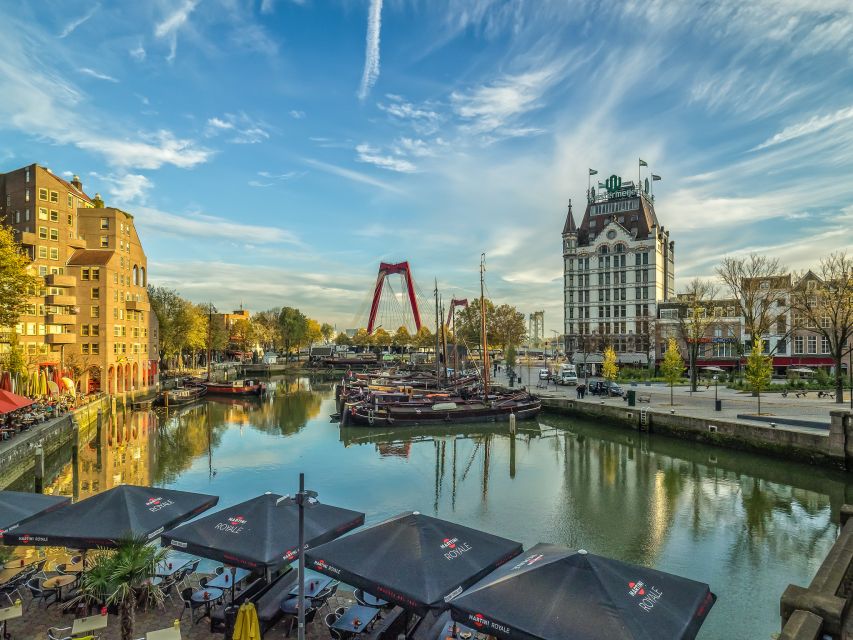
Rotterdam is easy to misunderstand if you see it only from a train window or harbor boat. It can appear almost entirely modern, yet its newer buildings make more sense once you understand the destruction and rebuilding that came before them.
This walking tour gives you that basic framework without taking half a day. You spend two hours moving through central Rotterdam, stopping for explanations and photographs while your guide connects the streets to the city’s past.
I see the tour as a strong first activity, especially if Rotterdam is one stop on a larger Netherlands trip. It helps you get your bearings, identify the buildings you want to revisit, and learn which parts of the city deserve more of your time.
The pace also suits you if you prefer seeing a city on foot instead of listening from a bus. Rotterdam’s central sights are close enough to link together, though the walk still involves standing and moving through city streets for the full two hours.
More Walking Tours in Rotterdam
- Rotterdam: Architectural Highlights Guided Walking Tour
★ 4.8 · 215 reviews - Rotterdam Walk: Hilights, Gems, Architecture & WWII | 2 or 3hrs
★ 5.0 · 149 reviews - Rotterdam: Highlights & Gems Walking Tour with Dutch Local
★ 5.0 · 133 reviews
Starting at Rotterdam Central Station
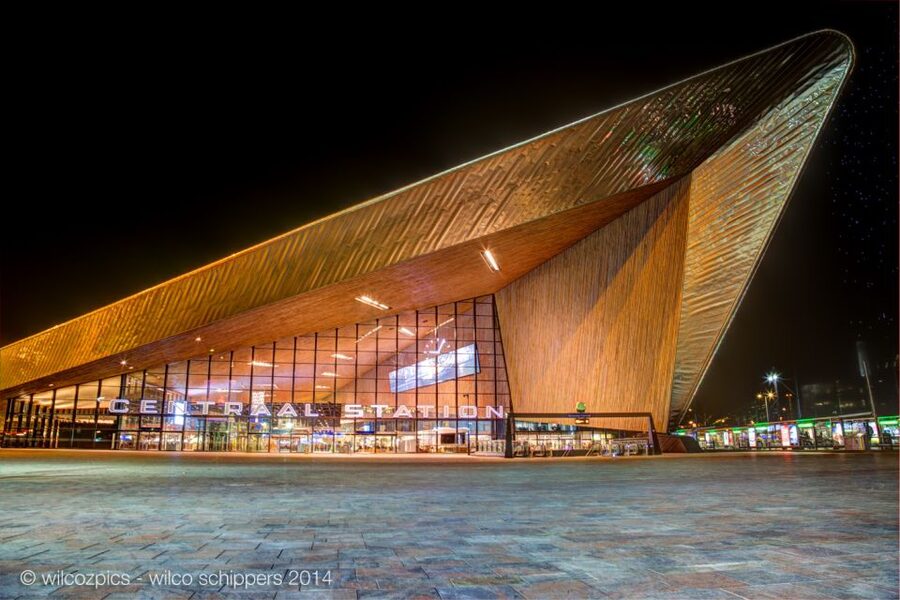
The tour begins at Rotterdam Central Station, one of the city’s most recognizable modern landmarks. This is a useful meeting point because it is a natural arrival place for anyone coming by train, though the exact meeting location can vary according to the option you book.
From the start, the design sets the tone. The station belongs to the new Rotterdam, a city comfortable with large, angular, forward-looking projects. Your guide uses it as the opening chapter before leading you toward older civic buildings and the central shopping area.
A guide matters here because architecture can look impressive while still leaving you with very little sense of what you are seeing. The walk is designed to explain the city’s choices, not simply point at unusual roofs and glass walls.
If you arrive early, allow time to find the correct meeting point. The supplied information says this can vary by booking option, so check your confirmation rather than assuming every group gathers in exactly the same spot.
Rotterdam’s wartime break with the past
One of the most important parts of the walk is the explanation of the World War II bombing. Rotterdam’s present-day appearance is closely tied to that event, and the guide explains why modern architecture is so abundant here.
That context changes the way you read the city. The unusual buildings are not just the result of architects trying to outdo one another. Much of Rotterdam had to be rebuilt, and the city chose a more experimental direction instead of recreating an older street plan in full.
This is where the tour offers more value than a self-guided stroll. You can photograph the Cube Houses on your own, but you may miss the connection between the bombing, postwar planning, the port economy, and the city’s taste for striking new design.
The historical section also keeps Rotterdam from becoming a collection of disconnected attractions. The Town Hall, St. Lawrence Church, early high-rise buildings, and newer projects all become part of one story about change.
Town Hall, St. Lawrence Church, and an early high-rise
The walk includes Rotterdam’s Town Hall and St. Lawrence Church, two important reminders that the city is not only concrete, glass, and daring angles. Their presence gives you a glimpse of Rotterdam before the modern rebuilding that defines much of the center.
You also hear about Europe’s first high-rise building. The point is not simply that the building was tall for its time. It shows that Rotterdam had a long interest in modern construction and urban ambition, even before the postwar skyline took shape.
I like this part of the route because it provides visual contrast. After hearing about the city’s destruction and new construction, you can see older civic and religious architecture standing alongside later projects.
The walk does not promise a full interior tour of each landmark. Treat these stops as explained sights along a wider route, with your guide supplying the context while you continue through the center.
Same country, a completely different kind of day:
- Rotterdam: Harbor Sightseeing Cruise
★ 4.3 · 7,599 reviews - Rotterdam: 1-Hour Sightseeing Splash Tour
★ 4.5 · 3,299 reviews - Rotterdam: Rotterdam Zoo Blijdorp Entry Ticket
★ 4.6 · 2,754 reviews - Rotterdam: Euromast Lookout Tower Ticket
★ 4.4 · 2,549 reviews
Timmerhuis and Rotterdam’s architectural experiment
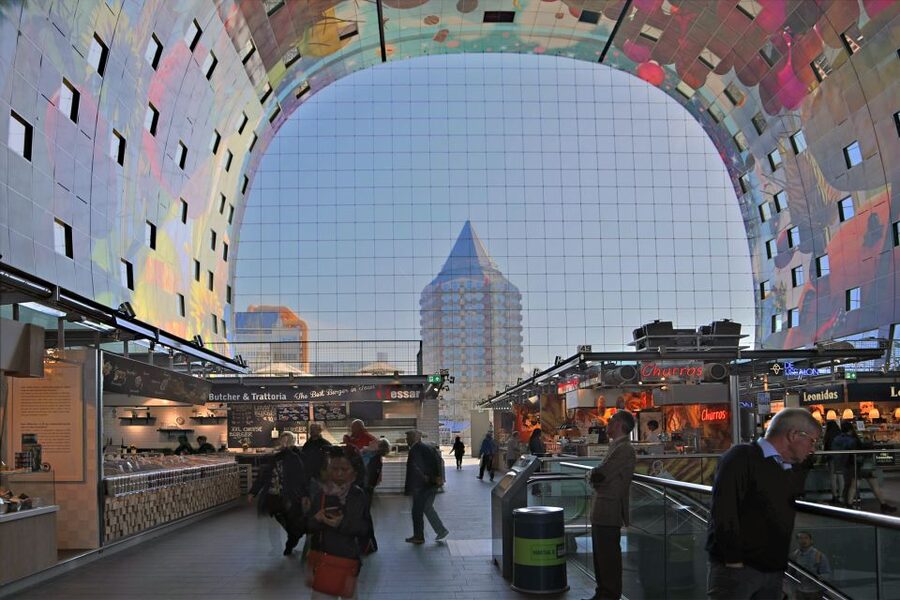
The Timmerhuis is one of the tour’s more recent architectural stops. Designed by OMA, the internationally known architecture firm, it represents Rotterdam’s continuing willingness to try something different in the heart of the city.
Your guide points out buildings such as the Timmerhuis while explaining how the modern center works. This is helpful if you are curious about architecture but do not want a highly technical lecture. The focus stays on what you can see and how the building fits Rotterdam’s wider story.
The Timmerhuis also helps show that Rotterdam’s design culture did not end with postwar rebuilding. New projects continue to shape the center, creating a city where older monuments and experimental structures share the same walking route.
For architecture fans, this may be one of the strongest reasons to book. For visitors mainly interested in museums or detailed history, it is still useful, but the tour’s attention to buildings may feel more important than those subjects.
Markthal: architecture meeting daily life
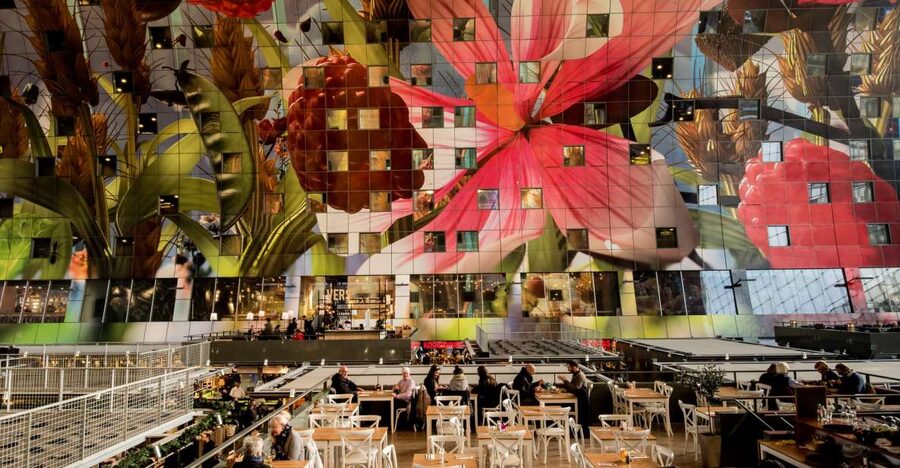
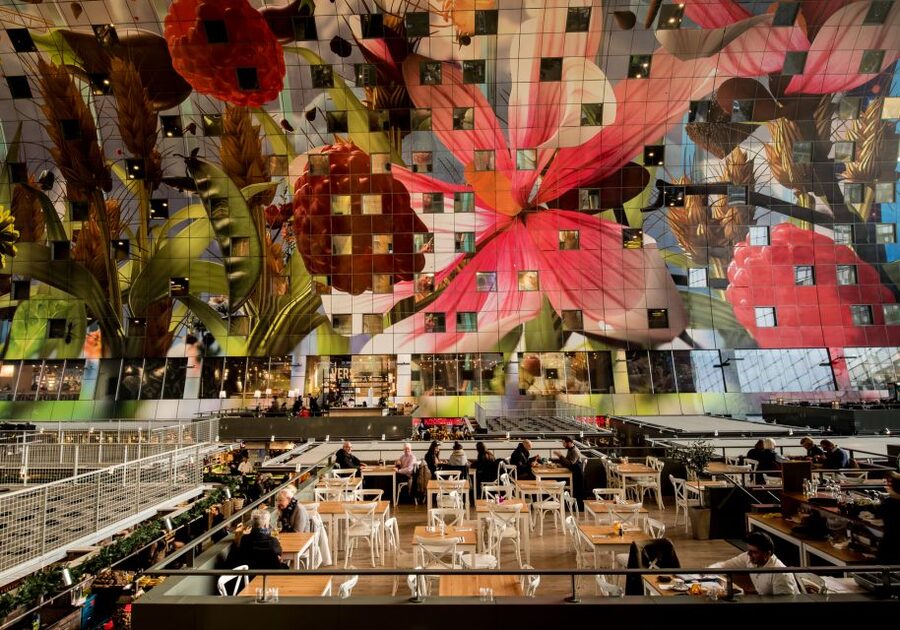
The Markthal is both a major architectural sight and a working covered market. That combination makes it more useful than a building you simply admire from the pavement.
Your guide introduces the Markthal as one of Europe’s most distinctive covered markets and explains its place in everyday Rotterdam. You can see the structure, watch people come and go, and get a sense of how the center functions beyond its famous photographs.
Food and drinks are not included, so plan to buy anything you want separately. That is not a serious drawback, but it is worth knowing if you expect a tasting tour. The experience is about seeing and understanding the market, not receiving a meal or set of samples.
I especially like this stop for first-time visitors. The Markthal links design with ordinary city life, giving the tour a more human pause after the discussion of war, planning, and large buildings.
Inside the strange logic of the Cube Houses
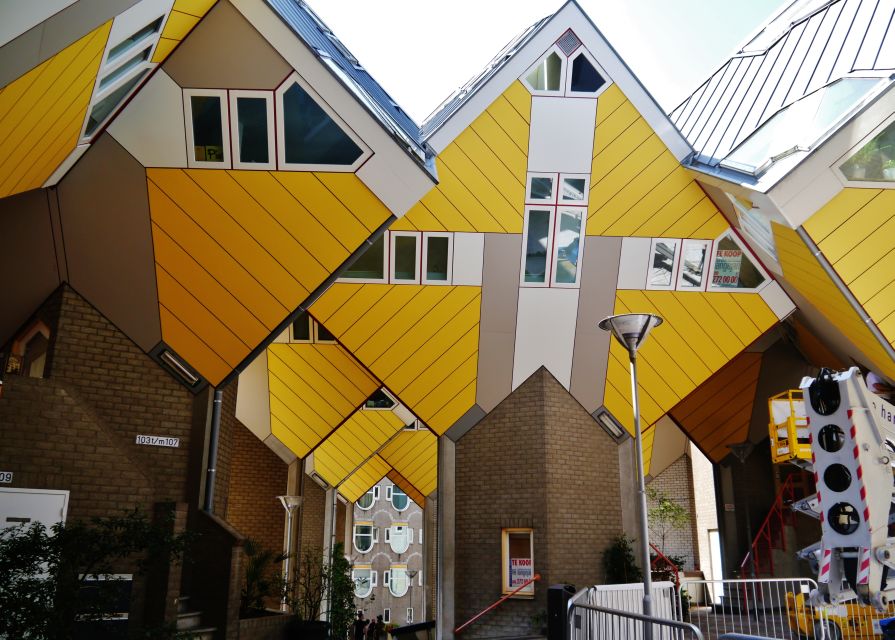
The Cube Houses are among Rotterdam’s most memorable sights. Their tilted forms make an immediate impression, and the guide helps you look beyond the novelty to the idea behind the design.
You learn about the city’s modern structures while seeing how unusual architecture can alter the feeling of a neighborhood. The Cube Houses are not a conventional street of upright facades. Their angles and clustered form make you stop, look up, and question how the spaces work.
The tour does not state that an interior visit is included, so you should expect to see and discuss the buildings rather than assume entry. If exploring inside is a priority, confirm the exact option before booking.
This is another place where a guide adds something practical. You can take a quick photograph in minutes, but a thoughtful explanation helps you remember why the Cube Houses matter within Rotterdam’s architectural identity.
Coolsingel, shopping streets, and the city today
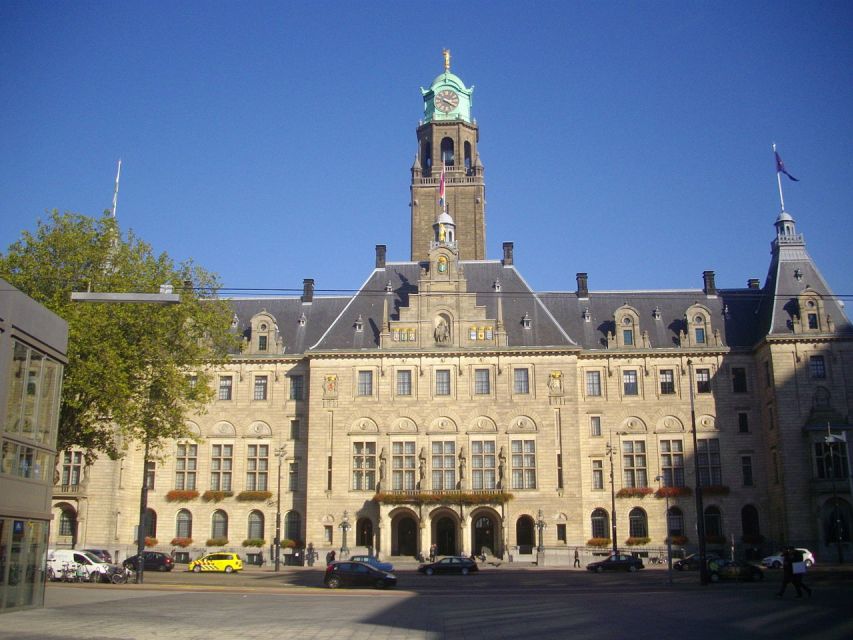
The route continues through Coolsingel and attractive shopping streets, shifting the focus from landmark buildings to the modern Rotterdam lifestyle. This section gives you a chance to watch the city operate at street level.
That matters because Rotterdam is more than a design showcase. People shop, commute, meet friends, and use the same streets that visitors photograph. The walk keeps those ordinary details in view while still pointing out the architecture around you.
The shopping streets also make the tour feel connected to the rest of your visit. You can note places you may want to return to later, although the tour does not include shopping time or purchases.
If you prefer a quiet, slow walk, keep in mind that this is a city-center route. The pace and surroundings may feel active, especially around major public spaces and retail streets. The reward is a stronger sense of Rotterdam as a living city.
Erasmus Bridge and the wider harbor story
The tour includes the Erasmus Bridge among its major sights and introduces Rotterdam’s harbor as part of the city’s identity. The bridge is an important visual link to the water and to the port that has shaped Rotterdam’s economy and character.
The supplied details do not promise a long harbor visit or a crossing of the bridge, so think of this as an architectural and urban view within the walking route. Your guide explains the city’s connection to its harbor while showing how the modern center faces toward the water.
This is a useful ending or late-stage reference point because it widens the story. You have seen civic buildings, religious architecture, markets, homes, offices, and shopping streets. The bridge and harbor help connect those pieces to Rotterdam’s role as a major port city.
The guides and the feel of the walk
The tour is led by a local guide in English, Dutch, or German. Named guides connected with recent departures include Edwin, Michel, John, and Susan, so the exact personality and emphasis can vary.
Edwin’s style, based on the information available, includes detailed answers about Dutch and Rotterdam history, art, and small features you could easily overlook. Michel brings personal stories about his connection with Rotterdam, which can make the city feel less like a diagram of buildings and more like a place people know intimately.
John is described as shaping the walking route around the sights a group wants to see, while Susan is noted for bringing buildings, history, culture, and food together. These details suggest a conversational tour rather than a fixed speech with no room for questions.
That flexibility is valuable. Use the walk to ask about anything that catches your attention, from architecture to food or the city’s past. Just remember that a two-hour tour cannot give every subject equal time.
Group size, languages, and private options
A private group option is available. This can make a difference if you want a more personal pace, have a short list of priorities, or prefer asking many questions without holding up a larger group.
Some departures may already feel quite personal when numbers are small. One recent private experience had only two participants, and another group had an especially favorable guide-to-participant ratio. You should not assume every departure will be this intimate, but the private option gives you a clear way to arrange it.
English, Dutch, and German are offered. Choose the language in which you can comfortably follow historical explanations and ask questions. Architecture terms and wartime history are easier to absorb when you are not working hard to translate every sentence.
The guide is the central part of the experience, so language and group format are more important here than extras. There is no included food, drink, museum ticket, or transport service.
Is $25 a fair price?
At $25 per person, this is a reasonable price for a two-hour introduction to central Rotterdam, especially if you are new to the city. You are paying for a local guide, a planned route, historical explanation, and the chance to ask questions rather than simply following a map.
The value is strongest when you use the tour as a starting point. Afterward, you can decide which sights deserve a second look and spend your own money on food, drinks, museums, or other activities.
The price is less compelling if you already know central Rotterdam well or want a long, specialist architecture tour. Two hours limits the amount of detail, and the tour does not include refreshments or attraction admission.
Still, the combination of wartime history, early high-rise design, the Timmerhuis, Markthal, Cube Houses, Coolsingel, and Erasmus Bridge gives you a lot of visual variety for a modest fee.
Who should book this walking tour?
I would recommend it to first-time visitors, architecture fans, cruise passengers with limited time, and anyone who wants a quick introduction before exploring independently. It also suits people who enjoy asking questions and prefer local explanation to a recorded audio guide.
The tour works well for visitors who want both old and new Rotterdam. You see historic landmarks, postwar planning, modern offices, a market, shopping streets, and major public architecture in one compact outing.
It may not suit you if you want a slow photography session, extensive time inside the Markthal, or a specialist lecture on one building. Families and mixed-interest groups should also consider whether everyone is happy walking and listening for two hours.
Book with the language, meeting point, and group type in mind. You can cancel up to 24 hours before the start for a full refund, and the reserve-now, pay-later option keeps your plans flexible.
Should you book the Rotterdam walking tour?
Yes, if you want a well-priced first look at why Rotterdam feels unlike much of the Netherlands. The strongest parts are the explanation of the World War II bombing, the contrast between St. Lawrence Church and the Cube Houses, and the way the Markthal connects bold design with ordinary city life.
I would book it early in your stay, then return on your own to the buildings or streets that caught your interest. Choose a private group if personal questions and a custom pace matter to you. Skip it only if you already know central Rotterdam well or need a longer, more specialized architecture experience.
FAQ
Where does the Rotterdam walking tour begin?
It begins at Rotterdam Central Station. The exact meeting point may vary depending on the option booked, so check the details for your selected departure.
How long does the tour last?
The guided walk lasts two hours.
What languages are available?
The tour is offered in English, Dutch, and German.
Is a private tour option available?
Yes. A private group option is available when booking.
What landmarks are included?
The route includes Rotterdam Central Station, the Town Hall, St. Lawrence Church, an early high-rise building, Timmerhuis, Markthal, the Cube Houses, Coolsingel, shopping streets, and Erasmus Bridge.
Does the tour explain Rotterdam’s World War II bombing?
Yes. The guide explains what happened during the bombing and how it helped shape Rotterdam’s large collection of modern architecture.
Are food and drinks included?
No. Food and drinks are not included in the tour price.
How much does the tour cost?
The listed price is $25 per person.
Can I cancel for a full refund?
Yes. You can cancel up to 24 hours in advance for a full refund. The reserve-now, pay-later option is also available.
More 2-Hour Experiences in Rotterdam
- Rotterdam 2-Hour Walking Tour | Discover The City With A Local
★ 4.5 · 111 reviews - Rotterdam 2-Hour Grand Walking Tour
★ 4.9 · 41 reviews - Rotterdam Private 2-Hour Food Tour with Tastings
★ 4.3 · 12 reviews - Amsterdam: 2-Hour Canal Cruise incl. Drinks & Dutch Snacks
★ 5.0 · 594 reviews
Just added around Rotterdam
- Discover Rotterdam: Classic Highlights Bike Tour by a Local★ 5.0 · 3 reviews
- Rotterdam: Capture the most Photogenic Spots with a Local★ 5.0 · 3 reviews
- Private tour: Markthal, Cube houses and Rooftop Het Witte Huis★ 4.5 · 3 reviews
- Private Transfer from Rotterdam Port to Amsterdam Airport (AMS)★ 5.0 · 3 reviews
- Rotterdam: 2.5-Hour Leckers Boat Cruise and Buffet★ 3.2 · 3 reviews
- Discover Rotterdam’s most Photogenic Spots with a Local★ 5.0 · 3 reviews
- Rotterdam: Wilhelminapier, High-rise & floating architecture★ 4.0 · 3 reviews
- Private Transfer from Rotterdam City to Amsterdam Schiphol Airport★ 5.0 · 4 reviews
Rotterdam Tours, compared.

Kinderdijk UNESCO World Heritage Entry Ticket
Read our review →
Browse the lists this tour appears in