
Reviewed · AMSTERDAM TOURS
Amsterdam City Center Guided Walking Tour – 12 guests 2,5h
Amsterdam reveals itself best on foot, and this tour gives you a useful first look at the city’s old center in just 2.5 hours. You move from the station area through canals, merchant houses, old churches, courtyards, Chinatown, the Jewish Quarter, Dam Square, and the Jordaan, with a private guide explaining how Amsterdam grew around the Amstel River.
I like the local orientation and the chance to ask practical questions as you walk. I also like the odd details: leaning houses, the hidden church at Our Lord in the Attic, the old inner court at Begijnhof, and Amsterdam’s small bridges. Guide Monique, who led one booking, was especially attentive and handled questions about art, architecture, food, and history.
The main consideration is pace. The route includes many sights, but most are photo stops or outside explanations rather than long museum visits. You should also confirm your group format when booking, since the information describes private groups and semi-private groups of up to eight, while the experience title refers to 12 guests.
Key points at a glance
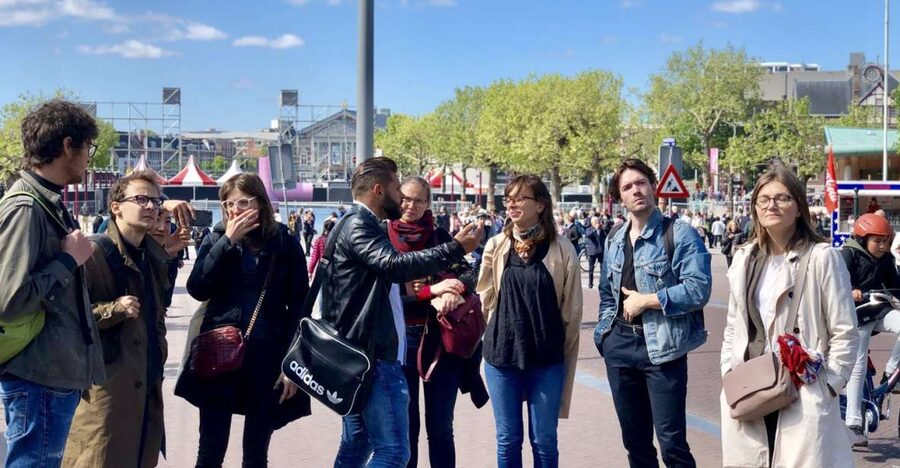
- A strong first-day orientation: Walk from Central Station through Amsterdam’s historic center and Canal Belt before choosing which sights deserve more of your time.
- More than the usual postcard views: See leaning merchant houses, a former hidden Catholic church, old courtyards, Chinatown, the Jewish Quarter, and tree-lined squares.
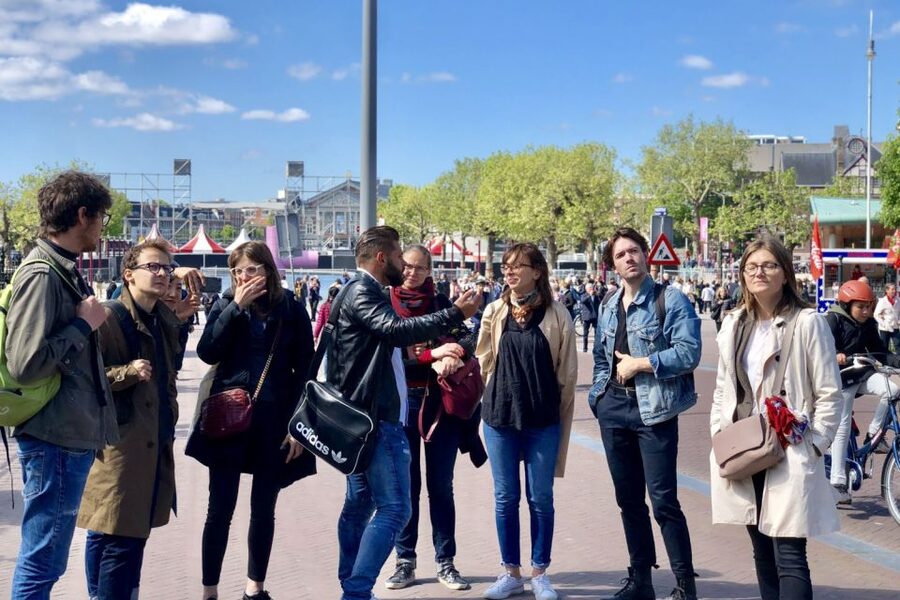
- A private guide makes the difference: Ask about food, art, architecture, transport, or neighborhoods as the route unfolds.
- A long list of landmarks in a short time: The route includes Oude Kerk, Dam Square, Westerkerk, Begijnhof, Magere Brug, and many more.
- Useful booking flexibility: You can cancel up to 24 hours before departure for a full refund and reserve now without paying immediately.
- Walking-first and weather-dependent: Wear comfortable clothes and shoes, bring identification, and leave large luggage behind.
Why this walk is useful when you first arrive
The meeting point is outside St Nicholas Church, opposite Amsterdam Central Station. That is a practical place to begin, especially if you have just arrived by train and want to start seeing the city without arranging a taxi or hotel transfer.
The first part of the walk sets the city in context. Amsterdam grew from settlement around the Amstel River in the 12th century, and the guide uses the old center to explain how trade, water, religion, and commerce shaped the city. This matters because Amsterdam can look like a collection of pretty canals until you understand why the canals are there and why the houses sit so tightly together.
You should expect a walking orientation rather than a full museum tour. The guide points out major buildings, explains their purpose, and helps you decide where to return later. If you want extended time inside the Royal Palace, Rembrandt House Museum, or the Amsterdam Museum, plan those visits separately.
The route also gives you a useful first map in your head. You pass through the old center, along canals, across bridges, and into districts with different characters. That can save time later, since you will know which sights sit near one another and which require a separate visit.
More Walking Tours in Amsterdam
- Anne Frank’s Story – Guided Walking Tour through Amsterdam
★ 5.0 · 11,619 reviews - Amsterdam: Life of Anne Frank and World War II Walking Tour
★ 4.8 · 10,467 reviews - Absolutely Amsterdam – the Essential Introductory Walking Tour
★ 5.0 · 3,629 reviews
From St Nicholas Church to the Weeping Tower
The walk begins near the Basilica of Saint Nicholas, a prominent church near Central Station. It is a fitting introduction to Amsterdam because it shows the city’s Catholic tradition in a part of town often treated simply as a transport hub.
From there, the route continues to the Weeping Tower. This old tower is tied to Amsterdam’s waterfront and maritime past. Your guide can help connect the tower to the city’s relationship with ships, sailors, and the harbor.
These first stops are close to the station, but the atmosphere changes quickly once you leave the main transport area. You begin to see the narrow streets and older buildings that make the center so distinctive. Keep your camera ready, but watch your footing and the traffic around you. Amsterdam’s center is shared by pedestrians, cyclists, trams, and delivery vehicles.
Zeedijk, Chinatown, and the church in the attic
Zeedijk brings you into one of the city’s oldest streets and into Amsterdam’s Chinatown area. The route here is valuable because it shows a side of the center beyond canals and grand civic buildings. You pass a district shaped by migration, trade, food, and the port.
The stop at Our Lord in the Attic Museum is one of the most unusual points on the walk. The name refers to a Catholic church built inside a canal house. From the street, it is easy to miss what is above you. The guide explains why a church was placed there and how religious life continued in Amsterdam when public worship was restricted.
You should treat this as an introduction rather than a museum visit. The stop is listed as a guided sightseeing and photo stop, so you may not have time to tour every room inside. If hidden interiors interest you, mark the museum for a longer return visit.
Oude Kerk and Nieuwmarkt’s old defenses
The Oude Kerk is Amsterdam’s oldest church, located in the heart of the Red Light District. Its age and position tell you a great deal about how the city developed around the harbor and its early commercial center. The surrounding streets are compact, busy, and full of contrasts, so a guide is useful for pointing out what you might otherwise walk past.
The route then reaches Nieuwmarkt, or New Market Square, and De Waag. De Waag is a large historic building that once formed part of the city’s defenses and later served trade and civic purposes. Today it operates as a restaurant, but its thick walls and prominent position still hint at its earlier role.
Nieuwmarkt is a good place to pause and understand the city’s old market life. The guide also takes you to Het Trippenhuis, another reminder of the wealth created by Amsterdam’s merchants. Rather than giving you only a list of dates, the walk connects architecture to the people who paid for these grand homes and public structures.
Same country, a completely different kind of day:
- Amsterdam: Van Gogh Museum Ticket
★ 4.7 · 52,054 reviews - Amsterdam Classic Saloon Boat Cruise with Drinks and Cheese
★ 5.0 · 31,825 reviews - Amsterdam Luxury Canal Cruise + Unlimited Drinks & Bites option
★ 5.0 · 30,518 reviews - Amsterdam: Heineken Experience Ticket
★ 4.6 · 30,055 reviews
The Jewish Quarter, Rembrandt House, and Zuiderkerk
The walk continues through Amsterdam’s Jewish Quarter, where the guide adds another layer to the city’s story. This section is especially useful if you want historical context without spending your entire day inside museums. You will hear about the district as part of Amsterdam’s wider religious, commercial, and residential past.
Rembrandt House Museum appears next. The museum is dedicated to the painter’s former home and workplace. The guide points it out and explains its place in Amsterdam’s art story, but the format does not allow for a full visit. I would plan to return if you want to see the interiors, collections, and studio rooms in detail.
Nearby, the Dutch National Opera and Ballet offers a different view of the city’s cultural life. Zuiderkerk adds an older architectural note to the route. These stops work well together because they show Amsterdam across several centuries, from early churches and merchant districts to major modern arts institutions.
This is also a good stretch for questions. One previous booking was led by Monique, whose ability to discuss art, architecture, food, and history made the walk useful for more than basic sightseeing. Since the guide speaks with you throughout the route, ask about the subjects that matter most to your trip.
Along the Amstel to Magere Brug
The Amstel River is central to Amsterdam’s identity, and the walk reaches it after passing through the older center. Seeing the river in person helps explain why the city formed where it did. The canal system may get most of the attention, but the Amstel is the natural thread behind the city’s name and early growth.
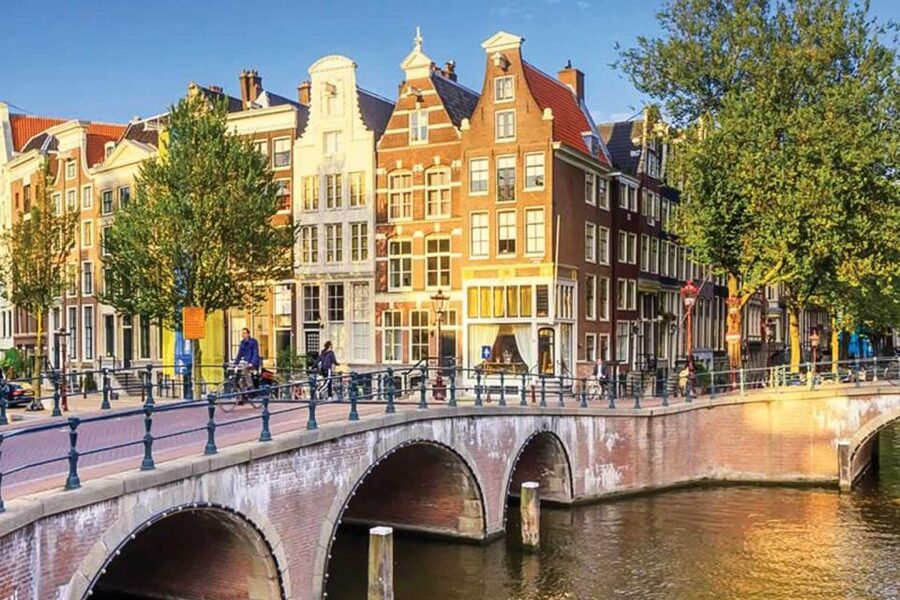
The route then reaches Magere Brug, one of Amsterdam’s best-known bridges, followed by Blauwbrug Bridge. These crossings give you classic views of the water, boats, buildings, and surrounding streets. The bridges are also good photo stops, though the exact view depends on weather, traffic, and how long the group can pause.
This part of the route shows why comfortable shoes matter. You will cross bridges and walk beside water for much of the tour. Wear weather-appropriate clothing, since the experience takes place outdoors and no indoor shelter is promised along the way.
Begijnhof and Amsterdam’s quieter corners
Begijnhof is one of the most rewarding stops on an orientation walk because it feels quieter than the streets around it. This historic inner court was associated with the Beguines, a community of religious women. The enclosed setting gives you a glimpse of a more private side of Amsterdam.
The tour description also promises tree-lined squares and private courtyards. These are exactly the kinds of places you might miss if you only follow the main canal routes. Access to courtyards can depend on local rules and opening conditions, so think of them as possible discoveries rather than guaranteed long visits.
The Amsterdam Museum is another useful landmark on this section. It gives you a reference point for a later visit if you want a fuller account of the city’s past. By now, the walk has moved beyond the station and the oldest harbor streets, giving you a better sense of how compact Amsterdam’s center really is.
Prinsengracht, leaning houses, and Westerkerk
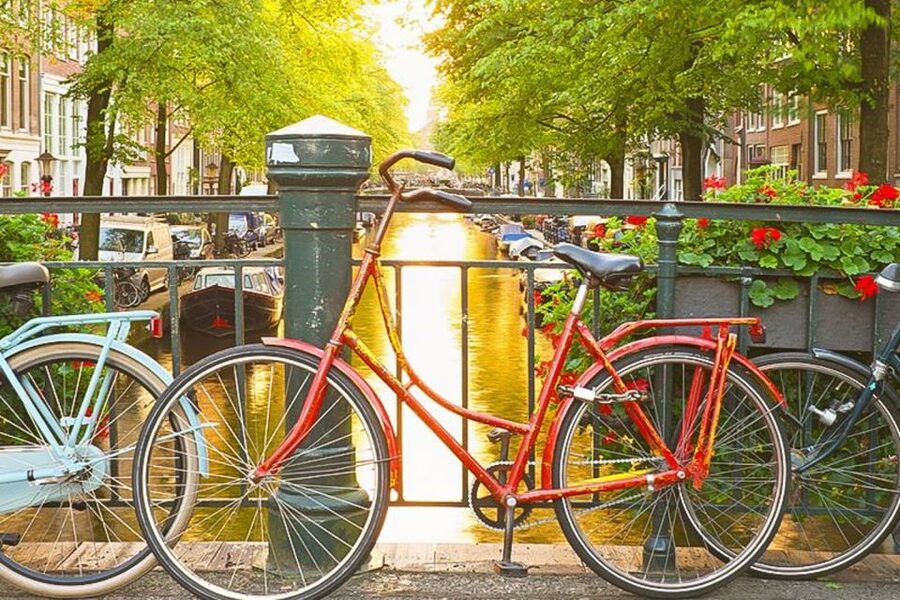
Prinsengracht brings you into the Canal Belt, the part of Amsterdam most people picture when they think of canal houses. The guide points out bridges, barges, houseboats, and the tall merchant houses that line the water.
The leaning houses are not simply a visual trick. Many old buildings tilt because of age, settlement, foundations, or the way they were built. The guide helps you notice the differences between buildings instead of treating the entire canal as one repeated view.
The route also includes a street associated with artists’ squats. This adds a modern and unconventional note to the tour. You see how Amsterdam’s old buildings have been used by different communities over time, not just preserved as scenery.
Westerkerk marks the Jordaan section of the walk. The church sits beside Prinsengracht and is one of the area’s major landmarks. The Jordaan is a useful neighborhood to learn early because it offers a change from the dense harbor streets and gives you another area to explore after the tour.
Dam Square and the Royal Palace
The final major stop is Dam Square, the city’s central public space. Here you see the Royal Palace and Nieuwe Kerk, or New Church, along with the monuments and open space that make the square a natural meeting point.
Dam Square can be crowded and noisy, so a guide helps you make sense of the buildings instead of simply taking a quick photograph and moving on. The Royal Palace is still used for official functions, while Nieuwe Kerk is a major historic church and exhibition venue. The tour provides an outside orientation, not a full interior visit.
Ending here is practical. You are close to central streets, shops, restaurants, and public transport, and you can decide what to do next with a better understanding of the city. Ask your guide for suggestions before parting. One of the tour’s stated aims is to give you tips on how to spend the rest of your time in Amsterdam.
What $61 means in real value
At $61 per person, this is not the cheapest way to walk around Amsterdam. You can see many canals and squares for free, and self-guided routes cost nothing beyond your time.
The value comes from the private guide, the broad route, and the ability to ask questions. In one short walk, you cover a large part of the old center and learn where the main areas sit in relation to one another. That can be worth the price if this is your first visit, your stay is short, or you prefer context over reading signs on your own.
The value is weaker if you want long indoor visits or a slow photography walk. Twenty-one listed sights in 2.5 hours means the pace is purposeful. The stops are generally brief, often around ten minutes, and several are viewing points rather than admissions. Food, drinks, hotel pickup, and drop-off are not included, and gratuity is optional.
The group wording deserves attention. A private group is available, while semi-private tours are described as having a maximum of eight people and requiring at least two participants. The title refers to 12 guests, so check the exact group size and format before paying. That small bit of preparation can affect how personal the walk feels.
Who should book this Amsterdam walk
I would recommend it to a first-time visitor who wants a clear introduction before choosing museums and neighborhoods. It also suits couples, families, and small groups who prefer to ask direct questions instead of following a large organized group.
It is a good fit if you want history, architecture, food suggestions, and practical city advice in one outing. The available languages are English, Dutch, French, Italian, Portuguese, and Spanish, so you can choose the language that makes the explanations easiest to follow.
It is less suitable if you have limited mobility or dislike walking outdoors in changeable weather. Wheelchair-accessible tours are available only by request, and the activity is listed as not suitable for wheelchair users. Large bags and luggage are not allowed, so arrange storage before meeting the guide.
You need to bring a passport or ID card and wear comfortable, weather-appropriate clothes. The guide’s contact details are sent by email from Babylon Tours Amsterdam, so check your spam folder before the tour in case you need to call or text about an urgent issue.
Should you book it?
Book this tour if you want a broad, personal introduction to Amsterdam rather than a series of long museum visits. The strongest parts are the mix of famous sights and lesser-noticed places, from Dam Square and Magere Brug to Begijnhof, Zeedijk, the hidden church, and the leaning houses.
I would book it early in a short Amsterdam stay, then use the guide’s suggestions to plan your next days. If you already know the center well, or you want a slow, specialist tour focused on one subject, $61 may be better spent on an admission ticket or a more focused experience. For a first orientation with a local guide, though, the route covers a lot of useful ground.
FAQ
Where does the Amsterdam walking tour meet?
Meet your guide outside the entrance of St Nicholas Church, on the side opposite Amsterdam Central Station.
How long does the tour last?
The walking tour lasts 2.5 hours.
What sights are included?
The route includes St Nicholas Basilica, the Weeping Tower, Zeedijk, Our Lord in the Attic Museum, Oude Kerk, Nieuwmarkt, De Waag, Het Trippenhuis, the Jewish Quarter, Rembrandt House Museum, the Dutch National Opera and Ballet, Zuiderkerk, the Amstel River, Magere Brug, Blauwbrug Bridge, Begijnhof, the Amsterdam Museum, Prinsengracht, Westerkerk, and Dam Square.
Does the tour include entry to the museums and churches?
The provided information describes the stops as photo stops, visits, guided sightseeing, and walking. Food, drinks, hotel pickup, and drop-off are not included. It does not state that admission tickets are included.
Is the tour private?
A private group is available. The information also describes a semi-private option with a maximum of eight guests. The experience title refers to 12 guests, so confirm the group format when booking.
Which languages are available?
The live tour guide may speak Portuguese, Spanish, Dutch, French, English, or Italian.
What should I bring?
Bring a passport or ID card and wear comfortable, weather-appropriate clothes.
Can I bring luggage?
Large bags and luggage are not allowed on the tour.
Can I cancel the booking?
You can cancel up to 24 hours in advance for a full refund. The reserve-now-and-pay-later option lets you keep your plans flexible.
Just added around Amsterdam
- Amsterdam: Giethoorn Tour with Canal Cruise and Windmills★ 5.0 · 3 reviews
- Full-day excursion to Edam, Volendam, and Marken★ 3.7 · 3 reviews
- Amsterdam: Chocolate Fondue in the Dark★ 5.0 · 3 reviews
- Amsterdam Private Walking Tour of Famous Painters★ 5.0 · 3 reviews
- Amsterdam Family Friendly Historical Walking Tour★ 5.0 · 3 reviews
- Amsterdam Old-West Vegan Food Tour with Local Guide★ 4.7 · 3 reviews
- From Amsterdam: visit Zaanse Schans, Muiderslot and more!★ 5.0 · 3 reviews
- Amsterdam Walking Tour with Dutch Pancake Lunch★ 5.0 · 3 reviews
Amsterdam Tours, compared.


Amsterdam Classic Saloon Boat Cruise with Drinks and Cheese
Read our review →
Amsterdam Luxury Canal Cruise + Unlimited Drinks & Bites option
Read our review →


Classic Boat Cruise with Optional Cheese & Wine
Read our review →
Evening Cruise with Optional Wine and Snacks
Read our review →
75 Minute City Canal Cruise with Audio Guide
Read our review →Browse the lists this tour appears in