
Reviewed · ROTTERDAM TOURS
Skip the Line: SS Rotterdam Steam Ship Entrance Ticket
The SS Rotterdam is not just a ship-shaped museum. It is a preserved ocean liner where you can walk the bridge, chart room, captain’s cabin, and sports decks, then picture the polished world of transatlantic travel in the late 1950s and 1960s. For me, the best part is choosing the route that matches your interests instead of being pushed through every corner.
I like the excellent audio headset, which gives the ship context as you move around, and the chance to hear extra stories from the helpful volunteer guides stationed along the way. The main drawback is that a one-hour visit feels rushed, and the layout can be confusing, especially with some areas closed at times because the ship still operates as a hotel.
- Choose your shipboard world: Pick upper decks for navigation rooms, views, and restored public spaces, or lower decks for the engine rooms and crew areas.
- See the working heart of the liner: The engine rooms offer a powerful look at the machinery that moved this large ship across the Atlantic.
- Look into first-class life: Original art deco furnishings, dining rooms, passenger rooms, and the indoor pool show how ocean travel once worked.
- Plan extra time: The advertised visit lasts about an hour, but I would allow up to two hours for the open decks and exhibits.
- Check mobility needs carefully: The upper route is suitable for wheelchair users, while the lower route is not and includes stairs.
- Book ahead at $15.99: Advance booking helps avoid disappointment, especially when public access changes around hotel operations.
A Former Ocean Liner With Rotterdam Roots
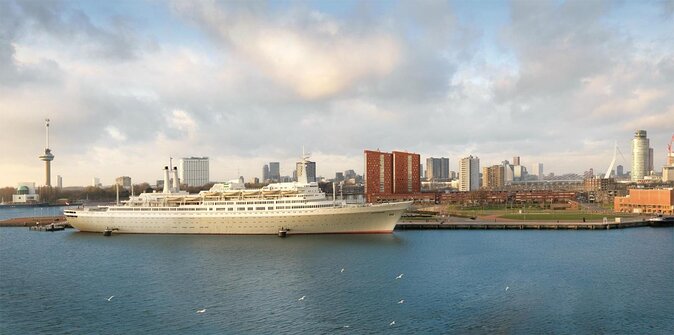
The SS Rotterdam has a strong local connection. This Holland America Line ship once carried passengers between Rotterdam and New York, and its interiors preserve the style of the ocean liner era rather than the more standardized look of a modern cruise ship.
You can expect art deco furnishings, polished public rooms, maritime equipment, and cabin areas that show how different classes of passengers lived onboard. I find that mix valuable because the ship lets you see both sides of cruising: the elegant dining and social spaces above, and the hot, mechanical work areas below.
The ship is now also a hotel, so it does not function as a museum in the usual sense. That gives the place a lived-in quality, but it also means access can vary. A deck or room may be unavailable at a particular time, and the route can feel less tidy than a purpose-built museum.
Choosing Between Upper and Lower Decks
Your ticket gives you a choice between an upper-deck visit and a lower-deck visit. Think of the upper option as the best all-around introduction to the ship, while the lower option is for anyone fascinated by engines, working spaces, and the less glamorous side of ocean travel.
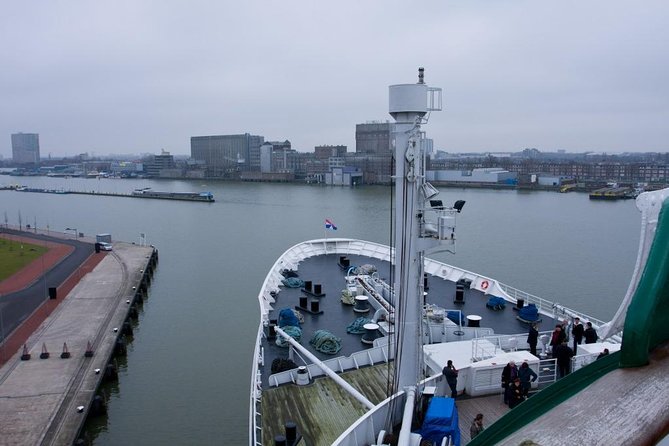
The upper-deck route includes the bow, bridge, pilothouse, stern areas, chart room, radio room, and captain’s cabin. You can also reach the upper sports decks for broad views and visit the Experience Center on the Lower Promenade Deck, where a short film adds background to the ship.
The lower-deck route takes you into the engine rooms and past replicas of original passenger cabins and crew areas. You return through the Promenade Deck, giving you a useful contrast between the hidden machinery and the public-facing parts of the liner.
If you have only an hour, I would choose the upper route unless engines are your main reason for coming. The bridge is a particular highlight because you can examine the individual controls and machinery and get a clearer sense of how the ship was run.
A few more Rotterdam trips worth a look
- Skip the Line: Entrance Ticket to Miniworld Rotterdam
★ 4.5 · 9 reviews - Amsterdam: National Maritime Museum Skip-the-Line Ticket
★ 4.5 · 863 reviews - Skip the Line: Youseum Amsterdam Ticket
★ 4.5 · 183 reviews
The Upper Decks: Bridge, Radio Room, and Sea Views
The upper route gives you the ship’s best sense of ceremony and command. At the bow, you can look out from the forward part of the liner, then move toward the bridge and pilothouse, where navigation once depended on people, instruments, and careful teamwork.
The chart room and radio room add useful detail. These spaces help explain how the ship found its way across the ocean and kept in contact with land and other vessels. The captain’s cabin gives you another glimpse into the hierarchy of life onboard, where the ship’s senior officer had a private working and living area close to the bridge.
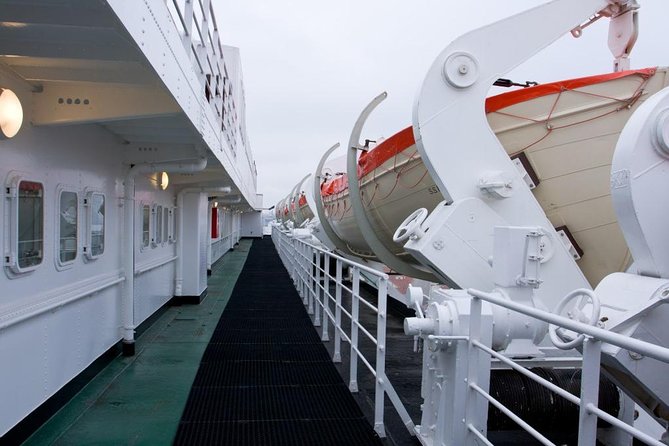
Do not rush the sports decks at the stern. They offer fine views across the water and back toward the ship itself. The upper levels also give you a better feel for the liner’s scale, though you should take care on the many stairs, particularly after rain when surfaces can become slippery.
The Experience Center movie is short, so it works well as a pause rather than a major attraction. Use it to get your bearings before continuing around the ship.
The Lower Decks: Engine Rooms and Crew Spaces
The lower option is more industrial and, for many people, more memorable. The engine rooms show the size of the systems required to move a major steamship, with large machinery filling spaces far removed from the polished dining rooms above.
You are accompanied by a crew member in the engine room area, which adds explanation to what could otherwise be a maze of metal, pipes, and equipment. If you enjoy ships, engineering, or practical details, this section gives the visit real weight. You are not simply looking at decorative rooms. You are seeing the machinery that made the voyage possible.
The lower route also includes replicas of original passenger rooms and crew areas. These spaces help you compare passenger comfort with the working conditions of the people who kept the liner operating. That contrast is one of the strongest reasons to choose the lower decks.
The engine room can be cold, particularly in winter, so bring an extra layer. This route is not suitable for wheelchair users, and the stairs may be difficult for anyone with mobility concerns.
Original Interiors and a Bygone Style of Cruising
The SS Rotterdam’s interiors are one of its main strengths. Art deco details and original furnishings give the public rooms a distinct period feel, while the dining areas show the formal side of long-distance sea travel.
You can picture the ship as more than a method of transportation. For many passengers, the voyage itself was the holiday, with time spent dressing for dinner, enjoying public rooms, and taking in the view from the sports decks. The ship presents that world without needing elaborate interpretation at every turn.
Some passenger areas are represented by replicas, while several decks now contain hotel rooms. That combination means you will not see every original space as part of the public route. Still, there is enough open material to make the ship feel substantial rather than reduced to a few display cases.
If you have an interest in Holland America Line, cruise design, or social history, I think the interiors justify the admission price on their own. If you are expecting a fully open ship with every room available, you may find the visit uneven.
Same country, a completely different kind of day:
- Rotterdam: Harbor Sightseeing Cruise
★ 4.3 · 7,599 reviews - Rotterdam: 1-Hour Sightseeing Splash Tour
★ 4.5 · 3,299 reviews - Rotterdam: Rotterdam Zoo Blijdorp Entry Ticket
★ 4.6 · 2,754 reviews - Rotterdam: Euromast Lookout Tower Ticket
★ 4.4 · 2,549 reviews
How Long You Should Allow
The official duration is about one hour, but I would not plan around that minimum. A quick visit can cover the key areas, yet the ship rewards a slower pace, especially if you stop to listen to the audio material and inspect the equipment.
Allow about two hours if you want to see the open areas without constantly checking the clock. That gives you time for the bridge, upper decks, public rooms, the short movie, and the route markers. If you choose the lower route, the engine rooms deserve time because the machinery is much easier to appreciate when you stop and look closely.
A flexible schedule helps. The ship’s hotel operations can affect which public spaces are open, and access may differ depending on the time of day. I would visit when you have some spare time rather than squeezing it between two fixed appointments.
Audio Headset and Volunteer Help
An audio headset is included, and it is useful for making sense of the ship’s size and purpose. Without some guidance, a vessel this large can become a string of rooms and staircases. The audio material helps connect the bridge, public rooms, cabins, and machinery.
You may also meet volunteer guides along the route. They can explain individual pieces of equipment and add personal stories about the ship’s working life. I like this informal help because you can ask about the parts that interest you instead of listening to a long group lecture.
The self-guided format also gives you control. You can linger at the bridge, move quickly through a room that does not interest you, or pause for the views. The tradeoff is that signs and routes may not always feel perfectly clear, so take a moment to check where the suggested path continues.
Price, Timing, and Practical Value
At $15.99 per person, this is a reasonable ticket for a large historic ship with several open decks, an audio headset, and access to areas that include the bridge or engine rooms. The value improves if you stay for two hours rather than treating it as a quick one-hour stop.
I would book ahead because the experience averages about 13 days of advance bookings and public access can be limited. The group size is capped at 15 people, which should make the visit feel less crowded than a large guided attraction, though hotel activity can still affect the atmosphere.
Food and drinks are not included. The ship has a restaurant, and the food can be a practical choice if you want to extend your visit, but you should budget separately. Transportation to and from the ship is also not included, although the site is near public transportation.
Children must be accompanied by an adult. Service animals are allowed, and most people can take part in the upper route. For wheelchair users, choose the upper-deck option and confirm the current route when booking, since the lower decks are not suitable.
Who Will Enjoy This Ship Most
I would recommend the SS Rotterdam to anyone who likes ocean liners, maritime technology, Holland America Line, or unusual museums. It also makes a good family break from city sightseeing because children can see a real bridge, massive engines, cabins, and decks rather than only reading about them.
The upper route suits first-time visitors, people interested in design and navigation, and anyone with mobility limits. The lower route is better for you if machinery, crew life, and the practical business of running a ship are your priority.
I would be more cautious if you dislike stairs, need a tightly organized route, or expect every part of the vessel to be available. The layout is not always obvious, and some access depends on hotel operations. Rain can also make exterior stairs slippery.
Should You Book the SS Rotterdam Ticket?
I think you should book it if you want a genuine look at the age of ocean liners and can spare closer to two hours. Choose the upper decks for the best broad introduction, especially the bridge, captain’s cabin, radio room, and sports decks.
Choose the lower decks if the engine rooms are your main goal, but dress warmly and be ready for stairs. At $15.99, the ticket is good value when you take your time and use the audio headset. It is less convincing as a rushed one-hour attraction, and anyone wanting a perfectly predictable museum route should keep the ship’s hotel function in mind.
FAQ
How much does the SS Rotterdam entrance ticket cost?
The ticket costs $15.99 per person.
How long does the visit take?
The listed duration is approximately one hour. You may want to allow up to two hours to explore the open areas at a comfortable pace.
Can I choose which parts of the ship to visit?
Yes. You can choose an upper-deck visit or a lower-deck visit, depending on the areas you want to see.
What is included with the ticket?
Admission to the SS Rotterdam and an audio headset are included.
Does the upper-deck route include the bridge?
Yes. The upper route includes the bow, bridge, pilothouse, chart room, radio room, captain’s cabin, upper sports decks, and areas at the stern.
Can I visit the engine rooms?
Yes, the lower-deck option includes the engine rooms. This route is not suitable for wheelchair users.
Is the experience suitable for wheelchair users?
The upper-deck visit is suitable for wheelchair users. The lower-deck visit is not suitable for wheelchair users.
Can I cancel the booking?
You can cancel for a full refund up to 24 hours before the experience start time. Cancellations or changes made less than 24 hours before the start time are not accepted for a refund.
Just added around Rotterdam
- Discover Rotterdam: Classic Highlights Bike Tour by a Local★ 5.0 · 3 reviews
- Rotterdam: Capture the most Photogenic Spots with a Local★ 5.0 · 3 reviews
- Private tour: Markthal, Cube houses and Rooftop Het Witte Huis★ 4.5 · 3 reviews
- Private Transfer from Rotterdam Port to Amsterdam Airport (AMS)★ 5.0 · 3 reviews
- Rotterdam: 2.5-Hour Leckers Boat Cruise and Buffet★ 3.2 · 3 reviews
- Discover Rotterdam’s most Photogenic Spots with a Local★ 5.0 · 3 reviews
- Rotterdam: Wilhelminapier, High-rise & floating architecture★ 4.0 · 3 reviews
- Private Transfer from Rotterdam City to Amsterdam Schiphol Airport★ 5.0 · 4 reviews
Rotterdam Tours, compared.





Kinderdijk UNESCO World Heritage Entry Ticket
Read our review →
Browse the lists this tour appears in