
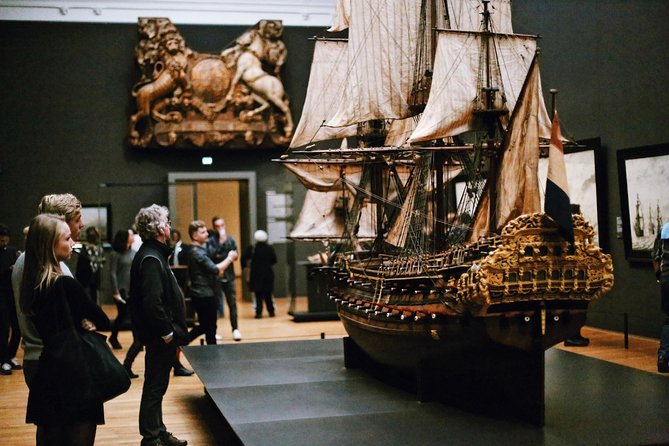
Reviewed · AMSTERDAM TOURS
Rijksmuseum & Amsterdam City Center – Exclusive Guided Tour
Amsterdam’s best lesson in art and city history comes in two parts: first, Rembrandt and Vermeer inside the Rijksmuseum, then the canals and cobbled streets that explain how Dutch society took shape. You see masterpieces such as The Milkmaid and works by Rembrandt before meeting the city’s old churches, almshouses, canal houses, and medieval walls on foot.
I like the private format, which lets your guide adjust the pace and explain a painting in plain language rather than rushing you past it. I also like the bridge between museum and city. The story of Amsterdam’s merchants, churches, trade, and homes makes more sense after you have seen the art they produced.
The main consideration is the price: $287.18 per person is a serious outlay, especially if your party is small. The day also involves several hours on foot, a lunch break at your own expense, and a start-point detail worth confirming because the tour description refers to the Rijksmuseum while the listed meeting point is Cobra Café.
Key points at a glance
- Rembrandt and Vermeer in the Rijksmuseum: Focus on major Dutch paintings, 17th-century dollhouses, historical objects, and the museum’s remarkable library.
- A private English-speaking guide: Your party receives its own guide unless you choose the semi-private savings option.
- A 21-stop city walk: The route links St. Nicholas Basilica, Nieuwmarkt, the Amstel, Begijnhof, Dam Square, the Jordaan, and the canals.
- History you can see on the street: Leaning houses, narrow façades, old hofjes, churches, and former trading headquarters turn abstract history into visible details.
- Five and a half hours with lunch included in the schedule: The museum portion takes about two and a half hours, followed by a break and a long walking section.
- Rain-or-shine planning: Wear practical shoes and bring weather protection. Amsterdam’s weather is not known for consulting your itinerary.
Why the museum-to-city format works
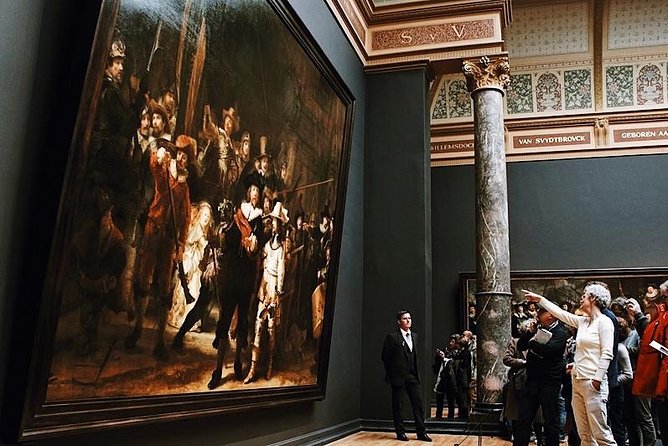
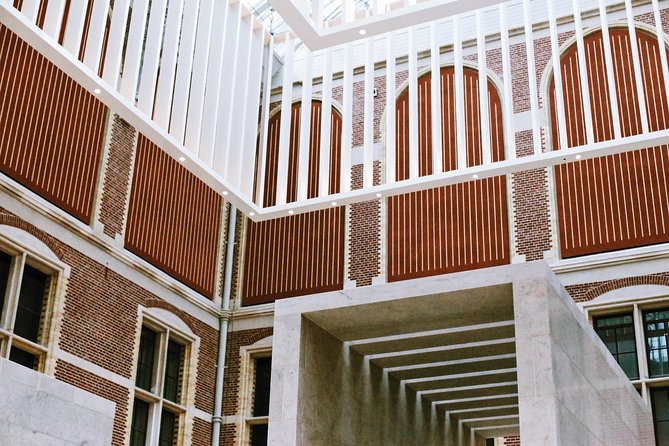
Many Amsterdam tours give you either a museum visit or a canal-area walk. This one ties the two together. Inside the Rijksmuseum, you look at the people, homes, trades, beliefs, and ambitions recorded by Dutch artists. Outside, your guide points to the buildings and waterways that made those subjects possible.
The Rijksmuseum holds about 8,000 objects on display, so nobody can cover everything in a single visit. That is not a flaw. A good guide helps you concentrate on the pieces that give you a working picture of Dutch art and society rather than leaving you lost among room after room of paintings.
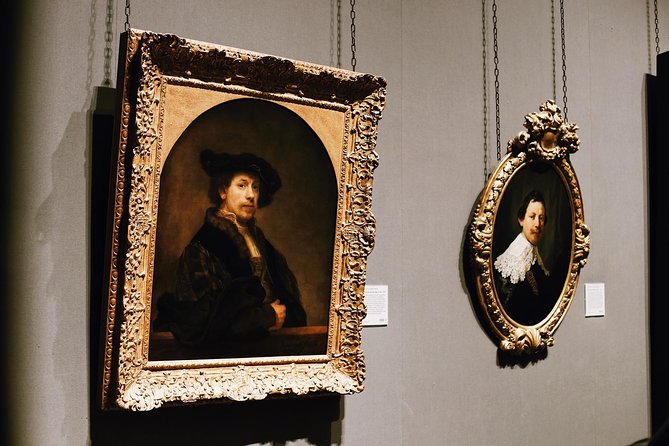
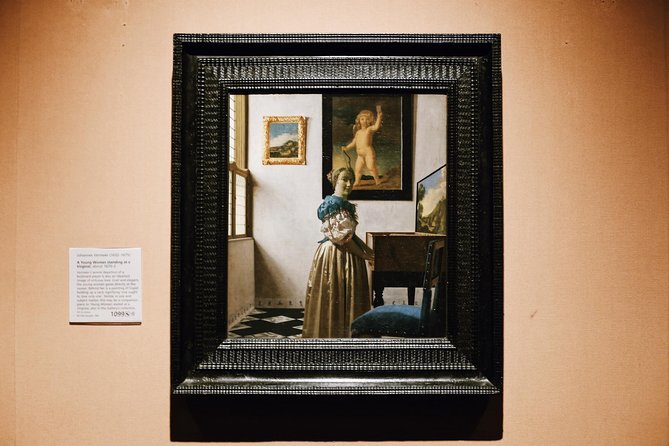
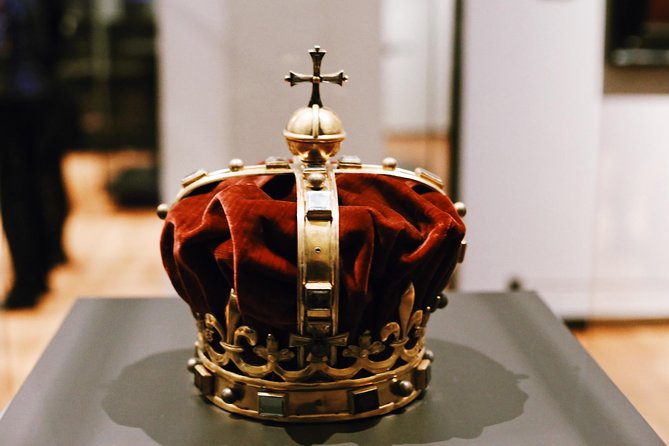
The focus includes Rembrandt, Vermeer’s The Milkmaid, 17th-century dollhouses, and a 19th-century library. The dollhouses are especially useful for visitors who think museum history means only paintings. They offer a close look at domestic life and the status-conscious world behind the grand portraits.
The museum portion is listed at about two hours and 30 minutes. That is enough for a guided overview, but not enough for a slow examination of every gallery. If you already have a long list of favorite artists, you should tell the guide early. The private setup makes that request more realistic than it would be on a large group tour.
Several guides have been singled out by name in past feedback, including Jacopo, Victoria, Josje, Giuseppina, and Paola. The consistent strengths are clear: strong command of the art, lively explanations, and the ability to steer around school groups or adjust when the day goes wrong. A power failure once interrupted a visit, but Victoria and the local operator worked to improve the situation. That tells you something useful about the service, though it cannot guarantee that every guide will suit your style.
More Rijksmuseum tickets:
- Amsterdam: Rijksmuseum Entry Ticket
★ 4.7 · 25,535 reviews - Amsterdam: City Canal Cruise and Rijksmuseum
★ 4.5 · 2,129 reviews - Rijksmuseum Amsterdam Small-Group Tour with Private Upgrade
★ 4.5 · 1,547 reviews
Starting at the Rijksmuseum
The supplied meeting information needs careful attention. The tour overview says you meet your guide at the Rijksmuseum, while the formal meeting point lists Cobra Café, Hobbemastraat 18, at 10:00 am. Confirm the exact place and timing before the day of the tour, and provide a mobile number with the country code as requested.
Once inside, expect security checks and restrictions on luggage. Large bags and suitcases are not allowed in the museum. A handbag or small, thin backpack is the safer choice.
Your guide will lead you toward the major works rather than leaving you to find them alone. Rembrandt gives the visit its dramatic center, while Vermeer offers a quieter look at everyday life. The Milkmaid rewards a close look at light, texture, and the dignity given to an ordinary household task.
The museum also places art inside a longer story of the Netherlands. You see how painting, trade, religion, domestic life, and civic pride fit together. Some rooms require very quiet behavior or restrict speaking, so the guide may explain a work just before you enter rather than talking freely inside.
Museum displays can change during the year, and occasional closures can happen without advance warning. If the opening is delayed by more than an hour, an alternative is offered, but the stated terms do not provide a refund or discount for that disruption.
Lunch before the long city walk
Lunch is part of the schedule but not part of the price. You pay for your own meal, and the supplied details do not specify a restaurant or fixed lunch duration.
That flexibility can be useful. You can choose according to appetite and budget, but you should not treat the break as a fully arranged meal. Amsterdam’s food prices vary, and the $287.18 tour price does not cover this extra cost.
The pause matters because the second half is not a short stroll. You will cover a large area of the old center, with repeated stops for explanations and photographs. Comfortable shoes are more important than fashionable ones, and a rain jacket earns its place in your day bag.
From St. Nicholas Basilica to Amsterdam’s medieval edge
The city walk begins with St. Nicholas Basilica, Amsterdam’s main Roman Catholic church. Built in the late 19th century, it reflects the return of public Catholic worship after roughly three centuries of prohibition. Its mixture of architectural styles makes it a good opening lesson in how Amsterdam changed after the Reformation.
A short walk leads to the Schreierstoren, often called the Weeping Tower or Tower of Tears. It was once part of the medieval city wall. The name comes from the old belief that women wept there as their husbands left the port for war or fishing. You spend only about 10 minutes here, so think of it as a compact historical marker rather than a full visit.
Zeedijk follows, in the part of the old center commonly known as Amsterdam’s Chinatown. Asian markets, restaurants, shops, and a large Chinese-style Buddhist temple give the street a different character from the grand canal belt. The value here is contrast: Amsterdam’s history is not only Golden Age merchants and narrow brick houses.
At Nieuwmarkt, the route reaches a square used for trade and social life since the 17th century. Its position just inside the old city gate made it handy for sellers and shoppers. The Waag, a 15th-century building on the square, began as a city gate and later served as a guildhall, museum, and fire station. You see it from outside unless your guide advises otherwise, and the tour does not promise entry.
A few more Amsterdam trips worth a look
- Amsterdam: Van Gogh Museum Ticket
★ 4.7 · 52,054 reviews - Amsterdam Classic Saloon Boat Cruise with Drinks and Cheese
★ 5.0 · 31,825 reviews - Amsterdam Luxury Canal Cruise + Unlimited Drinks & Bites option
★ 5.0 · 30,518 reviews - Amsterdam: Heineken Experience Ticket
★ 4.6 · 30,055 reviews
Narrow houses, old companies, and changing beliefs
The Trippenhuis and Kleine Trippenhuis offer one of Amsterdam’s most memorable architectural jokes. The Trippenhuis is exceptionally wide, about 22 meters across, while the smaller house opposite is among the city’s narrowest. Together, they show how land taxes encouraged tall, slim homes and made every bit of frontage matter.
You then reach the courtyard of the Oost-Indisch Huis, once the headquarters of the Dutch East India Company. The company helped create the model of a multinational business, linking Amsterdam to a global network of trade. The courtyard is a brief stop, but it gives the walking tour a firm connection to commerce and empire.
The route continues past the Kleine Trippenhuis and the Zuiderkerk. The latter was Amsterdam’s first purpose-built Protestant church, designed by Hendrick de Keyser. Its tower is one of the city’s familiar markers, and it helps explain how public worship reshaped Amsterdam after the Reformation.
You also pass Rembrandt’s former home, now Museum Het Rembrandthuis. Rembrandt lived and worked there from 1639 to 1656, and the museum holds his etchings and paintings by people from his circle. The tour lists the stop but does not include a visit inside, so book a separate entry if you want to see the rooms and collection properly.
The Stopera comes next, a building complex that contains city hall and the Dutch National Opera and Ballet. Its construction took at least 60 years to reach completion, making it a useful reminder that Amsterdam’s public buildings do not all belong to the old city.
Hofjes, canal houses, and Dam Square
The Huis aan de Drie Grachten is a rare 17th-century canal house at the meeting point of three canals. Its façades face in three directions, giving you a fine example of how Amsterdam’s buildings respond to water and tight urban space.
Begijnhof offers a quieter change of pace. This enclosed courtyard once housed Beguines, unmarried women who lived together under vows of chastity. The houses and gardens form one of Amsterdam’s old hofjes, and two churches remain on the site. Keep your voice low and follow any local rules, since this is a place with a residential and devotional character, not just a photo stop.
Dam Square is more open and more public. The Royal Palace, New Church, and National Monument gather here, along with frequent events. The square can feel busy and exposed compared with Begijnhof, but it gives you a clear sense of Amsterdam as a civic capital.
At Herengracht, you see the Golden Bend, the section lined with some of the city’s most ornate canal mansions. These homes show how wealth was displayed during the Dutch Golden Age. Your guide can connect the façades to the paintings seen earlier: the prosperity recorded in art had a physical address along these waterways.
Anne Frank House and the Jordaan
The route pauses outside the Anne Frank House. You do not enter as part of this tour, and admission is not included for this stop. If you want to visit inside, you need a separate ticket, subject to the museum’s own availability.
Next door is Westerkerk, known for having Amsterdam’s tallest church tower. Even from outside, the pairing of the hiding place and the church makes this a weighty stop. It shifts the story from 17th-century prosperity to the experience of Amsterdam during World War II.
In the Jordaan, look up at the façades for carved gable stones. These small markers use allegories and trade symbols to tell you what once happened behind the walls. They are easy to miss when you are watching bicycles, bridges, and traffic, which is exactly why having a guide can add value.
The Coöperatieve Vereniging Karthuizerhof brings you to Amsterdam’s largest hofje. Like other almshouses, it was built around a calm courtyard for poor and elderly residents. The stop adds a social side to the city’s story. Amsterdam was shaped not only by wealthy merchants but also by systems for housing people with fewer resources.
Noorderkerk, a 17th-century Protestant church built for the Jordaan, has an unusual cross-shaped floor plan. Its design reflects new ideas about worship during the Reformation. The visit is brief, but the building helps you read the neighborhood as a planned community rather than a random collection of old streets.
Finishing at Het Papeneiland
The tour ends at Het Papeneiland, a brown café dating to 1642, at the corner of Prinsengracht. It is one of the prettiest points on the canal route and a pleasant place to finish after several hours outside.
The café is said to serve some of the city’s best apple pie. The tour does not state that food is included, so any stop for pie or a drink is your own choice and expense. Ending here also gives you a useful chance to continue exploring the canal belt on your own.
The route covers a lot, but the short timings at many stops mean you should expect orientation and storytelling rather than full interior visits. That is the right way to judge this experience. It is a broad introduction, not a series of museum admissions.
What the $287.18 price buys you
At $287.18 per person, the tour is expensive for a half-day outing. Its value depends heavily on group size. A private group can divide the cost, and a dedicated guide can shape the museum visit around your interests. A couple paying the full amount will need to care deeply about personal guiding to find the price comfortable.
The cost includes the guided Rijksmuseum visit, the walking tour, entrance fees listed as included, and private transportation between locations if needed. It does not include hotel pickup or drop-off, lunch, or gratuities.
I would compare it with the cost of arranging a museum ticket and a separate city walk. The advantage here is the single story linking art and streets, plus the ability to ask questions throughout. The disadvantage is that many city stops are exterior views, so you are paying mainly for interpretation rather than a long list of admissions.
The private arrangement is also useful for families, mixed-interest groups, and art lovers who want to spend more time on Rembrandt or Vermeer. If everyone in your group already knows the Rijksmuseum well, the price is harder to justify unless the city history and private attention are the main draw.
Who should book this Amsterdam tour?
This tour suits a first visit, especially if you want the city’s main historic districts explained in one well-organized day. It also suits people who prefer context over collecting isolated sights. The guide can help you understand why a narrow house looks the way it does, why an old church matters, and how a painting connects to the city outside.
It is a good pick for art lovers who do not want to tackle the Rijksmuseum alone. Past guides including Jacopo, Victoria, Josje, Giuseppina, and Paola have been praised for clear explanations, humor, strong preparation, and passion for Dutch art. No guide is guaranteed by name, but the feedback suggests that the guiding team is a major part of the experience.
You should think twice if you dislike long walks, need hotel transport, or want substantial time inside the Anne Frank House or Rembrandthuis. Those sites are viewed from outside on this route, and the day keeps moving.
A moderate level of physical fitness is expected. The tour runs in rain or shine, and the many cobbled streets, bridges, and outdoor stops make sensible clothing essential. Free cancellation is available up to 24 hours before the start time, while later cancellations and changes are not accepted.
FAQ
How long does the tour last?
The experience lasts approximately 5 hours and 30 minutes, including a lunch break.
What time does the tour start?
The listed start time is 10:00 am.
Where does the tour meet?
The formal meeting point is Cobra Café at Hobbemastraat 18 in Amsterdam. The tour description also refers to meeting at the Rijksmuseum, so confirm the exact meeting location before the day of the tour.
Is the tour private?
Yes. Your group has an exclusive guide unless you select the semi-private savings option.
Is lunch included?
No. Lunch is scheduled during the tour, but you pay for your own meal.
Are hotel pickup and drop-off included?
No. Hotel transport is not included. The tour recommends using Uber or a taxi for this purpose.
Does the tour enter the Anne Frank House or Rembrandthuis?
The route stops outside both places. Entry is not included for these stops.
Just added around Amsterdam
- Amsterdam: Giethoorn Tour with Canal Cruise and Windmills★ 5.0 · 3 reviews
- Full-day excursion to Edam, Volendam, and Marken★ 3.7 · 3 reviews
- Amsterdam: Chocolate Fondue in the Dark★ 5.0 · 3 reviews
- Amsterdam Old-West Vegan Food Tour with Local Guide★ 4.7 · 3 reviews
- Amsterdam Family Friendly Historical Walking Tour★ 5.0 · 3 reviews
- Amsterdam Private Walking Tour of Famous Painters★ 5.0 · 3 reviews
- From Amsterdam: visit Zaanse Schans, Muiderslot and more!★ 5.0 · 3 reviews
- Amsterdam Walking Tour with Dutch Pancake Lunch★ 5.0 · 3 reviews
Amsterdam Tours, compared.


Amsterdam Classic Saloon Boat Cruise with Drinks and Cheese
Read our review →
Amsterdam Luxury Canal Cruise + Unlimited Drinks & Bites option
Read our review →


Classic Boat Cruise with Optional Cheese & Wine
Read our review →
Evening Cruise with Optional Wine and Snacks
Read our review →
75 Minute City Canal Cruise with Audio Guide
Read our review →Browse the lists this tour appears in