
Reviewed · MAASTRICHT TOURS
Maastricht Private Walking Tour With A Professional Guide
Maastricht’s story runs from Roman beginnings to the birth of the euro, and this two-hour private walk gives that long timeline a human scale. You move through market squares, churches, old defensive walls, and the city’s famous bridge rather than watching it pass from a bus window.
I like the private format, which gives your group room to ask questions and adjust the emphasis. I also like the route’s range, from St. Servatius and the Dominicans Church to the Maastricht Treaty and the city’s role during both world wars. The main drawback is simple: two hours goes quickly, and a walking tour does not include entrance fees.
Key points to know before booking
- Roman origins to the euro: The tour links Maastricht’s earliest settlement to the Maastricht Treaty and the European Union.
- Private group of up to 15: Your guide works only with your party, not a mixed crowd.
- A practical first look: The route covers major landmarks including the Vrijthof, Helpoort, City Hall, and Sint Servaasbrug.
- Customizable on the spot: You can ask your guide to spend more time on architecture, religion, politics, war, or daily city life.
- Easy walking, but still a walking tour: Most participants can take part, though comfortable shoes matter.
- Book with a little care: The service offers free cancellation up to 24 hours before departure, but one booking mix-up has been reported.
Maastricht’s long story fits into a two-hour walk
The best reason to choose this tour is the way it connects separate sights into one story. Maastricht can look like a handsome collection of churches, squares, and old lanes if you explore without context. A guide helps you see how Roman settlement, religious power, war, trade, industry, and European politics shaped the same compact city.
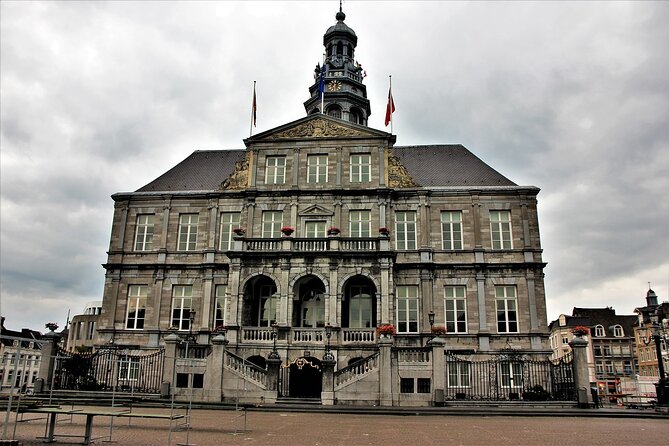
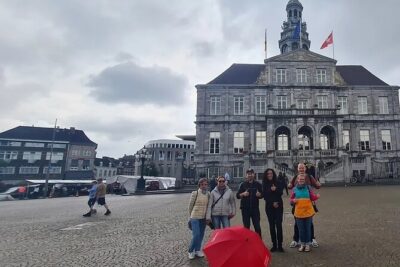
The tour begins at Markt 52, by Maastricht’s City Hall and market square. From there, the route can take you through the central sights and finish back at the same meeting point. That makes the walk easy to fit into a day of independent sightseeing, especially if you want an introduction before exploring on your own.
The guide is described as a professional licensed guide with more than 20 years of guiding experience. That level of experience should be useful in a city with several overlapping historical layers, though the guide’s name is not provided in the tour details.
You should expect interpretation rather than formal museum visits. The guide explains what you are seeing from the streets and public spaces, while entrance fees are left to you. If you want to enter a church or museum, ask about the option during the walk and confirm any added cost.
More walking tours in Maastricht:
- Maastricht Privat Sightseeing City Walk
★ 5.0 · 76 reviews - 2H Walking Tour Maastricht
★ 4.8 · 57 reviews - Maastricht 2-Hour Walking Tour | Discover The City With A Local
★ 4.5 · 57 reviews
Start at City Hall and the Street Market
The opening section around City Hall, or Stadhuis, and the Street Market gives you a useful sense of Maastricht’s civic center. This is a good place for a guide to explain how the city worked as a place of government, commerce, and local life.
The market setting also helps you see Maastricht as a living city rather than a preserved monument. Depending on the day and activity in the square, you might find a more active public setting than at some of the quieter historic sights. The trade-off is that a market area can be noisy or crowded, so your guide’s commentary may require attention.
The private arrangement helps here. Instead of trying to hear a guide over a large group, you can stay close and ask for clarification. If you are interested in architecture, local politics, or how the square is used today, this is a sensible point to shape the rest of the walk.
Dominicans Church and the city’s religious layers
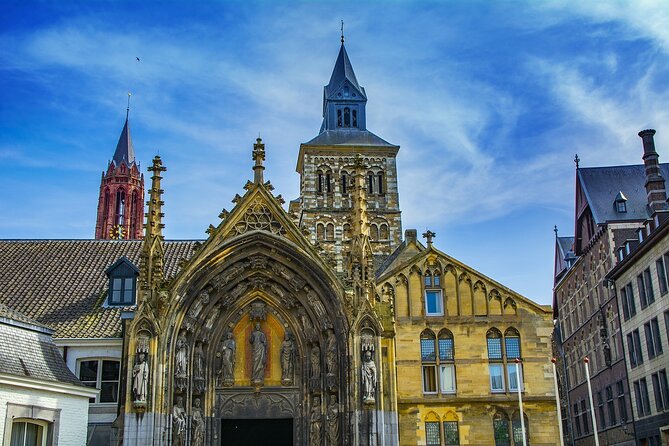
The Dominicans Church, or Dominikanerkerk, introduces one of Maastricht’s most striking changes of use. The tour presents the city’s religious past alongside its modern urban life, showing how old sacred buildings remain part of the city’s identity.
You will also hear about the legend of Saint Servatius, one of the central figures in Maastricht’s religious history. The story helps explain why St. Servatius Church became such an important landmark and why religious buildings occupy such a large place in the city’s historic center.
This is one area where a private tour can be more satisfying than a fixed group script. You can ask whether the guide is presenting legend, church tradition, or documented history, and you can request more detail about religious life. If you prefer to go inside, remember that the walking tour price does not cover entrance fees.
The Vrijthof brings architecture and public life together
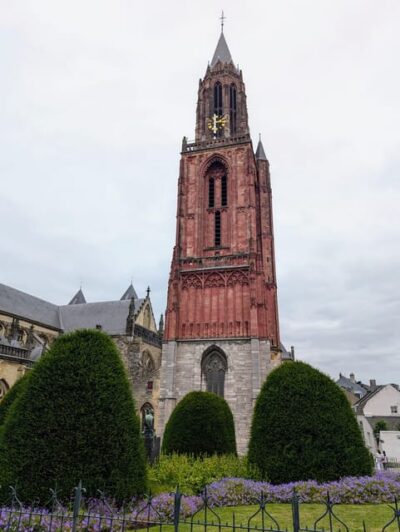
The route includes Museum Aan Het Vrijthof, St. Servatius Church, and St. John Church, or Sint-Janskerk, around the Vrijthof. This square is one of the key places to understand Maastricht’s architecture and public life.
St. Servatius Church carries the city’s connection to its patron saint, while St. John Church provides a contrasting religious landmark nearby. Seeing the two in the same part of the walk gives you a useful visual comparison, even if the guide does not take you inside either building.
Museum Aan Het Vrijthof adds an arts and local culture angle. Since the visit is conducted from the outside unless you arrange and pay for entry separately, you should think of this stop as orientation rather than a museum tour.
The mention of Hendrik van Veldeke adds a literary thread to the route. He is associated with Maastricht’s cultural story, and his inclusion keeps the tour from focusing only on rulers, battles, and buildings. I appreciate that balance. A city is also shaped by the people who write about it and give it a voice.
A few more Maastricht trips worth a look
- Highlight Running Tour
★ 5.0 · 118 reviews - e-Scavenger hunt Maastricht: Explore the city at your own pace
★ 4.5 · 110 reviews - Maastricht: Museum of Illusions Entry Ticket
★ 4.2 · 82 reviews - Valkenburg: Municipal Cave Guided Tour
★ 4.5 · 47 reviews
From medieval power to religious conflict
The historical explanation moves back to the Middle Ages and the Carolingian Empire, then forward to the religious wars of the 16th and 17th centuries. These subjects help explain why Maastricht’s churches, fortifications, and political history cannot be separated neatly.
The Carolingian period gives you an early European connection before the modern European Union existed. Religious conflict then shows how faith and political control could shape everyday life and the city’s built environment.
This part may be the most information-heavy section of the walk. If dates and dynasties are not your priority, ask your guide to focus on what remains visible in the streets. A good private guide can turn a long sequence of historical events into a simpler explanation of who held power, why the city mattered, and how that affected its residents.
Helpoort and the old defensive city
Helpoort is one of the clearest reminders that Maastricht was a fortified city. Along with the city’s older streets and Pieke oet de Stokstraot, it gives the walk a more intimate scale after the larger squares and churches.
The name Pieke oet de Stokstraot points to Maastricht’s local character. It is the kind of detail that can get lost on a standard sightseeing route, but a guide can explain why a particular figure, lane, or local reference matters.
Helpoort also gives you a chance to ask practical questions about the city’s defenses. The tour covers the wider setting of conflict and political change, including the religious wars and later European struggles. The fortification stop works best when you connect it to those stories rather than treating it as a quick photo stop.
The route is described as easy walking, but it is still a two-hour urban walk. Wear comfortable shoes and expect to spend the full time on foot. Most people can participate, and service animals are allowed.
Industry, Napoleon, and the difficult Dutch connection
The tour does not stop with medieval Maastricht. It follows the city through the industrial revolution, the Napoleonic era, and the formation of the Kingdom of the Netherlands.
That wider timeline is important because Maastricht’s identity was not formed in one peaceful stretch. Industrial change brought an economic turnaround, while the Napoleonic period shifted political structures and administration. The later integration into the Kingdom of the Netherlands was difficult, giving you a more complicated picture than a simple national story.
I like this part because it gives the city a sense of change. Maastricht was not merely preserving old buildings. It was adapting to new governments, new industries, and new political borders. If modern European history interests you, ask your guide to spend extra time on this section.
War, refuge, and occupation
The route also covers Maastricht during World War I and World War II. During World War I, the city served as a haven for refugees. During World War II, it experienced German occupation.
These subjects add a human side to the city’s history. A border city can be affected by events beyond its own streets, and Maastricht’s position helps explain why regional and international politics matter here.
The supplied details do not identify particular wartime buildings or memorials on the route, so you should not expect a dedicated museum visit or a full military history tour. Instead, the guide places Maastricht within the major events and explains how the city changed before and after them.
The post-war period completes the story. It prepares you for the final topic, which is the city’s role in creating the modern European Union.
Sint Servaasbrug and the road to the Maastricht Treaty
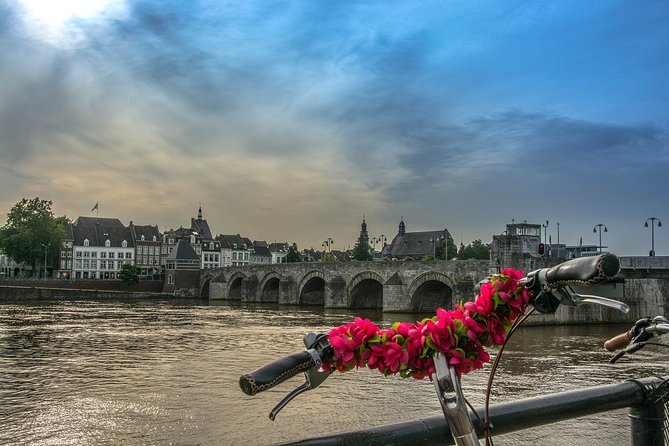
The walk includes Sint Servaasbrug, the bridge associated with one of the city’s most recognizable views. It also provides a natural place to connect old Maastricht with its modern political importance.
The final historical thread leads to the Maastricht Treaty, the foundation of the European Union and the euro. This is the detail that separates the tour from a basic old-town walk. You are not only looking at medieval churches and gates. You are also learning why Maastricht is linked to one of the major political agreements in modern Europe.
The contrast is useful. The city’s Roman and medieval past can feel distant, while the treaty connects Maastricht to institutions and currency you may deal with every day. Ask questions here if you want a clearer explanation of what the treaty established and why Maastricht was chosen as its namesake.
Why a private guide can be worth the price
The listed price is $275.65 per group of up to 15 people, not per person. For a full group, that can be reasonable, especially compared with booking several separate admissions or paying individual rates for a guided activity. For one or two people, the cost is much harder to justify.
The value comes from attention and flexibility. You are paying for a guide who stays with your group, answers questions, and can adjust the route as you go. A large group tour may cost less per person, but it usually gives you less control and less chance to shape the conversation.
The private format also suits families, friends, and small groups with different interests. One person can ask about churches, another about the European Union, and another about war history without forcing everyone into a fixed lecture.
Still, keep the limits in mind. The tour lasts about two hours, and entrance fees are not included. You are buying a guided introduction to Maastricht, not an all-day museum program.
A useful first tour for different types of visitors
I would choose this walk early in a Maastricht stay. It gives you a map in your head and points out places you can revisit later at your own pace.
It suits you best if:
- You are visiting Maastricht for the first time.
- You want history explained while you walk through the actual city.
- You prefer a private guide to a large group or bus.
- Your group has specific interests you want to discuss.
- You are comfortable walking for about two hours.
- You want both medieval landmarks and modern European history.
It may suit you less if you want extensive interior visits, a long museum session, or a very low-cost activity for two people. Since the tour ends where it begins, it is convenient, but it does not function as transportation around the city.
There is also one practical concern with the booking. A previous reservation was affected when the guide mistakenly believed the tour had been canceled. The provider accepted responsibility and apologized, but I would still confirm the meeting details shortly before the start. That is especially wise because the meeting point is specific and the activity is private.
Free cancellation is available up to 24 hours before the start time. Changes or cancellations made less than 24 hours before the local start time are not accepted for a refund.
Should you book this Maastricht walk?
Book it if you want a clear, private introduction to Maastricht and value the chance to ask questions. The route covers an unusually broad period, from Roman origins and Saint Servatius to the Maastricht Treaty, while still giving you recognizable sights such as City Hall, the Vrijthof, Helpoort, and Sint Servaasbrug.
I would be more cautious if you are booking only for the lowest possible price or if you need guaranteed access inside every church and museum. For a group of several people, the fixed group price makes better sense. For one or two people, compare the cost with a small-group option.
The strongest reason to choose this experience is its mix of local streets and big historical themes. Wear good shoes, arrive at Markt 52 on time, and tell the guide at the start which subjects matter most to you. That is how you get the best value from two hours.
FAQ
Where does the Maastricht walking tour begin?
The tour begins at Markt 52, 6211 CK Maastricht, Netherlands.
Where does the tour end?
The activity ends back at the meeting point.
How long does the walking tour last?
The tour lasts approximately two hours.
Is this a private tour?
Yes. Only your group participates, and the local guide is with your group only.
How many people can join the private group?
The listed price covers a group of up to 15 people.
Can the tour be customized?
Yes. You can discuss your interests with the local guide and make possible adjustments during the tour.
Are entrance fees included?
No. Entrance fees are not included in the tour price.
Is the tour suitable for most participants?
Most people can participate. The activity is a walking tour, and service animals are allowed.
Can I cancel for a full refund?
Yes. You can cancel at least 24 hours before the experience start time for a full refund. Cancellations or changes made less than 24 hours before the start time are not accepted for a refund.
Just added around Maastricht
- Maastricht: Day trip from Amsterdam with 3 country point★ 5.0 · 4 reviews
- Maastricht Heritage and Nature Tour★ 5.0 · 6 reviews
- Maastricht Self Guided Sherlock Holmes Murder Mystery Game★ 3.5 · 6 reviews
- Maastricht Highlights, Architecture & Heritage Tour★ 5.0 · 7 reviews
- Maastricht Evening Sightseeing Tour★ 4.5 · 7 reviews
- Maastricht: Segway City Tours★ 4.9 · 9 reviews
- Best of Maastricht: Private Walking Tour with a Local★ 5.0 · 10 reviews
- Discover Maastricht with a Smile! Culture, History and People★ 5.0 · 16 reviews
Maastricht Tours, compared.


e-Scavenger hunt Maastricht: Explore the city at your own pace
Read our review →

Maastricht 2-Hour Walking Tour | Discover The City With A Local
Read our review →
Browse the lists this tour appears in