
Reviewed · MAASTRICHT TOURS
Discover Maastricht with a Smile! Culture, History and People
Maastricht’s appeal is in the layers: Roman beginnings, medieval walls, Catholic landmarks, French influence, industrial change, and a strong local identity. This private walk with guide Peter Corsius brings those layers together through churches, bridges, squares, gossip, and stories about the people who shaped the city.
I like the custom route, which can last about 1.5 hours or stretch to a full day, and the small private format, with only your group taking part. I also like the balance of major sights and local details, from Saint Servaas Bridge to the statue of De Mestreechter Geis. The main consideration is that the advertised tour lasts about two hours, so you will see highlights rather than explore every site in depth.
Key points at a glance
- A private walk for up to 15 people: The group price can offer good value for families, friends, and organized groups.
- Peter Corsius leads the experience: His style mixes local stories, humor, history, and flexible conversation.
- Roman, medieval, and modern Maastricht meet: The route links the oldest settlement areas with city gates, churches, industry, and social history.
- Ten central stops create a useful first look: You cover Saint Servaas, the Market Square, Helpoort, Vrijthof, the Stokstraatkwartier, and more.
- The route can be made to measure: Ask to focus on architecture, religion, military history, industrial heritage, local life, or another subject.
- Plan for a walking tour, not a museum visit: Most stops are exterior explanations, and admission to Saint Servaas Basilica is not included.
Why this Maastricht walk feels different
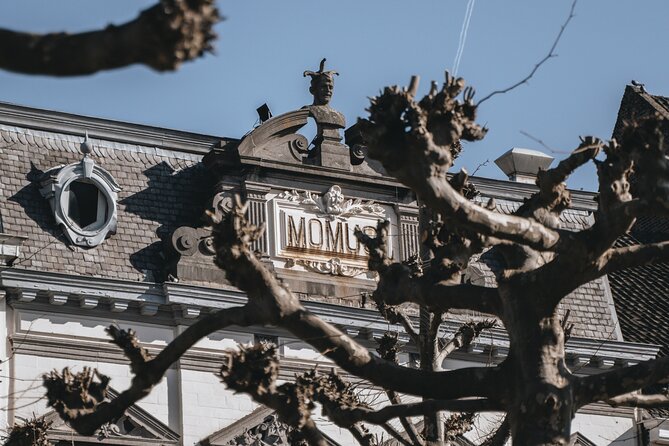
A standard city walk can turn into a parade of dates and names. This experience is designed to be more personal. Peter Corsius uses local stories, humor, and short explanations to connect Maastricht’s past with the streets you are standing on.
That matters in Maastricht because the city’s story is not simple. It has Roman roots, medieval defenses, religious power, border-town politics, French connections, industrial change, and a local dialect and character all its own. A good guide can make those subjects feel connected instead of scattered.
The private format is another real advantage. You do not have to follow the interests of a large mixed group. If you care about churches, you can spend more time on Saint Servaas and the Basilica of Our Lady. If military history interests you, you can ask about Helpoort, the defensive walls, D’Artagnan, and Louis XIV. If you prefer daily life and social history, Maastricht’s people and traditions can take the lead.
The published price is $210.27 per group of up to 15 people. For one or two people, that is a substantial cost compared with a large group walk. For a family or group of friends, the calculation changes. Split among 10 people, it is about $21 per person, before any admission or food costs. The value improves further if you use the custom format and ask for exactly the subjects you want.
More history tours in Maastricht:
- Maastricht Highlights, Architecture & Heritage Tour
★ 5.0 · 7 reviews - Maastricht Heritage and Nature Tour
★ 5.0 · 6 reviews - Amsterdam Food and Cultural Tour with Tastings
★ 5.0 · 2,442 reviews
Starting in the Stokstraatkwartier
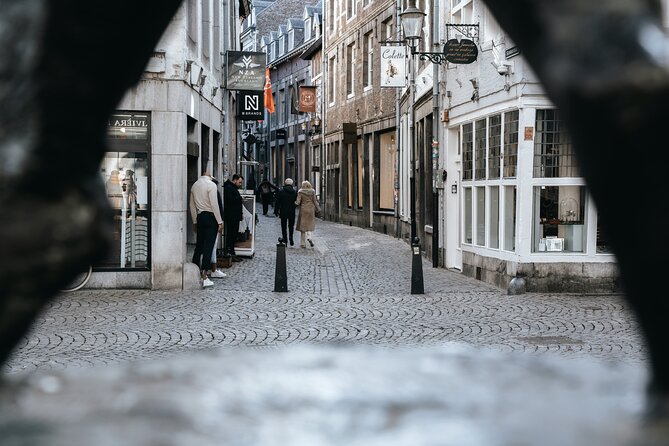
The meeting point is on Stokstraat, in the old Stokstraatkwartier. This is a sensible place to begin because the neighborhood itself introduces one of the city’s strongest themes: change.
The district is part of Maastricht’s oldest Roman settlement area. Today, it is carefully restored and attractive, but its past was not always polished. Peter can use the streets here to explain how an old quarter moved through different periods and how the city treated its historic center over time.
The Stokstraatkwartier is also the longest stop on the standard route, at about 20 minutes. That gives you a little more time to look closely and ask questions. I would use this opening to tell the guide what you want from the walk. The tour is specifically made to measure, so it is worth saying at the start if you want fewer church interiors, more military stories, or extra attention to Maastricht’s industrial past.
Saint Servaas Basilica and the city’s patron saint
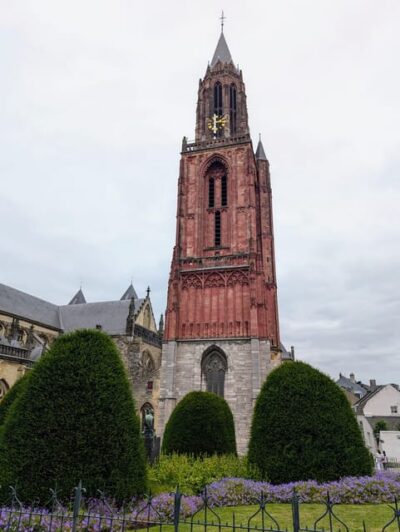
The walk includes about 10 minutes at Saint Servaas Basilica, one of Maastricht’s key religious buildings. The focus here is the short history of the church and its connection to Saint Servaas, the city’s patron saint.
This is a useful early stop because it gives you a foundation for understanding Maastricht as a major religious center. You will hear the story from outside or around the site as part of the walk. Admission is not included, so do not assume the tour price covers entry into the basilica.
If you want to go inside, ask Peter about timing and availability while planning your route. The standard tour is already tightly arranged, and an interior visit could affect the pace. For a quick introduction, the exterior stop works well. For visitors especially interested in church art, relics, or architecture, a longer custom tour would make more sense.
The old bridge and Roman connections
At Sint Servaasbrug, or Saint Servaas Bridge, Peter explains the story of what is described as the oldest bridge in the Netherlands, from the Roman era to modern times. The stop is free and takes about 10 minutes.
This is one of the best places to see how Maastricht’s position shaped its identity. A bridge is never just a crossing. It links neighborhoods, supports trade, and helps explain why a city grew where it did. Here, Roman influence and later urban life meet in one practical structure.
I would pay attention to the time span Peter covers. The point is not only that the bridge is old, but that it has remained part of the city’s daily movement through many changes. It is also a good photo stop, though the experience is built around the story rather than a long pause for pictures.
A few more Maastricht trips worth a look
- Highlight Running Tour
★ 5.0 · 118 reviews - e-Scavenger hunt Maastricht: Explore the city at your own pace
★ 4.5 · 110 reviews - Maastricht: Museum of Illusions Entry Ticket
★ 4.2 · 82 reviews - Maastricht Privat Sightseeing City Walk
★ 5.0 · 76 reviews
Market Square, Minckelers, and the Sphinx connection
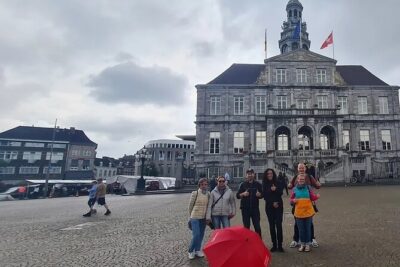
The Market Square receives about 10 minutes. The old city hall anchors the space, while the statue of J. P. Minckelers adds a less obvious chapter to the city’s story. The nearby Sphinx factory area brings in Maastricht’s industrial heritage.
This stop helps prevent the tour from becoming only a medieval walk. Maastricht also changed through invention, manufacturing, labor, and industry. The Sphinx connection gives Peter a way to explain how the city’s working life shaped its streets and communities.
I like this part of the route because it gives you a fuller picture of Maastricht. You are not simply shown pretty façades. You are encouraged to see the city as a place where religion, government, invention, and industry all affected ordinary life.
Helpoort and the medieval defenses
The route then moves through Helpoort, the oldest surviving town gate in the Netherlands, according to the tour description. The stop takes about 10 minutes and includes the gate’s history, along with some local gossip.
That last detail is important. Dry military facts can make defensive architecture feel remote. Stories about personalities, disputes, and local behavior give the gate a human scale. Peter’s humor is a central part of the experience, and this is the kind of setting where a well-timed anecdote can make the stonework easier to remember.
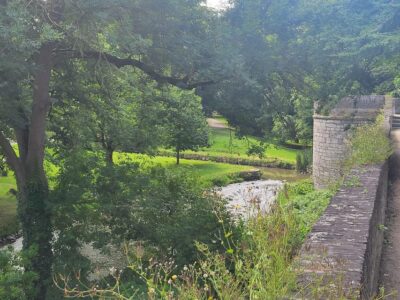
The broader walk also includes the park and medieval defense works. You should expect some uneven or ordinary city walking rather than a polished attraction path. The stated physical requirement is moderate fitness, so comfortable shoes are sensible.
Father Vinck Tower and the people behind the walls
Father Vinck Tower follows as another 10-minute stop. The subject is the medieval tower and the identity of friar Vinck.
This is a small detail with a useful lesson: city walls were built by governments and armies, but people lived beside them, worked around them, and gave them names. A tower becomes more interesting when you know whose story is attached to it.
The stop also fits the tour’s wider interest in social history. You are not only hearing about rulers and battles. You are being introduced to the people and local memories tied to Maastricht’s buildings.
Fons Olterdissen in the Jekerkwartier
In the Jekerkwartier, the walk pauses at the monument to Fons Olterdissen, a local cultural figure whose legacy remains tied to Maastricht. The stop lasts about 10 minutes and takes place in a quieter spot.
The description compares Olterdissen to a local Rodgers and Hammerstein, which signals an interest in song, performance, and civic identity. This is a different kind of history from the basilicas and gates. It asks how a city tells stories about itself and how local culture keeps those stories alive.
I would especially value this stop if you want more than architecture. It offers a glimpse of Maastricht’s own voice, rather than a broad account that could fit any European old town.
De Mestreechter Geis and local character
The statue of De Mestreechter Geis is a very short stop, about five minutes, but it may be one of the most revealing. The figure symbolizes the Maastricht spirit and the city’s way of life.
You will not spend long here, but the guide can explain the meaning behind the symbol. This is where the tour’s title, Discover Maastricht with a Smile, makes sense. The experience is not limited to monuments that appear in guidebooks. It also asks what makes Maastricht feel like Maastricht.
Because the stop is brief, ask Peter to explain any local terms or customs you do not understand. A small statue can carry a lot of meaning, especially when the explanation comes from someone who knows the city’s cultural references.
Vrijthof and the city’s grand public square
Vrijthof is Maastricht’s main square, with about 10 minutes set aside for its sights. It is one of the city’s broadest public spaces and a natural place to discuss religion, civic life, events, and architecture.
The strength of this stop is its flexibility. The tour description leaves the focus open, so you can ask about the buildings, the square’s role in city life, or a subject that has already caught your attention. If you have seen the square before, Peter can shift the conversation toward the stories behind it instead of repeating a basic orientation.
Do not expect a long pause at every building during the standard two-hour walk. This is a highlights route. If Vrijthof is a priority, request more time there when arranging the tour.
Basilica of Our Lady and the Slevrouw tradition
The final listed stop is Onze Lieve Vrouw Sterre der Zee Basiliek, commonly called Slevrouw by locals. The basilica sits on Onze Lieve Vrouweplein and is one of Maastricht’s important religious buildings.
The focus includes the church, the square, and the statue of the Virgin Mary. The stop lasts about 10 minutes and is included without an admission charge. As with Saint Servaas, the walk gives you context, but it does not promise an extended interior visit.
This is a fitting finish because it returns to the religious side of Maastricht after the bridge, walls, industry, and local culture. You get a sense of how churches were not separate decorations in the old city. They were part of its public life and identity.
A flexible route for different interests
The listed stops add up to roughly two hours, which matches the advertised duration. The operator also offers routes from 1.5 hours to a full day, so the exact experience depends on what you request.
Possible subjects include:
- Roman influences and the oldest settlement areas
- Maastricht as a border town
- Holland and Maastricht
- D’Artagnan and Louis XIV
- Medieval defense works
- Industrial heritage and the Sphinx factory
- Social history and local people
- Churches, religious traditions, and civic identity
This flexibility is valuable, but it also places some responsibility on you. A custom tour works best when you tell Peter what you already know and what you want to learn. Otherwise, the standard highlights route is the safer choice for a first orientation.
The walk is offered in English. Several pieces of feedback describe Peter guiding in German, but German is not listed as the standard language, so confirm language needs before booking.
Guide style and group fit
Peter Corsius is repeatedly praised for humor, clear storytelling, expert local insight, and the ability to keep history entertaining. The feedback describes him as intelligent, funny, competent, friendly, and flexible. One large group split across three tour variations, including this smile-focused option, and the whole party finished the day enthusiastic about the experience.
That pattern tells you what to expect: less lecture, more conversation. Peter appears comfortable adding anecdotes and adjusting the route, rather than delivering a fixed list of dates.
The tour suits adults, families with older children, couples who prefer a private guide, and groups wanting a first look at Maastricht. It is also a good choice for people who enjoy asking questions. If you want long museum visits, extensive church interiors, or a carefully timed architectural study, request a longer version or choose a more specialized experience.
The group limit is 15. Pickup can be arranged together with the guide, and you receive a call about 10 minutes before meeting. The stated start and end point is Stokstraat in Maastricht, so confirm the final meeting arrangement when you book.
What the price includes and what it does not
The $210.27 price covers the unique private experience for a group of up to 15 people. It does not include food, coffee, tea, or other drinks, and admission to Saint Servaas Basilica is not included.
For a solo visitor or couple, the price may feel high for a two-hour walk. For a larger private group, it can be quite reasonable. You are paying for a guide who can shape the conversation around your group rather than for a ticketed attraction.
The strongest value comes from using the flexibility. Ask for a subject you cannot easily get from a guidebook, such as Maastricht’s border-town role, local social history, or the link between the Sphinx factory and the city. If you simply want to check off the main sights, a less expensive group option may suit you better.
Practical planning before you book
Confirmation arrives within 48 hours, subject to availability. Free cancellation is allowed up to 24 hours before the start time for a full refund. Changes or cancellations inside that window are not accepted for a refund, and the cut-off follows local time.
The activity is near public transportation, service animals are allowed, and moderate physical fitness is recommended. Since this is a walking route through historic streets, wear shoes that can handle a steady city walk.
Food and drinks are not part of the tour, so plan them separately. The route ends where it begins at Stokstraat unless another arrangement is made with the guide.
Should you book Discover Maastricht with a Smile?
Book it if you want a private, story-led introduction to Maastricht and value a guide who can explain both famous buildings and local character. Peter Corsius’s humor, local insight, and flexible style are the main reasons to choose this experience.
It is especially good for a group of friends or family members who can share the fixed price. It also works well at the start of a Maastricht stay, when you want to understand the city before exploring on your own.
Think twice if you want extensive interior visits, a museum-heavy day, or the lowest possible price for one or two people. In that case, ask for a longer custom route or compare it with a standard group walk. For everyone else, this is a lively way to connect Roman traces, medieval walls, churches, industry, and Maastricht’s own sense of humor in a single walk.
FAQ
How long does the tour last?
The standard experience lasts about two hours. Custom tours can be arranged from about 1.5 hours up to a full day.
How many people can join the private tour?
The price covers one private group of up to 15 people.
Where does the tour start and finish?
The stated meeting point and end point are on Stokstraat, 6211 Maastricht, Netherlands. Pickup details can be arranged with the guide.
Is pickup available?
Yes. The pickup point is determined together with the group, and the guide calls about 10 minutes before meeting.
Is the tour offered in English?
Yes, the experience is offered in English. Some past feedback describes German-language guiding, so confirm the language directly if German is important for your group.
Are admission fees and refreshments included?
Food, coffee, tea, and other beverages are not included unless specifically arranged. Admission to Saint Servaas Basilica is also not included.
What is the cancellation policy?
You can cancel up to 24 hours before the start time for a full refund. Cancellations or changes made less than 24 hours before the start are not accepted for a refund.
Just added around Maastricht
- Maastricht: Day trip from Amsterdam with 3 country point★ 5.0 · 4 reviews
- Maastricht Private Walking Tour With A Professional Guide★ 4.0 · 6 reviews
- Maastricht Heritage and Nature Tour★ 5.0 · 6 reviews
- Maastricht Self Guided Sherlock Holmes Murder Mystery Game★ 3.5 · 6 reviews
- Maastricht Highlights, Architecture & Heritage Tour★ 5.0 · 7 reviews
- Maastricht Evening Sightseeing Tour★ 4.5 · 7 reviews
- Maastricht: Segway City Tours★ 4.9 · 9 reviews
- Best of Maastricht: Private Walking Tour with a Local★ 5.0 · 10 reviews
Maastricht Tours, compared.

e-Scavenger hunt Maastricht: Explore the city at your own pace
Read our review →
Maastricht 2-Hour Walking Tour | Discover The City With A Local
Read our review →
Browse the lists this tour appears in