
Reviewed · AMSTERDAM TOURS
Jewish Amsterdam Private Walking Tour
Amsterdam’s former Jewish Quarter is best understood on foot, where memorials, synagogues, markets, philosophers’ homes, and wartime sites sit close together. This private tour links those places into one serious, personal story, ending near the Anne Frank House.
I like the small group of up to four, which lets guide Aleks adjust the pace and explain difficult subjects without a crowd around you. I also like the route’s range: you move from the Holocaust Namenmonument and the Dockworker to the Portuguese Synagogue, Spinoza, Rembrandt, and the Waterlooplein Market.
The main caution is that several museum interiors are not included, and the Jewish Theater and Holocaust Memorial buildings were listed as under construction through 2024. You should also treat Anne Frank House entry as a separate matter, not as part of the tour price.
Key points to know before booking
- A private route through Amsterdam’s former Jewish Quarter: The group is limited to four people, with pickup offered and a walking finish at Anne Frank House.
- Holocaust sites form the emotional center: You visit the Namenmonument, Auschwitz Monument, Hollandsche Schouwburg, Dockworker, and several smaller memorials.
- Aleks shapes the pace around your group: He has adjusted schedules, helped with directions, and offered breaks for people with limited mobility.
- Museum admission is mostly extra: The Jewish Historical Museum and Portuguese Synagogue require tickets, while Anne Frank House admission is not included.
- The route connects Jewish life with wider Amsterdam history: You see the Snoge, Uilenburgersjoel, Spinoza Monument, Rembrandt House, and Waterlooplein.
- Plan carefully for Anne Frank House: The tour ends there, but your guide cannot personally obtain a ticket for you.
Why this walk matters in Amsterdam
Amsterdam’s Jewish Quarter is not a single preserved district with one grand entrance. It is a collection of streets, buildings, memorials, and public spaces scattered through the old city. That makes a guide useful. Without help, you could pass a synagogue, statue, or memorial without understanding its place in the larger story.
The route deals with Jewish life before, during, and after World War II. You learn about Sephardic and Ashkenazi communities, Jewish merchants, religious buildings, resistance, deportation, and the destruction of much of the local population under Nazi occupation.
The subject matter is painful. The tour does not soften the facts, particularly at the Holocaust Namenmonument and Hollandsche Schouwburg. At the same time, the route includes courage, protest, faith, intellectual life, and the continuing use of historic Jewish sites. That balance gives you more than a wartime memorial circuit.
The experience lasts about three and a half hours. Since the group is private, Aleks can slow the walking speed and arrange five to ten minute pauses by agreement. That flexibility is valuable, but you should still be ready for a substantial walk with repeated stops.
More Walking Tours in Amsterdam
- Anne Frank’s Story – Guided Walking Tour through Amsterdam
★ 5.0 · 11,619 reviews - Amsterdam: Life of Anne Frank and World War II Walking Tour
★ 4.8 · 10,467 reviews - Absolutely Amsterdam – the Essential Introductory Walking Tour
★ 5.0 · 3,629 reviews
Starting at the Holocaust Namenmonument
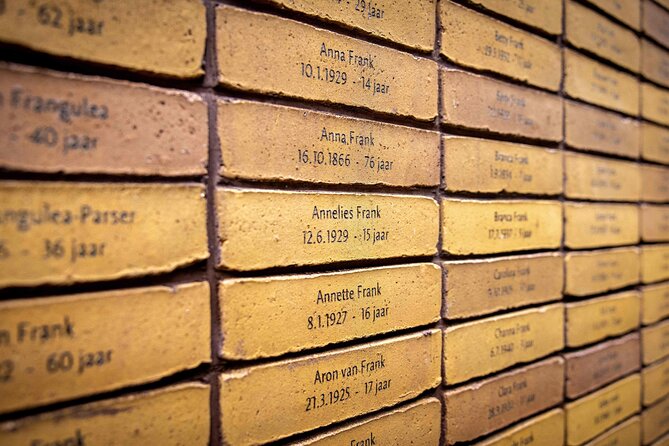
The first major stop is the Holocaust Namenmonument, a memorial carrying the names of 102,000 people who died in Nazi death camps and were not given a proper burial. The design makes the victims individual rather than anonymous. Reading names changes the scale of the Holocaust from a distant number to a record of distinct lives.
You receive about 15 minutes here. That is enough for an introduction and quiet reflection, though not enough for a long independent visit. If you want to spend more time reading the names, tell your guide early so you can discuss how the rest of the walk might be paced.
The nearby Auschwitz Monument honors the approximately one million people murdered at Auschwitz. You spend around 10 minutes at this stop. Together, these first memorials establish the tone of the day before the route turns to buildings connected with Amsterdam’s Jewish community.
Hollandsche Schouwburg and the difficult wartime story
Hollandsche Schouwburg, once known as the Dutch Theater, is tied to the deportation and persecution of Amsterdam’s Jewish population. The site includes two related museum buildings and monuments, presenting both the suffering caused by genocide and acts of courage and selflessness.
The important practical point is that the interiors were listed as under construction through 2024. The site could still be visited as an outdoor stop, but you should not assume that museum access is available simply because it appears in the route.
Aleks has used personal photographs to explain what the interiors contain and why the buildings matter. That can help when construction prevents entry, though photographs cannot replace seeing the museum spaces yourself. Check the current status before booking if interior access is important to you.
This stop receives about 15 minutes. It works best as a focused explanation rather than a full museum visit.
Jewish museums and the Portuguese Synagogue
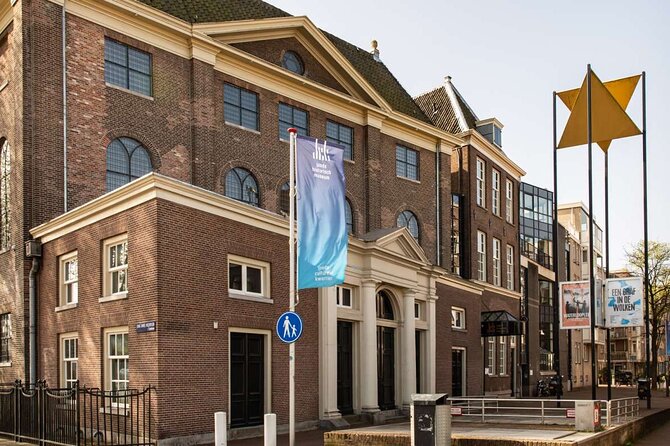
The Jewish Historical Museum and JHM Children’s Museum occupy four former Ashkenazi synagogues. The museum covers Jewish life in the Netherlands, including its religious, cultural, and family dimensions. The children’s section makes this part of the route more approachable for families, although the short scheduled stop means you should not expect a full museum visit.
The listed combined ticket covers the Jewish Historical Museum and the Portuguese Synagogue. Admission is not included in the tour price, so budget for it separately.
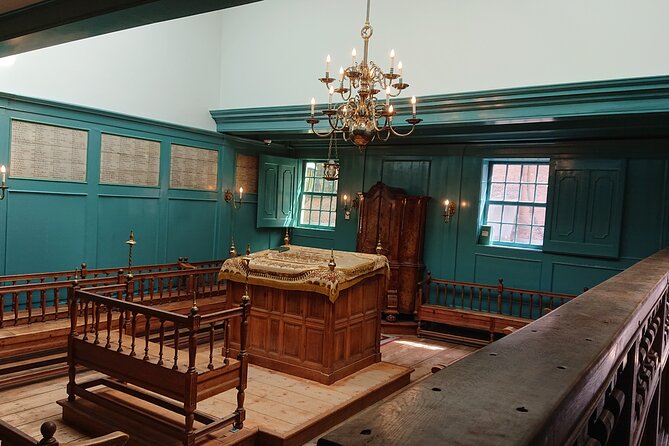
The Portuguese Synagogue, also called the Snoge or Esnoga, dates from 1675. It was built by Amsterdam’s Sephardic Jewish community and remains in use. The building represents a different Jewish tradition from the Ashkenazi synagogues, and seeing both helps you understand that Amsterdam’s Jewish community was never one uniform group.
Only about 10 minutes is assigned to the Jewish Historical Museum and another 10 minutes to the Portuguese Synagogue. That timing favors a guided orientation. If you want to study exhibits, architecture, or religious objects at length, return later on your own.
Same country, a completely different kind of day:
- Amsterdam: Van Gogh Museum Ticket
★ 4.7 · 52,054 reviews - Amsterdam Classic Saloon Boat Cruise with Drinks and Cheese
★ 5.0 · 31,825 reviews - Amsterdam Luxury Canal Cruise + Unlimited Drinks & Bites option
★ 5.0 · 30,518 reviews - Amsterdam: Heineken Experience Ticket
★ 4.6 · 30,055 reviews
The Dockworker and Amsterdam’s act of protest
The Dockworker statue commemorates the February 24, 1941 strike by dock workers against anti-Semitic measures and the first deportations of Jews to the concentration camp at Mauthausen. It is one of the clearest public reminders that resistance began early, even though the protest could not stop the occupation.
You spend roughly 10 minutes here. The site is outdoors and admission is free. Its value comes from the story attached to it: this is not simply a memorial to victims, but also a memorial to people who took a public risk in response to persecution.
The itinerary also refers to a 19th-century Catholic church connected with Baruch Spinoza and his family. The supplied details do not name the church, so ask Aleks to clarify the exact building and what you will see there. It is a small but useful link between Amsterdam’s religious history and the life of one of Europe’s major philosophers.
Diamonds, synagogues, and old merchant homes
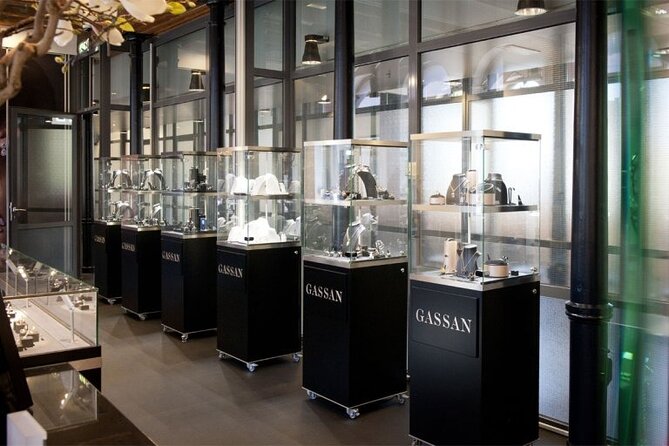
GASSAN provides a change of pace. This diamond company offers a free 20-minute visit, with optional local company tours explaining the business, workshop, and store. The stop connects Amsterdam’s Jewish story with commerce and craftsmanship rather than focusing only on persecution.
Because this is a commercial venue, you should know what to expect. The visit is free, but it is not a museum devoted solely to Jewish history. Some people will appreciate the working-company angle; others may prefer more time at the memorials or museums.
Uilenburgersjoel is an Ashkenazi synagogue built in 1766 in the Rococo style. The exterior gives you another architectural marker of Amsterdam’s former Jewish community and its institutions. The stop lasts about 10 minutes and admission is free.
Huis De Pinto dates to 1603 and once belonged to wealthy Jewish merchant Isaac de Pinto. This house offers a glimpse of Jewish economic life in Amsterdam before the modern era. You see how the route moves beyond a story of loss, showing people as merchants, householders, religious citizens, and public figures.
Rembrandt, Waterlooplein, and everyday Jewish Amsterdam
The Rembrandt House Museum is the former town house where Rembrandt van Rijn lived from 1639 to 1658. The route connects the painter with Amsterdam’s Jewish community in the 17th century, a useful reminder that Jewish life was part of the city’s artistic and commercial world.
The scheduled stop is about 15 minutes, and museum admission is not included. That makes this another orientation stop rather than a complete museum visit. If Rembrandt is a major interest, you will need separate time and a separate ticket.
Waterlooplein Market was Amsterdam’s oldest flea market, and before World War II it was a major center of social life for more than 150 years. Markets can tell you a great deal about ordinary city life, and this one helps place the Jewish Quarter in a daily setting of trade, conversation, and neighborhood exchange.
The current stop is about 15 minutes and free. The market’s present-day character may not recreate the prewar Jewish neighborhood, but the location still carries that civic and commercial memory.
Smaller memorials with important stories
The Deaf Memorial honors Jewish deaf victims of the Nazi regime between 1940 and 1945. You spend about five minutes here. It is a brief stop, but its subject shows how persecution affected people with different identities and needs within the Jewish population.
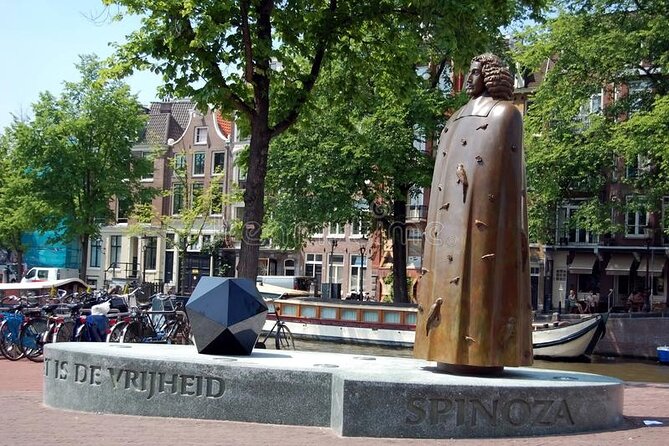
The Spinoza Monument honors Baruch Spinoza, an Amsterdammer descended from a prominent Portuguese Jewish family. He became one of Europe’s major philosophers and an early influence on modern philosophical thought. The stop lasts about 10 minutes and is free.
The Monument for Jewish Resistance honors Jewish resistance fighters who died during World War II. This gives the route another angle on the period, alongside the Dockworker’s commemoration of non-Jewish workers who protested anti-Semitic policies.
These smaller sites are easy to miss when you walk alone. They are also places where a short explanation makes a large difference. You may not spend long at each one, but together they broaden the story beyond the best-known names.
Ending near Anne Frank House
The walk ends at the Anne Frank House on Westermarkt, beside the Western Church on Prinsengracht. The house was the hiding place of Anne Frank’s family for two years during World War II, and the diary she wrote there has been translated into 57 languages.
The tour includes an exterior stop of about 15 minutes. It does not include entry to the Anne Frank House museum. Your guide may help you understand ticket availability and assist with booking, but he cannot obtain a ticket personally as part of the tour.
This distinction is crucial. One low-rated experience came from a misunderstanding about Anne Frank House tickets. The practical lesson is simple: read the exclusions closely, confirm your ticket situation before the walking day, and do not assume that ending at the museum means you have admission.
Some people have arranged their Anne Frank House visit around the walking tour, with Aleks adjusting the timing and getting them to the entrance afterward. That can work well, but the museum ticket itself remains your responsibility.
The guide and the private format
The strongest part of this experience is the personal service built into a four-person maximum. Aleks has contacted guests before the tour, confirmed arrival plans, adjusted timing around Anne Frank House entry, and helped with directions back to a hotel after the walk.
That kind of contact matters in Amsterdam, where a tightly scheduled museum visit can affect the whole day. It also means you can ask for a slower pace or agree on more frequent breaks if someone in your group has limited mobility.
The private format gives you room to ask questions about family history, religion, resistance, art, or philosophy. It also reduces the risk that a solemn memorial becomes a rushed group-photo stop. Still, the guide’s style will shape the day, and one mixed experience found the Jewish history less connected after the group stopped before completing the whole route.
That unfinished walk happened because one participant could not continue. The lesson is not that the tour is unsuitable, but that you should be honest about walking limits before you start. A three-and-a-half-hour route with many stops can be adjusted, but it is not a short stroll.
Is $540.69 a fair price?
The price is $540.69 for a private group of up to four. Split four ways, that is about $135 per person before museum admissions. For one or two people, the per-person cost is much higher.
I see the value mainly in the private guide, the long route, and the chance to connect sites that would otherwise feel scattered. If you want a customized pace, have a fixed Anne Frank House appointment, or prefer serious subjects explained quietly, the price can make sense.
The value is weaker if you expect a package with museum entry included. The Jewish Historical Museum, Portuguese Synagogue, Rembrandt House Museum, and Anne Frank House all involve separate admission arrangements, while Hollandsche Schouwburg interiors may be unavailable depending on construction status.
With an average booking lead time of 89 days, plan early, especially if you want to coordinate the tour with Anne Frank House tickets. Pickup is offered, and the stated meeting point is Passenger Terminal Amsterdam at Piet Heinkade 27. The end point is Anne Frank House at Westermarkt 20.
Who should book this walk?
I would choose this tour if you want a private introduction to Jewish Amsterdam rather than a single museum visit. It suits families, couples, or small groups who value conversation and want the guide to adjust the pace.
It is especially useful for people interested in:
- Holocaust memorials and Amsterdam during Nazi occupation
- The difference between Sephardic and Ashkenazi Jewish institutions
- Spinoza, Rembrandt, and Jewish life in the 17th century
- A guided route ending at Anne Frank House
- A flexible walk with agreed breaks
I would think twice if you want extensive time inside museums, a quick and easy route, or a package with all tickets handled. The tour covers many places in a limited time, so most stops are brief.
The experience has a rating of 4.6 from 17 reviews, with especially strong praise for Aleks’s communication, flexibility, pleasant manner, and ability to make a complicated day work. One lower rating centered on an incomplete walk and another on confusion over Anne Frank House tickets. Both points are useful warnings: confirm the inclusions and make sure your group can manage the distance.
FAQ
How long does the Jewish Amsterdam Private Walking Tour last?
The tour lasts approximately three hours and 30 minutes.
How many people can join the tour?
The tour has a maximum of four participants.
What is the price of the tour?
The price is $540.69 per group of up to four people.
Where does the tour start?
The listed starting point is Passenger Terminal Amsterdam, Piet Heinkade 27, 1019 BR Amsterdam.
Where does the tour end?
The tour ends at Anne Frank House, Westermarkt 20, 1016 GV Amsterdam, beside the Western Church at Prinsengracht.
Is pickup offered?
Yes, pickup is offered.
Is Anne Frank House admission included?
No. The walking tour does not include admission to the Anne Frank House museum. The guide may assist with availability and ticket information but cannot obtain a ticket personally.
Are museum tickets included at the Jewish Historical Museum?
No. Admission to the Jewish Historical Museum and JHM Children’s Museum is not included. The listed combined ticket covers the Jewish Historical Museum and Portuguese Synagogue.
Can I enter Hollandsche Schouwburg?
The buildings were listed as under construction through 2024, so interior access was not available during that period. The site remains part of the route as an outdoor stop, with the guide explaining its history and showing personal photographs.
Is the tour suitable for someone with limited mobility?
The tour takes at least three and a half hours. The walking speed can be adjusted, and five to ten minute breaks can be arranged by agreement, but anyone with limited mobility should consider the length of the route before booking.
Just added around Amsterdam
- Amsterdam: Giethoorn Tour with Canal Cruise and Windmills★ 5.0 · 3 reviews
- Full-day excursion to Edam, Volendam, and Marken★ 3.7 · 3 reviews
- Amsterdam: Chocolate Fondue in the Dark★ 5.0 · 3 reviews
- Amsterdam Old-West Vegan Food Tour with Local Guide★ 4.7 · 3 reviews
- Amsterdam Family Friendly Historical Walking Tour★ 5.0 · 3 reviews
- Amsterdam Private Walking Tour of Famous Painters★ 5.0 · 3 reviews
- From Amsterdam: visit Zaanse Schans, Muiderslot and more!★ 5.0 · 3 reviews
- Amsterdam Walking Tour with Dutch Pancake Lunch★ 5.0 · 3 reviews
Amsterdam Tours, compared.


Amsterdam Classic Saloon Boat Cruise with Drinks and Cheese
Read our review →
Amsterdam Luxury Canal Cruise + Unlimited Drinks & Bites option
Read our review →


Classic Boat Cruise with Optional Cheese & Wine
Read our review →
Evening Cruise with Optional Wine and Snacks
Read our review →
75 Minute City Canal Cruise with Audio Guide
Read our review →Browse the lists this tour appears in