
Reviewed · AMSTERDAM TOURS
Diamond Museum Amsterdam Admission Ticket
The Diamond Museum Amsterdam turns a small subject into a glittering lesson in geology, craft, commerce, and royal display. You follow a diamond from roughly 200 kilometers below the earth’s surface to the cutting wheel, then on to crowns, paintings, and jewelry. The museum’s connection with Amsterdam’s Coster Diamonds adds a local angle, especially when you see the craft taking place nearby.
I like the Museumplein location, which makes this an easy add-on before or after the Rijksmuseum or Van Gogh Museum. I also like the chance to watch stone polishers and goldsmiths at work, since a real workshop gives more life to the displays than labels alone. The main drawback is scale: the museum is small, and some exhibits, films, and listening devices feel dated.
Key points to know before you go
- See diamonds from mine to masterpiece: Learn how diamonds form, how they are judged, and how they become finished stones.
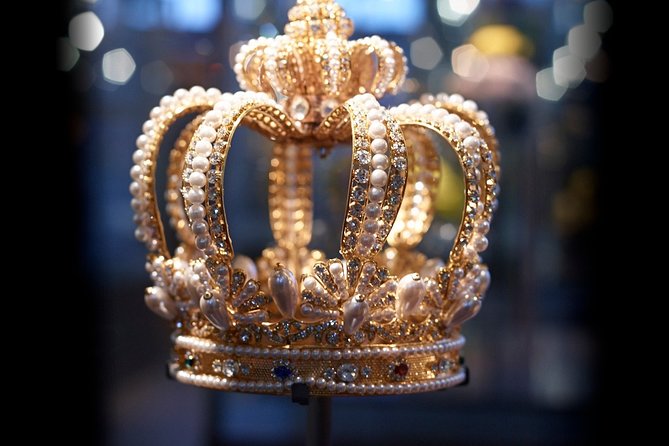
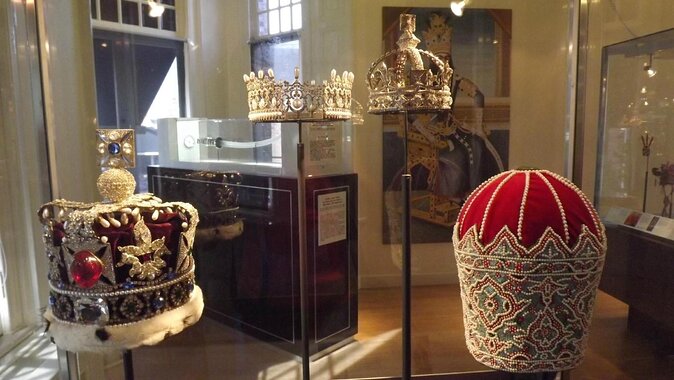
- Look for royal jewels and crowns: The crown collection is one of the most memorable parts of the museum.
- Watch practical craftsmanship: Goldsmiths and diamond polishers may be working as part of the experience.
- Expect a short museum visit: Most people will need about 1 to 2 hours, not an entire day.
- Use the location to your advantage: The museum is between the Rijksmuseum and Van Gogh Museum at Museumplein.
- Check your entry code before leaving: Some ticket holders have had trouble receiving or retrieving the QR code at the door.
A glittering stop at Museumplein
You find the Diamond Museum Amsterdam between two of the city’s biggest art institutions, the Rijksmuseum and the Van Gogh Museum. That makes its location especially useful. If you are already spending the morning around Museumplein, you can fit the museum into a gap without crossing the city.
The building and collection are not enormous. That is good news if you want a focused visit, but less good if you expect a major museum with room after room of priceless stones. Allow about an hour for a brisk visit, or closer to two hours if you read the displays, watch the films, play the interactive elements, and spend time at the working craft area.
The experience is offered by Royal Coster Diamonds, a name tied to Amsterdam’s diamond-cutting trade. The museum explains that famous stones such as the Cullinan, described as the largest diamond ever found, and the Koh-I-Noor were cut in Amsterdam by Coster Diamonds polishers. This connection gives the visit a sense of place. You are not simply looking at shiny objects in a generic gallery. You are learning why Amsterdam became associated with diamond cutting.
More Museums in Amsterdam
- Amsterdam: Van Gogh Museum Ticket
★ 4.7 · 52,054 reviews - Moco Museum Amsterdam Entrance Tickets with Banksy & More
★ 4.4 · 10,088 reviews - Amsterdam: The Upside Down Museum Entrance Ticket
★ 4.4 · 9,506 reviews
From 200 kilometers underground to a jewelry case
The museum begins with the origin story. Diamonds form far below the earth, under intense heat and pressure, over a process lasting billions of years. That scale of time is useful because it resets your expectations. The stone in a ring may be small, but its natural history is vast.
From there, the displays move toward the human side of diamonds. You learn about types of diamonds, valuation, and the qualities that affect their worth. The museum presents the traits that make one stone more valuable than another, helping you understand why two pieces that look similar in a shop can carry very different prices.
This part is most useful if you have never learned how diamonds are assessed. It gives you a basic framework for clarity, cut, and value without requiring specialist knowledge. If you already know the jewelry trade well, you may find the explanations fairly introductory.
The presentation also deals with the route from mining to finished jewelry. One part of the visit addresses the difficult conditions faced by people working in diamond mining, a worthwhile reminder that the sparkle in a display case has a much less glamorous beginning. The museum’s focus is partly commercial, but it does not treat the subject as only a story about luxury.
Crowns, artifacts, and a famous painted night
The strongest visual section is the display of royal jewels and crowns. Crowns make diamonds easier to understand because they show how stones are used for ceremony, power, and public image, rather than simply worn as private decoration.
You can also see a diamond-encrusted version of Van Gogh’s Starry Night. The piece is a playful meeting of Amsterdam art and jewelry culture. It is not the original painting, of course, but it gives you a memorable way to connect the city’s two big museum interests: Van Gogh and diamonds.
The collection includes unusual diamond artifacts and what is presented as the smallest diamond ever cut. These objects help break up the parade of large, sparkling jewelry. Tiny stones are often harder to appreciate than large crowns, so look closely and give yourself time to consider the skill involved in cutting something so small.
Keep your expectations realistic about authenticity. Some displays use reproductions and glass imitations, and not every glittering object is a valuable original. The museum is telling a story through objects, replicas, images, and explanations. If your main goal is to see a large number of major natural diamonds, this may feel thin.
Watching the cutters and goldsmiths work
The craft area can be the most convincing part of the visit. Seeing a stone polisher or goldsmith at work connects the museum’s explanations with a real process. Diamond cutting is not just a matter of making a stone smaller. The cut affects how light enters and leaves the stone, so tiny decisions have a major effect on the finished appearance.
You might see polishers shaping stones or goldsmiths working on jewelry. The hands-on activity gives you something to watch after the more static displays. It is also a good way to understand why finished jewelry costs more than the raw material alone. Skill, time, tools, design, and setting all matter.
Do not assume that your timed appointment guarantees a private demonstration or a personal guide. The core visit is a museum experience with films, written information, and displays. Some people may find the live work area satisfying, while others may hope for a longer explanation or a full cutting demonstration and feel disappointed.
There may also be access to a diamond factory in a nearby building, reportedly two doors away, depending on how your admission is handled. Treat that as a possible addition rather than the central promise of the ticket, since the listed inclusion is entrance to the museum itself. If staff direct you to another location, confirm where you should go before leaving the first building.
More Amsterdam diamond visits:
- Amsterdam: Diamond Museum Entrance Ticket
★ 3.9 · 460 reviews - Amsterdam: Royal Diamond Experience
★ 4.5 · 139 reviews - Royal Experience – Private Tour in World’s Oldest Diamond Polishing Factory
★ 4.5 · 75 reviews - Operation 45: An Adventure in Diamonds
★ 5.0 · 38 reviews
Films, audio, and interactive features
A short film helps introduce the subject before you walk through the galleries. The museum also uses audio-visual material, written explanations, and interactive rooms. These features are useful for families and for anyone who prefers a clear sequence rather than a wall of technical text.
The interactive elements can add a little play to a subject that might otherwise feel formal. A diamond heist game, described in the museum experience, lets you take on a Mission Impossible style challenge. It is a welcome change from simply reading about carats and polishing wheels, especially if you are visiting with a child or teenager.
The technology is not always dependable. Some listening devices have been reported as broken, and parts of the audio-visual program feel in need of an update. If a device does not work, move on rather than letting it slow your visit. The written displays still carry much of the basic information.
Language support may also be limited. French-language printed material has not always been available, and the museum’s self-guided format means you should not count on a staff member walking you through every room. If you need information in a language other than English, check the current arrangements before booking.
What the $72 ticket is really buying
At $72, this is not a bargain museum admission if you judge it only by time spent inside. A one to two-hour visit can make the price feel high, particularly when some exhibits are replicas and the museum occupies a compact space.
The value improves if you are already planning a Museumplein day and want a short, specialized stop between larger museums. You are paying for location, a focused presentation, the Amsterdam diamond-cutting connection, and the possibility of seeing working polishers and goldsmiths. The crowns and unusual artifacts add visual appeal, while the geology and valuation displays give the visit educational weight.
I would not choose this ticket as a substitute for Amsterdam’s major art museums. The Diamond Museum is a side trip with a narrow subject, not a full-day attraction. It works best when diamonds interest you, when you want something different from paintings, or when you are traveling with someone who may not enjoy another large art collection.
The purchase can also become more worthwhile if you make use of the interactive game and any nearby workshop access offered with your entry. Ask at the entrance what is included that day. Do not buy the ticket expecting that the museum alone will fill an afternoon.
Getting there and planning your visit
The museum is at the famous Museum Square, near the Rijksmuseum and Van Gogh Museum. It is close to public transportation, so you can combine it with other central Amsterdam sights without arranging a private transfer. Hotel pickup and drop-off are not included, and you arrange your own way to Museumplein.
Opening hours are daily from 9 a.m. to 5 p.m., including weekends and holidays. That schedule makes an early visit practical, especially if you want to continue to another museum afterward. Since the building can feel cramped, an early or quieter time may also make it easier to study the displays.
Your confirmation should arrive at booking, but check that you have the QR code or entry ticket before setting out. Entry problems have led to long waits while staff searched for bookings, and there has also been confusion when people were mistakenly directed toward a different diamond building. Save the ticket on your phone and carry the booking details with you.
Most people can take part, but the compact building may be awkward for anyone with mobility concerns. The information says most participants can join, yet the tight interior can be hard for people who need more space. If that matters to you, contact the provider before paying.
The best way to fit it into your day
I would pair the Diamond Museum with one large Museumplein museum, not two. The Rijksmuseum and Van Gogh Museum both demand time and attention. Adding all three in one block can leave you rushing through everything.
A practical plan is to spend the morning at the Rijksmuseum, stop for the Diamond Museum around midday, and then decide if you still have energy for another collection. Another option is to visit the Diamond Museum first, when you are fresh, then use the rest of the day for art.
Families may appreciate the short length and the heist game. The crowns, sparkling displays, and working craftspeople provide clear visual hooks for children, although the technical explanations may need some help from an adult. Couples considering jewelry purchases can also use the valuation section as a starting point before shopping.
If you care mainly about diamond artifacts, focus on the crowns, the smallest cut diamond, the Van Gogh piece, and the workshop. If you care more about geology and trade, spend extra time with the sections on formation, mining, types, and valuation.
Who should book this museum ticket?
You should book if you want a compact, specialized museum near Amsterdam’s main art square. It is a good fit for anyone curious about how diamonds form, how they are valued, and how Amsterdam became important in the cutting trade.
It is also useful for a mixed-interest group. One person can enjoy the royal jewelry, another can focus on craftsmanship, and children can try the interactive game. The self-guided format lets you move at your own pace rather than waiting for a group.
I would skip it if you want a large collection of authenticated diamonds, a long live lecture, or a polished high-tech museum experience. The small rooms, replica displays, aging audio equipment, and occasional entry confusion reduce the value at $72. The museum is informative and attractive, but it is not essential for every first trip to Amsterdam.
Free cancellation is available if you cancel at least 24 hours before the local start time. Cancellations inside that window are not refunded, and changes are not accepted within 24 hours.
Should you book the Diamond Museum Amsterdam?
Book it as a one to two-hour add-on, not as the main event of your Amsterdam schedule. I like its location, the royal crowns, the Amsterdam connection, and the chance to watch real diamond work. Those features give the museum more substance than a simple jewelry showroom.
The price asks you to be selective. If diamonds, jewelry, or craft interest you, the visit can be a pleasant and informative break from Amsterdam’s art museums. If you are unsure, choose it only when you can combine it easily with Museumplein and confirm your entry code in advance.
FAQ
Where is the Diamond Museum Amsterdam?
It is located at Museum Square in Amsterdam, between the Rijksmuseum and the Van Gogh Museum.
How long does a visit take?
The expected duration is approximately 1 to 2 hours.
What are the museum’s opening hours?
The museum is open daily from 9 a.m. to 5 p.m., including weekends and holidays.
Is admission included with the ticket?
Yes. Entrance to the Diamond Museum Amsterdam is included.
Are food and drinks included?
No. Food and drinks are not included in the admission ticket.
Is hotel pickup and drop-off provided?
No. Hotel pickup and drop-off are not included. The museum is near public transportation.
Can I watch diamonds being polished?
The experience includes the chance to watch professional stone polishers and goldsmiths working on jewelry. The exact demonstration available can vary, and the visit is not described as a private guided demonstration.
Can I cancel for a full refund?
Yes, if you cancel at least 24 hours before the experience start time. Cancellations made less than 24 hours in advance are not refunded, and changes inside that period are not accepted.
Just added around Amsterdam
- Amsterdam: Giethoorn Tour with Canal Cruise and Windmills★ 5.0 · 3 reviews
- Full-day excursion to Edam, Volendam, and Marken★ 3.7 · 3 reviews
- Amsterdam: Chocolate Fondue in the Dark★ 5.0 · 3 reviews
- Amsterdam Old-West Vegan Food Tour with Local Guide★ 4.7 · 3 reviews
- Amsterdam Private Walking Tour of Famous Painters★ 5.0 · 3 reviews
- Amsterdam Family Friendly Historical Walking Tour★ 5.0 · 3 reviews
- From Amsterdam: visit Zaanse Schans, Muiderslot and more!★ 5.0 · 3 reviews
- Amsterdam Walking Tour with Dutch Pancake Lunch★ 5.0 · 3 reviews
Amsterdam Tours, compared.


Amsterdam Classic Saloon Boat Cruise with Drinks and Cheese
Read our review →
Amsterdam Luxury Canal Cruise + Unlimited Drinks & Bites option
Read our review →


Classic Boat Cruise with Optional Cheese & Wine
Read our review →
Evening Cruise with Optional Wine and Snacks
Read our review →
75 Minute City Canal Cruise with Audio Guide
Read our review →Browse the lists this tour appears in