
Reviewed · AMSTERDAM TOURS
Amsterdam: Diamond Museum Entrance Ticket
Amsterdam’s Diamant Museum turns a tiny stone into a very long story, beginning 200 kilometers underground and stretching across mining, trade, cutting, royal collections, and modern jewelry. The highlight for many families is the Laser Room, where you weave between beams to reach a diamond without setting off the alarm.
I like the clear explanation of how a rough diamond becomes a polished jewel, and I like the 22 replicas of famous diamonds, which give the museum a strong visual focus. The royal House of Oranje-Nassau collection adds a Dutch connection rather than leaving the visit as a general lesson about luxury.
The main drawback is size. This is a compact museum, not a full-day attraction, and there is no guide included. At $14 per person, it can be good value when you want a short, central museum visit, but a single unused ticket is money lost, so book only for people who are likely to come.
Key points to know
- A three-billion-year story: Follow diamonds from their formation far below the earth to mining, trade, cutting, and jewelry.
- A playful Laser Room: Try a diamond heist by moving through laser beams without triggering the alarm.
- Twenty-two famous replicas: See recreations of notable diamonds and learn the stories connected to them.
- Royal Dutch jewelry: Examine diamonds and jewels linked to the House of Oranje-Nassau.
- Easy central visit: The museum is at Paulus Potterstraat 8, near Amsterdam’s major museum area.
- Short and self-guided: Your ticket is valid for one day, and no guide is provided.
From 200 kilometers underground to Amsterdam
The museum’s basic idea is simple: follow a diamond from birth to display case. That gives your visit a useful order, so you are not just looking at sparkling jewelry without knowing how it got there.
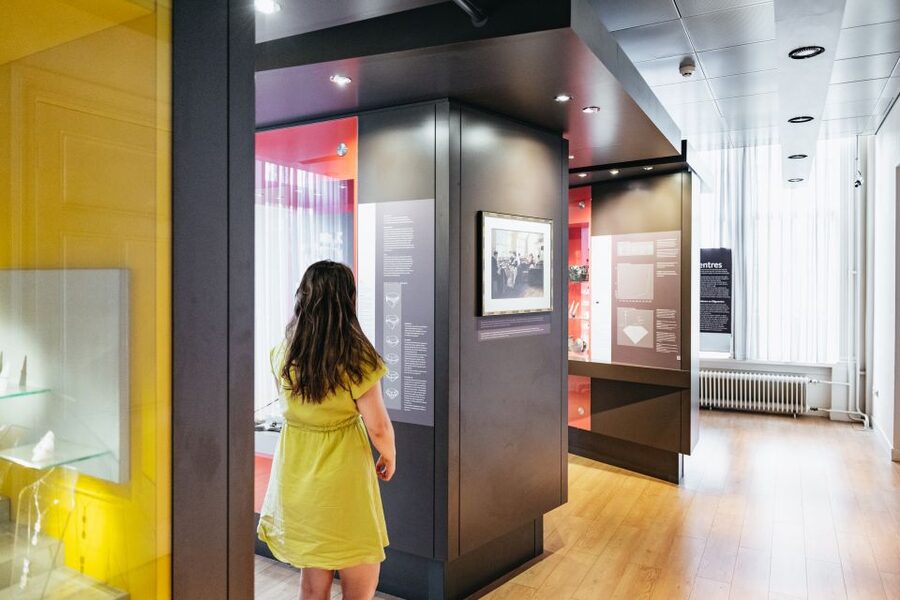
The story begins about three billion years ago, when natural forces formed diamonds roughly 200 kilometers below the earth’s surface. From there, the museum follows exploration and mining, then moves into distribution, trade, polishing, and jewelry design.
I like this approach because it explains why a finished diamond looks so different from the rough stone that comes out of the ground. You can see that a polished diamond is not simply found ready for a ring. It is the result of careful cutting, shaping, and finishing.
A short film supports the displays. It follows the stone through formation, mining, distribution, trade, and processing. The film is especially useful if you prefer a clear overview before looking closely at the cases.
Do not expect a long lecture or a guided presentation. This is a self-guided museum visit, so you move at your own pace and read the descriptions that interest you. That works well for independent visitors and families who do not want to keep up with a fixed group.
More Museums in Amsterdam
- Amsterdam: Van Gogh Museum Ticket
★ 4.7 · 52,054 reviews - Moco Museum Amsterdam Entrance Tickets with Banksy & More
★ 4.4 · 10,088 reviews - Amsterdam: The Upside Down Museum Entrance Ticket
★ 4.4 · 9,506 reviews
The craft behind a polished diamond
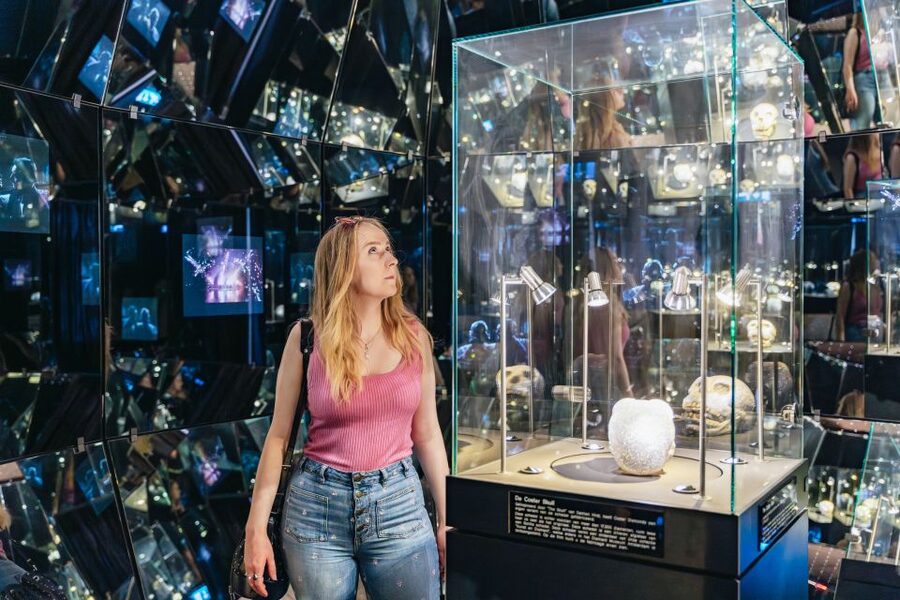
The processing section gives the museum its practical value. A finished jewel can look almost effortless, but diamond polishing is skilled work. The shape, angles, and finish affect how the stone catches light.
You will learn about the stages between raw diamond and jewelry. The displays connect the technical work to the necklaces, bracelets, and rings that people wear around the world.
This part is a good reason to visit even if you are not shopping for jewelry. It helps you look at a diamond with a more informed eye. Instead of seeing only sparkle, you begin to notice the result of the cutting and polishing process.
The museum also connects the trade to Amsterdam. Diamonds have long been part of the city’s commercial identity, and the visit gives you a compact introduction to that side of Amsterdam. The focus remains on diamonds and craftsmanship, so do not expect a broad survey of Dutch history.
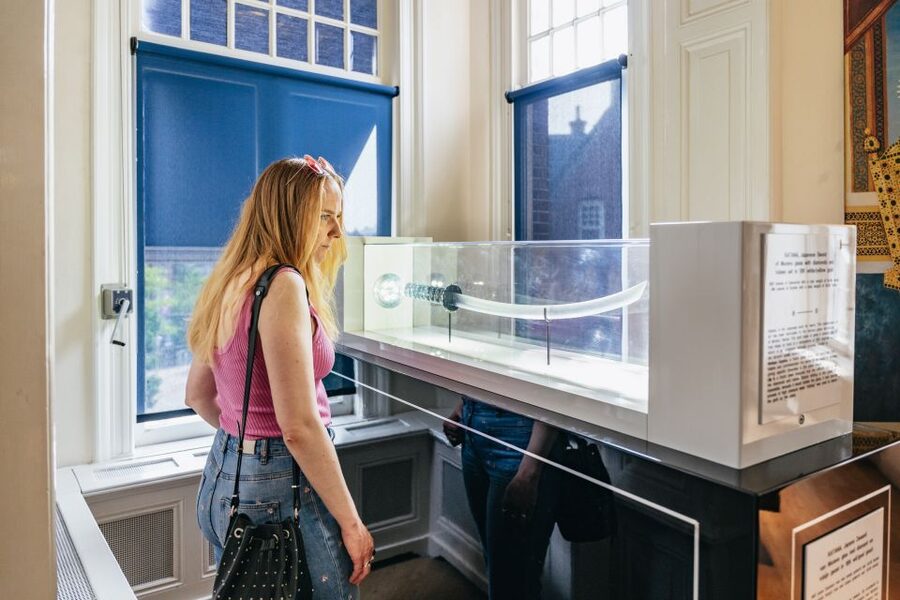
Descriptions accompany the exhibition pieces, and they are an important part of the experience. They explain what you are seeing rather than leaving you to guess why one stone or setting matters.
Twenty-two famous diamonds, recreated
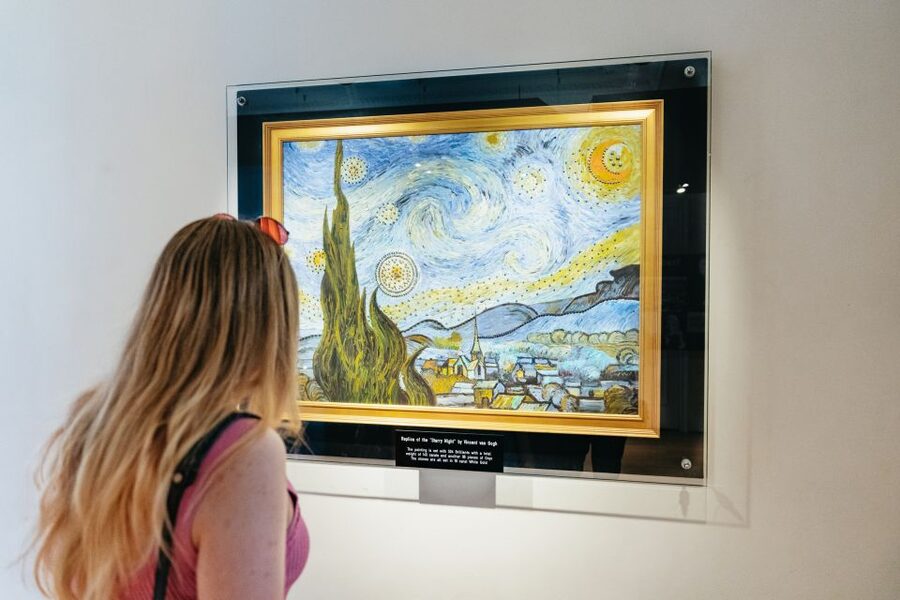
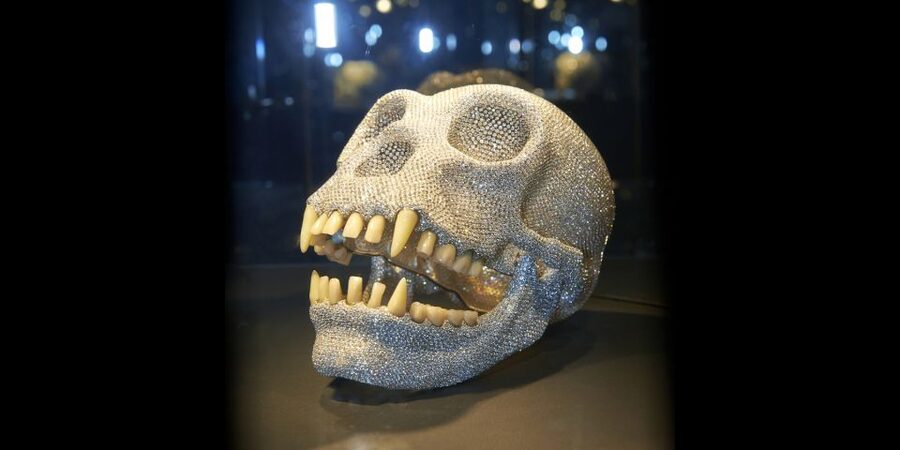
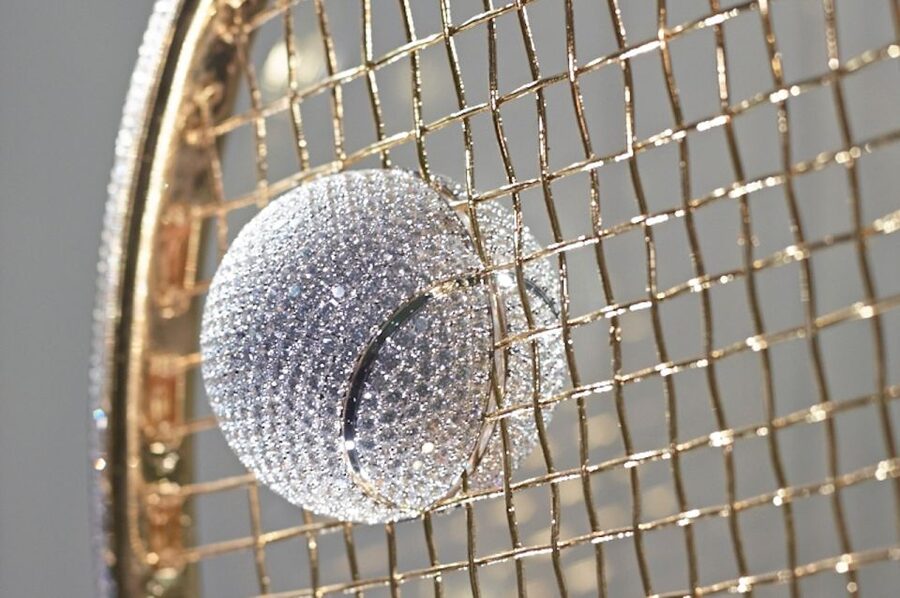
One of the strongest parts of the museum is its collection of replicas of 22 famous diamonds. These are recreations, not the original stones, so keep your expectations straight. Their value is educational: they let you compare famous stones and learn the stories attached to them without requiring a vault full of priceless originals.
The replicas also make the visit more visual. A display about diamond cutting can feel technical, but recognizable famous stones give you something specific to study. Their shape, size, color, and reputation help show why certain diamonds became well known.
The labels are designed to explain the pieces in an approachable way. You can spend extra time with the stones that interest you, or move through the collection quickly if you are combining this with another museum nearby.
I would not plan the visit around seeing original versions of famous diamonds. The museum is better understood as a place to learn about diamond culture, craftsmanship, and storytelling through carefully presented recreations.
Royal jewels and the House of Oranje-Nassau
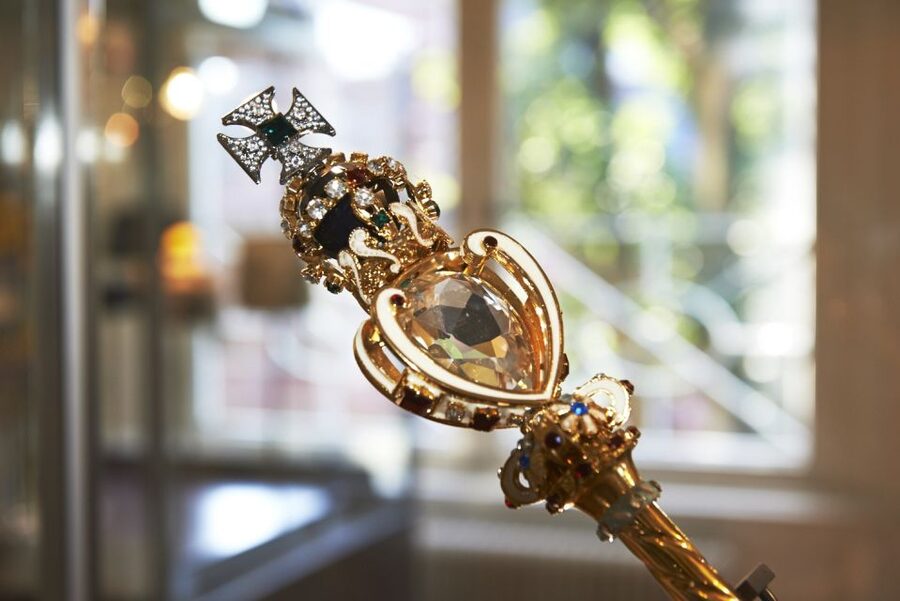
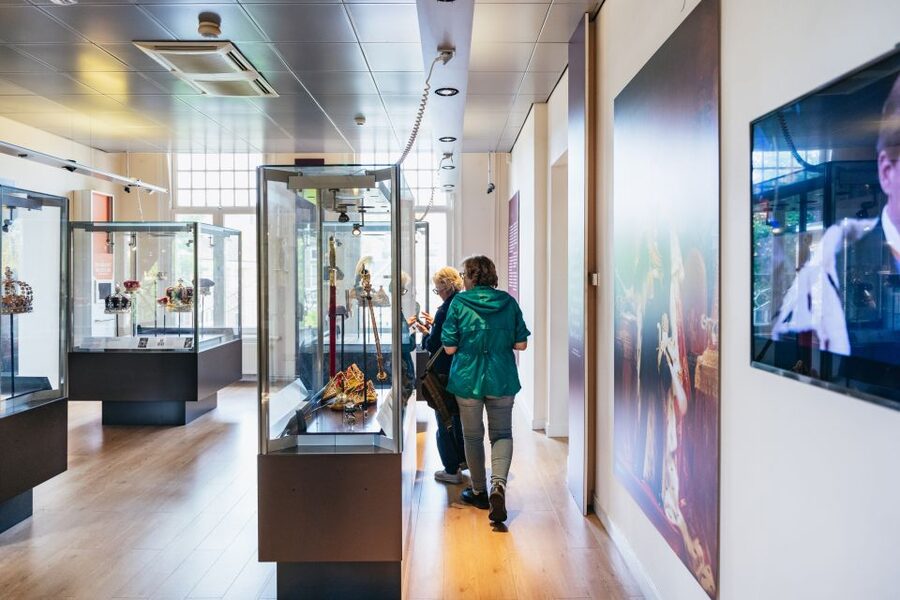
The royal collection gives the visit a distinctly Dutch touch. You will see diamonds and jewels connected with the royal House of Oranje-Nassau, alongside pieces chosen for their history or unusual beauty.
Royal jewelry can easily become a parade of expensive objects. Here, the collection works best when you think about how jewels function as symbols of status, ceremony, and public identity. The pieces connect the technical work of polishing to the way finished diamonds are worn and displayed.
The royal connection also adds variety. You are not looking only at loose stones or workshop methods. You are seeing the final result in jewelry, where the setting, design, and presentation matter as much as the diamond itself.
Descriptions help place these objects in context. Take a moment to read them, especially if you are interested in the difference between a diamond’s physical qualities and the story that makes it famous.
More Amsterdam diamond visits:
- Amsterdam: Royal Diamond Experience
★ 4.5 · 139 reviews - Royal Experience – Private Tour in World’s Oldest Diamond Polishing Factory
★ 4.5 · 75 reviews - Diamond Museum Amsterdam Admission Ticket
★ 3.5 · 71 reviews - Operation 45: An Adventure in Diamonds
★ 5.0 · 38 reviews
The Laser Room diamond heist
The Laser Room is the museum’s most playful feature. You try to reach a diamond by moving between laser beams, much like a movie-style thief. Touch a beam and an alarm sounds.
This is a simple activity, but it gives the visit a welcome change of pace. After reading about geology, trade, and royal jewelry, you get a chance to test your balance and coordination. Children are likely to enjoy it most, though adults can have fun trying to complete the challenge without setting off the alarm.
The Laser Room should not be confused with a major ride or a long interactive attraction. It is a short hands-on challenge within the museum. Its value is the contrast it provides, especially for families who need something active between display cases.
If you are visiting with children, this feature may be the detail that turns a quiet museum stop into an outing everyone remembers. If you are traveling alone and prefer a purely historical museum, it may feel more like a novelty, but it takes little time to try.
The adjacent Coster Diamonds visit
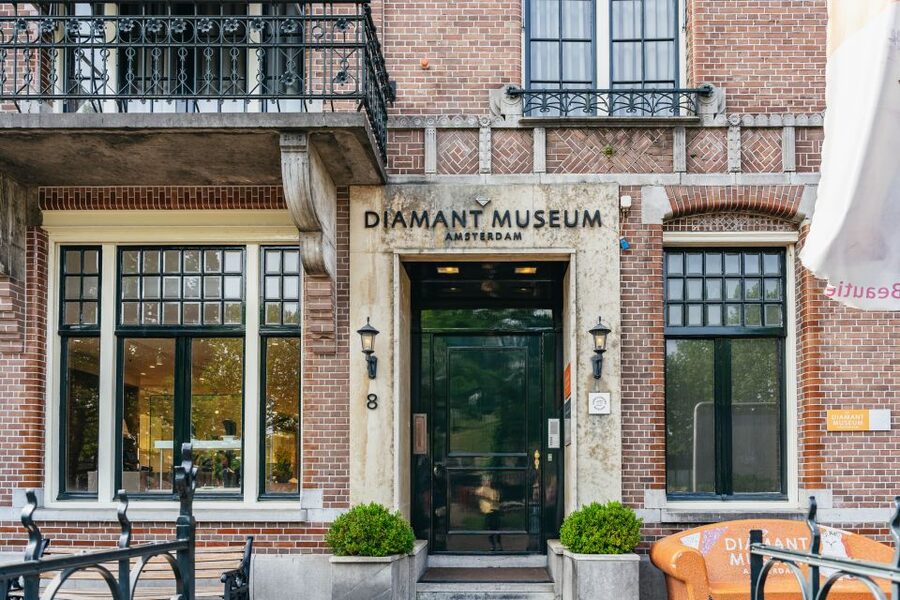
Your admission includes access to the Diamant Museum and adjacent Coster Diamonds. That means the ticket covers more than the museum displays alone, although the supplied information does not specify the exact format or length of the Coster Diamonds portion.
The combination makes sense. The museum explains the history and process, while the adjacent diamond setting connects that information with the working world of jewelry. You can consider the two together as one diamond-focused stop.
Keep in mind that this is not a guided tour. No guide is included, and no guide names are provided. You are responsible for moving through the spaces yourself, which gives you freedom but also means the written material matters.
How much time should you allow?
The ticket is valid for one day, but the experience does not promise a fixed tour duration. The museum is open daily from 9:00 AM to 5:00 PM, including weekends, and you should check availability for the starting time connected with your booking.
Because the museum is compact, I would treat it as a shorter stop rather than a full-day plan. It fits well before or after another Amsterdam museum, particularly if you are already in the area around Paulus Potterstraat.
Allow enough time to watch the short film, read the explanations, see the royal collection, examine the famous diamond replicas, and try the Laser Room. Your pace will depend on how much you enjoy the technical details and how long you spend with the jewelry displays.
The one-day validity is useful if your schedule changes during the day. Still, do not buy a ticket for someone who may not attend. A ticket bought for a person who cannot go may simply become wasted money, especially since the visit is short enough that you may be able to make a same-day decision at the door. Advance availability and admission conditions can change, so check before relying on that option.
Is $14 a fair price?
At $14 per person, this is a reasonable small-museum price if you are interested in diamonds, jewelry, or a family-friendly activity near Amsterdam’s museum district. The included access to adjacent Coster Diamonds strengthens the value.
The price is less appealing if you expect a large museum with hours of material. The attraction focuses tightly on diamonds, and visitors who are not interested in stones, jewelry, or the craft of polishing may finish quickly.
I see the best value in three cases. First, you want a focused introduction to how diamonds are formed and processed. Second, you are traveling with children and want a museum that includes a simple physical challenge. Third, you are curious about Amsterdam’s diamond trade and want a short stop with a clear subject.
The ticket also includes free cancellation up to 24 hours before the visit and a reserve-now, pay-later option. Those terms are useful if your plans are still moving, but they do not change the main value question: you should choose this because the subject interests you, not because it fills an entire day.
Location, bags, and access
The museum is at Paulus Potterstraat 8, 1071 CZ Amsterdam, in North Holland. The activity begins and ends at the same meeting point.
The museum is open every day, including weekends, from 9:00 AM to 5:00 PM. Check the available starting times when booking, since the ticket information does not give one universal entry time.
Large bags and luggage are not allowed. Pets and smoking are also not allowed. If you are carrying a suitcase between hotels or arriving straight from a station, plan around this restriction rather than assuming you can bring it inside.
The experience is not suitable for wheelchair users. That is an important point to check before booking, since the Laser Room and museum layout may require movement through spaces that are not accessible for every visitor.
Who will enjoy this museum most?

Families are a natural fit because the Laser Room gives children something active to do. The museum also offers a clear story, and the replicas make the displays easier to understand than a collection made up only of technical tools or written panels.
You will probably enjoy it if you like jewelry design, geology, luxury goods, royal collections, or Amsterdam’s diamond trade. The visit gives each subject a place without becoming a general museum of Dutch culture.
It is also a useful choice for a short break between larger attractions. You can learn something specific, see attractive objects, and leave without committing half a day.
I would be more cautious if you dislike self-guided museums or want a live expert explaining the exhibits. Since no guide is included, the experience depends on the displays, descriptions, and film. I would also skip it if your party includes someone who cannot manage the access conditions or someone carrying large luggage.
Should you book the Amsterdam Diamond Museum?
Book it if you want a focused, short museum visit with strong visual displays, famous diamond replicas, Dutch royal jewelry, and a fun Laser Room challenge. At $14, it offers fair value for families and anyone curious about how diamonds move from deep underground to a finished piece of jewelry.
Think twice if you are looking for a major Amsterdam attraction or a guided tour. The museum is compact, self-guided, and tightly focused on diamonds. For the right audience, that focus is its strength. For everyone else, it may feel brief.
My practical advice is to pair it with other nearby plans, avoid bringing large bags, and book only for people who are certain to attend. If the subject catches your interest, this is an easy way to see the process, the history, and the sparkle without spending an entire day.
FAQ
Where is the Amsterdam Diamond Museum located?
The Diamant Museum is at Paulus Potterstraat 8, 1071 CZ Amsterdam, in North Holland.
What does the admission ticket include?
The ticket includes entrance to the Diamant Museum and the adjacent Coster Diamonds.
Is a guide included?
No. The activity is self-guided, and no guide is included with the ticket.
How long is the ticket valid?
The ticket is valid for one day. Check availability for the starting times connected with your visit.
What are the museum’s opening hours?
The Diamant Museum is open daily from 9:00 AM to 5:00 PM, including weekends.
What can I see at the museum?
You can see diamond and jewelry displays, 22 replicas of famous diamonds, jewels connected with the House of Oranje-Nassau, and exhibits about diamond formation, mining, trade, processing, and polishing.
What is the Laser Room?
The Laser Room is a diamond heist activity. You try to move between laser beams and reach the diamond without touching a beam. An alarm sounds if you hit one.
Can I bring luggage or a large bag?
No. Luggage and large bags are not allowed. Pets and smoking are also not allowed.
Is the museum wheelchair accessible?
The activity is not suitable for wheelchair users.
Just added around Amsterdam
- Amsterdam: Giethoorn Tour with Canal Cruise and Windmills★ 5.0 · 3 reviews
- Full-day excursion to Edam, Volendam, and Marken★ 3.7 · 3 reviews
- Amsterdam: Chocolate Fondue in the Dark★ 5.0 · 3 reviews
- Amsterdam Family Friendly Historical Walking Tour★ 5.0 · 3 reviews
- Amsterdam Private Walking Tour of Famous Painters★ 5.0 · 3 reviews
- Amsterdam Old-West Vegan Food Tour with Local Guide★ 4.7 · 3 reviews
- From Amsterdam: visit Zaanse Schans, Muiderslot and more!★ 5.0 · 3 reviews
- Amsterdam Walking Tour with Dutch Pancake Lunch★ 5.0 · 3 reviews
Amsterdam Tours, compared.


Amsterdam Classic Saloon Boat Cruise with Drinks and Cheese
Read our review →
Amsterdam Luxury Canal Cruise + Unlimited Drinks & Bites option
Read our review →


Classic Boat Cruise with Optional Cheese & Wine
Read our review →
Evening Cruise with Optional Wine and Snacks
Read our review →
75 Minute City Canal Cruise with Audio Guide
Read our review →Browse the lists this tour appears in