
Reviewed · AMSTERDAM TOURS
Amsterdam Urban Legend Scavenger City Game
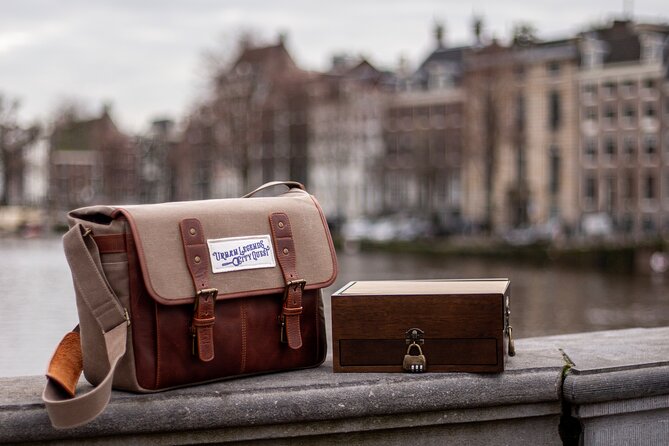
Amsterdam’s House with the Bloodstains gives this city game a fine hook: a mysterious chest, a troubled former mayor, and a trail of clues spread through the center. You are not simply following a guide from one landmark to the next. You are working out what the city is trying to tell you.
I like the way the game joins real urban legends with hands-on puzzles, including inkblots, lock picking, and chemical reactions. I also like the private format, which lets your own group set the pace and ask the host for hints. The main thing to consider is that you need a moderate level of fitness and a willingness to concentrate while walking outdoors for about two to two and a half hours.
Key points at a glance
- A mayor, a chest, and a bloodstained house: The story centers on Coenraad van Beuningen and an unsettling episode tied to a historic canal house beside the Amstel.
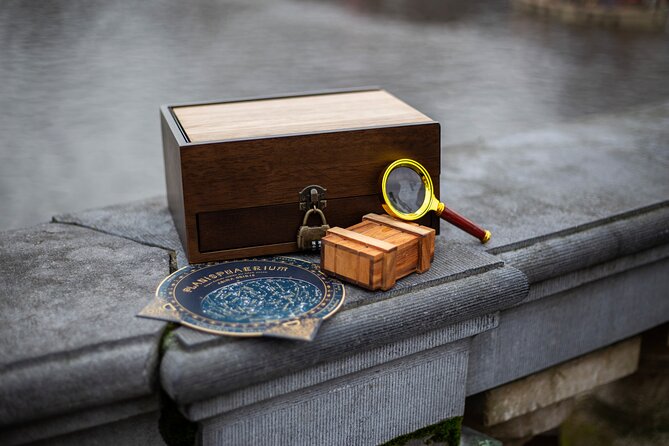
- Physical puzzles, not just phone clues: Expect tasks involving locks, inkblots, chemical reactions, and other carefully made game materials.
- A private city game: Only your group takes part, making it a good choice for friends, families, or colleagues.
- Sightseeing with a purpose: You explore Amsterdam’s center while searching for the next clue instead of simply following a standard walking route.
- Hints are part of the experience: The host gives an introduction, sets the group on its way, and offers help when you need it.
- Good value for puzzle fans: At $29.50 per person, the price is reasonable if you want an active city outing rather than a conventional tour.
A mystery rooted in Amsterdam’s canal streets
The game begins at Amstel in Amsterdam, a fitting spot for a story tied to one of the city’s historic waterways. The central mystery concerns a box found beneath the floorboards of an old canal house. A letter links it to Coenraad van Beuningen, a former mayor whose final days helped give the building its grim nickname, the House with the Bloodstains.
That setup gives you a reason to pay attention to the streets around you. Amsterdam’s center can sometimes feel like a parade of canals, bridges, bicycles, and handsome facades. Here, those surroundings become part of the puzzle. A building or street detail is not just scenery. It may help you work out the next step.
The story is based on urban legends and local myths, but the game adds an imaginative layer of its own. That balance matters. You get a connection to Amsterdam’s past without being asked to treat every dramatic detail as proven fact. It is best approached as a playful mystery built around real stories and places.
Your host gives the opening instructions and explains how the quest works. The introduction is important because the group needs to understand the story, the puzzle materials, and the general rhythm before setting off. A lively start can make the difference between a group that hesitates and one that quickly begins testing ideas.
More City Games in Amsterdam
- Discover Amsterdam’s city center in this Outside Escape game tour
★ 4.5 · 18 reviews - e-Scavenger hunt Amsterdam: Explore the city at your own pace
★ 4.5 · 14 reviews - Amsterdam Scavenger Hunt and Highlights Self Guided Audio Tour
★ 4.0 · 9 reviews
How the two-and-a-half-hour quest works
The advertised duration is about two hours and thirty minutes, although one group completed it in about two hours. Your exact timing will depend on how quickly you solve each challenge and how often you stop to look around or take a break.
The route is outdoors and takes you through Amsterdam’s central area. You are not confined to a room or a purpose-built attraction. The city itself supplies the setting, which gives the game a more open and spontaneous feel than a standard escape room.
At the start, you receive the story and the first clues. From there, the activity unfolds through a chain of puzzles. You may need to inspect a location carefully, connect an object to the story, or interpret a clue before the next part makes sense.
The structure is designed to keep your group moving without turning the outing into a race. If you get stuck, the host can offer hints. That safety net is useful, especially if your group includes people with different puzzle-solving styles. One person may spot visual details, another may be good with wordplay, and someone else may handle the physical mechanisms.
The private format also changes the mood. You do not need to solve problems in front of strangers or wait for another group to catch up. You can talk through an idea, try a wrong answer, and laugh about it without feeling watched. For a family or a group of friends, that privacy is worth more than it may first appear.
From lock picking to inkblots
The puzzles are the strongest part of the experience. They are not all the same type, so the game rewards a mixed group rather than one person who is good at a single kind of riddle.
Lock picking adds a tactile challenge. You have to handle an object and pay attention to how it responds, rather than simply reading a clue on a screen. This kind of task can be satisfying for people who enjoy escape rooms, though it may test your patience if your group tends to rush.
Chemical reactions bring another change of pace. The game uses physical surprises and practical tasks, giving the quest a more theatrical feel than a basic self-guided phone hunt. The supplied information does not spell out every mechanism, so you should expect discovery rather than a fixed list of challenges.
The inkblot puzzle has a different character. It is less about force or dexterity and more about seeing a pattern or understanding what the clue is asking you to notice. It may feel difficult at first, but the satisfaction comes when the purpose of the image becomes clear.
The final puzzle receives particular praise for its design. I would save a little energy for the closing stage instead of treating the last clue as an afterthought. A strong finish helps the whole story come together, especially after your group has spent the afternoon testing theories and handling the puzzle pieces.
The materials are described as attractive and well made. That detail matters. Physical props can turn a pleasant walk into a convincing story world, while flimsy or confusing materials can stop the fun. Here, the care put into the objects appears to be one of the main reasons the game feels different from an ordinary city quiz.
Sightseeing between the clues
This is still a way to see Amsterdam. You will move through the city center, pass canal scenery, and have chances to notice the streets at a slower pace than you might on a packed sightseeing schedule.
The route begins and ends at the meeting point on Amstel. That makes planning easier. You do not have to work out where to collect luggage, meet a taxi, or find a distant finish after the final puzzle. You can arrange lunch, drinks, or another activity around the same general area.
The game also leaves room for short pauses. One group noted enough opportunity to stop at a terrace along the way. These breaks are useful in a city where cafés and canal-side spots invite you to sit for a while. Just keep in mind that a long stop may extend your total outing beyond the approximate time.
Do not expect a conventional guided tour with a detailed explanation at every building. The host’s job is to introduce the challenge, support the game, and provide hints. The city context comes through the story and the places you visit, rather than through a continuous lecture.
That is a strength if you want to explore actively. It is less ideal if your main goal is a full architectural or historical survey of Amsterdam. You will pick up a specific tale and a fresh way to look at the center, but this is not a replacement for a dedicated canal-house or city-history tour.
More city games and scavenger hunts in Amsterdam:
- e-Scavenger hunt Volendam: Explore the city at your own pace
★ 4.5 · 8 reviews - Discover Amsterdam Vondelpark in this Outside Escape city game!
★ 4.5 · 6 reviews - Outside Escape Amsterdam with your friend(s) and have fun!
★ 4.4 · 4 reviews - e-Scavenger hunt Maastricht: Explore the city at your own pace
★ 4.5 · 110 reviews
Why the private format matters
The booking is private, so only your group participates. This is especially helpful for puzzle games because group chemistry affects the experience as much as the route does.
A group of friends can divide tasks naturally. Someone can handle a lock, someone else can study the visual clue, and another person can keep track of the story. Families can do the same, giving younger members a real role instead of making them trail behind an adult guide.
The activity can also work for a small team outing. The private arrangement lets colleagues solve problems together without the competitive pressure of a public game. Since group discounts are available, the value improves as more people join, although the exact discount is not stated.
The game is not described as a race, and the host can give hints. That makes it more welcoming than a strict timed escape room. Still, you should be comfortable with group problem-solving. If you prefer a quiet walk with no decisions to make, this will feel busy rather than restful.
A private booking does not mean you can ignore the clock entirely. The experience has an approximate duration, and the host needs the group to keep progressing. Ask for a hint rather than spending too long on one stubborn clue.
Is $29.50 a fair price?
At $29.50 per person, this sits in a reasonable range for a two-hour-plus private activity in central Amsterdam. The value comes from more than the walk. You are paying for the story, the physical puzzle materials, the host’s introduction, the hint system, and the planning behind the route.
If you already enjoy escape rooms, the price is easier to justify. You get many of the same pleasures, including locks, clues, surprising mechanisms, and a final challenge, but in the open air and against the backdrop of Amsterdam.
The value is also strong for a group that has already seen the main sights. A standard canal cruise or museum visit may explain more about the city overall, but this quest gives you a fresh reason to revisit familiar streets. It turns a central Amsterdam walk into a shared activity.
For a family with very young children, the calculation is more personal. A buggy was used successfully by one group with an almost two-year-old child, even in poor weather. That suggests the route is not an exhausting march, but the puzzles are mainly aimed at the adults and older children in your party.
The price may feel less attractive if you want a purely educational tour or a relaxed stroll. You are paying for play and problem-solving first, with sightseeing woven through it.
Weather, walking, and practical comfort
The activity takes place outdoors, so Amsterdam weather matters. A group still enjoyed it in poor conditions, but you should bring suitable clothing and shoes. Wet streets, wind, or cold can make it harder to handle small puzzle pieces and keep your attention on clues.
A moderate level of physical fitness is advised. The available details do not give a precise distance, but the game involves walking around the city for roughly two hours or more. Since there are opportunities to stop at a terrace, you may be able to pace yourself, but this is not a seated experience.
The start is near public transportation, which makes access simpler. The meeting point is Amstel, and the activity returns there at the end. A mobile ticket is available, and booking confirmation arrives at the time of booking.
Service animals are allowed. The information does not provide a full accessibility assessment, so if your group has specific mobility needs, confirm the route details before booking. A buggy has been used during the activity, but that does not guarantee that every surface or puzzle station will suit every mobility aid.
Free cancellation is available if you cancel at least 24 hours before the start time. Changes or cancellations made less than 24 hours ahead are not accepted for a refund, and the cut-off follows local Amsterdam time.
Who will enjoy this city game most?
I would choose this for people who like escape rooms, mystery stories, and sightseeing with a task attached. It is particularly good for friends who want something more original than a standard walking tour.
It also suits first-time visitors who want to see central Amsterdam in an active way. You will not receive a complete introduction to every major sight, but the route gives you a reason to look closely and remember the streets.
Families can consider it too. The private format helps adults adjust the pace, and a buggy has been used during the game. Very young children may not follow the puzzles, but they can come along while older members of the group play.
This may not suit you if you dislike riddles, outdoor activities, or group decisions. It is also not the best choice for anyone seeking a quiet, lecture-led history walk. The story is intriguing, but the main event is solving the next challenge.
Should you book the House with the Bloodstains quest?
Book it if you want Amsterdam sightseeing with a playful edge. The combination of a local legend, physical puzzles, attractive materials, and a private group creates a more memorable outing than a basic city scavenger hunt.
I especially like the variety of challenges. Lock picking, inkblots, chemical reactions, and a strong final puzzle give different members of your group a chance to contribute. The host’s hints keep the experience from becoming an exercise in frustration.
Skip it if you want a thorough general tour of Amsterdam or if two hours of outdoor problem-solving sounds tiring. You should also check the weather and consider your group’s walking ability before booking.
For puzzle fans, families with older children, and friends looking for a fresh way to see the center, $29.50 per person is a fair price. The best reason to choose it is simple: you will look at Amsterdam’s streets with a mystery in mind, and that tends to make familiar sights stick.
FAQ
Where does the Amsterdam Urban Legend Scavenger City Game start?
The activity starts at Amstel in Amsterdam, Netherlands.
Where does the activity end?
The game ends back at the meeting point on Amstel.
How long does the city game last?
The advertised duration is approximately two hours and thirty minutes. Some groups have completed it in about two hours.
How much does the experience cost?
The listed price is $29.50 per person. Group discounts are available.
Is the booking private?
Yes. Only your group participates in this private tour or activity.
Can I cancel for a full refund?
Yes, if you cancel at least 24 hours before the experience start time. Cancellations or changes made less than 24 hours ahead are not accepted for a refund.
Are service animals and public transportation access available?
Service animals are allowed, and the meeting point is near public transportation. A mobile ticket is also available.
Just added around Amsterdam
- Amsterdam: Giethoorn Tour with Canal Cruise and Windmills★ 5.0 · 3 reviews
- Full-day excursion to Edam, Volendam, and Marken★ 3.7 · 3 reviews
- Amsterdam: Chocolate Fondue in the Dark★ 5.0 · 3 reviews
- Amsterdam Old-West Vegan Food Tour with Local Guide★ 4.7 · 3 reviews
- Amsterdam Private Walking Tour of Famous Painters★ 5.0 · 3 reviews
- Amsterdam Family Friendly Historical Walking Tour★ 5.0 · 3 reviews
- From Amsterdam: visit Zaanse Schans, Muiderslot and more!★ 5.0 · 3 reviews
- Amsterdam Walking Tour with Dutch Pancake Lunch★ 5.0 · 3 reviews
Amsterdam Tours, compared.


Amsterdam Classic Saloon Boat Cruise with Drinks and Cheese
Read our review →
Amsterdam Luxury Canal Cruise + Unlimited Drinks & Bites option
Read our review →


Classic Boat Cruise with Optional Cheese & Wine
Read our review →
Evening Cruise with Optional Wine and Snacks
Read our review →
75 Minute City Canal Cruise with Audio Guide
Read our review →Browse the lists this tour appears in