
Reviewed · AMSTERDAM TOURS
Amsterdam: Private World War Two History Walking Tour
Amsterdam’s wartime story comes into sharp focus on this small walking tour, which uses streets, photographs, monuments, and personal names to explain the Nazi occupation from 1940 to 1945. Rather than touring a museum, you move through the city where the German army arrived, resistance activity unfolded, and Amsterdam’s Jewish population was deported.
I like the maximum group size of four, which gives you room to ask questions and keeps the walk personal. I also like the careful use of old resistance photographs at the very places where events happened. The main consideration is that this is a serious history tour, not a general sightseeing walk, and it does not include entry to the Anne Frank House, the Resistance Museum, or the Hollandsche Schouwburg.
I would also allow extra time beyond the advertised three hours. The coffee stop is useful, especially on a rainy Amsterdam morning, but refreshments cost extra. If Peter Schaapman leads your walk, you can expect an especially strong focus on stories, names, and the human cost of the occupation.
Key points at a glance
- A four-person maximum: You receive direct attention from the guide instead of listening to a speech through headphones.
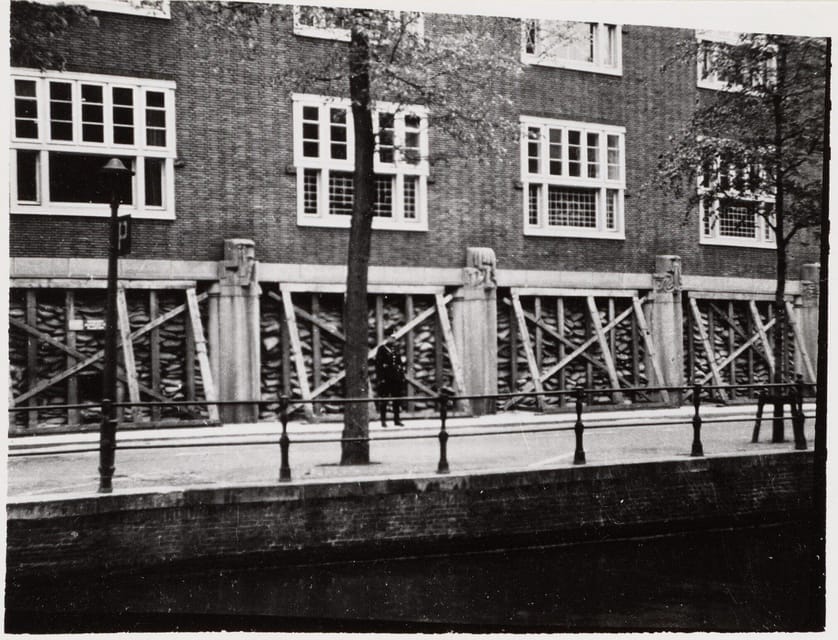
- Resistance photographs at the original sites: Historic images help you compare wartime Amsterdam with the streets you see today.
- The May 7, 1945 shooting on Dam Square: The tour covers a tragic incident that happened after liberation celebrations had already begun.
- A personal record of one Amsterdam street: You receive a small booklet naming Jewish residents and identifying the camps where they died.
- A midway coffee and restroom stop: The pause makes the three-hour walk easier, with time to eat something if needed.
- Wheelchair participation is possible: The pace can be adjusted, though you should contact the guide ahead of time so the route and stop can be planned properly.
Meeting beside the old Anne Frank House
The walk begins at 9:30 a.m. outside the former Anne Frank House at Prinsengracht 263. You meet between the museum and the Lunch Cafe, at the spot marked A on the map. The guide carries a large notebook and a sign reading Anne Frank Huis.
This is a clear meeting point, but give yourself time to find the exact location. The Anne Frank House is one of Amsterdam’s busiest addresses, and you are meeting outside rather than entering the museum. The tour uses the building as a starting reference for the occupation and Jewish persecution, but your ticket does not include admission.
That distinction matters. If you want to visit the Anne Frank House, arrange a separate ticket and schedule it independently. Do not expect this walk to replace that museum visit. Instead, it places Anne Frank’s story within a wider account of what happened across Amsterdam.
Starting in the morning also has a practical benefit. You can spend the rest of the day visiting another museum, exploring the canal district, or thinking over the material before moving on to lighter sightseeing.
More History Tours in Amsterdam
- Amsterdam Food and Cultural Tour with Tastings
★ 5.0 · 2,442 reviews - Amsterdam: Haunted History and Ghost Walking Tour
★ 4.5 · 488 reviews - Amsterdam High-End Dutch Food & History Tour – Up to 8 guests
★ 5.0 · 482 reviews
Seeing the German army arrive
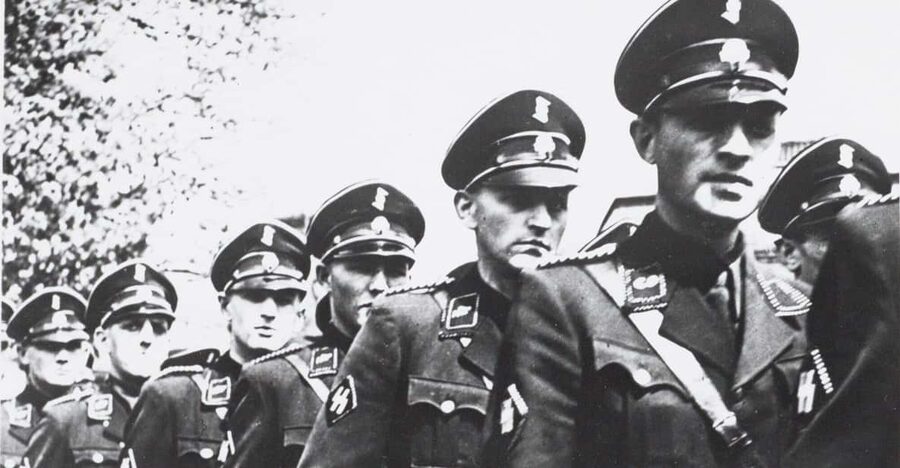
One early theme is the entry of the German army, the Wehrmacht, into Amsterdam. The guide shows photographs of the arrival and discusses how the city responded at the time.
The value here is the contrast between the photographs and the present-day street. Amsterdam may look calm and familiar now, but the images show how quickly public spaces can be transformed by military occupation and political pressure. Seeing the old photographs at or near the places connected with them gives the story a firm sense of location.
The tour also discusses the former town hall, now the Grand Hotel, where the German army received a welcome. Later, the Canadian army was cheered at the same site. That change in public mood helps explain the shifting atmosphere of the war without reducing the subject to a simple liberation story.
I appreciate this approach because it avoids treating the occupation as a series of distant dates. You see how the same buildings and squares could represent different powers at different moments. The city itself becomes part of the evidence.
Dam Square after liberation
Dam Square receives special attention for the shooting incident of May 7, 1945. The event happened after the German surrender, when celebrations were taking place and the war in the Netherlands was nearing its end.
This is exactly the sort of episode that can disappear from a standard city tour. It does not fit neatly into the usual story of occupation followed by liberation. On this walk, the guide explains the incident at the square, giving you a more complete picture of the danger and confusion that remained even after the occupation was ending.
The square is one of Amsterdam’s busiest public spaces, so the guide’s photographs and explanation are important. Without them, you could easily pass through without noticing its wartime significance. Be prepared for a sober stop in a place that otherwise feels built for shopping, ceremonies, and everyday city life.
Food drops and the winter of hunger
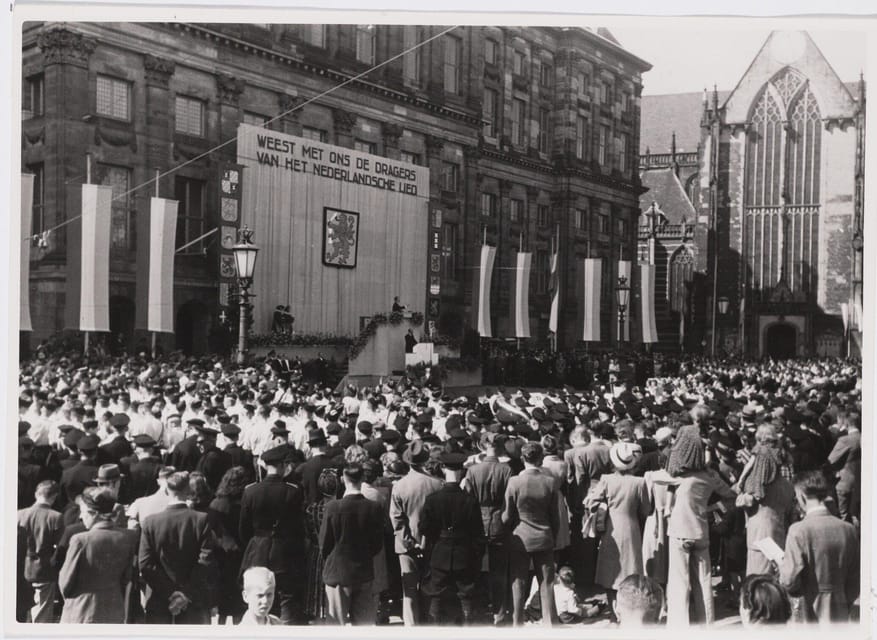
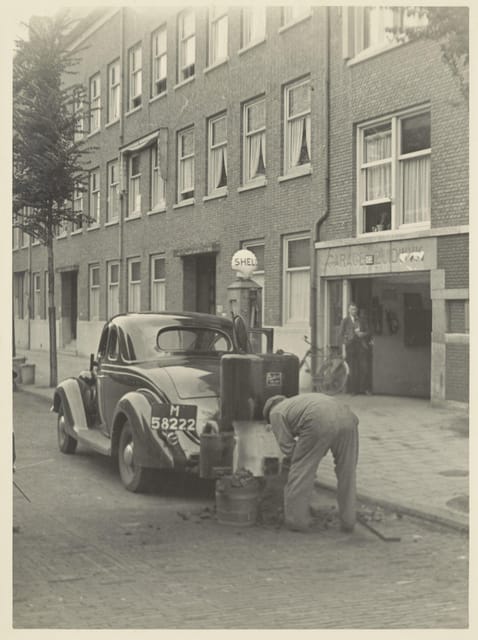
The tour addresses the food dropping during the winter of hunger, one of the clearest ways to understand the physical hardship caused by the final period of the war.
This subject brings the occupation down to the level of ordinary life. Military movements and political decisions mattered, but so did finding enough food to survive. The discussion gives you a sense of how the war affected people who were not on a battlefield and who had to cope with shortages in their own homes and neighborhoods.
The tour description does not promise a specific food-drop site or a recreated display, so you should expect explanation and photographs rather than a staged presentation. That suits the subject. The strength of the stop is the guide’s context and the connection to the streets around you.
A short break comes around the halfway point. You can stop for coffee, use the restroom, and possibly eat a late breakfast. Drinks and food are not included, so bring a payment method and allow for that extra cost.
More Walking Tours in Amsterdam
- Anne Frank’s Story – Guided Walking Tour through Amsterdam
★ 5.0 · 11,619 reviews - Amsterdam: Life of Anne Frank and World War II Walking Tour
★ 4.8 · 10,467 reviews - Absolutely Amsterdam – the Essential Introductory Walking Tour
★ 5.0 · 3,629 reviews - Amsterdam: Anne Frank Guided Small Group Walking Tour
★ 4.8 · 2,722 reviews
Jewish deportation and the names behind the numbers
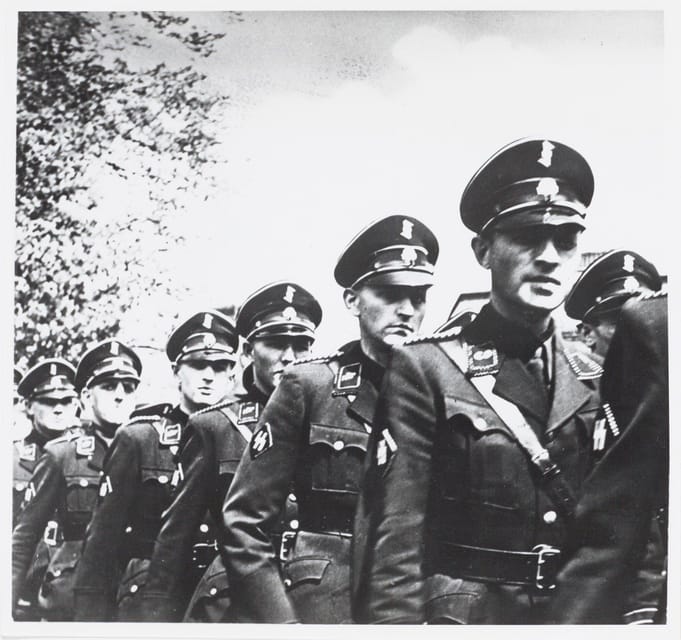
The most personal part of the walk may be the discussion of Amsterdam’s Jewish residents and their deportation to extermination camps, including Auschwitz and Sobibor.
The guides have selected the Jewish residents of one Amsterdam street and recorded which camps they died in. You receive a small booklet with photographs and names to keep. This is a modest object, but it changes how you process the subject. Large numbers can become hard to grasp. Names, faces, and one particular street make the loss more specific.
The booklet also gives you something to read after the walk. I find that useful because a three-hour tour can only introduce so many stories. You can return to the names later, when the guide’s explanation and the city’s streets are still fresh in your mind.
This section is handled as a memorial account, not as a quick list of statistics. You should be ready for difficult material. The focus on victims and deportation makes this a poor fit for anyone seeking only cheerful sightseeing, but it is a strong choice if you want to understand how the occupation affected Amsterdam’s Jewish community.
Resistance photographs and monuments
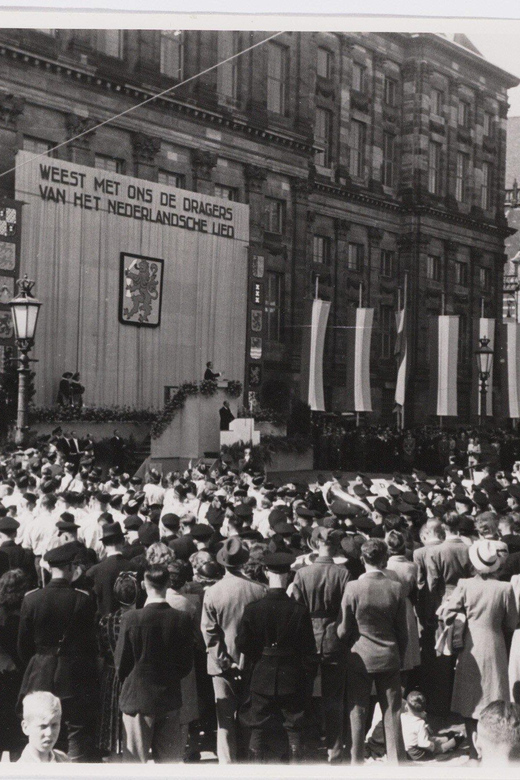
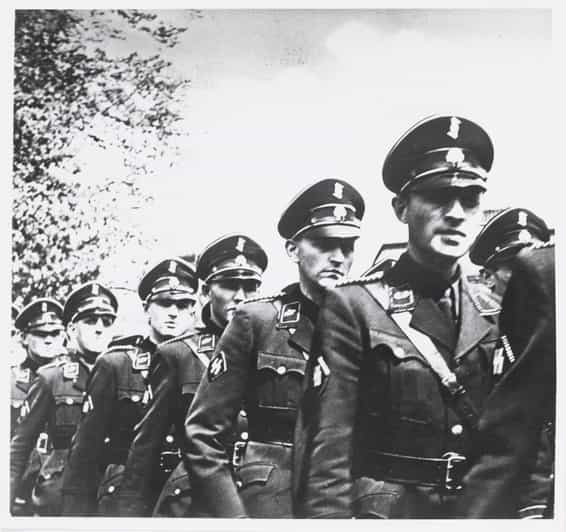
Dutch resistance fighters preserved many photographs from the period. The guide shows several of them at the locations where the events took place and explains what was happening in each image.
That method gives the walk its particular character. You are not only told what happened. You see a visual record and then look at the location as it exists today. The photographs help you notice how much has changed, and how much remains easy to overlook.
The route also passes resistance monuments and explains the stories behind them. These memorials are often small and easy to miss, especially when you are following a canal or heading toward a major attraction. A guide who knows why each monument exists can turn an unnoticed object into an important stop.
There is no audio system. For me, that is a benefit on a private walk because you can speak naturally and ask for clarification. It also means you need to stay close enough to hear the guide, especially near traffic or crowded streets.
The statue of the violin player from Auschwitz
Another distinctive stop is a statue honoring a famous violin player from Auschwitz. The description does not provide the statue’s name, so the guide’s explanation will be important here.
This stop adds an individual story to the wider account of deportation and camp life. Music and art can seem far removed from the machinery of persecution, yet a memorial to a violin player shows how a single life can carry several parts of the wartime story at once.
I would pay close attention to the details at this stop and keep the paper material provided by the guide. It is the kind of location you might not find on your own, especially if your Amsterdam plans are centered on canals, museums, and major landmarks.
Why a private group of four matters
The price is $188 per group of up to four people. If you fill all four places, that works out to $47 per person for a three-hour private tour. For two people, the effective cost is $94 each, so the value depends heavily on your group size.
The small group is the main reason to consider the price. You can ask questions throughout the walk, request a slower pace, and spend more time on a subject that interests you. A large group may cover the same ground for less money, but it usually cannot offer the same level of conversation.
The guides are three retired historians with a strong personal interest in the German occupation. Peter Schaapman is one of the guides associated with the experience. The strongest part of the guide style is the use of stories and source material rather than a generic city script.
You should still compare the cost with your own priorities. If you are traveling alone or as a couple on a tight budget, the price is substantial. If you are a family or group of four that wants a focused history walk, the cost becomes more reasonable because it covers the whole group.
Pace, weather, and accessibility
The walk lasts about three hours, though it may run a little longer. You choose the pace, and the guides can adapt the walk for a wheelchair. Contact the provider before booking if wheelchair access is important, since the coffee stop and route need to be considered in advance.
Amsterdam’s weather can change quickly, so bring an umbrella. The tour is outdoors, and the experience depends on moving between streets, squares, and memorials. Comfortable shoes are sensible, although the provided information specifically lists an umbrella rather than footwear.
The flexible pace is also useful if you want to take notes or study the photographs. This is not a race from one landmark to the next. The personal format gives you time to pause, but it also means the exact timing can vary.
What this tour does not include
This walk does not enter the Anne Frank House, the Resistance Museum, or the Hollandsche Schouwburg, which was used as a deportation center. Tickets for those places are separate, and drinks during the break are also extra.
That is not a flaw, but you should understand the format before booking. The tour is built around Amsterdam’s streets and outdoor memorials. You will get context that helps with later museum visits, but you will not see their exhibitions or interior displays.
I would pair this walk with one of those museums only if you have enough time and emotional energy. The subjects overlap, but each place offers a different type of learning. This tour gives you movement, location, photographs, and conversation. A museum gives you objects, documents, and indoor displays.
Who should book this Amsterdam history walk?
I would recommend it to you if you want a focused account of the occupation rather than a broad introduction to Amsterdam. It suits people who enjoy asking questions, looking closely at old photographs, and connecting memorials to specific events.
It is also a good fit for families with older children or teenagers who can engage with difficult wartime material. The small group format lets the guide adjust explanations to your questions, though the subject is not light and parents should decide if it suits their children.
History enthusiasts will find plenty of unusual material, especially the Dam Square shooting, the food shortages, the resistance photographs, and the booklet about one Jewish street. The tour also works well for repeat visitors who have already seen Amsterdam’s famous attractions and want a less familiar side of the city.
I would skip it if you want a relaxed sightseeing stroll, a museum entry, or a tour focused on architecture and canals. The subject is painful, and the value comes from attention and discussion rather than entertainment.
Should you book it?
Book this tour if you want Amsterdam’s wartime past explained at street level, with a guide who can answer questions and show you photographs tied to specific places. The private group limit, the personal booklet, and the focus on individual victims give it more weight than a standard overview.
The decision is easiest for a group of four, when the $188 price spreads well. Couples and solo visitors should decide if the personal format is worth the higher per-person cost. If you choose it, meet carefully at Prinsengracht 263, bring an umbrella, and leave room in your schedule for the coffee break and a possible extension.
FAQ
How long does the Amsterdam World War Two walking tour last?
The tour lasts about three hours, though it may extend a little depending on the pace and discussion.
Where does the tour begin?
The meeting point is at 9:30 a.m. in front of the old Anne Frank House at Prinsengracht 263, between the museum and the Lunch Cafe. The guide carries a large notebook and a sign reading Anne Frank Huis.
Is the Anne Frank House included?
No. The tour begins outside the old Anne Frank House but does not include entry. Tickets for the Anne Frank House, the Resistance Museum, and the Hollandsche Schouwburg are not included.
How large is the tour group?
The tour is private and never has more than four people in the group.
Is the tour wheelchair accessible?
Yes, the walk can accommodate a wheelchair because the pace can be adjusted. Contact the provider ahead of time so the route and coffee stop can be considered.
Are coffee and other refreshments included?
No. The cost of refreshments during the break is not included. A short coffee and restroom stop is provided about halfway through the walk.
Just added around Amsterdam
- Amsterdam: Giethoorn Tour with Canal Cruise and Windmills★ 5.0 · 3 reviews
- Full-day excursion to Edam, Volendam, and Marken★ 3.7 · 3 reviews
- Amsterdam: Chocolate Fondue in the Dark★ 5.0 · 3 reviews
- Amsterdam Private Walking Tour of Famous Painters★ 5.0 · 3 reviews
- Amsterdam Family Friendly Historical Walking Tour★ 5.0 · 3 reviews
- Amsterdam Old-West Vegan Food Tour with Local Guide★ 4.7 · 3 reviews
- From Amsterdam: visit Zaanse Schans, Muiderslot and more!★ 5.0 · 3 reviews
- Amsterdam Walking Tour with Dutch Pancake Lunch★ 5.0 · 3 reviews
Amsterdam Tours, compared.


Amsterdam Classic Saloon Boat Cruise with Drinks and Cheese
Read our review →
Amsterdam Luxury Canal Cruise + Unlimited Drinks & Bites option
Read our review →


Classic Boat Cruise with Optional Cheese & Wine
Read our review →
Evening Cruise with Optional Wine and Snacks
Read our review →
75 Minute City Canal Cruise with Audio Guide
Read our review →Browse the lists this tour appears in