
Reviewed · AMSTERDAM TOURS
Amsterdam: “Operation 45 ” Treasure Hunt Walking Tour
Amsterdam’s Operation 45 turns a history walk into a hands-on hunt for missing diamonds. You follow the trail through the old Jewish District, using printed maps, old tins, boxes, locks, and clues built into the city itself. The story is tied to the Dutch Resistance and a real diamond heist, so you are doing more than racing from one game station to the next.
I like two things right away: there is no app, and the route takes you beyond the usual city-center sights. The physical objects give the game a satisfying, old-fashioned feel, while stops such as the Shadow Wall, Portuguese Synagogue, Artis Zoo, and a diamond factory connect the puzzles to Amsterdam’s past.
The main caution is timing. The advertised route takes two hours, but a relaxed group may need closer to three. You will walk about 3 kilometers, and the puzzle format works best for people who enjoy solving clues rather than simply following a guide.
Key points at a glance
- A true WWII diamond mystery: Follow a story based on missing diamonds and the Dutch Resistance.
- Five stops in the old Jewish District: See historic places away from Amsterdam’s most touristic core.
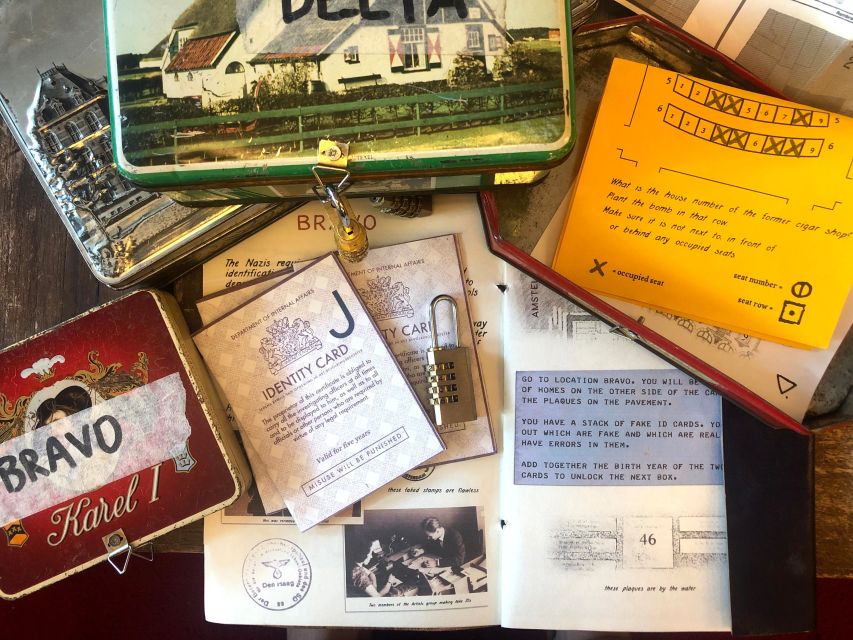
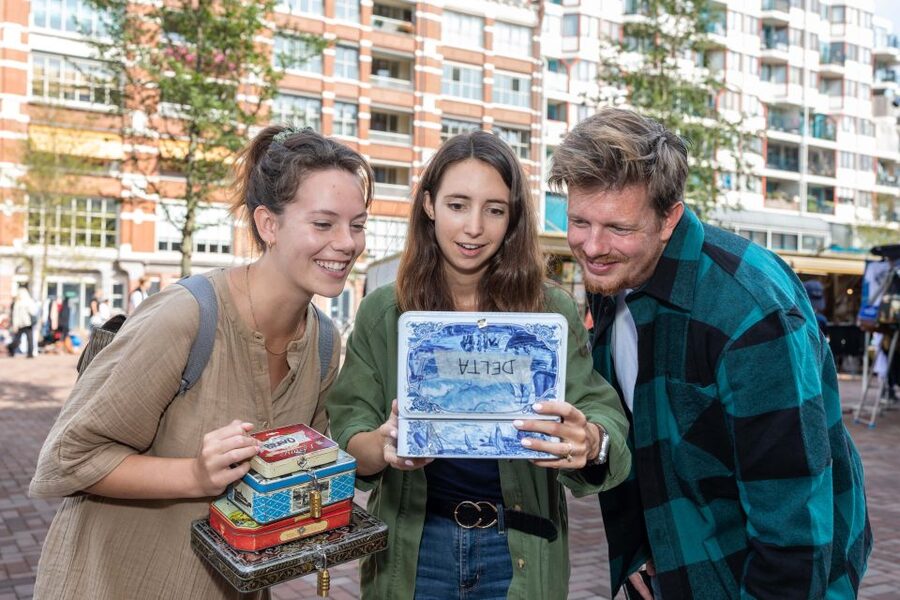
- Hands-on puzzle tools: Work with a backpack of maps, tins, boxes, and locks instead of a phone app.
- A 3-kilometer walking route: Plan for two hours if your group is focused, or up to three if you take your time.
- Good for families and escape-room fans: Children under six cannot join, but older children can take part in the clues.
- A $29 experience with a prize: The price covers the game, Game Master introduction, equipment, and a prize for everyone.
Starting at the secret headquarters on Zwanenburgwal
Your starting point is Mystery City Games at Zwanenburgwal 178, in Amsterdam’s 1011 JH postal area. Look for the Mystery City Games sign. This is presented as the Secret Headquarters, which sets the tone before you even begin walking.
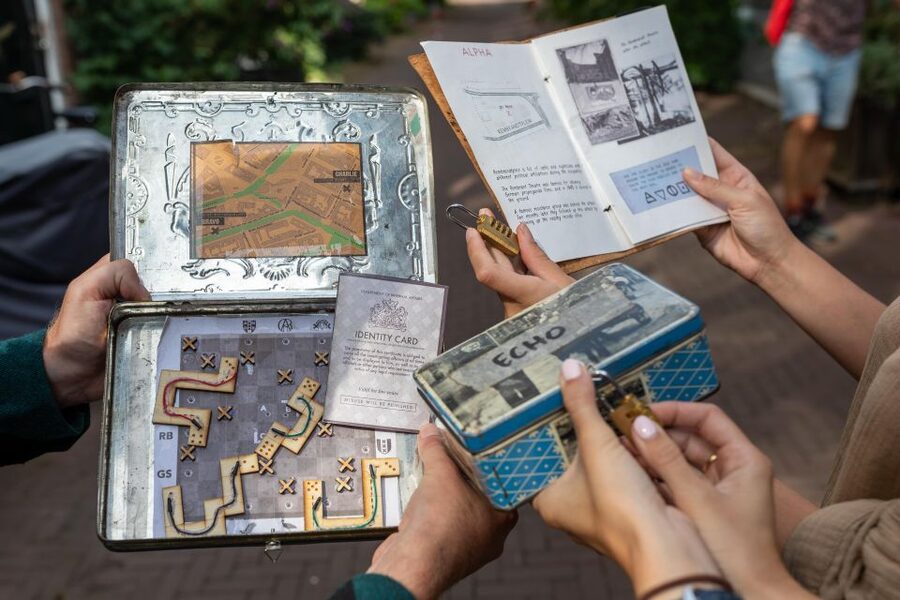
A Game Master meets you at the start and helps get the story moving. You receive a backpack filled with the equipment for the hunt: treasure maps, old tins, boxes, locks, and printed material. That detail matters. You are not being handed a phone and told to follow an app. The objects are part of the game, and opening or examining them gives the hunt a more physical feel.
The opening briefing also helps your group understand what it is trying to do. At the beginning of World War II, a cache of diamonds disappeared in Amsterdam. Your task is to follow clues connected to the Dutch Resistance and work out what happened.
No individual Game Master names are provided, so you should expect a host or greeter rather than a named private guide. The language is English.
More Walking Tours in Amsterdam
- Anne Frank’s Story – Guided Walking Tour through Amsterdam
★ 5.0 · 11,619 reviews - Amsterdam: Life of Anne Frank and World War II Walking Tour
★ 4.8 · 10,467 reviews - Absolutely Amsterdam – the Essential Introductory Walking Tour
★ 5.0 · 3,629 reviews
Why the old Jewish District makes a strong game board
The route leads into Amsterdam’s former Jewish District, away from the crowded sightseeing core. That is one of the best reasons to choose this experience. You are not just looking at Amsterdam’s famous canals and grand central streets. You are being directed toward places where architecture and local memory help carry the story.
The game asks you to notice details in buildings and public spaces. A wall, doorway, sign, shape, or other feature may become part of a puzzle. This gives you a reason to stop and look closely instead of walking past with your attention fixed on the next instruction.
The setting also adds weight to the WWII story. The tour connects the puzzle to the Dutch Resistance and to the Jewish District, so the historical subject is not separated from the places around you. You should approach it as a game with serious historical material, not as a light treasure hunt with a random Amsterdam theme.
The experience does not promise a long formal lecture at each stop. Its history comes through the story, the locations, and the clues. If you want a detailed museum-style explanation of wartime Amsterdam, this will feel too game-focused. If you like learning through action and observation, the format should hold your attention better than a standard walking talk.
Five stops, from the Shadow Wall to the diamond factory
The route covers five locations. The exact puzzle order is part of the game, but the named stops give you a good idea of what you will see.
The Shadow Wall
The Shadow Wall is one of the route’s key locations. The name alone suggests the kind of stop this game uses: a public place that may contain a detail you would normally miss.
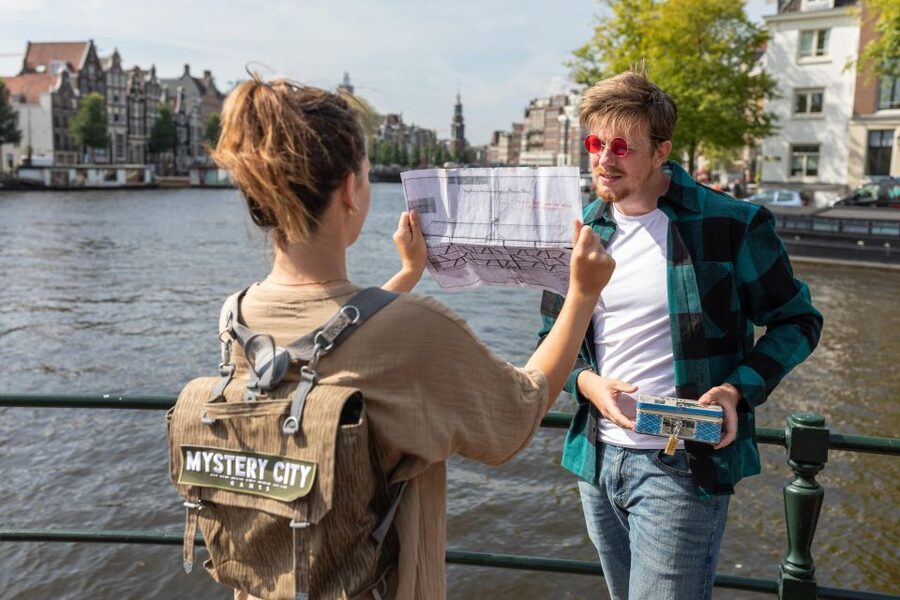
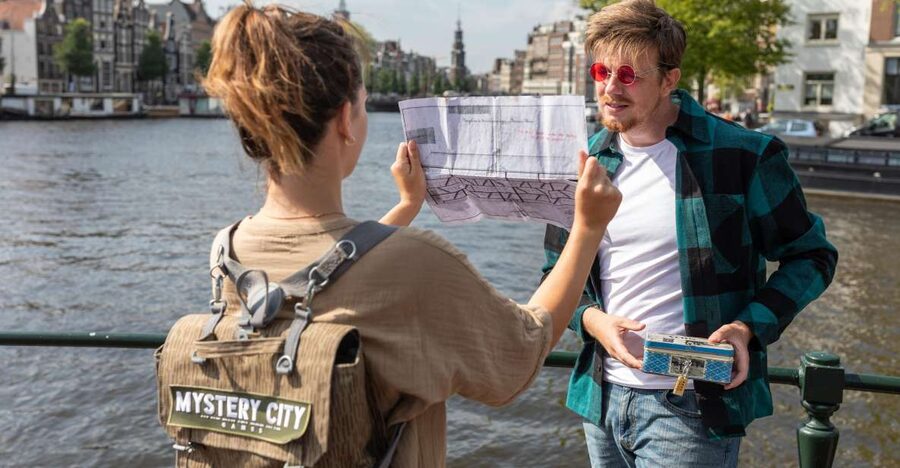
Here, you use the city itself as part of the puzzle. Instead of looking only at the backpack, you need to study the surroundings and work out how the architecture relates to the clue. This is where the experience differs from an indoor escape room. Your group must keep track of the story while also dealing with real streets, real buildings, and the need to move on.
Same country, a completely different kind of day:
- Amsterdam: Van Gogh Museum Ticket
★ 4.7 · 52,054 reviews - Amsterdam Classic Saloon Boat Cruise with Drinks and Cheese
★ 5.0 · 31,825 reviews - Amsterdam Luxury Canal Cruise + Unlimited Drinks & Bites option
★ 5.0 · 30,518 reviews - Amsterdam: Heineken Experience Ticket
★ 4.6 · 30,055 reviews
The Portuguese Synagogue
The Portuguese Synagogue adds a clear connection to Amsterdam’s Jewish past. You may not be entering every named site as part of the activity, so check the route instructions and any access details at the start. The important point is that the synagogue is one of the places tied to the hunt and to the district’s identity.
This stop should appeal to you if you enjoy puzzles with a sense of place. The architecture is not just background scenery. It helps you notice how the district looks and why a clue might have been placed there.
Artis Zoo
Artis Zoo is another named point on the route. The hunt therefore moves through a mix of historic streets and recognizable Amsterdam landmarks rather than staying inside one compact room or building.
The zoo stop also helps break up the historical material. After working through one puzzle, you have a new setting and a fresh visual problem to solve. You should still expect to remain outdoors and on foot, so comfortable shoes are important.
A diamond factory
The diamond factory connects directly to the central mystery. Amsterdam’s diamond trade gives the missing-cache story a natural local setting, and this stop brings the theme back to the object you are trying to find.
The experience does not provide a separate promise of a factory tour, so do not book it expecting a production demonstration or an extended visit indoors. Think of it as one of the places used by the story and puzzle route.
The remaining location
The hunt includes five locations in total, with the route tying them together through clues and the Dutch Resistance narrative. Some of the pleasure comes from not knowing exactly how each stop will lead to the next answer.
You will want everyone in the group to look, read, and test ideas. One person may spot a detail on a map, another may notice something on a building, and someone else may understand how a lock or box works. The game is designed for shared problem-solving rather than a single person doing all the work.
How the physical puzzles work
The backpack is the heart of the experience. It contains maps, boxes, locks, old tins, and other printed tools. You use these objects at key stops along the route, combining what you find in the city with what you carry.
That physical setup is a real advantage for anyone tired of app-based city games. You do not need to stare at a screen for the whole walk. The materials also give the activity a period feel that suits a WWII mystery.
The clues are described as manageable rather than brutally hard. That makes the game more welcoming to a mixed group, especially if not everyone has escape-room experience. Still, easy does not mean automatic. You need to read carefully, inspect details, and agree on answers.
A group with previous puzzle-game experience may finish quickly. A focused group has completed it in exactly two hours, while a slower group may need two to three hours. The difference will depend on how fast you solve the locks and clues, how much time you spend looking around, and how often your group pauses.
If you are booking around another fixed activity, leave breathing room after the two-hour estimate. Treat two hours as the efficient target, not a firm guarantee.
The historical story gives the game purpose
The missing diamonds are not an invented fantasy treasure floating free of Amsterdam. The story is based on a true event from the opening period of World War II and follows the trail of the Dutch Resistance.
That connection gives the puzzles more purpose. You are not simply opening boxes because the next box is there. You are trying to understand a chain of events and recover a cache that disappeared during a dangerous period.
The subject requires the right mood. Families and groups should be ready for a story connected to wartime persecution, resistance, and Amsterdam’s Jewish District. The activity can be fun, but the setting and subject are not merely decorative.
I also like the way the game encourages you to see places you may have skipped. The route is designed around historic points outside the most obvious city-center circuit. You may come away with a better sense of how Amsterdam’s districts connect, even if the activity does not provide a full academic account of the city.
Is $29 a fair price?
At $29 per person, the cost is reasonable if you want a two-hour activity that combines a guided introduction, a self-directed route, puzzle equipment, and a prize. You are paying for more than a walk from one landmark to another. The backpack and the game design are central parts of the value.
The price works especially well for a group. You share the solving experience, and every participant receives a prize at the end. That makes it a practical choice for families with older children, friends, and escape-room fans looking for something outdoors.
It is less compelling if your main aim is a traditional historical tour led by a guide. Much of your attention goes to solving the next clue, not listening to a long explanation at every site. You will need to decide if interactive entertainment and selective history are worth more to you than a standard walking tour with a wider survey of Amsterdam.
The route itself is 3 kilometers, so the fee also buys a structured way to see part of the city on foot. You will not need separate transport between the five locations.
Who should book Operation 45?
This is a good match for:
- Escape-room fans who want to take puzzles outdoors.
- Families with children aged six and older who enjoy working out clues together.
- Couples and small groups looking for a shared activity rather than a passive tour.
- Repeat visitors to Amsterdam who want to spend time in the former Jewish District.
- History-minded players who like a true story behind the game.
- Visitors who prefer physical props to phone-based city games.
You should think twice if you dislike puzzles, tire easily on a 3-kilometer walk, or want a fully narrated tour. The activity asks you to participate. You cannot simply follow along while someone else does all the work.
Children under six are not allowed. The information also says the experience is wheelchair accessible, while separately noting that it is not suitable for people with mobility impairments. Because the route involves outdoor walking and puzzle stops, contact Mystery City Games before booking if accessibility is important for your group.
Practical details before you go
Wear comfortable shoes. The route is not long by Amsterdam standards, but you will be walking, standing, stopping, and moving between five locations while carrying or sharing the game materials.
The activity is offered in English. The Game Master introduction takes place at the Mystery City Games headquarters, and the route then continues through the district.
You can cancel up to 24 hours before the start for a full refund. The reserve-now, pay-later option lets you hold a place without paying at once, which is useful when your Amsterdam schedule is still shifting.
Plan to arrive ready to start the story. The meeting point is specific, and you should look for the Mystery City Games sign at Zwanenburgwal 178 rather than wandering around the area looking for a generic tour group.
My verdict: book it for the format, not just the sights
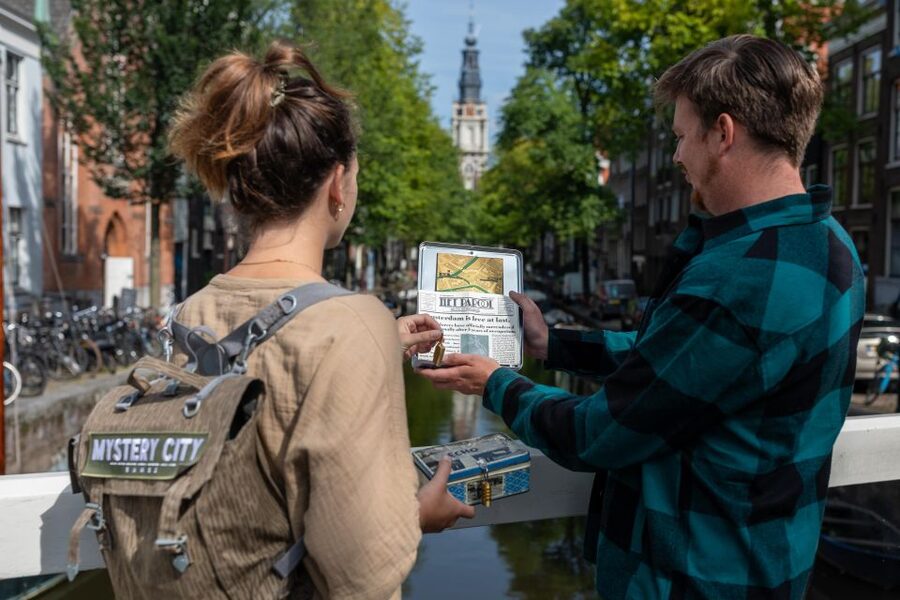
I would book Operation 45 if I wanted a break from ordinary sightseeing and liked the idea of solving a real Amsterdam mystery with maps, locks, and physical clues. The old Jewish District setting, the Dutch Resistance story, and the no-app format give it more character than a generic city scavenger hunt.
Book it with at least two hours free, and preferably three if your group likes to pause or gets stuck. Choose it for shared problem-solving and selective historical context. Skip it if you want a detailed guided lecture, a very short walk, or an activity where the scenery does all the work.
FAQ
How long does Operation 45 take?
The stated duration is two hours. A motivated group may finish in that time, while a slower group can take two to three hours.
How far do you walk?
The route is approximately 3 kilometers and visits five locations in Amsterdam’s old Jewish District.
Where does the tour begin?
Meet at Mystery City Games, Zwanenburgwal 178, 1011 JH Amsterdam. Look for the Mystery City Games sign at the Secret Headquarters.
Is the game played with a phone app?
No. The experience uses a backpack containing treasure maps, boxes, locks, old tins, and printed materials.
What locations are included?
Named locations include the Shadow Wall, Portuguese Synagogue, Artis Zoo, and a diamond factory. The route includes five stops in total.
What language is the activity in?
The activity is offered in English, including the Game Master introduction.
Can children join?
Children under six years old are not allowed to take part. Older children can join the puzzle activity.
What is included in the $29 price?
The price includes the two-hour walking route, puzzles at key stops, the backpack and game materials, a meeting with the Game Master, and a prize for all participants.
Just added around Amsterdam
- Amsterdam: Giethoorn Tour with Canal Cruise and Windmills★ 5.0 · 3 reviews
- Full-day excursion to Edam, Volendam, and Marken★ 3.7 · 3 reviews
- Amsterdam: Chocolate Fondue in the Dark★ 5.0 · 3 reviews
- Amsterdam Private Walking Tour of Famous Painters★ 5.0 · 3 reviews
- Amsterdam Family Friendly Historical Walking Tour★ 5.0 · 3 reviews
- Amsterdam Old-West Vegan Food Tour with Local Guide★ 4.7 · 3 reviews
- From Amsterdam: visit Zaanse Schans, Muiderslot and more!★ 5.0 · 3 reviews
- Amsterdam: Beer Tasting with Paired Bites at Eighty-Four★ 5.0 · 3 reviews
Amsterdam Tours, compared.


Amsterdam Classic Saloon Boat Cruise with Drinks and Cheese
Read our review →
Amsterdam Luxury Canal Cruise + Unlimited Drinks & Bites option
Read our review →


Classic Boat Cruise with Optional Cheese & Wine
Read our review →
Evening Cruise with Optional Wine and Snacks
Read our review →
75 Minute City Canal Cruise with Audio Guide
Read our review →Browse the lists this tour appears in