
Reviewed · ROTTERDAM TOURS
Rotterdam: Wilhelminapier, High-rise & floating architecture
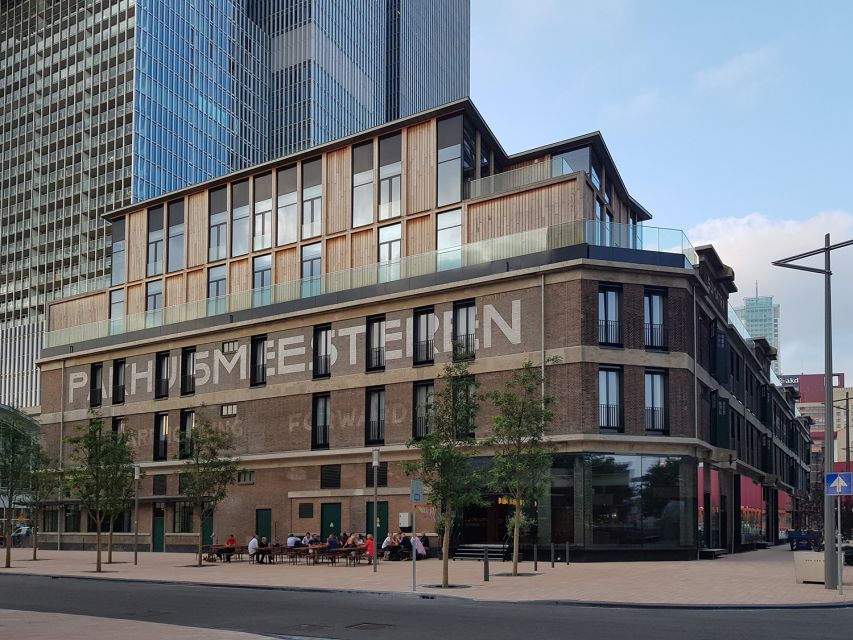
Rotterdam’s Wilhelminapier is where the city’s past as a port meets its future in steel, glass, and floating design. This compact tour takes you inside the former Pakhuismeesteren warehouse, up to its rooftop, and along Rijnhaven for views of the city’s bold architecture.
I like the private format, which lets your group focus on the buildings and questions that interest you. I also like the mix of indoor and outdoor stops: a rooftop view, the Foodhallen, the history of the Holland America Line, and floating projects all fit into one hour. The main drawback is the price: $286 per group of up to six is good value for a full group, but expensive if you are booking alone or as a couple.
Key points at a glance
- Wilhelminapier’s port-to-high-rise transformation: Learn how a former Holland America Line area became one of Rotterdam’s most striking districts.
- Pakhuismeesteren rooftop access: Go inside a former harbor warehouse and take in a panoramic view of Rotterdam’s skyline.
- De Rotterdam explained on site: Hear about the concept, design, and background of the large high-rise complex.
- Floating projects along Rijnhaven: See a floating hotel, park, and office as examples of Rotterdam’s practical approach to water and urban space.
- Foodhallen stop included: The former warehouse now includes a food hall and hotel, giving the architectural visit a useful everyday side.
- Small-group value: The $286 price covers up to six people, making the tour far more attractive for a family or group of friends.
Starting outside Het Nieuwe Luxor Theater
The meeting point is outside Het Nieuwe Luxor Theater, the distinctive red building on the Wilhelminapier. That is a useful landmark in a district filled with tall buildings and broad open spaces, so look for the theater itself rather than relying only on a street address.
From here, your guide introduces the area before leading you into its story. The Wilhelminapier can look like a collection of dramatic towers at first glance. The guide’s role is to connect those towers to the port activity that came before them.
This is a walking tour, but it is a short one. The full experience lasts one hour, so expect a brisk introduction rather than a slow architectural survey. You will get the main ideas, see several important buildings, and reach the rooftop without giving up half a day.
The private format matters here. With your own group, you can ask why a building looks the way it does, how the old warehouses were reused, or what makes a project float. A public tour might offer more time or a lower individual price, but this option gives you a more focused hour.
A few more Rotterdam trips worth a look
- Rotterdam: Harbor Sightseeing Cruise
★ 4.3 · 7,599 reviews - Rotterdam: 1-Hour Sightseeing Splash Tour
★ 4.5 · 3,299 reviews - Rotterdam: Rotterdam Zoo Blijdorp Entry Ticket
★ 4.6 · 2,754 reviews
From Holland America Line port to modern Rotterdam
One of the most useful parts of the tour is the explanation of the Wilhelminapier’s change over time. The area was formerly associated with the Holland America Line, a major part of Rotterdam’s port identity. Ships and passengers once connected this district with destinations overseas. Today, high-rise buildings and cultural venues shape the view.
That change is central to understanding Rotterdam. The city is not presenting old port buildings as a frozen museum district. Instead, it has reused and surrounded them with new architecture. Your guide explains how the former working waterfront became a place for homes, offices, hotels, food, and culture.
I find this context more valuable than simply hearing the names of famous architects. A tower can look impressive in a photograph, but its meaning becomes clearer when you understand what stood there before it and why the area was rebuilt.
The tour also helps you read the contrast between old and new. Pakhuismeesteren began as a harbor warehouse. De Rotterdam represents the large-scale high-rise approach. Along Rijnhaven, floating buildings show another answer to the question of how a port city can use limited land and water.
Reading De Rotterdam from the Wilhelminapier
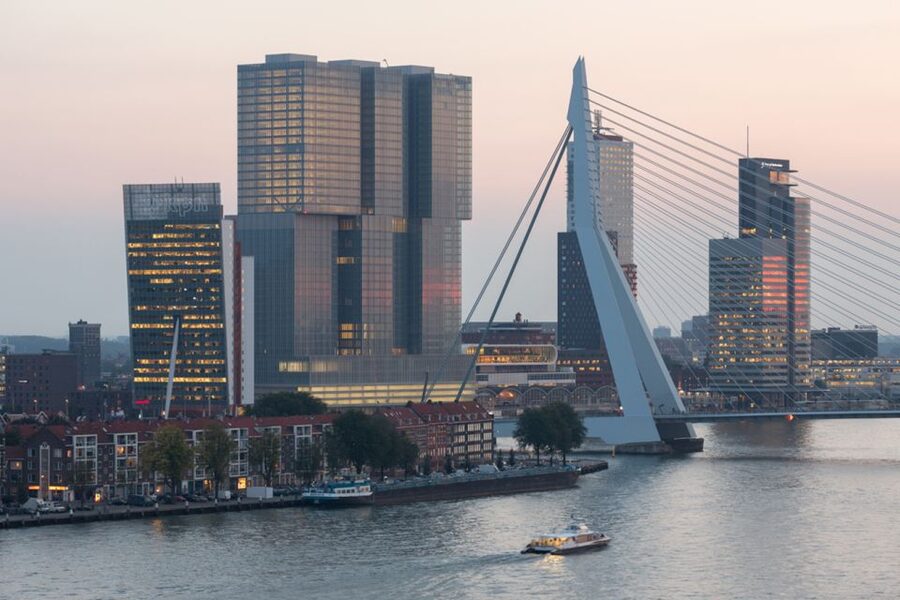
A professional guide talks you through De Rotterdam, including its history, design, and underlying concept. The building is one of the key high-rise subjects on this walk, and the tour gives you a chance to consider it as more than a large block on the skyline.
The value is in the explanation. Rotterdam’s architecture can be visually powerful but not always easy to interpret on your own. A guide can point out how the building fits the wider Wilhelminapier and why the area was designed around striking vertical forms.
You should expect an architectural overview rather than access to every part of De Rotterdam. The stated program focuses on learning about the building from the district and then visiting Pakhuismeesteren for the rooftop stop.
If you enjoy modern architecture, this is likely the strongest part of the tour. If you mainly want historic interiors, the experience may feel brief and too focused on exterior design. The tour gives you background and a view, not a long museum visit.
Inside Pakhuismeesteren and its Foodhallen
Pakhuismeesteren is one of the most appealing stops because it joins Rotterdam’s working-port past with its current life. The building was once a harbor warehouse. It now houses a hotel and the Foodhallen, a food destination that gives the old structure a more social, everyday purpose.
You get to see the building from the inside rather than simply photographing its exterior. That is a small but important difference. Warehouses can appear plain from the street, while their scale and layout become easier to understand once you enter.
The Foodhallen is especially useful for anyone who likes to connect architecture with local city life. It is not presented as a separate food tour, but it adds atmosphere and gives you a sense of how the building functions now. You also receive a tasty Dutch treat during the experience, though the specific treat is not stated.
Do not plan on a long meal here. With only one hour for the whole tour, the Foodhallen visit is a stop within a larger route, not a dining break. If you want to browse the food stalls properly, allow separate time before or after the tour.
Same country, a completely different kind of day:
- Rotterdam: Euromast Lookout Tower Ticket
★ 4.4 · 2,549 reviews - Rotterdam: Pancake Cruise
★ 4.4 · 1,986 reviews - Rotterdam: Kinderdijk UNESCO World Heritage Entry Ticket
★ 4.6 · 1,477 reviews - Rotterdam: Harbor Cruise with Live Guide
★ 4.0 · 1,270 reviews
The rooftop view from Pakhuismeesteren
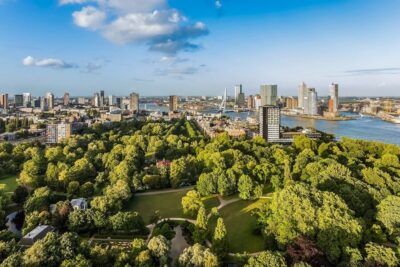
The rooftop is the visual payoff. After hearing about the former warehouse and its present use, you go up for a panoramic view of Rotterdam and its famous architecture.
This viewpoint gives you a chance to make sense of the Wilhelminapier as a whole. From street level, the high-rises can block one another and make the district feel compressed. From above, you can better see the relationship between the buildings, the water, and the surrounding city.
The rooftop also makes the tour useful for photographers. You receive a postcard featuring Rotterdam architecture by photographer Ossip van Duivenbode, and the rooftop supplies your own opportunity to frame the skyline. Weather will naturally affect the experience, so a clear day should produce the best result. The tour still has value in less ideal weather because the building history and design discussion do not depend entirely on the view.
The rooftop entrance is included in the tour price. That matters because a guided explanation combined with a dedicated viewpoint is more useful than simply wandering past Pakhuismeesteren without knowing its role in the district.
Floating hotel, park, and office along Rijnhaven
The route continues along Rijnhaven, where you see floating projects including a hotel, a park, and an office. Rotterdam is a water city, and these examples show how the city is testing ways to use the harbor beyond shipping and fixed construction.
The floating concepts are a good counterpoint to the towers. High-rise architecture uses vertical space on land. Floating buildings use the water itself. Your guide explains the ideas behind these projects, helping you see them as design and planning experiments rather than curiosities.
The information provided does not promise entry into the floating hotel, park, or office. Expect to view the projects from the route and hear about their purpose and design. That distinction is worth keeping in mind if you are hoping for an interior visit.
This part of the tour may appeal to families and younger visitors because the idea is easy to grasp: a building that floats feels unusual, but it also raises practical questions about city growth, water, and public space. Architecture fans will likely appreciate the range, from repurposed warehouse to high-rise complex to floating construction.
Ending near the Fenix migration Museum
The tour ends near the Fenix migration Museum, described as one of Rotterdam’s newest icons. The ending point is useful because you remain in the Wilhelminapier area, close to more cultural and architectural sights.
The tour does not include admission to the museum. Still, finishing nearby gives you a clear next stop if you want to continue exploring. You can also use the end of the route to return to the Foodhallen, spend more time by Rijnhaven, or take another look at the skyline from street level.
Because the tour lasts only an hour, this final location helps you build a larger day around it. It works well as a short orientation at the start of your Rotterdam visit, but it can also serve as a focused architecture stop between other plans.
How the $286 private price works
The cost is $286 per group of up to six people. At the maximum group size, that works out to about $47.67 per person. For six people who want a private guide, a rooftop visit, and a structured introduction to the Wilhelminapier, that is a reasonable use of money.
The value drops for smaller groups. Two people would effectively pay $143 each, while a solo visitor would pay the full group rate unless the booking conditions offer another arrangement. If price is your main concern, compare this with a larger public walking tour or explore the waterfront independently.
The tour includes the guide, rooftop entrance, a Dutch treat, and a Rotterdam architecture postcard by Ossip van Duivenbode. Those extras are pleasant, but the real value lies in the guide’s interpretation of the district. You are paying for access, organization, and context in a short private format.
The four-star rating from three recorded bookings suggests a solid, worthwhile experience rather than a perfect one. The comments point to an interesting tour, the benefit of seeing the building from inside, and a friendly visit with a guide named Willem. One description specifically mentions laughing and learning along the way, which fits the casual, personal feel you can expect from a private walk.
Who will get the most from this hour
I would choose this tour if you like modern buildings but want help understanding them. It is also a good fit if you have limited time in Rotterdam and want a concentrated look at one of the city’s best-known waterfront districts.
It suits:
- Architecture and urban-design fans
- Families or friends who can share the private group cost
- Visitors who want a rooftop view without planning a separate visit
- Food lovers who want to see the Foodhallen as part of a wider neighborhood walk
- Anyone curious about floating buildings and future-facing city design
- Visitors who prefer a guide who can answer questions in a chosen language
It may not suit you if you want a long food tasting, a museum visit, or a detailed tour of historic Rotterdam. The emphasis is modern architecture, adaptive reuse, waterfront planning, and views. The pace is compact, and the hour passes quickly.
Guiding is available in Dutch, English, German, Spanish, and French. The tour is wheelchair accessible, another practical benefit for visitors who want a structured route through the district.
Practical tips for a better visit
Meet outside the red Het Nieuwe Luxor Theater and arrive ready to walk. Since the route includes outdoor sections along Rijnhaven, clothing suited to the weather will make the hour more comfortable.
Keep your camera ready for the rooftop and floating projects. The architecture changes quickly as you move between the warehouse, towers, water, and open views, so the best photo may come from a stop you did not expect.
If you are interested in food, schedule extra time at the Foodhallen after the tour. The tour includes a Dutch treat, but the one-hour schedule does not leave room for a relaxed meal.
Book it as a group if possible. Six people sharing the fee receive the clearest value. For a couple, the private setting may still be worth it if you care about asking questions and want a guide in one of the available languages.
Free cancellation is available up to 24 hours before the start time, and you can reserve now and pay later. Those terms are helpful if your Rotterdam plans depend on weather or changing train schedules.
Should you book the Wilhelminapier architecture tour?
Book this tour if you want a short, well-organized introduction to Rotterdam’s modern waterfront and can share the private-group cost. The combination of Holland America Line history, De Rotterdam, Pakhuismeesteren, Foodhallen, rooftop views, and floating projects gives you more variety than a simple skyline walk.
I would be more cautious if you are traveling alone, watching every euro, or hoping for a long visit inside several buildings. The tour is only one hour, and most of its value comes from the guide’s explanation rather than extensive access.
For a group of up to six, this is a practical way to get your bearings on the Wilhelminapier while seeing the district’s most distinctive architectural ideas. For a smaller party, book it because you specifically want a private guide and rooftop access, not because it is the cheapest way to see Rotterdam.
FAQ
Where does the tour meet?
Meet your guide outside Het Nieuwe Luxor Theater, the red building on the Wilhelminapier.
How long does the tour last?
The tour lasts one hour.
How much does the tour cost?
The listed price is $286 per group of up to six people.
Is this a private tour?
Yes. The experience is offered as a private group tour.
What languages are available?
Guiding is available in Dutch, English, German, Spanish, and French.
Is the tour wheelchair accessible?
Yes, the tour is wheelchair accessible.
Is rooftop entry included?
Yes. Entrance to the Pakhuismeesteren rooftop is included.
What else is included?
The tour includes a guided visit, a tasty Dutch treat, and a Rotterdam architecture postcard by photographer Ossip van Duivenbode.
Does the tour enter the floating hotel, park, or office?
The tour takes you along Rijnhaven to see the floating hotel, park, and office. Entry into those floating projects is not stated.
Can I cancel for a refund?
Yes. You can cancel up to 24 hours in advance for a full refund. You can also reserve now and pay later.
Just added around Rotterdam
- Discover Rotterdam: Classic Highlights Bike Tour by a Local★ 5.0 · 3 reviews
- Rotterdam: Capture the most Photogenic Spots with a Local★ 5.0 · 3 reviews
- Private tour: Markthal, Cube houses and Rooftop Het Witte Huis★ 4.5 · 3 reviews
- Private Transfer from Rotterdam Port to Amsterdam Airport (AMS)★ 5.0 · 3 reviews
- Rotterdam: 2.5-Hour Leckers Boat Cruise and Buffet★ 3.2 · 3 reviews
- Discover Rotterdam’s most Photogenic Spots with a Local★ 5.0 · 3 reviews
- Private Transfer from Rotterdam City to Amsterdam Schiphol Airport★ 5.0 · 4 reviews
- The Netherlands: WW2 Private Day Trip★ 5.0 · 4 reviews
Rotterdam Tours, compared.

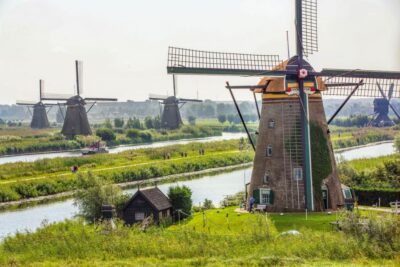
Kinderdijk UNESCO World Heritage Entry Ticket
Read our review →
Browse the lists this tour appears in