
Reviewed · ROTTERDAM TOURS
Discover Rotterdam: Classic Highlights Bike Tour with a Local
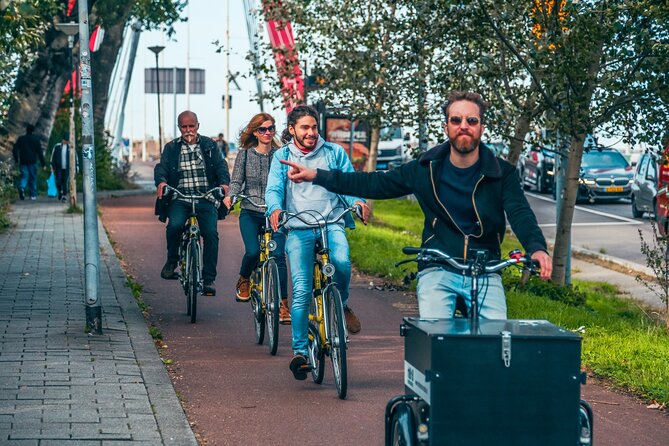
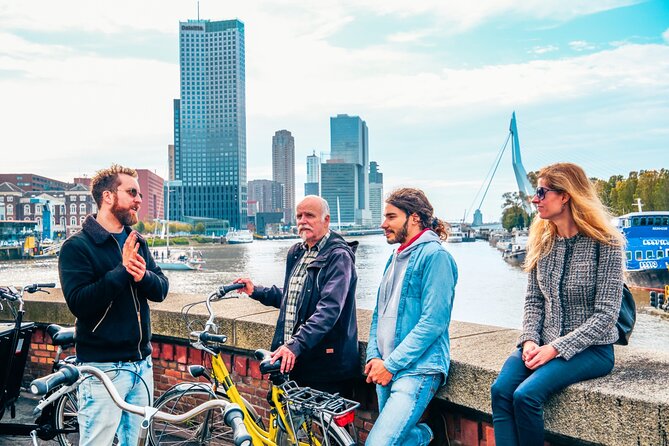
Rotterdam makes the most sense from a bicycle seat. You can cross the Erasmus Bridge, roll through the old Shipping Quarter, and reach the Cube Houses and Markthal without being boxed into a sightseeing bus. I like the way this tour mixes famous sights with useful local context, and I like the relaxed pace, short café break, and careful attention to bike fit and safety from guides such as Elmer.
The main consideration is coverage. You see a generous slice of central Rotterdam in three hours, but you do not visit every historic district. Delfshaven, the old quarter that escaped the wartime bombing, is not part of this route, and the café stop is brief rather than a full meal.
Key points at a glance
- A proper city overview in three hours: The loop links Rotterdam’s waterfront, museums, central shopping streets, old church, modern market hall, and bridges.
- A local guide leads the way: Elmer is praised for clear instructions, friendly energy, and a strong focus on keeping riders comfortable and safe.
- Seven-speed bikes are provided: The bikes have been described as easy to use, well maintained, and comfortable for a relaxed city ride.
- The route balances old and new Rotterdam: You move from Hotel New York and Veerhaven to the modern Depot Boijmans Van Beuningen, Cube Houses, and Markthal.
- The group stays small: A maximum of 15 people makes it easier to hear the guide and ask questions.
- Plan for a moderate workout: You will be cycling for about three hours, with stops and a 15 to 20 minute break at Oude Binnenweg.
Why a bike is the right way to meet Rotterdam
Rotterdam is a city of contrasts. Its rebuilt center is full of bold architecture, wide spaces, bridges, and large public projects. Yet older pockets survive, and the best way to connect them is by bike.
On foot, you can see the center, but the distances between waterfront landmarks, the Museum Quarter, and the southern riverfront take time. By bike, you cover more ground while still moving slowly enough to hear the guide and stop for photos. Cars cannot take you along every cycle route, and a bicycle gives you a better feel for how people actually move through the city.
The route is designed as a broad introduction, not a museum visit or a specialist architecture tour. You stop outside the major sights, hear their story, and keep moving. That makes it a good choice for your first day in Rotterdam, when you want to get your bearings before deciding where to return later.
The tour costs $72.01 per person. That is not the cheapest way to see Rotterdam, but the price includes the bicycle and an English-speaking guide. You are paying for the route, local explanations, bike setup, and the time saved connecting far-flung sights. Since admission tickets and drinks are not included, this works best if you want orientation and history rather than indoor visits.
More Bike Tours in Rotterdam
- Rotterdam: 2.5-Hour Highlights Bike Tour
★ 4.7 · 399 reviews - Rotterdam: City Highlights Guided Bike Tour
★ 4.8 · 112 reviews - Rotterdam Bike Tour – all the Highlights
★ 5.0 · 105 reviews
Starting at Hotel New York and the south bank
The meeting point is Linker Veerdam 1, near Hotel New York. The tour begins in front of this landmark building, once the headquarters of the Holland-America Line. The stop gives you a useful introduction to Rotterdam’s connection with ocean travel and migration.
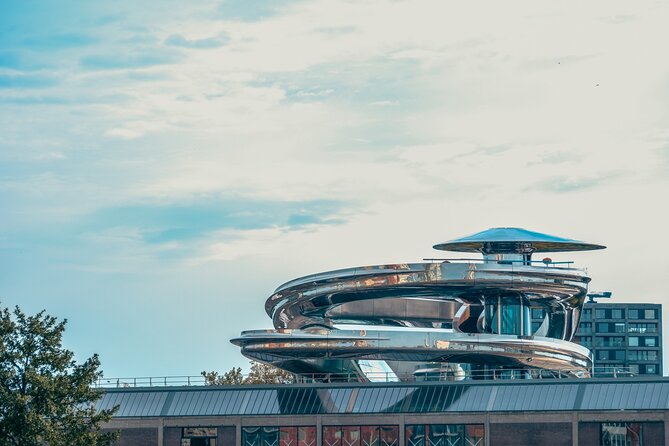
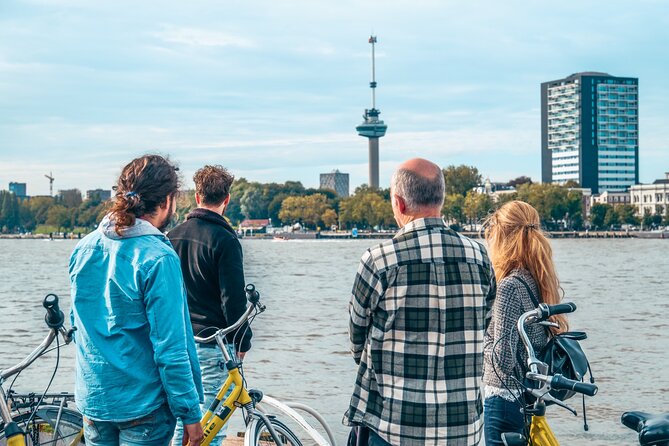
From here, you also get a view toward the Fenix Museum of Migration, known for its distinctive tornado-shaped design. The museum is presented as a new addition to Rotterdam’s cultural waterfront, but this tour only discusses it from outside. You should not expect entry or time to explore its galleries.
This opening stop is a good reminder that Rotterdam is not simply a collection of striking modern buildings. Its position on the river shaped its trade, shipping, and links with the wider world. The guide can answer questions as you look across the water, which is more useful than simply taking a quick photograph and moving on.
Crossing Erasmus Bridge into the Maritime District
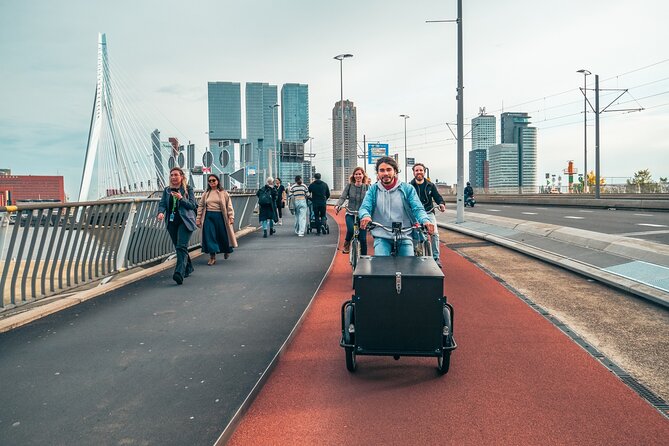
The group cycles across Erasmus Bridge, Rotterdam’s most recognizable modern bridge. The crossing gives you wide views of the river and both sides of the city, while the bike lets you experience the bridge as part of the urban route rather than as a distant photo stop.
After crossing, the tour pauses at Rotterdam’s World War II memorial in the Maritime District. Here, the guide connects the bridge and waterfront to Rotterdam’s wartime story, including the destruction that reshaped much of the city.
This short history lesson matters because the modern skyline can otherwise seem disconnected from the past. Rotterdam’s rebuilt center was not created all at once by choice. Much of it reflects what happened during the war and the planning decisions that followed.
The bridge crossing also shows one practical benefit of cycling. You can move between the southern waterfront and the central districts without a long walk, while still pausing at a meaningful place. Allow yourself enough comfort on the bike for bridges and city streets, since the tour requires moderate physical fitness.
Veerhaven and the Rotterdam that survived
At Veerhaven, the route enters the Shipping Quarter. This is one of the most attractive contrasts in the tour. Instead of wide postwar avenues and bold new buildings, you see a part of Rotterdam that offers a glimpse of the city before the war.
The group stops by a fountain that once stood in the city center. The fountain provides a small, tangible link to the older city, and the surrounding quarter helps you picture what Rotterdam looked like before wartime destruction and rebuilding changed its character.
This is also where the tour becomes more than a checklist of famous buildings. The modern center gets most of the attention, but Veerhaven gives you a quieter architectural counterpoint. You can ask the guide about the area and compare its scale and feel with the large spaces you have just crossed.
Still, if your main goal is to see every surviving historic quarter, this route has a limit. Delfshaven is not included. You may want to visit it separately if old Rotterdam, rather than modern architecture, is your priority.
Same country, a completely different kind of day:
- Rotterdam: Harbor Sightseeing Cruise
★ 4.3 · 7,599 reviews - Rotterdam: 1-Hour Sightseeing Splash Tour
★ 4.5 · 3,299 reviews - Rotterdam: Rotterdam Zoo Blijdorp Entry Ticket
★ 4.6 · 2,754 reviews - Rotterdam: Euromast Lookout Tower Ticket
★ 4.4 · 2,549 reviews
Museum Quarter and Depot Boijmans Van Beuningen
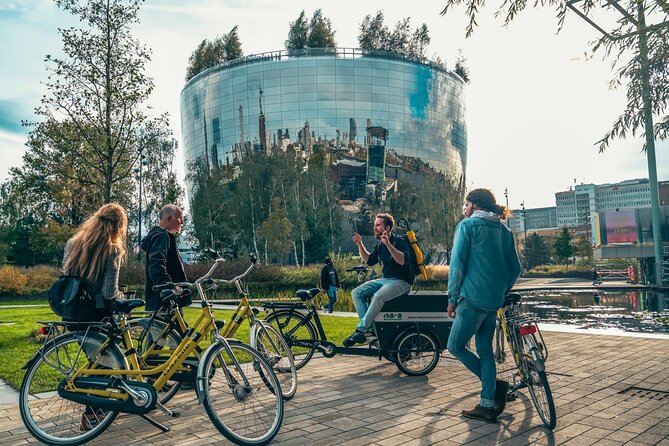
The route continues into the Museum Quarter, where several of Rotterdam’s major museums gather around Museumpark. The stop is near The New Institute and the Depot Boijmans Van Beuningen.
The depot is one of Rotterdam’s newer architectural icons and the first publicly accessible art depot in the world. Its mirrored exterior makes it immediately recognizable, but the tour focuses on the building and its place in the city rather than taking you inside.
That distinction is important when planning your day. You get a strong introduction to the building, but no admission is included. If you want to see the art storage spaces and collections, set aside separate time and budget.
I like this stop because it shows how Rotterdam treats architecture as part of its public identity. The city does not hide its cultural infrastructure behind traditional facades. The depot itself becomes part of the visit, even from the outside.
The Museum Quarter is also a sensible place to return later. After hearing the guide’s explanation, you can decide if the depot, The New Institute, or another nearby museum deserves a longer visit.
The Oude Binnenweg break
The break at Oude Binnenweg lasts about 15 to 20 minutes. This is one of Rotterdam’s oldest shopping streets and gives the group time to pause after the first part of the ride.
You might stay together at a coffee bar, or you may be allowed to wander briefly on your own. The stop can serve several purposes: grab a drink, use the restroom, warm up, cool down, or chat with the rest of the group.
Drinks are not included, and this is not a brunch stop despite brunch being listed among the exclusions. Treat it as a short refreshment break, not a meal. If you need food, plan around the limited time and the group’s schedule.
The flexible nature of this pause is helpful. A fixed café stop can feel awkward if you do not want a drink, but here the time can be adjusted to suit the group’s needs. It also breaks up the ride without turning the tour into a long sit-down session.
City Hall and St. Lawrence Church
The next section brings you back toward central Rotterdam. The stop at City Hall introduces one of the city’s historic civic buildings, a useful contrast to the modern towers and experimental buildings elsewhere on the route.
From there, the group moves near Grote of Sint-Laurenskerk, also called St. Lawrence Church. The church is especially important in a city where so much of the old center was destroyed. The square offers another chance to understand the relationship between surviving historic structures and the rebuilt city around them.
You stop outside, so anyone wanting to see the church interior will need to return independently. Even so, the placement of this stop helps explain Rotterdam’s complicated visual character. A prewar church, modern commercial buildings, and postwar planning all sit within the same central area.
The guide’s role is valuable here. Without some explanation, City Hall and the church could seem like unrelated photo stops. With context, they help you read the city as a place rebuilt around a few important survivors.
Cube Houses and the Markthal
The yellow Cube Houses are among Rotterdam’s most photographed sights. The tour stops in front of them to explain their design and history, with time for pictures.
You do not need to be an architecture fan to appreciate the stop. The tilted houses are instantly memorable, and their unusual form shows Rotterdam’s willingness to test new ideas in public space. The guide can provide context that a quick photograph cannot.
Nearby, the Markthal brings a different kind of spectacle. Opened in 2014, it combines an indoor food market with a huge interior artwork. The tour describes the artwork as Rotterdam’s modern Sistine Chapel, a comparison you can judge for yourself when you look up inside.
The Markthal is a good place to revisit after the bike ride. During the tour, you mainly stop and hear the explanation. You may not have enough time to browse food stalls or eat at a relaxed pace, so plan a separate visit if you want to sample the market.
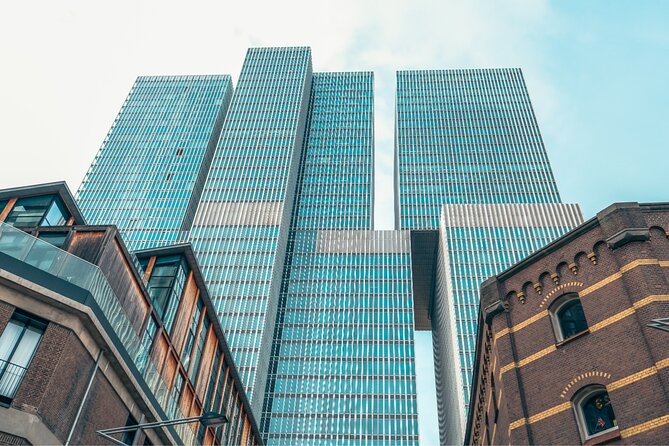
One useful feature of this part of the route is the pairing of the Cube Houses and Markthal. You see two major examples of Rotterdam’s modern design within a short distance, but they serve different purposes: one is residential and experimental, the other is commercial and social.
De Hef and the final riverfront stop
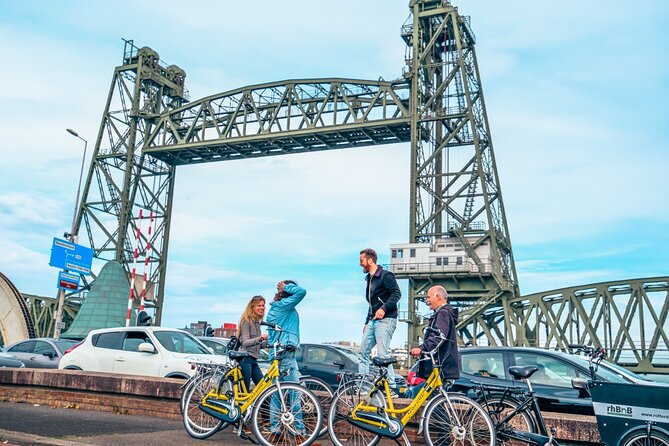
The final major stop is De Hef, also known as the Kings Harbour Bridge. The route continues toward the bridge so the guide can explain its history before the bikes return to the starting point.
De Hef adds another layer to the city’s relationship with transport and the river. By this stage, you have seen bridges as viewpoints, memorials, and working parts of the city. The stop rounds out the tour with one more piece of Rotterdam’s infrastructure story.
The activity ends back at Linker Veerdam 1. That makes the start and finish simple, but you should allow time to get to the meeting point at the beginning, especially since the tour starts on the south side of the river.
Bikes, safety, and group size
The supplied bikes are seven-speed models. They have been described as easy to shift, well maintained, and comfortable, with particular praise for the seats. That matters on a three-hour ride, even with frequent stops.
A helmet was provided during one reported experience, and the guide took time to make sure the bike fit properly. Since equipment details can vary, it is sensible to ask about the bike setup when you arrive and tell the guide at once if the seat or riding position feels wrong.
Elmer receives especially strong praise for safety, clear directions, and his ability to keep the group together. His guiding style combines facts with humor and positive energy. Yoreh is also associated with the company, and some tours may include two guides when one is training.
The maximum group size is 15. That is large enough to create a social outing but small enough for questions and personal attention. One important point is that the tour can run with only two people, according to the experience information provided. Minimum numbers can still apply, so a departure is not guaranteed in every circumstance.
You need moderate physical fitness. The route includes city cycling, bridge crossings, and roughly three hours on a bike, though the many stops make it less demanding than a nonstop ride. The tour requires good weather and may be moved or canceled if conditions are poor.
Who will get the most from this tour
This tour suits you best if you are visiting Rotterdam for the first time and want a clear sense of the city in one morning or afternoon. It is also useful if you prefer active sightseeing and would rather cover ground by bicycle than follow a walking route.
It works well for couples, friends, and small groups who like to ask questions along the way. The group discount option may help if you are booking for several people, though the exact discount is not provided.
You may want another activity if your main aim is to enter museums, spend a long time at the Markthal, or focus on Delfshaven and the oldest surviving parts of Rotterdam. This is an outside-focused tour with short stops, not a full cultural admission package.
The tour is offered in English. Confirmation arrives when you book, public transportation is nearby, and the activity returns to the meeting point. You can cancel for a full refund up to 24 hours before the start time. If bad weather or insufficient bookings cancel the tour, you are offered another date or a full refund.
Is the $72.01 price fair?
At $72.01, I would judge the value by what you want from the experience. If you only need a bicycle, the price is high. If you want a well-planned route linking the waterfront, old quarter, Museum Quarter, central sights, and De Hef, the cost is more reasonable.
You are not paying for attraction admission, drinks, or brunch. The value comes from the bicycle, the guide, the route design, and the chance to ask questions while moving through the city. A guide can also help you decide which places deserve a return visit, saving you time during a short stay.
The strongest part of the package is the combination of range and personal attention. You see much more than you could comfortably cover on foot, yet the small group and regular stops keep the tour from feeling like a race.
Should you book it?
Book this tour if you want an active first look at Rotterdam, especially if modern architecture, bridges, waterfront views, and city history appeal to you. Elmer’s careful bike fitting, safety focus, and friendly style add real value, and the route gives you plenty of useful pointers for the rest of your visit.
Skip it if you want long indoor visits, a full meal, or a close look at Delfshaven. For most first-time visitors with moderate fitness, though, this is a practical and enjoyable way to understand Rotterdam quickly, with enough local detail to make the city’s bold buildings and surviving older corners feel connected.
FAQ
Where does the bike tour start?
The tour starts at Linker Veerdam 1, 3072 NZ Rotterdam, Netherlands, in front of Hotel New York.
Where does the tour end?
The activity ends back at the meeting point at Linker Veerdam 1.
How long does the tour last?
The tour lasts about three hours.
What language is the tour offered in?
The tour is offered in English with an in-person English guide.
Is a bicycle included?
Yes. Use of a bicycle is included in the price.
Are attraction admission tickets included?
No admission tickets are included. The listed stops are outdoor sightseeing and explanation stops.
Is food or brunch included?
No. Brunch is not included, and beverages during the Oude Binnenweg break are also not included.
How many people can join the tour?
The maximum group size is 15 people.
How physically demanding is the ride?
You should have a moderate level of physical fitness. The activity involves cycling for about three hours with stops along the way.
Can I cancel for a full refund?
Yes. You can cancel at least 24 hours before the experience start time for a full refund. Cancellations or changes made less than 24 hours in advance are not refunded or accepted.
Just added around Rotterdam
- Discover Rotterdam: Classic Highlights Bike Tour by a Local★ 5.0 · 3 reviews
- Rotterdam: Capture the most Photogenic Spots with a Local★ 5.0 · 3 reviews
- Private tour: Markthal, Cube houses and Rooftop Het Witte Huis★ 4.5 · 3 reviews
- Private Transfer from Rotterdam Port to Amsterdam Airport (AMS)★ 5.0 · 3 reviews
- Rotterdam: 2.5-Hour Leckers Boat Cruise and Buffet★ 3.2 · 3 reviews
- Discover Rotterdam’s most Photogenic Spots with a Local★ 5.0 · 3 reviews
- Rotterdam: Wilhelminapier, High-rise & floating architecture★ 4.0 · 3 reviews
- Private Transfer from Rotterdam City to Amsterdam Schiphol Airport★ 5.0 · 4 reviews
Rotterdam Tours, compared.

Kinderdijk UNESCO World Heritage Entry Ticket
Read our review →
Browse the lists this tour appears in