
Reviewed · AMSTERDAM TOURS
Private Amsterdam WW2 walking tour
Amsterdam’s World War II story comes into focus as you walk from the old Jewish Quarter toward Dam Square. This private route links places of worship, memorials, resistance history, deportation, and Anne Frank’s story in roughly two hours, giving you a useful first look at a painful part of the city’s past.
I like the private format, which lets your guide adjust the pace and answer your family’s questions. I also like the route’s range: the Portuguese Synagogue and Spinoza Monument add cultural context, while the Auschwitz Monument and Hollandsche Schouwburg bring the Nazi occupation into sharper view. The main caution is that several stops receive only about 10 minutes, and the Anne Frank House itself is not included.
Key points to know before you book
- A private two-hour history walk: Your party has its own local guide, with no larger group to slow the pace.
- A strong Jewish Amsterdam focus: The route covers the Portuguese Synagogue, Auschwitz Monument, Hollandsche Schouwburg, Plantage, and Spinoza Monument.
- Anne Frank context, not a house visit: The guide discusses Anne Frank, but entry to Anne Frank House is not included.
- Guide quality may vary: James, Masha, and Stan receive warm praise, while one detailed complaint concerns Aaron’s manner.
- Mostly outdoor sightseeing: The tour is a walking route through city streets and public sites, with no food or drinks included.
- Good value for history-minded visitors: At $126.31 per person, the price makes the most sense for a small party that values a private guide.
A walk through Amsterdam’s Jewish Quarter
The meeting point is Amstel 51C, 1018 EJ Amsterdam. From there, the route moves through areas tied to Jewish life in Amsterdam before heading toward central landmarks. Since the activity lasts about two hours, you should arrive ready to walk and treat the tour as an orientation rather than a full museum visit.
The route begins at the Portuguese Synagogue, also called the Portugese Synagoge in the tour details. This building reflects the importance of Amsterdam’s Sephardic Jewish community during the Dutch Golden Age. The community was among the largest and wealthiest Jewish communities in Europe at the time, and its large synagogue expressed that position.
You receive about 10 minutes here. That is enough for an explanation of the community and the building’s role, but not enough for a long interior visit or quiet study. Admission is listed as free, though the tour does not promise a full guided visit inside. I would think of this stop as a setting for the story, not the entire story itself.
More Walking Tours in Amsterdam
- Anne Frank’s Story – Guided Walking Tour through Amsterdam
★ 5.0 · 11,619 reviews - Amsterdam: Life of Anne Frank and World War II Walking Tour
★ 4.8 · 10,467 reviews - Absolutely Amsterdam – the Essential Introductory Walking Tour
★ 5.0 · 3,629 reviews
Remembering deportation at the Auschwitz Monument
The Auschwitz Monument shifts the tone. Here, your guide explains the deportation of Amsterdam’s Jewish population and the meaning of the memorial. A short stop can still be powerful, but the subject deserves attention, so you may want to ask your guide questions instead of expecting a long formal presentation.
This is one of the places where the private setup helps. Your group can pause, ask for clarification, or take a moment without having to keep up with a large crowd. The tour does not include a ticket because the monument is an outdoor public site.
The route deals with difficult material. You should expect discussion of Nazi occupation, deportation, and the camps. It is not a light sightseeing walk with a small wartime theme added on at the end. The Jewish experience of Amsterdam is the central thread.
Resistance stories at Verzetsmuseum Amsterdam
The next stop is the Resistance Museum Amsterdam, or Verzetsmuseum Amsterdam. The guide uses this point to discuss resistance by the Jewish community and the wider story of opposition during the occupation.
The itinerary allows about 10 minutes here, and admission is listed as free. That timing does not allow for a full museum visit. If you want to explore the museum properly, plan a separate visit rather than assuming the walking tour includes an indoor museum session.
I like the museum’s place on the route because it keeps the story from becoming only one of persecution and loss. Resistance, choices, fear, and courage all matter when you are trying to understand Amsterdam during World War II. Still, the short stop means you will get an introduction, not a detailed museum tour.
Hollandsche Schouwburg and the mechanics of deportation
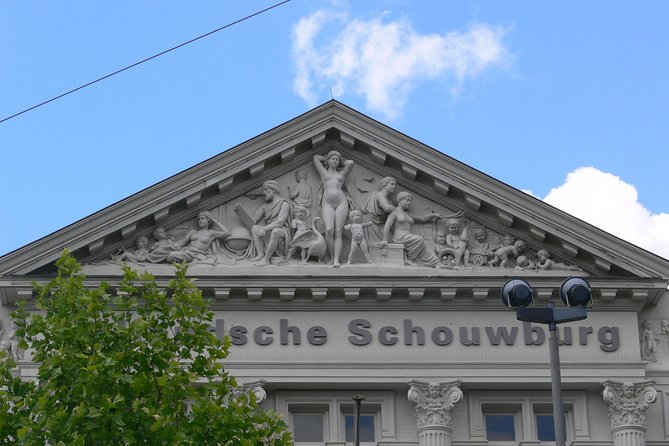
At the Hollandsche Schouwburg, your guide explains how the former theater became connected with the deportation of Jewish people. The stop focuses on deportation camps and the machinery that carried people away from Amsterdam.
This is a particularly important kind of site because it connects city life with the wider Nazi system. You are not only hearing about distant camps. You are learning how local places and institutions became part of the process.
Again, the scheduled time is about 10 minutes. That is a firm reminder to keep your expectations in check. You will hear the site’s role and its connection to the deportations, but you may want more time afterward to read, reflect, or visit related memorial spaces on your own.
Same country, a completely different kind of day:
- Amsterdam: Van Gogh Museum Ticket
★ 4.7 · 52,054 reviews - Amsterdam Classic Saloon Boat Cruise with Drinks and Cheese
★ 5.0 · 31,825 reviews - Amsterdam Luxury Canal Cruise + Unlimited Drinks & Bites option
★ 5.0 · 30,518 reviews - Amsterdam: Heineken Experience Ticket
★ 4.6 · 30,055 reviews
The Plantage, Spinoza, and the city between the landmarks
The Plantage area gives the walk a change of pace. Your guide points out the beauty of the neighborhood while explaining its history. This mix of ordinary streets and serious events is one of the useful parts of a walking tour. Amsterdam’s wartime story did not happen on a separate stage. It unfolded in places that are still part of daily city life.
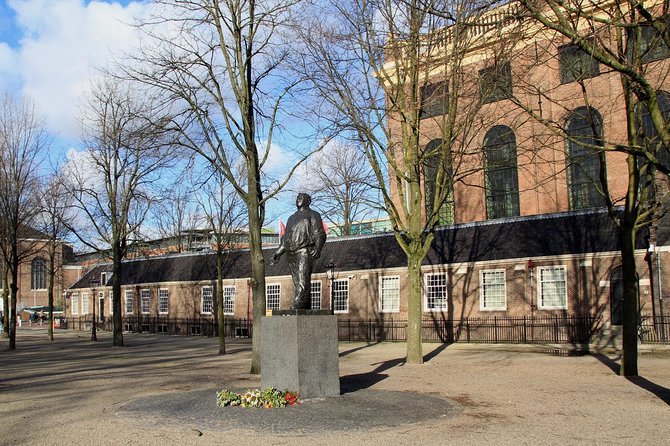
The Spinoza Monument adds another layer. Here, the guide explains the monument and its connection to Baruch Spinoza, the Amsterdam philosopher of Sephardic Jewish background. The stop is not presented as a World War II memorial, but it helps place Jewish intellectual and cultural life into a longer Amsterdam story.
The Plantage and Spinoza stops also give your guide room to connect the earlier sites. A good guide can show how Jewish religious life, civic life, philosophy, resistance, and persecution belong to one larger story. This is where the private format can feel more useful than a set script.
Walking to Dam Square and the Royal Palace
After the Jewish Quarter stops, the route walks toward Dam Square and the Royal Palace. This transition is practical as well as historical. You move from the memorial sites into Amsterdam’s best-known central square, so the tour broadens from Jewish World War II history to the city’s national symbols.
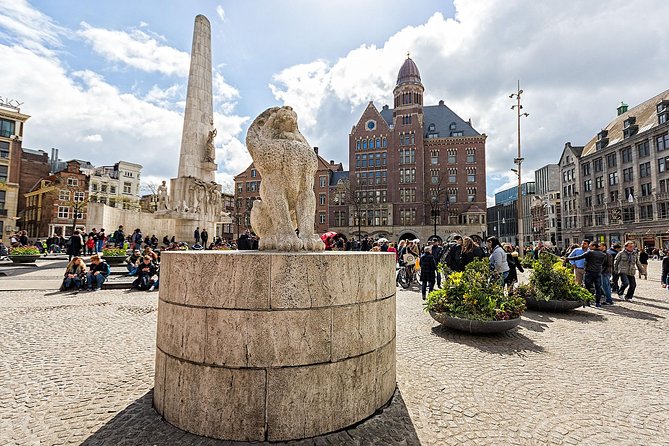
At Dam Square, you explore the monument for about 10 minutes. The square is a major public space, and the monument gives your guide another chance to discuss how the Netherlands remembers war and occupation.
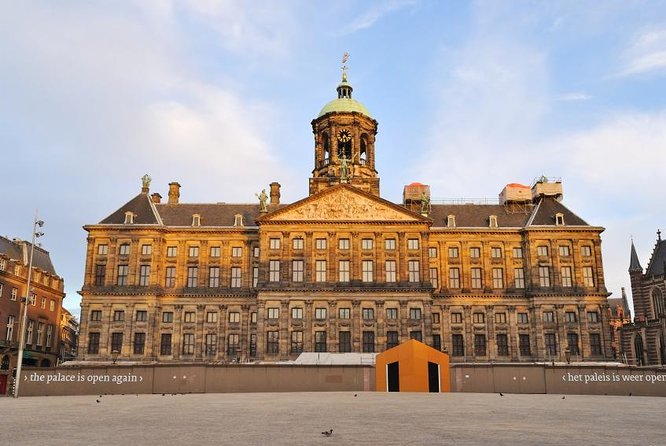
The Royal Palace receives about five minutes. The palace is an exterior sightseeing stop in this schedule, and admission is not included. You should not book this tour expecting a palace interior visit. The value here is the location and the explanation, not an extended royal tour.
I like this part of the route because it gives you a sense of Amsterdam’s scale. You begin with a focused Jewish history route and finish among the city’s most recognizable civic landmarks. The drawback is time. With only two hours, every added landmark reduces the amount of time available at the earlier memorials.
Anne Frank’s story without Anne Frank House entry
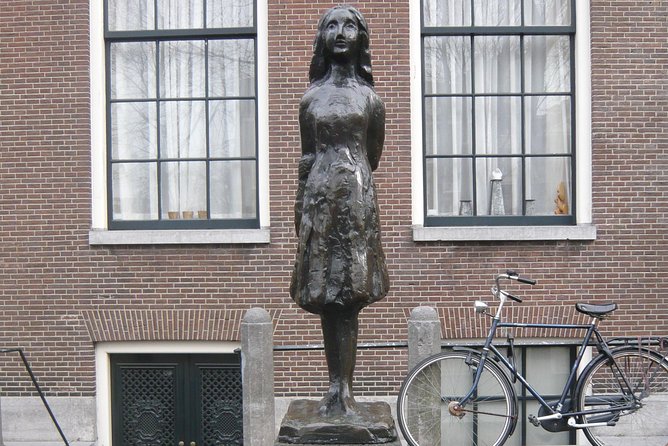
The final named stop is the Anne Frank House. The description says your guide will tell you more about Anne Frank’s story, but the admission ticket is not included. The itinerary also does not clearly promise entry into the house.
That distinction matters. You should treat this as an exterior or contextual stop with guide commentary, not as a museum visit. One piece of feedback specifically complained that the tour advertised the Anne Frank House and Dam Square but did not actually visit them as expected. Even though the route includes these places, the safest approach is to ask the operator exactly what you will see before booking.
If you want to visit Anne Frank House inside, you need a separate ticket. No admission price or ticket arrangement is supplied for this walking experience, so do not assume your tour booking covers it.
The Anne Frank discussion can still be valuable. The guide can connect her story to the Jewish community, deportation, and the occupation of Amsterdam. But you should reserve enough time in your own schedule for the museum if that is a priority.
What the private format adds
The activity is private for your party only. That is the clearest reason to choose it over a cheaper group walk. You can ask questions about a particular family interest, spend longer at a memorial, or move along when the subject becomes too heavy.
Private tours also make guide quality more visible. In a large group, a weak speaker can disappear into the crowd. Here, the guide shapes nearly the entire experience. Several guides are named in the feedback: James is praised for offering unusual historical perspectives and museum suggestions, Masha for making the walk friendly and interactive, and Stan for keeping the tour going in cold, windy rain.
Aaron receives mixed treatment. Some comments praise his work and recommend him, while one detailed account describes a cold and dismissive attitude, including an offensive remark about the visitor’s nationality. I cannot predict which guide you will receive, and the supplied information does not say that you can select one. Because this is a private experience, guide manner matters greatly. If you book, it is sensible to confirm the assigned guide and raise any concerns with the provider before the start.
Is $126.31 per person fair?
The price is $126.31 per person. That is a serious price for a two-hour walk, especially if you are a solo visitor or a couple. It becomes more defensible for a family or small group because you are paying for a private guide rather than several separate seats in a large tour.
You are paying for planning, a local guide, and a route that ties together sites scattered across Amsterdam. You are not paying for food, drinks, museum admission, or entry to Anne Frank House. The Portuguese Synagogue, monuments, and other listed stops have no admission charge, so the main product is the guide’s interpretation.
I would compare the price against the size of your group. For two people, it is a premium history walk. For four or more people, the per-person cost may feel more reasonable if you want a private conversation and a fixed route.
The tour is also booked an average of 54 days ahead, which suggests that advance planning is wise. That figure is not a guarantee of availability, but I would not leave this until the last day if your Amsterdam schedule is tight.
Timing, weather, and practical details
The walk lasts approximately two hours and ends back at the meeting point. The route includes several outdoor stops, so rain, wind, or cold can affect your comfort. One guide, Stan, received specific praise for handling severe weather without losing the thread of the tour, but you should still wear suitable shoes and bring weather protection.
The tour is offered in English. Confirmation arrives when you book, and the activity is near public transportation. Service animals are welcome, and the supplier says most people can take part.
The description lists each main stop at around 10 minutes, except the Royal Palace at five minutes. That tells you the pace will be purposeful. You will cover a lot of ground and hear many short explanations. If you prefer long museum visits, extended photography stops, or slow reflection at memorials, this may feel rushed.
There is no meal or refreshment included. Plan food and drinks separately, particularly if you are booking the walk around lunchtime.
Cancellation is free up to 24 hours before the start time for a full refund. Cancellations or changes made within 24 hours are not accepted for a refund, and the cut-off follows Amsterdam local time.
Who will get the most from this walk?
I would choose this tour if you want a focused introduction to Jewish Amsterdam and World War II without managing the route yourself. It suits families, couples, and small groups who prefer to ask questions privately.
It also works well early in an Amsterdam stay. The route gives you names, places, and themes that can guide later visits to museums or memorials. James is specifically praised for suggesting other museums, and that kind of follow-up advice can help you plan the rest of your history sightseeing.
I would be more cautious if your main goal is entering Anne Frank House, touring the Royal Palace, or spending serious time inside the Resistance Museum. None of those experiences is included as a full admission visit.
The tour may also be a poor fit if you want a relaxed stroll with only occasional history. The subject is serious, and the itinerary moves quickly from one difficult site to another. You should be ready for frank discussion of persecution and deportation.
Should you book the Private Amsterdam WW2 Walking Tour?
Book it if you value a private guide, want a concentrated Jewish and World War II route, and are comfortable paying a premium for personal attention. The best parts are the route’s range and the chance to connect memorials, synagogues, resistance history, Spinoza, Dam Square, and Anne Frank in one sitting.
Before you pay, confirm what the Anne Frank stop involves and which guide will lead your party. That small check matters because the activity does not include Anne Frank House admission, and guide style can make or break a private walk.
For a history-minded group, I think the tour can be a useful and moving introduction. For a museum-focused visitor, book it only as a guided outdoor overview, then arrange separate entry to the places you want to explore properly.
FAQ
How long does the private Amsterdam WW2 walking tour last?
The tour lasts approximately two hours.
Where does the tour start?
It starts at Amstel 51C, 1018 EJ Amsterdam, Netherlands.
Where does the tour end?
The activity ends back at the meeting point.
Is this a private tour?
Yes. Only your party participates, and the tour includes a local guide.
What language is the tour offered in?
The tour is offered in English.
Is admission to Anne Frank House included?
No. Anne Frank House admission is not included.
Does the tour include food or drinks?
No. Food and drinks are not included.
Are service animals allowed?
Yes. Service animals are welcome.
Can I cancel for a full refund?
Yes, if you cancel at least 24 hours before the experience start time. Cancellations or changes made less than 24 hours in advance are not accepted for a refund.
Just added around Amsterdam
- Amsterdam: Giethoorn Tour with Canal Cruise and Windmills★ 5.0 · 3 reviews
- Full-day excursion to Edam, Volendam, and Marken★ 3.7 · 3 reviews
- Amsterdam: Chocolate Fondue in the Dark★ 5.0 · 3 reviews
- Amsterdam Family Friendly Historical Walking Tour★ 5.0 · 3 reviews
- Amsterdam Private Walking Tour of Famous Painters★ 5.0 · 3 reviews
- Amsterdam Old-West Vegan Food Tour with Local Guide★ 4.7 · 3 reviews
- From Amsterdam: visit Zaanse Schans, Muiderslot and more!★ 5.0 · 3 reviews
- Amsterdam: Beer Tasting with Paired Bites at Eighty-Four★ 5.0 · 3 reviews
Amsterdam Tours, compared.


Amsterdam Classic Saloon Boat Cruise with Drinks and Cheese
Read our review →
Amsterdam Luxury Canal Cruise + Unlimited Drinks & Bites option
Read our review →


Classic Boat Cruise with Optional Cheese & Wine
Read our review →
Evening Cruise with Optional Wine and Snacks
Read our review →
75 Minute City Canal Cruise with Audio Guide
Read our review →Browse the lists this tour appears in