

Reviewed · AMSTERDAM TOURS
Amsterdam Haunted History and Ghost Walking Tour
Amsterdam’s darkest stories come alive after sunset on this two-hour walk, which links royal crypts, a former women’s prison, a silent courtyard, Blood Street, and the old Waag. It is less a jump-scare attraction than a history walk with a ghostly edge.
I like the mix of real Amsterdam landmarks and macabre tales, and I like that guides such as Sunil, Lola, Alexios, and Stefan bring their own style to the stories. The main drawback is simple: you walk a lot, and the ghost content may feel lighter than the title suggests.
- Nieuwe Kerk opens the evening with royal ceremonies, crypts, and buried figures.
- The former Spinhuis women’s prison gives the tour its most somber setting.
- Begijnhof adds a quiet nun’s tale to the darker city stories.
- Blood Street in De Wallen brings murders and violence into the walk.
- The Waag closes the route with tales of dissection and the Purgatory of Amsterdam.
- The tour ends near Prins Hendrikkade after about two hours of walking.
Amsterdam’s dark side, told on foot
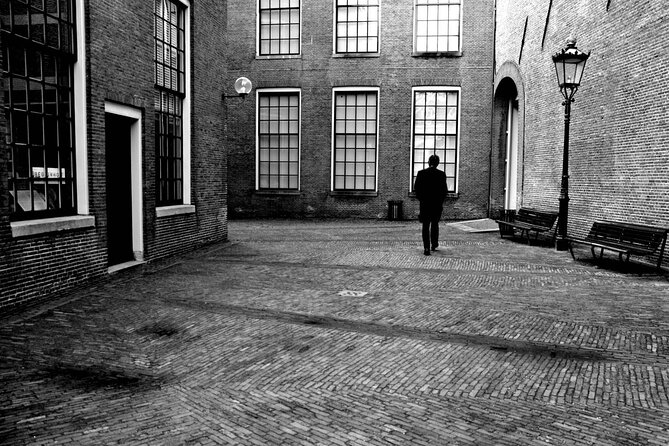
Amsterdam is often sold through canals, art museums, bicycles, and lively squares. This walk gives you a different way to read the city. Instead of looking only at pretty facades, you hear about punishment, religious rules, death, prison life, witch trials, murder, and the uneasy work of early science.
That contrast is the point. The route passes places you might otherwise see only as attractive buildings or busy streets. A guide adds the human stories behind them, then uses the evening setting to sharpen the mood.
The tour is led by a local storyteller, and the guide matters a great deal here. Sunil is praised for adding extra detail to familiar sites and taking the group through alleys and streets that can feel new even if you have visited Amsterdam before. Alexios is noted for clear explanations, enthusiasm, and a strong talent for telling a story. Lola and Stefan have also led engaging walks, with Stefan especially praised for his command of Amsterdam’s past.
You should expect a history tour with ghost stories, not a theatrical haunted house. The best parts come from the blend of fact, old belief, crime, and legend. Humor also appears along the way, which helps keep the mood from becoming too heavy.
Starting at Nieuwe Kerk and Dam Square

The walk begins at the Anantara Grand Hotel Krasnapolsky on Dam 9, close to the center of Amsterdam. Your first stop is Nieuwe Kerk, the New Church, where the focus turns to royal ceremonies, crypts, and vaults.
The church’s importance gives the evening a strong opening. You are not starting with a random spooky alley. You begin at a major civic and religious site, then hear about the people connected with its burial spaces and ceremonies.
The stop is listed as about 24 minutes. Admission to the individual stops is included, though the tour description does not promise entry into every building. Much of the experience is about hearing the site explained from outside or in its surrounding spaces, so do not book this expecting a formal church visit or an underground crypt tour.
I like this first stop because it sets up the walk’s main idea: familiar Amsterdam places can hold unsettling stories. It also gives you a useful sense of the city center before the route moves toward more unusual locations.
More History Tours in Amsterdam
- Amsterdam Food and Cultural Tour with Tastings
★ 5.0 · 2,442 reviews - Amsterdam: Haunted History and Ghost Walking Tour
★ 4.5 · 488 reviews - Amsterdam High-End Dutch Food & History Tour – Up to 8 guests
★ 5.0 · 482 reviews
The Spinhuis and the weight of a former prison
The former Spinhuis women’s prison is likely the most naturally atmospheric stop. As dusk arrives, the story shifts from royal ceremony to confinement, sorrow, and despair.
This was a place associated with women who had been imprisoned, and the tour presents it as a site where old suffering still seems to cling to the walls. The guide’s job here is not just to say that the building was a prison. You hear about the emotional burden attached to it and the idea of tormented souls remaining within the site.
The Spinhuis adds a useful historical layer. Prison stories can tell you more about a city than grand monuments do, because they reveal how Amsterdam dealt with poverty, crime, morality, and punishment. The ghost element gives those questions a personal face.
Allow about 24 minutes for this stop, then expect more walking. If you want the strongest atmosphere, the night setting helps. On the other hand, this is still a city walk. Street noise, bicycles, and people going about their evening can interrupt the mood.
One practical point matters here: wear comfortable shoes. The whole route lasts around two hours, and one person found the amount of walking greater than expected. There is no food or drink included, so have water with you before starting.
Begijnhof and the nun who could not leave
Begijnhof offers a sharp change in mood. This quiet courtyard is known for its calm setting, but the story told here is far from peaceful. The tour centers on a nun condemned to wander silently after breaking her vows.
That tale gives the stop a different kind of fear. The Spinhuis story is tied to confinement and collective misery. Begijnhof is more personal, built around guilt, religious duty, punishment, and a spirit unable to rest.
The courtyard setting also creates one of the walk’s better contrasts. You move from public streets into a quieter space, and the guide asks you to listen for the faint footsteps of the wandering nun. The effect depends on the storytelling rather than special effects, so the guide’s delivery is important.
This is one of the stories that can stay with you after the tour. It also shows why the experience works best for people who enjoy local legends mixed with history. If you want only documented events, parts of the walk may feel too folkloric. If you enjoy hearing how a city’s stories explain its fears and rules, Begijnhof should be a highlight.
The stop is planned for about 24 minutes. Because Begijnhof is a real courtyard rather than a purpose-built attraction, keep your voice low and follow the guide’s instructions about where to stand.
Blood Street in De Wallen
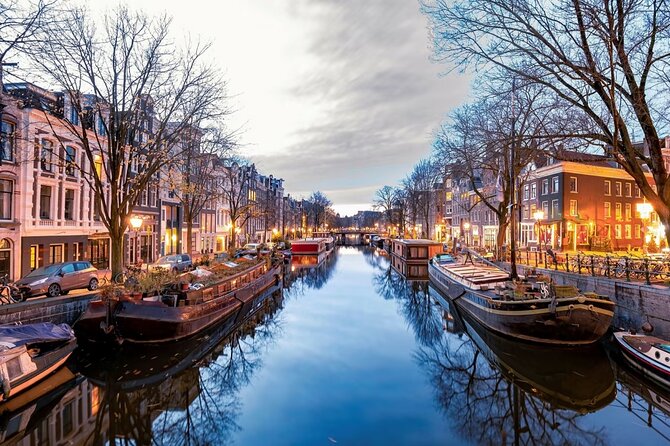
The route then turns toward De Wallen, Amsterdam’s Red Light District, and the place presented as Blood Street, the city’s most haunted street. The name alone sets the tone, but the stories are more important than the nickname.
Here, the subject is violence: murder, mayhem, and the long record of trouble attached to an old urban lane. The cobblestones and narrow streets make a fitting backdrop, though the area is also active at night. You are not walking through an empty ghost town. The ordinary life of De Wallen continues around you.
That mix can be a strength. The tour shows how dark stories survive in a living city, rather than placing them in a sealed museum. It can also be a weakness if you want silence and full concentration. Street noise and movement may make it harder to hear, especially if the group is large.
A good guide handles this well. One guide has been praised for moving the group to quieter spots when traffic and street noise made listening difficult. That is a small detail, but it matters. A ghost story loses its effect if you cannot catch the key names and details.
This stop is also where the tour feels most urban and immediate. You see the contrast between Amsterdam’s tourist image and its harder past. The walk does not ask you to ignore the modern district. It places old tales of violence right beside it.
More Walking Tours in Amsterdam
- Anne Frank’s Story – Guided Walking Tour through Amsterdam
★ 5.0 · 11,619 reviews - Amsterdam: Life of Anne Frank and World War II Walking Tour
★ 4.8 · 10,467 reviews - Absolutely Amsterdam – the Essential Introductory Walking Tour
★ 5.0 · 3,629 reviews - Amsterdam: Anne Frank Guided Small Group Walking Tour
★ 4.8 · 2,722 reviews
The Waag and Amsterdam’s uneasy science
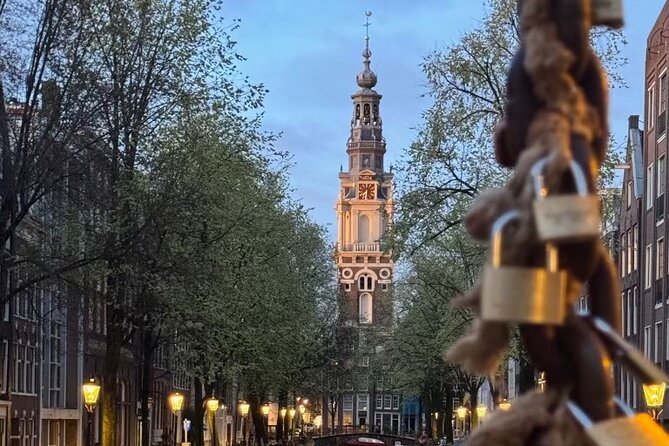
The final major stop is Nieuwmarkt, home to the Waag. The story here concerns what is called the Purgatory of the Waag, linked to the restless spirits of people dissected within its walls.
This is the tour’s most unsettling historical theme. The Age of Enlightenment is often remembered for reason, invention, and scientific progress. The Waag story reminds you that early scientific work could also involve grim practices and a very different attitude toward the dead.
The guide connects scientific curiosity with the people who suffered or were used in the process. That gives the building more weight than a quick photo stop. You are asked to think about the boundary between learning and cruelty, and about the people left behind in old accounts of medical study.
The stop also brings the walk toward a natural close. After crypts, prison suffering, religious punishment, and murder, the Waag adds one last question: what happens when the desire to understand the human body overrules respect for the person?
The tour then ends at Prins Hendrikkade 94-95, near the central station area. The route is useful if you are heading back toward the station or nearby hotels, though the exact final walking distance to your accommodation will depend on where you stay.
What the guides add to the experience

This is a storytelling tour, so the guide is not a minor detail. The strongest feedback focuses on clear explanations, humor, professionalism, and the ability to hold attention during the walking stretches.
Sunil is praised for knowing the city well and adding extra information even at places that may appear on other history walks. He also takes the group down side streets and alleys, which can give repeat visitors a fresh view of central Amsterdam.
Alexios has been praised for making the stories easy to follow while adding enthusiasm and useful local detail. Lola is described as keeping the group interested through a full evening walk, while Stefan is noted for combining strong Amsterdam history with entertaining delivery.
You are not guaranteed one particular guide, so treat these names as examples of the level of storytelling the tour can offer, not as a promise about your departure. The quality of an evening can depend on pacing, voice, group size, and how well the guide manages noisy streets.
The tour has a maximum group size of 140 people. That is a large possible group for a storytelling walk. If the group reaches that limit, you may need to stay close to hear well, and the guide may need to repeat points. The positive side is that guides have shown care with street noise and group positioning.
Is $72 a fair price?
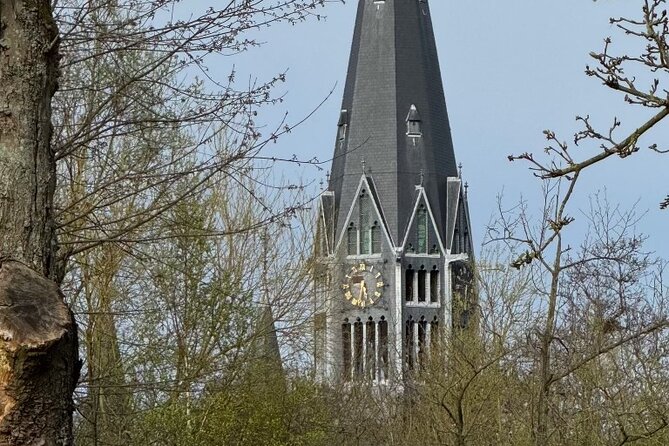
At $72, this is not the cheapest way to walk around central Amsterdam. You are paying for a guide, a planned route, and two hours of stories rather than for entry to a major attraction.
The value depends on what you want. If you would happily stroll these streets on your own and read a guidebook, the price may seem high. The individual stops do not list admission charges, and food and drink are not included.
I see more value if you want context and a ready-made evening plan. A good guide connects five very different sites and gives you a reason to notice details you might otherwise pass. You also get a route that moves beyond the standard postcard view of Amsterdam.
The rating is 4.8 out of 5, with 98 percent recommending the experience. That supports the idea that the guide and stories are the main product. It does not mean every moment will be frightening or that every guide will suit every person.
The best value comes when you listen closely and treat the walk as a history experience with a supernatural theme. If you expect constant ghost tales, special effects, or haunted-house scares, $72 will feel less convincing.
Who should book this Amsterdam ghost walk?
I would recommend it to adults, older children who enjoy dark stories, repeat visitors, and anyone who wants an evening activity that does not take up a full day. The two-hour length fits neatly between dinner and another evening plan.
It is especially useful early in your visit if you want to understand the center through stories rather than only maps. It can also work late in a stay, when the main museums and canal sights are already familiar.
You should think twice if you dislike walking, need frequent seated breaks, or find crime and death stories unpleasant. The route covers several central locations, and one stop leads naturally into the next on foot.
The experience is accessible to most people, and service animals are allowed. It is near public transportation, but the provided information does not specify step-free access at every point or seating during the walk. If those details matter to you, ask the operator before booking.
For a large group, stay near the guide and move promptly when asked. That simple habit will make it easier to hear the stories, especially in De Wallen and other noisy areas.
Booking and cancellation details
You receive confirmation at the time of booking, and the ticket is mobile, so you do not need a printed voucher. The meeting point is the Anantara Grand Hotel Krasnapolsky, Dam 9, 1012 GJ Amsterdam.
The tour ends at Prins Hendrikkade 94-95, 1012 AE Amsterdam. Check both points on a map before setting out, since the start and finish are different.
Free cancellation is available up to 24 hours before the local start time for a full refund. Cancellations or changes made within 24 hours are not refunded or accepted.
Should you book it?
Book this walk if you want Amsterdam history with a spooky filter, not a staged fright show. The route covers strong locations, the stories range from religious legend to murder and early science, and the best guides add humor and detail that make the walking worthwhile.
Skip it if you want a short, seated activity or a nonstop stream of ghost stories. The route involves a lot of walking, the group may be large, and the city remains noisy and active around you.
For most people who enjoy local legends, dark history, and evening walks, this is a good way to see central Amsterdam differently. Wear solid shoes, bring water, stay close enough to hear, and let the guide do the connecting.
FAQ
How long is the Amsterdam Haunted History and Ghost Walking Tour?
The tour lasts approximately two hours. It is a walking route through several central Amsterdam locations.
Where does the tour start?
The meeting point is the Anantara Grand Hotel Krasnapolsky at Dam 9, 1012 GJ Amsterdam, Netherlands.
Where does the tour end?
The tour ends at Prins Hendrikkade 94-95, 1012 AE Amsterdam, Netherlands.
Which places are included on the route?
The route includes Nieuwe Kerk, the former Spinhuis women’s prison, Begijnhof, De Wallen and Blood Street, and Nieuwmarkt with the Waag.
Is food or drink included?
No. Food and drink are not included in the tour price.
Can I cancel for a full refund?
Yes. You can cancel at least 24 hours before the experience start time for a full refund. Cancellations within 24 hours are not refunded.
Is the tour suitable for most people?
Most people can participate, and service animals are allowed. The tour is near public transportation, but it involves a substantial amount of walking.
Just added around Amsterdam
- Amsterdam: Giethoorn Tour with Canal Cruise and Windmills★ 5.0 · 3 reviews
- Full-day excursion to Edam, Volendam, and Marken★ 3.7 · 3 reviews
- Amsterdam: Chocolate Fondue in the Dark★ 5.0 · 3 reviews
- Amsterdam Family Friendly Historical Walking Tour★ 5.0 · 3 reviews
- Amsterdam Private Walking Tour of Famous Painters★ 5.0 · 3 reviews
- Amsterdam Old-West Vegan Food Tour with Local Guide★ 4.7 · 3 reviews
- From Amsterdam: visit Zaanse Schans, Muiderslot and more!★ 5.0 · 3 reviews
- Amsterdam Walking Tour with Dutch Pancake Lunch★ 5.0 · 3 reviews
Amsterdam Tours, compared.


Amsterdam Classic Saloon Boat Cruise with Drinks and Cheese
Read our review →
Amsterdam Luxury Canal Cruise + Unlimited Drinks & Bites option
Read our review →


Classic Boat Cruise with Optional Cheese & Wine
Read our review →
Evening Cruise with Optional Wine and Snacks
Read our review →
75 Minute City Canal Cruise with Audio Guide
Read our review →Browse the lists this tour appears in