
Reviewed · AMSTERDAM TOURS
Amsterdam 2 Hour History Walking Tour
Amsterdam’s story is best understood on foot, where canals, courtyards, churches, and old trading streets sit close together. This two-hour walk links the city’s big themes: water, religion, empire, royal politics, Jewish life, war, and the easygoing Dutch way of looking at it all.
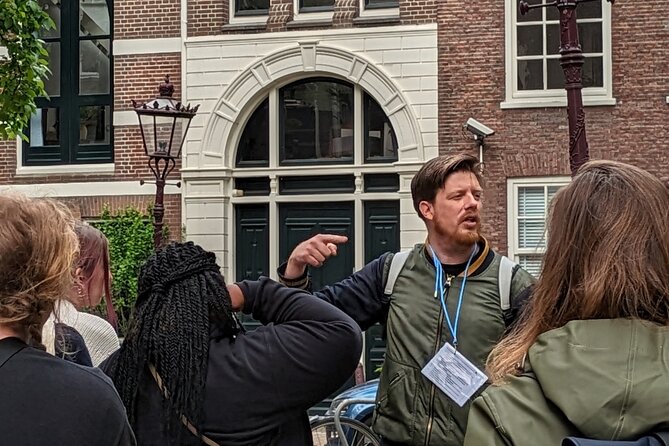
I like the small group of no more than 10, which gives the guide room for questions and keeps the pace social rather than crowded. I also like the practical side: you get local tips for the rest of your visit, plus a picture stop at the Monet bridge in Groenburgwal.
The main consideration is pace. Ten stops in two hours means most locations receive only three to ten minutes, so this is an excellent orientation walk, not a slow museum-style tour. The meeting time is 11 a.m., and you will need decent weather since the experience can be moved or canceled if conditions are poor.
What makes this Amsterdam walk worth your time
- Water shapes the whole story: Start in the Canal Ring and learn why Amsterdam grew by working with, and fighting, the water.
- A clear look at De Wallen: The Red Light District is explained through history, local attitudes, and how the area functions today.
- Small-group access to big subjects: With up to 10 people, the guide can bring humor and personal context to difficult topics.
- Jewish Amsterdam and wartime memory: Jodenbreestraat introduces the Jewish Quarter, wartime persecution, and the Hunger Winter.
- A useful first-day orientation: The walk ends near Dam Square, close to many forms of public transport.
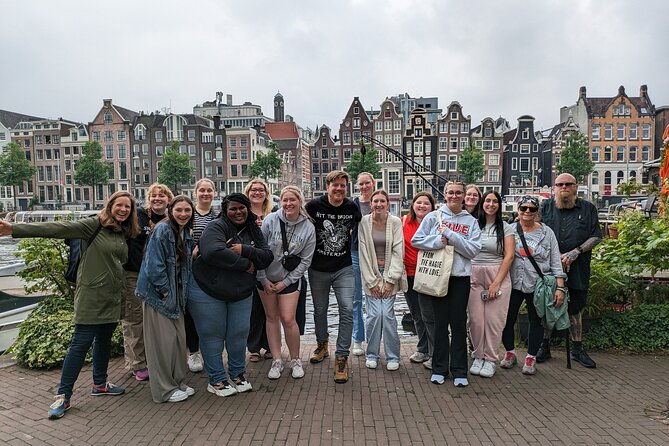
- A photogenic finish along the Amstel: Groenburgwal gives you the famous bridge associated with Monet and a fine photo stop.
The tour starts at Prinsenstraat 13, at the office of Hit the Bricks Walking Tours. From there, you move into the Canal Ring, where the guide explains how the Dutch had to live with water rather than simply push it aside.
That opening gives the rest of the walk a useful thread. Amsterdam’s canals are not just pretty scenery. They reflect planning, trade, engineering, and a culture shaped by cooperation against a stubborn natural force. You begin to see the city as a place built through practical problem-solving, not just as a postcard of narrow houses and bridges.
The first stop lasts about five minutes, but the walking between stops carries much of the explanation. Wear comfortable shoes and expect an outdoor lesson with frequent pauses rather than a long talk in one spot.
The Red Light District, known locally as De Wallen, gets about 10 minutes. That is enough time to cover why the neighborhood exists, how it works, and how Dutch society views it.
This is one of the more useful parts for a first visit because De Wallen can be confusing if you only see the bright windows and busy streets. A guide can give you the background and local frame of reference, while also helping you approach the area with basic respect.
Do not expect an extended discussion of every street or a private look behind the scenes. This is a short public walking tour, and the point is context. The guide uses history and humor, but the subject still deserves attention and good manners. Keep your camera away from people working in the windows, and listen to the guidance given on the street.
At Dam Square, the largest central square in the city, the focus returns to water and national character. You learn how the Dutch struggle with water helped shape ways of thinking and the country’s wider culture.
The stop lasts about five minutes, so the guide is giving you a compact explanation rather than a full account of every building around the square. Still, Dam Square is a smart place to connect local city development with national identity.
You also finish the tour here, which makes the square useful beyond the history lesson. From Dam Square, you can take many forms of public transport, continue sightseeing, or walk back toward the starting area, which is about two minutes away according to the tour details.
South Church provides a quieter pause. In the serene inner courtyard beside the church, the guide explains how and why Amsterdam moved from Catholicism to Protestantism.
This short stop is valuable because religious change in Amsterdam was not a minor side note. It affected buildings, public life, politics, and the way communities understood power. The courtyard also offers a calmer setting after the louder streets around De Wallen and Dam Square.
You spend roughly five minutes here. If you want an extensive account of the Reformation, church interiors, and religious art, you will need a separate visit. On this walk, the strength is the clear connection between faith and daily life.
The stop at Jodenbreestraat shifts the mood. At the edge of Amsterdam’s Jewish Quarter, the guide addresses the fate of tens of thousands of Jewish people who lived in Amsterdam before and during the war, along with the disastrous Hunger Winter.
This is an important part of the route, but it is also the point where the quick pace may feel most limited. Five minutes cannot tell the full story of Jewish Amsterdam or wartime occupation. It can, however, give you enough background to understand why the streets and nearby memorial sites matter.
I would pay close attention here and avoid treating the stop as just another photo opportunity. If this subject matters strongly to you, use the tour as an introduction and set aside more time elsewhere for Amsterdam’s Jewish history. The walk gives you the setting and the basic historical line, not a complete memorial visit.
At Bushuis and Oost-Indisch Huis, the tour turns to the Dutch East India Company, usually called the VOC. This was the company’s former headquarters, and the guide explains how a small country built a far-reaching empire and gained control of the spice trade while also fighting for independence.
This stop adds needed balance to the city’s pretty canals and merchant houses. Amsterdam’s wealth came from trade, but trade was tied to military power, overseas control, and hard competition. You get a chance to consider both the clever organization behind Dutch commerce and the human cost of empire.
The stop lasts about 10 minutes, making it one of the longer historical pauses. That extra time matters because the VOC story can otherwise become a blur of dates and famous names. A good guide can keep it connected to the street beneath your feet and explain why this modest-looking headquarters mattered.
At the Stopera pier, beside the Amstel River, you meet Amsterdam’s modern city hall and opera house complex. The guide explains why locals call it Stopera and why a building often criticized as unattractive can still be a source of civic pride.
This is a nice change from the usual old-town tour. You are not only looking backward at canals and seventeenth-century trade. You are also hearing how people in Amsterdam judge their own modern city, including the buildings they complain about and still claim as their own.
The stop is about five minutes. The pier also gives you a river setting and a moment to reset before the walk moves back toward quieter historic spaces.
Begijnhof is one of the route’s most appealing surprises. This enclosed courtyard feels removed from the city around it, and the guide introduces the beguine women who built and lived in the community.
The 10-minute stop gives you more time to appreciate the place than the brief pauses at Dam Square or South Church. You can expect a short account of the beguines and why this courtyard developed in the middle of Amsterdam.
Keep in mind that Begijnhof is a real place of residence and reflection, not simply a stage set for sightseeing. Enter quietly, follow any posted rules, and treat the courtyard as a living part of the city. The contrast between the peaceful interior and the streets outside is part of what makes the stop work.
At the Royal Palace Amsterdam, the guide explains how the Dutch royal family came to be, what France had to do with that process, and why the national color is orange even though the flag is red, white, and blue.
This five-minute stop is built around memorable questions rather than a full palace visit. That makes it especially useful for people who have noticed orange clothing, flags, and celebrations but never understood the reason behind them.
Admission to the palace is not included, so you should think of this as an exterior history stop. If you want to go inside, plan that separately. The tour itself does not provide an indoor palace visit.
The final stop is Groenburgwal, where you can photograph the famous bridge associated with Monet. The pause lasts about three minutes, so it is a quick look and picture stop rather than a lesson in painting or Amsterdam art.
Still, this is a smart ending. After two hours of political, religious, commercial, and wartime history, you get a simple visual memory of Amsterdam’s canals. Bring your camera or phone, and be ready to take the shot without holding up the group.
The bridge also helps explain why the city’s scenery has drawn artists. You do not need a long art lecture to understand the appeal of water, reflections, old buildings, and a compact bridge in one frame.
The listed stops add up to about an hour of short explanations, with the rest of the time spent walking and talking between them. That balance is useful because you cover a wide area and see how separate parts of Amsterdam connect.
You should not book this expecting a slow, exhaustive historical lecture. You should book it if you want a clear framework for the city, practical advice, and enough background to make later visits more meaningful.
The format also suits a first morning or early afternoon in Amsterdam. You can use the guide’s tips to plan the rest of your stay, then return to the places that caught your attention. The tour is offered in English, and confirmation arrives at booking.
The maximum group size is 10 people. That is a meaningful advantage on narrow streets and in small courtyards. It also makes it easier to ask questions, hear the guide, and stay connected as the group moves.
Guides named in the experience feedback include Axel and Mark. Axel is associated with an engaging overview of Amsterdam’s history and present-day culture, while Mark handled a substitute canal tour when a booking problem prevented the scheduled walk from taking place. The exact guide for your date is not specified, so you should expect a local guide but not assume one particular person.
Humor is part of the style, but the route also covers serious subjects, especially Jewish Amsterdam and wartime suffering. The best fit is someone who likes a guide to be personable and direct while still treating difficult history with care.
The tour includes local tips and, on request, discount codes for other Hit the Bricks tours. Bottled water is not provided, but there are several places to refill a bottle. Bring your own reusable bottle, since two hours of walking can leave you thirsty.
Service animals are allowed, the route is near public transport, and most people can take part. The supplied details do not give a full accessibility assessment, so if you have specific mobility needs, ask the operator before booking.
At $30.04 per person, the walk is priced as a compact small-group orientation rather than a basic stroll. You are paying for a local guide, a carefully connected route, and practical help that can save time during the rest of your stay.
The value is strongest if this is your first visit. In two hours, you get a working outline of Amsterdam’s water management, religious change, trade and empire, royal identity, Jewish history, and modern civic life. Buying separate guided visits to cover all those themes would cost more, though those longer visits would also offer more depth.
The value is weaker if you already know Amsterdam well or prefer to spend a long time at each site. You may find the short stops too brisk, especially at Jodenbreestraat and the Royal Palace. In that case, a focused museum visit or a longer specialist tour may suit you better.
The tour is booked an average of 27 days in advance, so it is sensible to reserve before your trip if your dates are fixed. Free cancellation is available until 24 hours before the start time. If bad weather forces cancellation, you are offered another date or a full refund.
I would choose this tour for a first-time visitor who wants to get your bearings fast without spending half a day indoors. It is also a good match for solo visitors or couples who prefer a relaxed small group and enjoy asking questions as they walk.
Families with older children may like the mix of canals, a famous district, royal stories, trade, and a photo stop. The subject matter is varied, but the serious wartime section may call for a little preparation and respectful attention.
You should think twice if you want a deep study of one subject, a palace interior visit, or a long stop at every landmark. The tour gives you ten connected glimpses. It does not replace the Anne Frank House, a Jewish history museum, a royal palace visit, or a specialist account of Dutch colonial history.
FAQ
More History Tours in Amsterdam
- Amsterdam Food and Cultural Tour with Tastings
★ 5.0 · 2,442 reviews - Amsterdam: Haunted History and Ghost Walking Tour
★ 4.5 · 488 reviews - Amsterdam High-End Dutch Food & History Tour – Up to 8 guests
★ 5.0 · 482 reviews
How long does the Amsterdam history walking tour last?
The tour lasts approximately two hours.
What time does the tour start?
The stated start time is 11:00 a.m.
Where does the tour begin?
It begins at Hit the Bricks Walking Tours, Prinsenstraat 13, 1015 DA Amsterdam, Netherlands.
More Walking Tours in Amsterdam
- Anne Frank’s Story – Guided Walking Tour through Amsterdam
★ 5.0 · 11,619 reviews - Amsterdam: Life of Anne Frank and World War II Walking Tour
★ 4.8 · 10,467 reviews - Absolutely Amsterdam – the Essential Introductory Walking Tour
★ 5.0 · 3,629 reviews - Amsterdam: Anne Frank Guided Small Group Walking Tour
★ 4.8 · 2,722 reviews
Where does the tour end?
It ends at Dam Square. The end point is about two minutes on foot from the starting area and is close to many forms of transport.
Is admission to the Royal Palace included?
No. Admission to the Royal Palace is not included. The tour provides a historical stop there, not an included palace ticket.
What happens if the weather is poor?
The experience requires good weather. If it is canceled because of poor weather, you can choose another date or receive a full refund.
Book it if you want a friendly, compact introduction to Amsterdam that connects famous sights with the forces behind them. The small group, practical tips, varied route, and Monet bridge photo stop give you more than a simple checklist walk.
Go in with the right expectations. You will cover a lot of ground, and some subjects receive only a few minutes. For a first visit, that quick, broad view is the point. For a return visit or a specialist interest, use it as a refresher and choose longer museum or site visits afterward.
More 2-Hour Experiences in Amsterdam
- Amsterdam: 2-Hour Canal Cruise incl. Drinks & Dutch Snacks
★ 5.0 · 594 reviews - Amsterdam 2-hour Private Canal Cruise with Live Guide and Drinks
★ 5.0 · 296 reviews - Amsterdam 2-Hour Evening Cruise With Live Guide and Bar
★ 5.0 · 134 reviews - Amsterdam: 2-Hour Sightseeing Tour by Rickshaw
★ 4.7 · 81 reviews
Just added around Amsterdam
- Amsterdam: Giethoorn Tour with Canal Cruise and Windmills★ 5.0 · 3 reviews
- Full-day excursion to Edam, Volendam, and Marken★ 3.7 · 3 reviews
- Amsterdam: Chocolate Fondue in the Dark★ 5.0 · 3 reviews
- Amsterdam Old-West Vegan Food Tour with Local Guide★ 4.7 · 3 reviews
- Amsterdam Private Walking Tour of Famous Painters★ 5.0 · 3 reviews
- Amsterdam Family Friendly Historical Walking Tour★ 5.0 · 3 reviews
- From Amsterdam: visit Zaanse Schans, Muiderslot and more!★ 5.0 · 3 reviews
- Amsterdam Walking Tour with Dutch Pancake Lunch★ 5.0 · 3 reviews
Amsterdam Tours, compared.


Amsterdam Classic Saloon Boat Cruise with Drinks and Cheese
Read our review →
Amsterdam Luxury Canal Cruise + Unlimited Drinks & Bites option
Read our review →


Classic Boat Cruise with Optional Cheese & Wine
Read our review →
Evening Cruise with Optional Wine and Snacks
Read our review →
75 Minute City Canal Cruise with Audio Guide
Read our review →Browse the lists this tour appears in