
Reviewed · AMSTERDAM TOURS
5 hrs Golden Age Amsterdam Private Walking Tour With Local Guide
Amsterdam makes more sense once you understand how its canals, old gates, churches, merchants, and neighborhoods fit together. This five-hour private walk begins at Centraal Station and follows a broad route through the medieval center, Chinatown, the Red Light District, Dam Square, Begijnhof, the Amstel, and the former Jewish Quarter.
I like the small-group format, capped at four people, and I like having Aleksandar, also called Alex or Aca, to explain the city’s odd details in clear, friendly English. He is also known for adjusting his stories for children, adults, and older visitors. The main drawback is the price: $540.69 per group is good value for four people, but expensive for one or two, and the route covers a lot of ground in five hours.
Key points to know before booking
- A true orientation walk: You see many major districts in one day, making it useful at the start of an Amsterdam stay.
- A private group of up to four: You get more room for questions and more flexibility than on a large group tour.
- Aleksandar’s personal approach: He is praised for patience, humor, language skills, and adapting explanations for families with children.
- Many sights are viewed from outside: Several museums and churches require separate admission, and five hours is not enough for full visits everywhere.
- Sensitive subjects are handled directly: The Red Light District section covers prostitution and Dutch drug policy in a factual, practical way.
- Anne Frank House needs advance planning: Tickets are not included and must be booked online at least six weeks ahead.
Why this five-hour route works as a first look at Amsterdam
I would choose this walk early in a visit because it gives you a useful mental map. You start at Amsterdam Centraal, then move through the old port area, canal belt, historic center, Dam Square, Begijnhof, the Amstel, and Jewish Amsterdam.
The route is not limited to postcard scenery. You get churches, memorials, former city gates, a Buddhist temple, old homes, flower stalls, cafés, and places connected to war, religion, trade, and royal life. That mix helps you see Amsterdam as a living city rather than a collection of pretty canals.
The private format matters here. With only your group and the guide, you can ask why the houses lean, how the canals were maintained, or what Dutch policy actually says about soft drugs. If your children become more interested in bridges than churches, Aleksandar can adjust. His past work with families suggests he is comfortable explaining art, city history, and local customs at several levels.
Still, keep your expectations in check. This is a walking overview, not a museum marathon. The listed stops include short visits of five or ten minutes, which usually means an exterior explanation and time for photographs. If you want to explore the Royal Palace, Anne Frank House, or the secret church properly, plan separate visits.
More Walking Tours in Amsterdam
- Anne Frank’s Story – Guided Walking Tour through Amsterdam
★ 5.0 · 11,619 reviews - Amsterdam: Life of Anne Frank and World War II Walking Tour
★ 4.8 · 10,467 reviews - Absolutely Amsterdam – the Essential Introductory Walking Tour
★ 5.0 · 3,629 reviews
Centraal Station, St. Nicholas Basilica, and the medieval harbor edge
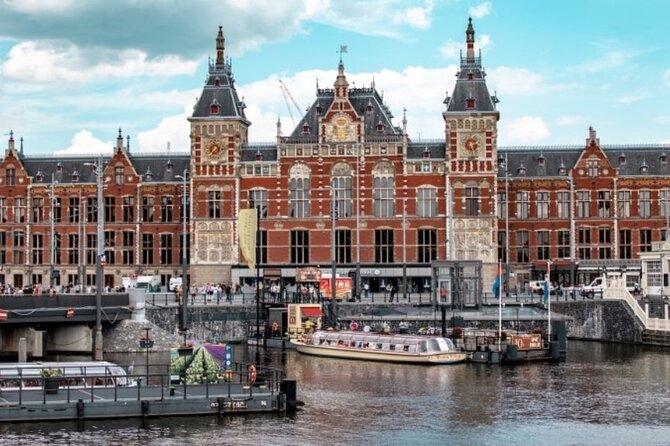
Meet at Amsterdam Centraal, a practical starting point near public transport. The station itself is worth a look. Its 19th-century building was constructed on 6,059 wooden poles, a reminder that Amsterdam is built on soft, wet ground and careful engineering.
From here, the walk goes to St. Nicholas Basilica, the largest Catholic church in the Netherlands. Its 19th-century date and Catholic identity help explain the city’s religious contrasts. Amsterdam is often associated with Protestant merchant wealth, but Catholic worship continued here, sometimes discreetly, during periods when public Catholic practice faced restrictions.
Next comes the Weeping Tower, part of the medieval defensive wall. The name gives the site a touch of legend, but the historical point is practical: this was once an edge of the fortified city. It is also linked to Henry Hudson’s departure for North America, connecting Amsterdam’s waterfront to the age of overseas exploration.
These first stops are brief. I would use them to ask questions and get the guide’s broad story rather than expect detailed interior visits.
Tiny houses and big canal lessons at Singel
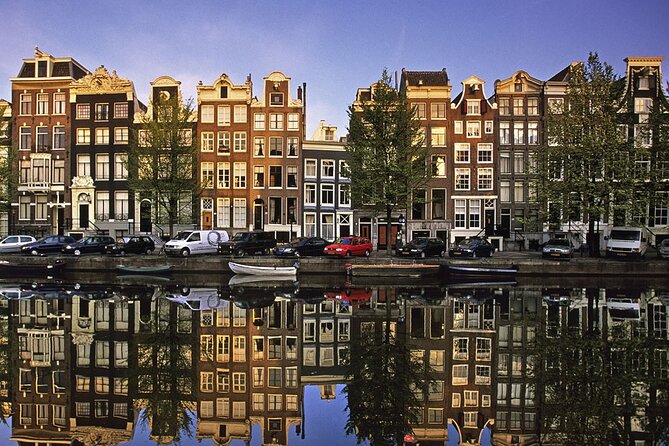
The smallest house on Singel is a perfect Amsterdam conversation starter. Its narrow shape is not just a curiosity for photographs. It opens the door to the city’s canal system, including what the canals were for, how they were maintained, and why Amsterdam houses became tall and slim.
You will also hear about bridges, narrow façades, and houses that lean. Some tilt because of settling foundations, while others appear to lean forward by design, making it easier to hoist goods through upper windows without scraping the façade.
This is one of the best parts of the route for first-time visitors because it turns a familiar view into useful understanding. After this explanation, you will look at every canal house differently.
The Waag, Chinatown, and the secret church
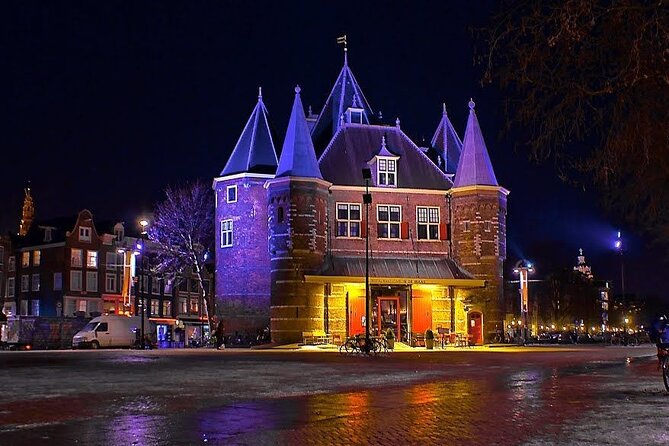
The Waag began as one of Amsterdam’s medieval city gates and later became a weighing house and a base for guilds. Its story shows how trade, city government, and professional groups once shared the same urban center.
The walk then reaches Ons’ Lieve Heer op Solder, the famous Our Lord in the Attic Museum. This former hidden Catholic church occupies the upper floors of a canal house. The stop is listed as only five minutes, with admission extra, so do not mistake the stop for a full museum visit.
If this church interests you, ask Aleksandar to help you decide if it deserves a return visit. The entrance fee is listed as €16.50 per person. That can add up quickly, especially alongside other paid sights, so I would choose only the interiors that matter most to you.
You also pass Fo Guang Shan, a traditional Chinese Buddhist temple in Amsterdam’s Chinatown. Its presence adds another layer to the city center, where medieval buildings, immigrant communities, religious institutions, and modern tourism occupy the same few streets.
Same country, a completely different kind of day:
- Amsterdam: Van Gogh Museum Ticket
★ 4.7 · 52,054 reviews - Amsterdam Classic Saloon Boat Cruise with Drinks and Cheese
★ 5.0 · 31,825 reviews - Amsterdam Luxury Canal Cruise + Unlimited Drinks & Bites option
★ 5.0 · 30,518 reviews - Amsterdam: Heineken Experience Ticket
★ 4.6 · 30,055 reviews
The Red Light District, explained without the usual nonsense
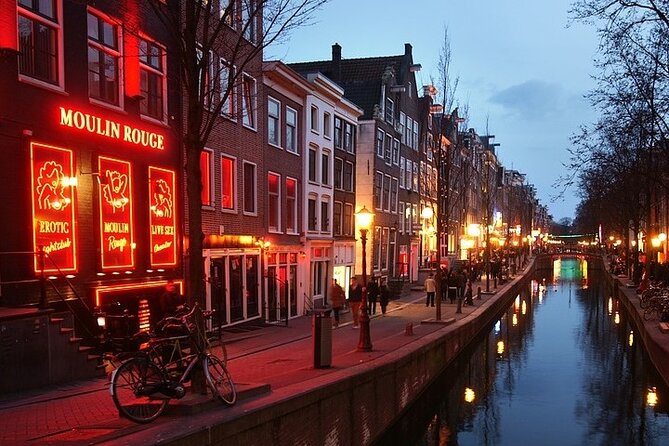
The 30-minute Red Light District pause is one of the more useful parts of the walk if you want context rather than spectacle. Aleksandar explains the history of prostitution, how the area functions today, and the basic facts of Dutch policy on prostitution and soft drugs.
That matters because Amsterdam’s reputation often rests on half-understood rules. You get practical advice on enjoying the district without breaking the law, along with a clear separation between legal policy, local customs, and tourist behavior.
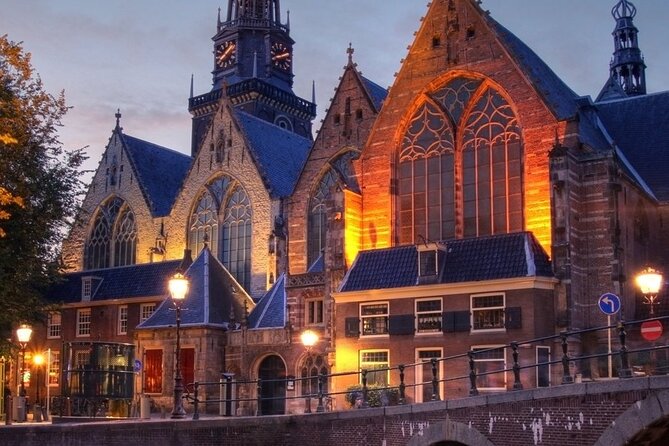
The area also contains the Old Church, museums, restaurants, theaters, coffeeshops, and the familiar red-lit windows. The guide presents the contradictions directly. You should still behave respectfully: this is a working neighborhood, not a human zoo.
The itinerary lists an Old Center admission of €13.50 for adults and €7 for those aged 13 to 18 and students. Since the exact attraction covered by that line is not fully clear, confirm it before budgeting. The Red Light District portion itself is listed as free.
Dam Square and the buildings that shaped the city
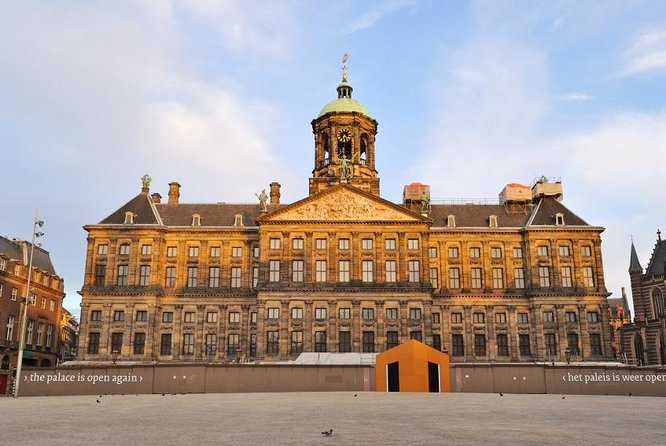
Dam Square is the city’s central historic stage. The guide points out the Royal Palace, Nieuwe Kerk, National Monument, Madame Tussauds, Magna Plaza, and Hotel Krasnapolsky.
The Royal Palace began as a 17th-century city hall and now serves as one of the Dutch royal family’s official residences. Like Centraal Station, it rests on thousands of wooden poles, 13,659 in this case. That construction detail gives you a better feel for the scale of Amsterdam’s engineering problems.
The palace admission is listed at €10 per person. Nieuwe Kerk costs €10 per person, and Westerkerk costs €7. These charges are not included, and the schedule allows only about 15 minutes at each. I would treat this section as an exterior orientation unless you have arranged extra time or plan to return later.
The National Monument, a 22-meter memorial erected in 1956, commemorates those killed in World War II and later armed conflicts. Its location makes it easy to pass without thought, so having the guide explain its purpose adds weight to the square.
Begijnhof and Amsterdam’s quieter side
Begijnhof offers a sharp change of mood. This enclosed area was associated with Beguines, women who lived in a semi-religious community similar to a convent but with a different structure.
The stop includes the English Church, another hidden Catholic church, the oldest wooden house in Amsterdam, and stories about Sister Cornelia Arens. You also hear about the Miracle of Amsterdam of 1345, a major Catholic tradition tied to the city.
I like this part because it shows a softer, more private side of Amsterdam. The city center can feel noisy and crowded, but Begijnhof has a restrained, residential character. Remember that it is also a memorial and living space, so quiet behavior is appropriate.
At 20 minutes, the visit is enough for a guided introduction and photographs. It is not enough to linger over every building. If this is the place that captures you, return independently.
The Munt Tower, Rembrandt, and the flower market
The Munt Tower marks the meeting point of the Amstel and Singel. The tower began as part of a 15th-century city gate and later became associated with coin minting in the 17th century.
The next stop focuses on Rembrandt van Rijn. You see his monument and a three-dimensional presentation connected with The Night Watch. Aleksandar adds facts about the painting and the artist’s private life, which helps turn a famous name into a more approachable story.
You also pass Amsterdam’s best-known flower and garden-accessory market. It is a sensible place to browse tulip bulbs and other flowers, though you should check import rules at home before buying bulbs. The market is especially useful for a quick look at Amsterdam’s long relationship with horticulture and trade.
Sint Luciënsteeg and the Anne Frank House area
Sint Luciënsteeg contains the former city orphanage, dating from 1580, along with stone gables and carved tablets that identified houses in earlier centuries. These small details can easily disappear if you walk alone, but a guide gives them a reason to matter.
The route then reaches the Anne Frank House area. Aleksandar explains Anne’s life, the secret shelter, the suffering of Jewish people during the Nazi occupation, human solidarity, and the worldwide reach of her diary.
The Anne Frank House requires careful planning. Tickets are not included, and entry can be booked only online, at least six weeks in advance. The walk’s 15-minute stop is an introduction, not a museum visit. If you want to enter, secure the ticket separately before booking the tour.
Nearby Westerkerk dates from 1631 and was built for Protestant worship. Its tower leans, and the church is associated with the wedding of former Queen Beatrix. Rembrandt’s burial place is nearby, though it has never been precisely proven.
Westerkerk admission is listed at €7 per person. Again, the short stop works best as background for a later interior visit.
The Amstel and Jewish Amsterdam
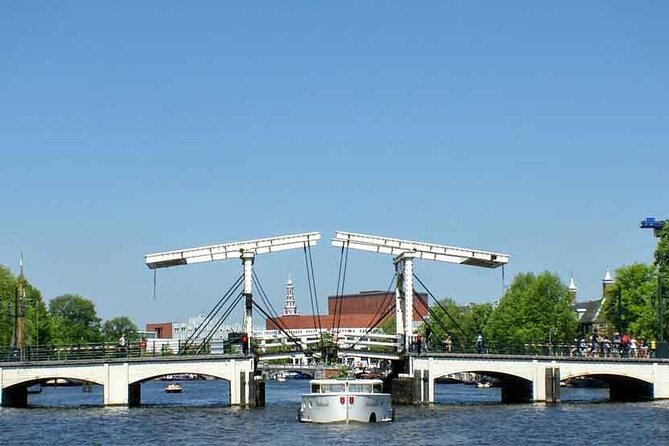
The river Amstel gives you a chance to step back from the tight streets. The route includes views toward the Blue Bridge and Skinny Bridge, along with buildings of cultural and social importance.
The final major section covers Jodenbuurt, also called Plantage in the supplied route description. This area was home to much of Amsterdam’s Jewish community from the late 16th century until World War II. The guide discusses important Jewish buildings, Holocaust memorials, and other monuments.
Allowing 30 minutes here is valuable because the subject needs more than a quick date or name. You can ask for explanations of particular memorials, and the guide can add information about specific sites. This section gives the tour moral and historical weight, balancing the lighter stories about canals, flowers, and leaning houses.
What the $540.69 price really buys you
The full price is $540.69 for up to four people. At maximum capacity, that works out to roughly $135 per person. For one person, the same price is hard to justify. For a family or group of four, it becomes more reasonable, especially if you value a private guide and a tailored pace.
Only guide services are included. Entrance fees are extra:
- Royal Palace: €10 per person
- Westerkerk: €7 per person
- Old Center: €13.50 per adult, or €7 for ages 13 to 18 and students
- Anne Frank House: €16 per person
- Nieuwe Kerk: €10 per person
- Our Lord in the Attic Museum: €16.50 per person
You do not need to enter every attraction. In fact, trying to do so would work against the purpose of this walk. Use the tour to choose which interiors deserve your time later.
The tour is commonly booked well ahead, with an average lead time of about 75 days. That makes sense for a private service with only four places. The stated opening schedule is Monday from 11 a.m. to 5 p.m., so check your selected date carefully.
Free cancellation is available up to 24 hours before the start time. Changes or cancellations inside that window are not refundable.
Who will get the most from this walk
I would recommend it most strongly to first-time visitors who want a fast, organized introduction to Amsterdam. It also fits families, since Aleksandar has experience keeping children aged 3, 10, and 13 involved through questions and age-appropriate explanations.
The tour suits you if you enjoy stories, local context, and city details more than long museum visits. It is also useful for people who want to understand the Red Light District and Dutch drug policy without relying on rumors.
You should think twice if you have limited mobility or dislike long walks, since the route covers a large part of central Amsterdam. The supplied information says most people can participate, but it does not give a detailed accessibility assessment.
Should you book this Amsterdam walking tour?
Book it if you are a group of three or four and want one guide for Amsterdam’s major themes: canals, religion, trade, art, royal power, war, and present-day city life. Aleksandar’s strongest qualities are his flexibility, language ability, patience with children, and talent for adding small facts that you might miss alone.
Skip it if your main goal is to spend hours inside museums, or if you are traveling alone and watching every dollar. In that case, a smaller shared walk or self-guided route may cost less.
For the best result, take this tour near the beginning of your stay, reserve Anne Frank House tickets at least six weeks ahead, and save time later for the interiors that interest you most. Think of the five hours as a guided map of Amsterdam, not the whole book.
FAQ
Where does the tour begin?
It begins at Amsterdam Centraal railway station, at Stationsplein, 1012 AB Amsterdam.
Where does the tour end?
The activity ends back at the meeting point at Amsterdam Centraal.
How long is the tour?
The walking tour lasts approximately five hours.
How many people can join the private tour?
The maximum group size is four travelers.
Is hotel pickup available?
Pickup is offered, but the stated meeting point is Amsterdam Centraal railway station.
Are entrance fees included?
No. Entrance fees for places such as the Royal Palace, Westerkerk, Anne Frank House, Nieuwe Kerk, and Our Lord in the Attic Museum are extra.
How far in advance must I book Anne Frank House?
Anne Frank House tickets can be booked only online and at least six weeks in advance.
Just added around Amsterdam
- Amsterdam: Giethoorn Tour with Canal Cruise and Windmills★ 5.0 · 3 reviews
- Full-day excursion to Edam, Volendam, and Marken★ 3.7 · 3 reviews
- Amsterdam: Chocolate Fondue in the Dark★ 5.0 · 3 reviews
- Amsterdam Private Walking Tour of Famous Painters★ 5.0 · 3 reviews
- Amsterdam Family Friendly Historical Walking Tour★ 5.0 · 3 reviews
- Amsterdam Old-West Vegan Food Tour with Local Guide★ 4.7 · 3 reviews
- From Amsterdam: visit Zaanse Schans, Muiderslot and more!★ 5.0 · 3 reviews
- Amsterdam Walking Tour with Dutch Pancake Lunch★ 5.0 · 3 reviews
Amsterdam Tours, compared.


Amsterdam Classic Saloon Boat Cruise with Drinks and Cheese
Read our review →
Amsterdam Luxury Canal Cruise + Unlimited Drinks & Bites option
Read our review →


Classic Boat Cruise with Optional Cheese & Wine
Read our review →
Evening Cruise with Optional Wine and Snacks
Read our review →
75 Minute City Canal Cruise with Audio Guide
Read our review →Browse the lists this tour appears in