
Reviewed · AMSTERDAM TOURS
Your Own Amsterdam: The Art Underground
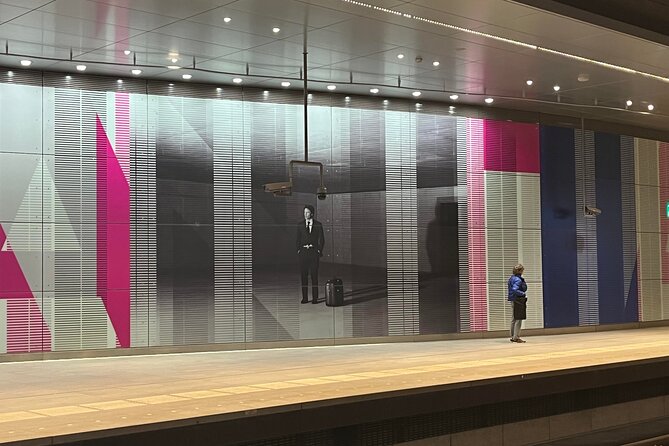
Amsterdam’s metro is more than a way to get across town. On this private two-hour tour, stations become galleries, archaeological sites, music rooms, and lessons in Amsterdam’s uneasy urban past. You move from Centraal Station to Amsterdam-Noord, seeing a side of the city most visitors pass without noticing.
I like the small private format, since your guide can adjust the pace and answer your questions. I also like the range of subjects: the route connects public art with tulip mania, colonialism, local ecology, old music, and the fierce arguments over metro construction. The main consideration is price: at $236.59 per person, plus about €9 for metro tickets, this is a serious spend for two hours.
Key points to know before booking
- Six metro-related stops take you from Centraal Station through Rokin, Vijzelgracht, Nieuwmarkt, Noorderpark, and Amsterdam-Noord.
- Archaeology at Rokin includes objects more than 2,000 years old, giving the underground system an unexpectedly old foundation.
- A private guide leads only your group, which makes discussion and pacing more flexible than on a standard group walk.
- Maria’s route reaches beyond the artwork, with useful context about places such as the de Pijp market and Amsterdam’s transport system.
- The tour ends in Amsterdam-Noord, so you finish in a different part of the city from where you began.
- Metro tickets are extra, costing €9 per person according to the tour details.
Why Amsterdam’s metro makes an unusual museum
Amsterdam is famous for canal houses, bridges, museums, and bicycles. Its metro system gets much less attention. That is precisely what gives this experience its appeal.
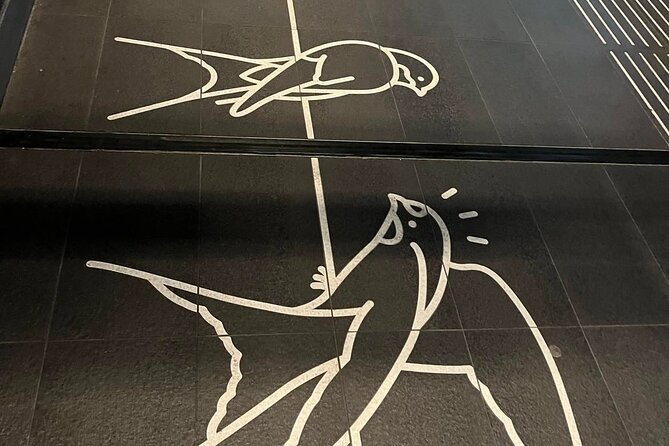
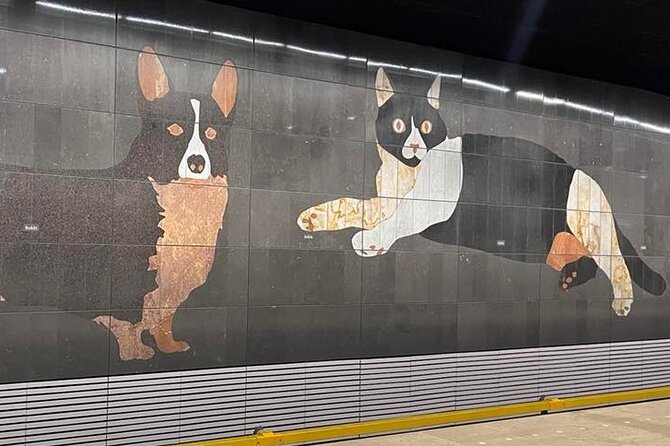
You are not simply looking at decoration on station walls. The art becomes a way to understand the city. At Centraal Station, the guide uses several artworks to discuss local climate, Dutch history, tulip mania, the Dutch East India Company, and colonialism. Those are big subjects for a short tour, but the setting gives them a practical anchor. You are standing in a place used by more than ten million people each year, surrounded by images that most commuters may barely notice.
I like that approach. Instead of separating art from daily life, the tour asks you to look at the public spaces you normally hurry through. The metro is part gallery, part transport network, and part record of Amsterdam’s choices.
The tour is also private. Only your group takes part, so you do not have to compete with a large crowd to hear the guide or ask a question. That matters most here because the experience depends on explanation. A station artwork may not make much sense at first glance, while a short story about its subject can change how you see it.
A few more Amsterdam trips worth a look
- Amsterdam: Van Gogh Museum Ticket
★ 4.7 · 52,054 reviews - Amsterdam Classic Saloon Boat Cruise with Drinks and Cheese
★ 5.0 · 31,825 reviews - Amsterdam Luxury Canal Cruise + Unlimited Drinks & Bites option
★ 5.0 · 30,518 reviews
Centraal Station: art beneath the city’s front door
The meeting point is Stationsplein 13a, near Amsterdam Centraal Station. This is a practical place to begin, but give yourself enough time to locate the meeting point before the start. Centraal is one of Amsterdam’s busiest transport areas, and the tour moves into the metro system rather than beginning as a conventional street walk.
The first stop lasts about 15 minutes. The guide introduces multiple artworks in and around the station and uses them to discuss Amsterdam’s climate and past. Tulip mania, Dutch overseas trade, and colonialism all enter the conversation.
That mix gives you more than a standard art explanation. You learn to ask what public art says about a city, what it leaves out, and how local identity is presented in a shared public place. If you enjoy museums but want something tied to ordinary city life, this is a strong opening.
The limitation is time. Fifteen minutes is enough for a focused introduction, not a full account of every artwork or historical subject. You should expect a compact reading of the station, not an art-school lecture.
Rokin: archaeology beside modern transit
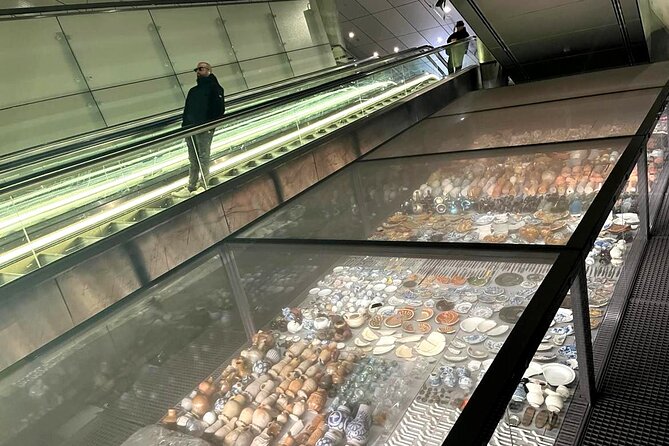
At Rokin, the focus shifts from modern public art to archaeology. Excavations connected with the metro project uncovered objects dating back more than 2,000 years. The guide uses these finds to explain what they reveal about Amsterdam and the people who lived here.
This is one of the tour’s most distinctive subjects. You are not visiting a separate archaeological museum and then taking the metro elsewhere. Instead, the evidence of earlier life is tied directly to the construction of a modern transport line.
The stop lasts around 15 minutes. That is enough to introduce the discoveries and explain why they matter, but you should not expect a long museum visit. Admission is listed as not included, so check the precise ticket arrangements when booking and bring the required metro fare.
I find the contrast especially effective: at one point you are considering present-day public art, and soon after you are looking at material connected to people who lived in the area thousands of years ago. Amsterdam’s underground system becomes a meeting point between old ground and new infrastructure.
Vijzelgracht: Dutch music in a station setting
Vijzelgracht brings a change of mood. Here, the subject is popular Dutch music of the 20th century.
This stop is useful if you want a cultural experience that is not limited to paintings and architecture. Music can reveal how people saw themselves in a particular era, and the station gives the subject a public, everyday setting. You are not being sent to a concert hall. You are learning how a country’s popular sound can appear in the places people use to move around the city.
The stop takes about 15 minutes, and admission is free. The details do not specify which musicians or songs are covered, so you should treat this as an introduction rather than a complete history of Dutch music.
For the right audience, this may be a welcome surprise. If you already know Dutch music, you may want to ask the guide for more background. If you do not, the stop adds variety to a route that might otherwise feel heavily focused on urban planning and visual art.
Same country, a completely different kind of day:
- Amsterdam: Heineken Experience Ticket
★ 4.6 · 30,055 reviews - Amsterdam: Rijksmuseum Entry Ticket
★ 4.7 · 25,535 reviews - Amsterdam: Classic Boat Cruise with Optional Cheese & Wine
★ 4.6 · 22,925 reviews - Amsterdam: Evening Cruise with Optional Wine and Snacks
★ 4.4 · 19,696 reviews
Nieuwmarkt: why metro construction sparked resistance
Nieuwmarkt explores one of Amsterdam’s most contested transport stories. The old metro station helps explain why construction of the first metro lines in the 1980s provoked such strong resistance from local people, and how that conflict still affects city life.
This is the point where the tour moves beyond art appreciation. Transport projects change neighborhoods. They affect buildings, streets, homes, businesses, and the way residents feel about decisions made by city officials. The guide links that earlier conflict to the present, giving you a clearer sense of why Amsterdam’s metro system carries political as well as practical meaning.
The stop lasts 15 minutes and admission is free. Since the tour provides only a short time here, you will get the key story rather than every detail. Still, I consider this an important part of the experience because it keeps the art from floating free of its surroundings. Art and architecture exist within decisions that affect real communities.
If you are interested in city planning, local politics, or the tension between modern infrastructure and older neighborhoods, pay close attention here.
Noorderpark: the Amsterdam School and its wider influence
At Noorderpark, the subject becomes the Amsterdam School, an important architectural style associated with the city. The guide discusses its influence on modern architecture and society.
This stop broadens the tour again. You are not only looking at what is inside a metro station. You are considering how design shapes the way people understand their homes, public buildings, and neighborhoods. Architecture becomes a social subject, not just a matter of attractive shapes or decorative details.
The stop lasts about 15 minutes. Admission is listed as not included, so confirm whether any separate access cost applies on your date. The supplied details do not describe a formal building visit, so plan for an explanation of the style and its influence rather than a long architectural tour.
I like this stop because it gives the route a bridge between historic Amsterdam and modern design. If your interests lean toward buildings, planning, or the relationship between art and daily life, this may be one of the more rewarding sections.
Amsterdam-Noord: art, plants, animals, and the route’s final view
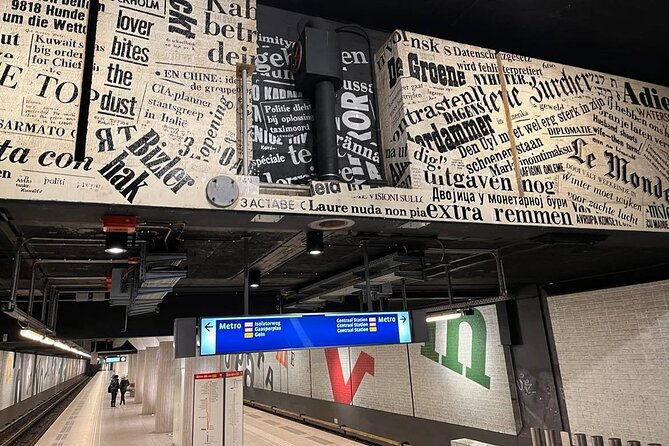
The final stop is in Amsterdam-Noord. Here, the guide discusses the local ecosystem, flora, and fauna, and explains how those subjects appear in public art.
Ending in Noord gives the tour a useful sense of movement. You begin at one of Amsterdam’s major central transport hubs and finish across the water in a different part of the city. The tour does not simply return you to the starting point, so think of the final stop as a launch point for the rest of your day.
The stop lasts approximately 15 minutes and admission is free. The information does not promise a nature walk or wildlife viewing, so you should expect discussion of ecology and art rather than a field excursion. That distinction matters if you are hoping for a long outdoor experience.
Still, the subject fits the route well. The tour begins with human history, trade, art, and transport, then ends by asking how the city relates to the natural world around it. That gives the final stop a broader purpose than simply being the last station.
A private tour with enough room for questions
Only your group participates, which is one of the strongest practical features. A private format can make a big difference on a subject like this. You may want to stop longer at one artwork, ask about Amsterdam’s colonial past, or connect the station design with places you have already visited. You are more likely to get a useful answer when the guide is not managing a large crowd.
Maria is named as one guide who has led the experience. She explains the metro system, the way artwork is selected for these spaces, and points out nearby sights beyond the stations. The de Pijp market was one specific place she highlighted, showing that the experience can include useful orientation to the neighborhoods along the route.
That extra local context is valuable. You are not being rushed from one isolated artwork to another. You can connect the station to the city above it. If you want only a quick list of artists and dates, this may feel too broad. If you like learning how a city works, the format should suit you well.
The tour is offered in English. Confirmation arrives at booking, and the meeting area is near public transportation. Most people can participate according to the supplied details, though no more specific accessibility information is provided.
What the $236.59 price really means
At $236.59 per person, this is not a low-cost introduction to Amsterdam. The advertised duration is about two hours, and metro tickets cost an additional €9 per person. You should therefore compare the total cost with what you want from a guide.
The price makes more sense for a private group than for one person booking alone. If several people are sharing the guide, the private format may offer better value because everyone gets the same focused attention and can shape the conversation. Group discounts are available, so check the final price for your party before deciding.
You are paying for interpretation, not a long list of included admissions. Most stops are public metro locations, and the guide is the main part of the experience. That can be worthwhile if you would otherwise pass through these places without understanding them.
I would not choose this tour simply because you want to see Amsterdam’s famous highlights. It does not focus on the Rijksmuseum, canal houses, or major historic squares. I would choose it if you have already seen the obvious sights, or if you prefer a thoughtful look at transport, public art, archaeology, architecture, and city debates.
Timing, tickets, and how to plan your day
The six stops are each planned for about 15 minutes, which totals roughly 90 minutes before allowing for metro travel and transitions. The full activity lasts about two hours. That makes it easy to fit into a morning or afternoon, but you should not plan a separate appointment immediately afterward if timing matters.
Metro tickets are not included. The stated extra cost is €9 per person. Keep that amount separate from the tour price, and make sure everyone in your group has the required fare before the route begins.
The tour starts at Stationsplein 13a and ends in Amsterdam-Noord. Since the endpoint differs from the meeting point, plan your next move from Noord rather than assuming you will finish back at Centraal Station.
I would wear comfortable shoes and keep your belongings manageable. You are moving through stations and changing locations, so a small bag is easier than bulky luggage. The experience is not described as physically demanding, but it is still a moving tour rather than a seated talk.
Free cancellation is available if you cancel at least 24 hours before the local start time. Changes or cancellations made inside that window are not accepted for a refund.
Who will get the most from this experience
I would recommend the tour most strongly to:
- Art and design fans who want to see public work outside traditional museums.
- People interested in Amsterdam’s metro system and urban development.
- Repeat visitors looking for subjects beyond the usual central sights.
- Small private groups who enjoy asking questions and setting their own pace.
- Anyone curious about how archaeology, architecture, music, and ecology can share one city route.
Families may also find the changing subjects helpful, but the experience depends on listening and discussion. Children who need constant activity may not enjoy 15-minute explanations at several stations.
This is less suitable if you want a relaxed walking tour with long stops, a full archaeological museum visit, or a broad survey of Amsterdam’s main attractions. It is also not the best value for a solo visitor who is mainly comparing price per hour.
Should you book Your Own Amsterdam: The Art Underground?
Book it if you want to understand Amsterdam through places you might otherwise ignore. The strongest parts are the private format, the range of subjects, the archaeology at Rokin, and the clear connection between public art and city life. Maria’s ability to explain the metro system while pointing out places such as the de Pijp market adds useful local orientation.
Skip it if you want famous landmarks, extensive time at each stop, or a low-cost way to see the city. The price is high for two hours, and the €9 metro fare is extra. But for a small group that values a personal guide and enjoys art with social and historical context, this is an unusual and worthwhile way to see Amsterdam from below street level.
FAQ
Where does the tour begin?
It begins at Stationsplein 13a, 1012 AB Amsterdam, near Amsterdam Centraal Station.
Where does the tour end?
The tour ends in Amsterdam-Noord, Amsterdam.
How long does the experience last?
The activity lasts approximately two hours.
Is the tour private?
Yes. Only your group participates in the activity.
Is the tour offered in English?
Yes. English is the listed language.
Are metro tickets included?
No. Underground metro tickets are not included. The stated cost is €9 per person.
Can I cancel for a full refund?
Yes, if you cancel at least 24 hours before the experience start time. Cancellations or changes made less than 24 hours before the start are not accepted for a refund.
Just added around Amsterdam
- Amsterdam: Giethoorn Tour with Canal Cruise and Windmills★ 5.0 · 3 reviews
- Full-day excursion to Edam, Volendam, and Marken★ 3.7 · 3 reviews
- Amsterdam: Chocolate Fondue in the Dark★ 5.0 · 3 reviews
- Amsterdam Old-West Vegan Food Tour with Local Guide★ 4.7 · 3 reviews
- Amsterdam Family Friendly Historical Walking Tour★ 5.0 · 3 reviews
- Amsterdam Private Walking Tour of Famous Painters★ 5.0 · 3 reviews
- From Amsterdam: visit Zaanse Schans, Muiderslot and more!★ 5.0 · 3 reviews
- Amsterdam Walking Tour with Dutch Pancake Lunch★ 5.0 · 3 reviews
Amsterdam Tours, compared.


Amsterdam Classic Saloon Boat Cruise with Drinks and Cheese
Read our review →
Amsterdam Luxury Canal Cruise + Unlimited Drinks & Bites option
Read our review →


Classic Boat Cruise with Optional Cheese & Wine
Read our review →
Evening Cruise with Optional Wine and Snacks
Read our review →