
Reviewed · AMSTERDAM TOURS
Van Gogh Museum Amsterdam Small Group Guided Tour
Van Gogh’s paintings are easy to recognize, but much harder to fully understand in a crowded museum. This two-hour guided visit follows his career from somber Dutch peasant scenes to the bold color and restless brushwork of Arles, Saint-Rémy, and Auvers. You see major works such as The Potato Eaters, Sunflowers, The Bedroom, Iris, and Wheatfield with Crows in a useful chronological order.
I like the small maximum group of 14, which gives your guide room to answer questions, and the wireless headphone system, which helps you hear without standing shoulder to shoulder. Guides including Martina, Claire, Kawika, Marlene, Holly, Roland, and Sylvia have been praised for linking Van Gogh’s personal struggles to changes in his technique. The main caution is price: at $77.43 per person, this costs much more than visiting with an audio guide, and one poor guide or a rushed group could make the difference harder to justify.
Key points to know before booking
- The route follows Van Gogh’s artistic development, from early Dutch work through Paris, Arles, Saint-Rémy, and Auvers.
- Major paintings include The Potato Eaters, Sunflowers, The Bedroom, Almond Blossoms, Iris, and Wheatfield with Crows.
- A wireless Whisper System makes the guide easier to hear in busy galleries.
- Groups are capped at 14 adults, creating a more personal visit than a large museum walk.
- Morning and afternoon tour times let you fit the museum around the rest of your Amsterdam day.
- You can remain inside the museum afterward and continue looking through the permanent collection until closing time.
Why a guide helps at the Van Gogh Museum
The Van Gogh Museum is not simply a room of famous paintings. Its real strength is that it brings together enough work to show change over time. You can watch Vincent move from earthy, heavy scenes of rural life toward broken color, bright sunlight, and increasingly urgent brushwork.
That progression is easy to miss if you hurry from one famous canvas to the next. A guide can point out how Van Gogh studied other artists, copied Japanese prints, altered his use of color, and responded to new surroundings. You get a clearer sense of the artist as a working painter, not just the troubled figure often reduced to a few dramatic stories.
I also like that the route includes less-famous works alongside the headline pieces. Paintings by Jean-François Millet and Jules Breton, for example, help explain the influences behind Van Gogh’s early subjects. The tour then moves through Paris and southern France, where his methods change sharply.
The wireless system matters here. Museum rooms can be noisy, and guides often need to speak while visitors are moving around the paintings. One visitor specifically found the headsets useful even while wearing hearing aids. You can stand at a sensible viewing distance and still follow the explanation.
The tradeoff is pace. Twenty minutes in each broad section is enough for a clear overview, but not enough to study every painting at length. If you already know Van Gogh well, you may want less time on the self-portraits and more time with individual works. One less enthusiastic assessment made exactly that point.
More Museums in Amsterdam
- Amsterdam: Van Gogh Museum Ticket
★ 4.7 · 52,054 reviews - Moco Museum Amsterdam Entrance Tickets with Banksy & More
★ 4.4 · 10,088 reviews - Amsterdam: The Upside Down Museum Entrance Ticket
★ 4.4 · 9,506 reviews
Meeting at Museumplein and getting started
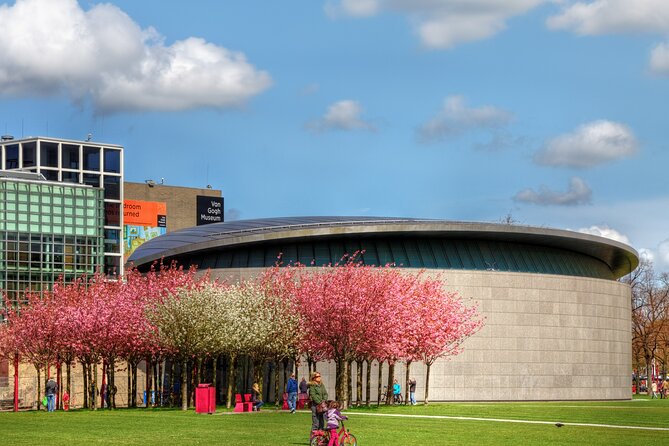
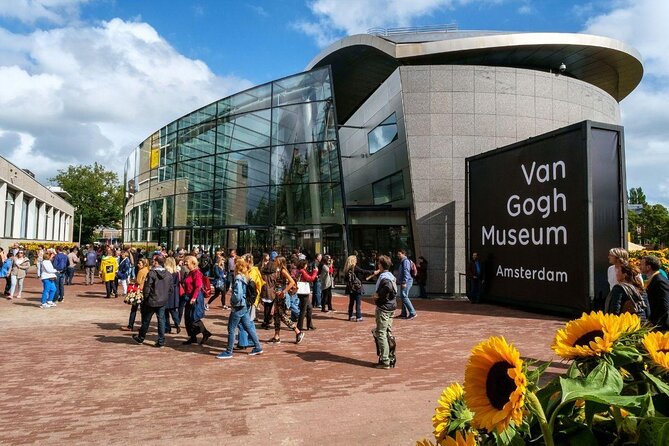
The tour begins at Cobra Café, Hobbemastraat 18, near Amsterdam’s Museumplein. The end point is inside the Van Gogh Museum at Museumplein 6. The museum is close to public transportation, so the location is practical for a day built around the Rijksmuseum, Stedelijk Museum, or the surrounding square.
Allow a little breathing room before the start. The meeting point is a café rather than the museum entrance itself, and you will want to identify the guide and group before the visit begins. Your confirmation is provided when you book, so keep the meeting details handy.
The tour is for adults aged 18 and older, with no more than 14 people. That limit is important. At a museum as popular as this one, a very large group can turn a painting explanation into a hunt for the guide. A smaller group gives you a better chance to hear, ask a question, or move closer when the guide directs attention to a detail.
The experience is offered in English according to the booking information. The included service also refers to a live guide in your chosen language, so check the available language at the time you reserve if English is not your preference.
Early Van Gogh: self-portraits and the Dutch years
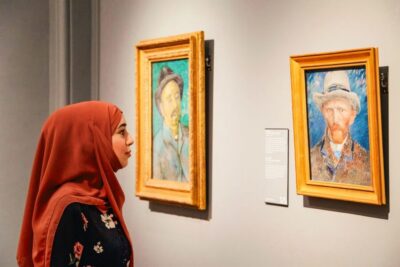
The opening section focuses on Van Gogh’s self-portraits. Twenty minutes may sound like a lot for one subject, but the paintings offer a fast way to see his face, clothing, color choices, and brushwork change across his career.
A guide can make this section useful by treating the portraits as working records rather than repeated likenesses. You can look for shifts in paint handling and mood, along with the impact of his years in Paris. If you already own a strong Van Gogh book or have studied these works, this may feel like the slowest part of the visit.
The next stop moves to the first-floor foyer and Van Gogh’s early Dutch influences. You see paintings connected with Millet and Jules Breton, along with Woman Lifting Potatoes, the portrait wall titled Head of a Peasant Woman, and The Potato Eaters.
This is one of the most valuable parts of the route because it gives The Potato Eaters a setting. Instead of meeting the painting as an isolated masterpiece, you see how Van Gogh built toward it through rural subjects and dark, limited tones. The people in these works are not polished salon figures. They belong to the hard, plain world Van Gogh wanted to take seriously.
I would listen closely here if you are new to art. The guide’s explanation of influence, subject matter, and technique can help you understand why the early paintings look so different from Sunflowers or Iris. This section also helps prevent the common mistake of judging early Van Gogh only by the bright style that made him famous.
Paris from 1886 to 1888: color begins to break open
Van Gogh moved to Paris between 1886 and 1888, and the change in his work is one of the clearest visual turns in the museum. The tour includes Self-Portrait with Felt Hat, Still Life with Absinthe, In the Café: Agostina Segatori in Le Tambourin, and Garden with Courting Couples.
Here you can watch his palette lighten and his brushwork become more active. Paris brought him into contact with new artistic ideas and a different way of handling color. The guide can connect those changes to the paintings without asking you to memorize a list of art movements.
The café scene and garden painting also broaden your view of Van Gogh’s subjects. He was not only painting peasants and sunflowers. He was looking at modern city life, leisure, interiors, and the effects of artificial or changing light.
This stop is especially good for anyone who thinks Van Gogh’s style appeared fully formed. It did not. The Paris works show an artist testing ideas, borrowing from others, and building toward the forceful color relationships of his southern French period.
With twenty minutes here, you get the basic arc rather than a full study of every influence. I would use this part to ask your guide about the specific change you notice most. Some guides, including Martina and Kawika, have used extra images or personal examples to explain paint types, brushwork, and the artistic setting of the time.
More Van Gogh Museum tickets and tours:
- Amsterdam: Van Gogh Museum Ticket and City Canal Cruise
★ 4.6 · 3,899 reviews - Amsterdam: Van Gogh Museum Ticket & Canal Cruise
★ 4.5 · 3,304 reviews - Van Gogh Museum Amsterdam Exclusive Tour w/ Reserved Entry
★ 5.0 · 1,760 reviews - Van Gogh Museum Tour Reserved Entry Semi Private
★ 5.0 · 1,437 reviews
Arles: sunflowers, a bedroom, and Japanese prints
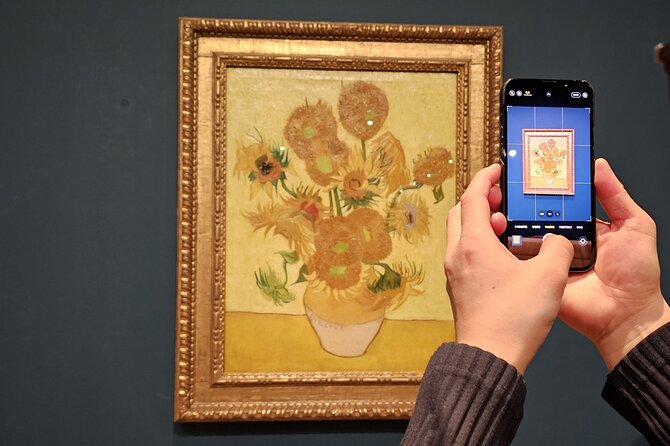
The Arles section brings you to the paintings many people most want to see. Van Gogh moved to Arles in 1888, and the tour includes Sunflowers, Almond Blossoms, The Bedroom, The Yellow House, and Japanese paintings copied from prints.
This is the point where the museum visit can feel most rewarding. The famous works are familiar from books and posters, but seeing the paint surface close up lets you notice the physical decisions behind the image. One guide, Marlene, has been praised for drawing attention to individual brushstrokes and showing how Van Gogh’s technique changed.
Sunflowers is not just a bright decoration. Ask your guide to explain how color and repeated marks create its presence. The Bedroom rewards a close look at the tilted room, strong outlines, and unusual color choices. It is a quiet subject handled with surprising tension.
The Japanese print copies are important because they show Van Gogh actively studying another visual tradition. Their inclusion keeps the Arles story from becoming only a tale of sunlight and personal crisis. You see an artist searching for new ways to frame scenes, flatten space, and use clear areas of color.
The Yellow House adds another layer. It connects the paintings to the place Van Gogh imagined as a working home for artists. The guide’s job here is not to turn the visit into a dramatic biography, but to show how ambition, place, friendship, and technique meet in the work.
This is likely the busiest and most sought-after portion of the route. The small group and headsets help, but you should still expect other museum visitors nearby. Your guide may encourage the group to move closer for a detail, but do not assume you will have uninterrupted time directly in front of every famous painting.
Saint-Rémy: beauty, illness, and controlled intensity
On the third level, the route continues with paintings from Saint-Rémy-de-Provence. The works include another Almond Blossoms, Wheatfield with a Reaper, Iris, and Pietà (After Delacroix).
This section benefits from a guide who can handle Van Gogh’s illness with care. His mental health is part of the story, but it should not swallow the paintings. The stronger approach is to look at how he worked, what he chose to paint, and how his technique could remain purposeful even during difficult periods.
Iris gives you a chance to study the contrast between the flowers and the surrounding ground. Wheatfield with a Reaper carries an entirely different emotional weight, with a worker set against the movement of the field. The Delacroix-inspired Pietà shows Van Gogh engaging with an older master while translating the subject into his own language.
The second Almond Blossoms is a reminder that repeated subjects can serve different purposes. Van Gogh returned to motifs because they offered ways to test color, structure, and feeling. A guide can help you compare similar subjects rather than treating each painting as a separate famous image.
This is also where pacing matters. The route lists about twenty minutes, so you will get interpretation of key works rather than a quiet, extended look at each one. If one painting matters most to you, tell the guide early. The small group makes that request more realistic.
Auvers: the final room and the last paintings
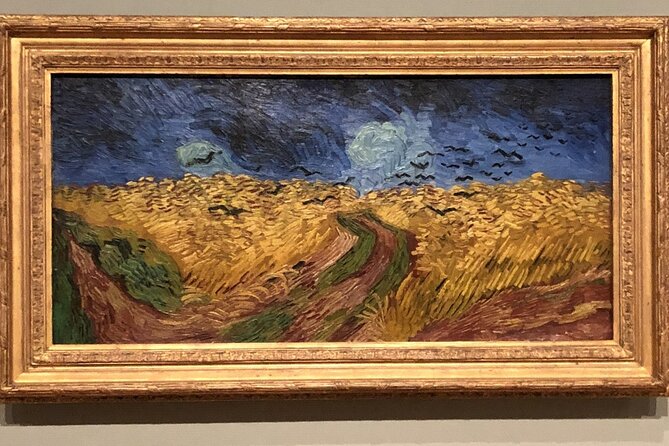
The final stop is the Auvers room on level three, with Tree Roots and Wheatfield with Crows. The visit gives you about fifteen minutes here, a shorter closing section that brings the chronology to Van Gogh’s final period.
These works can be difficult to absorb after the bright optimism of Arles and the concentrated intensity of Saint-Rémy. A good guide will help you look first at the paintings themselves: the direction of the marks, the structure of the ground, and the way the scene seems to carry movement.
The danger is that the final works become a dramatic ending to a familiar biography. Try to resist that shortcut. Pay attention to what is actually on the canvas before turning to the circumstances around it. This is one place where a calm, precise explanation adds real value.
After the guided portion, you can stay inside the museum until closing time and continue at your own pace. That is a major advantage. The two-hour route gives you a framework, then the remaining visit lets you return to Sunflowers, The Bedroom, or any work the guide passed over quickly.
Is $77.43 a fair price?
At $77.43 per person, this is not the cheapest way to enter the museum. The value depends on how much you want interpretation rather than simple access.
I think the price is reasonable for a first visit if you care about Van Gogh but do not already know the collection well. You are paying for admission, a live guide, a small group, and a clear two-hour path through the permanent collection. The guide can also help you avoid spending your entire visit on the first famous painting you recognize.
The value is strongest when the guide is excellent. Martina has been singled out for her enthusiasm, use of an iPad, and ability to connect technique with Van Gogh’s life. Claire has been praised for making the subject engaging even for someone less interested in art. Kawika has been noted for explaining paint, artistic influences, and the development of Van Gogh’s work with humor.
There is no guarantee which guide you will receive. One poor experience found the tour less useful than an audio guide, and one serious complaint involved a guide failing to appear. Those reports are unusual beside the much stronger response, but they matter when the price is well above a standard museum add-on.
The tour includes the permanent collection only. Special exhibitions are not part of the guided route, though you can visit them afterward at your own pace if your museum admission permits. Food and drinks are not included.
Who will get the most from this visit?
I would choose this tour if you want a guided structure, appreciate art but do not speak its academic language, or want someone to connect Van Gogh’s life with his changing methods. It also suits couples or friends with different levels of interest, since a lively guide can make the visit accessible to someone who would not normally choose an art museum.
It is a good fit for a first Amsterdam visit when you want to see the museum without spending half a day planning your own route. The morning or afternoon choice gives you room to pair it with other Museumplein stops.
You may prefer an audio guide or independent visit if you already know the collection, want long stretches of silence, or dislike being held to a two-hour route. The self-portrait section may feel too long if your priority is only the southern French paintings.
Cancellation is free up to 24 hours before the start time. Cancel later than that and the payment is not refunded. The booking information says the activity is near public transportation and suitable for most adults, but it is limited to people aged 18 and older.
Should you book the Van Gogh Museum guided tour?
Book it if you want context, chronology, and a real person to answer questions. The route is well chosen, the small group is practical, and the ability to remain inside afterward means the guided visit does not have to be your entire museum experience.
I would be more cautious if you are mainly shopping for the lowest price or already have a detailed plan for the collection. In that case, an audio guide may leave more money for another Amsterdam sight.
For most first-time visitors who want Van Gogh’s development explained rather than simply displayed, I think the tour earns serious consideration. Just arrive ready to look beyond the famous names. The early Dutch paintings, Paris experiments, Japanese copies, and final Auvers works are what turn this from a greatest-hits stop into a story about an artist constantly trying to see and paint differently.
FAQ
How long does the Van Gogh Museum guided tour last?
The guided portion lasts approximately two hours.
What does the tour price include?
The $77.43 price includes admission to the permanent collection, a two-hour guided tour, a live guide, and a wireless Whisper System.
Is the tour available in English?
The tour information lists English as the offered language. The included service also refers to a live guide in your chosen language, so check the language option when booking.
How large is the group?
The group has a maximum of 14 travelers.
Are children allowed on this tour?
No. The activity is available only to adults aged 18 and older.
Where does the tour start?
It starts at Cobra Café, Hobbemastraat 18, 1071 ZB Amsterdam, Netherlands.
Where does the tour finish?
The tour finishes inside the Van Gogh Museum at Museumplein 6. You can stay in the museum until closing time and continue exploring independently.
Are special exhibitions included?
No. The guided tour covers the permanent collection. Special exhibitions can be visited afterward at your own pace, but they are not part of the guided tour.
Can I cancel for a full refund?
Yes, if you cancel at least 24 hours before the experience start time. Cancellations or changes made within 24 hours are not refunded.
Just added around Amsterdam
- Amsterdam: Giethoorn Tour with Canal Cruise and Windmills★ 5.0 · 3 reviews
- Full-day excursion to Edam, Volendam, and Marken★ 3.7 · 3 reviews
- Amsterdam: Chocolate Fondue in the Dark★ 5.0 · 3 reviews
- Amsterdam Family Friendly Historical Walking Tour★ 5.0 · 3 reviews
- Amsterdam Private Walking Tour of Famous Painters★ 5.0 · 3 reviews
- Amsterdam Old-West Vegan Food Tour with Local Guide★ 4.7 · 3 reviews
- From Amsterdam: visit Zaanse Schans, Muiderslot and more!★ 5.0 · 3 reviews
- Amsterdam Walking Tour with Dutch Pancake Lunch★ 5.0 · 3 reviews
Amsterdam Tours, compared.
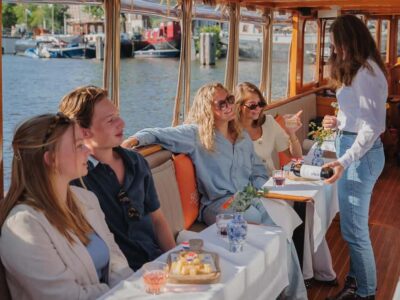
Amsterdam Classic Saloon Boat Cruise with Drinks and Cheese
Read our review →
Amsterdam Luxury Canal Cruise + Unlimited Drinks & Bites option
Read our review →
Classic Boat Cruise with Optional Cheese & Wine
Read our review →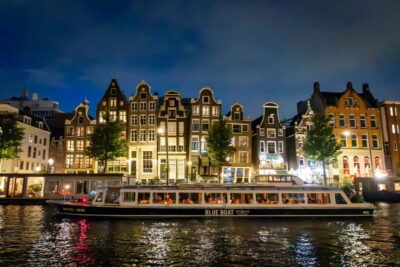
Evening Cruise with Optional Wine and Snacks
Read our review →
75 Minute City Canal Cruise with Audio Guide
Read our review →Browse the lists this tour appears in