
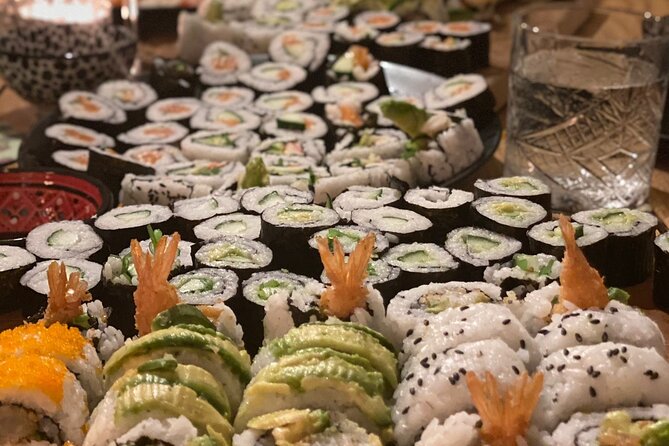
Reviewed · WORKSHOPS
Private Sushi Workshop in Hilversum
The best part of this private workshop is that you do not simply watch a chef assemble sushi. You work through the process yourself, from rice to toppings, with former restaurant owner Nigel van der Weerd and Chantal guiding the group. I like the four sushi styles and the fact that your finished work becomes dinner, not just a cooking demo. I also like the private format, which gives your group room to ask questions and work at its own pace.
The main thing to check before booking is the location. The experience is described as an Amsterdam workshop, but the stated meeting point is on Kometenstraat in Hilversum, outside Amsterdam. You should also note the preferred minimum of four people and confirm the exact venue before you pay.
Key points at a glance
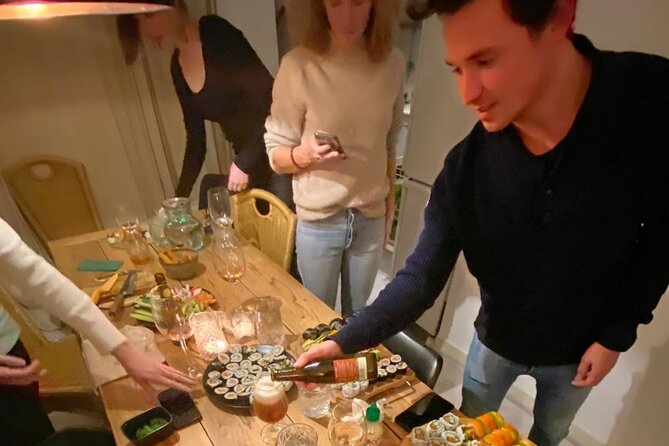
- Four styles in one evening: Make maki, nigiri, uramaki, and temaki rather than repeating a single basic roll.
- Hands-on instruction: Nigel van der Weerd, a former sushi restaurant owner and chef, leads the practical work.
- Your work becomes dinner: The sushi you prepare is served after the workshop, along with alcoholic or non-alcoholic drinks.
- Private group setting: The experience is designed for your own party, with a maximum of 10 participants.
- Flexible menu: Meat and fish can be included, and the menu can be adapted for vegetarians.
- Possible rental visit: The workshop may take place at your holiday rental if you have a usable kitchen.
What happens during the 2.5-hour sushi evening
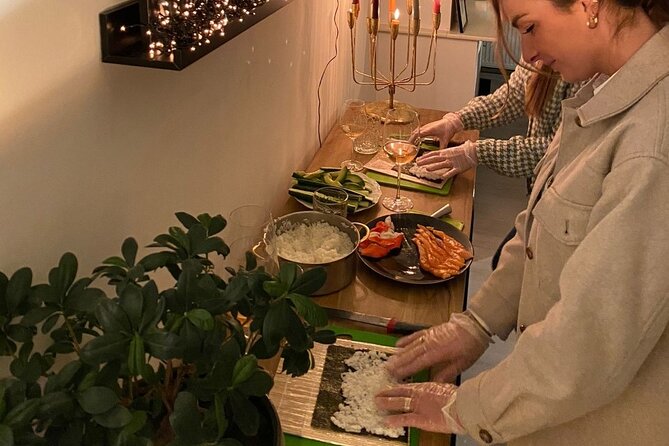
This is a compact cooking class with a clear purpose: learn a set of sushi basics, prepare enough food for dinner, and sit down to eat it afterward. The listed start time is 5:00 pm, and the activity lasts about two and a half hours.
The workshop takes place privately at home, with the stated meeting point at Kometenstraat, 1223 Hilversum. Since the description also refers to Amsterdam, do not assume that the class is in central Amsterdam. Hilversum is a separate town in North Holland, so check the address and transport plan carefully.
The cooking begins with instruction from Nigel and Chantal. The available information specifically highlights the process from the sushi rice through to the toppings. That matters because sushi often looks simple when it reaches the plate, yet each part affects the finished result. Rice preparation, shaping, filling, and presentation all require different handling.
You will then make four forms of sushi:
- Maki: Rolled sushi with the filling enclosed in rice and seaweed.
- Nigiri: Hand-shaped rice topped with fish or another suitable ingredient.
- Uramaki: Inside-out rolls with the rice on the outside.
- Temaki: Hand-rolled cone-shaped sushi.
Learning all four gives you a useful comparison. Maki and uramaki involve rolling technique, while nigiri asks for careful shaping by hand. Temaki is more free-form and can be a relaxed way to finish the practical part of the class.
The supplied information does not give a minute-by-minute schedule, a fixed menu, or a list of exact fish and fillings. That is worth remembering if you have strong food preferences. The menu can include meat and fish, but it can also be adapted for vegetarians, so tell the provider about your needs when arranging the booking.
A few more North Holland trips worth a look
- Amsterdam: Traditional Dutch Syrup Waffle Making Workshop
★ 4.8 · 4,093 reviews - Amsterdam Traditional Dutch Syrup Waffle Making Workshop
★ 5.0 · 960 reviews - Amsterdam: Bols Cocktail Experience and Cocktail Workshop
★ 4.8 · 666 reviews
Why the private format matters
A private class changes the feel of a cooking workshop. You are not placed with a large mixed crowd, and your group can focus on making food together. That suits families, couples traveling with friends, or a small celebration.
The maximum group size is 10, while the preferred minimum is four. That is a useful range: large enough for a social meal, but still small enough for hands-on work. If your group is smaller than four, ask before booking rather than assuming the class will run.
The private setup also makes this a better choice for people who want to ask basic questions without feeling rushed. Sushi has several small techniques that can be easy to miss in a large demonstration. Here, the stated emphasis is on guidance and patience, and the available feedback gives particular praise to Nigel and Chantal for explaining the preparation with enthusiasm and care.
That praise is most useful when translated into practical expectations. You are not signing up for a formal culinary-school session with advanced knife work or a long lecture about Japanese food. You are signing up for a friendly, social class where the hosts help you turn ingredients into a meal.
Meeting Nigel and Chantal in the kitchen
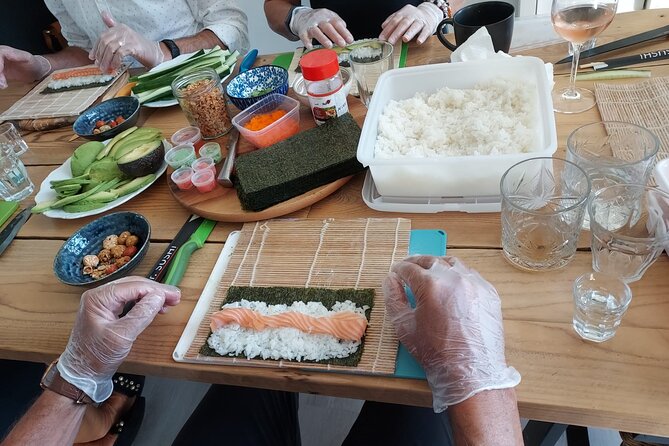
Nigel van der Weerd is identified as a former sushi restaurant owner and chef. That background gives the workshop a practical edge. He has worked with the food in a restaurant setting, so he can explain the steps from the point of view of someone who has prepared sushi for diners, not only someone following a home recipe.
Chantal teaches alongside Nigel. The strongest available praise focuses on both hosts as a warm and patient couple, with particular attention to their enthusiasm and their explanation of everything from the rice to the toppings.
You should still keep your expectations in proportion. The class lasts about 150 minutes, and that time includes preparation and the meal. It is long enough to learn several styles, but it is not designed to turn you into a professional sushi chef in one evening.
The value is in leaving with a working feel for the basics. You can see how the different forms are made, practice them under supervision, and eat the results while the process is still fresh in your mind.
From rice and toppings to four finished styles
The rice is a central part of the workshop, and the available details specifically call out learning the process from the rice onward. That is a good sign for anyone who wants more than a decorative rolling exercise.
Many casual sushi classes rush straight to filling and rolling. This one gives the rice a named place in the teaching. You will likely find that the rice work sets the rhythm for the rest of the evening, since it must be prepared and handled before the rolls and hand-shaped pieces come together.
Maki gives you the classic rolling practice. Uramaki adds another challenge because the rice sits on the outside. Nigiri changes the task again, asking you to form rice and place a topping neatly by hand. Temaki is made individually and offers a less rigid shape.
The class description does not promise advanced fish-cutting instruction, raw seafood demonstrations, or a particular knife technique. Do not book it expecting a specialist masterclass in every part of sushi preparation. Book it for a broad, hands-on introduction to four recognizable forms.
The menu may include fish and meat. Vegetarian adjustments are possible, which widens the appeal for mixed groups. If one person eats vegetarian food while others want fish, the flexibility can save you from choosing a different activity altogether.
Same country, a completely different kind of day:
- Private Electric Boat Rental in Haarlem (No License Required)
★ 5.0 · 186 reviews - Windmills Zaanse Schans small group tour-region Amsterdam
★ 5.0 · 55 reviews - Fresh nose tour with the canoe through the nature near Amsterdam
★ 5.0 · 26 reviews - Haarlem Private Canal Tour with Bites and Unlimited Drinks
★ 4.5 · 18 reviews
Dinner and drinks are part of the value
At the end, you eat the sushi you made. I consider this one of the strongest features because the class is not just an activity followed by a separate search for dinner. The food you prepare becomes the evening meal.
Wine, beer, and non-alcoholic drinks are included. That helps the experience feel like a complete night out rather than a short lesson. It also means you can choose a non-alcoholic option without needing to arrange a separate drink plan.
The price is $108.45 per person. That is not a low-cost meal, especially if you compare it with buying prepared sushi. The comparison is not quite fair, though. You are paying for a private cooking session, instruction from a former restaurant owner and chef, the food you prepare, and drinks.
The price makes better sense for a group that wants an evening activity with dinner built in. It may feel less worthwhile if you only want to eat sushi or if you already make these styles confidently at home. For a small private group, the combination of instruction and a shared meal gives the fee a reasonable purpose.
Because the class is private, the value also depends on how many people join. A group of four may get a more personal session, while a larger party of up to 10 may create a livelier dinner. If you are arranging this for a celebration, ask how the menu and seating will work for your particular group.
Taking the workshop to your holiday rental
The hosts may organize the workshop at your guest accommodation or Airbnb. This is possible only if the property has a kitchen.
That option can be very convenient. You avoid traveling to an unfamiliar address, and the evening can fit neatly into a stay where everyone is already gathered. It also makes the private nature of the experience especially clear: your own rental becomes the setting for the class.
The kitchen requirement is not a minor detail. Before choosing this option, confirm that the space is suitable for a group and that the property allows an outside cooking experience. The supplied information does not specify the required equipment, counter space, or kitchen size, so those details should be checked with Nigel or Chantal in advance.
If you are staying in central Amsterdam, the mobile option may be more appealing than arranging transport to Hilversum. If your rental has a cramped kitchen, though, the fixed meeting point may be the smoother choice. Ask before booking rather than discovering the limitation on the day.
Getting there and planning the evening
The stated start time is 5:00 pm, and the activity ends back at the meeting point. The listed meeting point is Kometenstraat, 1223 Hilversum, Netherlands, and the area is near public transportation.
The location wording deserves attention. Some parts of the experience describe the class as being in Amsterdam, while the actual starting address is in Hilversum. Hilversum is not central Amsterdam, so allow time for the journey and confirm which location applies to your booking.
A 5:00 pm start works well as a dinner plan. You can spend the earlier part of the day sightseeing, then head to the class without needing another restaurant reservation. Since the session lasts around two and a half hours, expect the meal to come later in the evening rather than immediately at the start.
The experience uses a mobile ticket, which is useful when you are moving around North Holland. Confirmation is sent within 48 hours of booking, subject to availability. That timing is important if you are fitting the class into a short visit, so do not leave it until the last possible evening.
The activity has a maximum of 10 participants. It also requires a minimum number of travelers, so the provider may cancel if that minimum is not met. In that case, you are offered another date or experience, or a full refund.
Who will enjoy this sushi workshop
I would recommend this for people who like food activities with a social side. You get to work with your hands, learn several formats, and sit down together afterward. It is a good match for a group of friends, a family outing, or a private celebration.
It also suits mixed dietary groups better than many fixed-menu food tours. Meat and fish can be included, while vegetarian adjustments are possible. You should still share dietary requirements early, since the precise menu is not published.
This may be less suitable if you want a central Amsterdam activity with no transport planning. The Hilversum meeting point could add time and cost to your evening, depending on where you are staying.
It is also not the right pick if you want a large selection of restaurant-quality sushi prepared entirely by someone else. The point is to make the food yourself. Imperfect rolls are part of the evening, and that is likely more fun for a relaxed group than for someone seeking a polished tasting menu.
Booking, cancellation, and practical checks
Free cancellation is available if you cancel at least 24 hours before the local start time. Cancellations made within 24 hours are not refunded, and changes inside that period are not accepted.
Before you reserve, confirm four points:
- The exact address, since Hilversum and Amsterdam are both used in the description.
- Whether your group meets the preferred minimum of four.
- Whether the menu can meet your dietary needs.
- Whether your rental kitchen is suitable if you want the mobile option.
The class is near public transportation, but no detailed route information is provided. Check your own route to Kometenstraat once the booking is confirmed.
Should you book it?
Book this workshop if you want a private evening that combines a cooking lesson, a shared dinner, and drinks. The four sushi styles give the class more range than a basic roll-making session, and Nigel’s former restaurant experience adds useful practical guidance.
I would be especially inclined to book for a group of four to 10 people, or for a vegetarian and non-vegetarian group that needs a flexible menu. The key caution is location. Confirm whether you will meet in Hilversum or host the workshop at your rental before treating it as an Amsterdam activity.
At $108.45 per person, the experience is best judged as a private meal and cooking class, not as a cheap dinner. If that combination fits your plans, it offers a personable way to spend an evening and a meal you helped create from start to finish.
FAQ
Where does the sushi workshop start?
The stated meeting point is Kometenstraat, 1223 Hilversum, Netherlands.
Is the workshop in Amsterdam or Hilversum?
The experience is described as an Amsterdam workshop, but the supplied meeting point is in Hilversum. Confirm the exact location when your booking is accepted.
What time does the workshop begin?
The listed start time is 5:00 pm.
How long does the experience last?
The workshop lasts approximately 2 hours and 30 minutes.
What types of sushi will I make?
You will learn to make maki, nigiri, uramaki, and temaki.
Who leads the workshop?
The workshop is led by Nigel van der Weerd, a former sushi restaurant owner and chef, with Chantal.
Is dinner included?
Yes. The sushi prepared during the workshop is enjoyed as dinner afterward.
Are drinks included?
Yes. Wine, beer, and non-alcoholic drinks are included.
Can the menu be vegetarian?
Yes. The menu can be adapted for vegetarians, and it may also include meat and fish.
Can the workshop take place at my rental?
It may be organized at your guest accommodation or Airbnb if the property has a kitchen.
Just added around North Holland
- Discover Texel (Den Burg) with Self-Guided Outside Escape game★ 4.0 · 3 reviews
- Texel: Solex Moped Rental★ 4.6 · 4 reviews
- Private Transfer Service Between Ijmuiden and Amsterdam★ 5.0 · 6 reviews
- IJmuiden to Amsterdam Private Transfer★ 5.0 · 6 reviews
- Amsterdam to Schiphol Airport Transfer Comfort & service.★ 5.0 · 6 reviews
- 3-Hour E-fatbike Rental in Texel★ 4.5 · 9 reviews
- Guided Bike Tour along the Dutch Tulip Fields in Noord Holland★ 5.0 · 9 reviews
- Texel: Electric Fatbike Rental with Map★ 4.8 · 17 reviews
Workshops, compared.
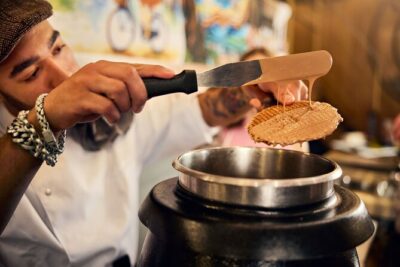
Traditional Dutch Syrup Waffle Making Workshop
Read our review →Amsterdam Traditional Dutch Syrup Waffle Making Workshop
Read our review →
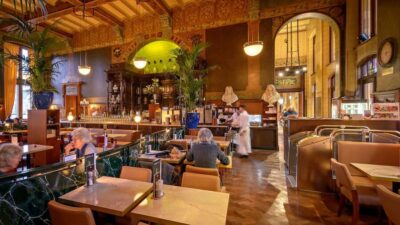
3-Course Meal in Historic 1st Class Waiting Rooms
Read our review →

Amsterdam Light Festival Winter Walk with Stroopwafel Workshop
Read our review →
Distilling Class @ Spirited Union Rum Co. (Amsterdam)
Read our review →
Cocktail workshop @ Spirited Union Rum Co. (Amsterdam)
Read our review →Browse the lists this tour appears in