

Reviewed · AMSTERDAM TOURS
Private Off-the-beaten-path Countryside Windmill Tour
The most rewarding part of this six-hour outing is how quickly Amsterdam gives way to quiet dikes, small villages, and old waterworks. Esther, your local guide, grew up in a windmill, so the visit to Schermer’s museum mill has a personal touch that a standard photo stop cannot match.
I like the private door-to-door transport, which saves you from piecing together several regional buses and trains. I also like the mix of history and simple pleasures: a working windmill, a stroll through De Rijp, cheese tasting, a village church, and lunch chosen around your tastes.
The main drawback is the price, $473.17 per person. That is a serious cost, especially for one or two people, and lunch is extra. You pay for privacy, a full day of transport, and Esther’s personal connection to the area, not for a long list of admission tickets.
Why this countryside tour earns a place on your Amsterdam plans
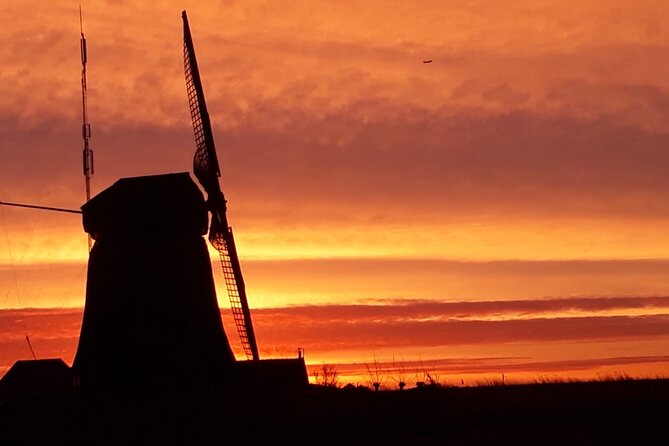
- Visit the Schermer museum windmill from top to bottom, including its machinery and living quarters.
- Drive through reclaimed Dutch land shaped by 17th-century windmill engineering.
- See De Rijp and Broek in Waterland, two small villages often skipped by larger tours.
- Taste Gouda and Edam cheese at the Jacobs Hoeve farm by Henri Willig.
- Choose your own Volendam lunch, from local fish to Dutch pancakes.
- Travel privately with Esther, whose family connection to windmills gives the day a rare personal angle.
From Amsterdam hotel pickup to open polder roads
The day begins at 9:30 a.m. with pickup at your Amsterdam hotel. You do not need to find a meeting point or work out the regional transport system. Private transportation, parking, and bottled water are included, and the return is also to your hotel.
That convenience matters. The countryside sights are spread across several areas north of Amsterdam. A public transport day would require planning, connections, and some walking between stops. Here, you can watch the city recede while Esther explains what you are seeing.
The tour is private, so only your group takes part. That gives you room to ask questions, adjust the pace within the planned schedule, and make your lunch preferences known. It also makes this a better fit for families or friends who want to spend the day together rather than join a bus full of strangers.
The schedule is full. You cover a large area in about six hours, with several short stops. Think of it as an introduction to the Dutch countryside, not a slow village holiday. You will see a lot, but some visits are brief.
More windmill trips around Amsterdam:
- Amsterdam: Guided Zaanse Schans, Windmills & Cheese Tour
★ 4.4 · 4,826 reviews - Windmill Tour from Amsterdam, Including Volendam & Marken
★ 4.0 · 4,572 reviews - Zaanse Schans Windmills, Clogs and Dutch Cheese Small-Group Tour from Amsterdam
★ 4.5 · 2,369 reviews
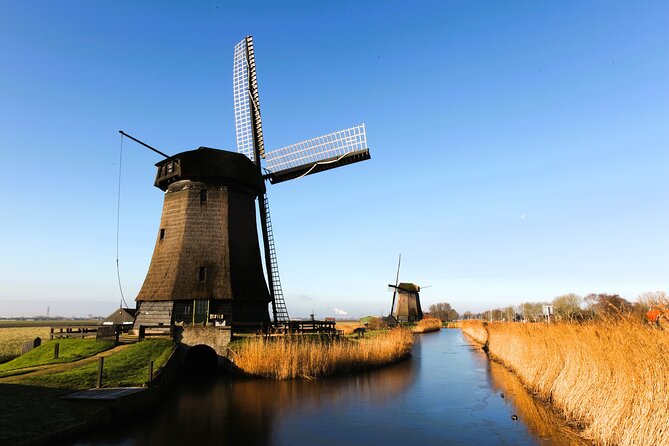
Schermer: the windmill that made farmland possible
The first major stop is the Schermer region, one of the Netherlands’ largest reclaimed areas. In the 17th century, Lake Schermeer was drained by 52 windmills. The result was the Schermerpolder, a carefully managed area of fields, roads, canals, and farms.
This is the sort of Dutch history that becomes clearer when you see the machinery that made it possible. The country’s famous flat fields are not simply natural. Much of the ground was won from water and then kept dry through a system of pumps, dikes, canals, and constant maintenance.
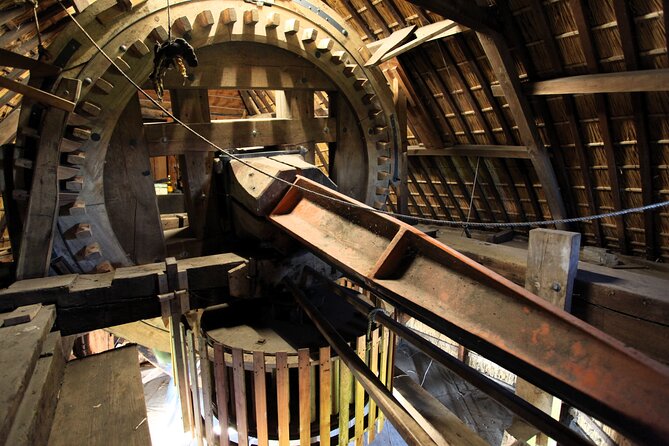
At the museum mill, you can go from the top of the windmill down through the working parts. You will see how the mill operates and how people lived inside these structures. That second detail is important. A windmill was not only a machine. It was also a home, workplace, and family setting.
Esther’s background adds meaning here. She grew up in a windmill, so she can explain the practical side of mill life in a way that connects the old technology to real daily routines. This is the strongest historical stop of the day, and the included entrance fee makes it more than a roadside picture.
The visit lasts about 30 minutes. That is enough for a useful look, but not enough for a slow technical study of every mechanism. If windmills are your main reason for booking, you may wish the mill visit were longer. Still, the chance to enter the structure from top to bottom makes this much better than simply photographing a mill from a dike.
A 15-minute drive through the Schermer Mills
After the museum mill, the route continues along the dikes through the Schermer. You pass more windmills, reclaimed fields, and small villages, including Esther’s family windmill and the surrounding countryside.
This short drive helps connect the museum visit to the wider system. One isolated windmill can look like a charming old building. A row of mills beside the dikes shows the scale of the engineering project more clearly.
The 15-minute segment is mainly a scenic drive rather than a long walking stop. Bring a camera, but also look beyond the mills. The straight roads, canals, farm buildings, and carefully divided plots reveal how deliberately this land was planned.
De Rijp, a former fishing village surrounded by fields
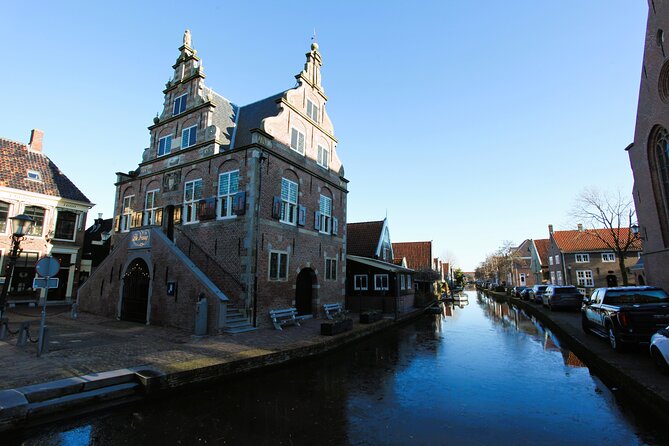
De Rijp has an unusual story. It was once a fishing village known for herring boats and whalers. When the surrounding waters were drained, the village ended up surrounded by land rather than sea.
That change explains why De Rijp feels different from a coastal fishing town. Its identity was shaped by water, but its setting was transformed by Dutch engineering. You get a compact village visit without the crowds associated with the best-known destinations around Amsterdam.
The stop is listed at about 15 minutes, so plan on a quick look rather than an extended walk through every street. You can enjoy the village character, take photographs, and hear about Jan Adriaanzoon Leeghwater, the hydraulic engineer born here. His name is closely tied to Dutch drainage and land reclamation.
This is one of the tour’s more authentic moments. De Rijp is not presented as a giant attraction with a long queue. It is a place to see how old village life fits into the story of reclaimed Holland.
A few more Amsterdam trips worth a look
- Amsterdam: Van Gogh Museum Ticket
★ 4.7 · 52,054 reviews - Amsterdam Classic Saloon Boat Cruise with Drinks and Cheese
★ 5.0 · 31,825 reviews - Amsterdam Luxury Canal Cruise + Unlimited Drinks & Bites option
★ 5.0 · 30,518 reviews - Amsterdam: Heineken Experience Ticket
★ 4.6 · 30,055 reviews
Beemster, where the countryside follows a plan
The drive continues through the Beemster UNESCO World Heritage site. The Beemster was also reclaimed from a lake, but its design is especially notable for its orderly pattern of roads, plots, farms, and canals.
As you travel through it, look for the geometry. The fields and roads reflect a plan made after the lake was drained, rather than a village pattern that grew slowly over centuries. Farmhouses and green meadows fill the spaces between the waterways.
The tour does not list a separate admission or long walking stop here. You experience the Beemster from the vehicle, which is the right format for covering this broad area in a half-day outing. The tradeoff is that you will not have much time to explore on foot or study individual farmhouses closely.
Cheese and clogs at Jacobs Hoeve in Katwoude
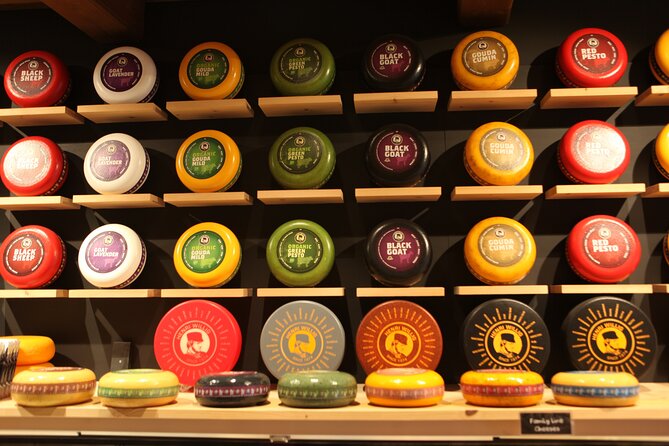
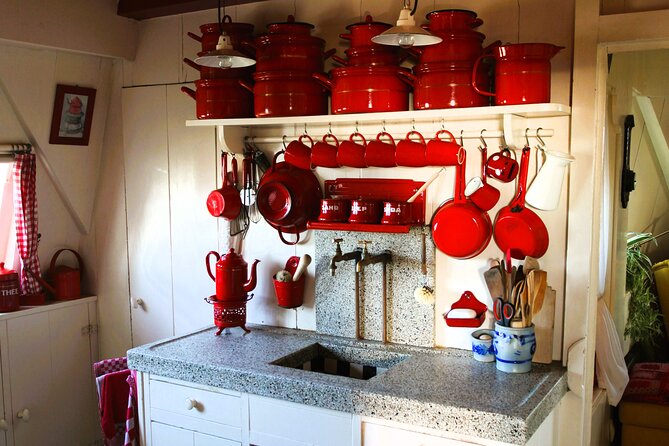
At the Jacobs Hoeve cheese farm by Henri Willig, you get a tasting of Gouda and Edam cheeses. The farm offers around 30 flavors and develops cheeses with travel in mind, so this stop is built for sampling and shopping as well as learning.
The tasting is included, and the visit lasts about 40 minutes. You can compare two cheeses closely associated with the Netherlands, then try flavored versions. If you enjoy cheese, this is likely to be one of the day’s most satisfying stops. If you are not interested in food tastings or retail-style farm visits, it may feel less essential than the windmill and villages.
There is also a wooden shoe craft demonstration. You can see how a clog is made, try on a pair, and buy one if you wish. The demonstration adds a hands-on piece to a day that otherwise relies on views and storytelling.
Keep your expectations sensible. This is not a full cheesemaking course, and no meal is included here. It is a tasting and craft stop, useful for trying local products and picking up a small souvenir without giving up much sightseeing time.
Volendam lunch, with freedom to choose
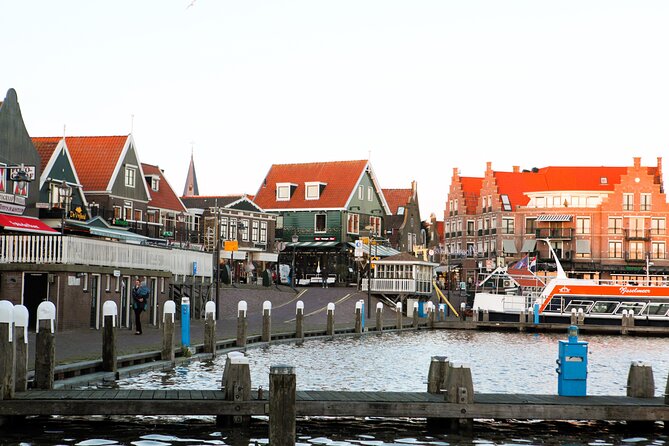
The tour pauses in Volendam for about an hour at lunchtime. You choose the restaurant, and Esther can arrange a place based on your preferences.
You might choose a local fish restaurant or a traditional Dutch pancake restaurant. Lunch is not included in the tour price, so you pay for your own meal. This arrangement is practical because food tastes and budgets vary. A private group can make a decision that suits everyone instead of accepting a fixed menu.
One hour gives you enough time for a relaxed meal, but it is not an open-ended visit to Volendam. If you want to spend much of the day exploring its waterfront or shops, this schedule will feel short. The purpose here is lunch within a broader countryside route, not a dedicated Volendam tour.
Volendam is also one of the more familiar names on the route, while De Rijp and Broek in Waterland feel quieter. That balance works well. You get a recognizable Dutch stop without letting the entire day become a standard tourist circuit.
Edam and the town behind the cheese name
The next stop is Edam, a beautifully preserved town best known for its cheese. The visit lasts about 30 minutes, giving you time to walk through the historic center and get a feel for its old streets and buildings.
Edam works well after the cheese farm because the name becomes more than a label on a tasting plate. You can connect the product to the town that helped make it famous. The stop also gives you another look at traditional Dutch architecture and village life.
Again, 30 minutes is a sampler, not a full historical tour. You will not have time to explore every lane, browse at length, or build a museum visit into the schedule. I would treat Edam as a pleasant walking break and a chance to see one of the Netherlands’ most picturesque small towns.
Broek in Waterland and its old wooden houses
Broek in Waterland is the final village stop before Amsterdam. The village is surrounded by water and is often compared with Giethoorn, another famous Dutch water village.
The stroll takes about 20 minutes and passes old wooden houses with preserved details such as ceremonial doors and carved lintels. These small features reward a slower glance. They show how much care went into homes that might look simple at first.
You also pass a restored 16th-century church. Its floor is paved with tombstones belonging to formerly wealthy residents of Broek in Waterland. That detail gives the church a direct connection to the people who shaped the village.
This is a brief visit, but it closes the tour on a quieter note. After the machinery of Schermer, the grand planning of Beemster, and the food stops near Volendam, Broek offers a close look at village buildings and local character.
What the $473.17 price really buys you
At $473.17 per person, this is not a budget excursion. The included items are private transportation, parking fees, bottled water, entry to the historic windmill, and the cheese tasting. Lunch is separate.
The price makes more sense if you are splitting it among a private group. You are paying for a vehicle, a full six-hour route, hotel pickup and return, parking, and a guide who can focus on your party. You are also reaching places that are awkward to combine independently in one morning and afternoon.
For a solo traveler or couple, the cost may be hard to justify unless private guiding and personal transport are high priorities. A larger group can get better value from the private format, especially if everyone wants the same pace and lunch style.
The tour also includes several experiences that are not expensive on their own, such as village walks and scenic drives. That is normal for a countryside day. The value comes from how the stops are linked and from the time saved moving between them.
Who should book this private countryside day
I would choose this tour if you want to understand how Dutch land reclamation shaped everyday life, not just collect a photo of a windmill. It suits people who enjoy small villages, local food, short walks, and having a guide explain what lies behind the scenery.
It is also a strong choice for families, friends, and anyone who dislikes rigid group tours. The private setup lets you make lunch preferences known and gives you a more personal setting with Esther.
You may want something else if your priority is a long visit inside one major attraction. The itinerary covers many stops, and several last only 15 to 30 minutes. You will see more places than you can study in detail.
Wear comfortable shoes for the village walks. The route includes driving, short strolls, a windmill interior, and a church visit, so practical footwear will serve you better than formal shoes. The tour is in English, and most travelers can participate.
Free cancellation is available if you cancel at least 24 hours before the 9:30 a.m. start. Changes or cancellations made inside that window are not accepted for a refund.
Should you book Windmillgirl Tours?
Book it if you want a private, well-connected day beyond Amsterdam, with a real windmill visit, quiet villages, reclaimed-land history, cheese, and a flexible lunch stop. The strongest reasons are Esther’s windmill background and the chance to see places such as De Rijp and Broek in Waterland without arranging the transport yourself.
Skip it if $473.17 per person feels too high, if you want a slower single-destination visit, or if you have already planned separate trips to Edam, Volendam, and the windmill region. For the right group, though, this is a useful way to turn a crowded Amsterdam stay into a closer look at how the Netherlands was built.
FAQ
Where does the tour begin?
Pickup is offered from your hotel in Amsterdam. The scheduled start time is 9:30 a.m.
How long does the tour last?
The experience lasts approximately six hours and returns you to your hotel in Amsterdam.
Is this a private tour?
Yes. Only your group participates in the activity.
Is transportation included?
Yes. Private transportation and parking fees are included, along with bottled water.
Is the windmill entrance included?
Yes. Admission to the historic museum windmill at Museummolen Schermer is included.
Is lunch included?
No. Lunch in Volendam is not included. You can choose the type of restaurant, such as a local fish restaurant or a Dutch pancake restaurant.
What is the cancellation policy?
You can cancel at least 24 hours before the experience start time for a full refund. Cancellations or changes made less than 24 hours before the start are not accepted for a refund.
Just added around Amsterdam
- Amsterdam: Giethoorn Tour with Canal Cruise and Windmills★ 5.0 · 3 reviews
- Full-day excursion to Edam, Volendam, and Marken★ 3.7 · 3 reviews
- Amsterdam: Chocolate Fondue in the Dark★ 5.0 · 3 reviews
- Amsterdam Old-West Vegan Food Tour with Local Guide★ 4.7 · 3 reviews
- Amsterdam Private Walking Tour of Famous Painters★ 5.0 · 3 reviews
- Amsterdam Family Friendly Historical Walking Tour★ 5.0 · 3 reviews
- From Amsterdam: visit Zaanse Schans, Muiderslot and more!★ 5.0 · 3 reviews
- Amsterdam Walking Tour with Dutch Pancake Lunch★ 5.0 · 3 reviews
Amsterdam Tours, compared.


Amsterdam Classic Saloon Boat Cruise with Drinks and Cheese
Read our review →
Amsterdam Luxury Canal Cruise + Unlimited Drinks & Bites option
Read our review →


Classic Boat Cruise with Optional Cheese & Wine
Read our review →
Evening Cruise with Optional Wine and Snacks
Read our review →
75 Minute City Canal Cruise with Audio Guide
Read our review →Browse the lists this tour appears in