
Reviewed · AMSTERDAM TOURS
Private Amsterdam Red Light District and Coffee Shop Tour
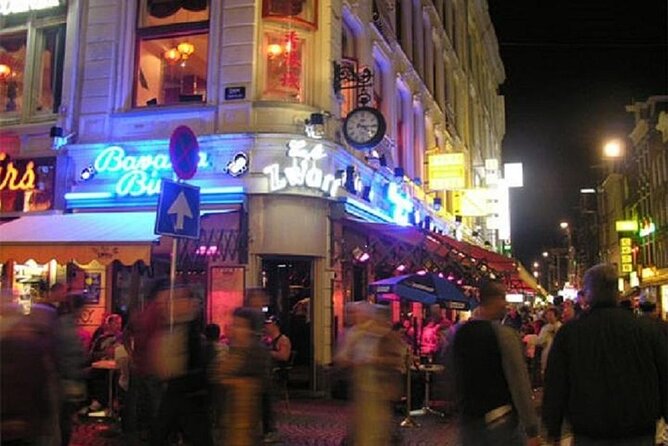
Amsterdam’s Red Light District is easier to understand when you look past the neon windows. This private walking tour connects prostitution, coffee shop policy, old city landmarks, and Dutch law in one relaxed route. Guides such as Ben, Robin, Saskia, and Aarie have been praised for mixing facts with light humor.
I like the private format, since your group gets to ask direct questions without waiting for a large crowd. I also like the route’s surprising Old Town stops, from a wooden pub dating to around 1540 to the world’s first condom shop.
The main thing to consider is the tour’s scope. It is described as about two hours, while the route details also refer to a 2.5-hour historical walk, and one guest felt the district could not be explored in great detail. This is a guided introduction, not an exhaustive study of every street or venue.
Key points to know before you book
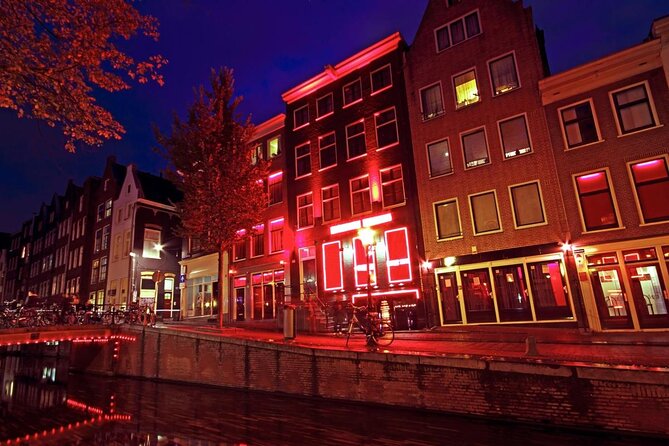
- The tour explains Amsterdam’s laws and customs: Learn how prostitution is legal and why marijuana is tolerated, without relying on rumor or tabloid stories.
- You get a private guide for your group: The pace can feel more personal, and you can ask questions that may seem awkward in a larger group.
- The route includes more than red windows: See Dam Square, the Waag, Int Aepjen, the Smallest House, and the Condomerie.
- Coffee shop culture is part of the lesson: An upgrade may allow a coffee shop visit with your guide, but food and drinks are not included.
- Family groups can fit the tone: The material is adult in subject, yet the tour is presented in a respectful, educational way.
- Plan for outdoor walking: The meeting and ending point are on Damrak, and the tour runs on foot for roughly two hours.
What this private Amsterdam tour is really about
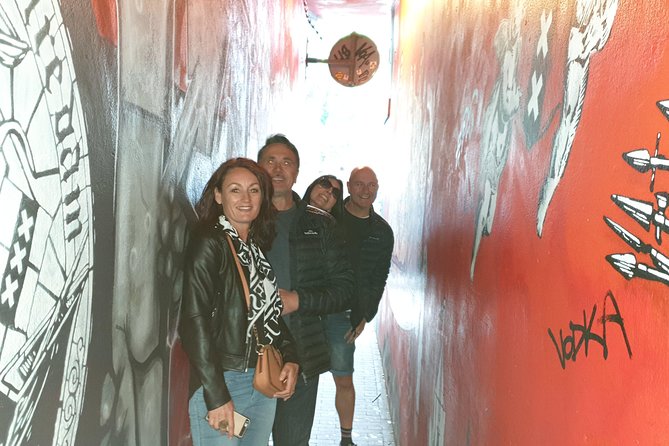
This is not simply a walk past Amsterdam’s famous red-lit windows. The useful part is the explanation around them: how the district developed, how Dutch law treats sex work, and how tolerance differs from unrestricted permission.
Your guide also discusses coffee shop culture and the Dutch approach to marijuana. That distinction matters. The tour helps you understand why Amsterdam can appear relaxed about drugs and prostitution while still operating within rules and limits.
Because the booking is private, only your own group joins the activity. That makes a difference here. The subject can bring up questions about law, safety, working conditions, religion, tourism, and local attitudes. You can ask plainly, rather than trying to raise a sensitive question in front of strangers.
The style seems to vary slightly by guide, but the strongest guide experiences share a pattern: clear historical explanation, a little humor, and practical suggestions for the rest of your stay. Ben is often singled out for lively storytelling and small city details. Robin is praised for warmth and gentle humor, while Saskia is described as especially helpful during an evening walk.
More Red Light District walks:
- Amsterdam: Red Light Secrets Museum Entry Ticket
★ 4.2 · 5,722 reviews - Amsterdam: Red Light District Tour in German/English/Italian
★ 4.9 · 5,623 reviews - Amsterdam Red Light District & Coffee Shop Tour
★ 4.6 · 4,134 reviews
Starting at Damrak and entering Amsterdam’s Old Town
The walk begins and ends on Damrak, 1012 Amsterdam. This is a practical location near public transportation, and ending where you started makes the tour easy to fit into a day of sightseeing.
One early topic is Dam Square, or simply the Dam. The guide explains why Amsterdam is sometimes described as a city built on trees. Much of the ground is fen, clay, and water, so older buildings were supported by wooden piles driven down to a firmer layer of sand around 11 meters below ground.
That detail gives you a better way to read the city. Amsterdam’s leaning or unusual old buildings are not random curiosities. They are part of a long struggle to build a stable city on wet ground.
The route then moves through the Old Town, which is also part of the Red Light District. This is important context. The district is not a separate entertainment zone placed far from Amsterdam’s past. It occupies one of the oldest parts of the city, where old trade routes, churches, defensive works, taverns, and narrow streets all overlap.
I like this beginning because it puts the adult subject inside a wider city story. You are not only being shown where the district is. You are learning why it developed in this part of Amsterdam.
Int Aepjen, one of Amsterdam’s last wooden buildings
One stop is Pub The Ape, known in Dutch as Int Aepjen. The building dates to around 1540 and is one of only two remaining wooden buildings in Amsterdam.
The reason that is unusual goes back to a major city fire in 1452. Afterward, the government pushed for brick facades to reduce the risk of another disaster. A wooden building that survived and remained in use is therefore more than a pub photo opportunity. It gives you a quick look at the city’s building rules and early urban life.
This is the sort of stop you might walk past without noticing. The tour’s value often lies in these brief explanations. The Red Light District can command all your attention, but the surrounding streets contain older and quieter stories.
Do not expect a long interior visit from the information provided. The stop is part of a walking route, and admission to attractions is not included in the basic tour.
The Waag and Amsterdam’s defensive past
The Waag was once one of Amsterdam’s city gates and part of its defensive wall. Built around the 1400s, it is described as the city’s second-oldest building.
Later, the Waag served as a meeting place for guilds, the organizations that represented craftsmen and tradespeople. This changes the feel of the stop. The building is not only a striking old structure on a square. It reflects how medieval cities controlled entry, protected commerce, and organized work.
The guide uses places like the Waag to connect the district to Amsterdam’s wider past. That is a strength if you want to understand the area instead of simply taking pictures. It is also a reason to book the tour early in your stay, as one participant suggested. The orientation can help you recognize the locations and understand the city during the rest of your visit.
A few more Amsterdam trips worth a look
- Amsterdam: Guided Ganja Walking Tour of Coffee Shops
★ 4.2 · 2,092 reviews - Amsterdam: Coffee Shops Walking Tour
★ 4.5 · 55 reviews - Amsterdam: Red Light Tour with Bar Visit + Free Drink and Stop at a Coffee Shop
★ 5.0 · 11 reviews - Amsterdam City Center, Red Light District and Coffee Shops Tour
★ 5.0 · 4 reviews
The Smallest House and the Condomerie
The route includes Amsterdam’s Smallest House, built around the 1700s. It first served as storage for the Dutch East India Company, known as the VOC, before later becoming a home.
The building shows how tight space was in the old city and how commercial Amsterdam shaped its architecture. Storage, trade, and housing were packed into a small area. Again, the stop adds a dose of ordinary urban history to a tour better known for adult themes.
Then comes the Condomerie, described as the world’s first shop devoted to condoms. It has been located here since 1987 and sells unusual designs as well as size-customized condoms.
This is a frank but useful stop. Amsterdam’s reputation for tolerance did not appear from nowhere. Shops, public health, tourism, and the city’s willingness to discuss sex openly all form part of the modern picture.
You should expect the subject matter to be direct. That is the point, but it may not suit every group. Parents with teenagers may find the tour comfortable if they are prepared for adult topics, while very young children are a less obvious fit.
Red Light District history, prostitution, and coffee shops
The central walk explains how the Red Light District developed and why prostitution is legal in the Netherlands. Your guide also covers marijuana tolerance and the role of coffee shops in Amsterdam.
The most helpful approach is to listen for the difference between what is legal, what is tolerated, and what is regulated. Amsterdam’s public image can make these ideas seem simpler than they are. A good guide gives you enough background to replace assumptions with a more accurate picture.
The route does not promise access to every part of the sex industry, and one account specifically found that the district could not be covered in great detail. That is a fair limitation for a short walking tour. You see and discuss key areas, but you should not book this expecting private access, a behind-the-scenes workplace visit, or a full academic survey.
Photography also requires common sense and respect. The supplied information does not set out a detailed photography policy, so follow your guide’s instructions and do not treat working people as scenery.
The coffee shop discussion is another major part of the tour. You learn why these venues are called coffee shops even though coffee is not the main reason people visit. As Aarie explained with humor during one tour, there is no coffee at the coffee shop in the usual sense.
Optional visits to the Erotic Museum or a coffee shop
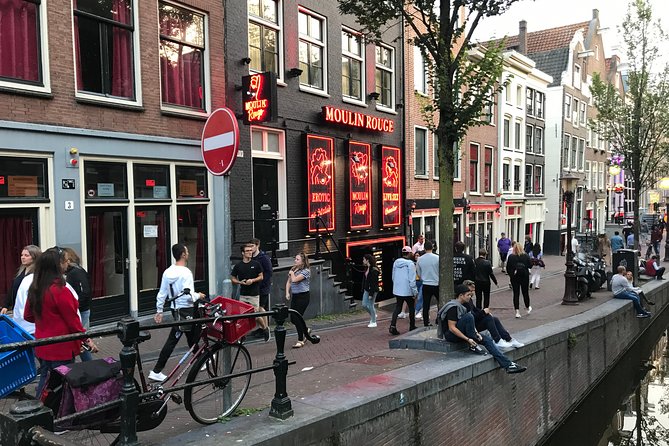
The tour offers an upgrade to visit the Erotic Museum or a coffee shop with your guide. These options can make the experience feel more concrete, especially if you prefer seeing a venue rather than only hearing about it.
Check the booking details carefully before assuming an upgrade is included. The basic inclusions are a local guide and guided walking tour. Food and drinks are not included, and the supplied information does not state that standard admission to either optional venue comes with the base price.
For many people, the private format is most valuable when paired with one of these options. You can ask questions at your own pace and decide how much adult material suits your group. Still, the walking portion is the core of the experience, so do not book only for the possibility of entering a venue.
Why the private format matters at $41.60
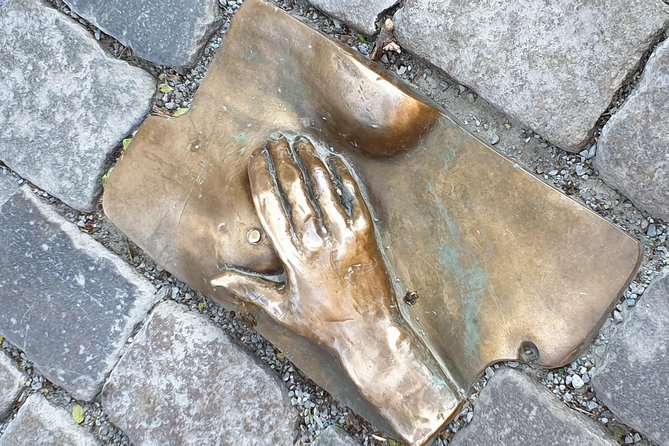
At $41.60 per person, the price is reasonable if you value a focused guide and your party is large enough to share the private booking. A private tour usually costs more than joining a standard group, but the benefit here is not luxury. It is control over the conversation and pace.
A group of five, for example, can discuss sensitive topics without being surrounded by a busload of strangers. Several family groups found the tone respectful, and one party specifically felt comfortable bringing teenagers and women. That does not make the tour child-focused. It means the guide can set a tasteful tone when the subject is handled well.
The price is less compelling if you only want a quick look at the windows and canals. You can walk through parts of the district independently. You are paying for the explanations, the Old Town connections, and the chance to ask a local guide direct questions.
The tour is offered in English and includes group discounts. It is commonly booked well ahead, around 46 days in advance on average, so last-minute availability may not be dependable.
Timing, weather, and practical comfort
The stated duration is approximately two hours, while the route description also refers to a 2.5-hour historical walking tour. Allow at least two hours, and leave a little space afterward rather than booking a tight dinner reservation or timed attraction.
You meet and finish on Damrak. Hotel pickup and drop-off are not included, so you need to reach the starting point yourself. The location is near public transportation, which makes that fairly simple, but you should still allow time to find your guide in the busy center.
This is an outdoor walking activity. A rainy evening did not prevent one group from enjoying it, but Amsterdam weather can be cold and wet. Wear shoes that can handle city streets and bring a rain layer. The tour runs at a relaxed pace, yet you are still on foot for much of the experience.
Most people can participate, and service animals are allowed. Confirmation arrives at booking. Free cancellation is available until 24 hours before the start time, but changes or cancellations inside that window are not accepted for a refund.
Who should book this tour
I would choose this tour if you want context before exploring Amsterdam’s adult districts on your own. It suits first-time visitors, couples, small friend groups, and families with older teenagers who are comfortable discussing sex work, drugs, and public policy.
It is also a strong choice for anyone who enjoys city history. The Waag, Dam Square, Int Aepjen, the Smallest House, and the Condomerie give the route more range than the title suggests.
I would hesitate if you want a long, detailed investigation of modern prostitution, or if you expect extensive indoor access. The route is short, and one honest assessment found it somewhat ordinary beyond the guide’s explanations. Your experience will depend heavily on the individual guide, though names such as Ben, Robin, Saskia, Guido, Esther, Catherine, Fia, Luis, and Aarie have all been associated with positive experiences.
Should you book it?
Book this private Amsterdam Red Light District and Coffee Shop Tour if you want a respectful explanation of a famous but often misunderstood part of the city. The private setting, local history, and clear discussion of Dutch law give you more than a quick stroll through the neon streets.
The best strategy is to book it near the start of your Amsterdam stay. You will get practical area knowledge, restaurant and sightseeing suggestions, and a clearer sense of what you are seeing. Skip it if you want unrestricted access or a highly specialized study. For a compact, good-humored introduction with a strong Old Town angle, $41.60 per person is a fair buy.
FAQ
How long does the tour last?
The tour is listed as approximately two hours. The route description also refers to a 2.5-hour historical walking tour, so allow some flexibility.
Where does the tour start?
It starts on Damrak, 1012 Amsterdam, Netherlands.
Where does the tour finish?
The tour ends on Damrak, 1012 Amsterdam, the same general location as the meeting point.
Is this a private tour?
Yes. Only your own group participates in the private tour or activity.
What language is offered?
The tour is offered in English.
Is a coffee shop visit included?
A coffee shop visit is available as an upgrade with your guide. Food and drinks are not included in the standard tour.
Can I visit the Erotic Museum?
The Erotic Museum is listed as an upgrade option. Standard admission is not listed among the basic inclusions.
Is the tour suitable for families?
Most participants can take part, and several family groups found the respectful tone comfortable, including groups with teenagers. The tour covers adult subjects such as prostitution, condoms, and marijuana.
Can I cancel for a full refund?
Yes, if you cancel at least 24 hours before the experience start time. Cancellations or changes made less than 24 hours in advance are not accepted for a refund.
Just added around Amsterdam
- Amsterdam: Giethoorn Tour with Canal Cruise and Windmills★ 5.0 · 3 reviews
- Full-day excursion to Edam, Volendam, and Marken★ 3.7 · 3 reviews
- Amsterdam: Chocolate Fondue in the Dark★ 5.0 · 3 reviews
- Amsterdam Old-West Vegan Food Tour with Local Guide★ 4.7 · 3 reviews
- Amsterdam Private Walking Tour of Famous Painters★ 5.0 · 3 reviews
- Amsterdam Family Friendly Historical Walking Tour★ 5.0 · 3 reviews
- From Amsterdam: visit Zaanse Schans, Muiderslot and more!★ 5.0 · 3 reviews
- Amsterdam Walking Tour with Dutch Pancake Lunch★ 5.0 · 3 reviews
Amsterdam Tours, compared.

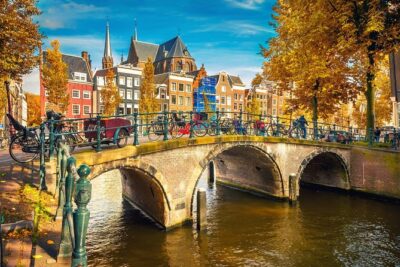
Amsterdam Classic Saloon Boat Cruise with Drinks and Cheese
Read our review →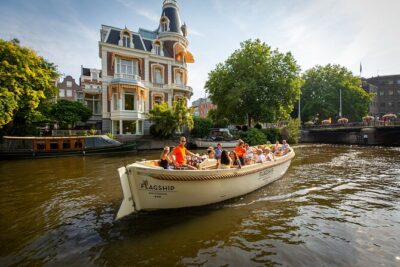
Amsterdam Luxury Canal Cruise + Unlimited Drinks & Bites option
Read our review →
Classic Boat Cruise with Optional Cheese & Wine
Read our review →
Evening Cruise with Optional Wine and Snacks
Read our review →
75 Minute City Canal Cruise with Audio Guide
Read our review →Browse the lists this tour appears in